NEW YORK (AP) — The 2026 midterm season begins in earnest on Tuesday with two of the nation's most consequential Senate primaries playing out in Texas, a political behemoth that Democrats have been fighting to flip for decades.
Is this the year? Republican leaders in Washington openly fret that a victory by conservative firebrand Ken Paxton over four-term incumbent Sen. John Cornyn would give Democrats a rare shot of winning the seat come November. The contest has already cost Republicans tens of millions of dollars, and there will be much more spent ahead of a May 26 runoff if no one gets 50% in the three-way primary that also includes Rep. Wesley Hunt.
Click to Gallery
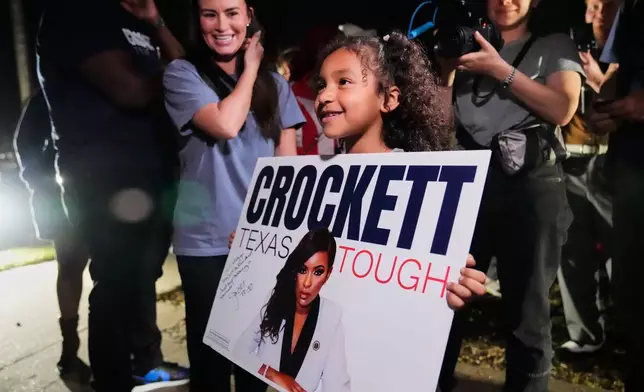
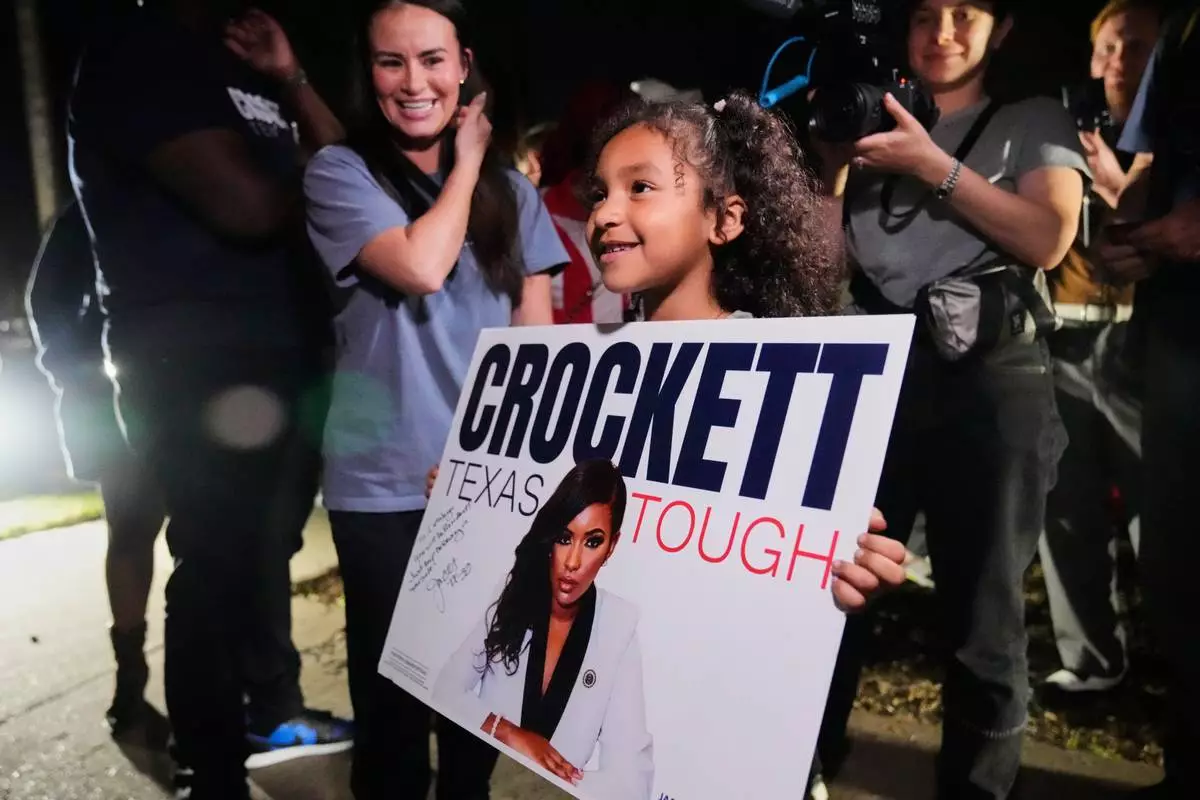
Cataleya Davis holds a poster promoting primary candidate for U.S. Senate Rep. Jasmine Crockett, D-Texas, during a campaign stop in Dallas, Friday, Feb. 27, 2026. (AP Photo/Tony Gutierrez)
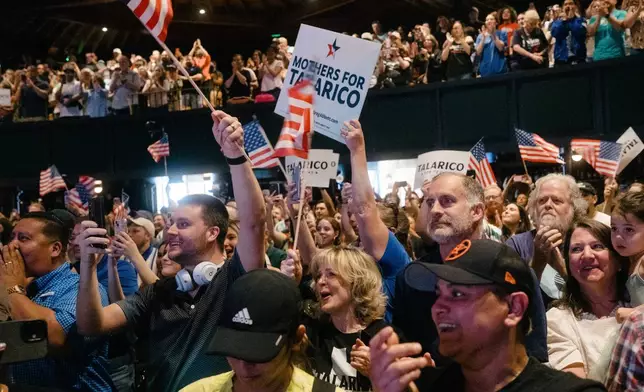
Supporters of James Talarico, a Texas Democratic primary candidate for U.S. Senate, cheer during an event, Sunday, March 1, 2026, in San Antonio, Texas. (AP Photo/Brenda Bazán)
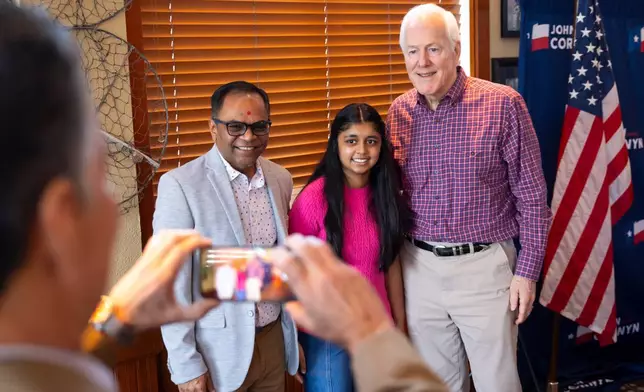
Kalpesh Patel and his 12-year-old daughter Keya pose for a photo with Sen. John Cornyn, R-Texas, during a campaign stop in The Woodlands, Texas, Saturday, Feb. 28, 2026. Keya recently completed a project on Cornyn for her seventh grade Texas history class. (AP Photo/Annie Mulligan)
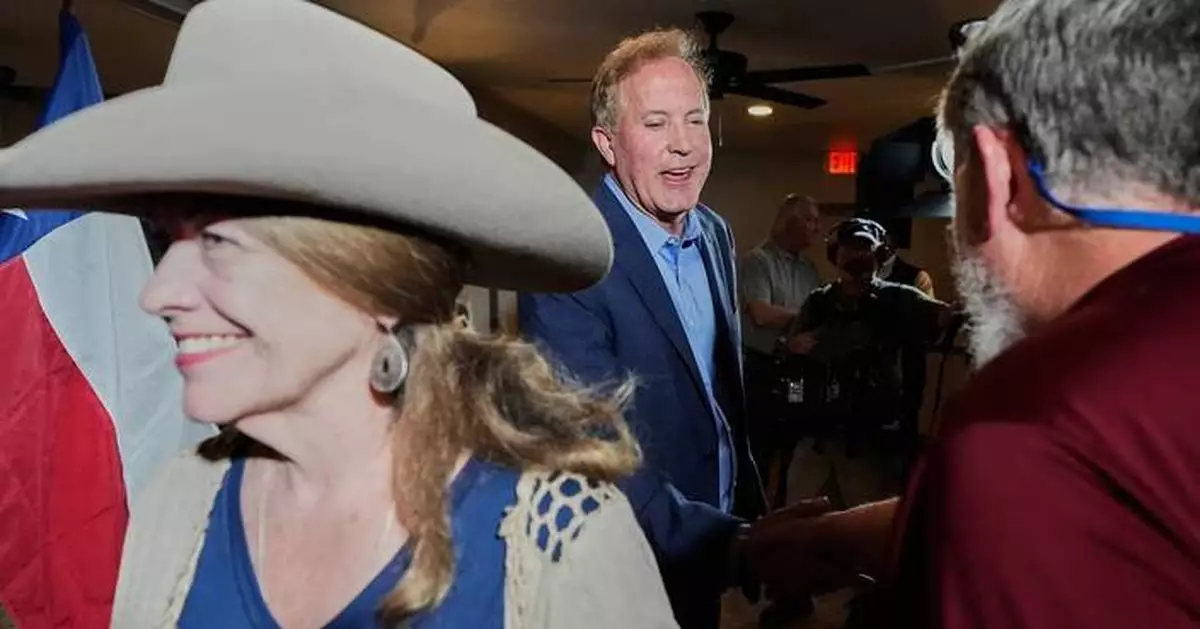
Texas Attorney General Ken Paxton, a Republican candidate for the U.S. Senate, greets supporters during a campaign stop, in Waco, Texas, Monday, March 2, 2026. (AP Photo/Tony Gutierrez)
Democrats, meanwhile, are picking between two rising stars with conflicting styles. There's U.S. Rep. Jasmine Crockett, who made a name for herself through confrontation, and state Rep. James Talarico, a former middle school teacher who is working toward a divinity degree.
Primaries are also taking place in North Carolina and Arkansas. Voting comes just days after President Donald Trump launched a major military campaign against Iran, injecting an urgent foreign policy component in races otherwise focused on domestic issues.
Here's what to watch for on Tuesday.
Democrats have been raising the prospect of a Texas upset for decades. And yet the party hasn't won a Senate race there since Lloyd Bentsen's reelection in 1988.
Both sides believe this could be the year that things change. But much depends on Tuesday's results.
Some Republican leaders in Washington, including key allies of Trump, warn that a victory by Paxton, who has well-documented personal baggage, would undermine their chances in November. If he's the nominee, the party would need to divert tens of millions of dollars from other states to protect the seat.
Paxton could finish first on Tuesday, although he's not expected to earn the 50% needed to avoid a May 26 runoff election against the second-place finisher. For now, Cornyn is most likely to claim that position, while Hunt has made an aggressive case as well.
The runoff could get even uglier for a party that has already spent more than $100 million on the nomination fight, making it the most expensive primary in state history.
Democrats have a tough choice on their side as they decide what kind of fighter it wants to run against Trump's Republican Party.
Privately, Republicans say they're most worried about Talarico. The 36-year-old Democrat blends progressive politics with biblical fluency in a way that is uncommon among many national Democratic figures.
Talarico denounces “politics as a blood sport” and says people want “a return to more timeless values of sincerity and honesty and compassion and respect.”
On the other side is 44-year-old Crocket, a former civil rights attorney who has feuded with Republicans and drawn Trump's scorn. One of her advertisements boasts that she “drives the president crazy.” Another has the tagline “Crockett fights for us.”
Former Vice President Kamala Harris backed Crockett in a recorded call that went out across the state over the weekend.
“Texas has the chance to send a fighter like Jasmine Crockett to the United States Senate,” Harris said.
The primary elections come just three days after the U.S., in coordination with Israel, launched a major attack against Iran. Trump has suggested the military campaign could take at least four weeks. At least six U.S. soldiers have already been killed and the president predicts more deaths.
Foreign policy rarely shapes U.S. elections, although the timing of the conflict could certainly help shift voters' attention in primaries that have largely focused on issues at home. Texas, after all, is home to many military families.
The Republican candidates have overwhelmingly aligned themselves with Trump and his “America First” movement. The president's aggressive interventions overseas could complicate that message and force his allies to answer difficult questions.
So far, Cornyn and Paxton have been quick to line up behind Trump. “Hopefully lives will not be lost needlessly, but this always entails risk,” Cornyn said Saturday.
The president sits at the very center of Tuesday's contests whether he is on the ballot or not.
Trump visited Texas on Friday and dangled a potential endorsement in the Senate race. But on the eve of the primary, he had yet to make a pick.
All of the Republican candidates have worked to convince voters they are aligned with Trump, who remains overwhelmingly popular among the primary electorate. Former Trump campaign chief Chris LaCivita is on the Cornyn payroll as well.
Trump stars in the Democratic primary as well, where Crockett, far more than Talarico, has grown a national brand based on her fierce opposition to Trump.
Depending on Tuesday's results, Texas may play a prominent role in the balance of power in Congress for the last two years of Trump's term. And he certainly doesn't want to be known as the Republican president who presided over Texas' shift blue.
Texas may dominate the chattering class, but North Carolina may be just as important — if not more — for the makeup of the Senate come November.
Even before Republican Sen. Thom Tillis announced his retirement last June, North Carolina presented Democrats with one of few opportunities to flip a Republican-held seat in an otherwise difficult electoral map.
Former two-term Gov. Roy Cooper is the dominant figure in the six-person Democratic field. The most prominent name in the Republican field is Michael Whatley, the former Republican National Committee chair who has Trump’s backing.
A more competitive primary is expected in North Carolina's 4th District, where incumbent Rep. Valerie Foushee, 69, is facing progressive Nida Allam, 32, who has endorsements from Sen. Bernie Sanders, I-Vt., among other progressives.
Allam, a county commissioner and the first Muslim woman ever elected to public office in North Carolina, is campaigning on a message of a “brighter future.”
Cataleya Davis holds a poster promoting primary candidate for U.S. Senate Rep. Jasmine Crockett, D-Texas, during a campaign stop in Dallas, Friday, Feb. 27, 2026. (AP Photo/Tony Gutierrez)
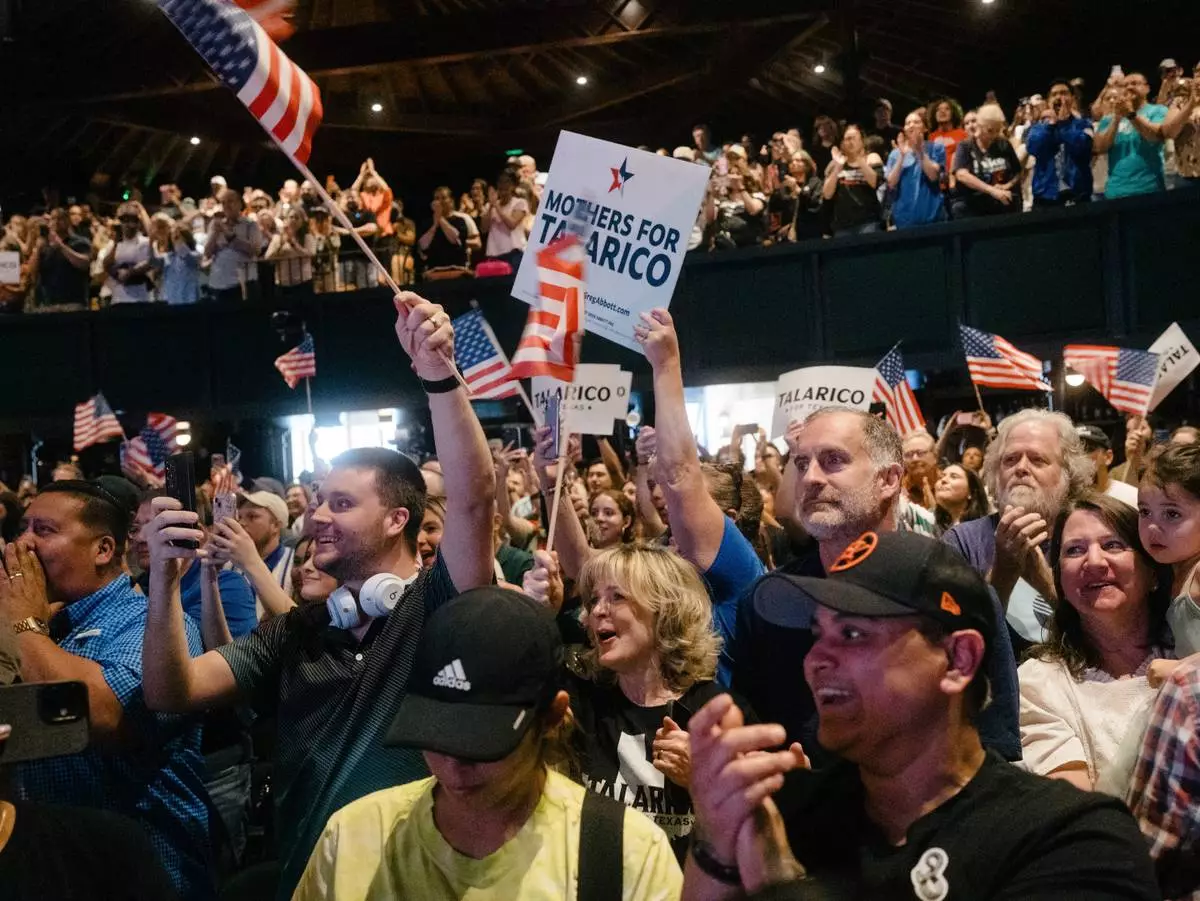
Supporters of James Talarico, a Texas Democratic primary candidate for U.S. Senate, cheer during an event, Sunday, March 1, 2026, in San Antonio, Texas. (AP Photo/Brenda Bazán)

Kalpesh Patel and his 12-year-old daughter Keya pose for a photo with Sen. John Cornyn, R-Texas, during a campaign stop in The Woodlands, Texas, Saturday, Feb. 28, 2026. Keya recently completed a project on Cornyn for her seventh grade Texas history class. (AP Photo/Annie Mulligan)
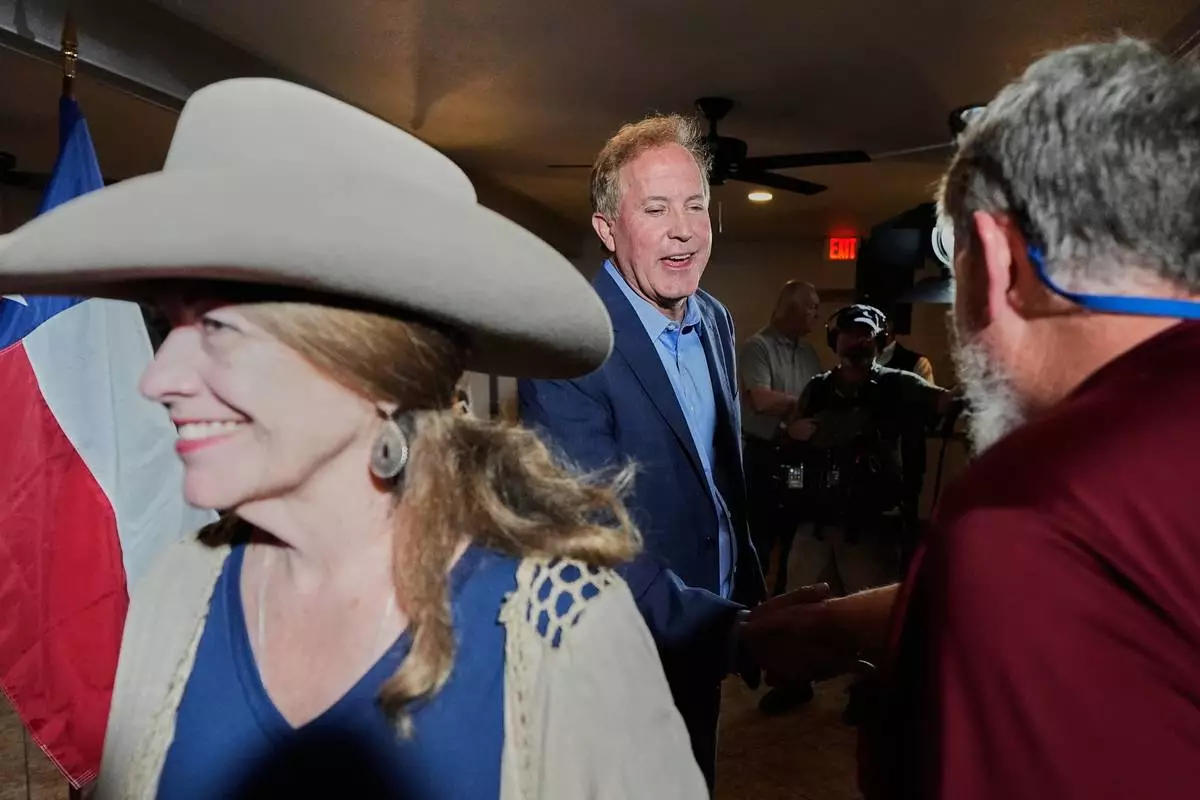
Texas Attorney General Ken Paxton, a Republican candidate for the U.S. Senate, greets supporters during a campaign stop, in Waco, Texas, Monday, March 2, 2026. (AP Photo/Tony Gutierrez)
WASHINGTON (AP) — For Democrats demoralized at being shut out of power in Washington, the past several months have offered reason for optimism.
A party often beset by ideological division has largely been unified in opposition to President Donald Trump's hardline immigration tactics, particularly after two U.S. citizens were killed in Minneapolis. Heading into a midterm election year in which they are just a few seats shy of reclaiming the U.S. House majority, Democrats have also kept the White House on defense with criticism of Trump's economic policies and ties to Jeffrey Epstein, the convicted sex offender.
But the U.S. and Israeli strikes against Iran could test the durability of that cohesion. Initially, Democrats balanced condemnation of Iran's supreme leader, Ayatollah Ali Khamenei, who was killed over the weekend, with calls for Congress to quickly pass a war powers resolution that would restrain Trump's attack options.
“As soon as our resolution comes to the floor, senators need to pick a side,” Senate Democratic leader Chuck Schumer said on Monday. “Stand with Americans who don't want war, or stand with Donald Trump as he singlehandedly starts another war.”
But some divisions are surfacing as a handful of Democrats, especially those who are strongly aligned with Israel, express reservations about the war powers measure. Rep. Greg Landsman, D-Ohio, won't back an Iran resolution. Before the strike, Rep. Josh Gottheimer, D-N.J., also said he would vote no.
Sen. John Fetterman, D-Pa., who backed a war powers vote tied to Venezuela in January, also has broken with Democrats over the Iranian measure and rejected arguments that the attack was illegal, spurring frustration among some party leaders.
“John Fetterman knows better,” House Democratic leader Hakeem Jeffries said Monday on CNN.
Republicans are also facing internal dissent. Trump, who did little to prepare Americans for the prospect of such a dramatic conflict, said Monday the operation could last four to five weeks. He hasn’t articulated a clear exit strategy and warns that American casualties could mount, which will pose a severe test of voter patience for the conflict.
The war could also lead to rising gas prices and economic volatility that may bolster Democratic arguments that the president is out of touch with the financial realities facing many Americans.
Still, Republicans see an opportunity to portray Democrats as reflexively opposed to Trump.
“For my Democratic colleagues, this is not about what's best for our national security or what's best for protecting the American people,” said Sen. John Kennedy, R-La. “This is about how to defeat Donald Trump.”
Democrats have undergone a searing internal debate over the party's relationship with Israel in the wake of the war in Gaza. Then-President Joe Biden's loyalty to Israel during the heat of the 2024 campaign was starkly at odds with younger generations outraged by the treatment of Palestinians in Gaza. By the time Kamala Harris rose to the top of the ticket that year, she struggled to win over some younger voters who are critical to Democratic success.
Paco Fabian, the political director for the progressive advocacy group Our Revolution, acknowledged that Democrats “aren’t monolithic.” But he also suggested a shift was underway, noting the results of a New Jersey special election last month.
During that campaign, the affiliated super PAC of the pro-Israel American Israel Public Affairs committee sought to thwart the moderate candidate, Tom Malinowski, after he questioned unconditional aid to the Israeli government. Those efforts appeared to backfire with the more progressive contender, Analilia Mejia, winning the primary.
“Given what's going on right now, I don't think the moment is doing AIPAC and Israel any favors,” Fabian said.
Sympathy toward Israel appears to be shifting. Three years ago, 54% of Americans sympathized more with the Israelis, compared with 31% for the Palestinians, according to Gallup polling released last month. Now, their support is about evenly balanced, with 41% saying their sympathies lie more with the Palestinians, and only 36% saying the same about the Israelis.
Americans’ initial reactions to airstrikes also appeared more negative than positive, early polling suggested. About 6 in 10 U.S. adults disapproved of the U.S. decision to take military action in Iran, according to a CNN poll conducted via text message over the weekend. A separate snap poll from The Washington Post conducted via text message on Sunday suggested that about half of those polled opposed the strikes, while 39% were in support. Roughly 1 in 10 were unsure.
Democrats and independents drove much of the disapproval in those early polls, while Republicans were much more supportive.
The initial political impact of the attacks in Iran could emerge as soon as Tuesday during the first primary elections of this year’s midterm campaign.
In North Carolina, Durham County Commissioner Nida Allam was already going into her bid to unseat two-term Rep. Valerie Foushee with backing from Our Revolution and other top progressives. After receiving support from groups tied to AIPAC during her 2022 campaign, Foushee’s campaign rejected such contributions this cycle. Over the weekend, she said she doesn’t support “Trump’s illegal war with Iran” and would back the war powers resolution.
Still, Allam, who would be the first Muslim elected to Congress from North Carolina, was quick to release a video ahead of Tuesday’s vote criticizing Trump for “starting another endless war” and promising to never accept support from “the pro-Israel lobby.”
In Texas, home to high-profile Senate primaries on Tuesday, Democratic voters expressed alarm at the attacks.
“It shouldn't have happened,” said Charles Padmore, 45, an independent contractor in Houston. “Affordability should be the top priority on Trump's list.”
Alex Diaz, 31, a biology high school teacher in Houston, called the bombing of Iran “uncalled for.”
“You’re trying to start World War III, and we don’t need that right now,” he said.
The fallout could spread to other contests this month. Ahead of the March 17 primary in Illinois, AIPAC-aligned groups have also criticized Daniel Biss, the Evanston mayor who is aiming to become the Democratic candidate to succeed the retiring Rep. Jan Schakowsky. In an interview, Biss spoke of the “backlash I'm hearing people have against AIPAC, their MAGA-aligned money and their Trump-aligned policy agenda.”
Asked about such predictions, Patrick Dorton, a spokesman for AIPAC’s affiliated super PAC, said “the key distinction will be between those who recognize that Iran is a murderous regime that tortures women for leaving their hair uncovered, hangs gay people, and executes peaceful democratic protestors, and those who will turn a blind eye to the regime’s atrocities.”
As Congress moves toward a potential war powers vote this week, Biss said there was a need for Democrats to act as a “strong, clear, vocal, united opposition party.”
“I also would like to see the Democratic Party united not just on the procedural argument but on the basic acknowledgment that this war is wrong,” he added.
On Capitol Hill, Sen. Richard Blumenthal of Connecticut, a Democrat on the Armed Services Committee, said he was less concerned about party unity than the prospect of achieving a bipartisan vote on the war powers resolution. Three Republicans ultimately backed the Venezuela resolution in January.
“What I want to see happen is the war powers resolution pass,” he said. “I'm not focused on what Democrats as a whole do. We're going to have differing opinions among Democrats and among Republicans.”
Associated Press journalists Linley Sanders in Washington and Juan Lozano in Houston contributed to this report.
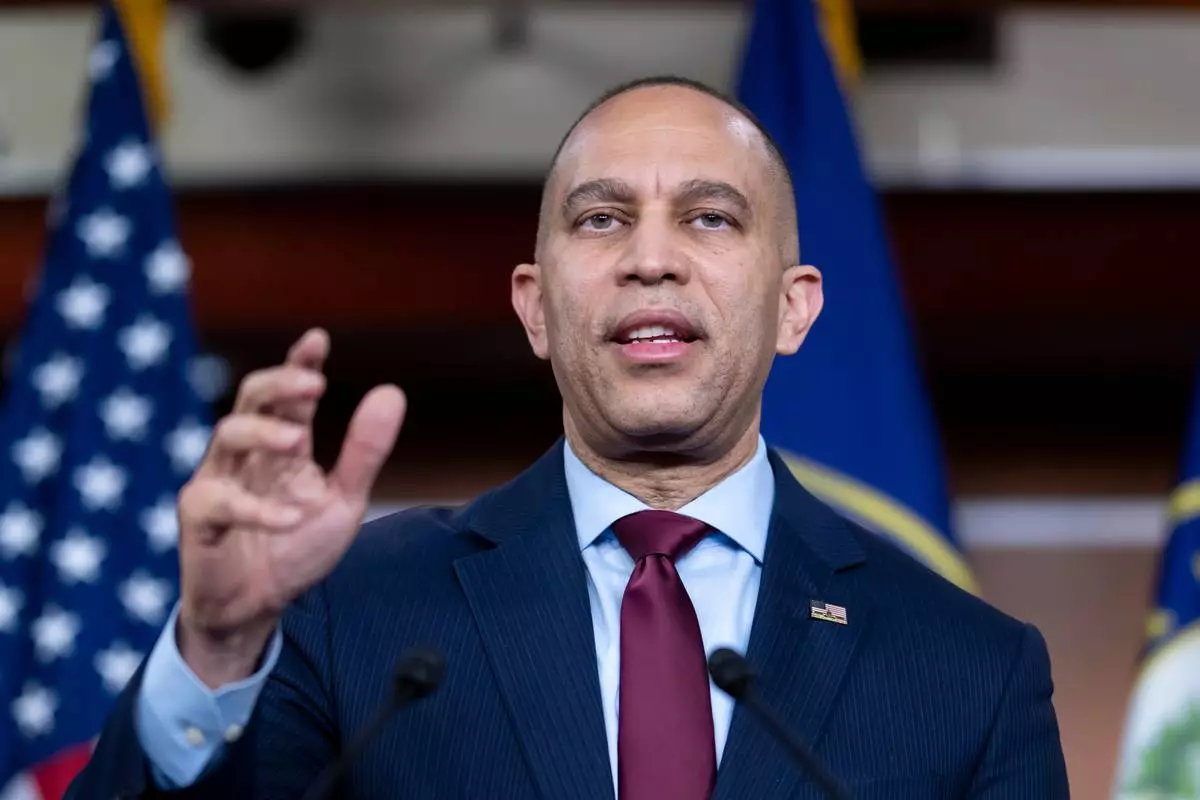
House Minority Leader Hakeem Jeffries, D-N.Y., speaks during a news conference at the Capitol in Washington, Wednesday, Feb. 18, 2026. (AP Photo/J. Scott Applewhite)
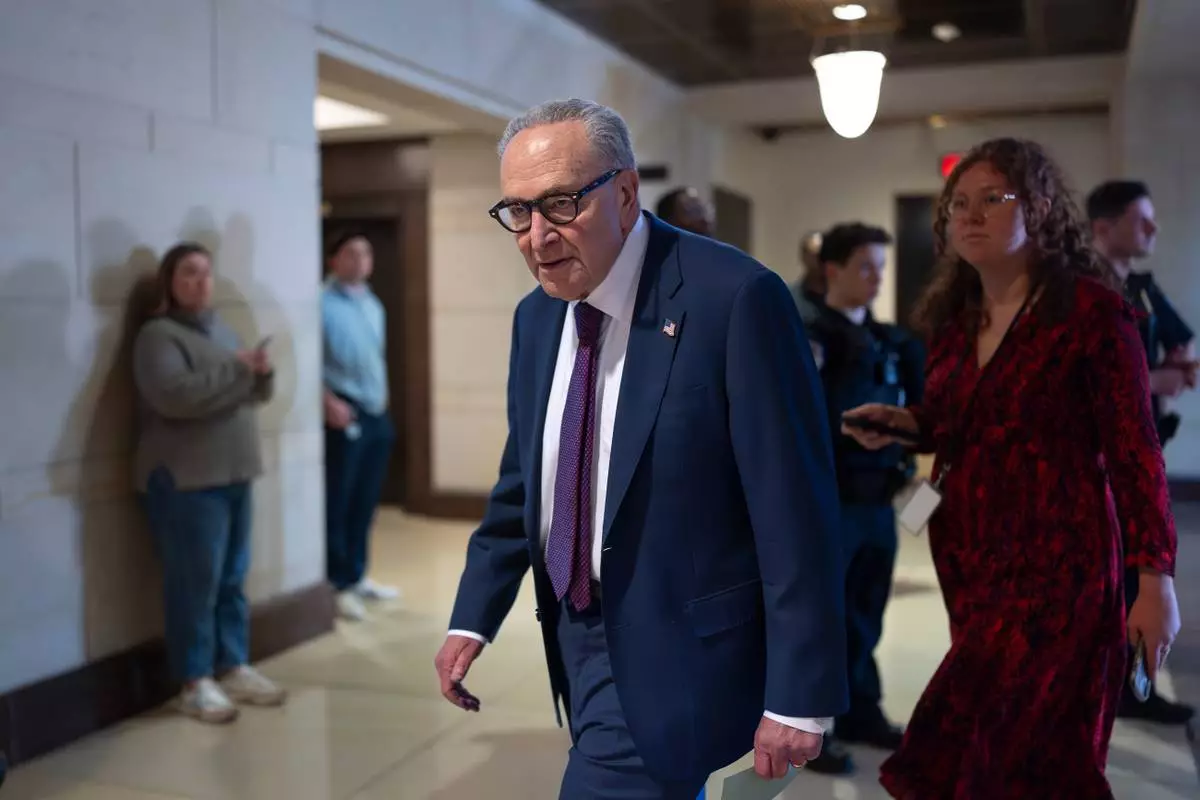
Senate Minority Leader Chuck Schumer, D-N.Y., arrives at a secure facility in the basement of the Capitol for an intelligence briefing with Secretary of State Marco Rubio on the Iran war in Washington, Monday, March 2, 2026. (AP Photo/J. Scott Applewhite)
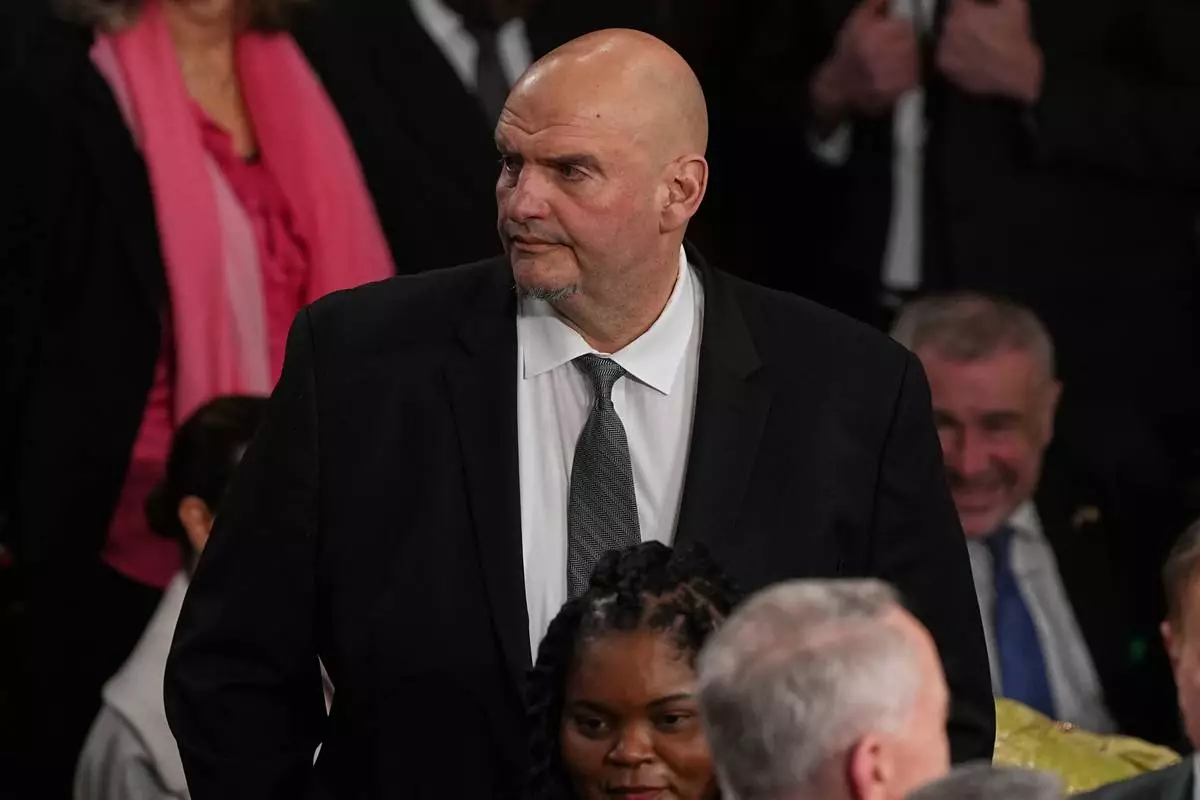
Sen. John Fetterman, D-Pa., arrives before President Donald Trump delivers the State of the Union address to a joint session of Congress in the House chamber at the U.S. Capitol in Washington, Tuesday, Feb. 24, 2026. (AP Photo/Matt Rourke)