WASHINGTON (AP) — The U.S. Congress is about to launch a war powers debate over President Donald Trump's authority to bomb Iran under largely unusual circumstances — he has already done it, and the country is essentially already at war.
Bombs are falling, people are dying and vows of revenge and retribution are being lobbed in escalating threats, all while untold taxpayer dollars are being spent on a military strategy that's expected to continue for weeks with an undefined goal and conclusion. Unlike the run-up to the Iraq War in 2003, which included long debates in Congress in the aftermath of the Sept. 11, 2001, attacks, or the more recent U.S. military strikes on Venezuela that proved to be limited, the joint U.S.-Israel military attack on Iran, called Operation Epic Fury, is well underway, with no foreseeable end in sight.
At least four U.S. military personnel have been killed, and Trump warned on Sunday “there will likely be more.”
The moment is a defining one for Congress, which alone has the authority under the U.S. Constitution to declare war, and for the Republican president, who has consistently seized power during his second term with an apparent limitless view of his own executive reach.
“The Constitution is intended to prevent the accumulation of power in any one branch of government — and in any one person in government,” said David Janovsky, acting director of The Constitution Project at the Project on Government Oversight, a watchdog organization.
“Congress is the people’s representatives in a way that the president isn’t, even though we tend to focus on the president,” he said. "We need the people's representatives to weigh in on whether we, the people, are going to war right now."
In the U.S., the Congress would need to affirmatively approve wartime operations, with a declaration of war, or with an authorization for the use of military force, to essentially approve of the actions. But this rarely happens.
In fact, Congress has declared war just five times in the nation's history, most recently in 1941, to enter World War II a day after the Pearl Harbor attack. Congress approved an AUMF for the 1990 Gulf War and did so again in 2001 and 2002 to launch the 9/11-era wars into Afghanistan and then Iraq.
But Congress also created the war powers resolution during the Vietnam War-era, as something of a tool of last resort — deployed to slap back a president who had embarked on military excursions without congressional approval.
Both the House and the Senate have prepared war powers resolutions for votes this week.
Sen. Mark Warner, the top Democrat on the Senate Intelligence Committee, said Trump, as president, “does not have the right to do this on his own.”
“When the president commits American forces to a war of choice, he needs to come before Congress and the American people and ask for a declaration of war,” Warner said on CNN's “State of the Union.”
While lawmakers have criticized the Iranian regime and its nuclear ambitions, Democrats said Trump has not provided a rationale for the war or outlined its strategy for what comes next, and Trump’s MAGA coalition is splintering over what it sees as the president’s failure to keep his “America First” campaign promise by leading the U.S. toward an overseas war. Many lawmakers are wary of a longer entanglement as the operation killed Iran's Supreme Leader Ayatollah Ali Khamenei and hundreds of people in the region.
White House officials are scheduled to brief congressional leaders and lawmakers this week, but the question-and-answer sessions will be behind closed doors, without a watchful public.
Over time, presidents of both major political parties have accumulated vast authority to engage in what are often more limited U.S. military strikes to accomplish strategic national security goals without approval from Congress. Democrat Barack Obama's military operations over Libya and Republican George H.W. Bush's incursions into Panama were conducted without the nod from Congress.
But restraining a president’s war powers is something lawmakers past and present have rarely been able to accomplish. Even if Congress is able to pass a war powers resolution to curb Trump in Iran, the House and the Senate would be unlikely to tally the two-thirds majority needed to overcome a presidential veto.
Trump has shrugged at the power of Congress to dictate what he can and can’t do, in war and other matters. He made only a brief mention of Iran in his State of the Union address last week, treating lawmakers' support as an afterthought.
John Yoo, a law professor at the University of California, Berkeley, said the Founding Fathers set up a constitutional system in which the president and Congress would battle it out over these issues — but with Congress having one particularly powerful tool, because it controls the federal funding.
“Congress, they know how to stop this if they want to,” said Yoo, who helped draft the Bush administration's 2001 and 2002 use of force authorizations. The Vietnam War ended once Congress pulled funding, he said.
But Congress is controlled by a Republican majority that largely shares Trump's view of focusing military power against Iran, and it recently approved massive new funds for the Pentagon, some $175 billion, in the big tax cuts bill that he signed into law last yar.
With the Republican president's party in power in the House and the Senate, it's no surprise they are unlikely to object, Yoo said: “They agree with him.”
Ahead of debates, Republican Sen. Tom Cotton, the chairman of the Senate Intelligence Committee, said Trump already laid out his vision for Iran.
Cotton said Sunday that Trump has made it clear the U.S. won't be sending ground forces inside Iran. Instead, Americans should expect to see an “extended air and naval campaign” in the region, which could result in pilots being shot down, though he said the military personnel would be recovered.
He expects a weekslong campaign as Iran names a new leader and determines how it will react to the U.S. attack.
“There’s no simple answer for what’s going to come next,” Cotton said on CBS' “Face the Nation.”
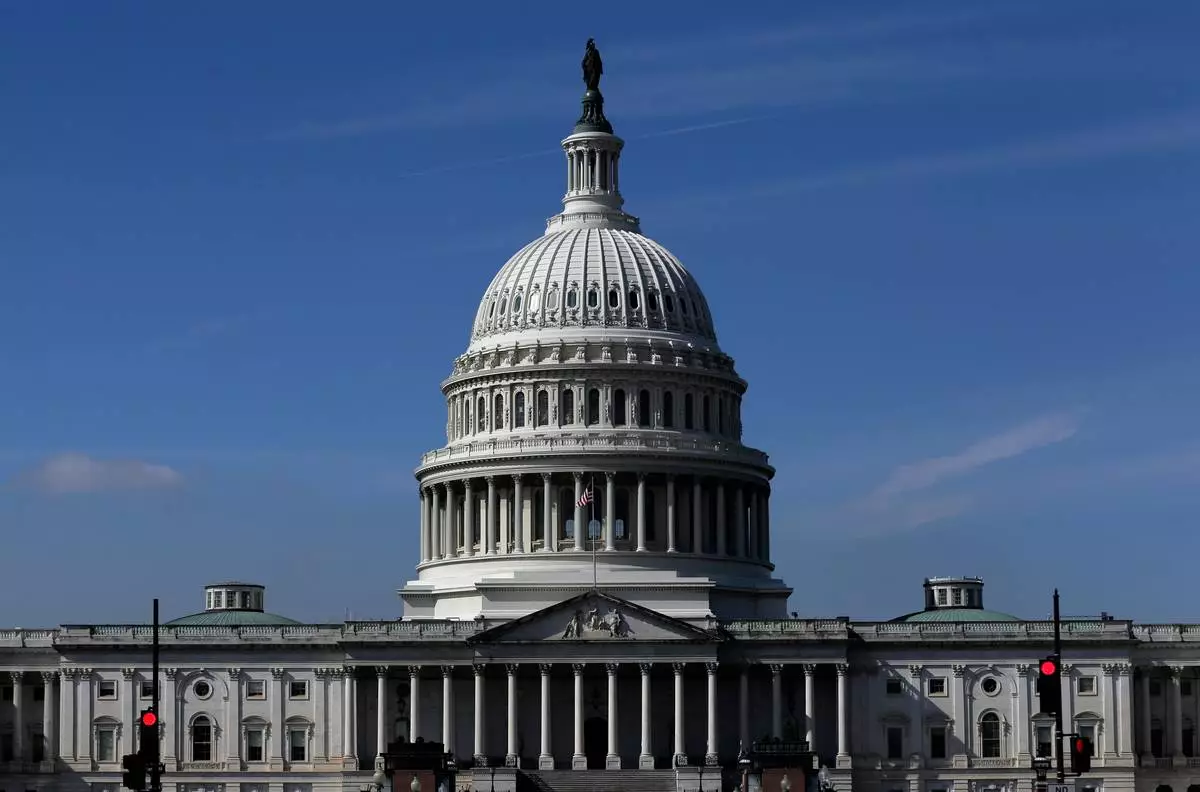
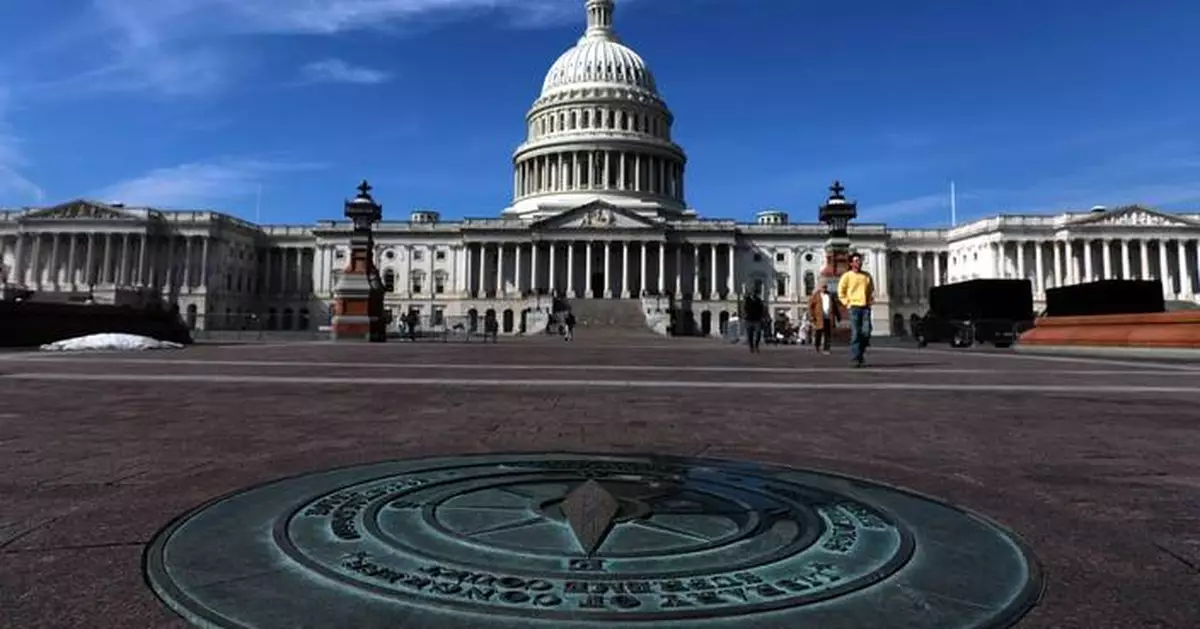
The U.S. Capitol is photographed Friday, Feb. 27, 2026, in Washington. (AP Photo/Rahmat Gul)
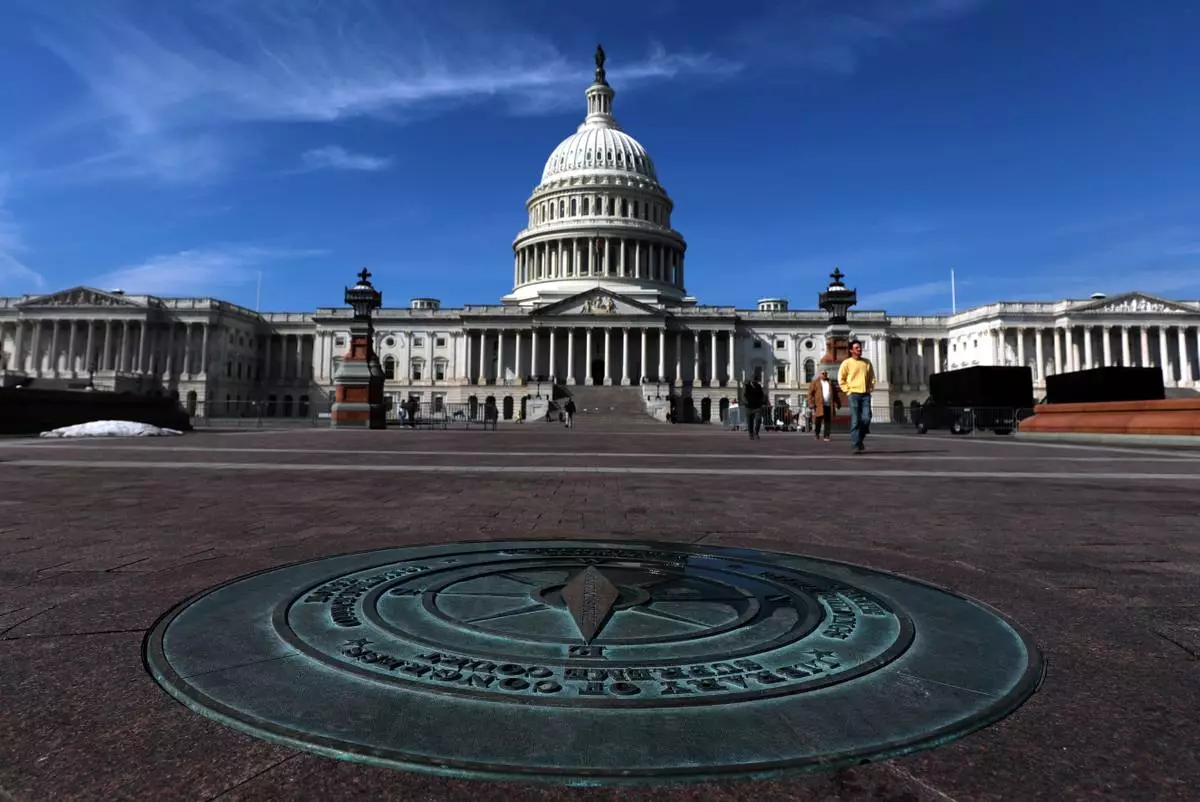
The U.S. Capitol is photographed Friday, Feb. 27, 2026, in Washington. (AP Photo/Rahmat Gul)
DUBAI, United Arab Emirates (AP) — Iran and allied armed groups fired missiles at Israel, Arab states and U.S. military targets around the region on Monday, while Israel and the United States pounded Iran as the war expanded to several fronts. Kuwait mistakenly shot down three American warplanes over its skies.
The intensity of the attacks, the killing of Iranian Supreme Leader Ayatollah Ali Khamenei, and the lack of any apparent exit plan indicated the conflict would not end anytime soon. It was already having far-reaching consequences: Previously safe havens in the Mideast like Dubai have seen incoming fire; hundreds of thousands of airline passengers are stranded around the globe; oil prices shot up; and U.S. allies pledged to help stop Iranian missiles and drones.
Iran has long threatened, if attacked, to drag the region into total war, including targeting Israel, the Gulf Arab states and the flow of crude oil crucial for global energy markets. All of these came under attack on Monday.
The chaos of the conflict became apparent when the U.S. military said Kuwait had “mistakenly shot down” three American F-15E Strike Eagles while attacks from Iranian aircraft, ballistic missiles, and drones were underway. U.S. Central Command said all six pilots ejected safely and are in stable condition.
Israel and the U.S. bombed Iranian missile sites and targeted its navy, claiming to have destroyed its headquarters and multiple warships. As several airstrikes hit Iran’s capital of Tehran, the top security official Ali Larijani vowed on X: “We will not negotiate with the United States.”
The death toll grew on all sides. The Iranian Red Crescent Society said that the U.S.-Israeli operation has killed at least 555 people. In Israel, where several locations were hit by Iranian missiles, 11 people were killed. The Iranian-backed Hezbollah militant group also targeted Israel, which responded with strikes on Lebanon, killing more than two dozen people. Meanwhile, four American troops have been killed, and three people were reported killed in the United Arab Emirates and one each in Kuwait and Bahrain.
In Kuwait City, fire and smoke rose from inside the U.S. Embassy compound, shortly after the U.S. issued a warning to Americans to take cover and stay away from the complex. There were no immediate reports on damage or casualties.
Iran targeted the lifeblood of the area’s economy.
With world markets already rattled by the fighting and oil prices soaring, QatarEnergy said it would stop its production of liquefied natural gas, taking one of the world’s top suppliers off the market. It offered no timeline for restoring its production.
Meanwhile, Saudi Arabia’s Ras Tanura oil refinery came under attack from drones, with defenses downing the incoming aircraft, a military spokesman told the state-run Saudi Press Agency. The refinery has a capacity of over half a million barrels of crude oil a day.
A drone also targeted an oil tanker in the Gulf of Oman, killing one mariner, the sultanate said, while debris fell on an oil refinery in Kuwait.
Several ships have been attacked in the Strait of Hormuz, the narrow mouth of the Persian Gulf through which a fifth of all oil trade passes and where Iran has threatened attacks.
“The attack on Saudi Arabia’s Ras Tanura refinery marks a significant escalation, with Gulf energy infrastructure now squarely in Iran’s sights,” said Torbjorn Soltvedt, an analyst at the risk intelligence company Verisk Maplecroft. “An extended period of uncertainty lies ahead.”
Reza Najafi, Iran’s ambassador to the International Atomic Energy Agency, told reporters that airstrikes targeted the Natanz nuclear enrichment site on Sunday.
“Their justification that Iran wants to develop nuclear weapons is simply a big lie,” he said.
Israel and the U.S. have not acknowledged strikes at the site, which the U.S. bombed in the 12-day war between Iran and Israel in June. Israel has said that it is targeting the “leadership and nuclear infrastructure.”
Iran has said it has not enriched uranium since June, though it has maintained its right to do so while saying its nuclear program is entirely peaceful.
Hezbollah said it fired missiles on Israel early Monday in response to Khamenei’s killing and “repeated Israeli aggressions.” It was the first time in more than a year that the militant group has claimed an attack.
There were no reports of injuries or damage.
Lebanon’s government said Hezbollah’s overnight attacks against Israel were “illegal” and demanded the group hand over its weapons.
Rescue services in Israel said several locations have been hit by Iranian missiles, including Jerusalem and a synagogue in Beit Shemesh. In all, 11 people have been killed.
Israel retaliated with strikes on Lebanon, killing at least 31 people and wounding 149 others, according to Lebanon’s Health Ministry. Associated Press journalists in Beirut were jolted awake by a series of loud explosions that shook buildings and caused windows to shatter.
Iran’s proxies were a chief concern for American and Israeli officials before they moved ahead with strikes over the weekend.
The Iraqi Shiite militia Saraya Awliya al-Dam claimed a drone attack Monday targeting U.S. troops at the airport in the Iraqi capital, Baghdad. It claimed another drone attack on Sunday against a U.S. air base in Iraq’s north.
The U.S. military said B-2 stealth bombers struck Iran’s ballistic missile facilities with 2,000-pound bombs. President Donald Trump said on social media that nine Iranian warships had been sunk and that the Iranian navy’s headquarters had been “largely destroyed.”
“Combat operations continue at this time in full force, and they will continue until all of our objectives are achieved,” Trump said in a video message Sunday.
It’s not completely clear what those objectives are. In announcing the initial strikes, Trump referred to the threat posed by Iran’s nuclear and missile programs. But he also listed various grievances dating back to Iran’s Islamic Revolution in 1979 and urged Iranians to “take over” their government. There have been no signs yet of any such uprising.
The American leader, however, has also signaled he would be open to dialogue with the new leadership in Iran.
In an indication that the conflict could draw in other nations, Britain, France and Germany said Sunday they were ready to work with the U.S. to help stop Iran’s attacks.
Early Monday, Cyprus said a drone “caused limited damage” when it hit a British air base there.
Tehran’s streets have been largely deserted with people sheltering during airstrikes. The paramilitary Basij force, which has played a central role in crushing recent nationwide protests, set up checkpoints across the city, according to witnesses.
In the northern Iranian city of Babol, a student, speaking anonymously over concerns of retribution, told the AP that armed riot police were on the streets Saturday night and into the early hours of Sunday after the death of Khamenei.
“We don’t know whether to be happy about the elimination of the criminals who oppress us or to remain silent in the face of the U.S. and Israel’s war against the country and its interests and the terror that is taking place,” he said.
Lidman reported from Tel Aviv, Israel, and Magdy from Cairo. Associated Press writers Bassem Mroue and Sally Abou AlJoud in Beirut contributed to this report.
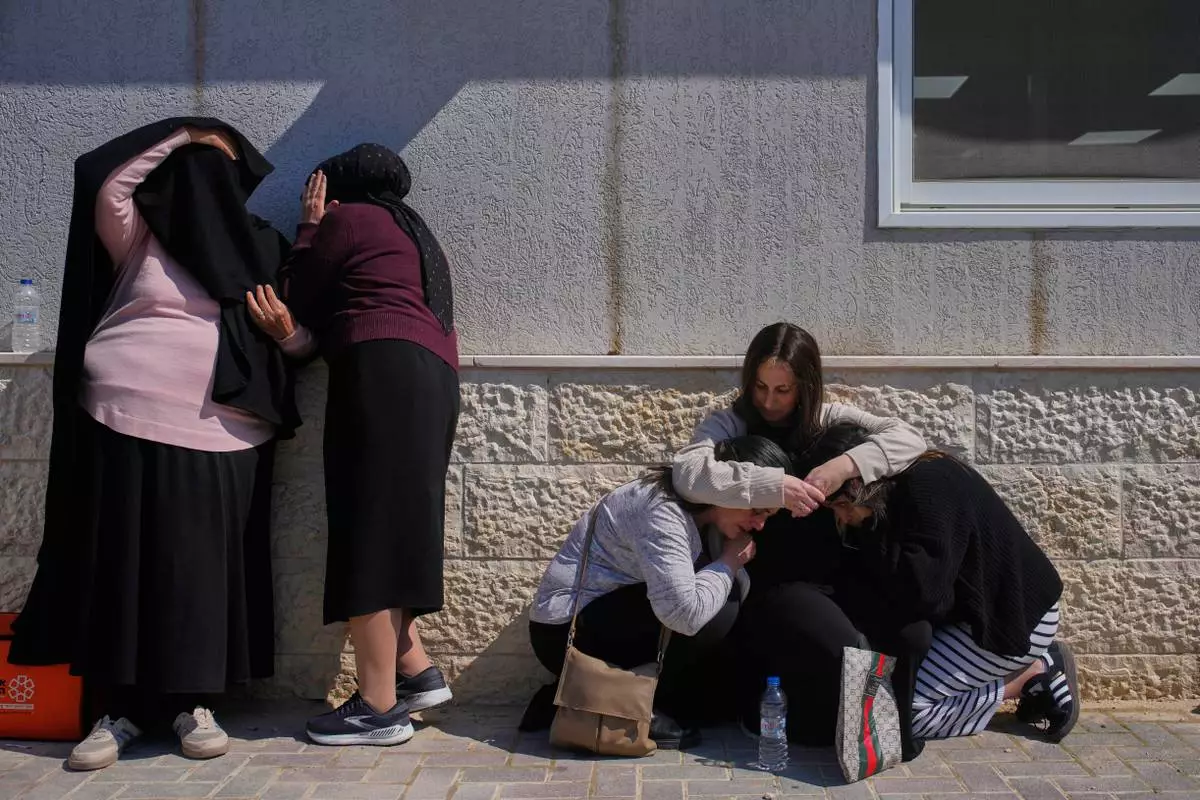
Mourners take cover while air-raid sirens warn of incoming missiles launched by Iran toward Israel during the funeral of Sarah Elimelech and her daughter Ronit who were killed in an Iranian missile attack, in Beit Shemesh, Israel, Monday, March 2, 2026. (AP Photo/Ohad Zwigenberg)
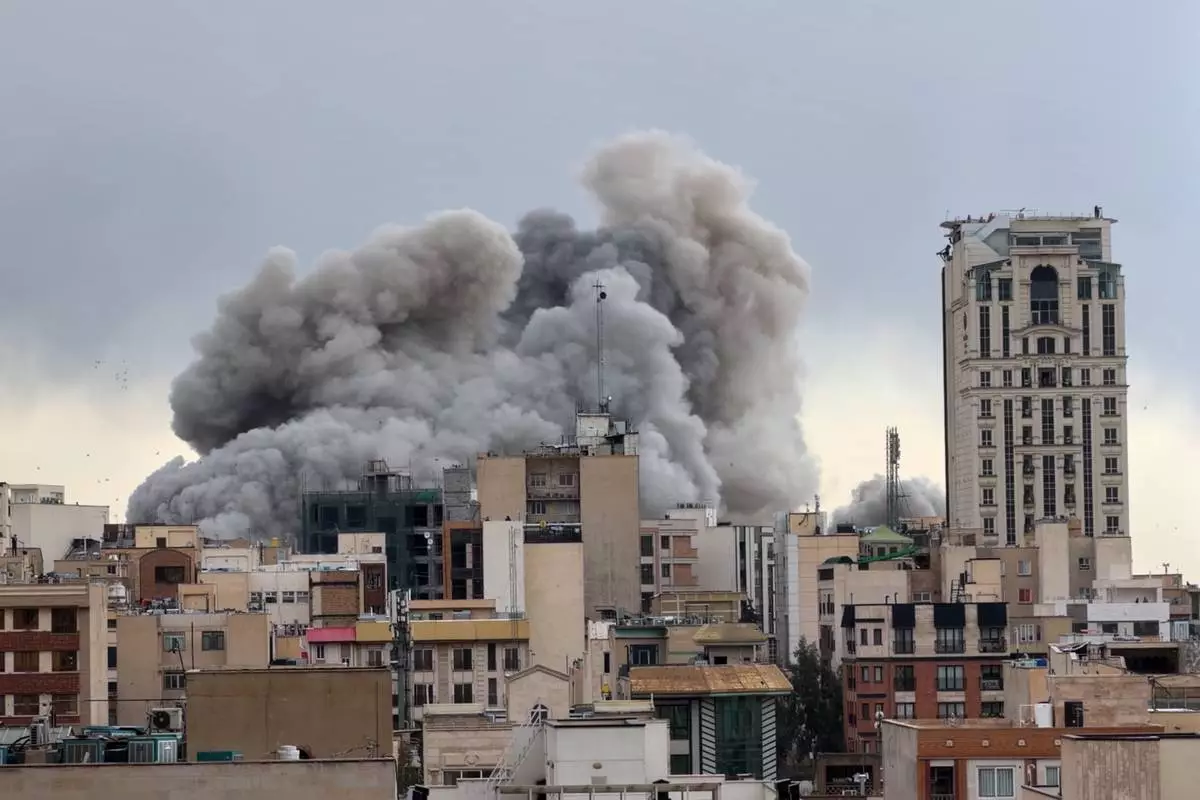
A plume of smoke rises after a strike in Tehran, Iran, Monday, March 2, 2026. (AP Photo/Mohsen Ganji)
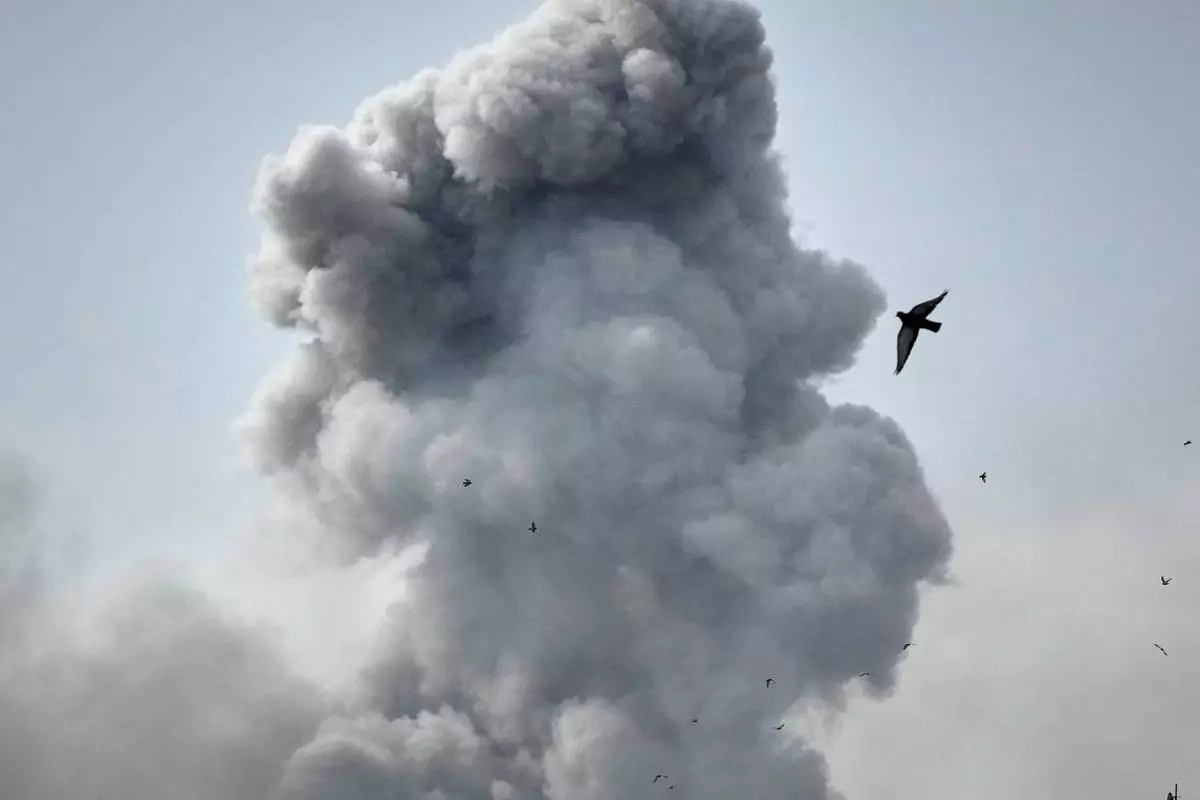
A bird flies by a plume of smoke rising after a strike in Tehran, Iran, Monday, March 2, 2026. (AP Photo/Vahid Salemi)
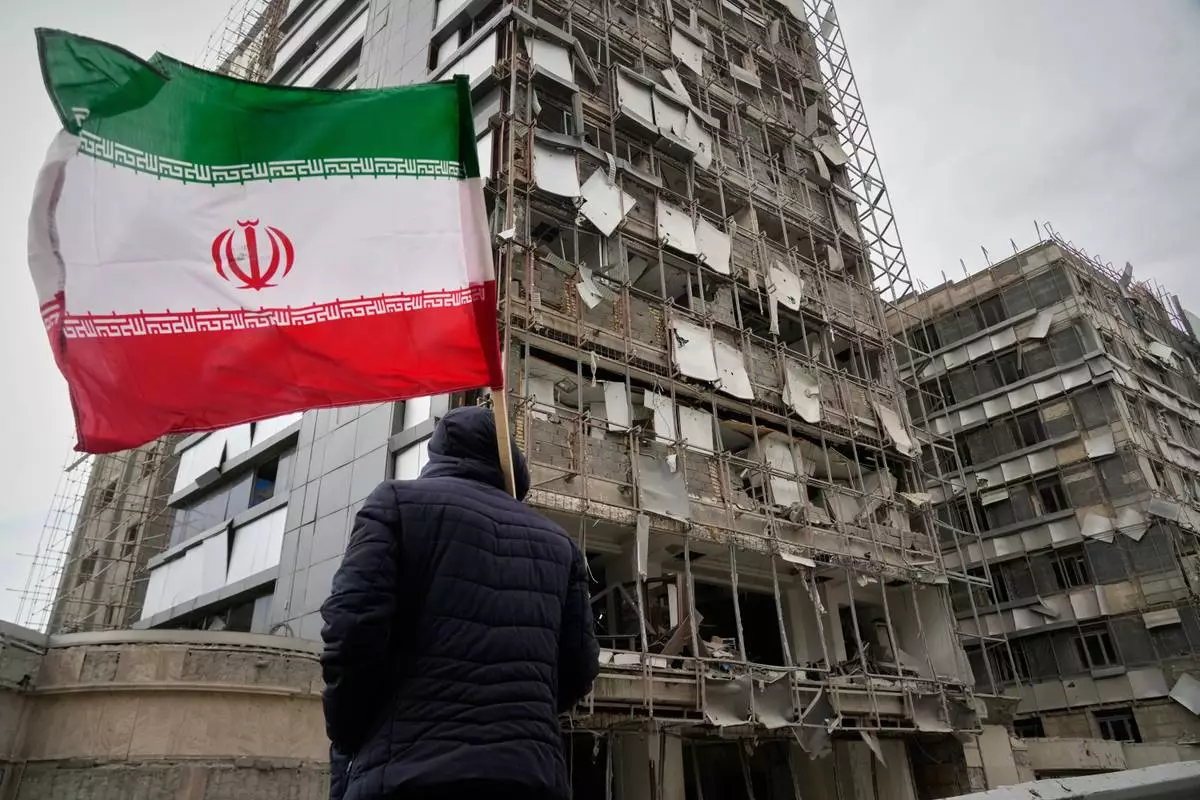
A man holds an Iranian flag as he looks at the damaged façade of Gandhi Hospital, which was hit Sunday when a strike also struck a state TV communications tower and nearby buildings across the street during the ongoing joint U.S.–Israeli military campaign in Tehran, Iran, Tuesday, March 2, 2026. (AP Photo/Vahid Salemi)
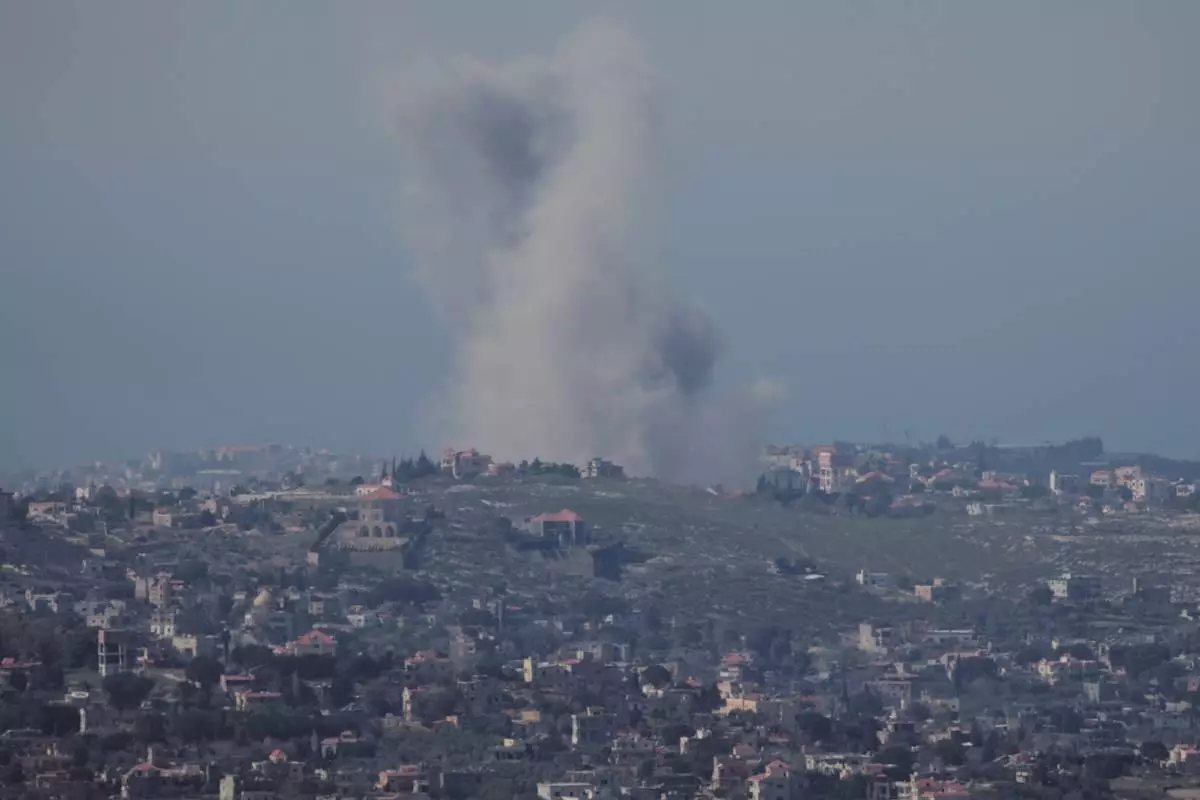
Smoke rises following Israeli bombardment in southern Lebanon as seen from northern Israel Monday, March 2, 2026. (AP Photo/Ariel Schalit)
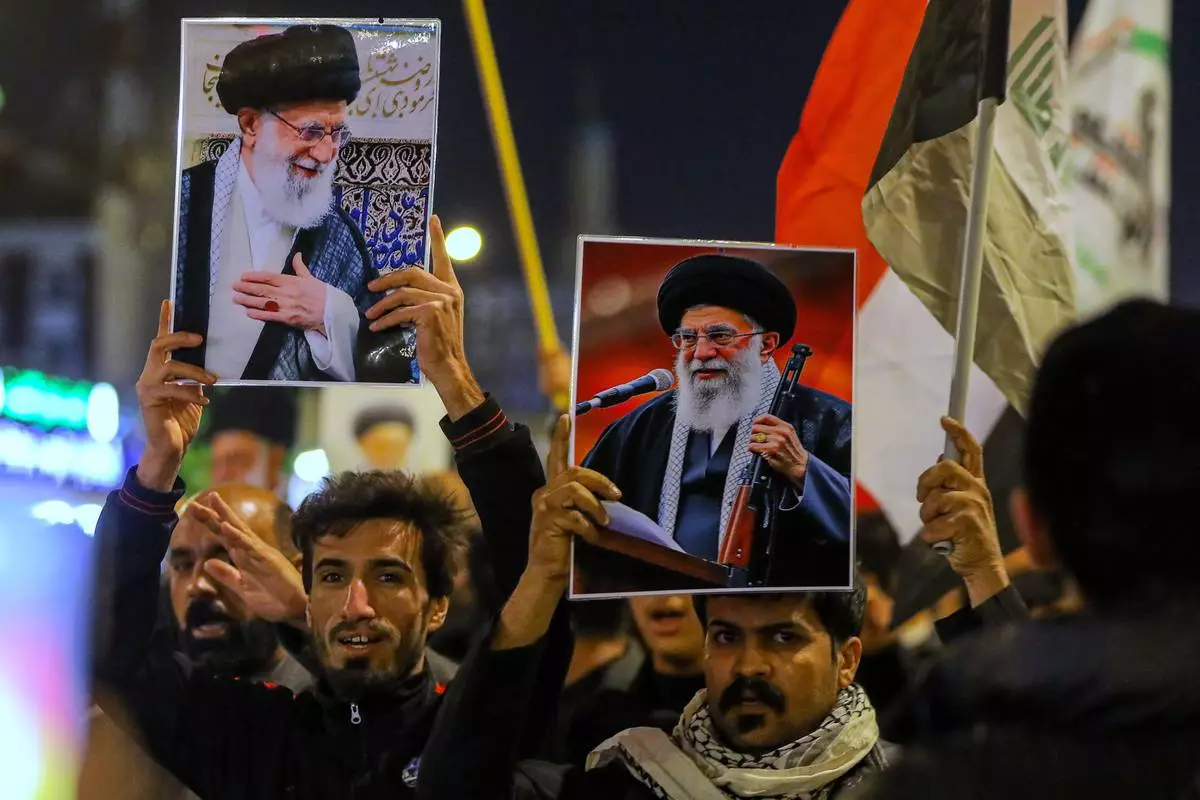
Iraqi Shiites hold pictures of Iranian Supreme Leader Ayatollah Ali Khamenei, who was killed by a U.S. airstrike in Tehran, during a symbolic funeral, in Najaf, Iraq, Sunday, March 1, 2026. (AP Photo/Anmar Khalil)
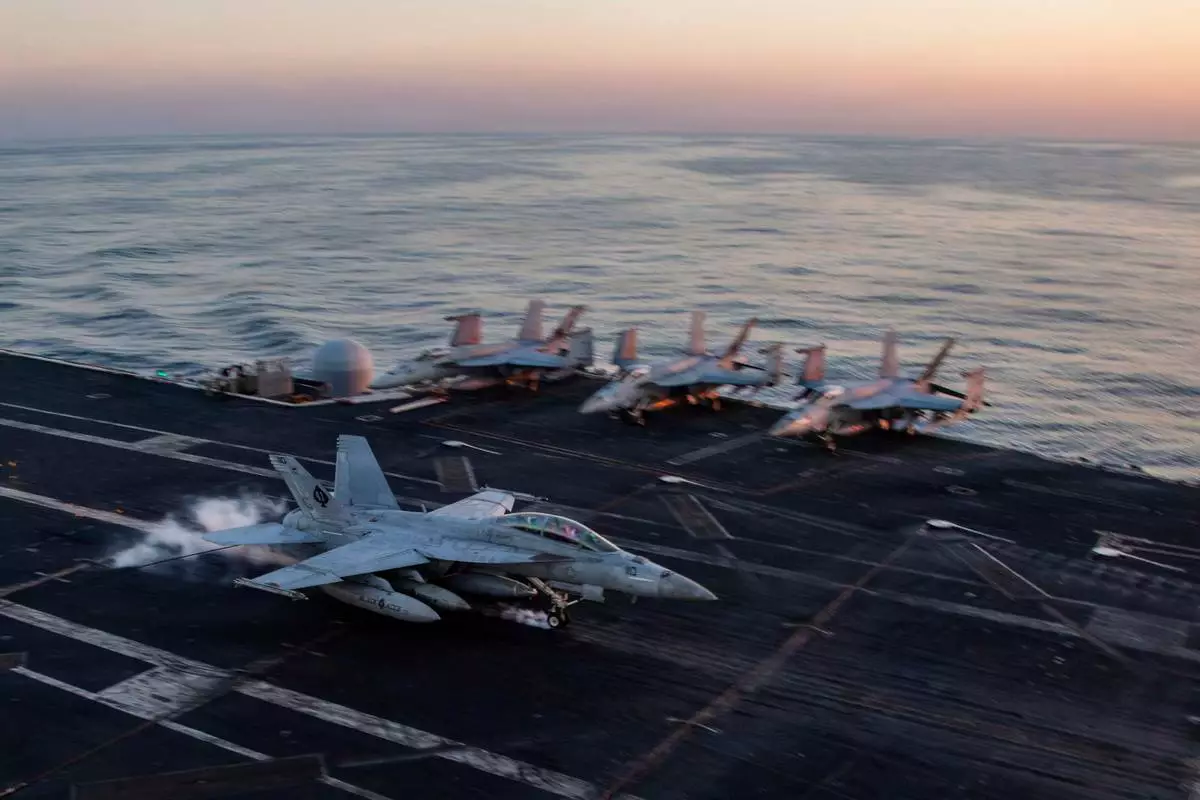
This image provided by U.S. Central Command shows a F/A-18F Super Hornet preparing to make an arrested landing on the USS Abraham Lincoln (CVN 72)) in support of Operation Epic Fury, on Saturday, Feb. 28, 2026. (U.S. Navy via AP)
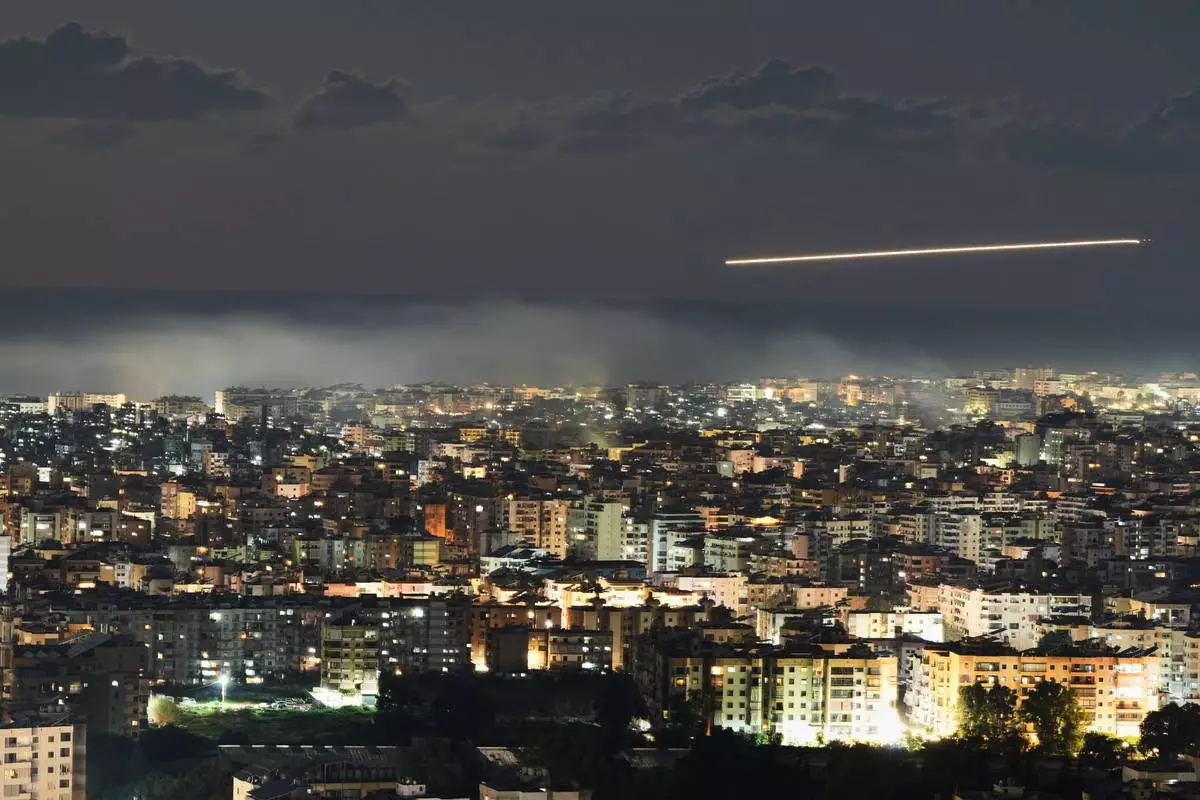
In this photo taken with a slow shutter speed, a Middle East Airlines plane flies over Beirut as smoke rises from Israeli airstrikes on Dahiyeh in Beirut's southern suburbs, early Monday, March 2, 2026. (AP Photo/Hassan Ammar)
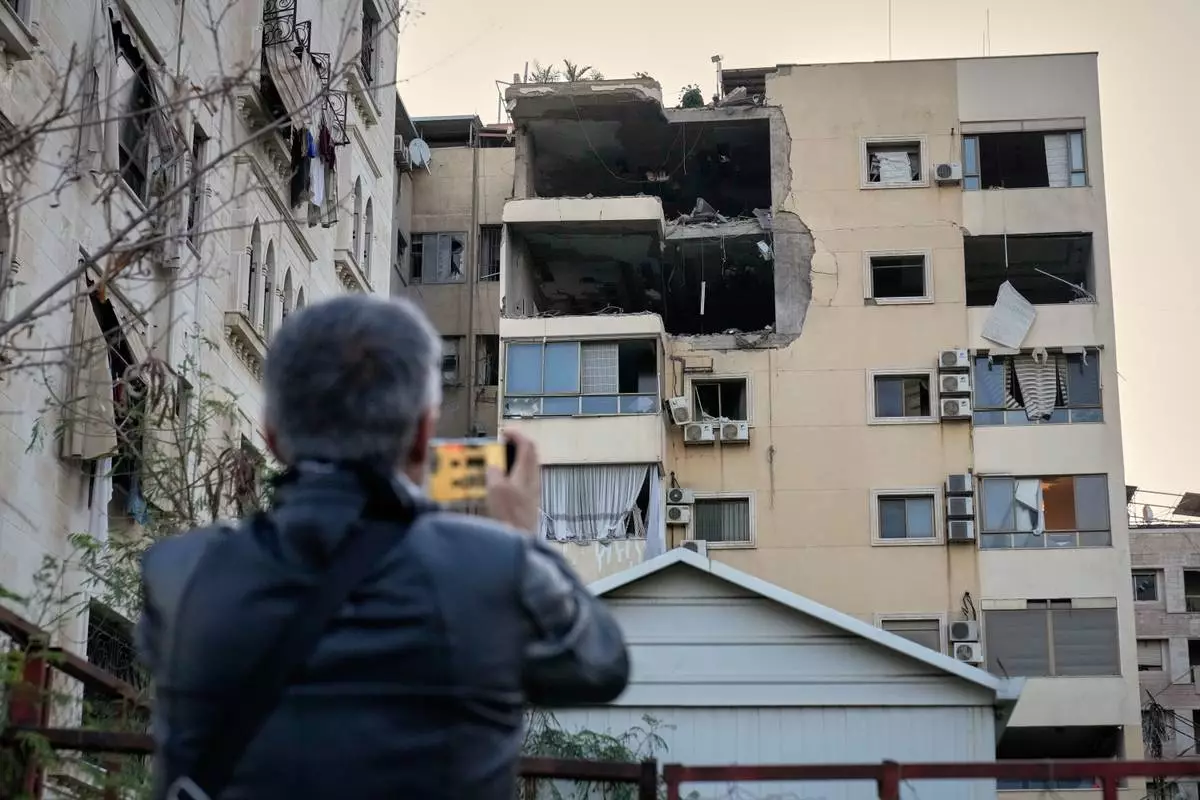
A man takes pictures of the damage in an apartment building after it was hit by an Israeli airstrike in Dahiyeh, Beirut's southern suburb, Lebanon, Monday, March 2, 2026. (AP Photo/Hussein Malla)
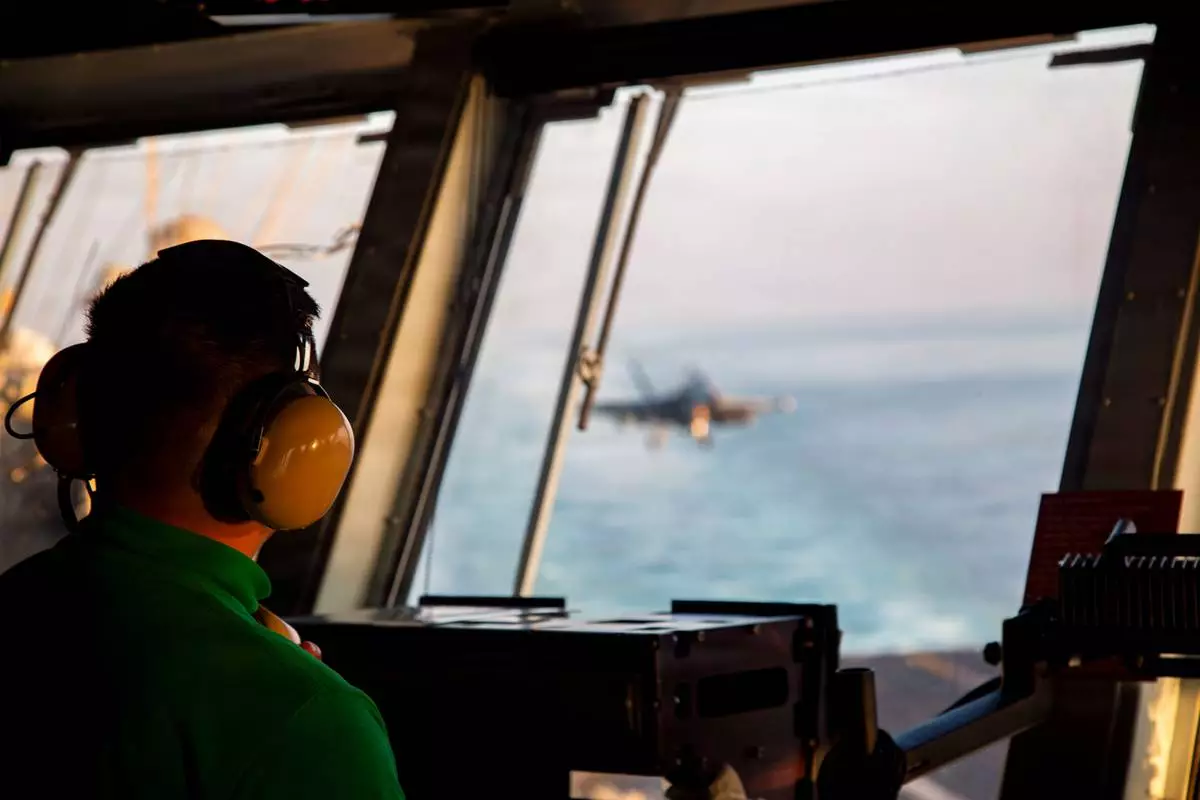
This image provided by U.S. Central Command shows a Navy sailor observing flight operations aboard the USS Abraham Lincoln (CVN 72)) in support of Operation Epic Fury, on Saturday, Feb. 28, 2026. (U.S. Navy via AP)
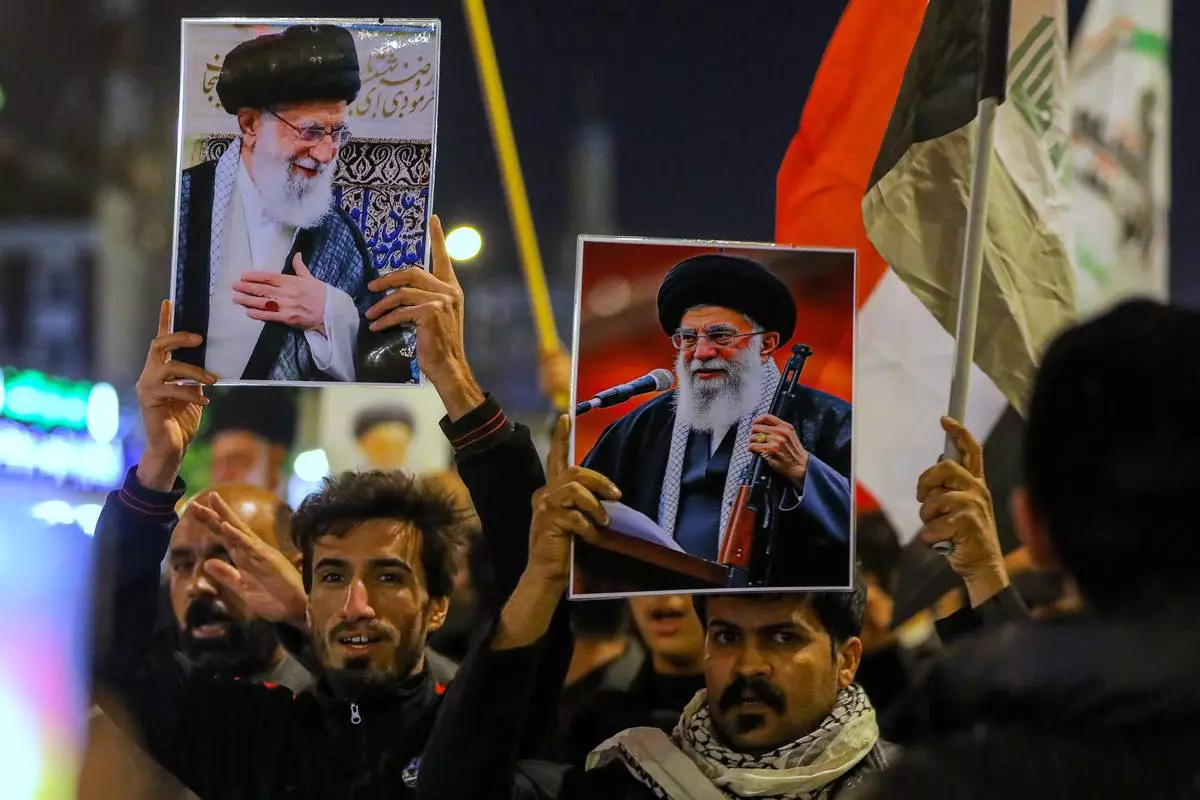
Iraqi Shiites hold pictures of Iranian Supreme Leader Ayatollah Ali Khamenei, who was killed by a U.S. airstrike in Tehran, during a symbolic funeral, in Najaf, Iraq, Sunday, March 1, 2026. (AP Photo/Anmar Khalil)