LONDON (AP) — Several international airlines resumed limited flights from the United Arab Emirates on Monday, offering some relief for travelers caught up in airspace closures and other safety precautions as the U.S. and Israel bombarded Iran, and Iran struck back at targets across the Middle East.
Long-haul carriers Etihad Airways and Emirates, based in Abu Dhabi and Dubai, and budget carrier FlyDubai, said they would operate select flights from the country, where air traffic was suspended Saturday and defense systems have intercepted Iranian missiles and drones.
Dubai’s government told passengers to head to airports only if they were contacted directly during what it said would be a “limited resumption of operations.”
At least 15 Etihad flights took off from Abu Dhabi’s airport Monday to help evacuate passengers who have been stranded there, according to tracking service Flightradar24. The flights headed to a variety of destinations, including Islamabad, Paris, Amsterdam, Mumbai, Cairo and London. But regular commercial flights remained canceled.
Emirates said it would also fly limited flights beginning Monday evening, but it wasn’t immediately clear if those had begun. It previously said it was suspend flights until 3 p.m. local time Tuesday.
“We are accommodating customers with earlier bookings as a priority,” it said.
FlyDubai said it would also operate a limited number of flights on Monday evening, including four flights departing the city and five more arriving flights.
“We continue to work closely with the relevant authorities and stakeholders to ensure an efficient, gradual return to operations,” it said in an emailed statement. “The situation remains dynamic, and we continue to monitor closely and amend our schedule accordingly.”
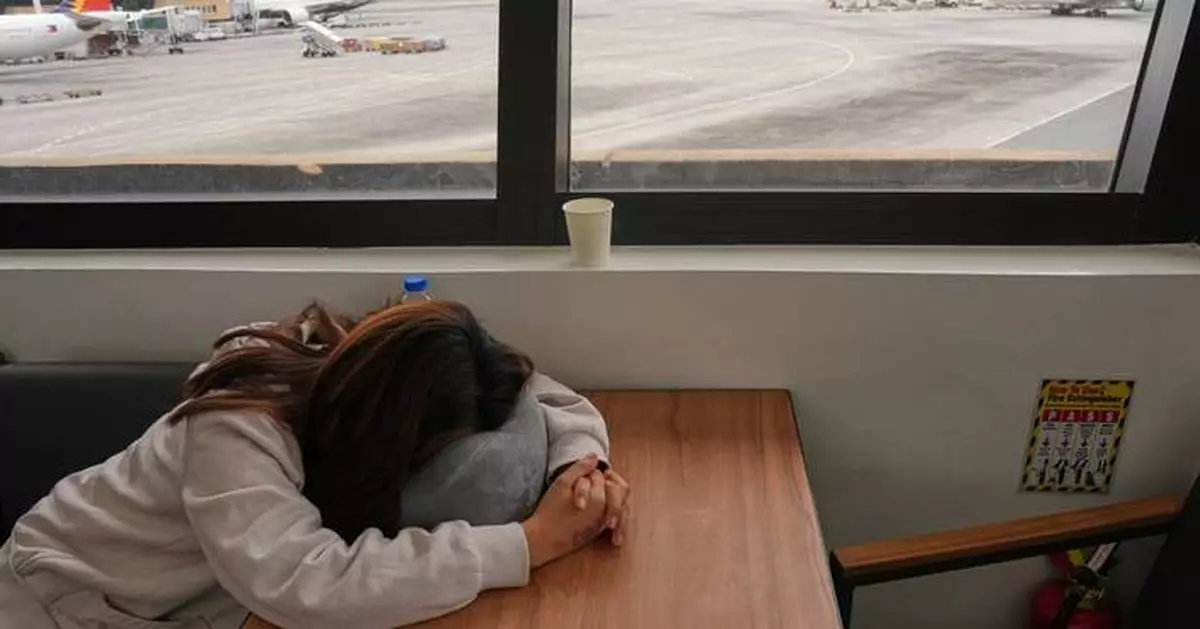
With air travel mostly halted throughout the Middle East, the conflict that started Saturday stranded travelers in multiple countries besides Iran and Israel. Tourists, business travelers and religious pilgrims found themselves stuck unexpectedly in hotels, airports and on cruise ships.
The airports in Dubai, Abu Dhabi and Doha, Qatar, which are important hubs for travel between Europe, Africa and the West to Asia, were all directly hit by Iranian strikes over the weekend. Along with people planning to head to or from the region, travelers who were passing through airports for long-distance flights also found themselves stuck.
Indian technology entrepreneur Varun Krishnan was aboard a Qatar Airways flight on Saturday headed to Barcelona for a conference when it was forced to turn around. Now he’s one of the many travelers stuck in Doha.
The airline put him up in an hotel and was providing meals, but Krishnan said he was reconsidering his plans to attend the Mobile World Congress, a major telecom industry trade fair.
“At this point in time, I don’t think I’m in any mental kind of situation to go work from there,” he said. “I think I’ll probably take the flight back home, given an option. I don’t think going to Barcelona or MWC is on my mind anymore, given what we have gone through in the last two, three days here.”
Doha-based Qatar Airways said its flights remained suspended, with its next update planned for Tuesday morning. Jordan announced a partial closure of its airspace Monday, stretching the travel turmoil in the region.
Governments told stranded citizens to shelter in place while officials scrambled to find ways to get them home.
More than 58,000 Indonesians were stranded in Saudi Arabia, where they were visiting Islam's holy sites of Mecca and Medina on an Umrah pilgrimage during Ramadan.
“It has become an urgent humanitarian and logistical issue,” said Ichsan Marsha, spokesperson for Indonesia’s Ministry of Hajj and Umrah, which was coordinating with Saudi authorities, airlines and Indonesian travel operators to arrange alternative routes or rescheduled flights.
Thousands of travelers also were stranded on Indonesia’s tourist island of Bali because of international flight cancellations.
About 30,000 German tourists are currently stranded on cruise ships, in hotels or at closed airports in the Middle East and cannot get back home because of the conflict.
German Foreign Minister Johann Wadephul said late Sunday a military evacuation wasn't possible because of airspace closures and that the government was looking into other options to help bring citizens home. He said everyone should follow advice from German travel agencies and local authorities.
The German Travel Association called on tourists to “remain at their booked hotels as a matter of urgency” and not “make their own way to the airport or to a neighboring country.”
Other governments made similar recommendations.
The Czech Republic said it was sending two planes to Egypt and Jordan to bring home Czech nationals, Prime Minister Andrej Babiš said. One will pick up 79 Czechs in the Egyptian resort town of Sharm El Sheikh who want to return from Israel. They are traveling from Israel to Egypt by bus. The other plane will evacuate Czechs from Amman, Jordan. Babiš said there are some 6,700 Czechs in the region.
Four more planes were heading to Muscat and Salalah in Oman to fly home Czech tourists.
Britain was preparing for all options, including possible evacuation of Britons in the Middle East, Foreign Secretary Yvette Cooper said.
“We are setting up the support systems,” Cooper told Sky News, when asked if Britain was preparing for an evacuation. “We’re working on every possible option.” More than 102,00 Britons in the region have registered their presence with the U.K. government since the conflict erupted on the weekend.
U.S. airlines issued travel advisories and upended global transportation roiled the travel sector in financial markets early Monday, including the shares of airlines that fly globally. United, Delta and American all slid 5% to 6% and global hotel chains tumbled. Cruise lines like Carnival fell even harder.
The Gulf’s shimmering and globalized cities depend on a steady influx of flights carrying foreigners – both tourists and resident workers – and cargo to keep their economies humming. That's fueled the growth of Gulf airline brands including Emirates, Qatar Airways and Etihad Airways.
Those long-haul airlines and a handful of smaller carriers typically pack the skies over the Gulf and have turned their hubs into some of the busiest international airports in the world.
Dubai International Airport handled a record 95.2 million passengers last year, ensuring its status as the world’s busiest airport when measured by international travel. It’s second only to Hartsfield-Jackson Atlanta International Airport overall.
Schreck reported from Bangkok. AP writers Kirsten Grieshaber in Berlin, Karel Janicek in Prague, Sam Magdy in Cairo, Mustakim Hasnath in London, and Niniek Karmini in Jakarta contributed to this report.
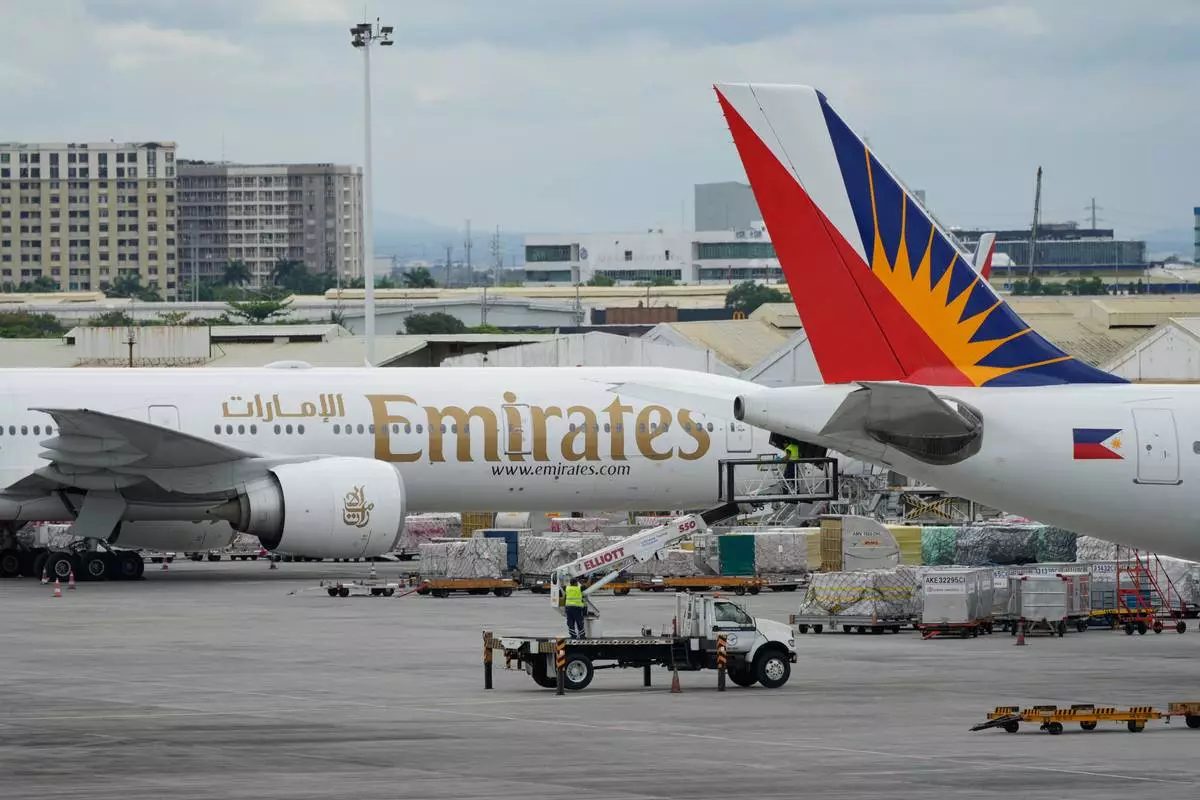
A man works beside a parked Emirates plane at Manila's International Airport, Philippines on Monday, March 2, 2026. (AP Photo/Aaron Favila)
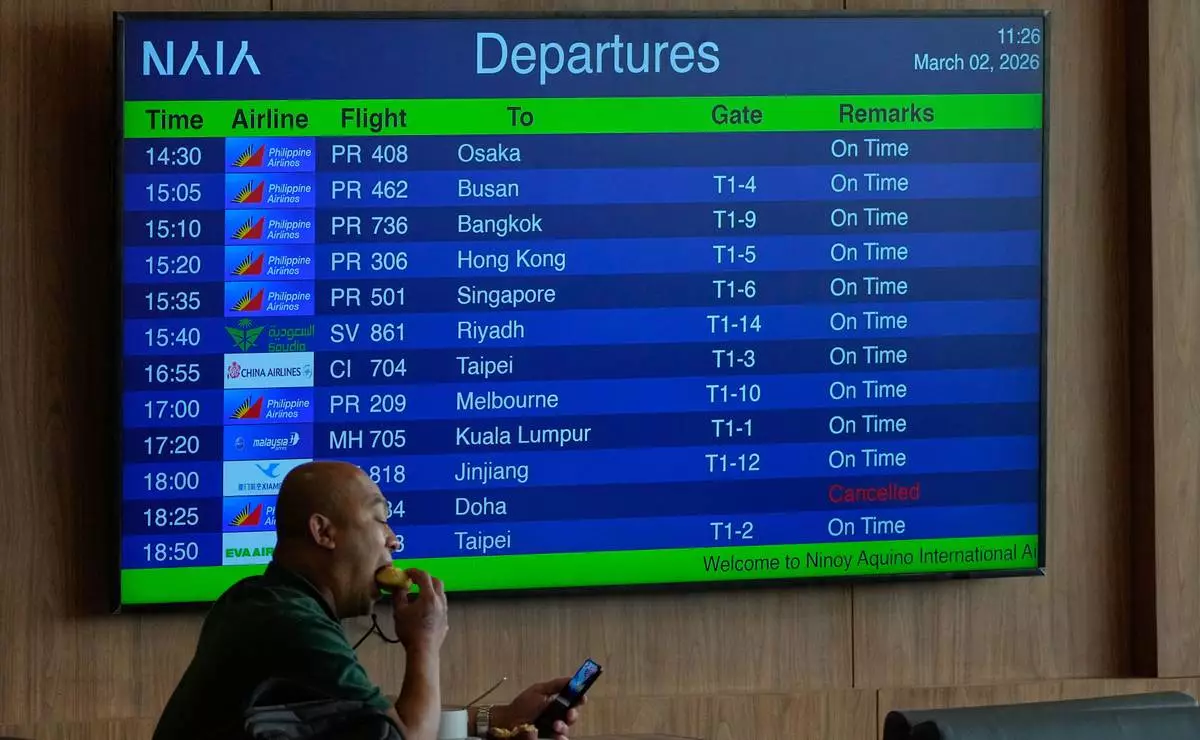
A board shows flight details at the Overseas Filipino Workers lounge at Manila's International Airport, Philippines on Monday, March 2, 2026. (AP Photo/Aaron Favila)
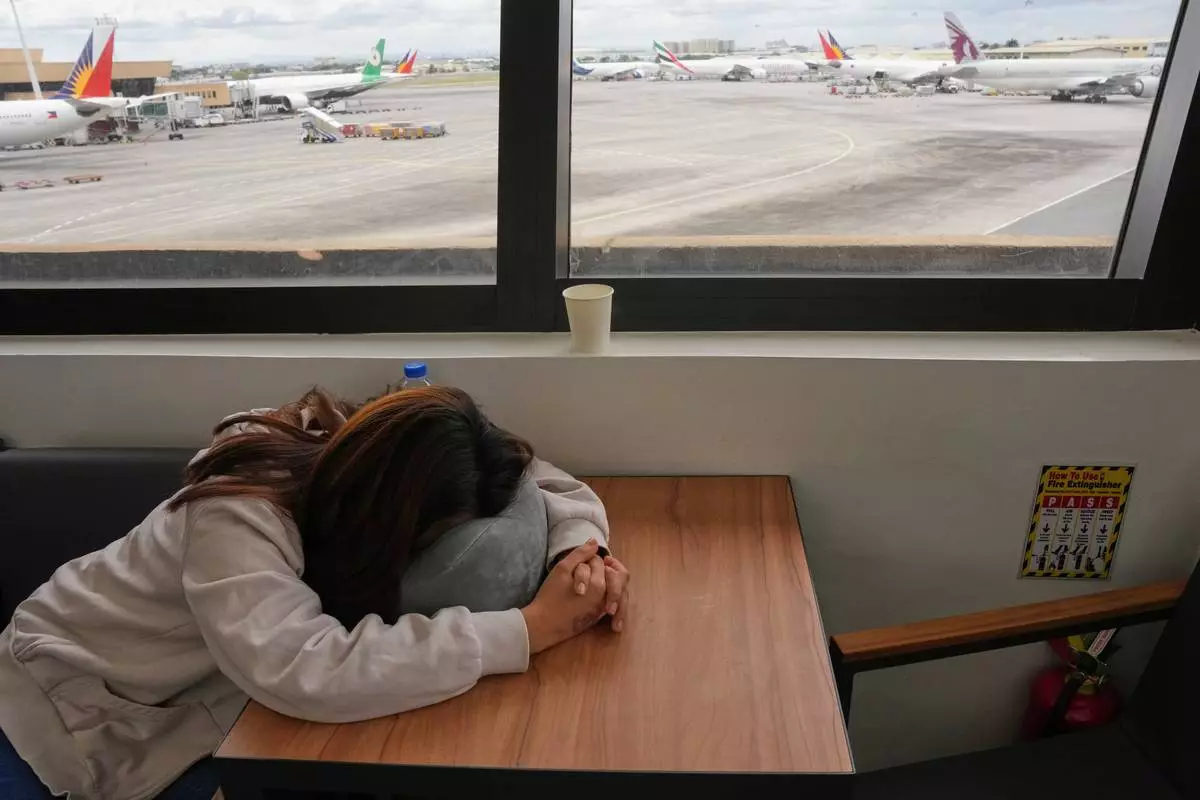
An overseas Filipino worker sleeps as she waits for updates on her cancelled flight to the Middle East at Manila's International Airport, Philippines on Monday, March 2, 2026. (AP Photo/Aaron Favila)
Iran and Iranian-backed militias fired missiles at Israel and Arab states, apparently hitting the U.S. Embassy compound in Kuwait, while Israel and the United States pounded targets in Iran as the war expanded Monday with statements of defiance and increasing casualties.
In the chaos, the U.S. military said that Kuwait “mistakenly shot down” three American F-15E Strike Eagles during a combat mission.
At least 555 people have been killed in Iran so far by the U.S.-Israeli campaign, the Iranian Red Crescent Society said, and more than 130 cities across the country have come under attack. In Israel, 11 people have been killed, with 31 in Lebanon, according to authorities.
Iranian cleric Alireza Arafi, delivering his first public remarks since he was made a member of Iran’s temporary leadership council, said he hoped that a new supreme leader would be “quickly” appointed to replace Ali Khamenei.
Here is the latest:
The Israeli army said it had completed “a broad wave of strikes” on dozens of targets in southern Lebanon, including weapons storage facilities and missile launchers that it said belong to the militant group Hezbollah.
At least 31 people were killed in overnight Israeli strikes in Lebanon after Hezbollah launched rockets into Israel for the first time in more than a year.
U.K. Prime Minister Keir Starmer on Monday defended his decision to allow the U.S. to use British bases to launch defensive strikes against Iran, saying the country had to support its allies in the region and British citizens who were at risk due to indiscriminate attacks by Iran.
Speaking to the House of Commons, Starmer said that the government was focused on looking ‘’at all options to support our people.’’
“We want to ensure that they can return home as swiftly and safely as possible, for their lives are on the line.’’
Starmer also defended his decision not to join U.S and Israeli offensive actions against Iran, saying the U.K. had learned the lessons of the Iraq War and that any military action must be legally justified. Britain can legally take part in defensive action to protects its own citizens and allies, but it will not participate in offensive actions aimed at regime change, he said.
Pakistan’s President Asif Ali Zardari on Monday condemned what he described as a “war being waged on Iran while negotiations were underway” and called for restraint.
In a televised address to lawmakers in parliament, Zardari said he joins “all Pakistanis in condoling the martyrdom of Iran’s Supreme Leader Ayatollah Ali Khamenei.” He also condemned what he called “subsequent attacks launched on our brotherly countries in the Gulf region.”
Demonstrators in Pakistan supportive of the Iranian government attempted to storm a U.S. Consulate on Sunday, authorities said, leading to violent clashes with security forces that killed at least 22 people and injured more than 120 others.
The top commander in Lebanon of the Quds Brigades, the armed wing of the Palestinian Islamic Jihad group, was killed at dawn Monday by an Israeli airstrike on a southern suburb of Beirut.
The group gave no further details about Adham Adnan al-Othman but said he had a long history of fighting Israeli forces.
Like the larger and stronger Hamas, Palestinian Islamic Jihad was formed in the 1980s as a radical Islamist movement to resisting Israel.
The Israeli military’s Home Front Command said all schools across the country will remain closed and the ban on attending workplaces will continue at least until Saturday evening. Gatherings are prohibited and all beaches will remain closed to the public.
The nationwide restrictions were first imposed after Israel and the US launched a war against Iran on Saturday.
Prime Minister Benjamin Netanyahu has visited the site of a deadly Iranian missile attack in central Israel.
Nine people were killed Sunday when a missile slammed into a shelter located in a synagogue in Beit Shemesh.
Netanyahu accused Iran of intentionally targeting civilians and said the country poses a threat to the entire world. He said the world would benefit from the joint Israel-U.S. war against Iran.
“We set out to protect ourselves, but in doing so we protect many others,” Netanyahu said.
U.S. Defense Secretary Pete Hegseth says the U.S. military operation in Iran could be shorter or longer than the four to five weeks that Trump has recently suggested.
“Trump has all the latitude in the world to talk about how long it may or may not take,” Hegseth said at Monday’s news briefing. “Four weeks, two weeks, six weeks. It could move up. It could move back.”
Trump, in an interview Sunday with The New York Times, said the assault could last “four to five weeks.”
The U.S. Embassy in Beirut is urging Americans to depart Lebanon immediately while commercial flights remain available, saying that the security situation in the country “is volatile and unpredictable.”
The statement came as Israel carried a new wave of airstrikes on Lebanon that were clearly heard in the capital Beirut and the southern port city of Tyre.
Israel’s military also said that it killed Hezbollah’s intelligence official Hussein Mokalleh in a strike near Beirut earlier Monday.
The embassy urged U.S. citizens not to travel to Lebanon. It said all consular services are suspended until further notice, and that the U.S. embassy currently has no ability to provide any assistance to U.S. citizens in Lebanon.
President Donald Trump says he is “very disappointed” in Prime Minister Keir Starmer for initially refusing to allow British bases to be used for U.S. strikes on Iran.
Trump told Britain’s Daily Telegraph that “we were very disappointed in Keir.”
In a change of position, Starmer announced Sunday that the U.S. can use bases in England and on Diego Garcia in the Indian Ocean to strike Iran’s ballistic missiles and their launch and storage sites, but not to hit other targets.
Trump said the change in position is “useful” but “took far too much time.”
“It sounds like he was worried about the legality,” Trump said.
Iranian media said Mansoureh Khojasteh, wife of Supreme Leader Ayatollah Ali Khamenei, died on Monday. She had been in a coma since Saturday’s strikes on her husband’s office.
Khojasteh, 78, was the only wife of Ali Khamenei. They married in 1964.
Separately, an Iranian human rights activists’ group cited an education ministry spokesperson as saying that 171 students were killed across Iran in the past 48 hours.
According to the Human Rights Activists News Agency, the ministry spokesperson said the deadliest strike hit the Shajareh Tayebeh girls’ elementary school in Minab, where 168 students died and 95 were injured. Additional casualties included two students in Tehran and a 9‑year‑old child in Abyek, Qazvin, while three others were injured in separate incidents in two districts of Tehran.
Cyberattacks knocked out Iran’s key systems ahead of U.S and Israeli strikes, according to Joint Chiefs of Staff Chairman Air Force Gen. Dan Caine.
U.S. cyber operations were used to “disrupt, disorient and confuse” Iranian forces at the start of the operation, Caine said.
Disruptions to its communications systems reduced Iran’s ability to assess the attack and to coordinate its response, Caine told reporters at a Monday briefing.
European natural gas futures are spiking 42% in the wake of the shutdown of a major supplier of ship-born gas due to the fighting in the Middle East.
The futures contract for April delivery shot up to 45.46 euros ($53.26) on the ICE commodities exchange. The jump came after QatarEnergy said it would stop its production of liquefied natural gas as the Mideast war rages. The state-owned firm blamed the war for the decision.
Air Force Gen. Dan Caine, chairman of the Joint Chiefs of Staff, told reporters that more forces are being deployed.
The deployment already includes thousands of service members from all branches, including Reserve and National Guard forces; hundreds of advanced fighters; dozens of refueling tankers; the Lincoln and Ford Carrier Strike Group and their embarked air wings.
“The Joint Force has launched hundreds of missions over land and sea,” Cooper said.
Caine noted especially the Wisconsin Army National Guard units that are operating in Kuwait and Iraq, and Air National Guard units from a variety of states to include Vermont and Virginia.
U.S. Defense Secretary Pete Hegseth said the military operations in Iran are the “most precise aerial operation in history.”
Decrying Tehran’s “expansionist and Islamist regime,” Hegseth referenced violence in places across Iraq, Afghanistan and Lebanon as proxies in more than four decades he said were part of “a savage, one-sided war against America.”
“Their war on Americans has become our retribution against their ayatollah and his death cult,” Hegseth told a news conference at the Pentagon.
Hegseth said the U.S. is not engaged in a nation building effort in Iran and that ongoing strikes on Iran have a clear mission and won’t be the prelude to a long sustained conflict.
“This is not Iraq. This is not endless,” he said. “This is not a so-called ‘regime change war’ but the regime sure did change and the world is better off for it."
Cyprus said it is displeased that Britain did not make clear its intention to use its military bases in Cyprus in a capacity other than for humanitarian purposes.
Government spokesman Constantinos Letymbiotis said Cypriot authorities had assurances from U.K. officials that the bases would only be used for “strictly in a humanitarian capacity.”
Letymbiotis said protests will be lodged with the U.K. government to express Cyprus’ displeasure. He left open the possibility that the Cypriot government would possibly open negotiations with the U.K. regarding the bases’ status.
Military strikes on Iran rattled global markets on Monday with U.S. futures following markets in Europe and Asia lower. Energy prices rose sharply.
Futures for the S&P 500 and Dow Jones Industrial Average each sank about 1%.
Travel sectors, from airlines and cruise operators to global hotel chains, tumbled. Natural gas futures rose early 6% and futures for fuel used for transportation as well as industrial purposes, spiked more than 14%.
Germany’s DAX dropped 1.9% to 24,817.42, while in Paris the CAC 40 lost 1.7% to 8,435.80. Britain’s FTSE 100 slipped 1% to 10,808.53.
Shares fell in most Asian markets but they rose in Shanghai, where higher oil prices lifted some oil company stocks such as CNOOC, China Petroleum & Chemical and PetroChina to the 10% limit. The Shanghai Composite index climbed 0.5% to 4,182.59, while in Hong Kong, the Hang Seng lost 2.1% to 26,059.85. Japan’s Nikkei 225 index initially fell more than 2%.
Gold, a safe haven for investment in times of uncertainty, rose 3.1% to about $5,408.10 per ounce.
Cyprus says two drones moving in the direction of a British air base on the island have been intercepted.
Cyprus government spokesman Constantinos Letymbiotis posted on X that the two drones were heading toward RAF Aktotiri Air Base.
Sirens sounded at around 1000 GMT at the key base, minutes before two Typhoon fighter jets and a pair of F-35s took off, ostensibly to intercept the drones. The sirens stopped an hour later with the aircraft landing shortly after.
Cyprus President Nikos Christodoulides said earlier that a Shaheed-type drone had cause minor damage when it struck inside the base just after midnight.
A U.S. soldier has died during the war with Iran, the U.S. Central Command announced on Monday, bringing the official tota l to four.
The soldier was wounded during the initial stage of Operation Epic Fury and died on Monday, it said.
A total of four U.S. soldiers have been killed since Israel and the U.S. launched strikes against Iran on Saturday.
U.S. President Donald Trump said in a video posted to his Truth Social platform on Sunday that “sadly, there will likely be more before it ends. That’s the way it is. Likely be more, but we’ll do everything possible where that won’t be the case.”
Countries across the world are scrambling to bring citizens home who are stranded in the Middle East.
Qatar Airways and Etihad Airways said flights remain suspended, with its next update planned for Tuesday morning, while Jordan announced a partial closure of its airspace.
About 30,000 German tourists are currently stranded on cruise ships, in hotels or at closed airports. Air France canceled flights to and from Tel Aviv, Beirut, Dubai and Riyadh, while carriers from Air India to KLM suspended flights and issued advisories.
The Czech Republic is sending two planes to Egypt and Jordan to bring home Czech nationals, Prime Minister Andrej Babiš said. Four more planes are heading to Muscat and Salalah in Oman to fly home Czech tourists.
In Asia, thousands of travelers were stranded on Indonesia’s tourist island of Bali because international flights were canceled. Bali’s international airport said at least 15 flights, including eight departures and seven arrivals, on routes to Dubai, Doha and Abu Dhabi were canceled as of Monday afternoon.
Russian President Vladimir Putin spoke Monday to the United Arab Emirates president, Sheikh Mohamed bin Zayed Al Nahyan to discuss “the unprecedented tragic events in the Middle East in the context of the American-Israeli aggression against Iran and Tehran’s harsh retaliatory actions,” the Kremlin said.
Putin noted that Russia had sought to help facilitate a settlement of the situation regarding the Iranian nuclear program, but those efforts were “thwarted by an unprovoked act of armed aggression against a sovereign U.N. member state, in violation of the fundamental principles of international law.”
Al Nahyan described the Iranian strikes on the Emirates as completely unjustified, noting that the country’s territory wasn’t used for launching attacks on Iran. Putin expressed his readiness to convey these signals to Tehran and to provide all possible assistance to stabilize the overall situation in the region, the Kremlin said.
Britain is not at war, the government said Monday, despite saying it would allow the U.S. to use British bases during its war with Iran and after a Royal Air Force base in Cyprus was struck by an Iranian-made drone.
Sirens sounded again at RAF Akrotiri on Monday and British warplanes were scrambled, apparently in response to a new threat.
“The U.K. is not at war,” Middle East Minister Hamish Falconer said Monday. He told the BBC Iran has ballistic missiles “pointed at the Gulf and it is vital that those missile launchers are taken out in the face of these completely reckless attacks.”
Greece is sending two frigates and two fighter jets to Cyprus after attacks against a British base on the island.
Defense Minister Nikos Dendias said one of the frigates was equipped with an anti-drone system recently tested in a European Union-led deployment in the Red Sea to protect international shipping.
”(Greece) will contribute in every possible way to the defense of the Republic of Cyprus, in order to confront the threats and unlawful actions taking place on its territory,” Dendias said.
IAEA chief Rafael Grossi expressed hope that a diplomatic process will resume with regard to Iran’s nuclear program, highlighting the “indispensable role” that the U.N. nuclear watchdog could play in such a scenario.
“My hope...is that we will be back at the negotiating table sooner rather than later. It is obvious that after this military conflict ends — and we all hope that this will be very, very soon — we will still need to have a long, durable solution, which will provide a sense of predictability and a sense of certainty for Iran and neighboring countries,” Grossi told reporters after the special session of the IAEA Board of Governors in Vienna.
The IAEA chief underlined that “there is a recognition” that “there will have to be a dialogue at some point.”
QatarEnergy, one of world’s top natural gas producers, said it is halting production of liquefied natural gas, taking one of the world’s top suppliers off the market.
“Due to military attacks on QatarEnergy’s operating facilities in Ras Laffan Industrial City and Mesaieed Industrial City in the state of Qatar, QatarEnergy has ceased production of liquefied natural gas and associated products,” it said. “QatarEnergy values its relationships with all of its stakeholders and will continue to communicate the latest available information.”
It offered no timeline for restoring its production.
Lebanon’s President Joseph Aoun said Hezbollah's rocket attack on Israel were “illegal” acts, adding that such activities give Israel a pretext to destroy the country.
The government held a five-hour Cabinet meeting to discuss the Hezbollah action that triggered massive Israeli retaliation and the displacement of tens of thousands of people.
Information Minister Paul Morcos cited Aoun as saying that what happened overnight “was not to defend Lebanon or protect the Lebanese people. What are witnessing is building collapsing on their residents as they sleep.”
Israel’s rescue services said at least 15 people were injured by Iranian missiles in the southern city of Beer Sheba.
Searches are ongoing for additional victims. Several missile barrages targeted Israel from Iran on Monday.
Long-haul carrier Etihad Airways said in an update that all flights to and from its base in the Emirati capital, Abu Dhabi, will be now suspended until 2 p.m. local time on Tuesday.
Etihad, like fellow Gulf airlines Emirates and Qatar Airways, mainly serves long-haul travelers whose plans have been disrupted by the closure of regional airspace.
The price of oil jumped as tanker disruptions near the Strait of Hormuz raise fears about supply shortages from the Persian Gulf.
U.S. oil rose to about $71.97 a barrel on Monday and Brent climbed to about $78.46. Higher prices increase the risk of costlier gasoline and pricier goods.
The U.K. maritime center also reported attacks on vessels and warned of heavy electronic interference. Oman said a drone boat hit an oil tanker and killed one mariner. Saudi media said drones hit near Ras Tanura and Saudi Arabia shut the refinery as a precaution.
Traffic through the strategic Strait of Homruz has sharply dropped following U.S.-Israel weekend strikes in Iran. MarineTraffic.com said that transit through the chokepoint has fallen by 70% since Saturday.
It said that it has noticed changes in vessels’ navigation in the past three days including “U-turns, idling, reduced speeds, and last-minute diversions.”
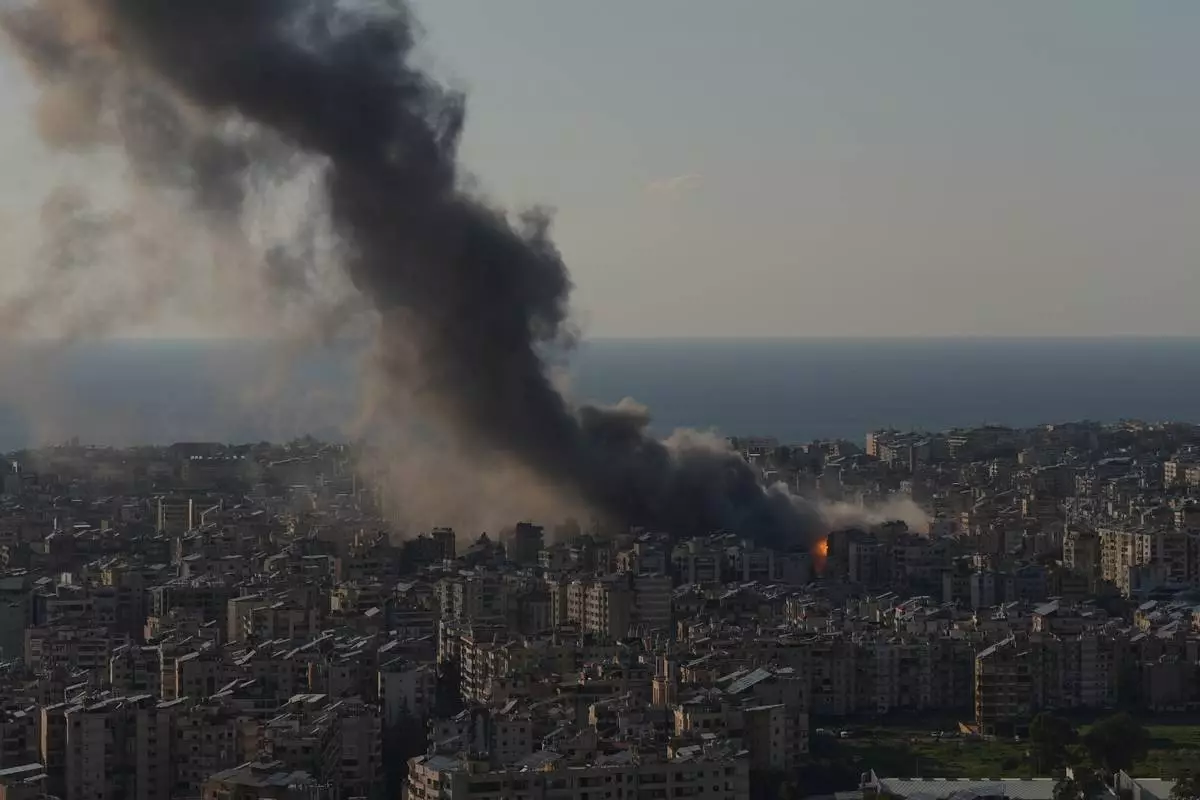
Flames and smoke rise from Israeli airstrikes on Dahiyeh, a southern suburb of Beirut, Lebanon, Monday, March 2, 2026. (AP Photo/Hassan Ammar)
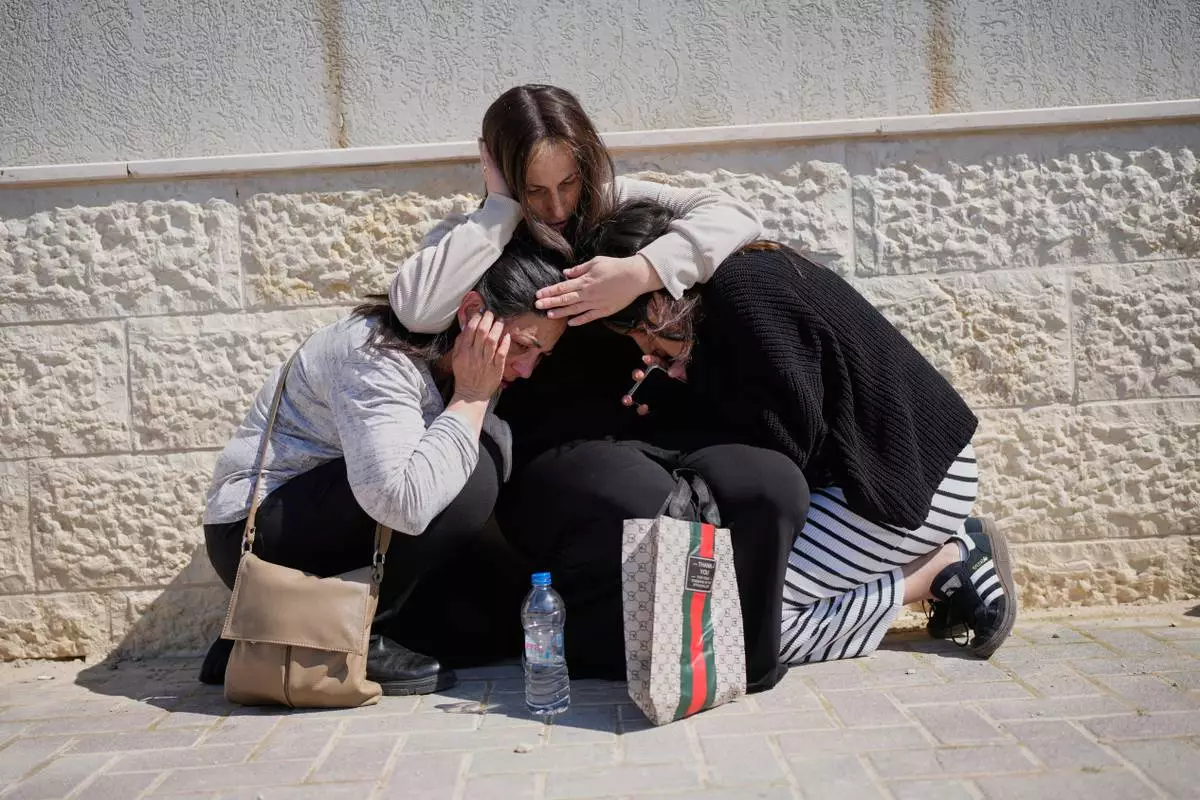
Mourners take cover while air-raid sirens warn of incoming missiles launched by Iran toward Israel during the funeral of Sarah Elimelech and her daughter Ronit who were killed in an Iranian missile attack, in Beit Shemesh, Israel, Monday, March 2, 2026. (AP Photo/Ohad Zwigenberg)
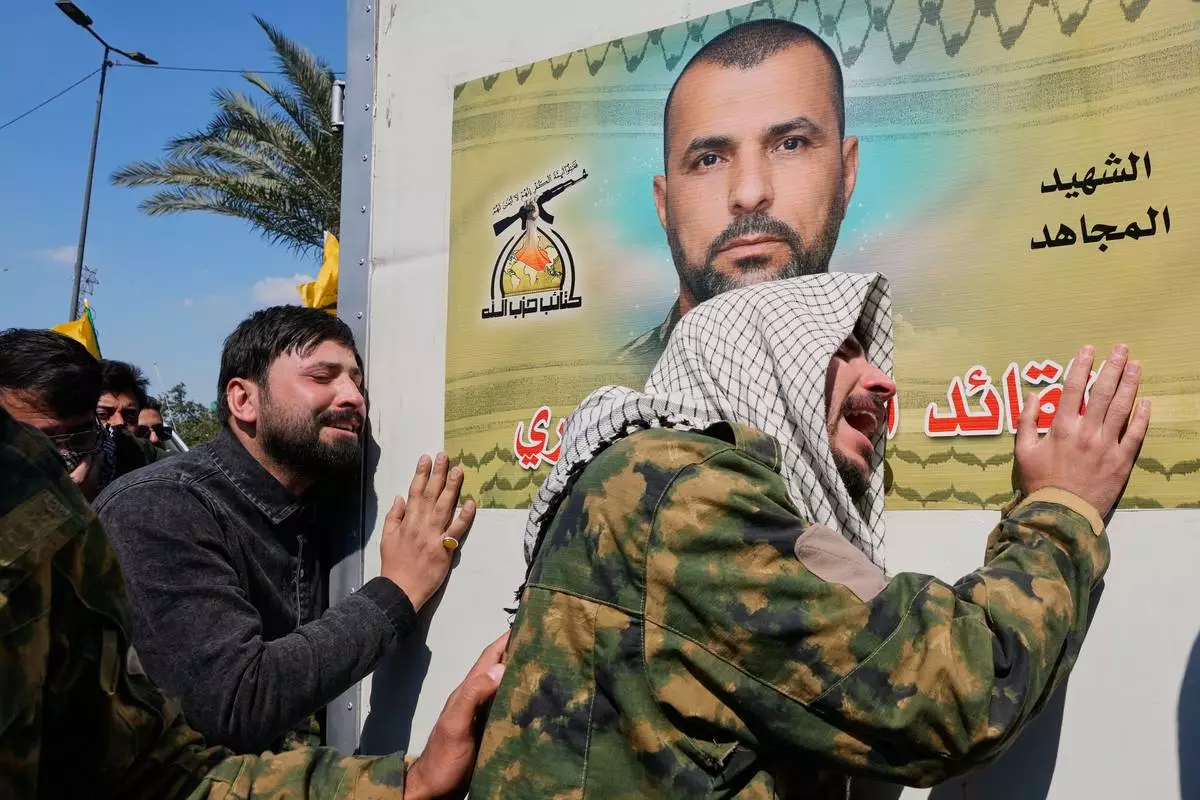
Relatives grieve during a funeral of a fighter with the Kataib Hezbollah, who was killed in a U.S. airstrike, in Baghdad, Iraq, Monday, March 2, 2026. (AP Photo/Hadi Mizban)
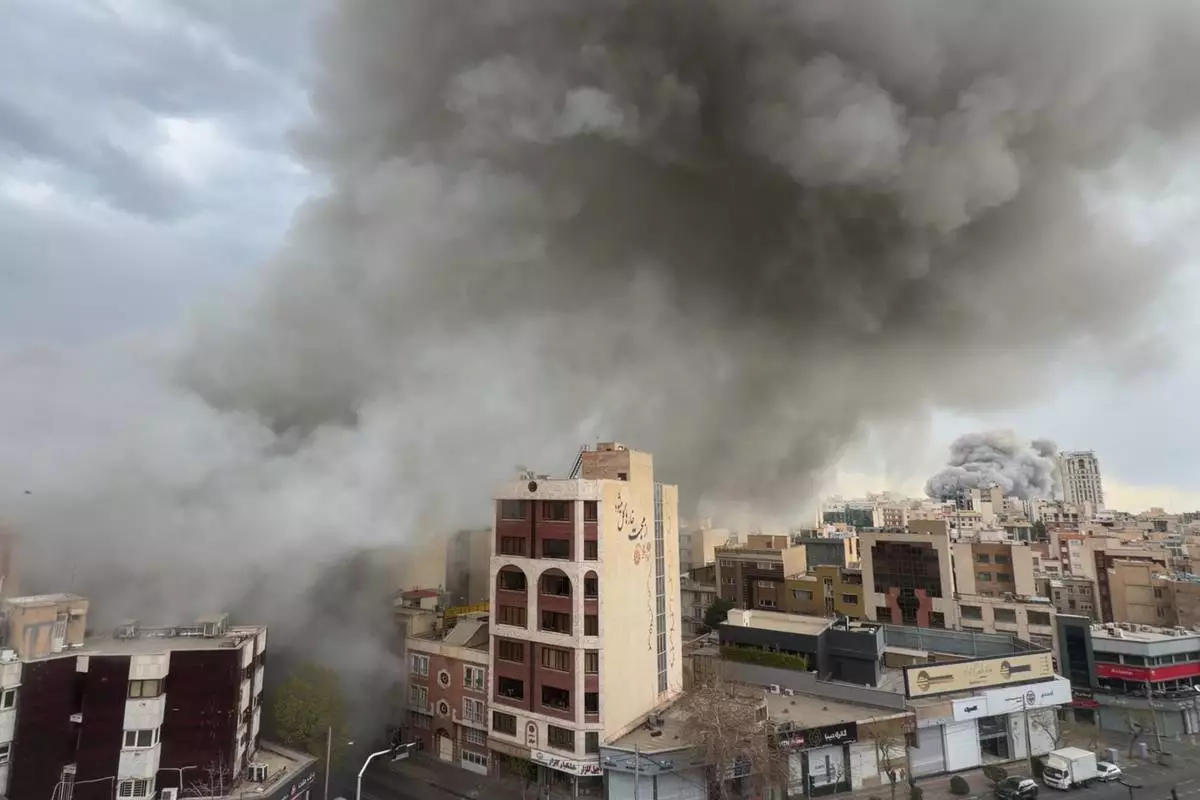
Plumes of smoke from two simultaneous strikes rise over Tehran, Iran, Monday, March 2, 2026. (AP Photo/Mohsen Ganji)
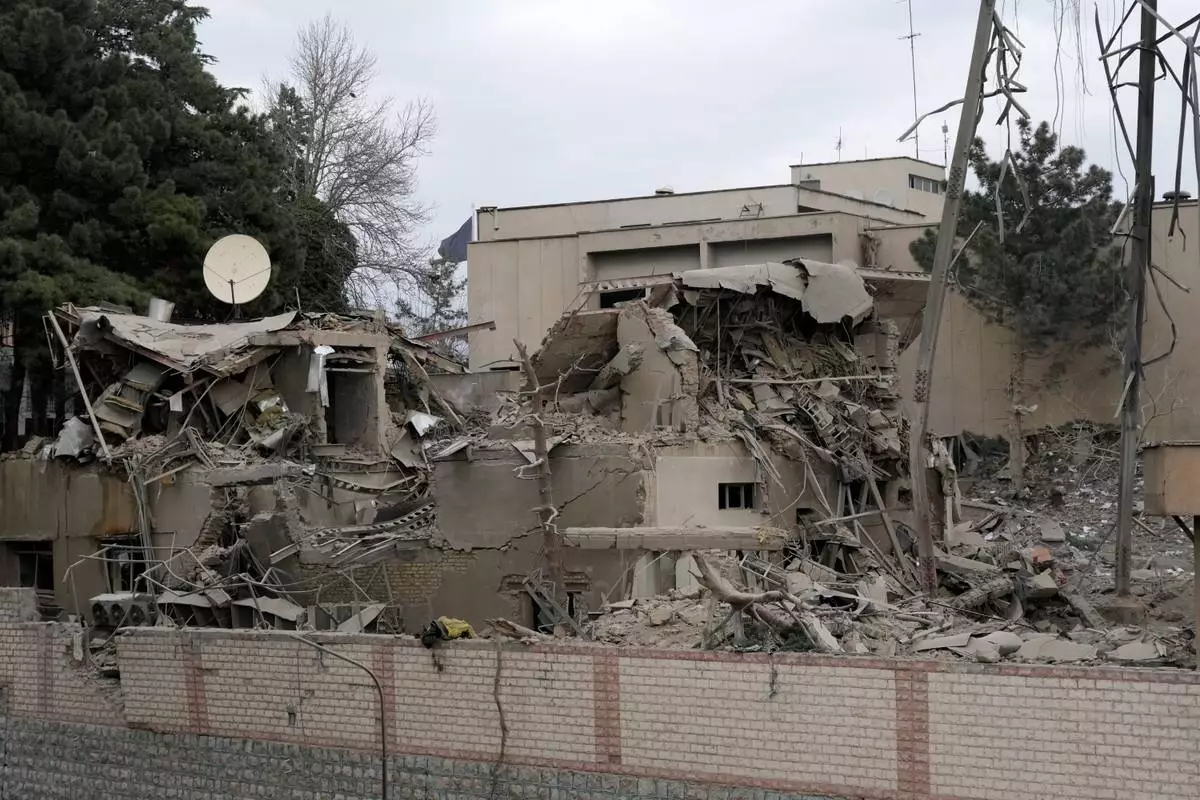
A state TV communications tower and building destroyed Sunday during a strike as part of the ongoing joint U.S.–Israeli military campaign are seen in Tehran, Iran, Tuesday, March 2, 2026. (AP Photo/Vahid Salemi)
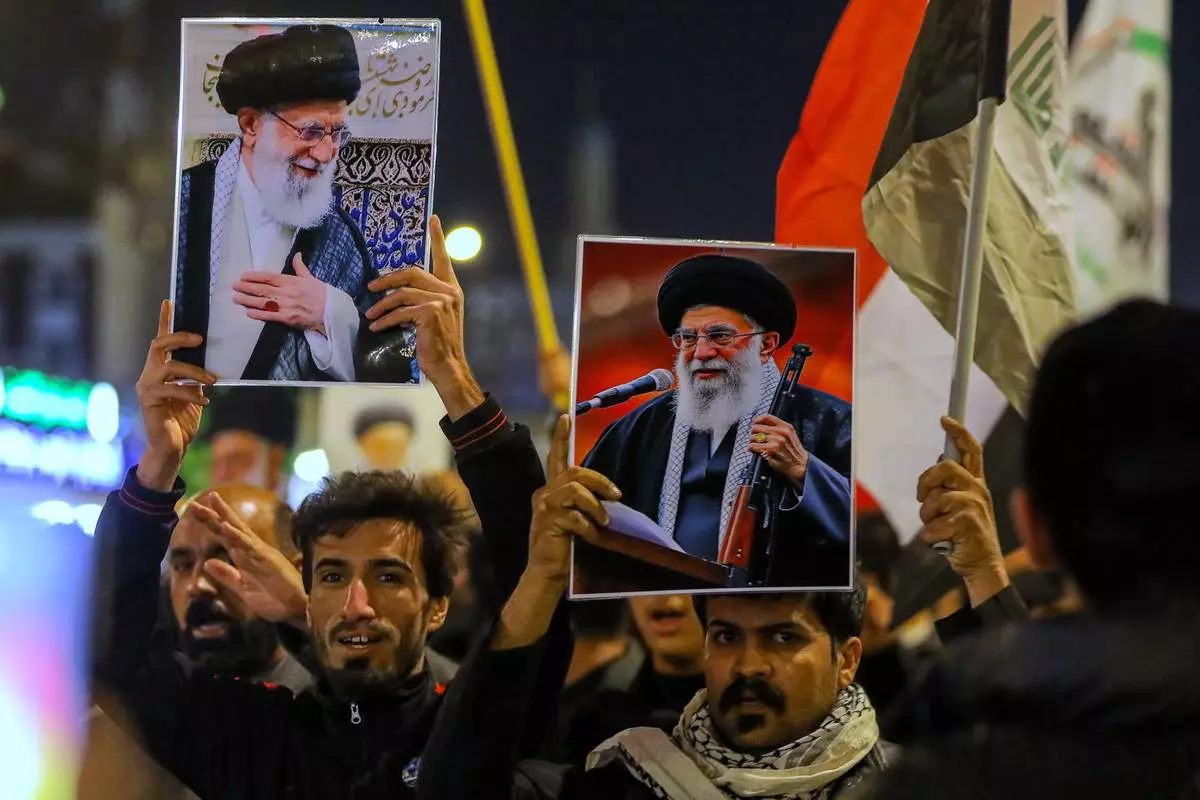
Iraqi Shiites hold pictures of Iranian Supreme Leader Ayatollah Ali Khamenei, who was killed by a U.S. airstrike in Tehran, during a symbolic funeral, in Najaf, Iraq, Sunday, March 1, 2026. (AP Photo/Anmar Khalil)
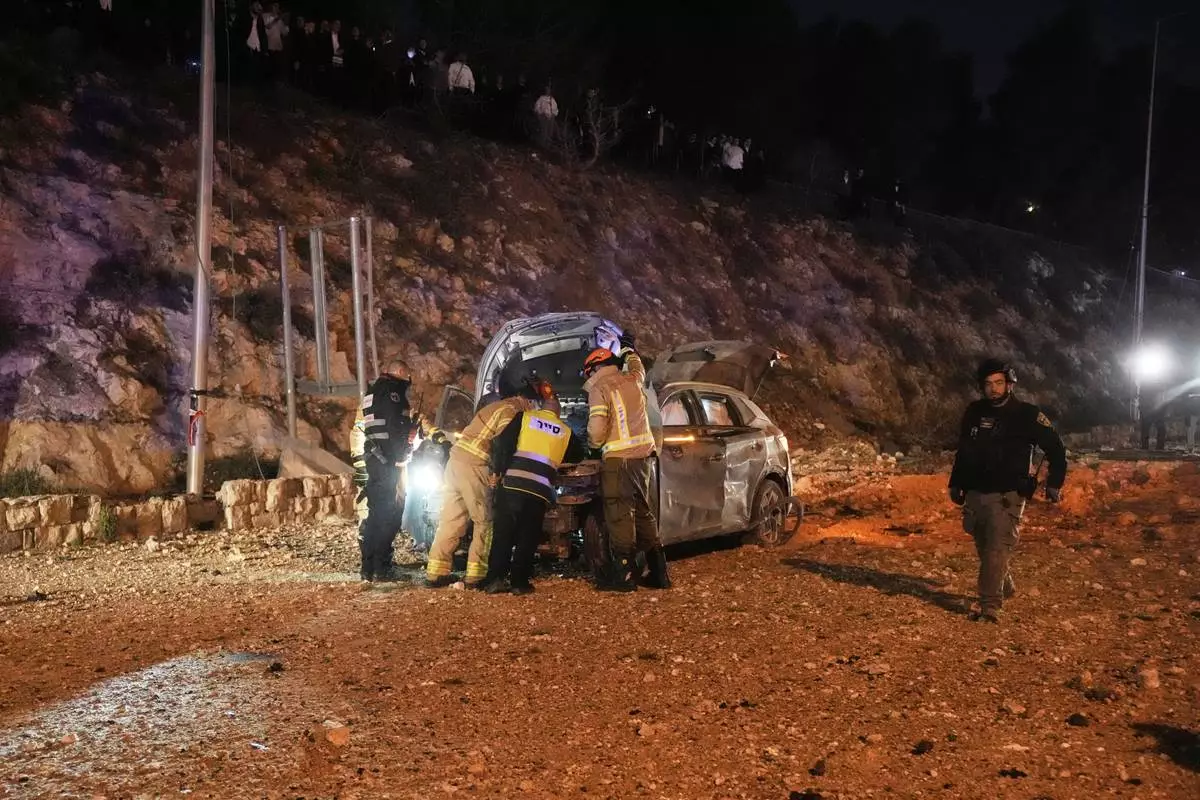
Israeli security forces inspect the scene of a direct hit on a road following an Iranian missile strike in Jerusalem, Sunday, March 1, 2026.(AP Photo/Mahmoud Illean)
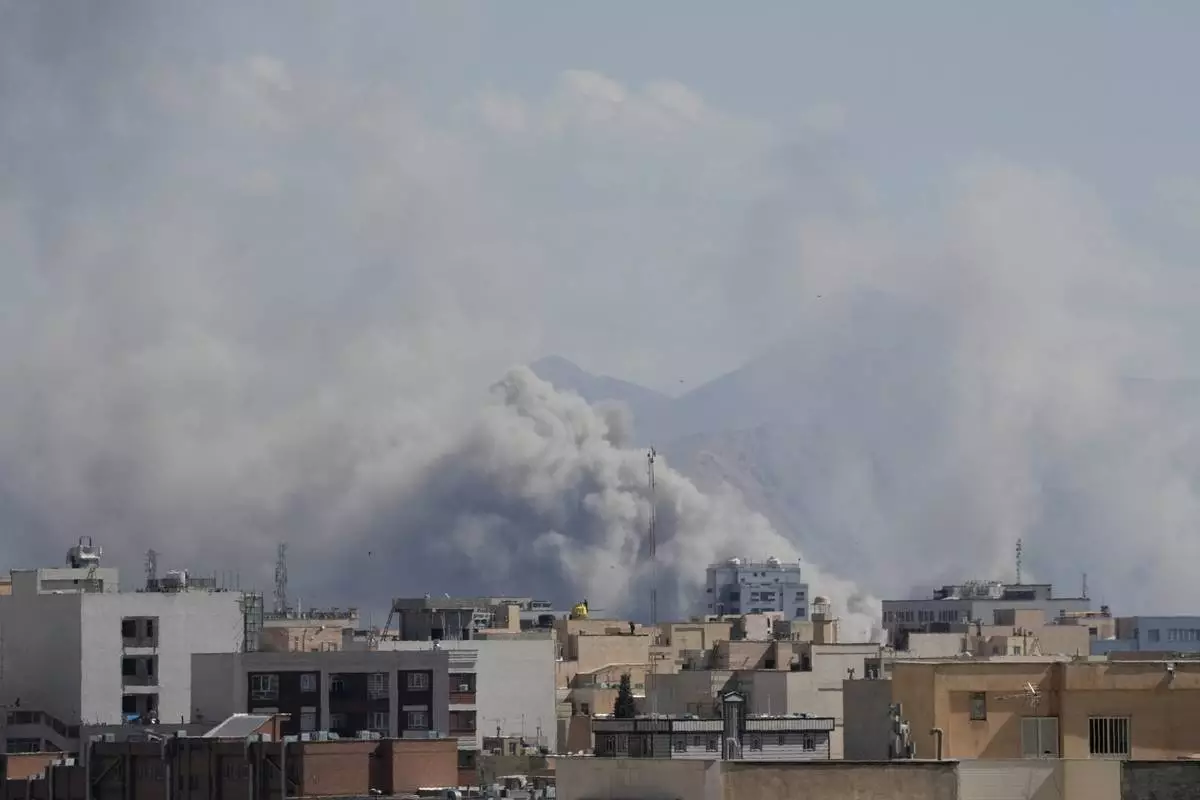
Smoke rises up after a strike in Tehran, Iran, Sunday, March 1, 2026. (AP Photo/Vahid Salemi)
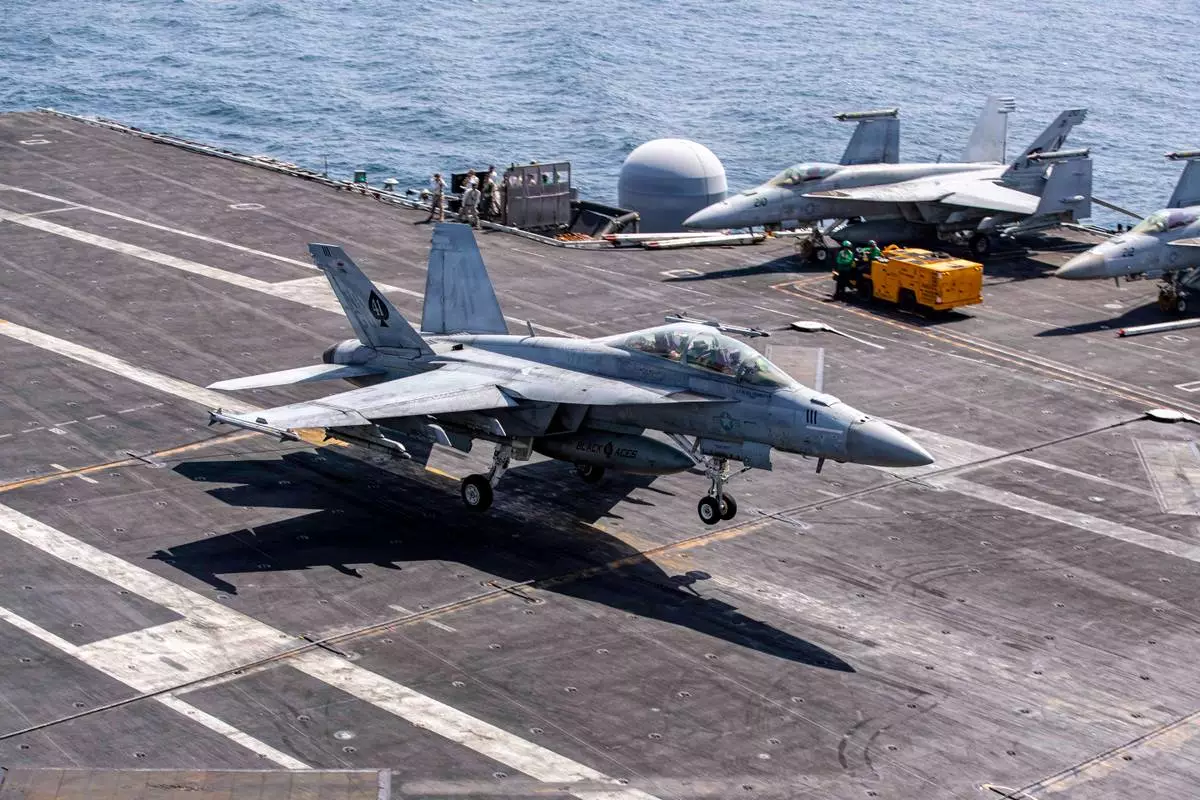
This image provided by U.S. Central Command shows a F/A-18E Super Hornet makes an arrested landing on the USS Abraham Lincoln (CVN 72) after a mission in support of Operation Epic Fury, on Saturday, Feb. 28, 2026. (U.S. Navy via AP)
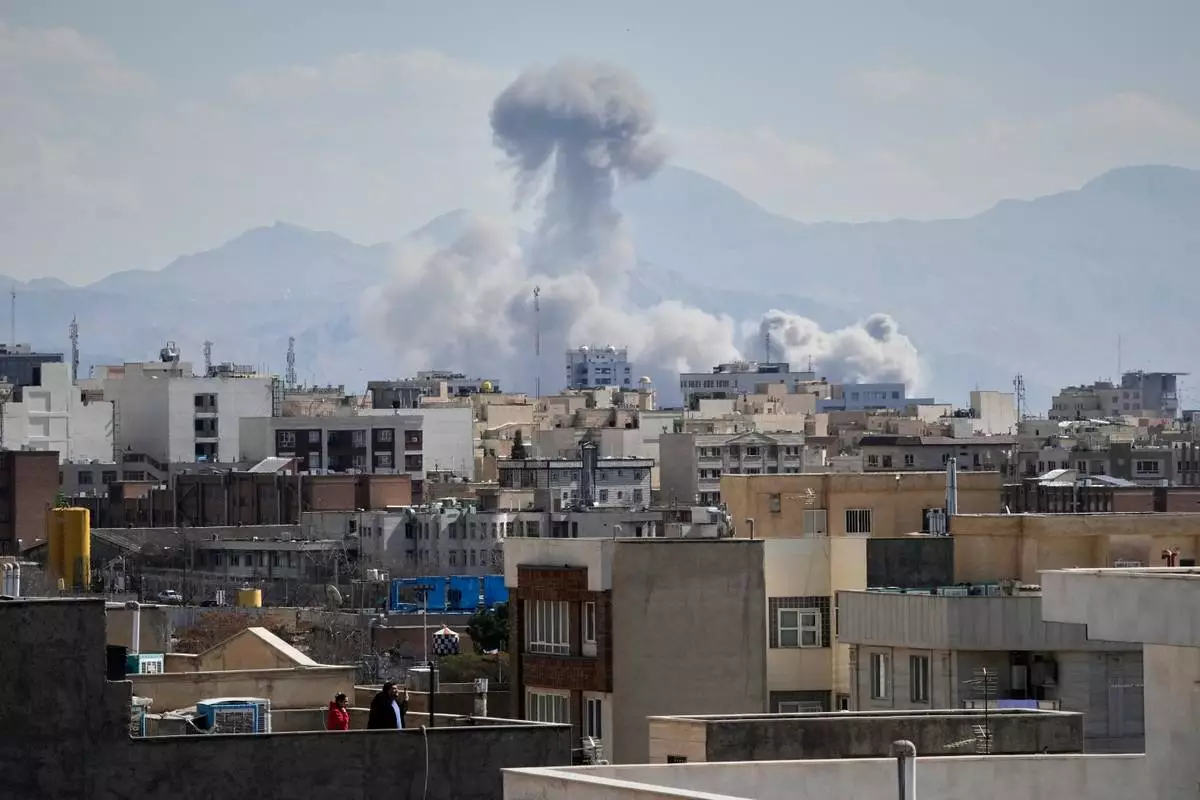
People watch from a rooftop as a plume of smoke rises after a strike in Tehran, Iran, Sunday, March 1, 2026. (AP Photo/Vahid Salemi)
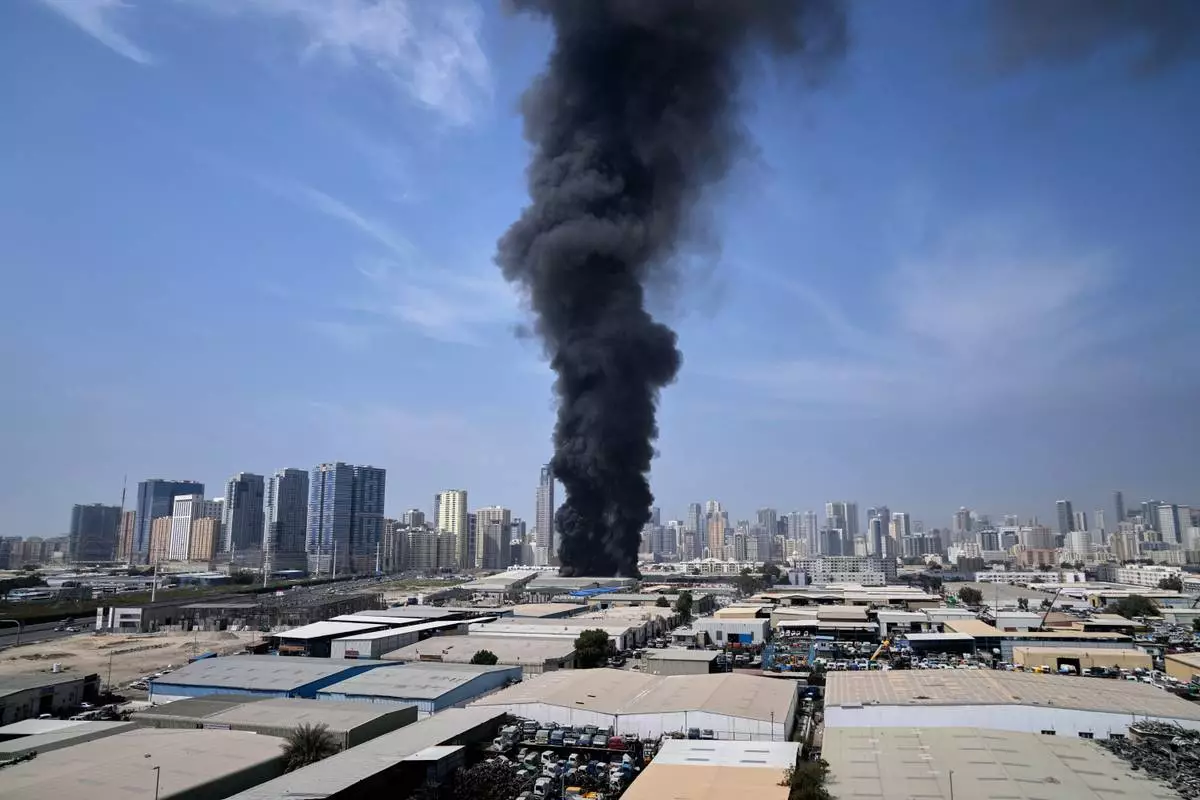
A black plume of smoke rises from a warehouse at the industrial area of Sharjah City in the United Arab Emirates following reports of Iranian strikes in Dubai, United Arab Emirates, Sunday, March 1, 2026. (AP Photo/Altaf Qadri)