Tens of thousands of airline passengers are stranded by the Iran war that has spread across the Gulf region, but some wealthy travelers are getting out — by paying large sums for luxury flights to Europe via airports that are safe from Iranian drone and missile attacks.
Demand for charter flights has skyrocketed, with some people paying up to 200,000 euros ($232,000) as major airports in Dubai, Abu Dhabi and Doha, Qatar, were closed after the start of the conflict last weekend.
Travelers from Dubai, usually known as a safe and luxurious destination, are seeking to evacuate by traveling overland either to Muscat, Oman, about a four-hour drive, or to Riyadh, the capital of Saudi Arabia, more than 10 hours away. Then they board one of the few available commercial flights or take a charter flight, whose costs have soared since the start of the war.
“The demand is huge, and we can’t deliver enough aircraft to respond to the demand,” said Altay Kula, CEO of the France-based private jet broker JET-VIP.
Whereas normally a charter flight on a private jet that can accommodate up to 16 passengers from Riyadh to Porto in Portugal may cost around 100,000 euros ($115,800) these days, the cost has doubled, Kula said.
“This increase in cost reflects the aircraft’s scarcity, the repositioning costs as well, and the operator risk assessments. So this is not speculative pricing,” he added.
Prices can vary depending on the departure point, the type of aircraft and the route constraints, said Ameerh Naran, CEO of Vimana Private Jets. For flights from the Gulf region to Europe, prices are ranging from 150,000 euros ($173,800) to 200,000 euros, he added.
In order to reach functional airports such as those in Riyadh and Muscat, some travelers hire private security companies that coordinate transportation in vehicles ranging from ordinary passenger cars to coach buses.
Due to the heavy traffic, wait times at border points with Oman can be up to four hours, while costs range in the thousands of dollars, said Ian McCaul, operations and planning director with Alma Risk, a U.K.-based risk management and security firm.
Those seeking to leave are predominantly stranded travelers, as opposed to residents, McCaul added.
He estimates his company has made transfer arrangements for more than 200 people and advised several others in recent days.
Vimana's clients include business executives, families and entrepreneurs, as well as remote workers who had been based in the region, Naran said.
Elie Hanna, CEO for the Middle East headquarters of Air Charter Service, based in Dubai, said most of the flights out of the region are leaving from Oman. The prices are so high, he said, because few charter planes are available since most of them are stuck at airports that are now closed.
The clients he is seeing range from people who regularly charter private, as well as people who generally fly commercial but are trying to pool resources with other travelers or families to share the expense.
“Everyone is stressed," Hanna said. "To be honest, everyone is trying to accommodate as much as they can. Muscat Airport is overloaded with flights and everybody is stressed.”
Experts from the International SOS security and health services company expect the fighting to continue to affect transportation and energy infrastructure for weeks.
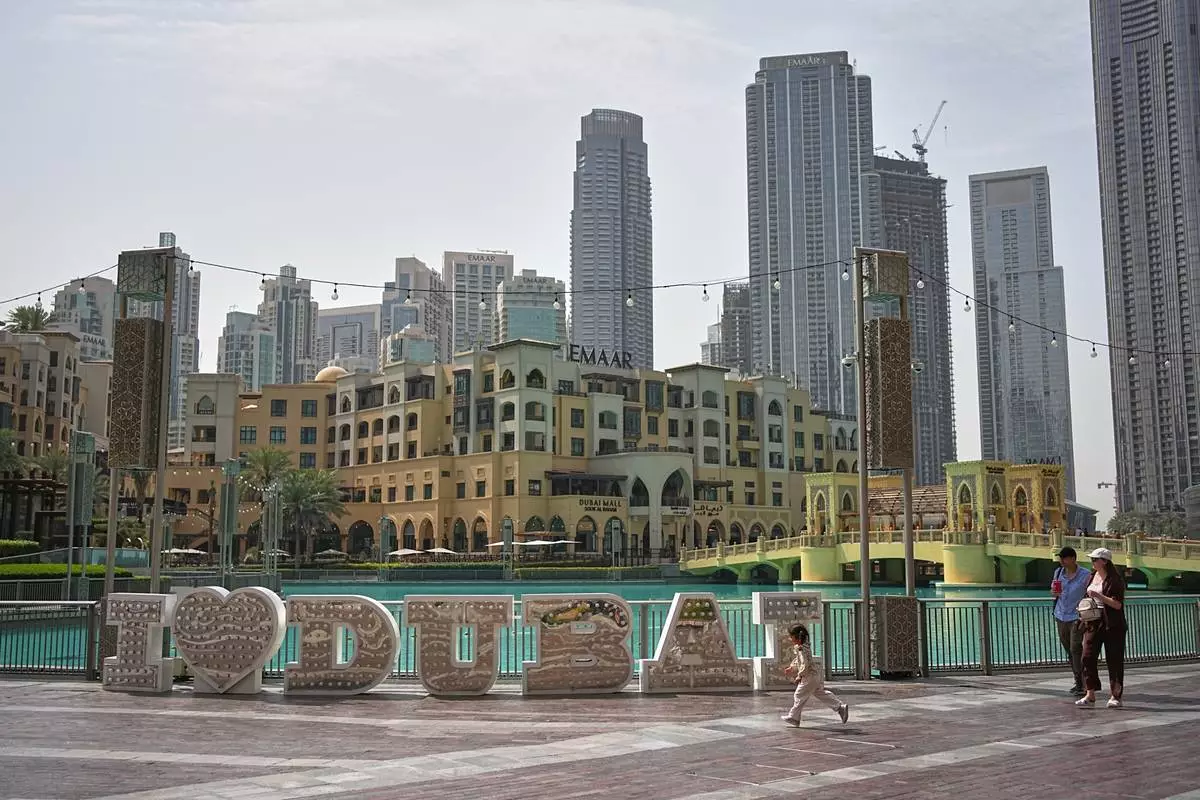
A few people walk in a public plaza in downtown Dubai, United Arab Emirates, Tuesday, March 3, 2026. (AP Photo/ Fatima Shbair)
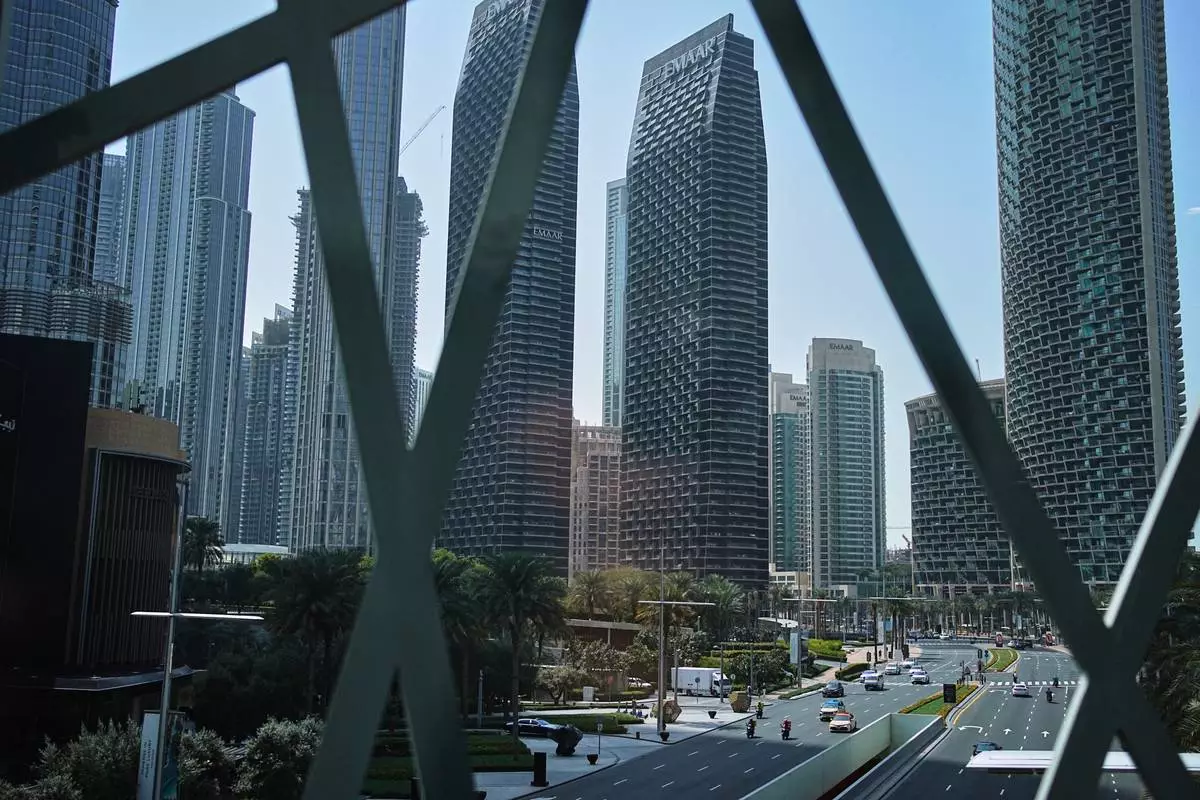
Light traffic moves along a main road in downtown Dubai, United Arab Emirates, Tuesday, March 3, 2026. (AP Photo/ Fatima Shbair)
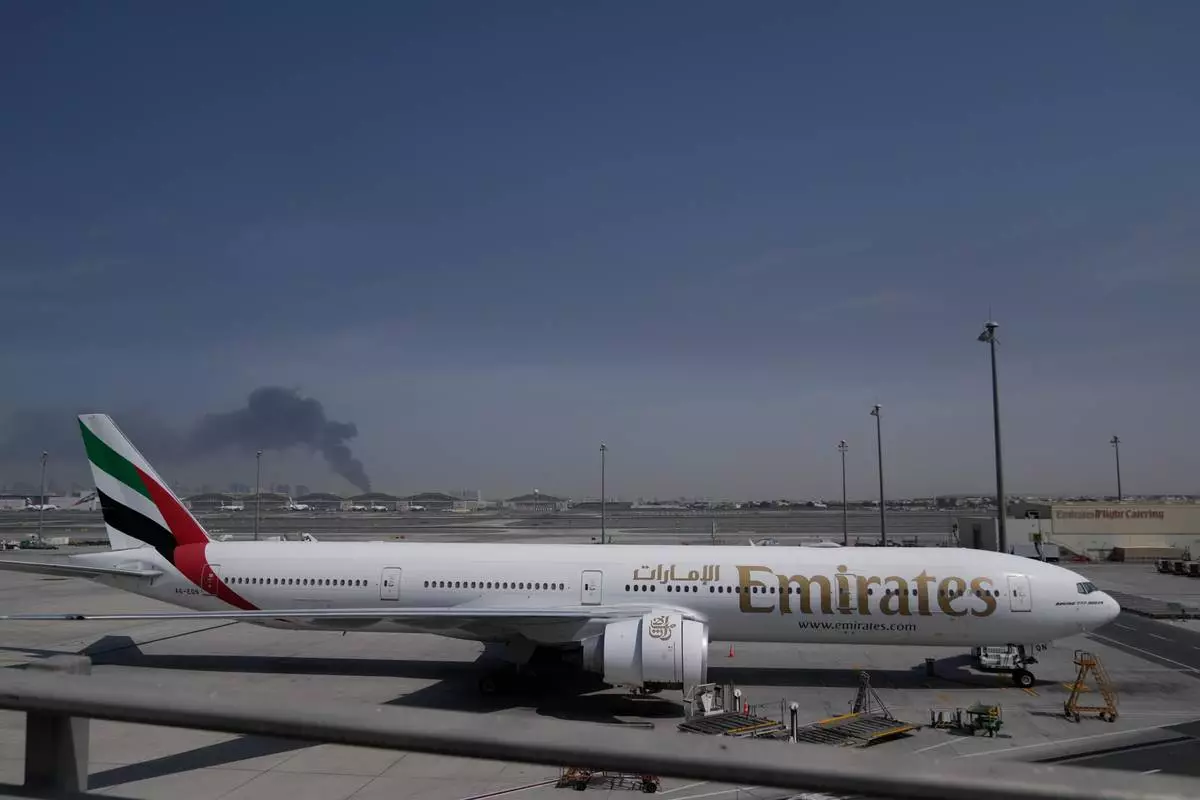
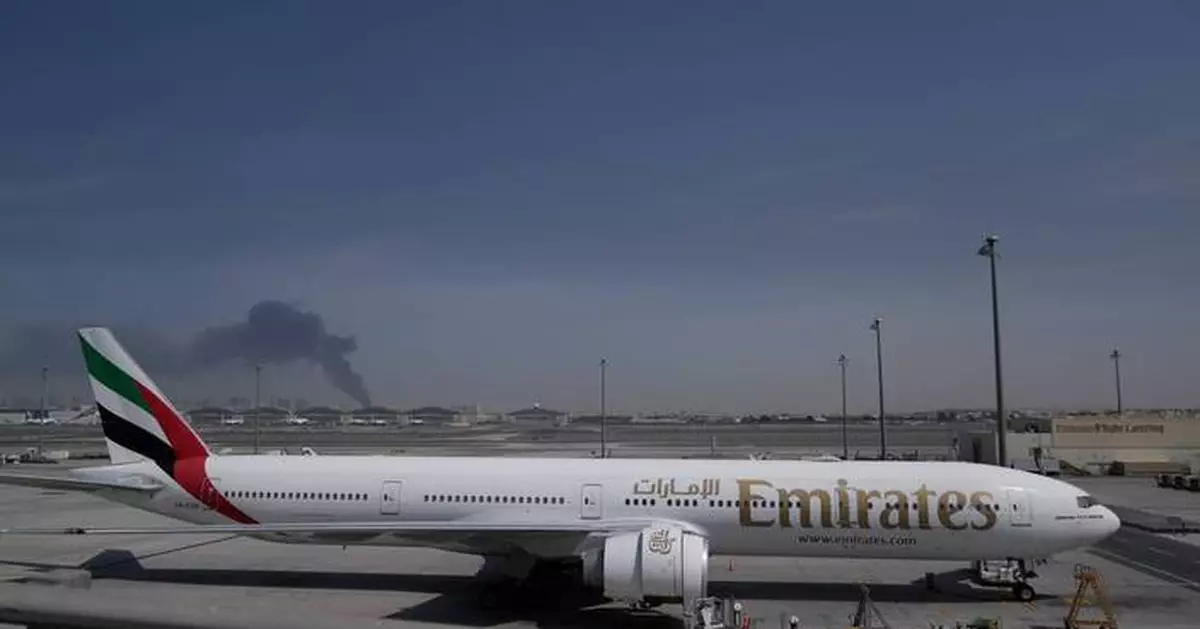
ADDS CAUSE OF BLACK SMOKE IN THE BACKGROUND.- A plume of smoke caused by an Iranian strike is seen in the background an an Emirates plane is parked at the Dubai International Airport after its closure in Dubai, United Arab Emirates, Sunday, March 1, 2026. (AP Photo/Altaf Qadri)
DUBAI, United Arab Emirates (AP) — Israel stepped up airstrikes against Iranian missile launchers and factories Tuesday, and Iran retaliated across the Gulf region, disrupting energy supplies and travel. As explosions rang out in Tehran and in Lebanon — where Israel said it struck Hezbollah militants — the American embassy in Saudi Arabia came under drone attack.
Four days into a war that President Donald Trump suggested would last several weeks but perhaps longer, hundreds of people have been killed, the vast majority in Iran. Information coming out of Iran has been limited because of poor communications, round-the-clock airstrikes and tight restrictions on journalists.
The spiraling nature of the war raised questions about when and how it would end. Trump seemed to leave open the possibility for more extensive U.S. military involvement, telling the New York Post on Monday that he was not ruling out the possibility of boots on the ground.
The administration has given various objectives. While the initial U.S.-Israeli strikes killed Iranian Supreme Leader Ayatollah Ali Khamenei and Trump urged Iranians to overthrow their government, senior administration officials have since said regime change was not the goal.
Trump said Monday the military campaign’s four objectives were to destroy Iran’s missile capabilities, wipe out its navy, prevent it from obtaining a nuclear weapon and ensure that it cannot continue to support allied armed groups.
Trump said Tuesday that ‘someone from within’ Iranian regime might be best choice to take power once U.S.-Israel campaign is finished.
Speaking from the Oval Office Tuesday, Trump said Reza Pahlavi, the exiled crown prince of Iran’s last shah, is not someone that his administration has considered in depth to take over leadership in Iran.
Across Iran’s capital, aircraft were heard overhead and explosions rang out throughout the night into Tuesday.
The Israeli military said it conducted a wave of airstrikes on sites that produce and store ballistic missiles, in Tehran and Isfahan. Strikes caused two explosions at a broadcasting facility in Tehran, Iranian state TV said, adding that no one was injured.
The United Nations’ nuclear watchdog said Iran’s Natanz nuclear enrichment site had sustained “some recent damage,” though there was “no radiological consequence expected.” The U.S. hit Natanz during the 12-day war in June, when Israeli and American strikes greatly weakened Iran's nuclear program.
Without offering evidence, Israeli Prime Minister Benjamin Netanyahu claimed Iran was rebuilding “new sites, new places” underground for making atomic bombs. Iran has said it has not enriched uranium since June, though it has maintained its right to and says its nuclear program is peaceful.
Satellite photos analyzed by The Associated Press showed limited activity at two Iranian nuclear sites before the war. Analysts said Tehran was likely assessing damage from the 2025 strikes and possibly salvaging what remained.
A north Tehran resident has described growing fears in the capital as it comes under heavy bombardment. The resident messaged an AP reporter before dawn on Tuesday. He spoke on the condition of anonymity.
He said a major blast had shaken his building on Monday. “I was by the window and felt the shock wave. Pretty scary, then saw the smoke,” he said.
Most stores in the normally bustling area of Tajrish were closed, he added. Iran has declared an official mourning period following the killing of Khamenei.
The resident said bakeries were open and supermarkets were stocked, but ATMs were mostly “out of cash.” Iran’s economy was already spiraling when the currency crashed to record lows in December.
An attack from two drones on the U.S. Embassy in Riyadh caused a “limited fire,” according to Saudi Arabia’s Defense Ministry, and the embassy urged Americans to avoid the compound. It followed an attack on the U.S. Embassy in Kuwait. U.S. Embassies in Saudi Arabia, Kuwait and Lebanon said they were closed to the public.
The U.S. State Department ordered the evacuation of non-emergency personnel and family in Kuwait, Bahrain, Iraq, Qatar, Jordan and the United Arab Emirates. In addition, the U.S. has urged citizens to leave more than a dozen Middle Eastern countries, though with much of the airspace closed many remained stranded. Several other countries arranged evacuation flights for their citizens.
The U.S.-Israeli strikes have killed at least 787 people, according to the Iranian Red Crescent Society. In Israel, where Iranian missiles struck several locations, 11 people were killed. The Iranian-supported militant group Hezbollah has also attacked Israel, whose retaliatory strikes killed 52 people in Lebanon.
The U.S. military has confirmed six deaths of American service members. In addition, three people were killed in the United Arab Emirates, and one each in Kuwait and Bahrain.
Iran has hit many countries deemed safe havens in the Mideast in retaliation for the U.S.-Israeli strikes. Recent targets included two Amazon data centers in the United Arab Emirates and one in Bahrain. The centers in the UAE were hit, while a drone struck near the one Bahrain, causing damage, the company said.
Iran has also struck energy facilities in Qatar and Saudi Arabia, and attacked several ships in the Strait of Hormuz, the narrow mouth of the Persian Gulf through which a fifth of all oil traded passes, sending global oil and natural gas prices soaring.
“The Strait of Hormuz is closed,” declared Iranian Brig. Gen. Ebrahim Jabbari, an adviser to the paramilitary Revolutionary Guard, vowing that any ships that passed through it would be set on fire.
Qatari Foreign Ministry spokesman Majed Al Ansari vowed that Iranian attacks on the gas-rich country “will not go unanswered.”
As oil and natural gas prices climbed, stock prices fell sharply.
The conflict has spread to Lebanon, where Hezbollah fired missiles at Israel on Monday, prompting Israel to retaliate.
On Tuesday, the Israeli military hit Beirut with more airstrikes and said it had moved additional troops into southern Lebanon and taken new positions on several strategic points close to the border.
The U.N. peacekeeping force in Lebanon later said its peacekeepers saw Israeli troops going into and then out of Lebanon. But Israel’s army said its troops are still operating in Lebanon.
This story has been updated to correct that communications in Iran are poor, but that the internet isn't shut down. It also clarifies that that more than one drone hit the U.S. Embassy in Saudi Arabia. Some instances referred to just one drone.
Becatoros reported from Athens, Greece, and Magdy from Cairo. Konstantin Toropin in Washington, David Rising in Bangkok, Melanie Lidman in Tel Aviv, Israel, Hallie Golden in Seattle, Giovanna Dell'Orto in Miami, and Suzan Fraser in Ankara, Turkey, contributed to this report.
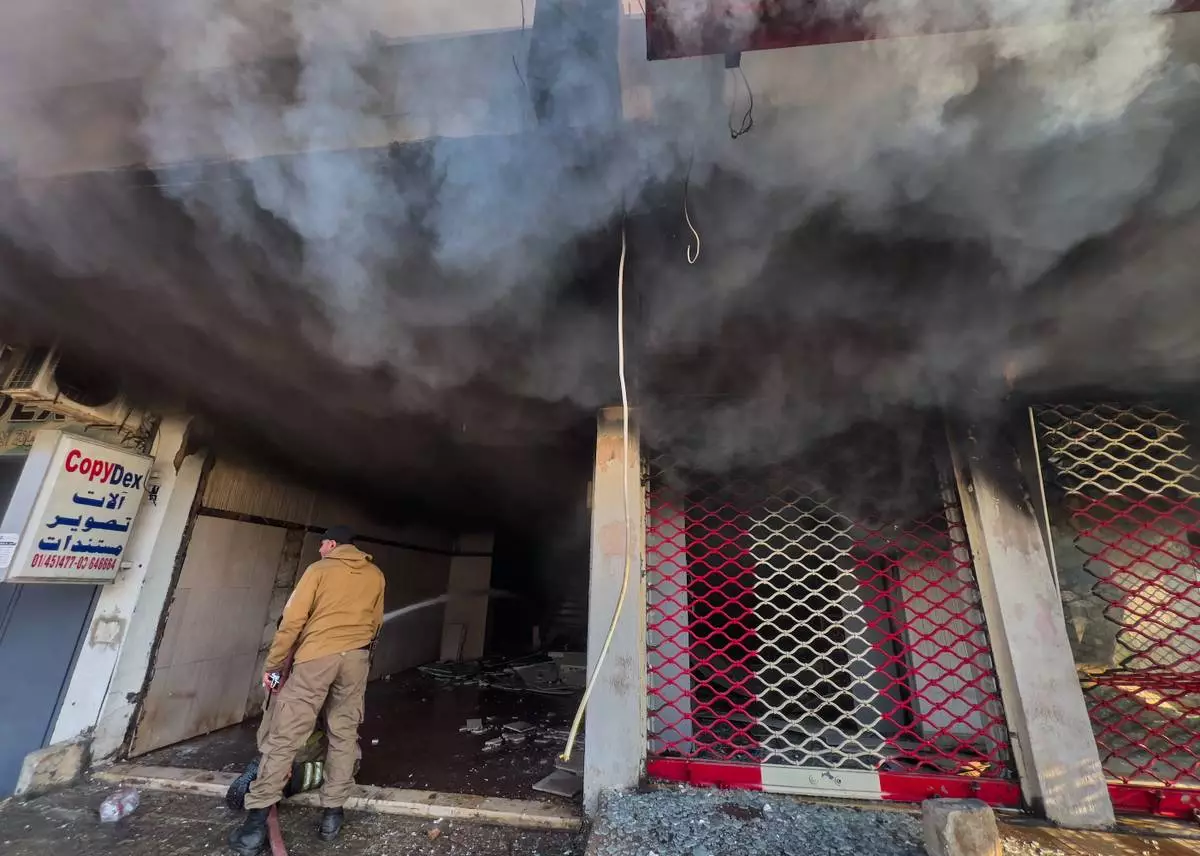
A firefighter extinguishes fire at a building that was hit by an Israeli airstrike in Dahiyeh, a southern suburb of Beirut, Lebanon, Tuesday, March 3, 2026. (AP Photo/Hussein Malla)
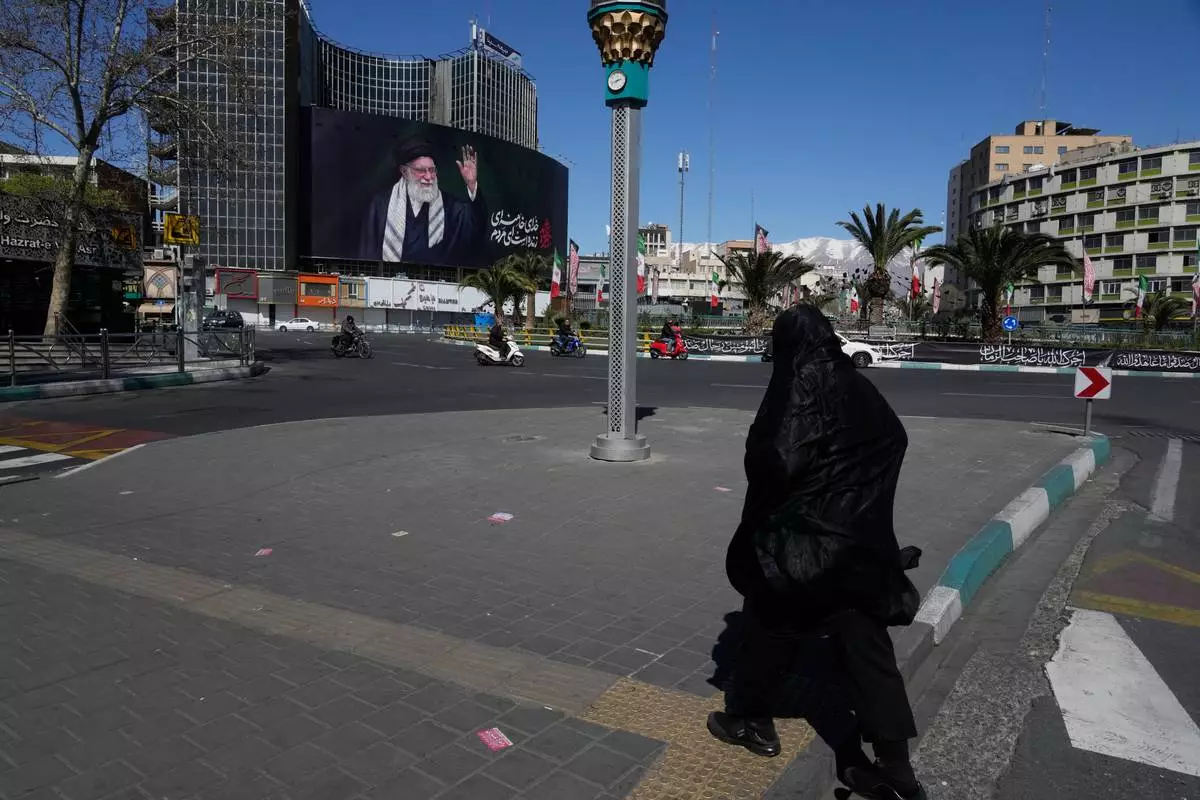
A woman crosses almost deserted square with a billboard at rear showing a portrait of the late Iranian Supreme Leader Ayatollah Ali Khamenei, who was killed in the U.S.–Israeli military campaign, in Tehran, Iran, Tuesday, March 3, 2026. (AP Photo/Vahid Salemi)
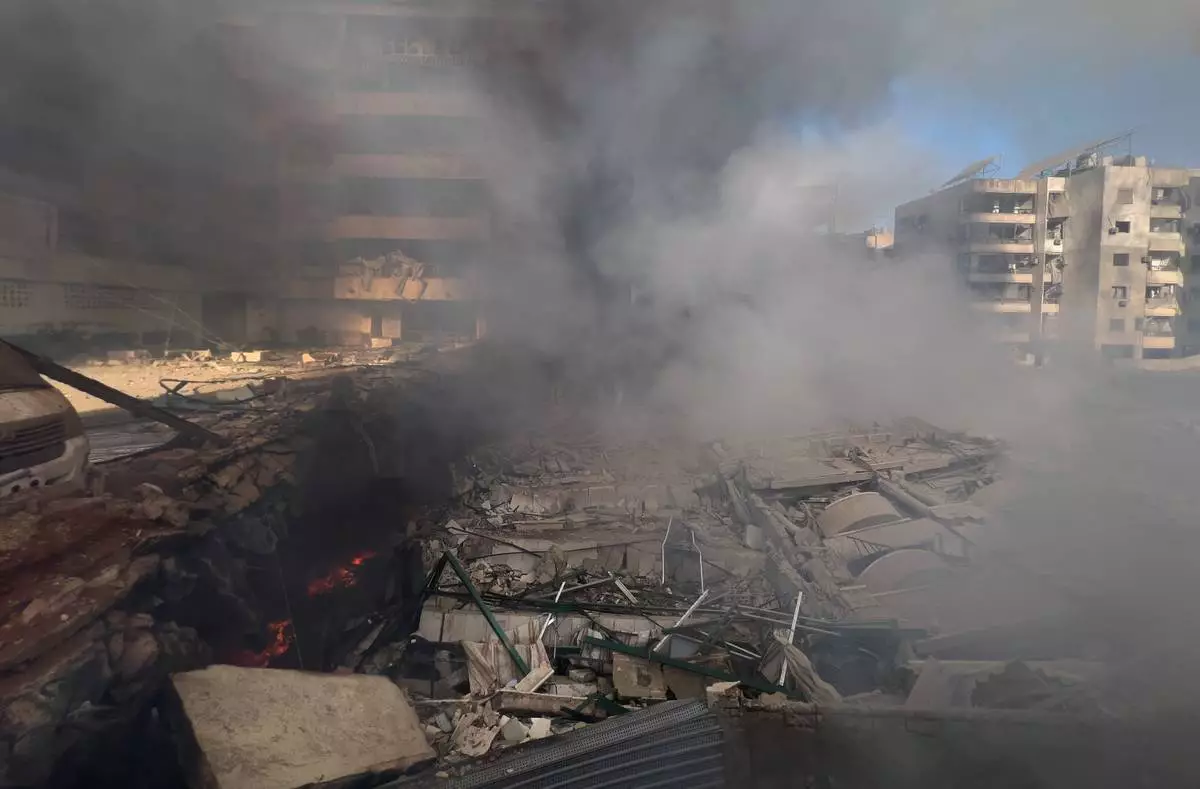
Smoke rises from a destroyed building that was hit by an Israeli airstrike in Dahiyeh, a southern suburb of Beirut, Lebanon, Tuesday, March 3, 2026. (AP Photo/Hussein Malla)
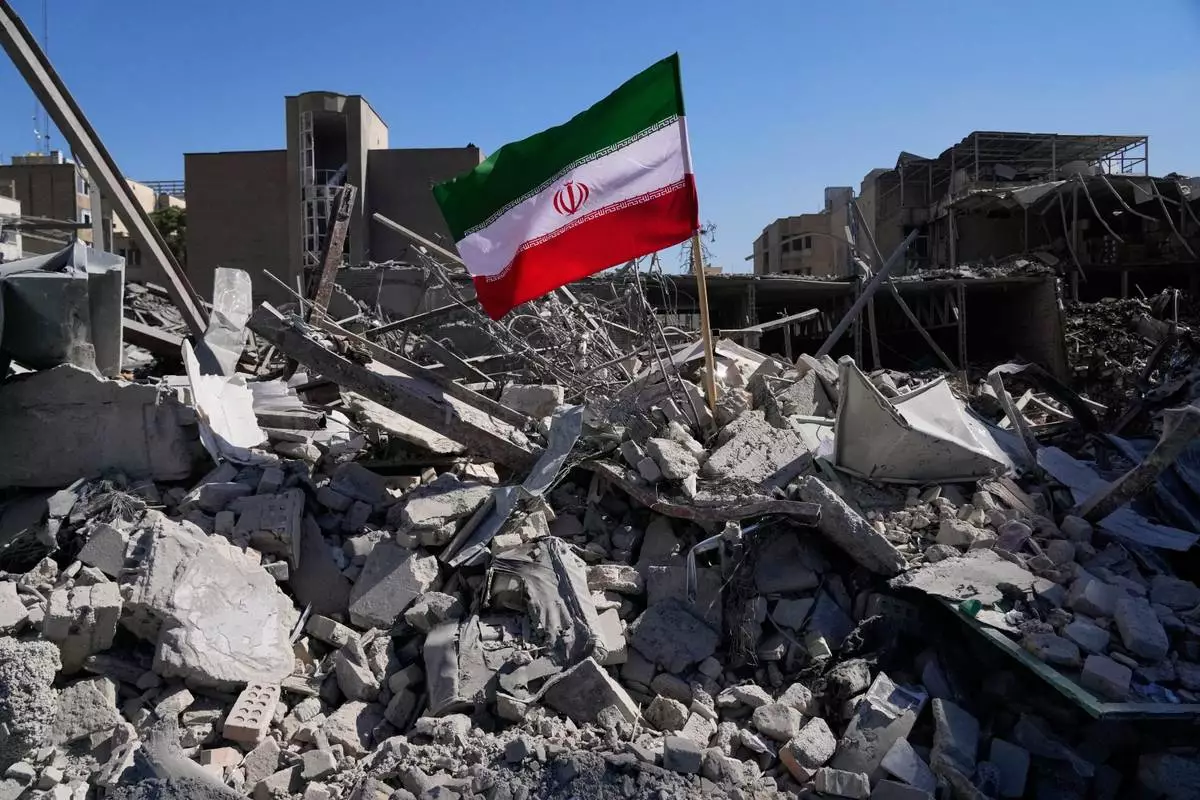
An Iranian flag is placed among the ruins of a police station struck Monday during the U.S.–Israeli military campaign in Tehran, Iran, Tuesday, March 3, 2026. (AP Photo/Vahid Salemi)
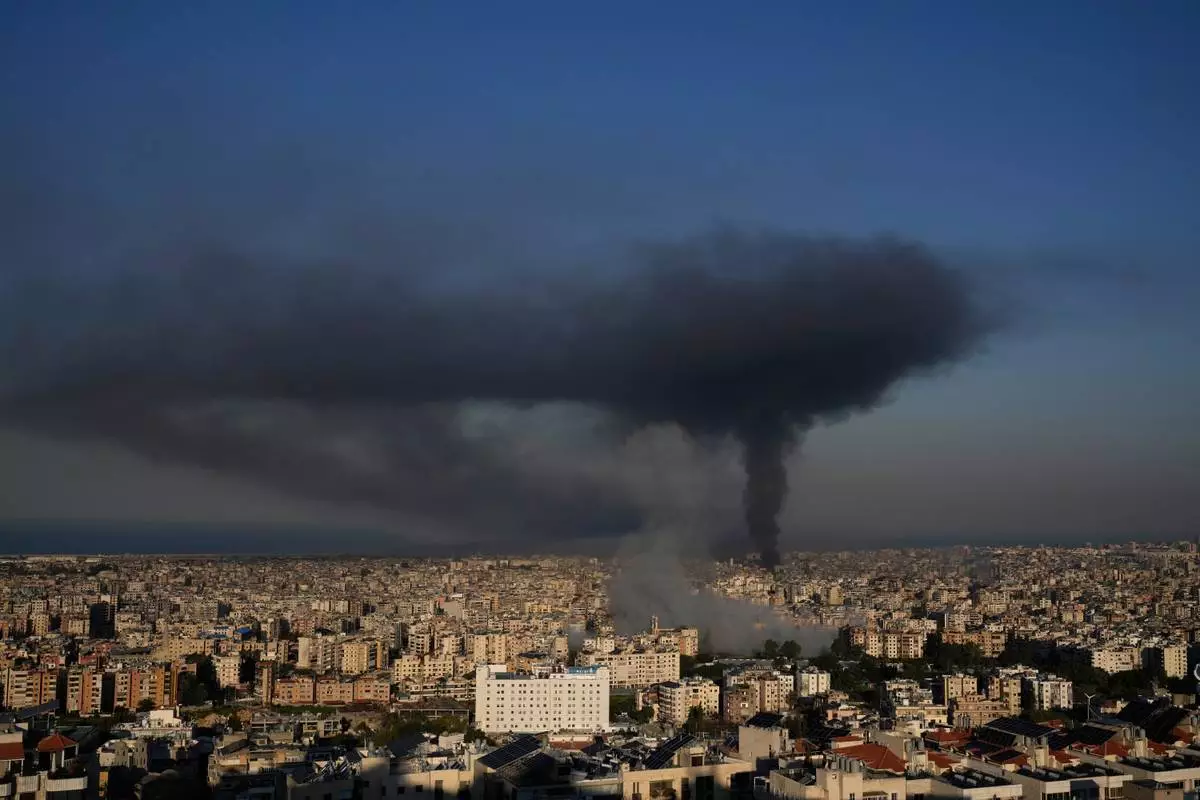
Smoke rises from Israeli airstrikes in Dahiyeh, a southern suburb of Beirut, Lebanon, Tuesday, March 3, 2026. (AP Photo/Hussein Malla)

Jewish men covered in prayer shawls pray in an underground parking garage as a precaution against possible Iranian missile attacks, in Tel Aviv, Israel, Tuesday, March 3, 2026. (AP Photo/Oded Balilty)
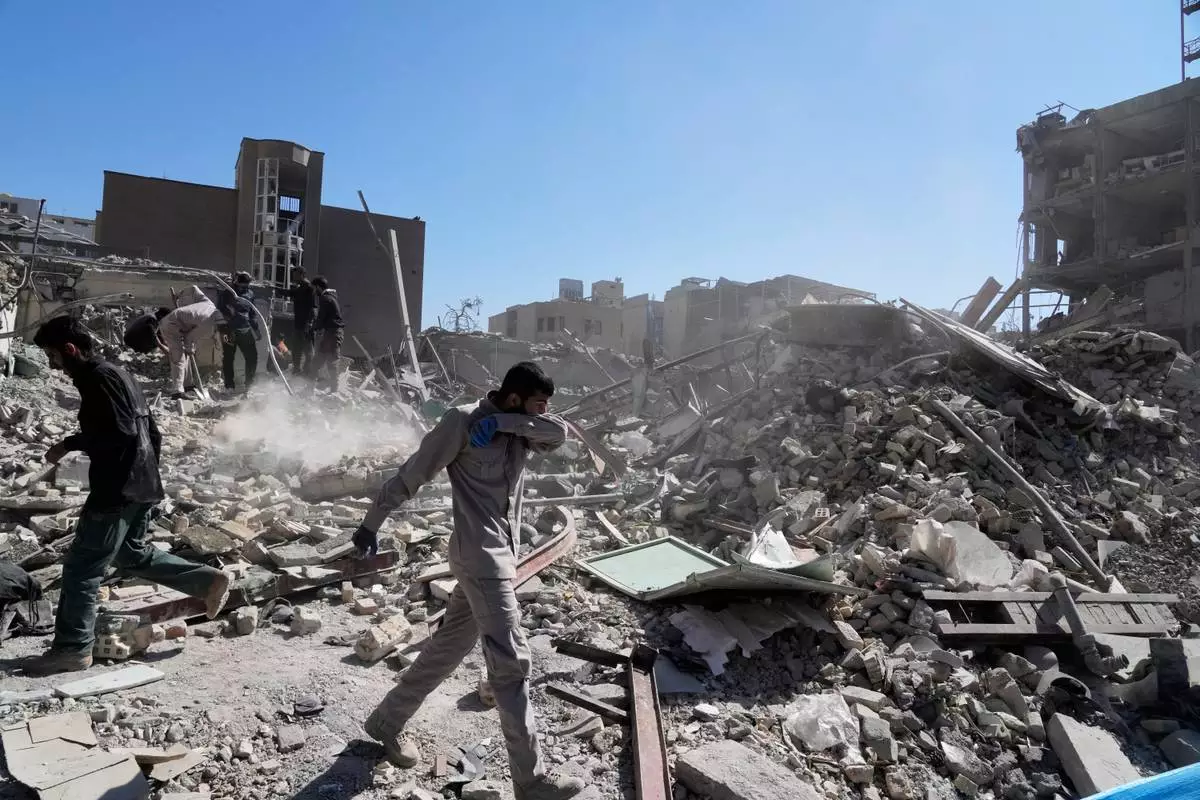
A group of men inspects the ruins of a police station struck Monday amid the U.S.–Israeli military campaign in Tehran, Iran, Tuesday, March 3, 2026. (AP Photo/Vahid Salemi)
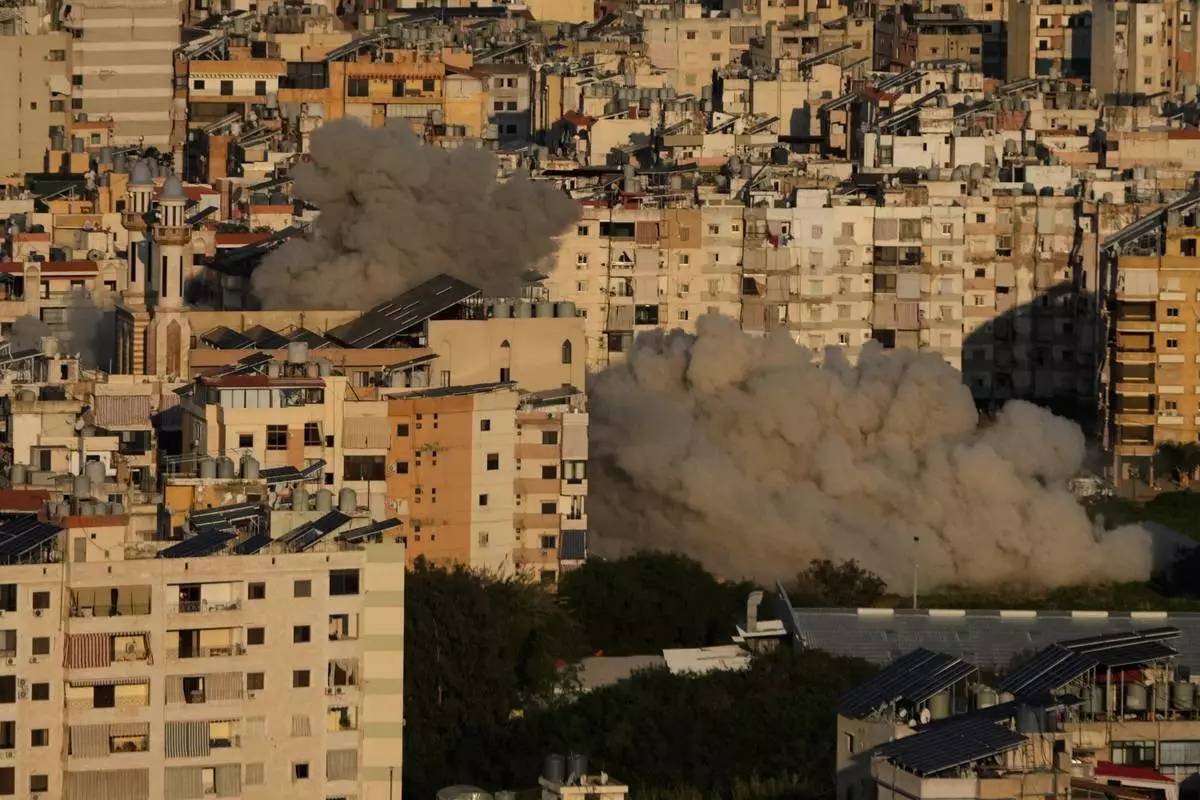
Smoke rises from Israeli airstrikes in Dahiyeh, a southern suburb of Beirut, Lebanon, Tuesday, March 3, 2026. (AP Photo/Hussein Malla)
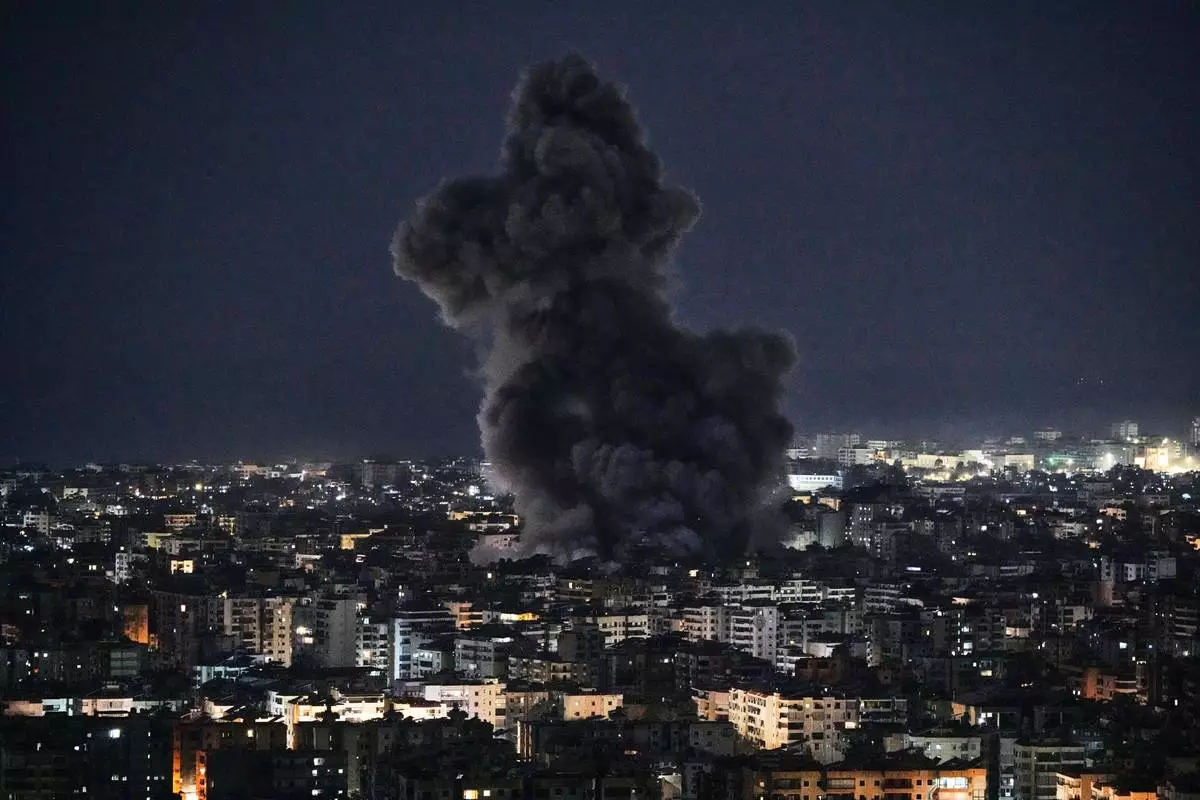
Smoke rises from Israeli airstrikes in Dahiyeh, a southern suburb of Beirut, Lebanon, early Tuesday, March 3, 2026. (AP Photo/Bilal Hussein)
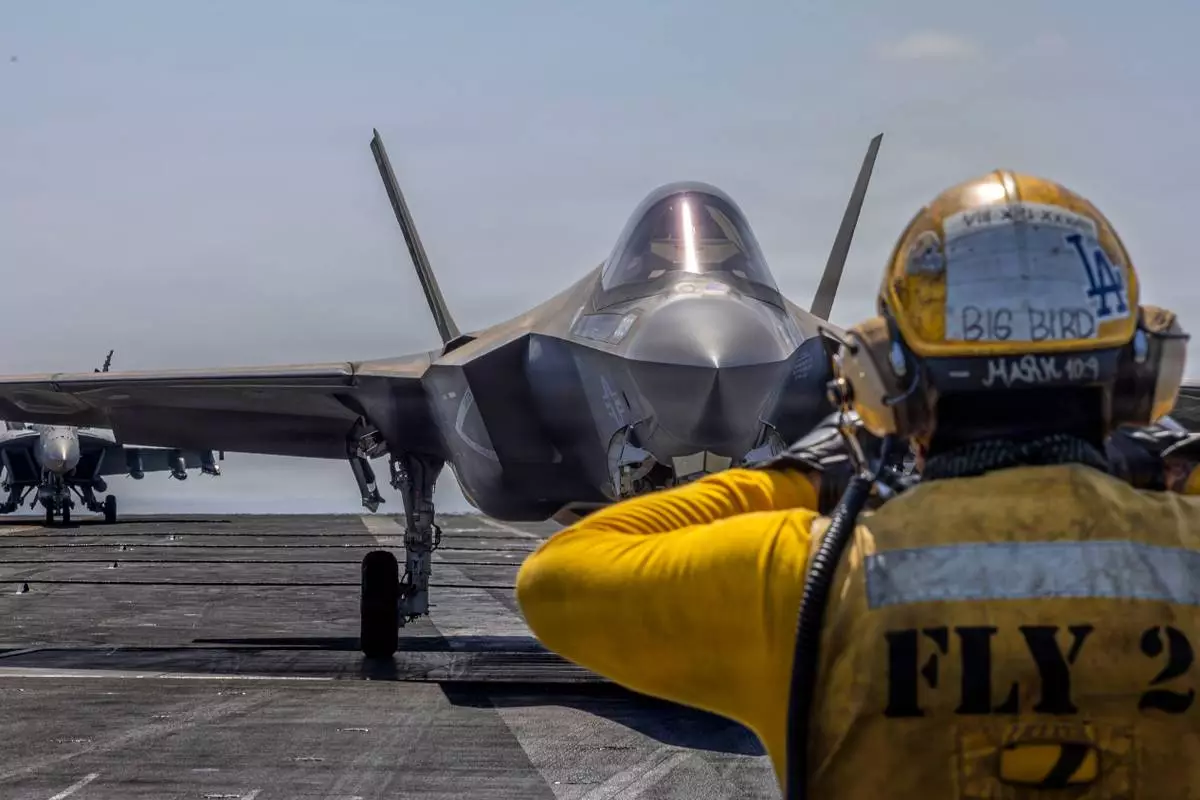
This image provided by U.S. Central Command shows a F-35C Lightning II preparing for launch on the flight deck of the USS Abraham Lincoln (CVN 72) in support of Operation Epic Fury on Monday, March 2, 2026. (U.S. Navy via AP)
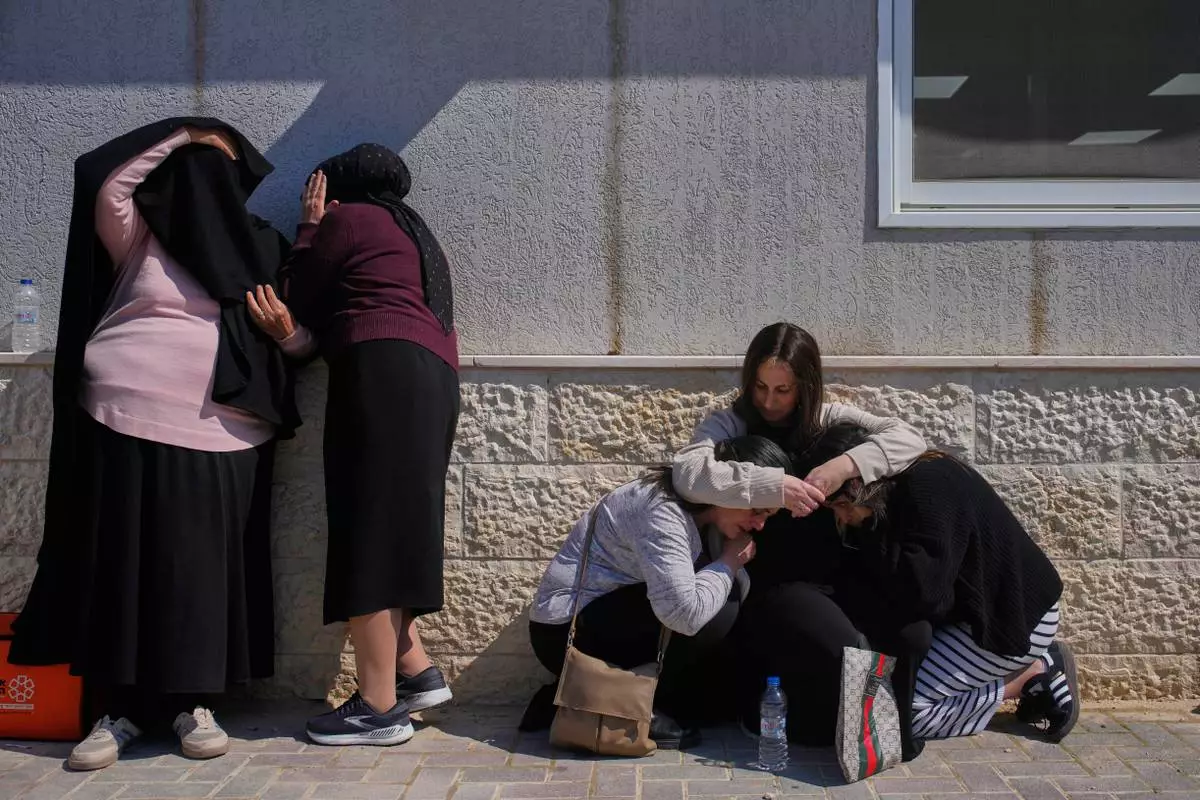
Mourners take cover while air-raid sirens warn of incoming missiles launched by Iran toward Israel during the funeral of Sarah Elimelech and her daughter Ronit who were killed in an Iranian missile attack, in Beit Shemesh, Israel, Monday, March 2, 2026. (AP Photo/Ohad Zwigenberg)
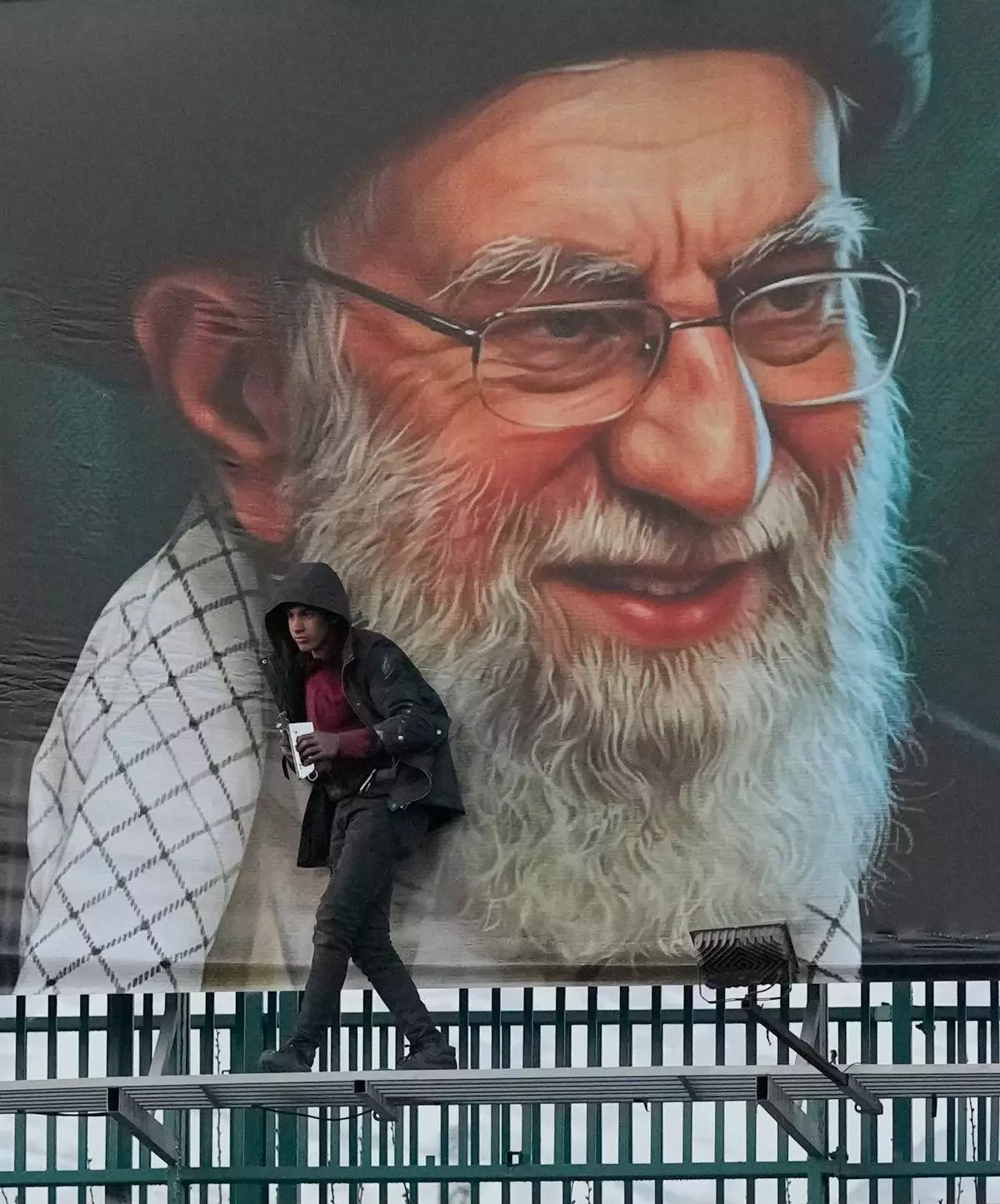
A worker instals a billboard on an overpass containing a portrait of the late Iranian Supreme Leader Ayatollah Ali Khamenei, who was killed during the ongoing joint U.S.-Israeli military campaign, in Tehran, Iran, Monday, March 2, 2026. (AP Photo/Vahid Salemi)
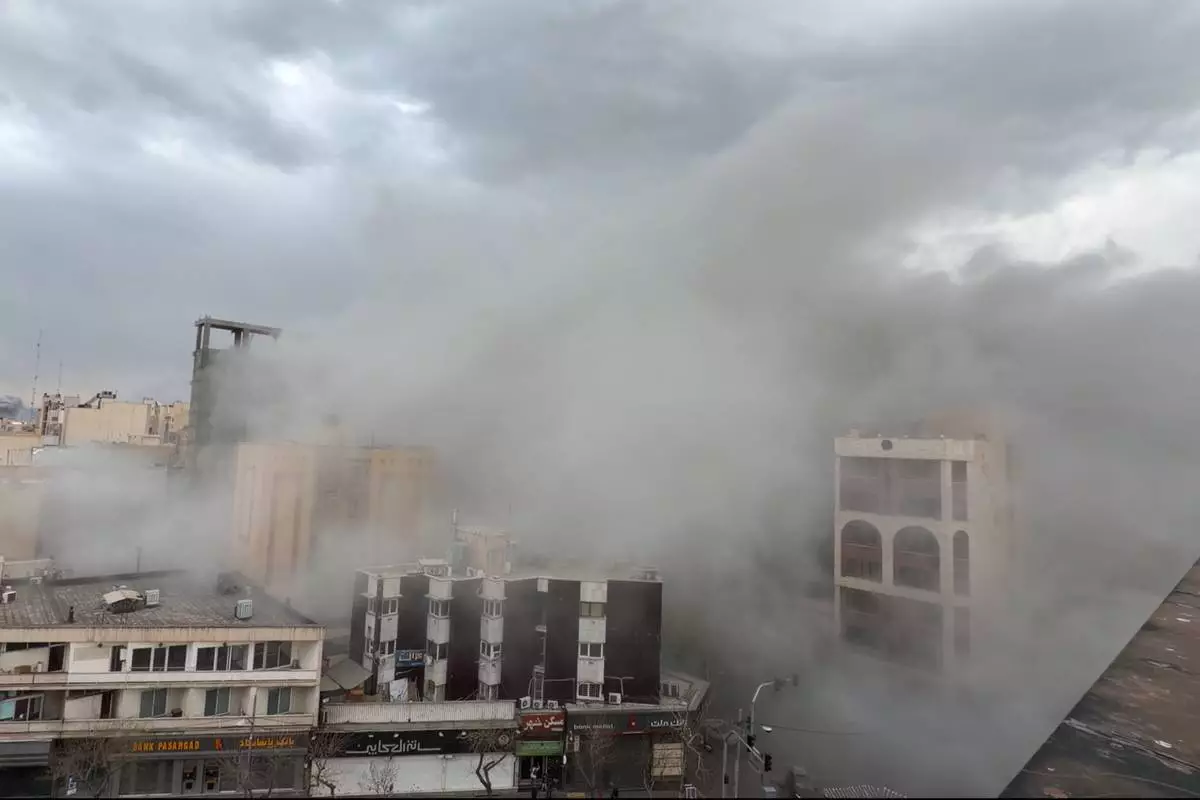
Smoke engulfs a street after a strike in Tehran, Iran, Monday, March 2, 2026. (AP Photo/Mohsen Ganji)