NEW YORK (AP) — This year’s Love Rocks NYC benefit is as star-studded as ever, with headliners Paul Simon, Mary J. Blige and Elvis Costello, and hosts that include Whoopi Goldberg and Julianne Moore.
But organizers say the sold-out event, set for Thursday night at New York’s Beacon Theatre, is taking on additional significance this year. It marks the 10th Love Rocks concert and the 40th anniversary of God’s Love We Deliver, the nonprofit that provides medically tailored meals to New Yorkers that need them, at a time when federal cuts to food programs have increased demand for that work. And the more difficult fundraising landscape makes events like Love Rocks, the nonprofit’s biggest of the year, even more essential.
Greg Williamson, the concert producer and real estate broker who has executive produced all the Love Rocks NYC shows with fashion designer John Varvatos and events producer Nicole Rechter, said the reduced federal support to fight food insecurity has made artists more interested in helping out.
“There has always been a reason to support this cause, if you can,” Williamson said. “But during the times we’re living in, people are very aware of (federal cuts).”
The Love Rocks shows have raised $65 million in the past 10 years, which translates to about 6.5 million meals that God’s Love We Deliver can offer, Williamson said. But the events have also raised the profile of the charity and its mission, enabling it to attract more volunteers and more partners.
“We’ve cracked the code on using music to raise money and raise awareness, which is not an easy thing to really do effectively and it’s not an easier thing to do year after year,” Williamson said. “That means more than I’m fully conscious of because it’s just hard to wrap your head around it.”
The proceeds from this year’s Love Rocks NYC concert and its livestreaming at loverocksnyc.com is set to be the biggest single fundraiser in God’s Love We Deliver’s history. And it comes at a time where the nonprofit is taking on its biggest expansion, opening a new distribution center in Brooklyn last month and launching its new 40 Forward capital campaign to better utilize the space to serve more meals more efficiently.
Terrence Meck, God’s Love We Deliver’s president and CEO, said that the group has worked hard to diversify its funding base over the years and only relies on federal grants for a small percentage of its work.
Because God’s Love We Deliver began serving meals to HIV-positive patients before expanding to anyone with a chronic illness, the nonprofit has always strived to be more in control of its finances rather than depending on governmental funding that could change depending on what administration is in charge. Currently, about 60% of the group’s annual budget comes from philanthropy – money from individual donors and other nonprofits.
Meck said that, so far, God’s Love We Deliver hasn’t seen any cuts due to the Trump administration. “We’ve been really lucky,” he said. “I think we operate in a sweet spot with this administration because ‘food as medicine’ is something that they are talking about and that they’re keeping front of mind when it comes to the health and well-being of this nation.”
What sets the organization apart, though, is its volunteers, Meck says. “The care, dignity and compassion that we bring to our clients through food, but also through that human connection is so important,” he said. “Of course they love our food and they’re so grateful that they’re not hungry… But it’s all about feeling, about knowing, that they’re not alone.”
Actor-philanthropist Liev Schreiber, in celebrating the 40 millionth meal donated by God’s Love We Deliver in the New York area last year, said that the nonprofit is “a testament to New Yorkers and how they step up.”
“It’s one of the things I love about this city,” he said of the organization.
This story has been updated to correct the spelling of Terrence Meck's last name.
Associated Press coverage of philanthropy and nonprofits receives support through the AP’s collaboration with The Conversation US, with funding from Lilly Endowment Inc. The AP is solely responsible for this content. For all of AP’s philanthropy coverage, visit https://apnews.com/hub/philanthropy.
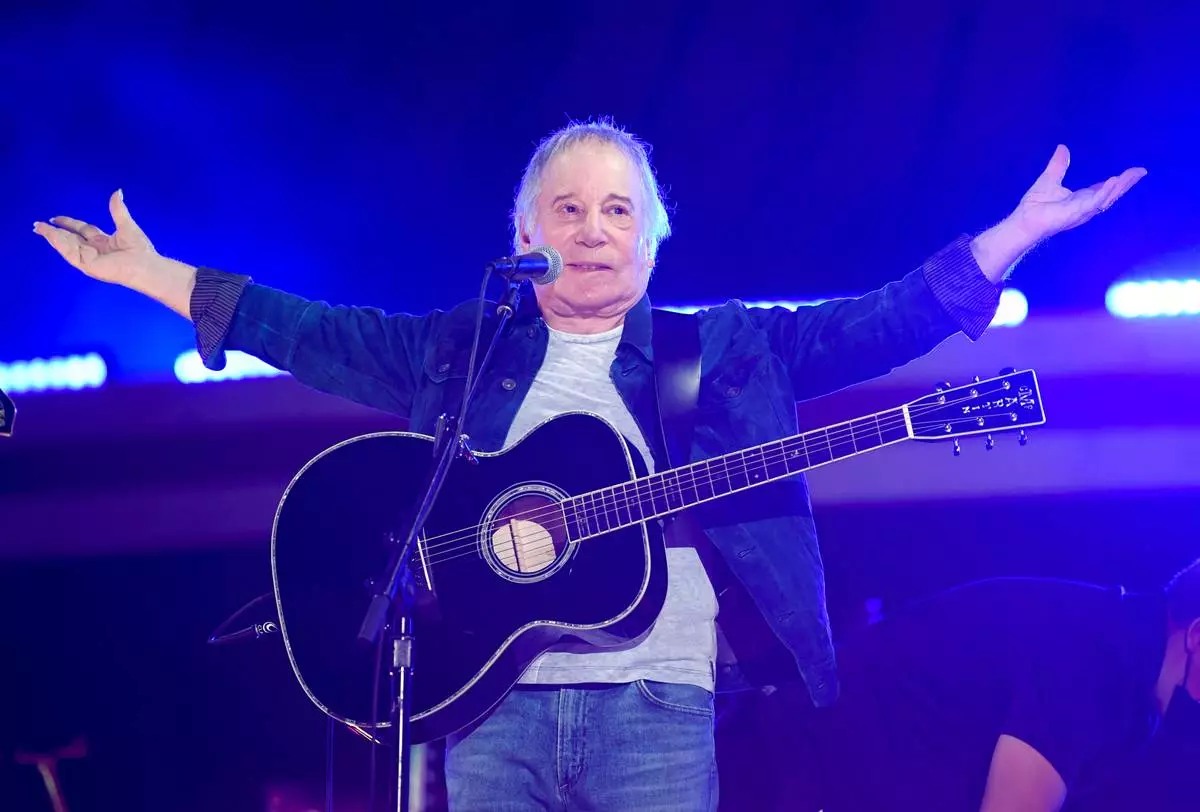
FILE - Singer-songwriter Paul Simon performs at Global Citizen Live in Central Park on Sept. 25, 2021, in New York. (Photo by Evan Agostini/Invision/AP, File)

FILE - Songwriter Paul Simon, right, and singer Mary J. Blige attend the skills competition at the NBA basketball All-Star Saturday Night on Feb. 13, 2010, in Dallas. (AP Photo/Eric Gay, file)

FILE - Mary J. Blige onstage during the MTV Video Music Awards on Sept. 12, 2023, at the Prudential Center in Newark, N.J. (Photo by Charles Sykes/Invision/AP, File)
TOKYO (AP) — Asian shares mostly declined and oil prices surged higher Tuesday as investors eyed risks to the region’s energy supply because of the Iran war.
Shares in South Korea sank 4.8% as markets reopened after a holiday on Monday, to 5,946.06.
Benchmark U.S. crude rose 77 cents to $72.00 a barrel. Brent crude, the international standard, added $1.10 to $78.84 a barrel. They jumped Monday then fell back although still at higher levels than before due to worries that the war could clog the global flow of crude.
Japan's benchmark Nikkei 225 sank 2.1% to 56,853.48. Like other resource-poor countries in the region, Japan could be especially hit by the lack of access to the Strait of Hormuz since much of its oil and natural gas is shipped through there.
However, analysts say Japan has a sizable stockpile lasting more than 200 days and so the threat is not immediate.
Japanese energy stocks plunged, with Eneos Corp. down nearly 6% and Idemitsu Kosan down nearly 4%. Defense-related issues, which have risen recently on expectations of more military spending by Prime Minister Sanae Takaichi, sank back as traders sold to lock in gains from the day before. Mitsubishi Heavy plunged 5%, and IHI lost 4%.
In the rest of the region, Australia's S&P/ASX 200 lost 1.2% to 9,089.50, while Hong Kong's Hang Seng shed 0.1% to 26,038.29 and the Shanghai Composite index lost 0.3% to 4,170.63.
Stocks of airlines, including American Airlines, United and Delta, were some of Monday’s biggest losers on Wall Street. Higher oil prices threaten their already big fuel bills, the fighting in the Middle East also has closed airports and left travelers stranded.
The losses cascaded in Asia, with ANA stock down 2.4%, while Japan Airlines fell 5.2%, Korean Air declined 8.9% and Qantas Airways lost 2.9%.
The market reactions to the war have been relatively muted. Past military conflicts in the Middle East have not caused long-term drops for U.S. markets. For this war to knock down U.S. stocks in a significant and sustained way, the price of oil would perhaps need to jump above $100 per barrel, according to strategists at Morgan Stanley led by Michael Wilson.
“Since 2000, there have been 22 one-day oil price spikes of more than 10 percent,” said Stephen Innes, managing partner at SPI Asset Management. “In other words, energy shocks do not automatically derail equities unless they are severe and sustained. The market is well aware of that playbook.”
On Monday, the S&P 500 fell as much as 1.2% but finished with a gain of less than 0.1%, at 6,881.62. The Dow Jones Industrial Average dipped 0.1% to 48,904.78, and the Nasdaq composite rose 0.4% to 22,748.86. Both also recovered from steep early losses.
Gold climbed 1.2% as investors looked for safer things to own and as U.S. officials tried to persuade the world that this war will not last forever.
Helping the U.S. stock market to bounce back from its early losses were oil companies, which benefited from the rising price of crude. Exxon Mobil climbed 1.1%, and Marathon Petroleum rose 5.9%.
Companies that make equipment for the military also strengthened. Northrop Grumman climbed 5.9%, and RTX rallied 4.7%. Palantir Technologies, whose software helps global defense agencies and other customers, jumped 5.8%. Big Tech stocks also rose. Nvidia rose 2.9% and was the strongest single force pushing the S&P 500 higher.
In the bond market, the yield on the 10-year Treasury rose to 4.04% from 3.97% late Friday. A report showing growth for U.S. manufacturing was better last month than economists expected also helped to lift yields.
In currency trading, the U.S. dollar slipped to 157.32 Japanese yen from 157.47 yen. The euro cost $1.1693, inching up from $1.1690.
AP Business Writer Stan Choe contributed.
Yuri Kageyama is on Threads: https://www.threads.com/@yurikageyama
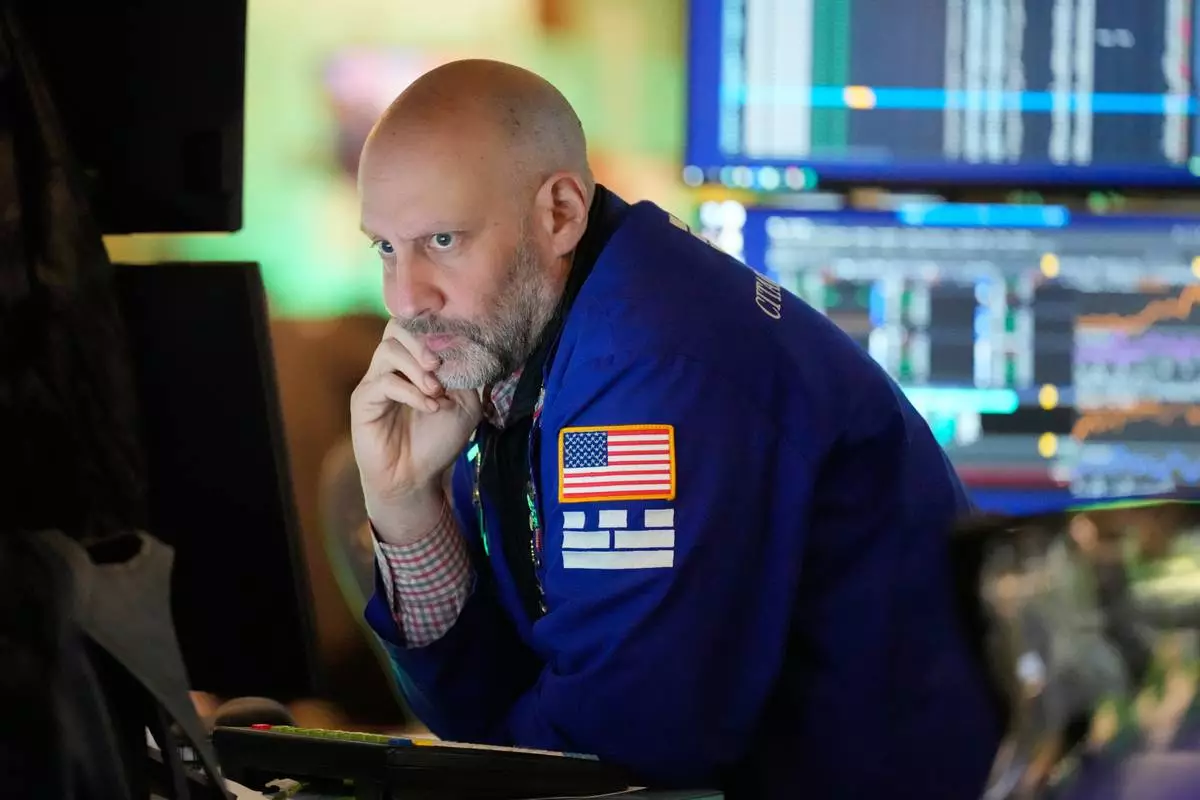
Meric Greenbaum works on the floor at the New York Stock Exchange in New York, Tuesday, March 3, 2026. (AP Photo/Seth Wenig)
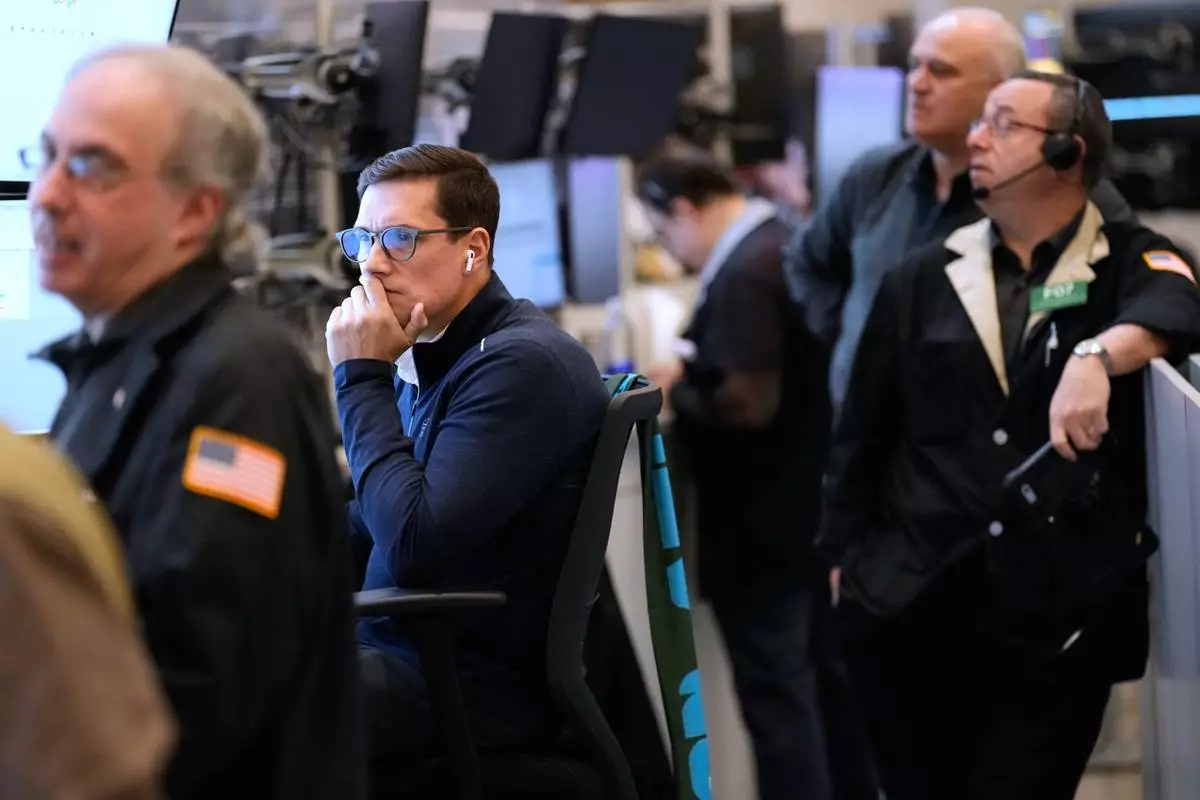
Traders work on the floor at the New York Stock Exchange in New York, Monday, March 2, 2026. (AP Photo/Seth Wenig)
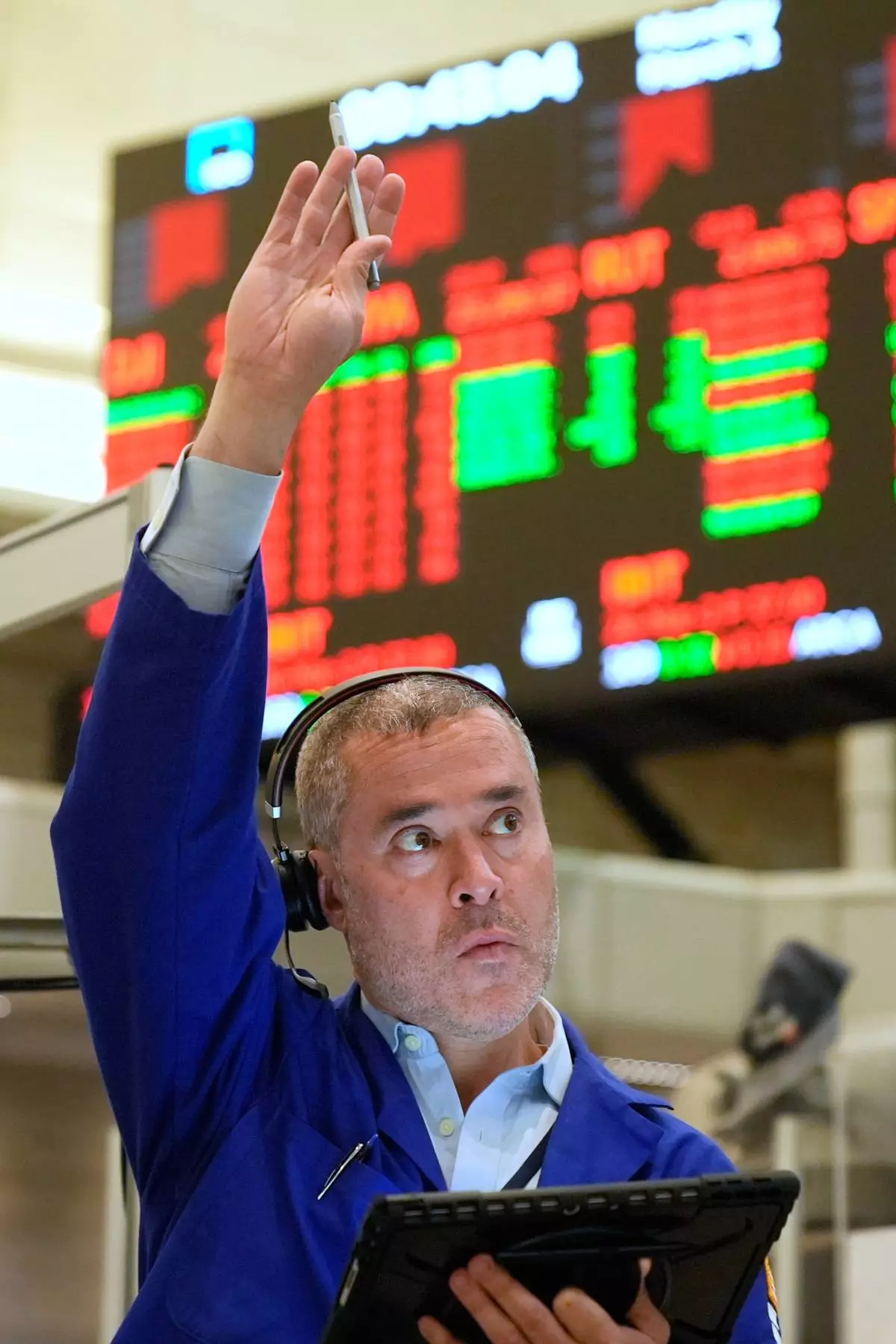
Justin Kanda works on the floor at the New York Stock Exchange in New York, Monday, March 2, 2026. (AP Photo/Seth Wenig)
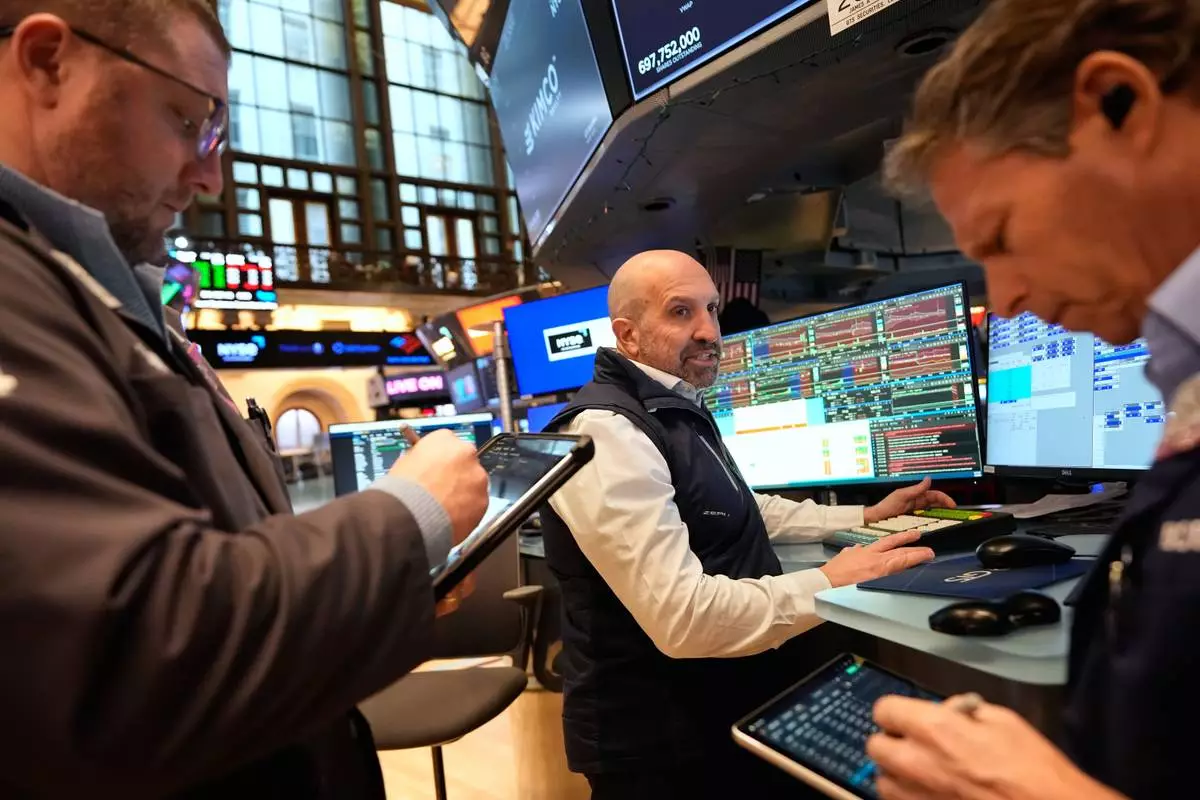
James Denaro, center, and others work on the floor at the New York Stock Exchange in New York, Monday, March 2, 2026. (AP Photo/Seth Wenig)
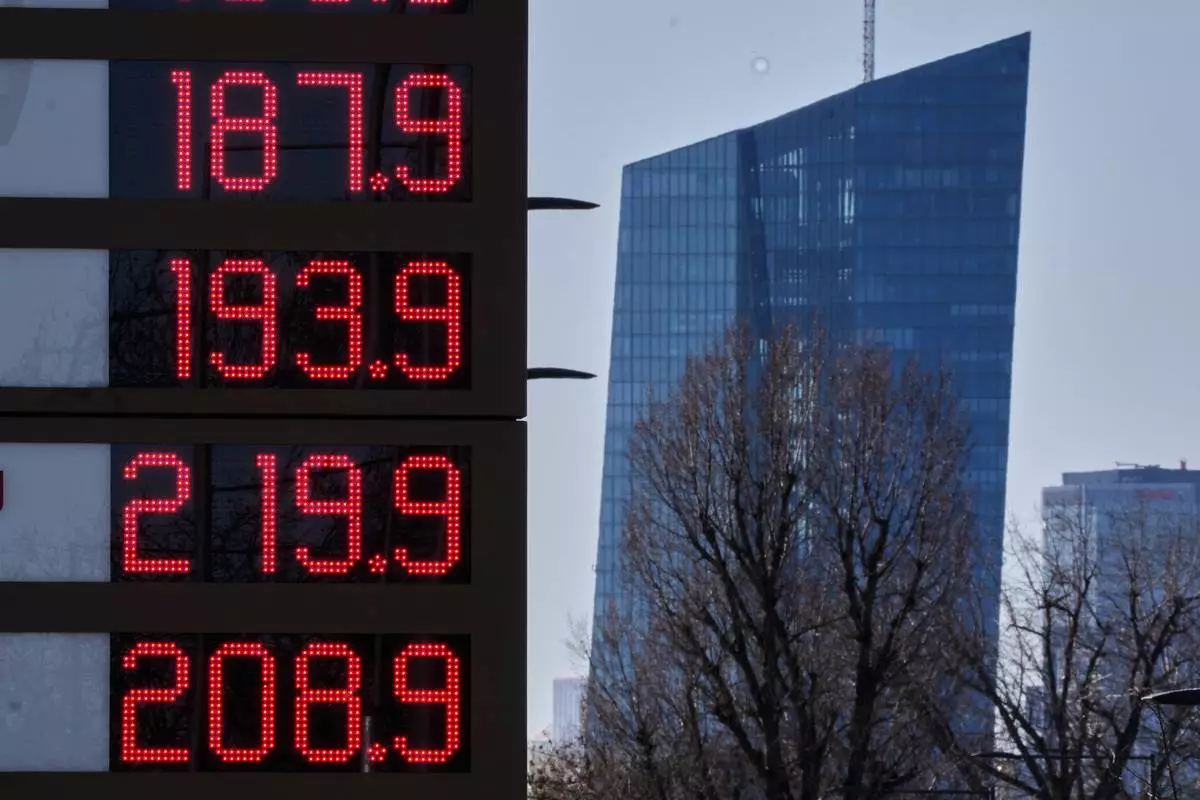
Gas prizes are displayed at a gas station with the European Central Bank in background in Frankfurt, Germany, Monday, March 2, 2026. (AP Photo/Michael Probst)
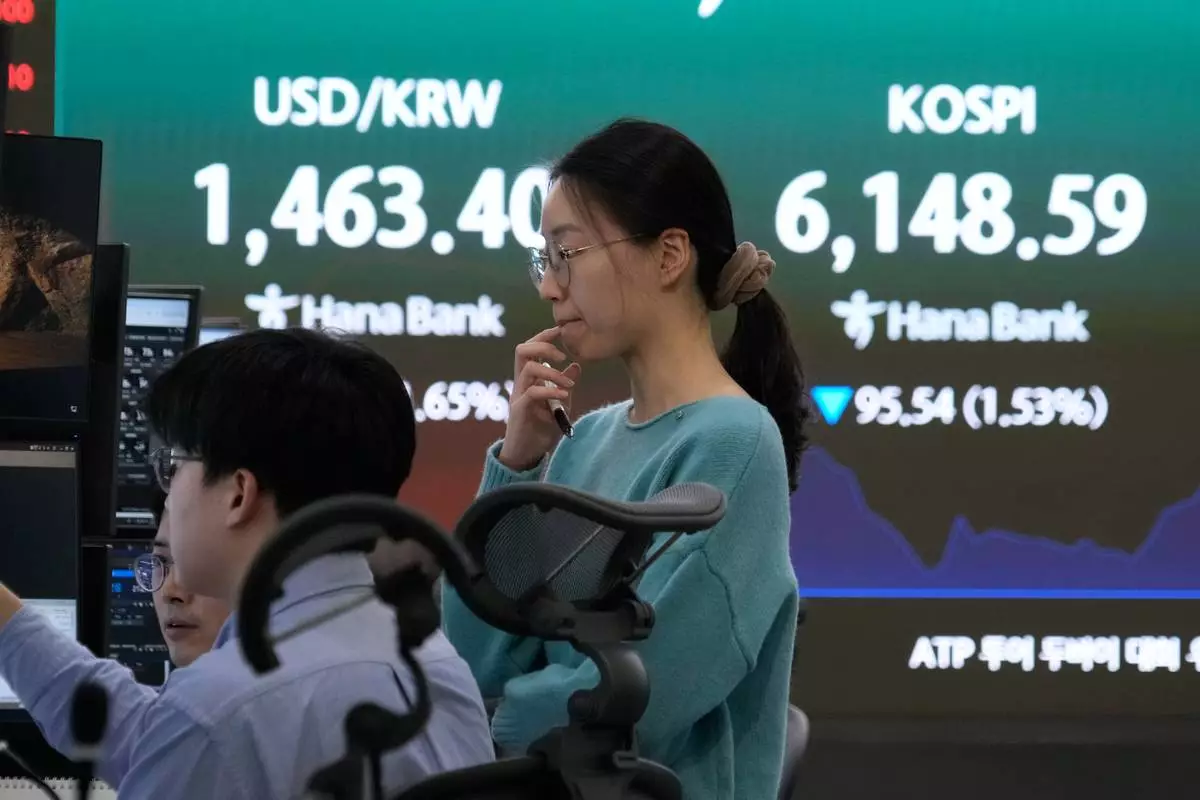
Currency traders watch monitors near a screen showing the Korea Composite Stock Price Index (KOSPI), right, and the foreign exchange rate between U.S. dollar and South Korean won at the foreign exchange dealing room of the Hana Bank headquarters in Seoul, South Korea, Tuesday, March 3, 2026. (AP Photo/Ahn Young-joon)
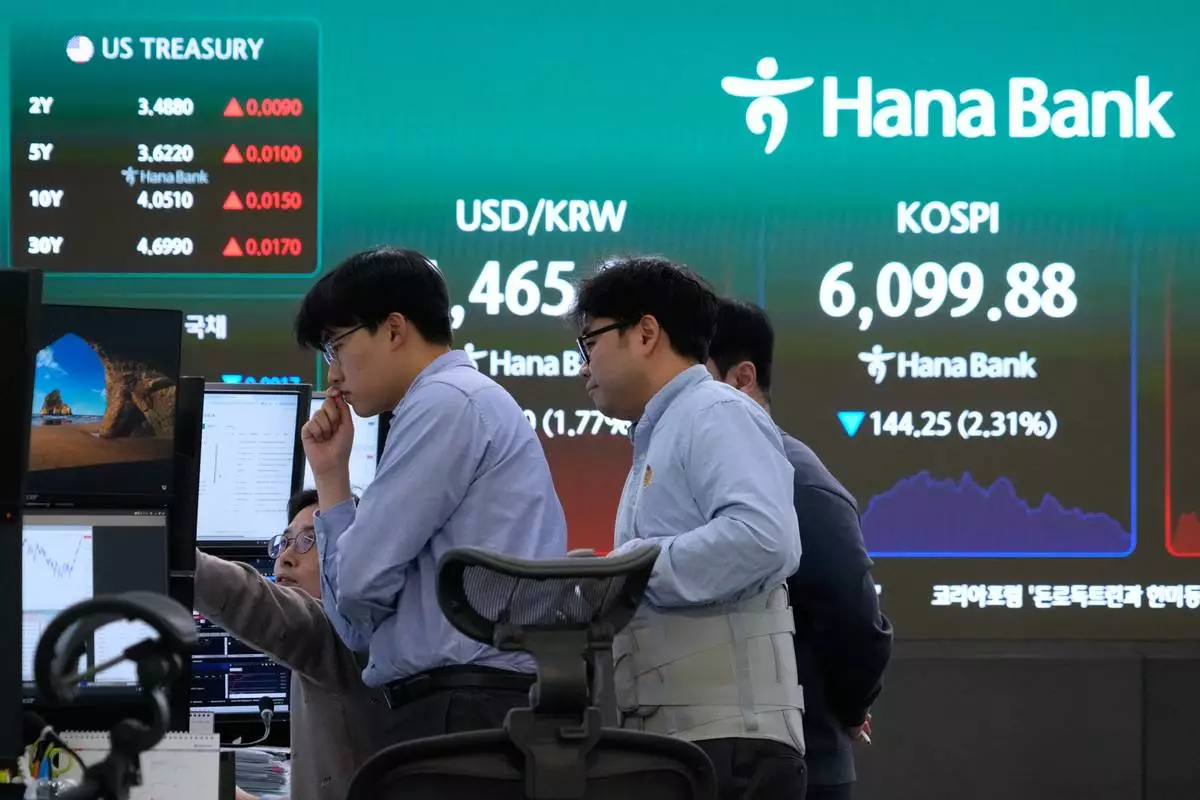
Currency traders watch monitors near a screen showing the Korea Composite Stock Price Index (KOSPI), right, and the foreign exchange rate between U.S. dollar and South Korean won at the foreign exchange dealing room of the Hana Bank headquarters in Seoul, South Korea, Tuesday, March 3, 2026. (AP Photo/Ahn Young-joon)
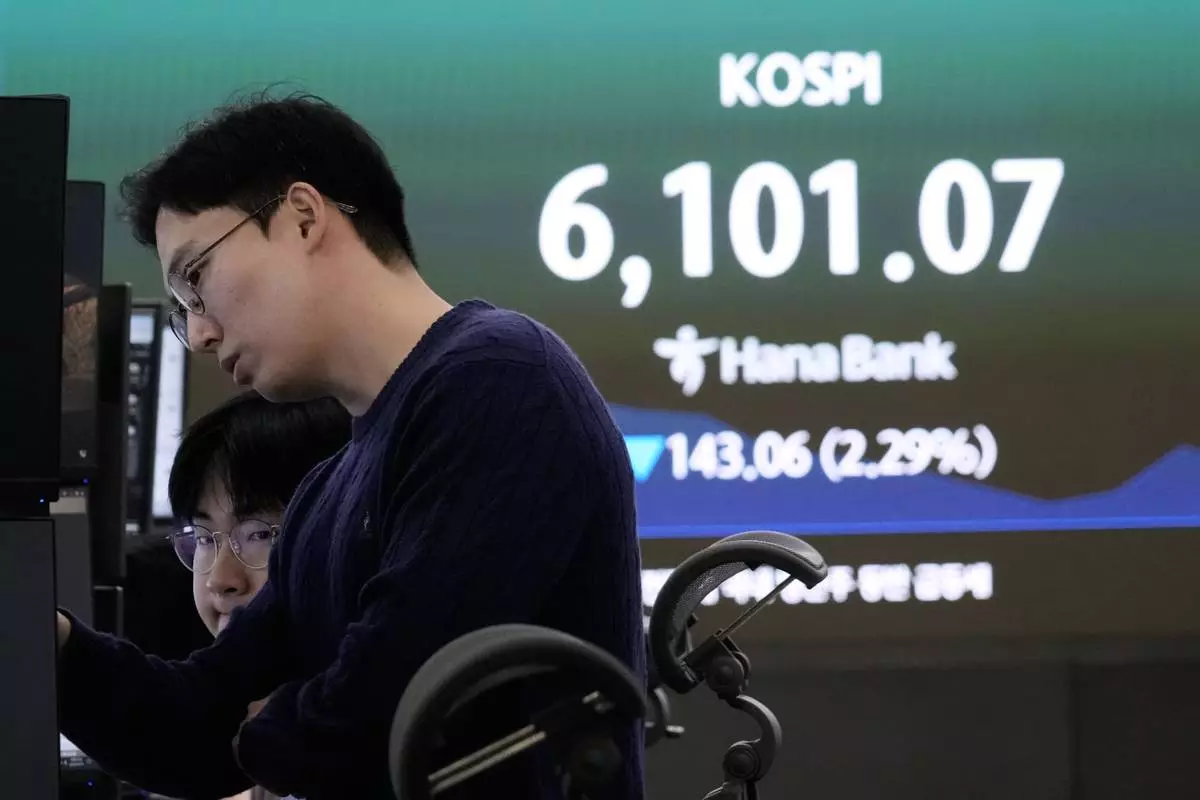
Currency traders watch monitors near a screen showing the Korea Composite Stock Price Index (KOSPI) at the foreign exchange dealing room of the Hana Bank headquarters in Seoul, South Korea, Tuesday, March 3, 2026. (AP Photo/Ahn Young-joon)
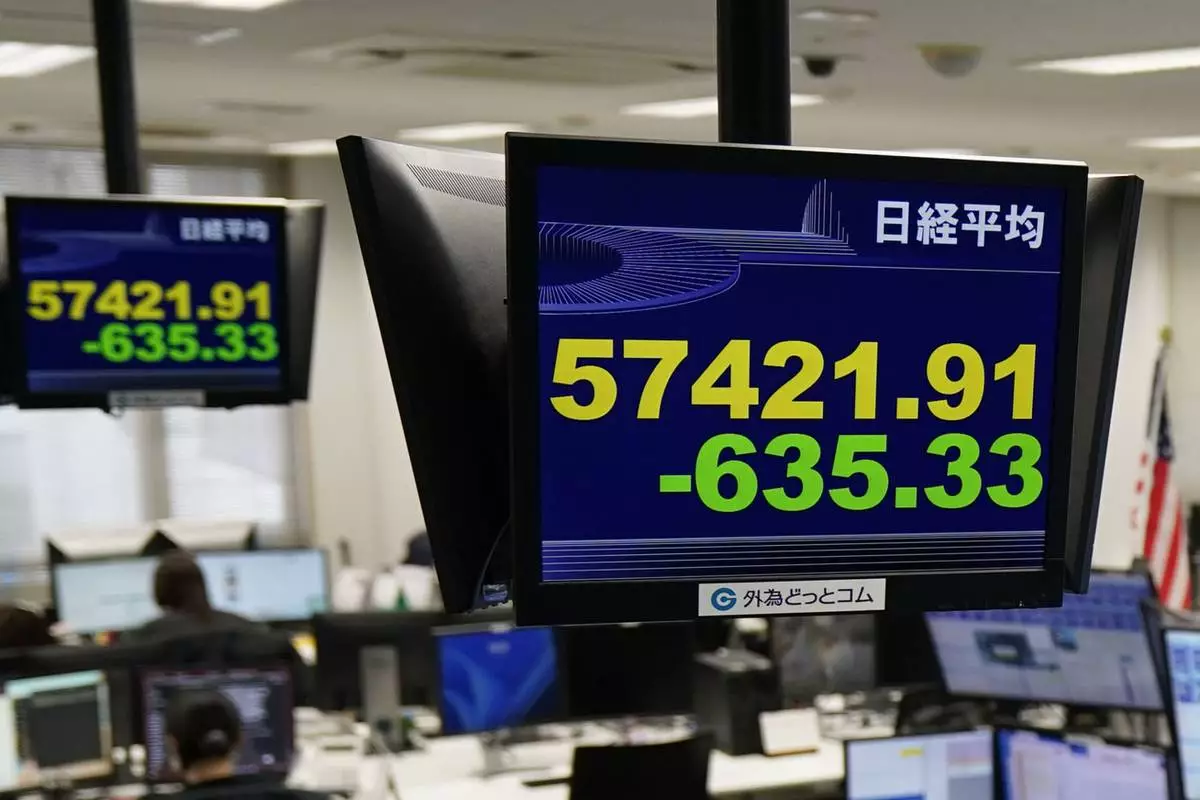
Electronic stock boards show Japan's Nikkei index at a foreign exchange brokerage firm Tuesday, March 3, 2026, in Tokyo.(Kyodo News via AP)
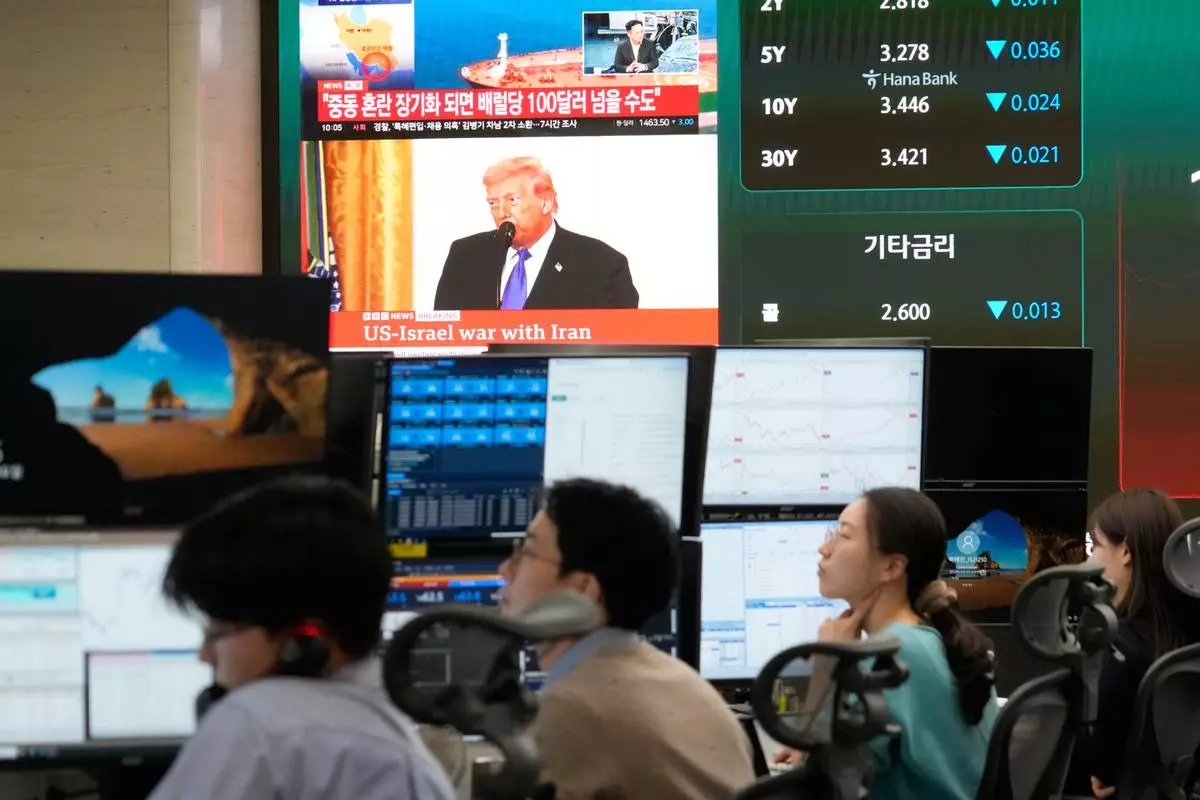
U.S. President Donald Trump is seen on a screen as traders work at the foreign exchange dealing room of the Hana Bank headquarters in Seoul, South Korea, Tuesday, March 3, 2026. (AP Photo/Ahn Young-joon)