Skip to Content Facebook Feature Image

China has never exported fentanyl-related drugs to North America: drug regulator

China

China

China

China has never exported fentanyl-related drugs to North America: drug regulator

2025-03-13 13:29 Last Updated At:03-14 00:57

A spokesperson for China's National Medical Products Administration (NMPA) on Wednesday said China has never exported fentanyl-related drugs to North America.

In response to a media inquiry, the spokesperson provided a comprehensive overview of the production, operation, and export management of fentanyl-related substances in China.

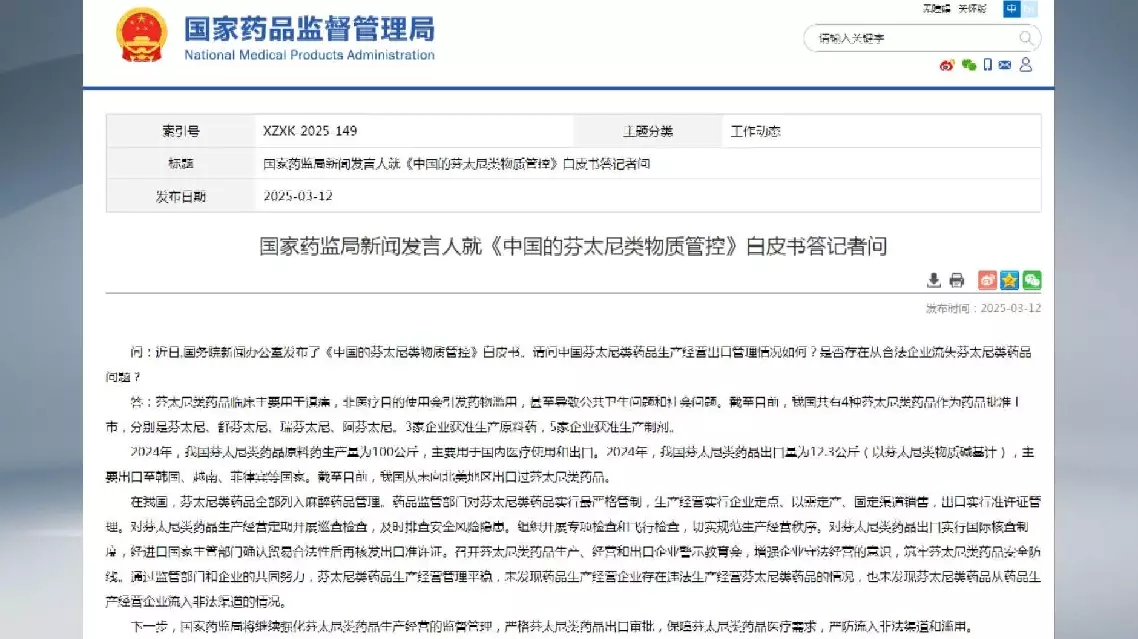
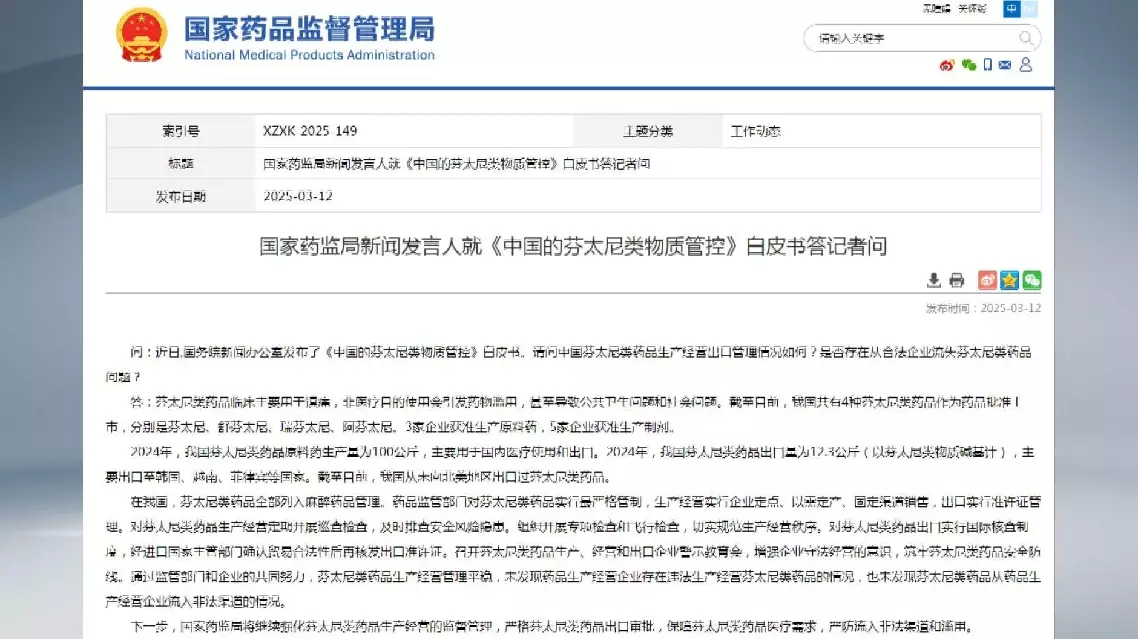
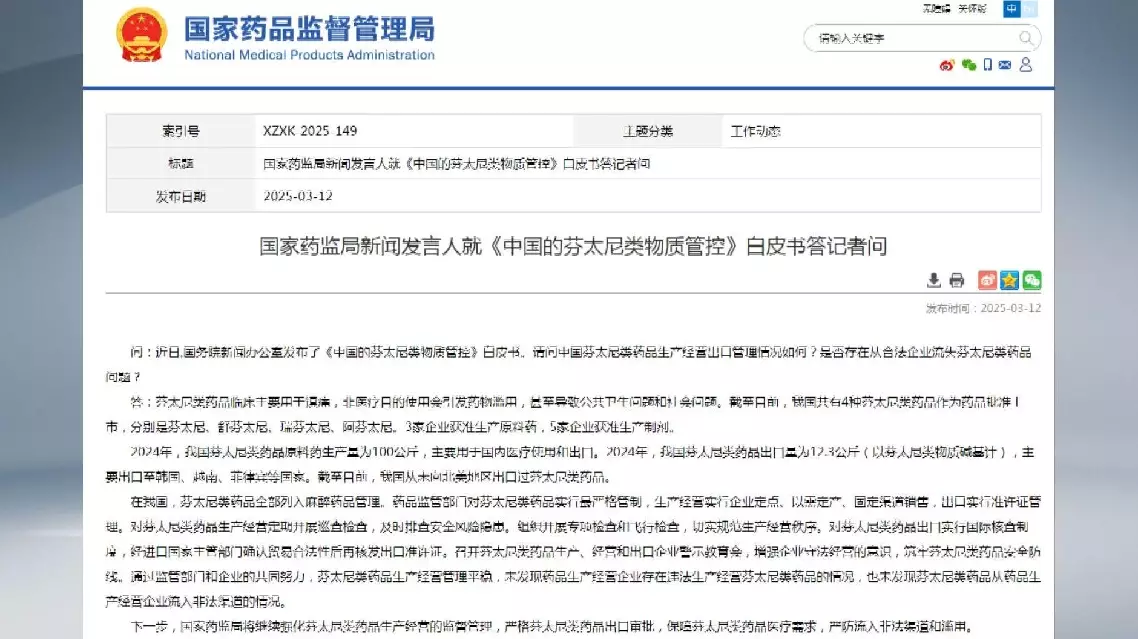
The spokesperson noted that in 2024, China exported 12.3 kilograms of fentanyl-related drugs, with shipments mostly going to South Korea, Vietnam, and the Philippines. To date, the country has never exported fentanyl-related drugs to North America.

In 2024, China produced 100 kilograms of fentanyl-based active pharmaceutical ingredients, primarily for domestic medical use and export, according to the spokesperson.

The spokesperson said the fentanyl-related drugs are primarily used in clinical settings for pain relief, noting that non-medical use can lead to abuse and significant public health risks.

China has approved four fentanyl-related drugs for medical use, namely fentanyl, sufentanil, remifentanil, and alfentanil, and granted production rights to three companies for active pharmaceutical ingredients, as well as five others for finished formulations.

The spokesperson emphasized that all fentanyl-related drugs in China are classified as narcotics, and drug regulatory authorities enforce the strictest regulations on their production and distribution.

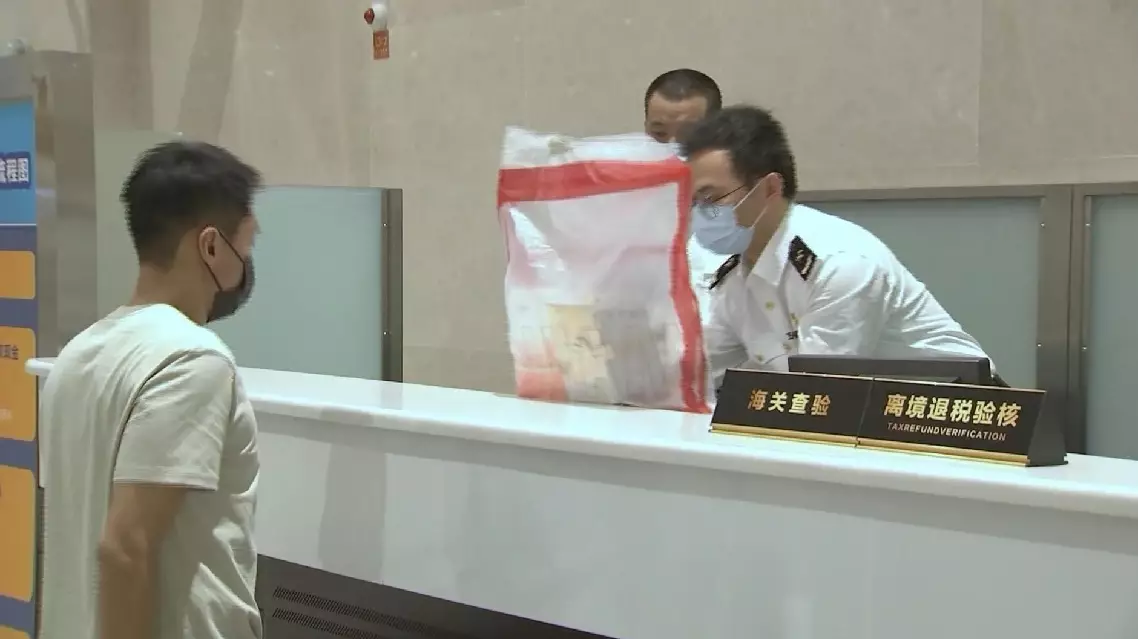
Production is carried out by designated companies based on demand, and sales occur through fixed channels. The export process is tightly regulated through an approval system, with export permits issued only after the importing country confirms the legitimacy of the trade. The NMPA conducts regular inspections, including surprise checks, to ensure that production complies with regulations.

The spokesperson further noted that the export of fentanyl-related medications is subject to an international verification system. An export permit is issued only after the legality of the trade is confirmed by the competent authorities of the importing country. The NMPA has also organized educational sessions for companies involved in the production, distribution, and export of fentanyl-related drugs to enhance legal compliance.

Looking forward, the NMPA plans to further tighten oversight of fentanyl-like drug production and exports, ensuring that medical demand is met while preventing misuse and illegal distribution, according to the spokesperson.
China has never exported fentanyl-related drugs to North America: drug regulator
China has never exported fentanyl-related drugs to North America: drug regulator
China has never exported fentanyl-related drugs to North America: drug regulator

China has never exported fentanyl-related drugs to North America: drug regulator

China has never exported fentanyl-related drugs to North America: drug regulator

China has never exported fentanyl-related drugs to North America: drug regulator

Chinese scientists have established a new technology platform that reveals how genetic mutations in tumors reshape the microenvironment and modulate immune responses, a discovery that could explain why modern cancer treatments often fail in patients whose cancers have spread.

The study, published in the journal Cell on Thursday, was jointly conducted by a Shanghai-based team from the Center for Excellence in Molecular Cell Science at the Chinese Academy of Sciences, in collaboration with teams from Shanghai Jiao Tong University, and Guangzhou Laboratory.

Using the new technology platform called CLIM-TIME (CRISPR-Laser-captured microdissection Integration Mapping of Tumor Immune Microenvironment), the researchers analyzed 391 common tumor suppressor genes to see how they reshape the tumor microenvironment — the biological neighborhood surrounding a tumor, and classified them into seven distinct subtypes.

The researchers found that the loss of certain tumor suppressor genes — genes that normally prevent cancer growth — triggers a massive buildup of collagen. This excess collagen makes the tumor structure so dense that it acts like a wall, preventing T cells — the body's natural "assassin" cells — from reaching and killing the cancer.

"It acts like a spider weaving a web. This web not only supports itself but also recruits and reshapes other normal cells from the body into accomplices that help shape this suppressive environment, blocking T cells' entry," said Wang Guangchuan, researcher at the Center for Excellence in Molecular Cell Science.

The team identified a specific molecule called LOXL2 as the architect of this barrier. In tests on mice, researchers found that by blocking LOXL2, they could dissolve the collagen wall. This allowed T cells to penetrate the tumor and significantly boosted the power of immunotherapy drugs.

We combined this with current CAR-T cell therapy. One major issue with CAR-T is that it can't enter solid tumors. When treating human tumors with CAR-T, if we use a small molecule to target this protein we've identified, it could significantly improve CAR-T treatment outcomes. Of course, when it comes to clinical application, we still need to evaluate its safety [and other indicators]," Wang said.

CAR-T is an immunotherapy involving the genetic engineering of a patient's T-cells to recognize and attack cancer cells.

Chinese scientists develop new technology to decode immunotherapy resistance in tumor microenvironment

Chinese scientists develop new technology to decode immunotherapy resistance in tumor microenvironment

Recommended Articles