A Cuban veteran pilot shared his memories of the aviation training and the friendship forged in China at a journey that shaped his life and career over six decades ago.
In 1961, shortly after China and Cuba established diplomatic relations, 81-year-old Henry Perez, a now retired pilot from the Cuban Air Force, was among the first batch of the 223 young Cubans selected to travel to China for aviation and aircraft maintenance training.
Their curriculum focused on aviation-related subjects, with Perez particularly enjoying aerodynamics and flight training. Despite the language barrier, the Chinese military instructors developed a creative communication system using numerical codes to ensure effective flight training. And that was also the reason why he was called "641," his flight number, all the time.
Perez was also amazed at the instructions their Chinese military instructors provided which helped them prevent injures from training.
"We finished flying the Yak-18 and were parachuted out. Not one of us had an ankle problem. Because the Chinese instructors had something, which I later learned about at the War College, called combat action modeling," said Perez.
For many of the young Cubans, life in China was a sharp contrast to what they were used to. To encourage them to do exercises in the morning, Chinese instructors used a motivational approach rather than enforcing strict orders.
"I didn't get up at five or six in the morning, never here in Cuba. So, when we arrived in China, they gave us shorts and sneakers, and told us we had to get up to run and do morning exercises. You guess what the Chinese military instructors did to encourage us? Do you think they said you had to obey the orders? No, no, no. The military instructors invented a graph and put the distance from Beijing to Havana on it, and we ran the distance from Beijing to Havana without anyone watching us," he said.
"The advice from or the way of how they lived their lives set an example. They never criticized people but instructed people in a different way which was setting themselves examples to others. And that's how we try to be here in Cuba. Here in my house, no one throws away a piece of food. And here in my house, everyone eats what's served on their plate," said Perez.
Thanks to the training in China, Perez quickly rose through the ranks to serve as a flight leader in Holguin upon returning to Cuba. Later, he became a squadron commander, and eventually, the head of Cuba's only aviation school. In his later years, he took on the role of director of the Cuban Museum of the Revolution.
On Feb 28 this year, a gathering was held in Havana to bring together representatives of the Chinese Air Force and over 10 retired Cuban pilots who received training in China.
Perez was one of the invited, but he never thought some people in China still remembered him when he received a gift at the gathering.
"I think the best thing that has happened to us is the full, selfless and united training we received from this great country China," he said at the gathering.
Former 12th Chinese Air Force Flight Academy instructors, Guan Huaizhong and Zhou Shengjing, recollected the farewell at the train station when the Cuban pilots graduated and recalled heartfelt embraces.
"At the train station after the graduation, they wouldn't leave, when we bid them farewell. They just held onto us and cried hardly," said Guan.
"We lived together, flied together in the sky and walked together on the ground that time. We really had a very good relationship," said Zhou.
Alberto Armando Alonso San Juan, a veteran pilot who has dedicated decades to sharing his story with Chinese tourists in Cuba, remarked that despite the long years and vast distances, the seasoned Cuban and Chinese pilots could reunite in brotherhood.
"I'm very happy that I had the opportunity to study in China. As I've said, it was one of the most important experiences of my life. I was just a kid, only 17 years old at the time, but I am deeply grateful to the Chinese people because they taught me so much. They not only taught us skills but also friendship and other important qualities. Even today, the group of us from that time still stay in touch and get along like brothers," Juan said.
"I won't have enough years left to live to be grateful to the Chinese people, who taught us that everything is possible. Don't look back but look forward," said Perez.
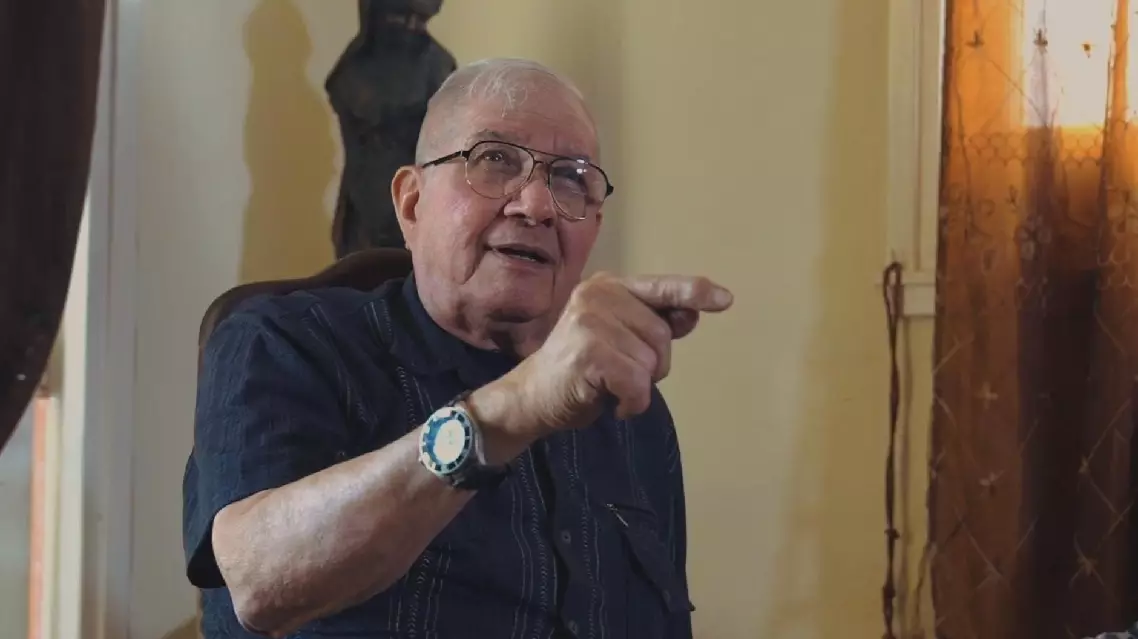
Veteran Cuban pilot reflects on life-changing aviation training in China
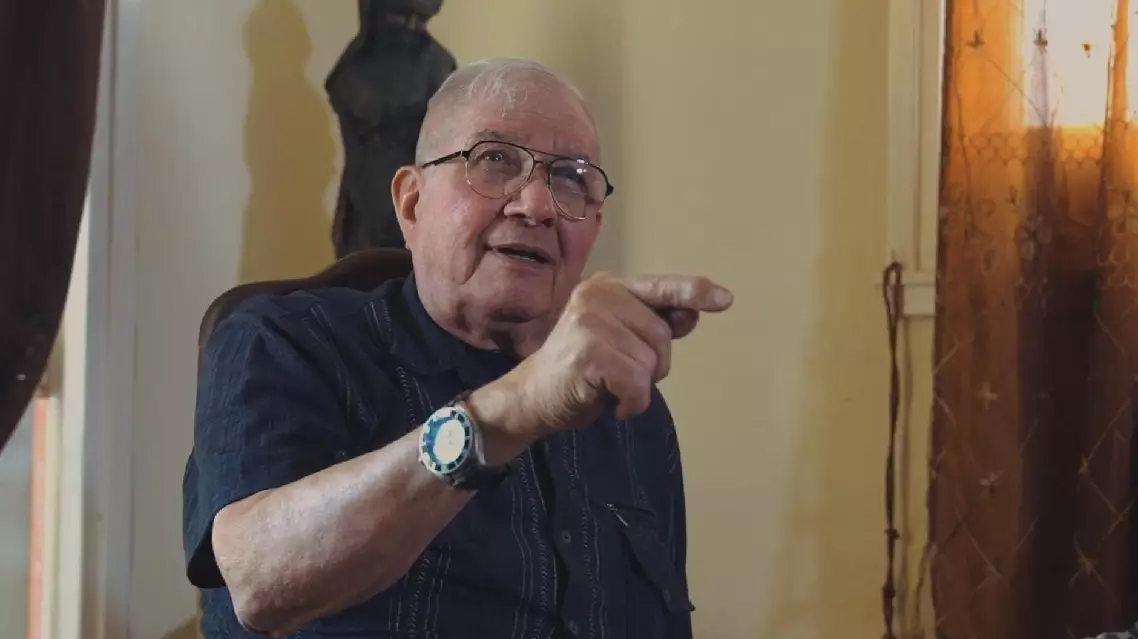
Veteran Cuban pilot reflects on life-changing aviation training in China
Veteran Cuban pilot reflects on life-changing aviation training in China