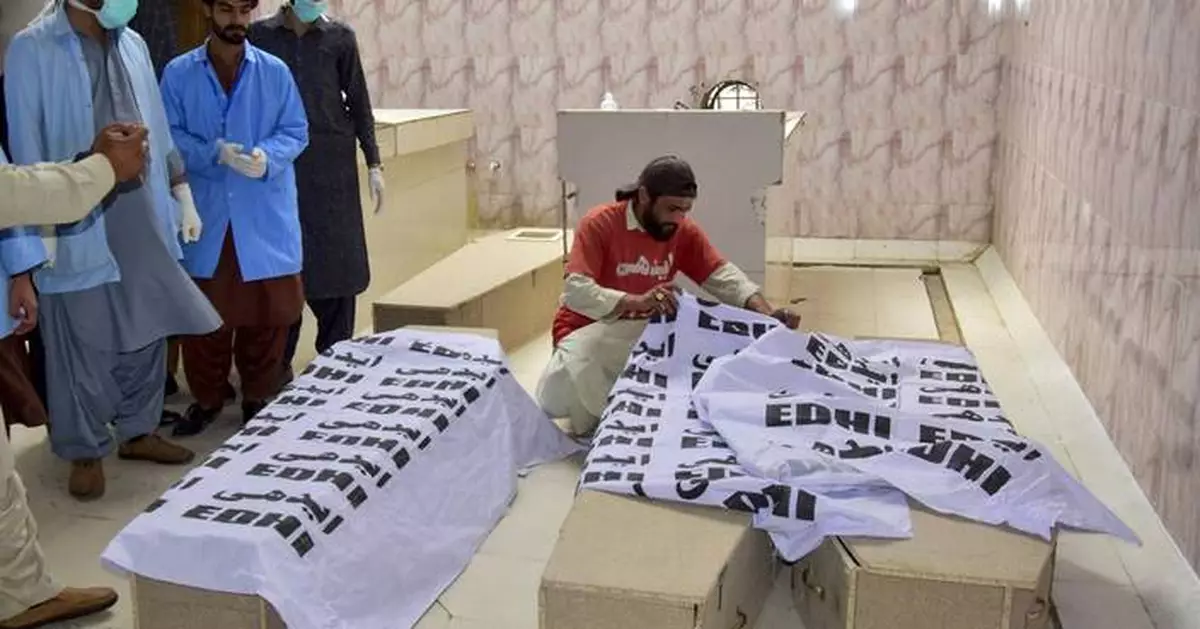
ISLAMABAD (AP) — Pakistan’s military accused neighboring India on Friday of sponsoring insurgents in the restive southwest as more survivors recounted their ordeal from the unprecedented attack by armed separatists this week that killed 26 passengers aboard a hijacked train.
The scope of the attack in Balochestan province underscored the struggles that Pakistan faces in efforts to reign in militant groups as attacks across the country escalated in recent years.
Accusing India and neighboring Afghanistan has been Islamabad's go-to strategy in the past. No evidence was offered for the latest accusation, which New Delhi promptly rejected.
In the attack Tuesday, members of the outlawed Baloch Liberation Army ambushed a train in a remote area, took about 400 people onboard hostage and triggered a firefight with security forces. The standoff lasted until late Wednesday, when the army said 33 hijackers were killed.
Oil- and mineral-rich Balochistan is Pakistan’s largest and least populated province. Ethnic Baloch residents have long accused the central government of discrimination — a charge Islamabad denies.
The attack has drawn condemnation from the international community, including the United States, China, Turkey, Iran and Britain. On Friday, the members of the U.N. Security Council “condemned in the strongest terms the heinous and cowardly terrorist attack” on the train in Balochistan.
“The members of the Security Council underlined the need to hold perpetrators, organizers, financiers and sponsors of these reprehensible acts of terrorism accountable and bring them to justice,” the council said in a statement.
At a news conference in Islamabad, army spokesman Lt. Gen. Ahmad Sharif said Friday that “in this terrorist incident in Balochistan, and others before, the main sponsor is your eastern neighbor,” referring to India.
He offered no proof. It was the first time the BLA — which has been fighting for more autonomy if not outright independence and a greater share of the province’s resources — had hijacked a train, although it had attacked trains before.
Some assailants escaped, and a search operation was underway to find them, Sharif said. When asked by a reporter, Sharif said most of the fatalities on the train were security forces protecting the passengers and troops traveling to their home cities.
Sarfraz Bugti, the chief minister of Balochistan, told reporters that Pakistan has “solid evidence” of India’s involvement in attacks but didn't share any specifics.
Sharif added that an Indian naval officer arrested in 2016 and convicted of espionage in Pakistan had worked for Indian intelligence to help the Baloch separatists and other militant groups. The officer, identified as Kulbhushan Jadhav, has been sentenced to death. Sharif did not link him to the train attack.
Pakistan and India are nuclear-armed rivals with a history of bitter relations. They have fought three wars since they gained independence in 1947 from colonial power Britain.
“We strongly reject the baseless allegations made by Pakistan,” India’s foreign ministry spokesman Randhir Jaiswal said in a statement.
Earlier, Pakistan’s Foreign Ministry claimed the train attack was orchestrated from Afghanistan. Kabul denied the accusation and said that the BLA has no presence in Afghanistan.
Still, Sharif claimed the train attackers had been in contact with handlers in Afghanistan and that they had weapons originating from both India and Afghanistan.
Pakistan has suspended all train services to and from Balochistan since Tuesday's attack. Sharif Ullah, a railway official, said repairs on the tracks, which were blown up by insurgents to stop the train, have not yet started.
Survivors have recounted their harrowing ordeal during the 36-hour hijacking.
Muhammad Farooq, a resident of Quetta, described how BLA stopped the train and ordered passengers to disembark.
“They checked identity cards and started killing people who worked for the armed forces,” Farooq said. Many passengers, he said, fled successfully while the hijackers were exchanging fire with Pakistani troops.
Mohammad Tanveer, who was traveling from Quetta, Balochistan's provincial capital, to the eastern city of Lahore, said he was wounded but managed to escape the hijackers. The attackers were looking for members of the military and security forces, and started killing them in small groups, one after another, he said.
College student Nair Husnain said he saw the militants go through the train, asking people to stand up and tying their hands before shooting them several times. They first killed soldiers, then minority Shiites and Punjabis. Balochs were spared.
Husnain, who also made his escape while the hijackers were exchanging fire with Pakistani security forces as they laid siege to the train, recounted how a mother traveling with three sons — all soldiers — had to watch as they were shot and killed.
“Those scenes are still before my eyes,” he said.
Sattar reported from Quetta, Pakistan. Associated Press writers Sheikh Saaliq in New Delhi and Edith M. Lederer at the United Nations contributed to this report.
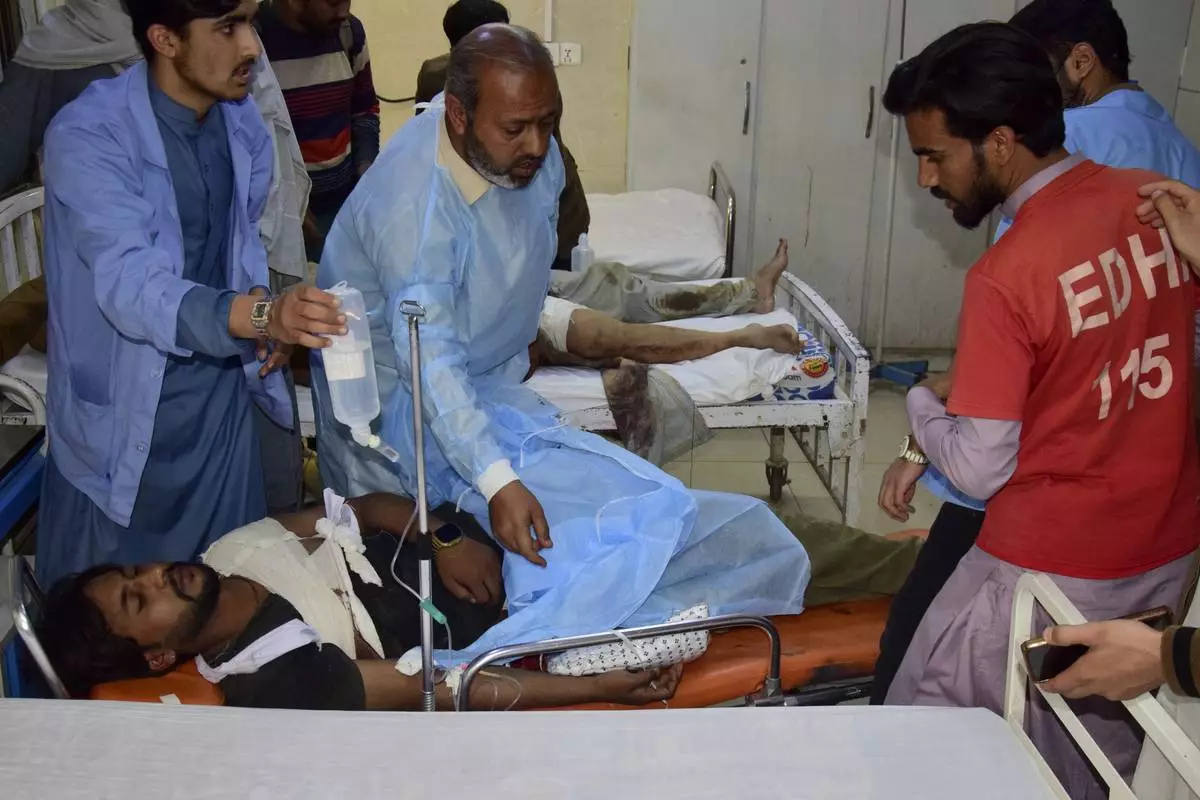
An injured victim of a passenger train attacked by insurgents, receives treatment upon arrival at a hospital in Quetta, Pakistan's southwestern Balochistan province, Thursday March 13, 2025. (AP Photo/Arshad Butt)
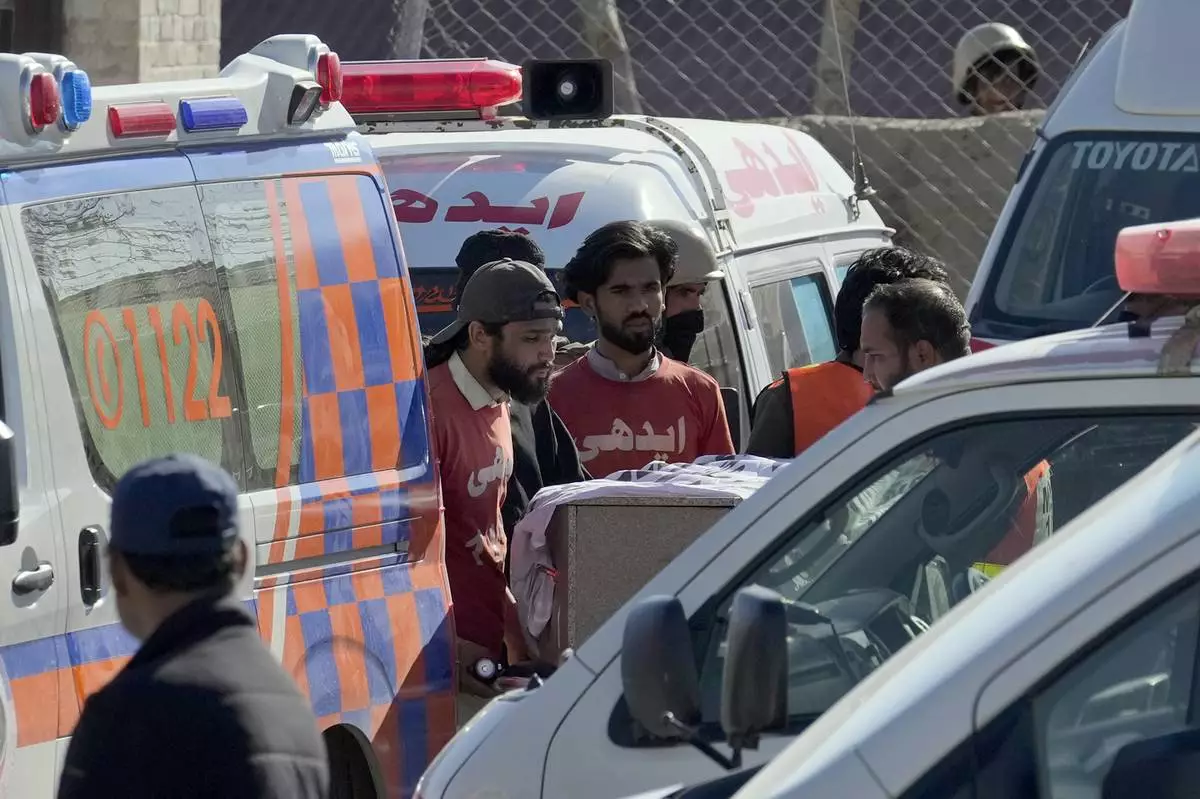
Rescue workers transport a coffin containing the body of a victim from a passenger train attacked by insurgents, upon arrival at a railway station in Much, Pakistan's southwestern Balochistan province, Thursday March 13, 2025. (AP Photo/Anjum Naveed)
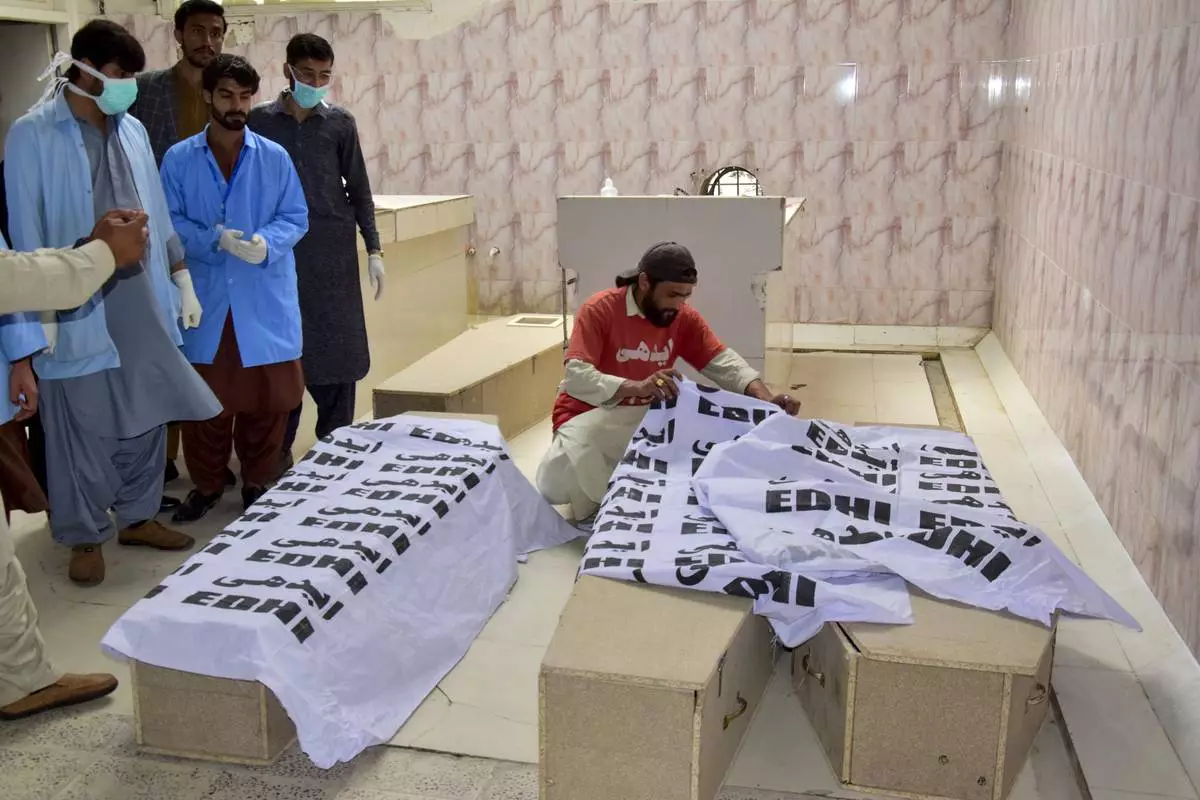
Rescue workers gather around coffins containing the bodies of victims following a train attack upon arrival at a hospital in Quetta, Pakistan's southwestern Balochistan province, Thursday March 13, 2025. (AP Photo/Arshad Butt)