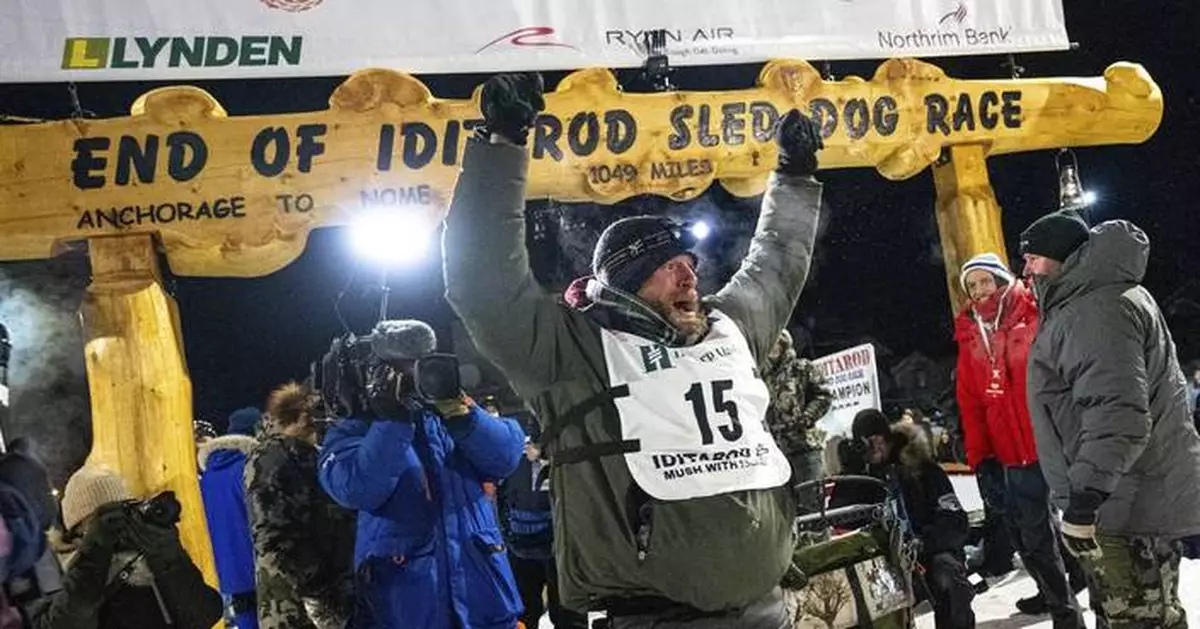
JUNEAU, Alaska (AP) — Bundled-up well wishers lined a street along the Bering Sea coastline in the early morning darkness Friday, cheering musher Jessie Holmes as he won Alaska's Iditarod Trail Sled Dog Race.
Holmes pumped his fist as he ran alongside his sled with a headlamp beaming from his forehead, as he and his 10-dog team finished the 1,128-mile (1,815-kilometer) race across the Alaska wilderness in the Gold Rush town of Nome. The distance for this year's running was the longest in the Iditarod's 53-year history.
Click to Gallery
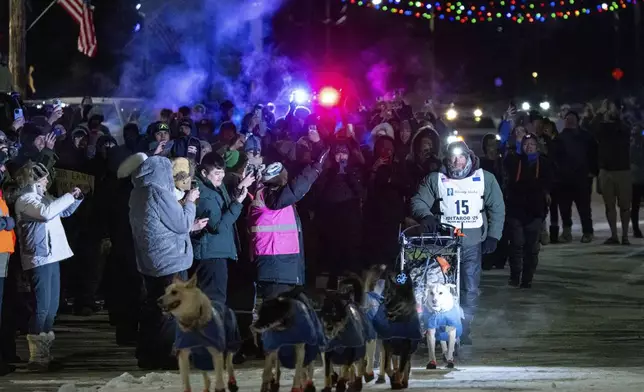
Jessie Holmes mushes down Front Street on his way to winning the Iditarod Trail Sled Dog Race early Friday morning, March 14, 2025 in Nome. (Loren Holme/Anchorage Daily News via AP)
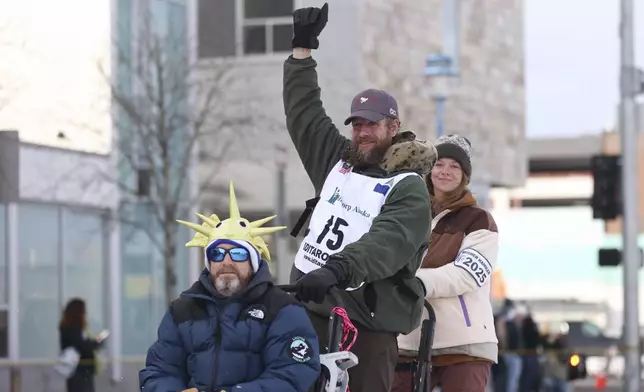
FILE - Jessie Holmes (15), of Alabama, mushes down Fourth Street during the Ceremonial Start of the Iditarod Trail Sled Dog Race in Anchorage, Alaska., Saturday, March 1, 2025. (AP Photo/Amanda Loman, File)
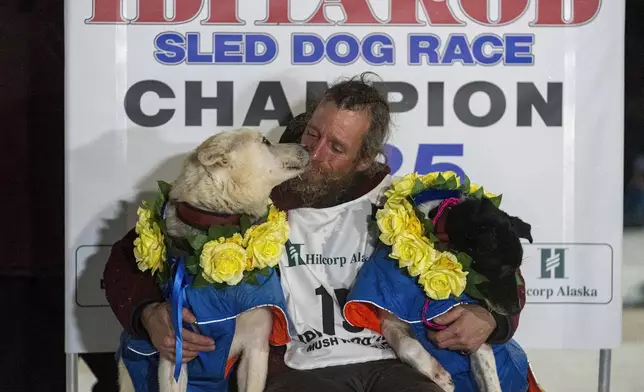
Jessie Holmes hugs his lead dogs Polar, left, and Hercules after winning the Iditarod Trail Sled Dog Race early Friday morning, March 14, 2025 in Nome. (Loren Holme/Anchorage Daily News via AP)
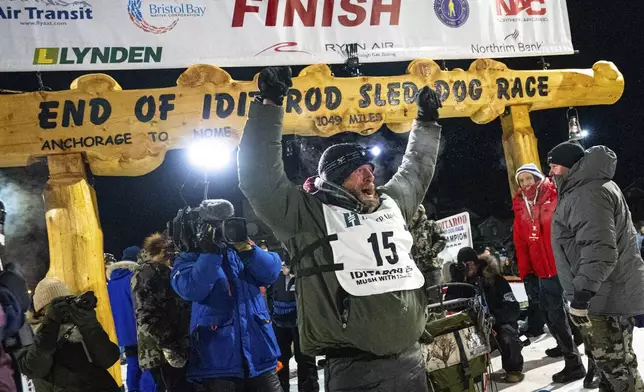
Jessie Holmes celebrates after winning the Iditarod Trail Sled Dog Race early Friday morning, March 14, 2025 in Nome. (Loren Holme/Anchorage Daily News via AP)
He said his win felt “magical” and he gave credit — and hugs — to his dogs, whom he described as family.
Holmes lives in the Interior Alaska community of Nenana, about 300 miles (480 kilometers) north of Anchorage, where he is a carpenter and lives a subsistence lifestyle. He found reality TV fame as a yearslong cast member of “Life Below Zero,” a National Geographic program that documents the struggles of people living in remote parts of Alaska.
Originally from Alabama, Holmes has lived since 2004 in Alaska, where he found a passion for the wilderness and competing in sled dog races.
This year was Holmes’ eighth Iditarod, and he has now finished in the top 10 six times, including third last year and in 2022. In 2018, his first Iditarod, he won Rookie of the Year honors with his seventh-place finish.
His win this year comes on the heels of adversity. He was helping repair buildings in the remote community of Golovin after the region was walloped by the remnants of Typhoon Merbok in 2022 when part of a house fell on him. He suffered several broken ribs and a broken wrist and was forced to train that winter with one arm, the Anchorage Daily News reported.
Holmes said he bred the 10 dogs that took him to victory, adding that he had held each of them in his hands as puppies.
“I’m really proud of these dogs and I love them. And they did it. They deserve all the credit,” he said.
He lavished particular praise on his lead dogs, Hercules and Polar, who were adorned at the finish with floral wreaths.
“These are the best in the world, right here,” he said, smiling, his arms draped around them.
A lack of snow this year forced changes to the route and starting point of what is typically a 1,000-mile (1,609-kilometer) race.
There are checkpoints along the route for rest or refueling. Mushers feed their dogs and put out straw for them to lay down, and catch some sleep themselves if they can. Mushers' sleds must be able to carry and provide cover to injured or tired dogs, in addition to equipment and food. They must carry adequate emergency food for their dogs when leaving a checkpoint, as well as routine meals and snacks.
The temperature in Nome when Holmes finished was -6 degrees Fahrenheit (-21 Celsius). He crossed the finish line after 10 days, 14 hours, 55 minutes and 41 seconds of racing. He came in about three hours ahead of the second place finisher, Matt Hall. Paige Drobny finished third.
“I'll tell you one thing: I damn sure ain't tired,” Holmes said to a chorus of cheering fans. “It's hard to put into words, but it's a magical feeling, and it's not about this moment now. It's about all those moments along the trail.”
He described witnessing a beautiful sunset, the moon shimmering on the snow and the northern lights, and said he had time to ponder his mentors and race winners who had died, “looking down on me and telling me I could do it. I just wanted to join that club with them. I've wanted that for a long time.”
Holmes is taking home $57,200 for his victory, in addition to awards including $4,500 worth of gold nuggets and 25 pounds of fresh salmon for finishing first in earlier stages.
He described the race as “10 quality days. I got my money’s worth.”
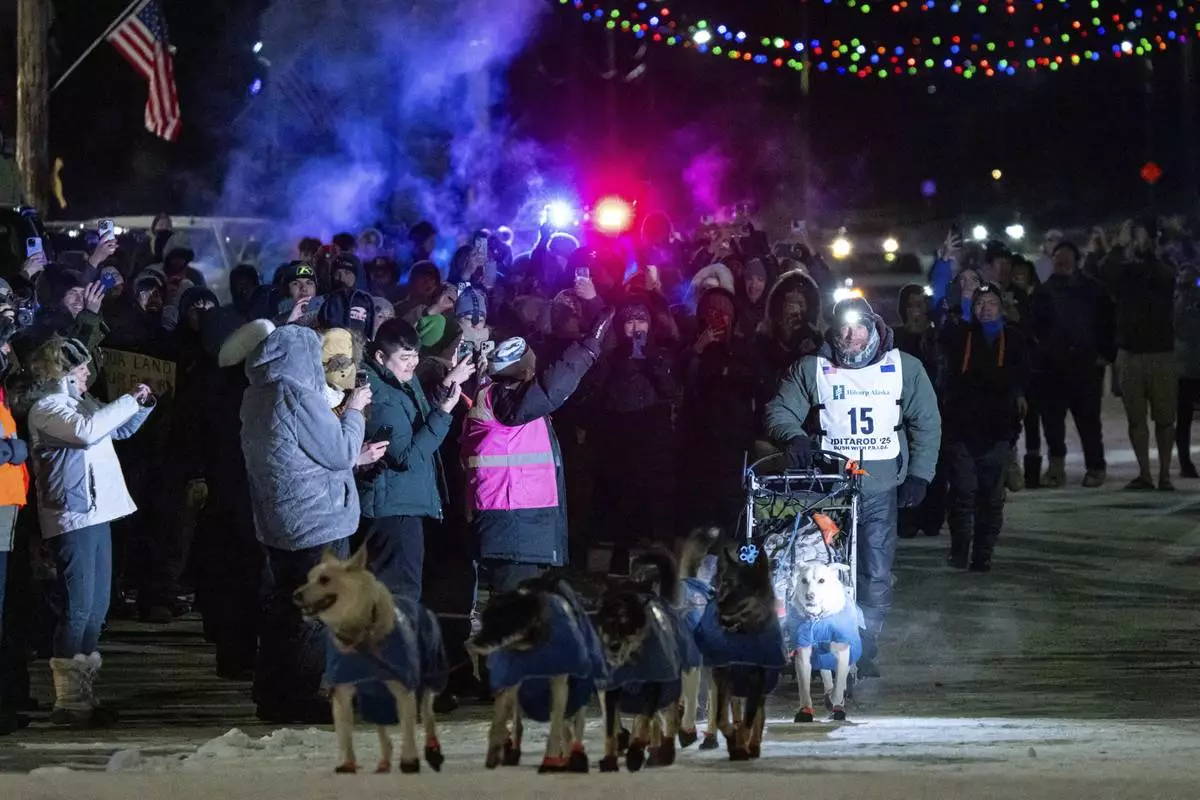
Jessie Holmes mushes down Front Street on his way to winning the Iditarod Trail Sled Dog Race early Friday morning, March 14, 2025 in Nome. (Loren Holme/Anchorage Daily News via AP)
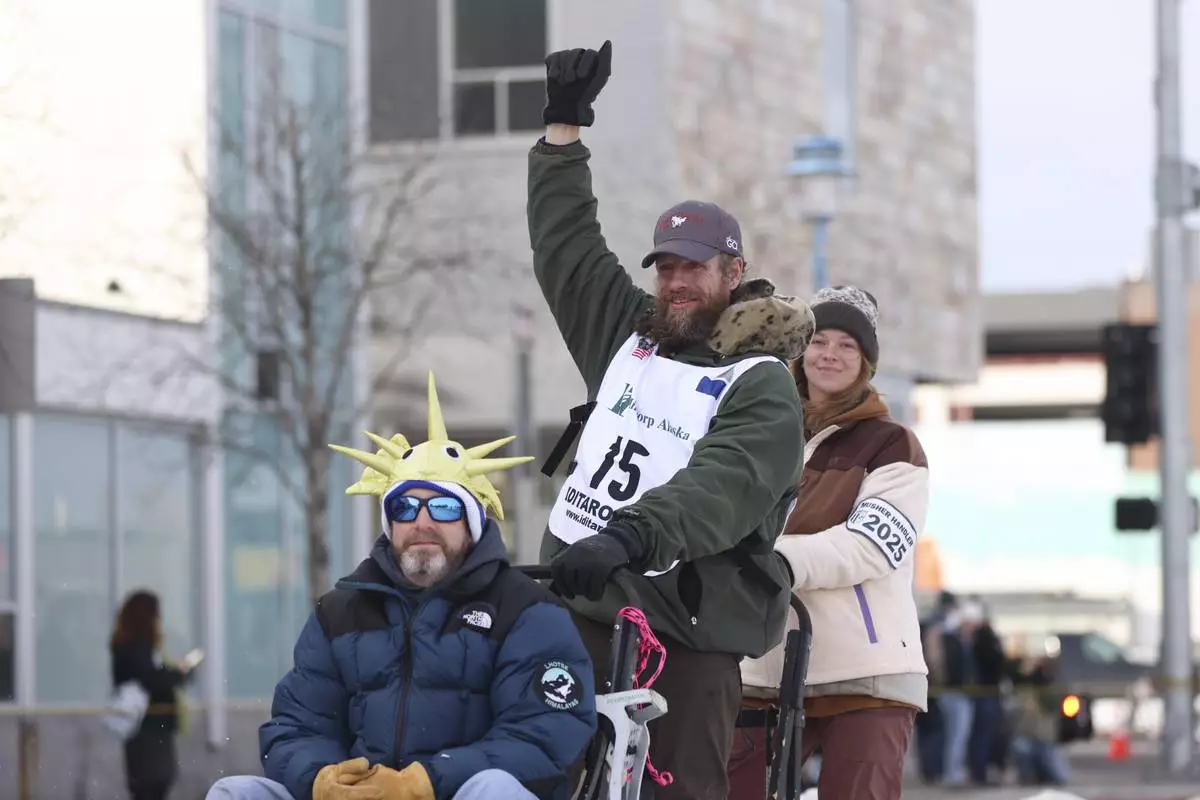
FILE - Jessie Holmes (15), of Alabama, mushes down Fourth Street during the Ceremonial Start of the Iditarod Trail Sled Dog Race in Anchorage, Alaska., Saturday, March 1, 2025. (AP Photo/Amanda Loman, File)
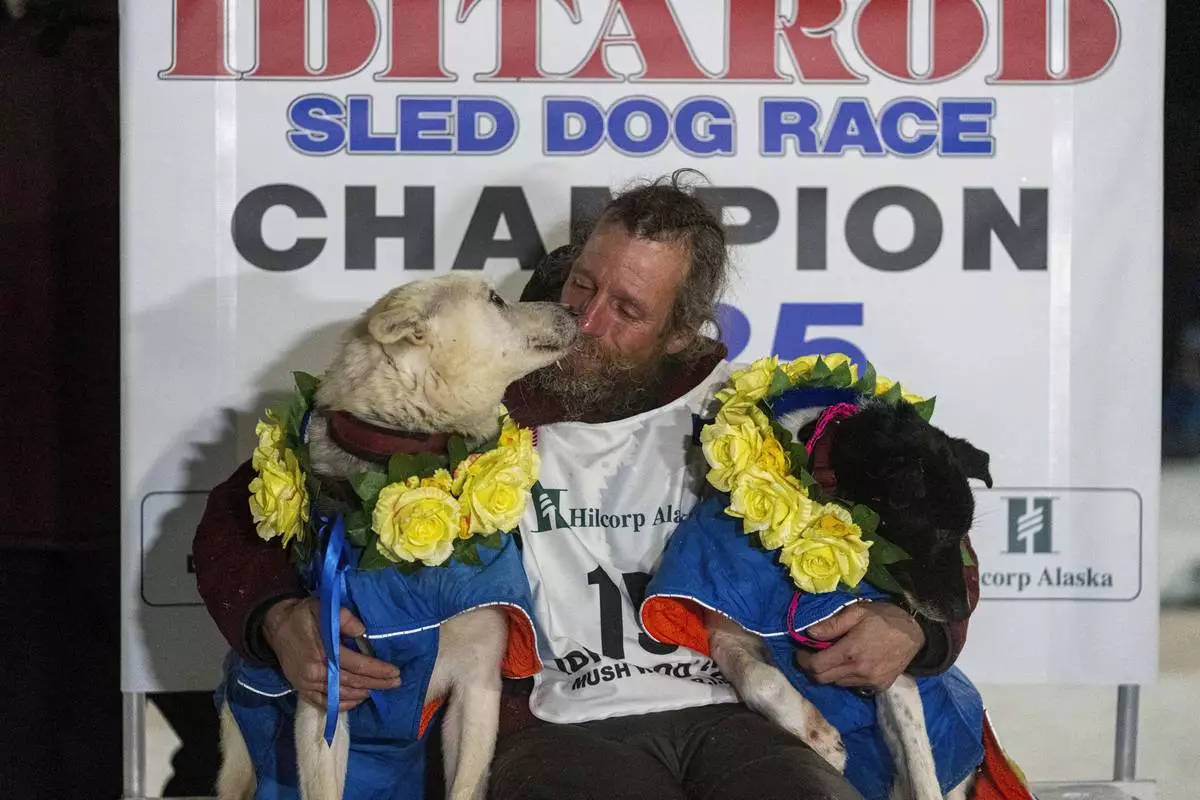
Jessie Holmes hugs his lead dogs Polar, left, and Hercules after winning the Iditarod Trail Sled Dog Race early Friday morning, March 14, 2025 in Nome. (Loren Holme/Anchorage Daily News via AP)
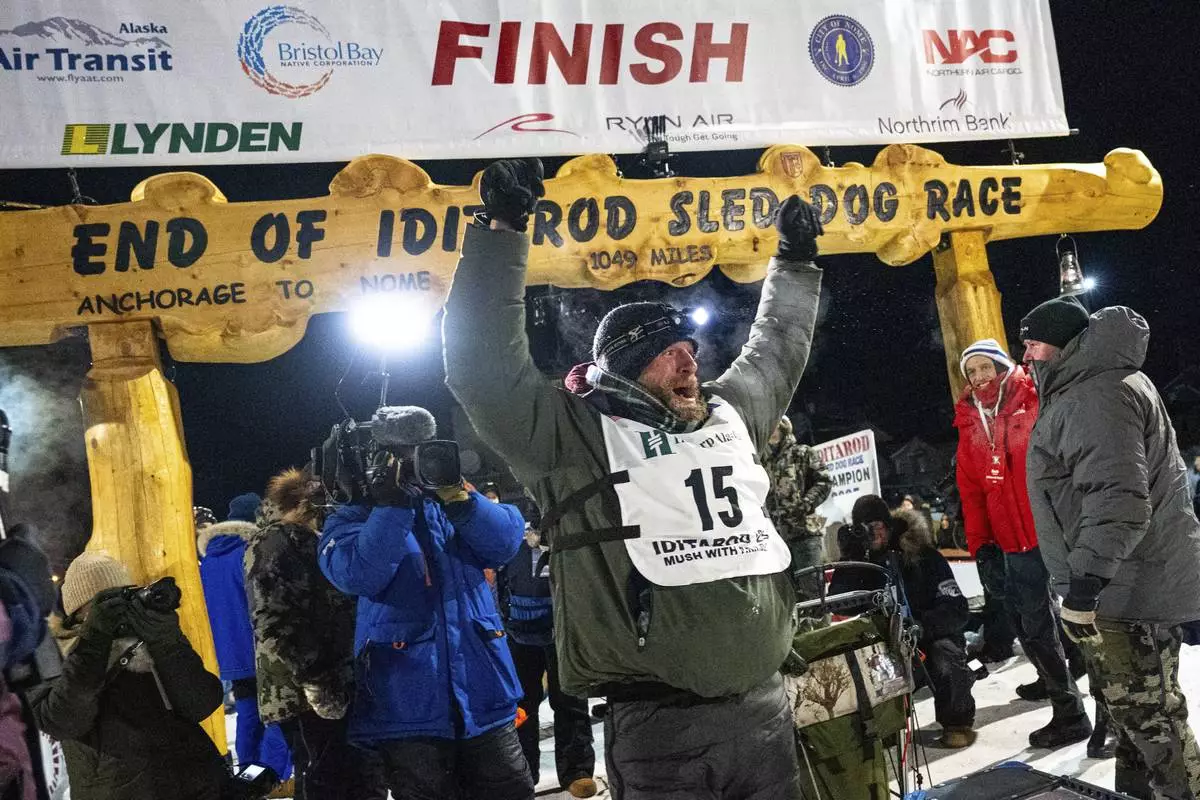
Jessie Holmes celebrates after winning the Iditarod Trail Sled Dog Race early Friday morning, March 14, 2025 in Nome. (Loren Holme/Anchorage Daily News via AP)