BELGRADE, Serbia (AP) — Serbian officials denied Sunday that security forces used a military-grade sonic weapon to disperse and scare protesters at a huge anti-government rally in the capital.
Opposition officials and Serbian rights groups claimed the widely banned acoustic weapon that emits a targeted beam to temporarily incapacitate people was used during the protest Saturday. They say they will file charges with the European Court of Human Rights and domestic courts against those who ordered the attack.
Click to Gallery
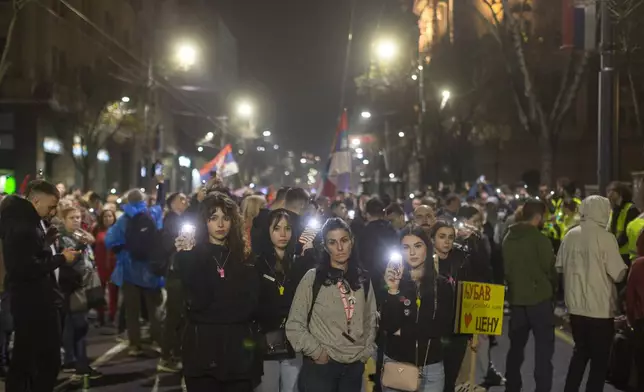
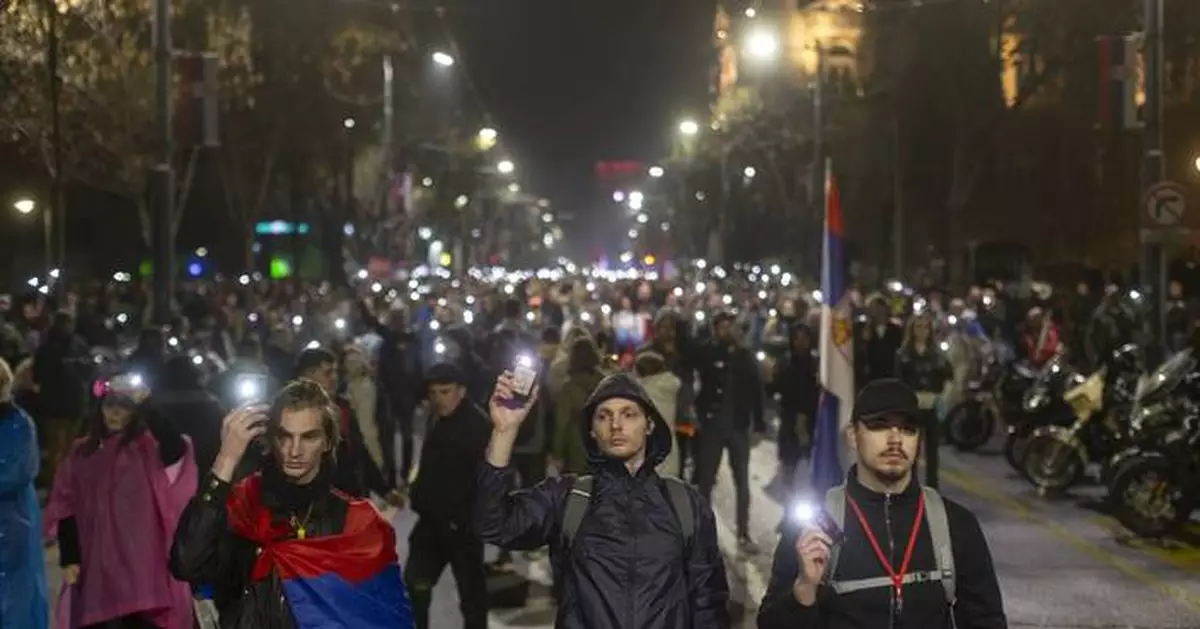
People use the lights on their cell phones as they observe fifteen minutes of silence during a major anti-corruption rally led by university students in Belgrade, Serbia, Saturday, March 15, 2025. (AP Photo/Marko Drobnjakovic)
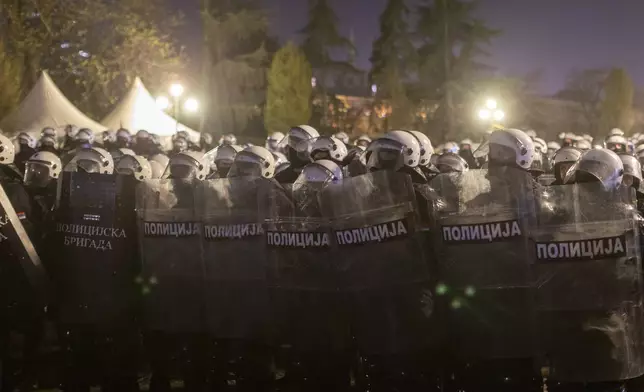
Riot police stand guard on the side of a street during a major anti-corruption rally led by university students in Belgrade, Serbia, Saturday, March 15, 2025. (AP Photo/Marko Drobnjakovic)
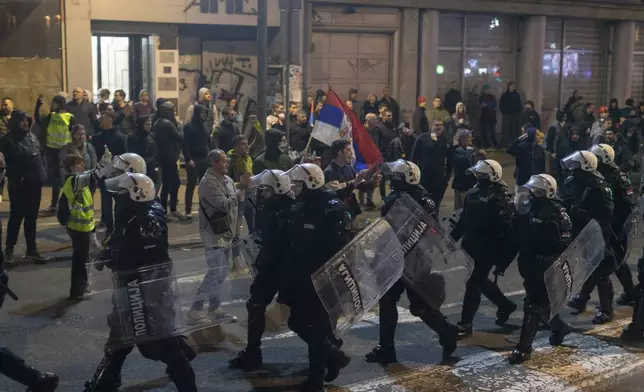
Police in riot gear walk down a street during a major anti-corruption rally led by university students in Belgrade, Serbia, Saturday, March 15, 2025. (AP Photo/Marko Drobnjakovic)
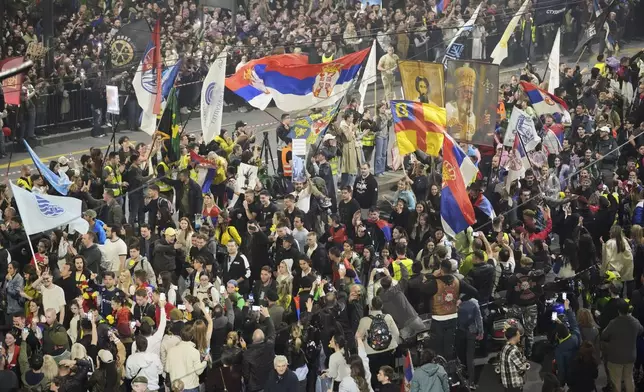
People welcome protesters from provinces who have arrived ahead of a major rally this weekend in downtown Belgrade, Serbia, Friday, March 14, 2025. (AP Photo/Darko Vojinovic)
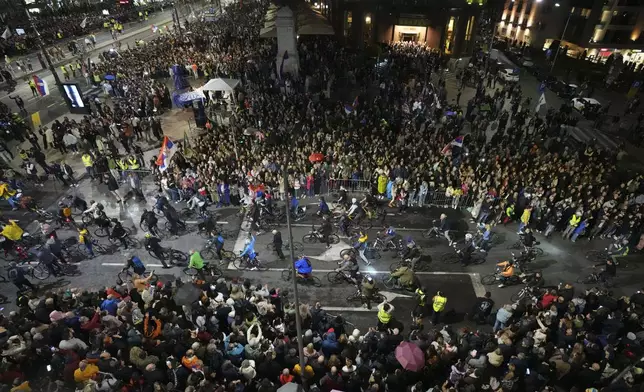
People welcome a group of cyclists who have arrived ahead of a major rally this weekend in downtown Belgrade, Serbia, Friday, March 14, 2025. (AP Photo/Darko Vojinovic)
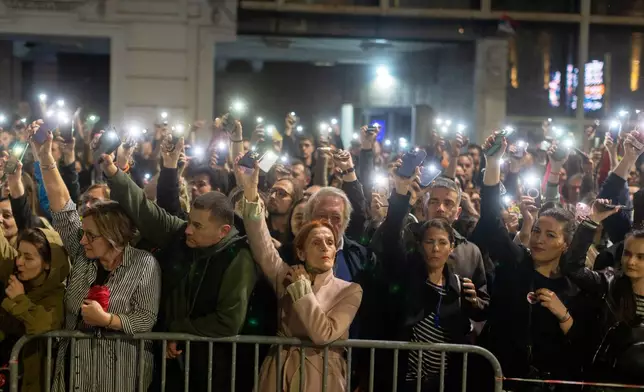
People hold the lights on their cell phones as they attend a protest ahead of a major anti-corruption rally this weekend, in Belgrade, Serbia, Friday, March 14, 2025. (AP Photo/Marko Drobnjakovic)
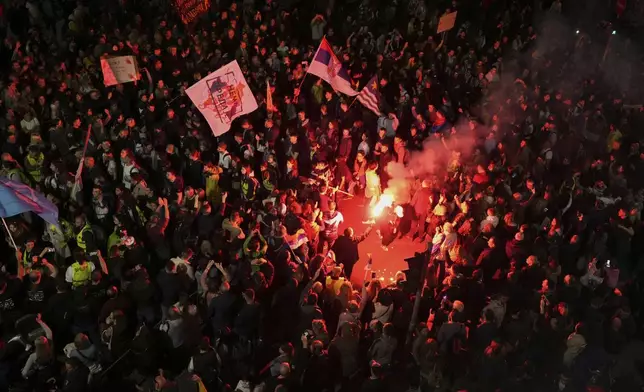
Protesters light flares as they gather ahead of a major rally this weekend in downtown Belgrade, Serbia, Friday, March 14, 2025. (AP Photo/Darko Vojinovic)
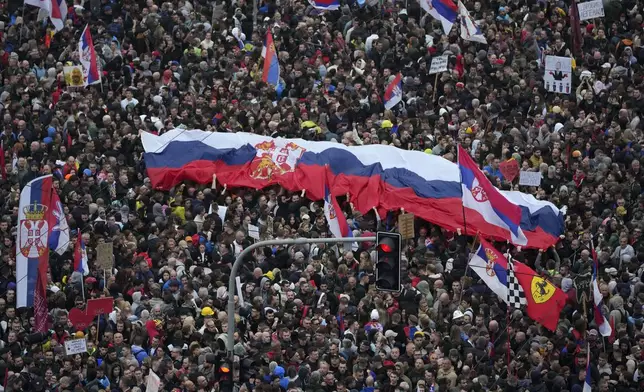
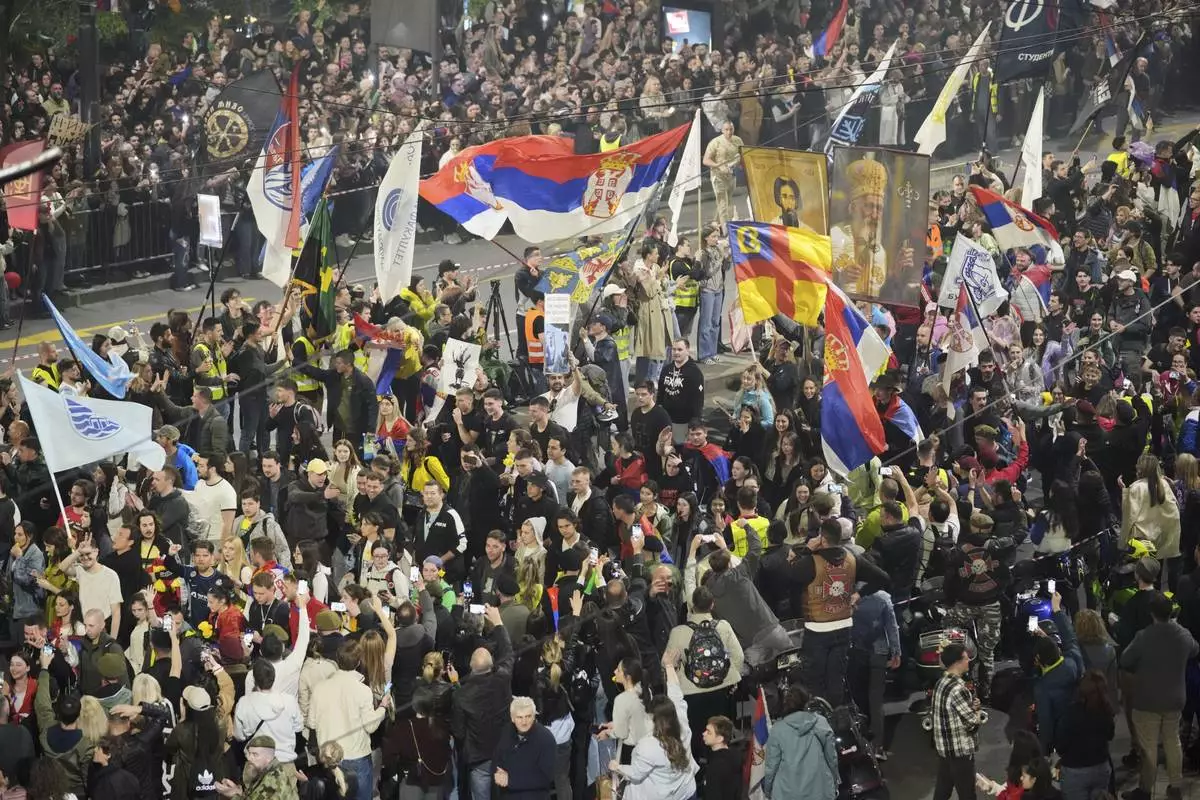
Protesters march during a major rally against populist President Aleksandar Vucic and his government, in downtown Belgrade, Serbia, Saturday, March 15, 2025. (AP Photo/Darko Vojinovic)
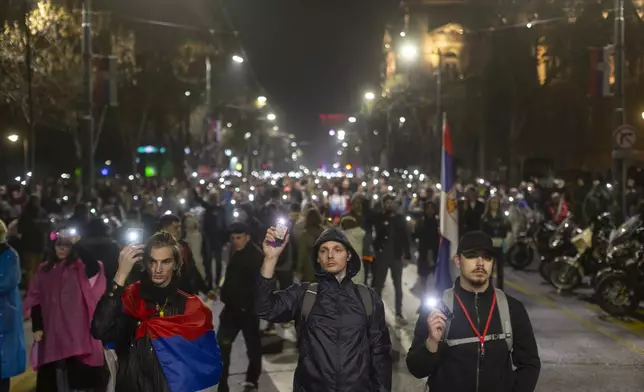
People use the lights on their cell phones as they observe fifteen minutes of silence during a major anti-corruption rally led by university students in Belgrade, Serbia, Saturday, March 15, 2025. (AP Photo/Marko Drobnjakovic)
Serbia has not denied that it has the acoustic device in its arsenal.
At least 100,000 people descended on Belgrade on Saturday for a mass rally seen as a culmination of monthslong protests against Serbia’s populist President Aleksandar Vucic and his government.
The rally was part of a nationwide anti-corruption movement that erupted after a concrete canopy collapsed at a train station in Serbia’s north in November, killing 15 people.
Almost daily demonstrations that started in response to the tragedy have shaken Vucic’s decade-long firm grip on power in Serbia where many blame the crash on rampant government corruption, negligence and disrespect of construction safety regulations, demanding accountability for the victims.
Footage from the rally show people standing during 15 minutes of silence for the rail station disaster while suddenly experiencing a whooshing sound that immediately triggered panic and a brief stampede.
An Associated Press photographer at the scene said people started scrambling for cover, leaving the middle of the downtown street almost empty as they started falling over each other.
Those exposed to the weapon experience sharp ear pain, disorientation and panic, military experts say. Prolonged exposure can cause eardrum ruptures and irreversible hearing damage.
The Belgrade Centre for Security Policy, a non-governmental organization, condemned “the unlawful and inhumane deployment of prohibited weapons, such as acoustic devices, against peaceful protesters.”
“This act represents a blatant display of force and an attempt to incite chaos, aiming to delegitimize protests and criminalize peaceful citizens,” the group said.
Serbian police and the defense ministry denied that the illegal weapon was used.
The Serbian president on Sunday urged judicial authorities to respond to the information "that sonic cannons were used during the protests," the state RTS broadcaster reported.
“I am asking … the ministry of justice and the prosecutor’s office to react, either to prosecute those who used it, and we know they didn’t but let’s check," Vucic said. “Let there be a proceeding but then they should also prosecute those who went public with such a notorious lie.”
Belgrade’s emergency hospital has denied reports that many people sought help after the incident and urged legal action against those who “spread untrue information.”
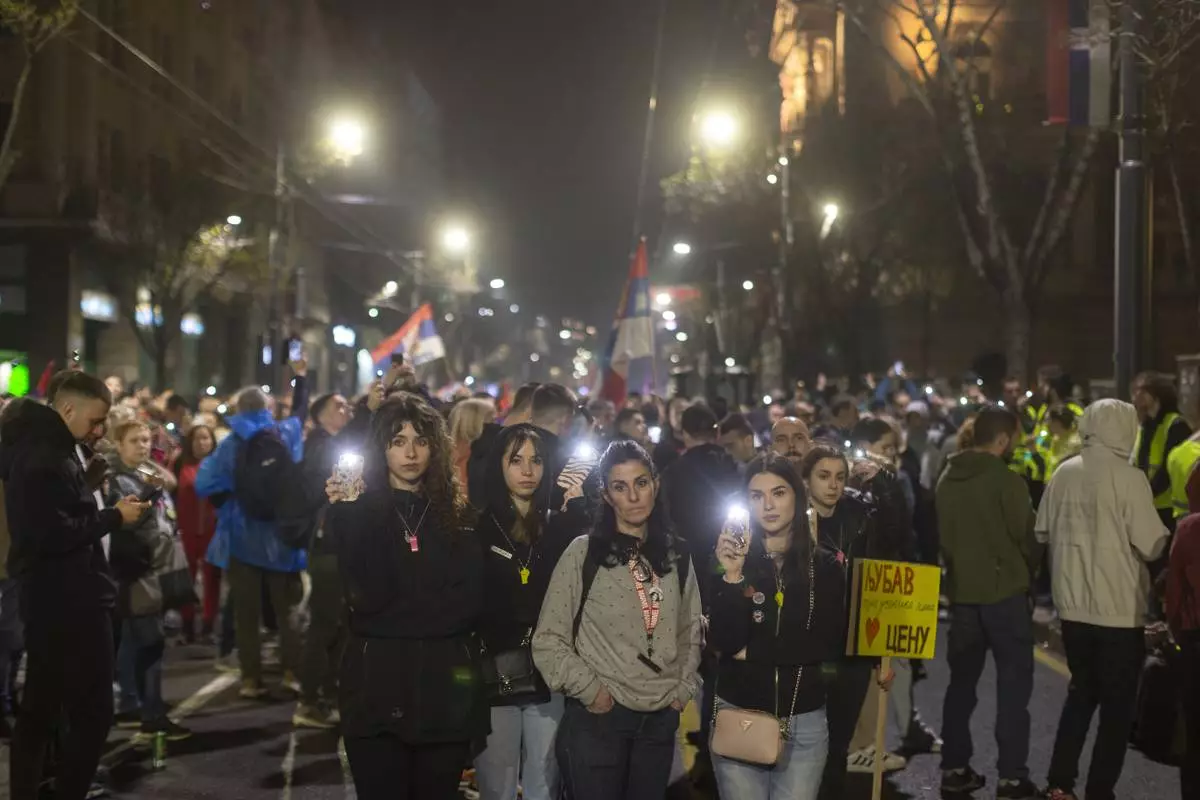
People use the lights on their cell phones as they observe fifteen minutes of silence during a major anti-corruption rally led by university students in Belgrade, Serbia, Saturday, March 15, 2025. (AP Photo/Marko Drobnjakovic)
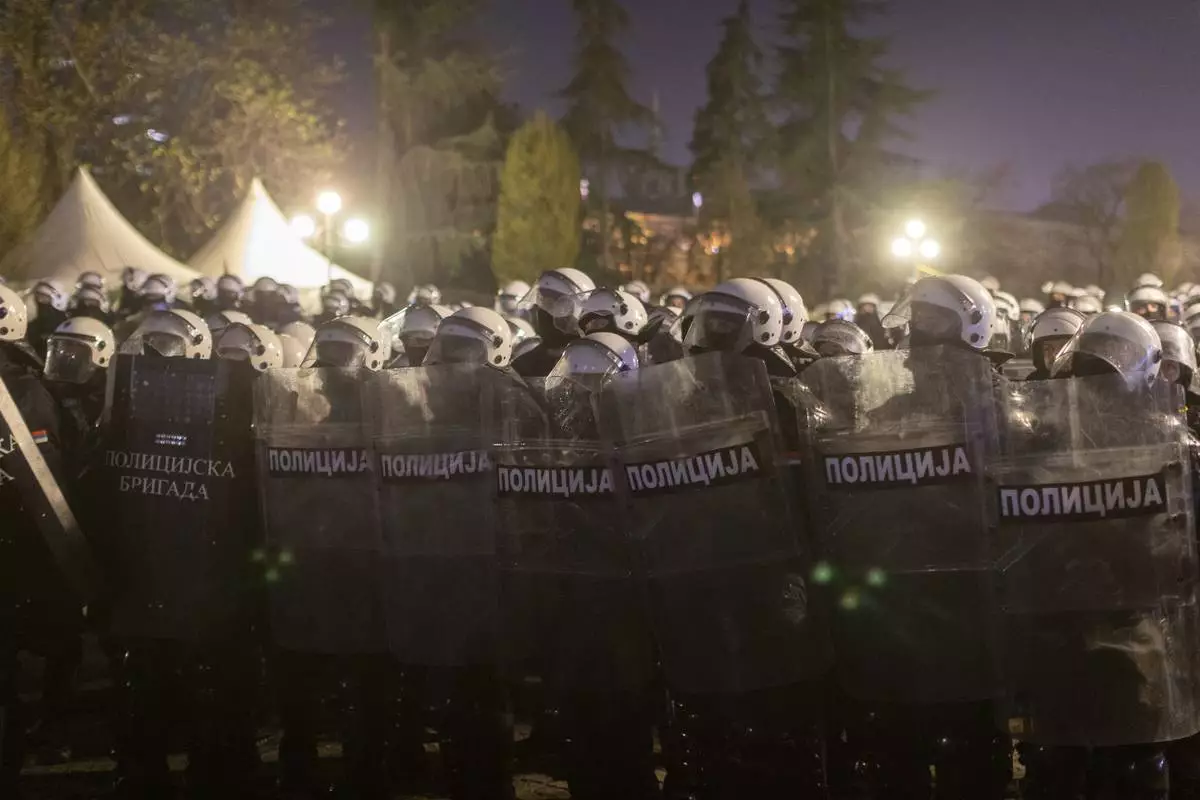
Riot police stand guard on the side of a street during a major anti-corruption rally led by university students in Belgrade, Serbia, Saturday, March 15, 2025. (AP Photo/Marko Drobnjakovic)
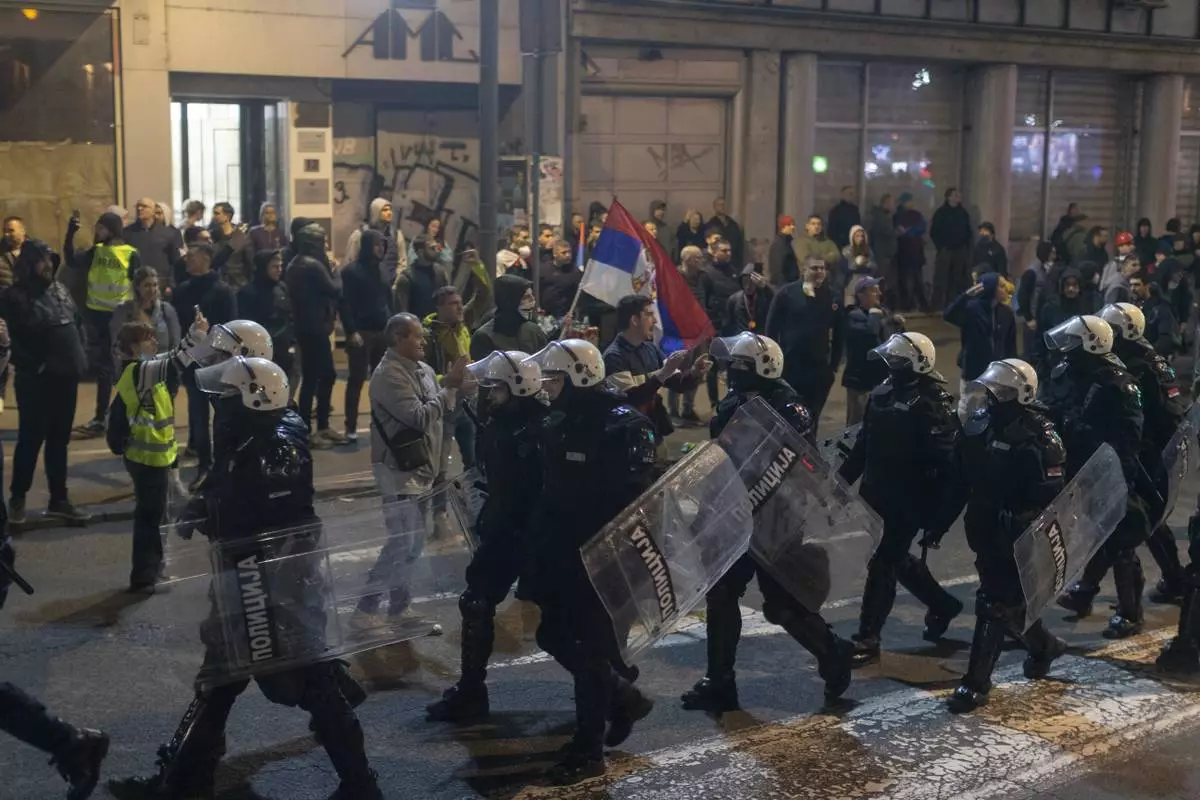
Police in riot gear walk down a street during a major anti-corruption rally led by university students in Belgrade, Serbia, Saturday, March 15, 2025. (AP Photo/Marko Drobnjakovic)
People welcome protesters from provinces who have arrived ahead of a major rally this weekend in downtown Belgrade, Serbia, Friday, March 14, 2025. (AP Photo/Darko Vojinovic)
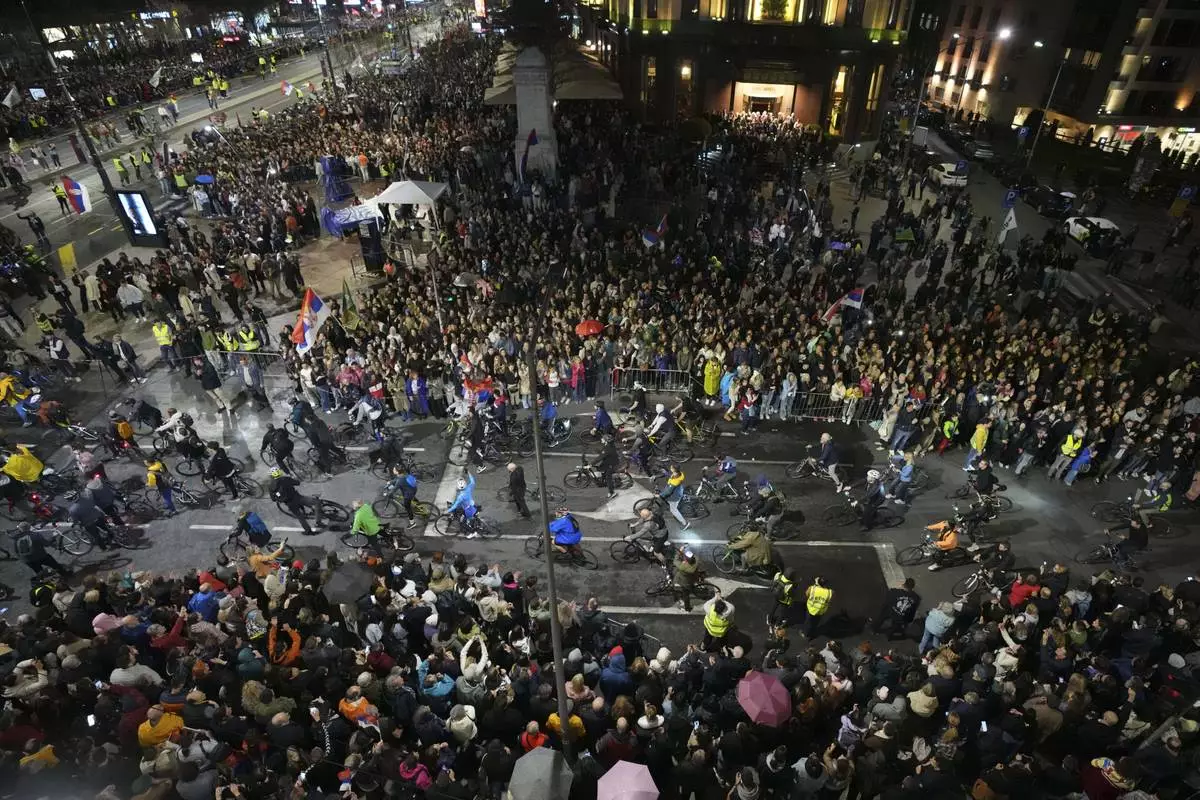
People welcome a group of cyclists who have arrived ahead of a major rally this weekend in downtown Belgrade, Serbia, Friday, March 14, 2025. (AP Photo/Darko Vojinovic)
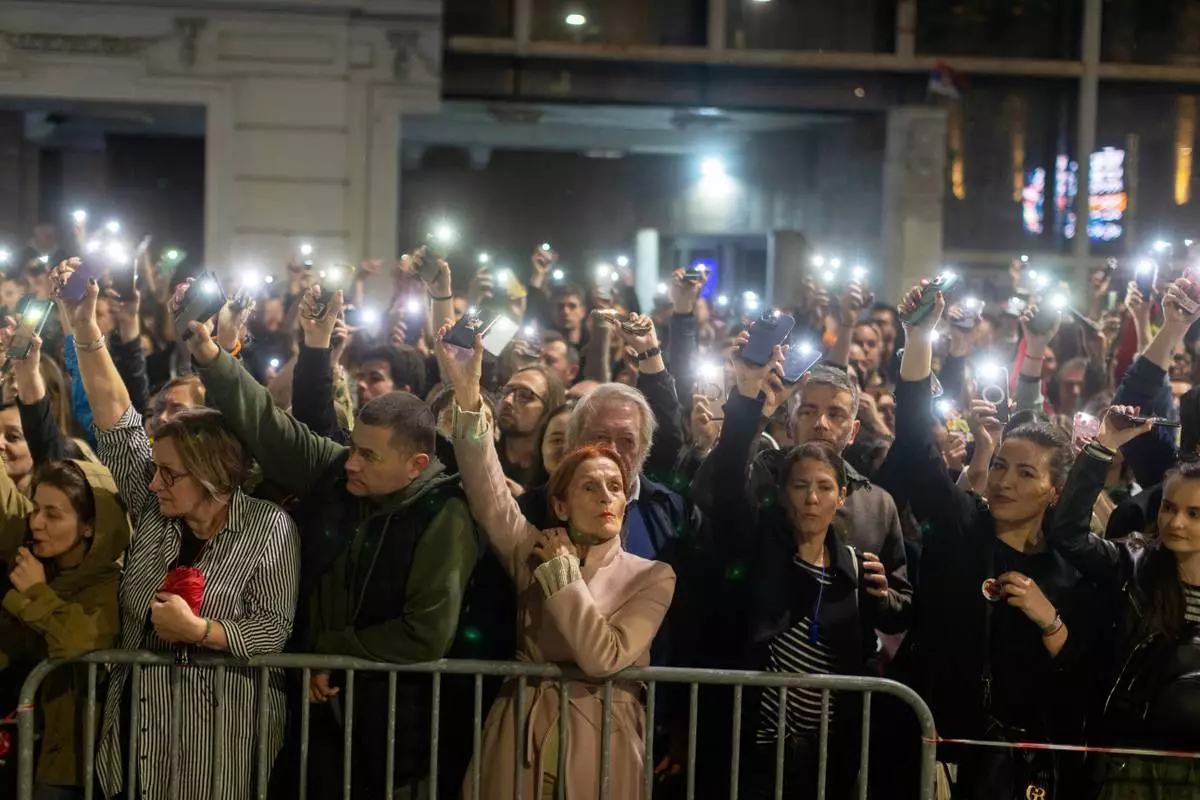
People hold the lights on their cell phones as they attend a protest ahead of a major anti-corruption rally this weekend, in Belgrade, Serbia, Friday, March 14, 2025. (AP Photo/Marko Drobnjakovic)
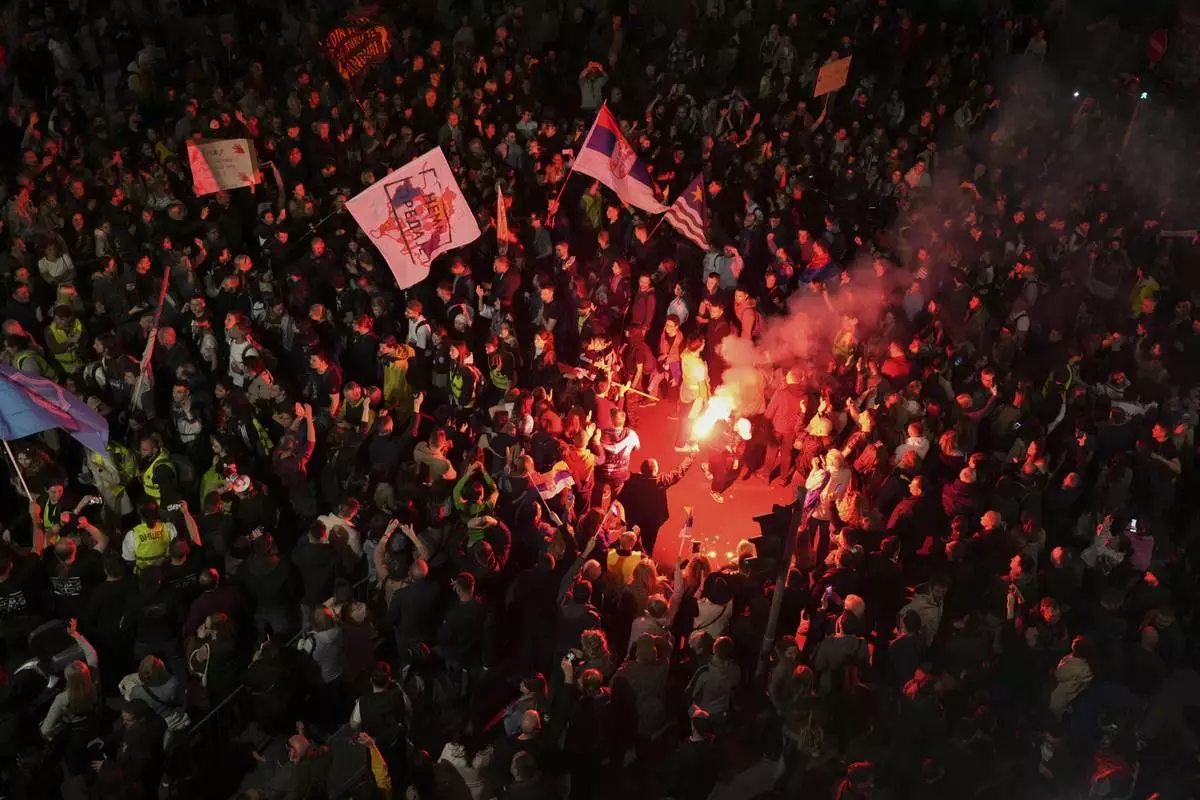
Protesters light flares as they gather ahead of a major rally this weekend in downtown Belgrade, Serbia, Friday, March 14, 2025. (AP Photo/Darko Vojinovic)
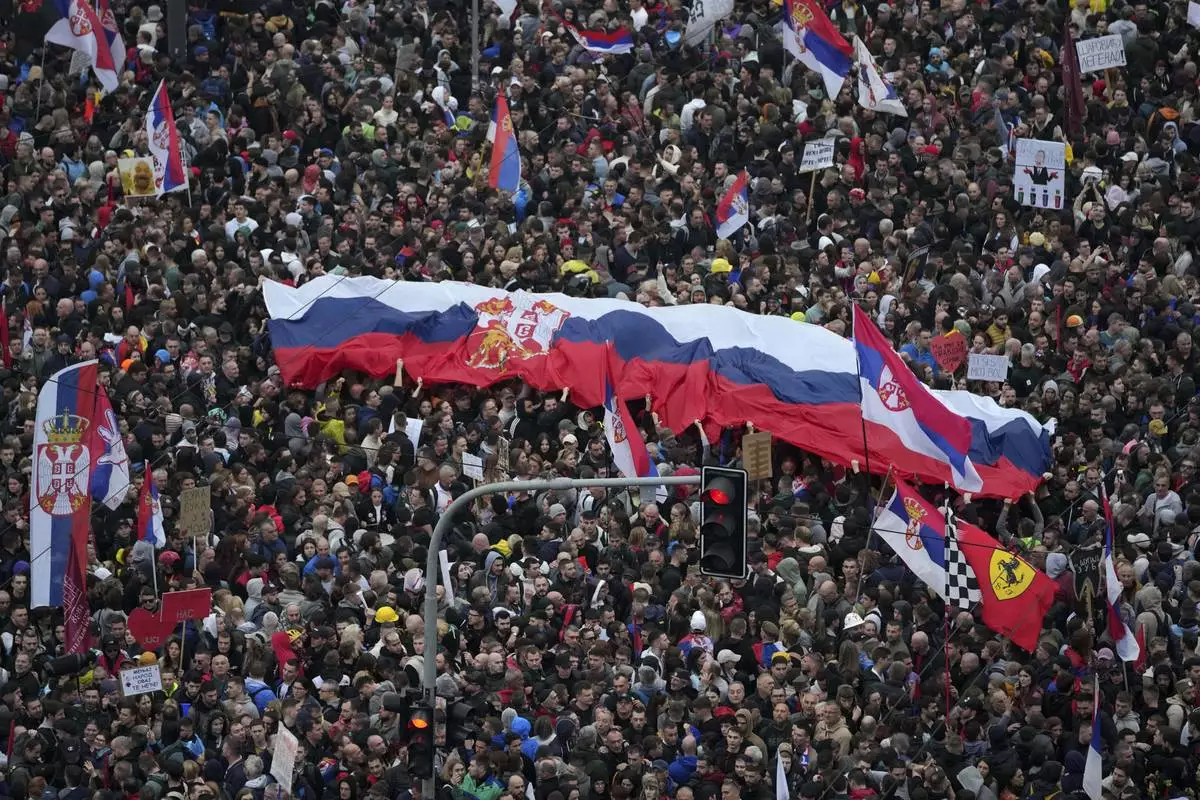
Protesters march during a major rally against populist President Aleksandar Vucic and his government, in downtown Belgrade, Serbia, Saturday, March 15, 2025. (AP Photo/Darko Vojinovic)
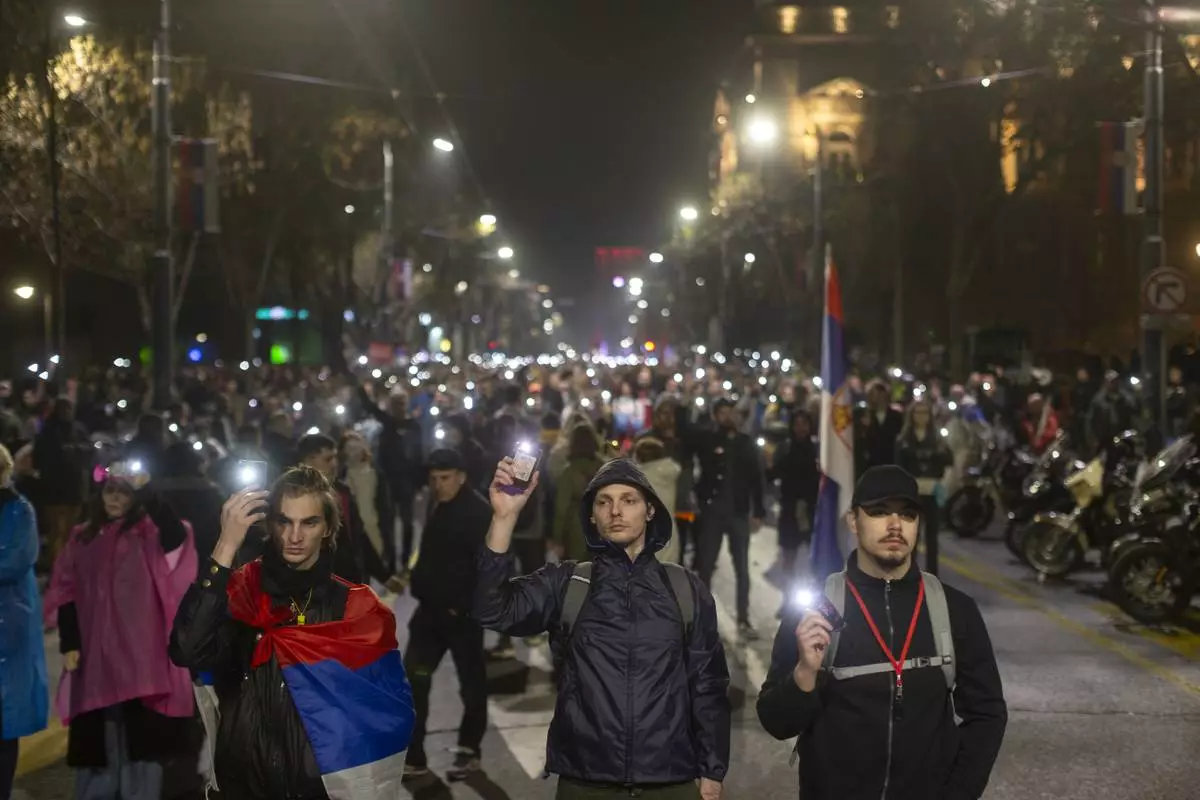
People use the lights on their cell phones as they observe fifteen minutes of silence during a major anti-corruption rally led by university students in Belgrade, Serbia, Saturday, March 15, 2025. (AP Photo/Marko Drobnjakovic)