With over 200 million workers now part of China's gig economy, companies like Accumulus are at the forefront of providing essential services to this growing workforce. Its founder Yang Hui recently reflected on the challenges and opportunities of this transformative shift.
Flexible employment has become a rising trend in China. It refers to people working under flexible schedules, including those with part-time jobs and freelancers. After attending the recently concluded third session of the 14th National Committee of the Chinese People's Political Consultative Conference (CPPCC) as a committee member, Yang returned to work with a renewed focus on stepping up innovation and supervision.
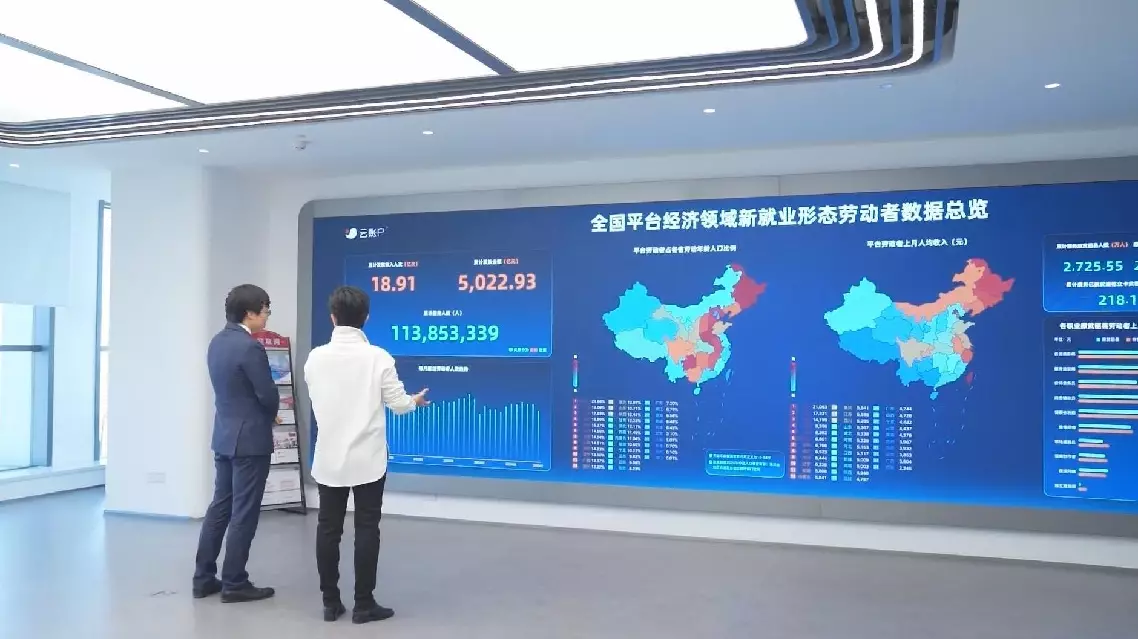
"Accumulus has now served over 110 million workers in new forms of employment, and we're seeing a clear trend of more people entering this field. Across provinces and municipalities, we've observed a pattern: economically strong regions first absorb flexible workers from within their own areas before accommodating workers from other provinces. This reflects the choices made within the context of China's vast, unified market," Yang said.
Founded in 2016, Accumulus provides comprehensive services for flexible workers, including identity verification, income settlement, tax filing, and insurance payments.
"Our lifestyles have changed significantly. The rapid growth of the platform economy has led to a surging number of people entering this new market, creating gaps in services. Traditional human resources and labor companies couldn't keep up with the pace of this new employment model, especially when it comes to resolving disputes, which requires specialized, time-consuming efforts. Having a company like ours to support and solve these issues enables workers to focus on their core tasks, which contributes to our rapid growth. I wouldn't say our initial success was due to any smart decision, but rather our ability to seize opportunities during a period of major market transformation," Yang said.
The company's revenue skyrocketed from 10 billion yuan in 2018 to over 100 billion yuan in 2021, reflecting the explosive growth of flexible working practices in China. By 2023, the number of flexible workers in China exceeded 200 million, with over 80 million working in e-commerce.
However, the sector's rapid rise has also brought challenges, such as unclear labor relationships, insufficient social security coverage, and disputes between workers and platforms. In 2018, Accumulus terminated services for over 1,000 clients suspected of violating regulations.
"I have a strong sense of crisis. If I can't make my business clear to regulators, the government of locality, clients, or even those who file complaints, then a crisis can strike anytime, anywhere. That’s why we need to thoroughly understand the economic issues at hand. So we're striving to have a deeper understanding of the issues than the industry and academia, and to develop effective solutions. I think this is both a reactive and proactive choice for us to address challenges," he said.
To address these challenges, the Chinese government has introduced policies to protect gig workers' rights. In 2021, eight departments jointly issued guidelines requiring platform companies to ensure minimum wage standards, leave management, and occupational injury protection. In 2024, further regulations were adopted to clarify rules on working hours and payment transparency.
Accumulus, which now dominates over 50 percent of the domestic market, has expanded its services to 14 industries and 60 sub-sectors, including video media, local life services, and cultural entertainment. The company is also actively contributing to the legal framework governing the gig economy.
According to a 2024 report by Jinan University's Institute for Economic and Social Research, the share of flexible working positions in China had nearly doubled since 2019, reaching 15.2 percent. The sector is expected to continue growing rapidly, becoming a cornerstone of China's labor market in the next decade.
Flexible employment boom in China drives innovation: CPPCC member
The Chinese folk tradition of "Hezhen Yimakan storytelling" has been added to the UNESCO intangible cultural heritage list, a recognition that inheritors and researchers say will help to better preserve and promote these age-old artistic customs.
At its ongoing 20th regular session in India's New Delhi, the Intergovernmental Committee for the Safeguarding of the Intangible Cultural Heritage decided to transfer Hezhen Yimakan storytelling from the List of Intangible Cultural Heritage in Need of Urgent Safeguarding to the Representative List of the Intangible Cultural Heritage of Humanity.
At the same time, based on the effectiveness of the protection of this heritage project, the committee decided to include the safeguarding program for Hezhen Yimakan storytelling in the Register of Good Safeguarding Practices.
Last year saw three Chinese elements, including Li textile techniques, being successful transfered from the Urgent Safeguarding List. The upgrade in status for Hezhen Yimakan storytelling also represents the first time that an element has achieved both a transfer and an inscription on the Register of Good Safeguarding Practices simultaneously.
As an age-old oral tradition passed down through generations of the Hezhe ethnic group, Hezhen Yimakan storytelling is narrated in the Hezhe language and performed in a mixed prose-and-verse style. It conveys the ethnic group's history, heroic tales, fishing and hunting practices, rituals, and moral norms. While documenting the past, it has also played a key role in educating younger generations, with its entertaining format ensuring the tradition has retained its vitality over many centuries.
Since its inscription on the Urgent Safeguarding List in 2011, various stakeholders, including bearers, community groups, research and educational institutions, intangible heritage protection centers and governments at different levels, have worked together with a community-centered approach. Their joint efforts have continuously enhanced the intergenerational transmission and visibility of the storytelling art form.
In December 2023, when submitting the third periodic report on the safeguarding status of the element to UNESCO, China simultaneously submitted its request for the transfer of the element to the Representative List. The committee examined and approved the periodic report at its 19th session in December 2024, recognizing China's safeguarding efforts and encouraging continued community participation and practice to ensure the effective transmission of the element.
Wu Xuan, deputy director of the Heilongjiang Intangible Cultural Heritage Protection Center in northwest China, said that the important steps taken in recent years by existing practitioners have seen the popularity of the historic storytelling form grow significantly, as more people learn how to conduct these cherished performance styles.
"The number of recognized inheritors at the national, provincial, city, and county levels has grown from five performers at the initial application for urgent safeguarding to 121 individuals now, with three people having passed away. Additionally, more than 500 students have participated in both online and offline training programs of Yimakan storytelling," said Wu.
Huang Renyuan, a researcher at the Heilongjiang Academy of Social Sciences, also believes the concerted efforts that have been undertaken will significantly amplify the safeguarding and preservation of the long-standing tradition.
"This recognition will promote the Hezhen people's enthusiasm for learning Yimakan and the Hezhen language, thereby strengthening the ongoing inheritance and protection of the tradition. We should develop various artistic forms such as novels, essays, poetry, and stage plays from Yimakan and use its elements in the cultural tourism industry, to help rural revitalization in the region," said Huang.
With the latest inscriptions, the total number of Chinese elements on UNESCO's Lists and Register of Intangible Cultural Heritage has risen to 45, including 40 on the Representative List, three on the Urgent Safeguarding List and two on the Register of Good Safeguarding Practices.

China's "Hezhen Yimakan" storytelling tradition inscribed on UNESCO Representative List

China's "Hezhen Yimakan" storytelling tradition inscribed on UNESCO Representative List