Skip to Content Facebook Feature Image

Judge says Fani Willis violated open records law, orders her to pay $54K in attorneys' fees

News

Judge says Fani Willis violated open records law, orders her to pay $54K in attorneys' fees
News

News

Judge says Fani Willis violated open records law, orders her to pay $54K in attorneys' fees

2025-03-18 04:19 Last Updated At:04:20

ATLANTA (AP) — A judge has ordered Fulton County District Attorney Fani Willis to pay more than $54,000 in attorneys' fees and to turn over documents after finding that her office violated Georgia's Open Records Act.

Attorney Ashleigh Merchant represents former Trump campaign staffer Michael Roman, one of the 18 people indicted in August 2023 along with President Donald Trump on allegations that they illegally tried to overturn Trump's 2020 election loss in Georgia. Merchant sued in January 2024, alleging that the district attorney's office had failed to turn over public records she had requested.

Fulton County Superior Court Judge Rachel Krause found that the failures to comply with the records law “were intentional, not done in good faith, and were substantially groundless and vexatious.” Because Willis and her office “lacked substantial justification” for not complying, Merchant is entitled to attorneys' fees and litigation expenses totaling just over $54,000, Krause found.

Krause ordered Willis to search for and turn over all records responsive to Merchant's requests. The documents and payment are to be delivered within 30 days of Friday's order.

A spokesperson for Willis' office said Monday that they plan to appeal the order.

Merchant said she filed the lawsuit as a last resort after Willis' office repeatedly failed to produce documents.

“We definitely didn't want to file suit,” she said. “They were just ignoring it and telling us that documents didn't exist that we knew existed and resisting at every move, so we really didn't have a choice.”

Willis' office was “openly hostile” to Merchant and testimony showed that Merchant's requests “were handled differently than other requests,” Krause wrote in her order. Open records officer Dexter Bond said during a hearing that he refused to communicate by phone with Merchant, even though it was his regular practice to call the requester if a request was unclear.

Treating Merchant's requests this way “indicates a lack of good faith,” Krause wrote.

Among the records Merchant sought were reports provided to Willis' office by companies hired “to track the impact of Willis' statements to the media and whether such statements were viewed favorably by the public,” according to a court filing. The filing says Willis began contracting with those companies just before she and her office sought to indict Trump, Roman and others.

Merchant also asked for a copy of the non-disclosure or confidentiality agreement that employees of the district attorney's office are required to sign, as well as a list of attorneys Willis had hired.

The Georgia Court of Appeals in December ruled that Willis and her office could not continue to prosecute the election interference case against Trump and others. Willis in January asked the Georgia Supreme Court to review and reverse that ruling, and the high court has not yet said whether it will take up the case.

The intermediate appeals court's ruling was based on an “appearance of impropriety” created by a romantic relationship Willis had with special prosecutor Nathan Wade, whom she had hired to lead the case. It was a bombshell filing by Merchant in January 2024 that first exposed that relationship publicly, alleging that the relationship created a conflict of interest that should disqualify Willis and her office from the case.

A grand jury in Atlanta indicted Trump and 18 others in August 2023, using the state’s anti-racketeering law to accuse them of participating in a wide-ranging scheme to illegally try to overturn Trump’s narrow 2020 loss to Democrat Joe Biden in Georgia. The alleged scheme included Trump’s call to Georgia Secretary of State Brad Raffensperger urging him to help find enough votes to beat Biden. Four people have pleaded guilty. Trump and the others, including Roman, have pleaded not guilty.

Even if the Georgia Supreme Court agrees to hear the case and eventually rules in Willis’ favor, it seems unlikely that she will be able to prosecute Trump while he's the sitting president. But there are 14 other defendants, including Roman, who still face charges in the case.
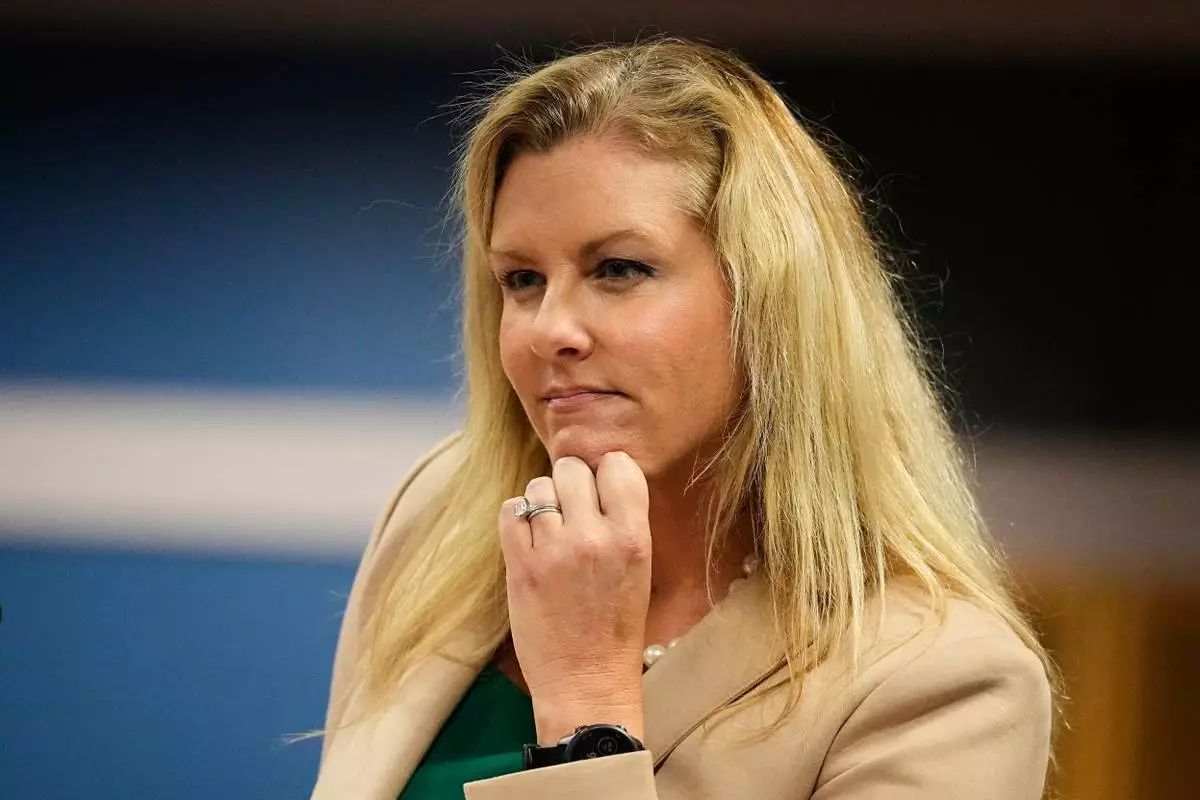
FILE - Attorney Ashleigh Merchant looks on in court, Feb. 27, 2024, in Atlanta. (AP Photo/Brynn Anderson, Pool, File)
FILE - Attorney Ashleigh Merchant looks on in court, Feb. 27, 2024, in Atlanta. (AP Photo/Brynn Anderson, Pool, File)

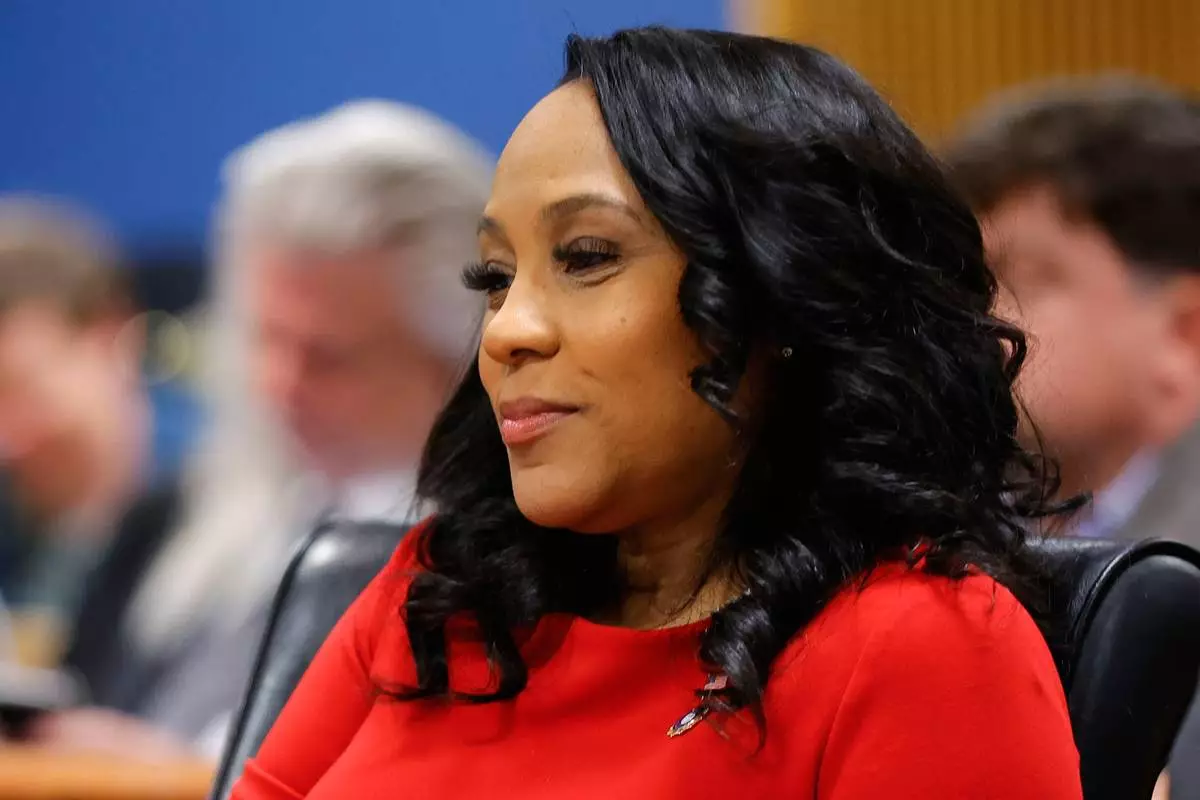
FILE - Fulton County District Attorney Fani Willis looks on during a hearing on the Georgia election interference case, Friday, March, 1, 2024, in Atlanta. (AP Photo/Alex Slitz, Pool, File)
FILE - Fulton County District Attorney Fani Willis looks on during a hearing on the Georgia election interference case, Friday, March, 1, 2024, in Atlanta. (AP Photo/Alex Slitz, Pool, File)

NEW YORK (AP) — Tomatoes, ubiquitous in everything from fast-food burgers to haute cuisine, are taking on a new role beyond the plate: A nagging reminder of rising costs.

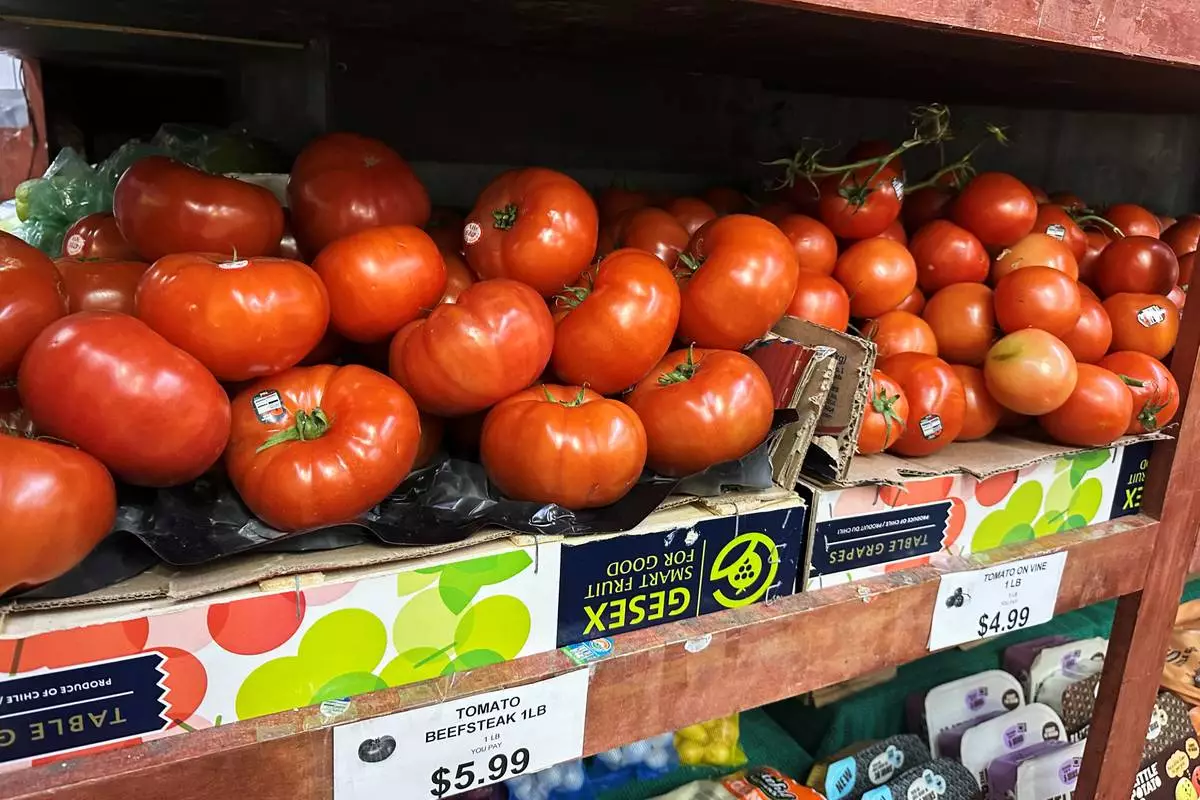
Prices for those red orbs have soared more than any other food product over the past year to cement a spot as one of the consumer headaches du jour.

“The tomato has become a symbol of something much deeper,” says Isaac Bernal Carbajo, a New York City chef who lamented life's “simplest pleasures” falling victim to price increases. “Something as basic as buying fresh vegetables is starting to become a serious financial decision for many families.”

Tomato prices are up about 40% over a year ago, according to the latest Consumer Price Index, dwarfing increases for other groceries, including coffee (up 18.5%), beef roasts (up 17.8%) and frozen fish and seafood (up 12%), among other products that have become symbols of America’s affordability squeeze.

A separate inflation gauge released Thursday showed that overall prices increased 3.8% in April from a year earlier, the highest reading in nearly three years.

Alongside crop yields, experts blame price increases for tomatoes, in part, on two pillars of President Donald Trump’s second-term policies: the Iran war and tariffs. The war spiked gas prices and increased shipping costs. Meantime, the U.S. withdrew from a deal allowing duty-free imports of tomatoes from Mexico, which grows most of America's supply.

Usha Haley, a Wichita State University economist, says it's “a perfect storm of trade policy, extreme weather and Mideast policy.”

American tomato farmers cheered the withdrawal from the tomato deal last July, saying it would help rebuild their shrinking industry. But for consumers, it's been painful. Though the U.S. withdrew from the Mexico tomato deal in July, it took time to see the impact in the produce aisle, with more imports in late winter and early spring.

When the tomatoes arrived, they were slapped with a 17% tariff.

“Tariffs are undeniably a big driver of the price inflation,” says Brett Massimino, a Virginia Commonwealth University business professor. “Because the U.S. relies on Mexico for the majority of its tomato supply, any changes in trade policy can have a large impact.”

U.S. tariffs collected on tomatoes ballooned from just $16,424 in 2024 to nearly $4.6 million, according to federal data, a staggering 27,879% increase.

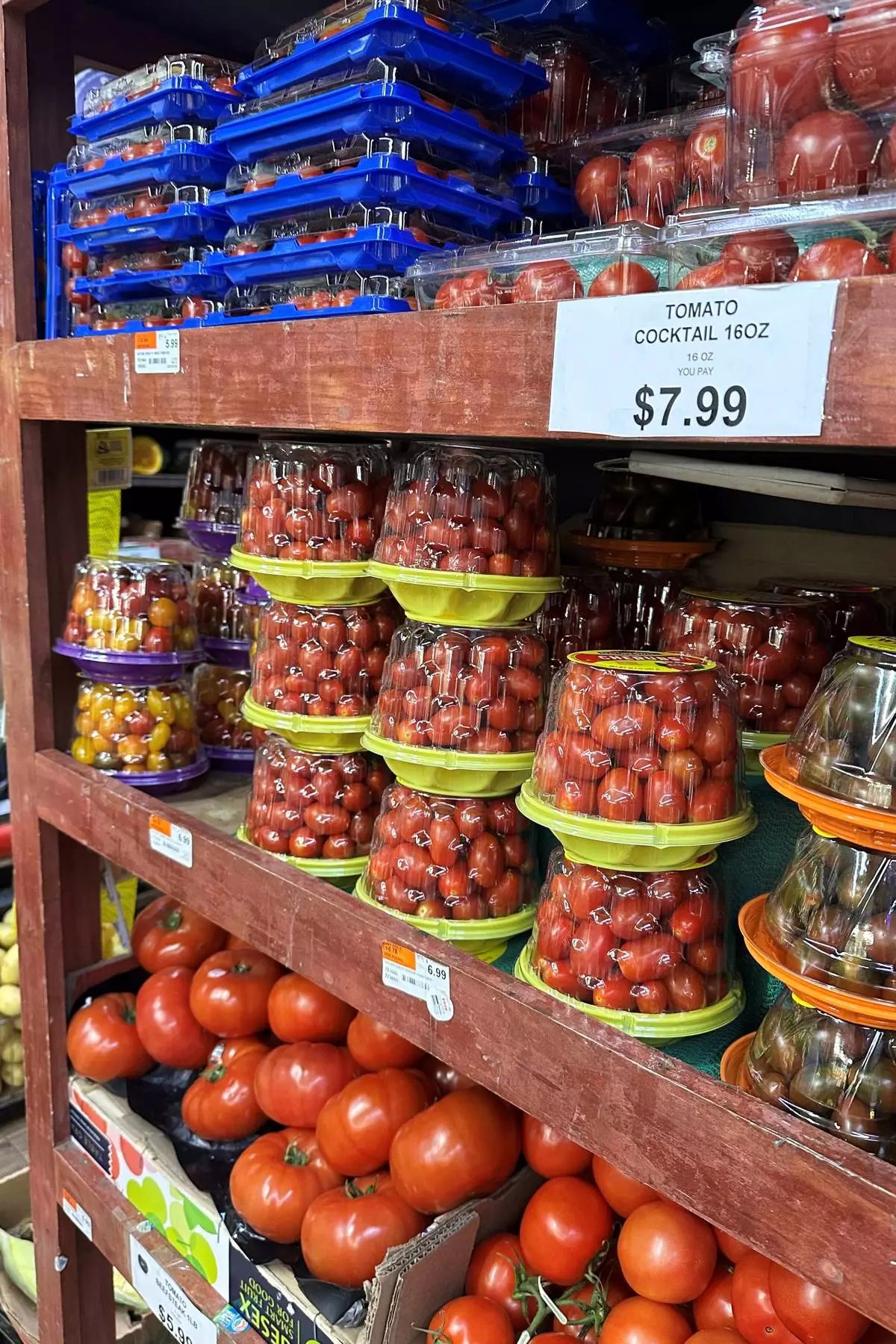
As the cost trickles down, outraged shoppers have pulled out their phones in the produce aisle, shooting videos lamenting costs they said quadrupled, with some vowing to plant a garden to avoid prices of up to $8 a pound. But the impact has been most pronounced for businesses that rely on tomatoes as a key ingredient in their kitchens.

MarginEdge, which tracks prices for restaurants, says grape tomatoes have increased most — 65% in just a month — but prices have gone up across all types of tomatoes.

Phillip Coles, a professor of supply chain management at Lehigh University, says prices should drop later in the year when domestically grown tomatoes are harvested. Higher prices, he says, will also “induce farmers to increase planting to meet the demand, but this takes longer because of the lead time.”

Meantime, it's translating to a big hit for businesses like Snarf’s Sandwiches, which puts a tomato in nearly every sandwich it makes.

Wayne Humphrey, chief operating officer of Snarf’s, which operates dozens of stores in Colorado, Missouri and Texas, said cases of tomatoes went from costing him $27 to $93 in the space of a year, piled on top of rising expenses for other ingredients including bread and beef, as well as increased labor costs.

“That single ingredient now costs us more than $1.7 million in additional spend annually,” says Humphrey. “The math is getting harder to ignore.”

Associated Press writer Dee-Ann Durbin contributed to this report. Matt Sedensky can be reached at msedensky@ap.org and https://x.com/sedensky

Tomatoes await customers on the shelves of a supermarket in New York on Tuesday, May 26, 2026. (AP Photo/Matt Sedensky)

Tomatoes await customers on the shelves of a supermarket in New York on Tuesday, May 26, 2026. (AP Photo/Matt Sedensky)

Tomatoes await customers on the shelves of a supermarket in New York on Tuesday, May 26, 2026. (AP Photo/Matt Sedensky)

Tomatoes await customers on the shelves of a supermarket in New York on Tuesday, May 26, 2026. (AP Photo/Matt Sedensky)

Recommended Articles