Director of Hong Kong Observatory highlights HKO's latest services and annual weather outlook
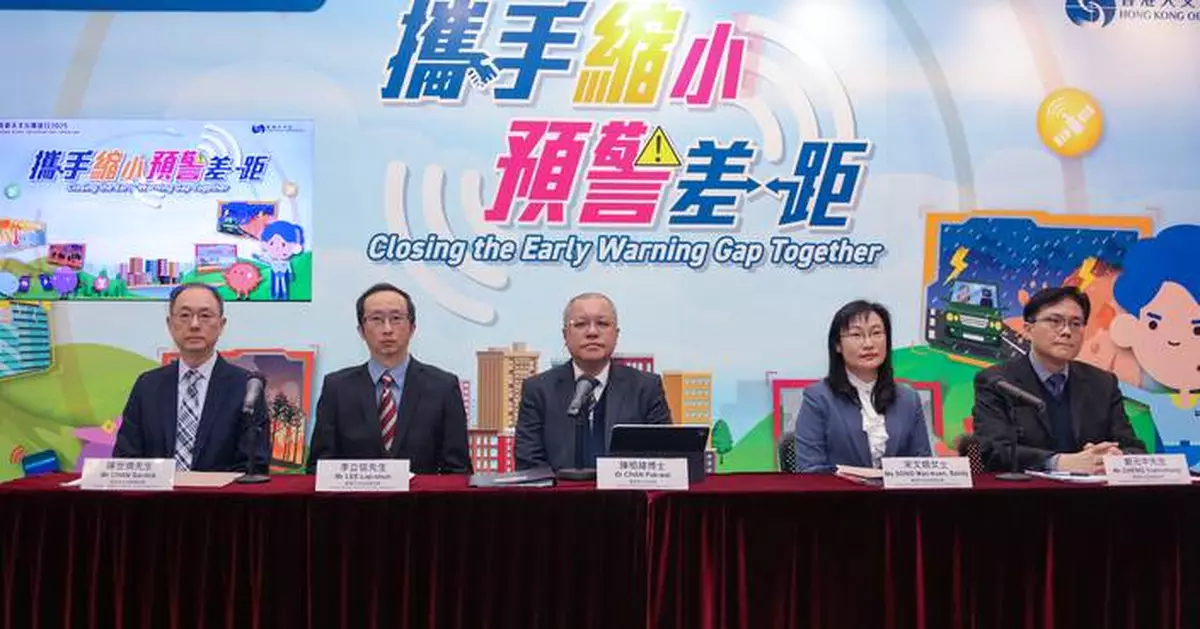
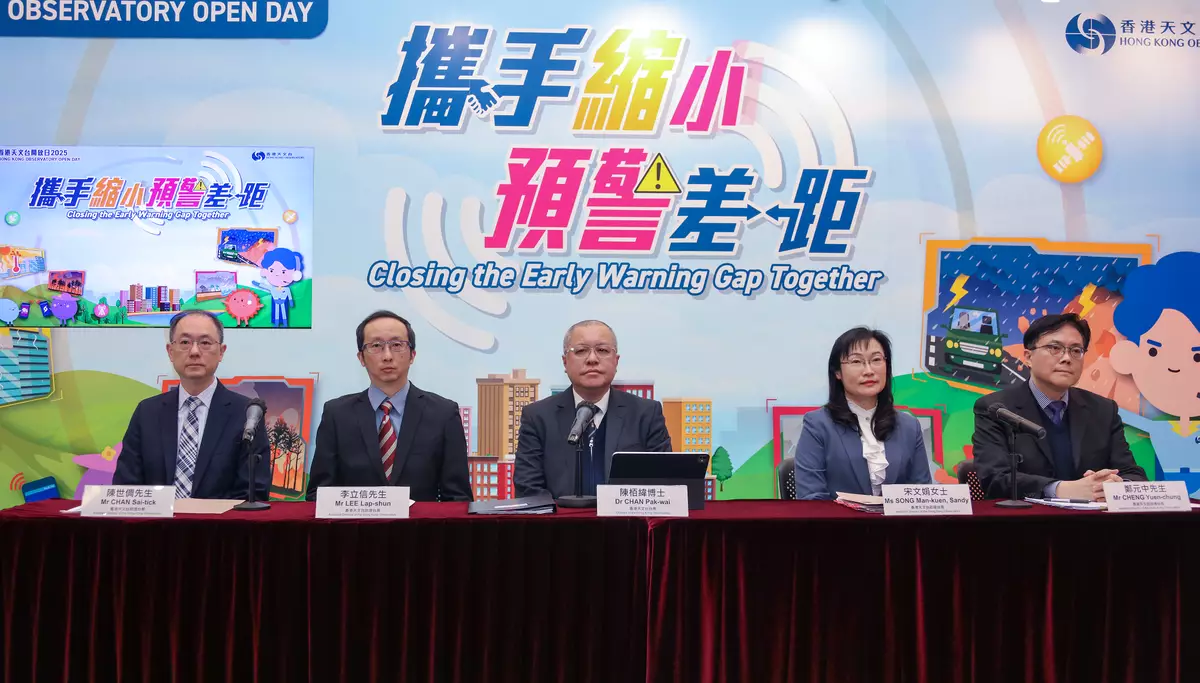
The Director of the Hong Kong Observatory (HKO), Dr Chan Pak-wai, hosted a press briefing today (March 18) to recap the weather in 2024 and elaborate on the weather outlook for Hong Kong this year as well as the HKO's latest services.
Dr Chan said that 2024 was the warmest year on record globally according to the assessment of the World Meteorological Organization (Note). The past 10 years (2015 to 2024) were also the 10 warmest years on record globally. Locally, with a total of 11 months being warmer than usual, including the record-breaking monthly mean temperatures in April and October, 2024 was the warmest year on record with the annual mean temperature reaching 24.8 degrees, 1.3 degrees above the 1991-2020 normal. The annual mean minimum temperature of 22.8 degrees and annual mean maximum temperature of 27.3 degrees were respectively the highest and second highest on record.
Looking ahead to 2025, the tropical cyclone season in Hong Kong is expected to start in June or earlier and cease in October or later this year. There will likely be about five to eight tropical cyclones coming within 500 kilometres of Hong Kong during the year, which is normal to above normal. As the climate warming continues, the annual mean temperature in Hong Kong is expected to be above normal this year. The annual rainfall in Hong Kong is expected to be near normal, ranging from 2 100 millimetres to 2 700mm. However, Hong Kong would still be affected by rainstorms and localised heavy rain. Members of the public are reminded to be prepared for the rain and tropical cyclone seasons.
Dr Chan highlighted the continual enhancement of the HKO's various services. With the rainy season approaching, the radar and satellite imagery services on the Observatory's website and "MyObservatory" mobile application will be enhanced. The update frequency of radar images covering 128km and 256km ranges will be increased from the current 12 minutes to every 6 minutes. In addition to the current rainfall rate imagery at 3km above sea level for the 64km range, new imagery at a height of 2km will be added, allowing the public to better grasp the rainfall situation in the lower atmosphere. Furthermore, the update frequency of the Fengyun-4B satellite images covering western Asia will be increased from hourly to every 15 minutes. "All-day Visible" satellite imagery and aerosol optical depth imagery from the Republic of Korea's GK-2B satellite will also be introduced to enhance the monitoring of weather and visibility conditions over southern China and the northern part of the South China Sea.
To strengthen dissemination of weather information to enable the public to prepare for weather changes in advance, the HKO will add graphical rainfall information for various districts in Hong Kong and will, on a trial basis, use video in which forecasters will explain future weather changes on camera this year. The graphical rainfall information will be launched on the "MyObservatory" mobile application and website in the next couple of months, while videos of forecasters explaining future weather changes will be provided in some of the Weather Notes articles published in the second half of this year.
Moreover, weather information for the Guangdong-Hong Kong-Macao Greater Bay Area was launched at the end of last year on the "MyObservatory" mobile application to assist citizens with travelling in the area to obtain the latest official weather information. Meanwhile, the "Dr. Tin" chatbot also supports a voice function on the "MyObservatory" mobile application. Members of the public may update to the latest version to enjoy the new features.
With the rapid development of AI, the HKO added the forecasting products of two AI-powered models as well as upper-air forecast charts on the "Earth Weather" webpage last year. The HKO will continue to enhance the "Earth Weather" webpage this year with the addition of more computer model forecast products, including the forecasting of chances of thunderstorms, to enable the public to understand the weather changes more comprehensively.
The HKO's open day activities this year will be conducted on March 22 and 23 (Saturday and Sunday) with the World Meteorological Day's theme "Closing the Early Warning Gap Together". It will provide a brief overview of the long-standing collaboration between the Observatory and meteorological authorities around the world over the years, and showcase how the HKO applies the latest technology to provide various services, enhancing the public's understanding and awareness of climate change and extreme weather. Apart from participating inperson with a valid admission ticket, members of the public can also visit the virtual tour on the Hong Kong Observatory Open Day 2025 webpage, which will be launched on March 22, to learn more about the HKO's work and services.
Dr Chan's speech at the press briefing is available on the HKO's website (www.hko.gov.hk/en/dhkovoice/files/speech20250318e.pdf).
Note: The annual average global temperature in 2024 was 1.55 degrees above pre-industrial levels, marking it as the first year the 1.5 degrees level was exceeded. Although an individual year surpassing the 1.5 degrees level does not mean that the long-term temperature goals of the Paris Agreement are not achievable, it indicates the urgent need for a significant reduction in global carbon emissions to avoid the further worsening of climate change impacts.
Director of Hong Kong Observatory highlights HKO's latest services and annual weather outlook Source: HKSAR Government Press Releases