Skip to Content Facebook Feature Image

Trump's 200% tariff threat would be 'a real disaster' for Europe's wine industry

ENT

Trump's 200% tariff threat would be 'a real disaster' for Europe's wine industry
ENT

ENT

Trump's 200% tariff threat would be 'a real disaster' for Europe's wine industry

2025-03-20 19:14 Last Updated At:19:21

CHAMPAGNE, France (AP) — Across wine country in France, Italy and Spain one number is top of mind: 200%.

That's because last week U.S. President Donald Trump threatened a tariff of that amount on European wine, Champagne and other spirits if the European Union went ahead with retaliatory tariffs on some U.S. products. The top wine producers in Europe could face crippling costs that would hit smaller wineries especially hard.

More Images
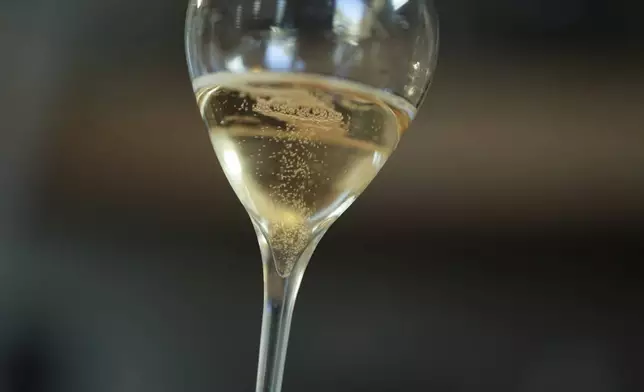
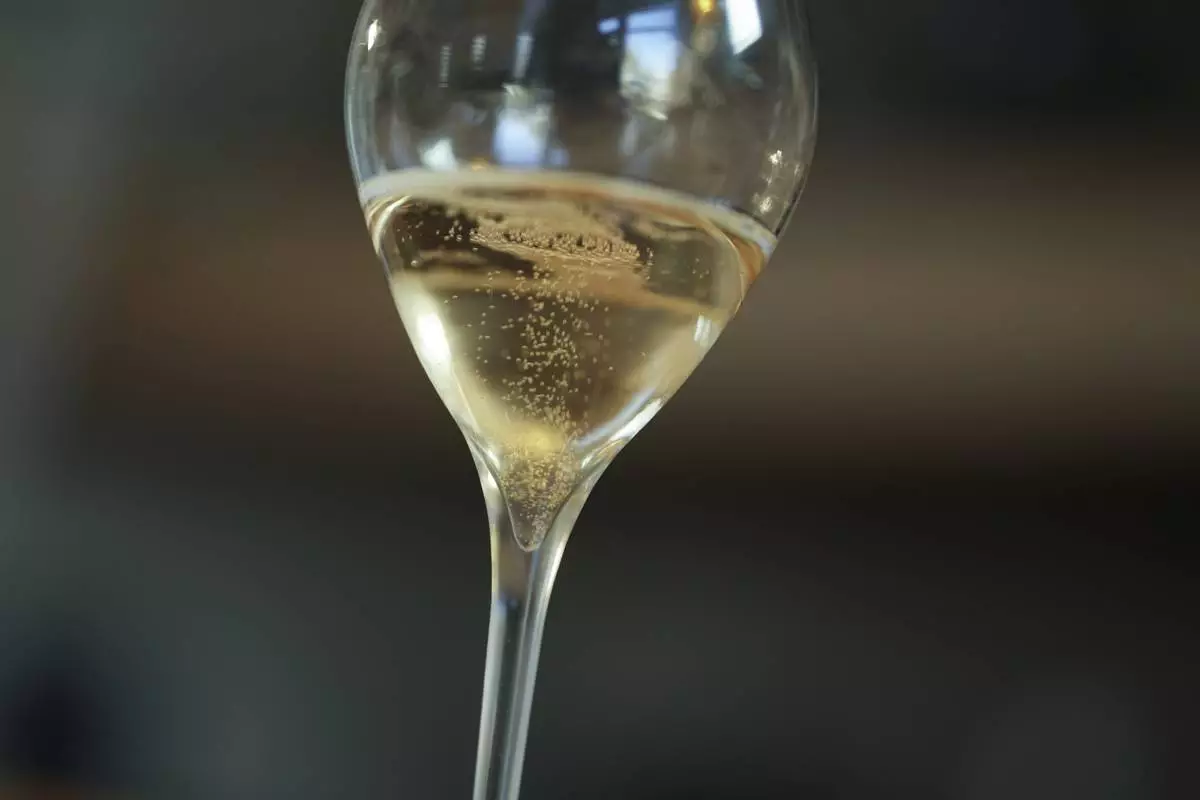
A glass of champagne is seen at the wine making facility of wine grower David Levasseur in Cuchery, eastern France, Monday, March 17, 2025. (AP Photo/Thibault Camus)
A glass of champagne is seen at the wine making facility of wine grower David Levasseur in Cuchery, eastern France, Monday, March 17, 2025. (AP Photo/Thibault Camus)

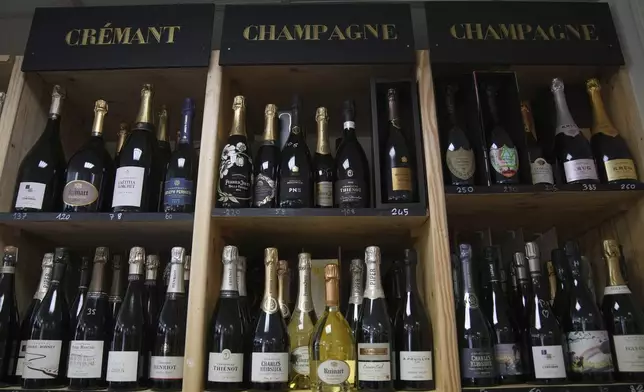
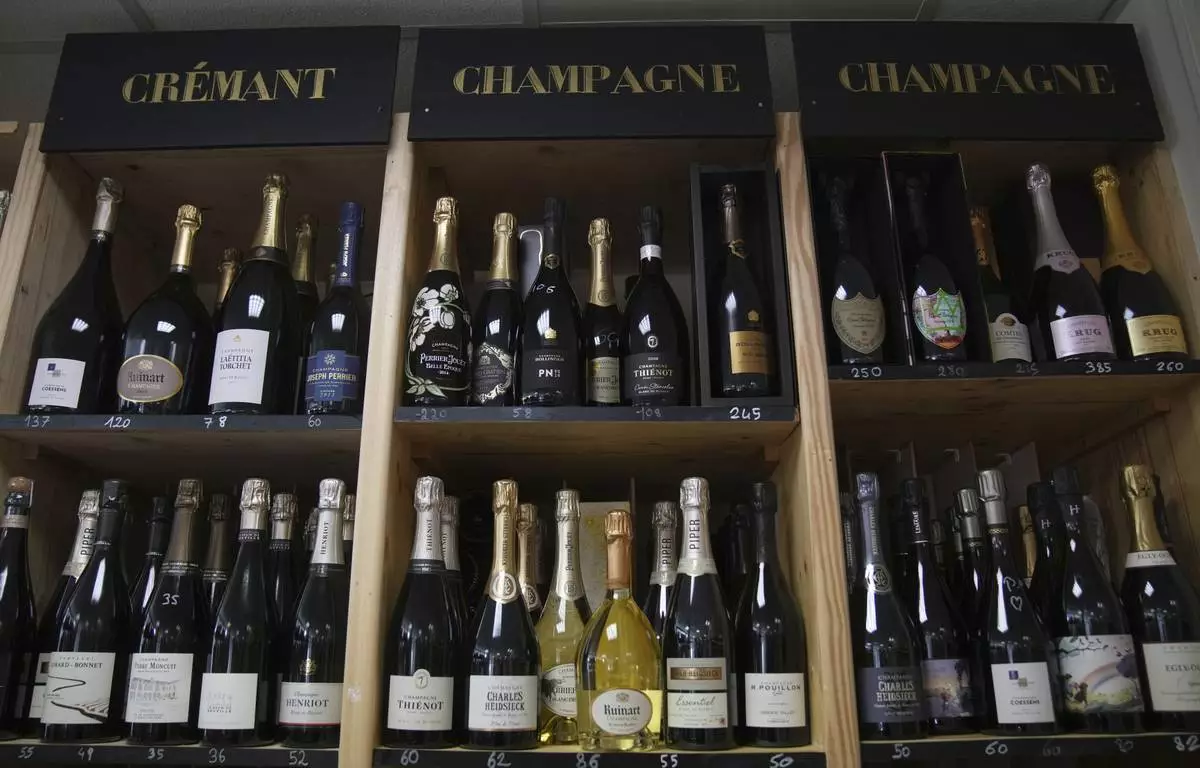
Bottles Champagne are for sale at a wine dealer shop as President Donald Trump threatened a 200% tariff on European wine, Champagne and spirits if the European Union goes forward with a planned tariff on American whiskey, Thursday, March 13, 2025 in Ville d'Avray, outside Paris. (AP Photo/Christophe Ena)
Bottles Champagne are for sale at a wine dealer shop as President Donald Trump threatened a 200% tariff on European wine, Champagne and spirits if the European Union goes forward with a planned tariff on American whiskey, Thursday, March 13, 2025 in Ville d'Avray, outside Paris. (AP Photo/Christophe Ena)

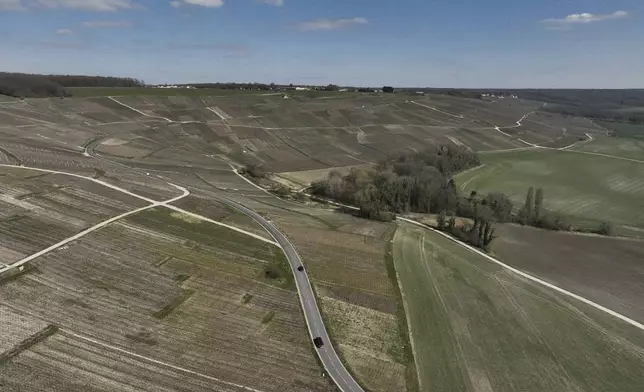
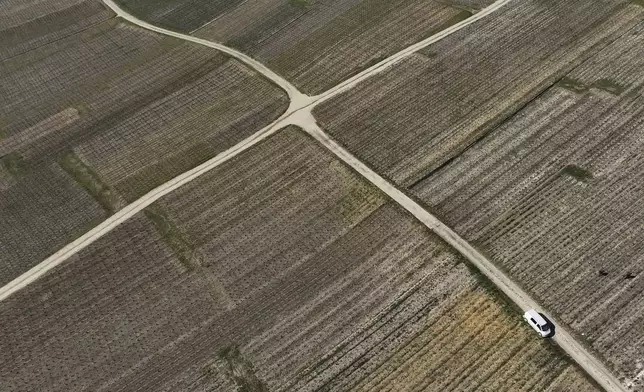
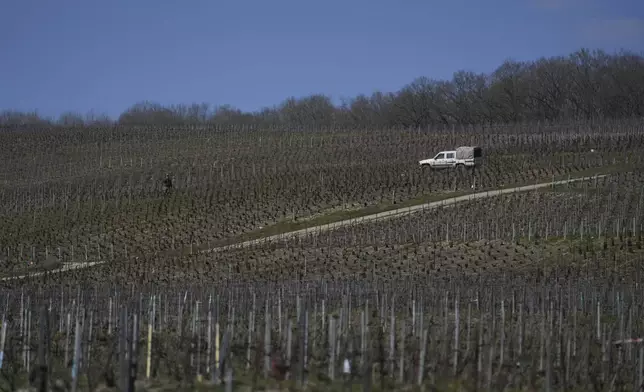
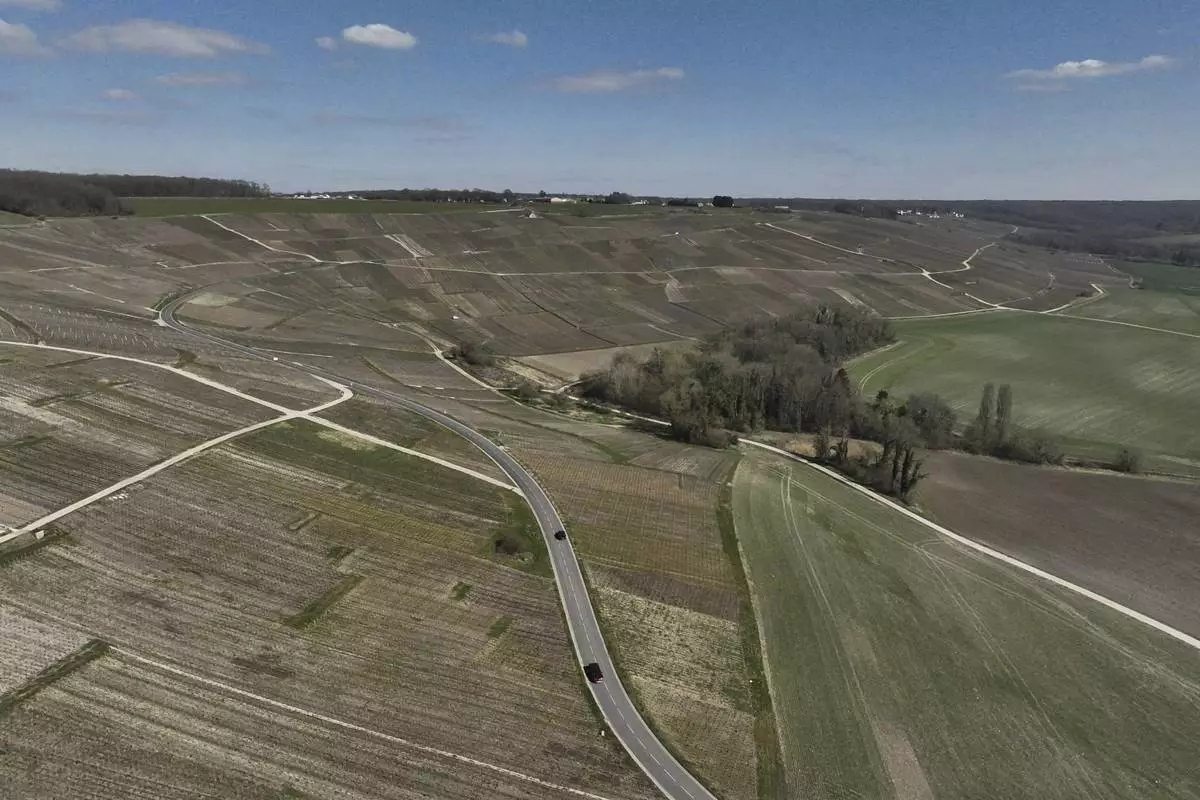
View of champagne vineyards in Cuchery, eastern France, Monday, March 17, 2025. (AP Photo/Thibault Camus)
View of champagne vineyards in Cuchery, eastern France, Monday, March 17, 2025. (AP Photo/Thibault Camus)

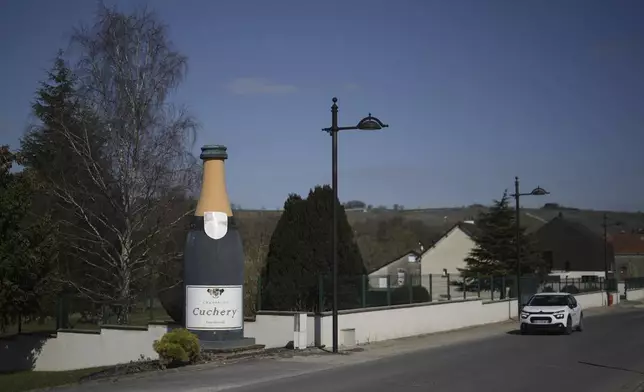
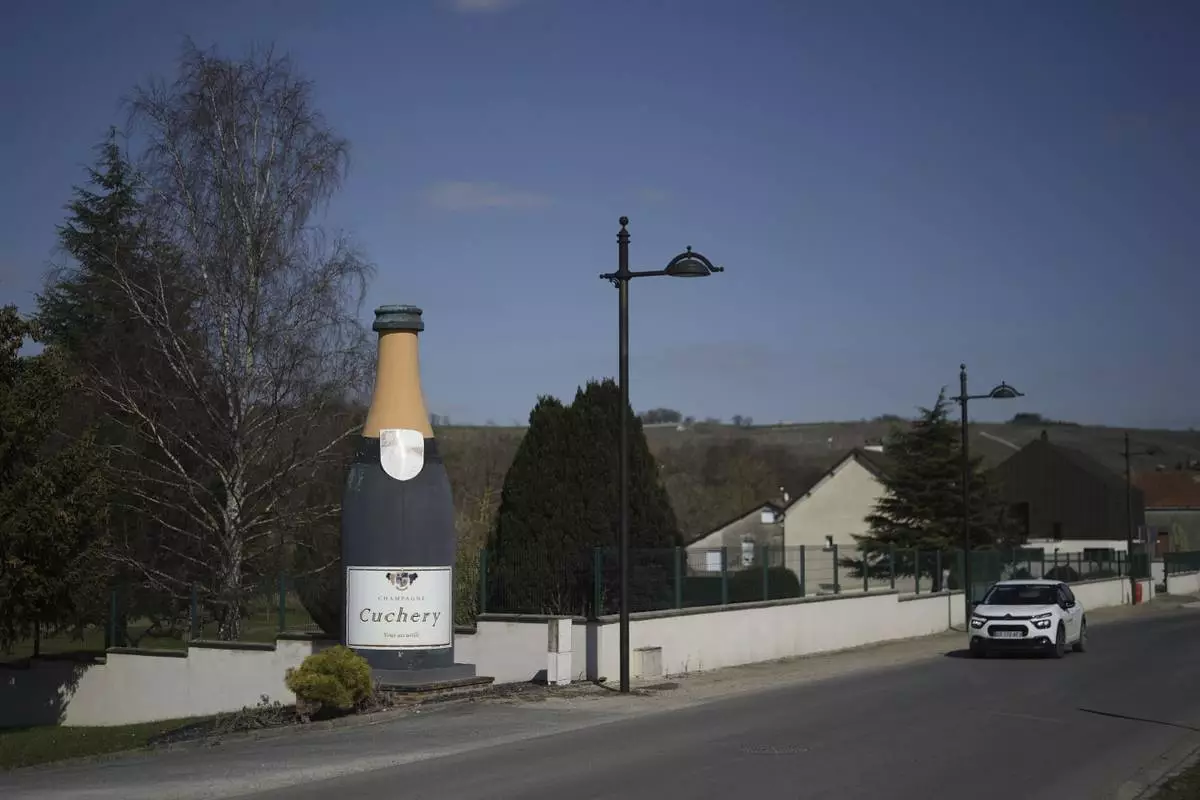
A giant plastic champagne bottle is seen at the entrance of Cuchery, eastern France, Monday, March 17, 2025. (AP Photo/Thibault Camus)
A giant plastic champagne bottle is seen at the entrance of Cuchery, eastern France, Monday, March 17, 2025. (AP Photo/Thibault Camus)

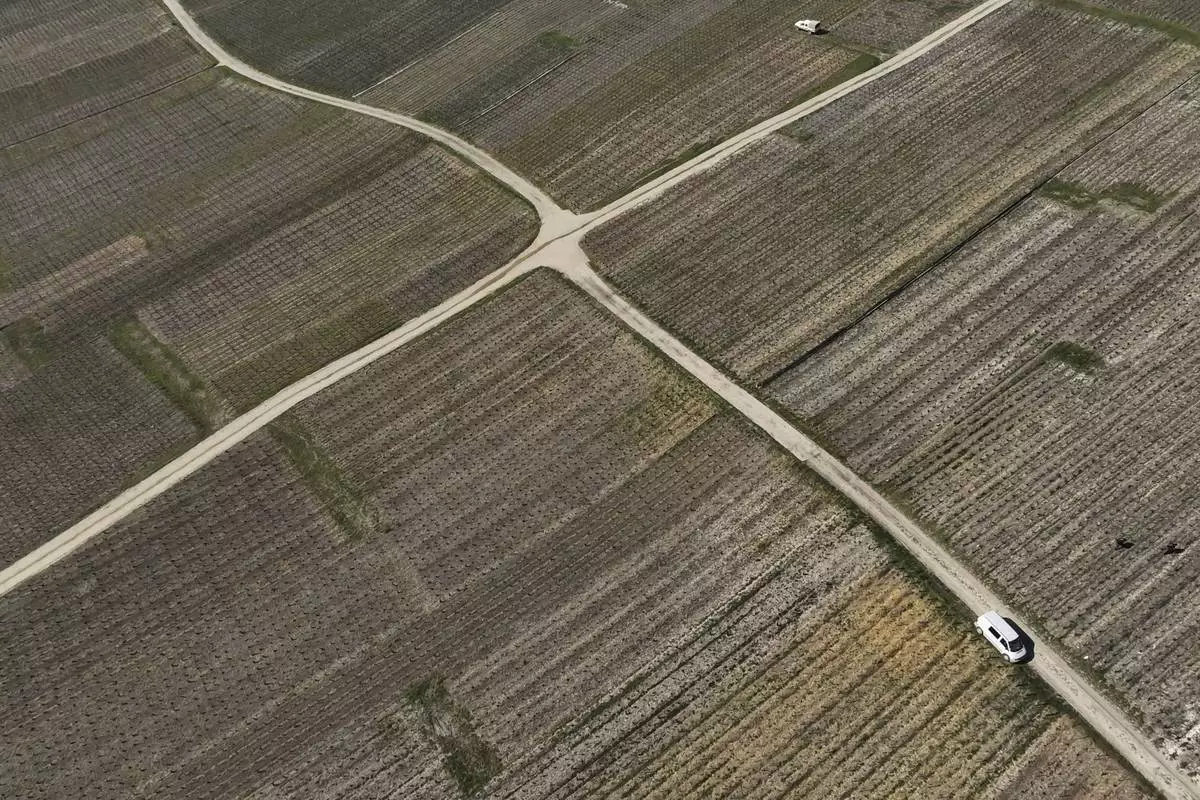
View of champagne vineyards in Cuchery, eastern France, Monday, March 17, 2025. (AP Photo/Thibault Camus)
View of champagne vineyards in Cuchery, eastern France, Monday, March 17, 2025. (AP Photo/Thibault Camus)

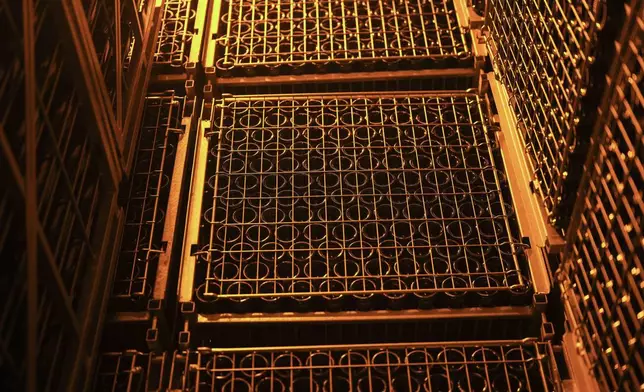
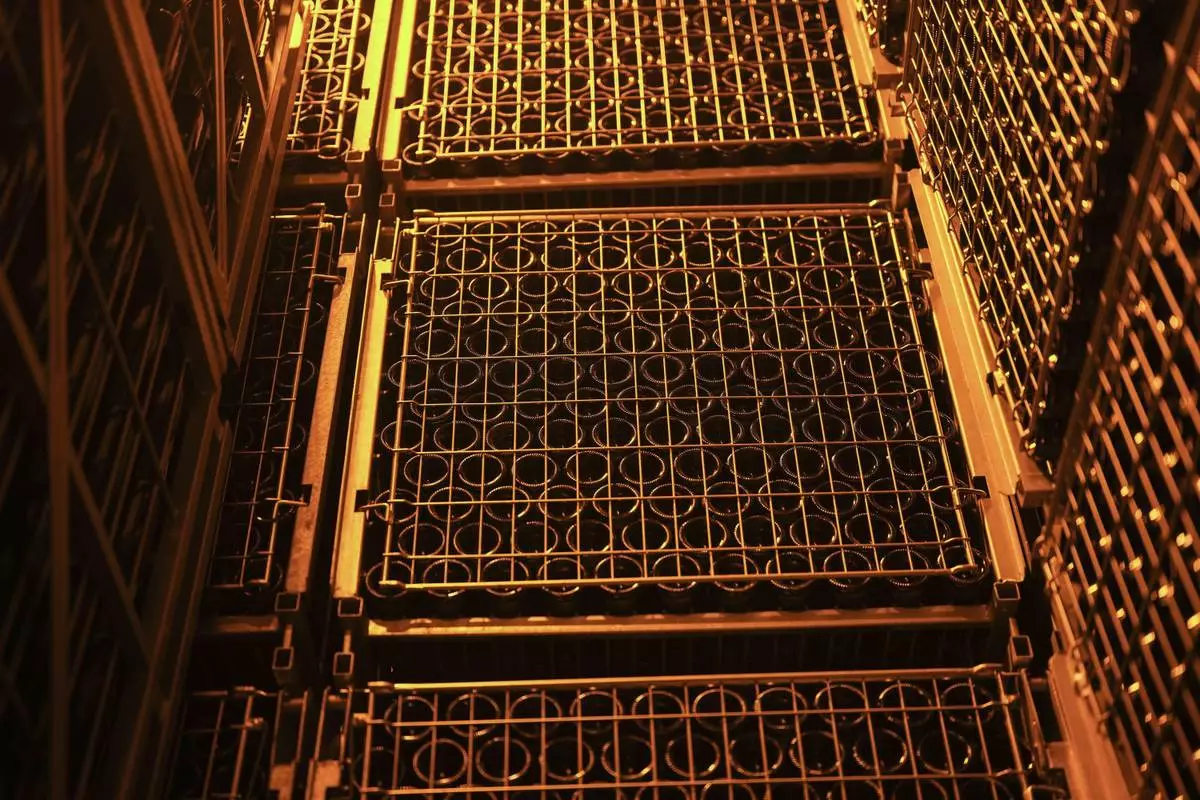
Bottles of champagne are packed to be export at the wine making facility of wine grower David Levasseur in Cuchery, eastern France, Monday, March 17, 2025. (AP Photo/Thibault Camus)
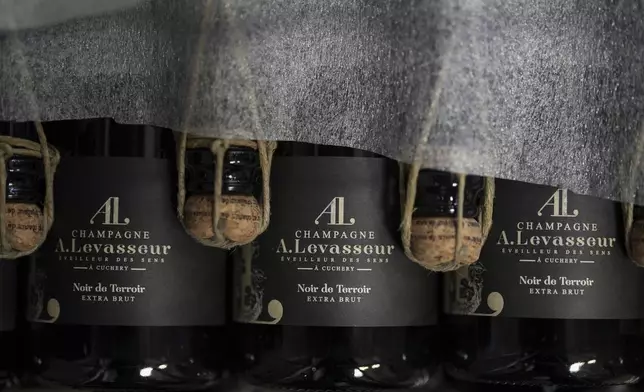
Bottles of champagne are packed to be export at the wine making facility of wine grower David Levasseur in Cuchery, eastern France, Monday, March 17, 2025. (AP Photo/Thibault Camus)
Bottles of champagne are packed to be exported at the wine making facility of wine grower David Levasseur in Cuchery, eastern France, Monday, March 17, 2025. (AP Photo/Thibault Camus)

Bottles of champagne are packed to be exported at the wine making facility of wine grower David Levasseur in Cuchery, eastern France, Monday, March 17, 2025. (AP Photo/Thibault Camus)

A winegrower works in a plot of champagne wine in Cuchery, eastern France, Monday, March 17, 2025. (AP Photo/Thibault Camus)
A winegrower works in a plot of champagne wine in Cuchery, eastern France, Monday, March 17, 2025. (AP Photo/Thibault Camus)

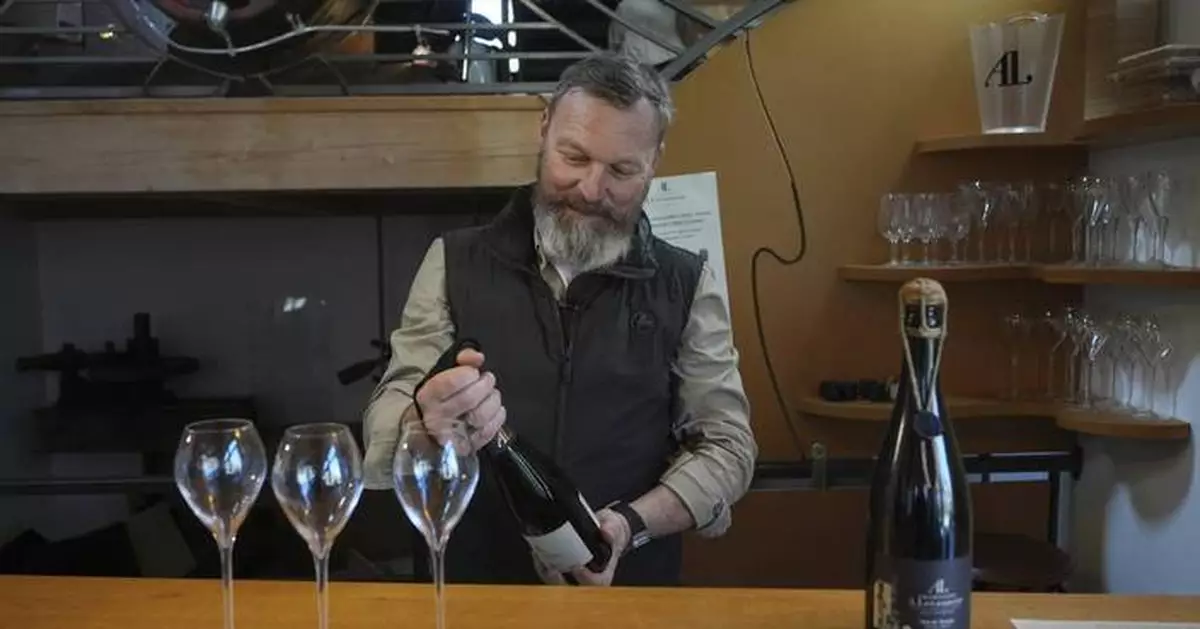
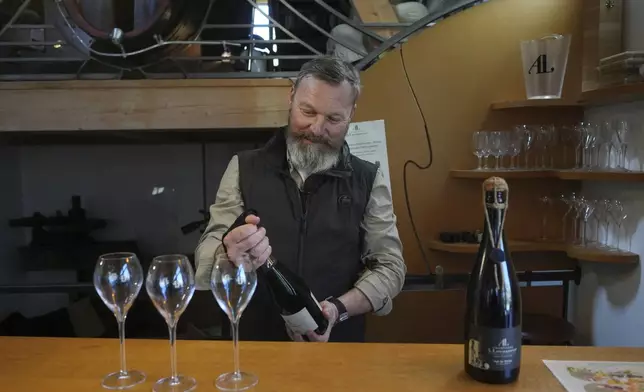
French wine grower David Levasseur opens a bottle of champagne in his wine making facility in Cuchery, eastern France, Monday, March 17, 2025. (AP Photo/Thibault Camus)

French wine grower David Levasseur opens a bottle of champagne in his wine making facility in Cuchery, eastern France, Monday, March 17, 2025. (AP Photo/Thibault Camus)

Europe's wine industry is the latest to find itself in the crosshairs of a possible trade spat with the U.S.

Among those concerned is David Levasseur, a third-generation wine grower and owner of a Champagne house in France’s eponymous region.

“It means I’m in trouble, big trouble. We hope it’s just, as we say, blah blah,” Levasseur said, standing in his Champagne house as he swilled a flute of his vineyard’s bubbly. “When someone speaks so loudly,” he said of Trump’s 200% threat, “it’s about the media buzz. But in any case, we think there will be consequences.”

Like other wine sellers and exporters, Levasseur said that a 200% tariff on what he exports to the U.S. would essentially grind to a halt his business in that country.

“It could be a real disaster,” Levasseur said.

Italy, France and Spain are among the top five exporters of wine to the United States. Trump made his threat to Europe's alcohol industry after the European Union announced a 50% tax on American whiskey expected to take effect on April 1. That duty was unveiled in response to the Trump administration's tariffs on foreign steel and aluminum.

Gabriel Picard, who heads the French Federation of Exporters of Wines and Spirits, said 200% tariffs would be “a hammer blow” for France’s industry, whose wine and spirits exports to the U.S. are worth 4 billion euros ($4.3 billion) annually.

“With 200% duties, there is no more market," Picard said.

Still, he understood why European leaders responded to Trump's initial tariffs.

“There's no debate about that. We agree that Mr. Trump creates and likes to create contests of strength. We have to adapt to that,” he said.

In Italy, the wine industry has called for calm, hoping that negotiators in Brussels and Washington can back down from the growing trade spat.

The U.S. is Italy’s largest wine market, with sales having tripled in value over the past 20 years. Last year, exports grew by nearly 7% to over 2 billion euros ($2.2 billion) according to Italy's main farming lobby Coldiretti.

Strong sales at high-end restaurants, in particular, make the U.S. market difficult to replace, said Piero Mastroberardino, vice president of the national winemakers’ association Federvini.

Mastroberardino’s “Taurasi Radici” red wine, for example, was rated the fifth-best wine in the world in 2023 by Wine Spectator, an American wine and lifestyle magazine. It sells for around $80 a bottle retail in the U.S., roughly twice how much it costs in Italy, so any tariffs would push it to an “unthinkable price point,” he said.

In January, Mastroberardino's U.S. import partners increased orders by about 20% in January anticipating possible Trump tariffs. But the increase in orders would not offset the impact of tariffs, particularly that high, he said, for long.

"It is in everyone’s interest to maintain a united front at the negotiating table," Mastroberardino said, "especially those who are being targeted.”

Wine producers and industry experts in Spain, whose smooth reds are savored by tens of millions of American tourists who visit the southern European country every year, shared similar concerns about prospective tariffs.

“We don't think they have much logic and we hope it never comes to fruition," said Begoña Olavarría, an economic analyst at the Interprofessional Wine Organization of Spain.

Spain was the fourth-largest exporter of wine to the U.S. last year in sales, and the seventh-largest by volume, according to the trade group. Spanish wine exports to the U.S. grew by 7% last year. And the wine industry represents about 2% of the country's overall economic output, the trade group said.

For Spain's producers of Cava, the threat of U.S. tariffs hit especially hard. The U.S. is the number two market for the Spanish bubbly wine, which like Champagne has a designation of origin meaning it can only be made in Spain.

Mireia Pujol-Busquets is owner of the Alta Alella Bodega located in Cava country just south of Barcelona. Founded by her family in 1991, she said her business and its 40 employees immediately risk losing sales of some 25,000 bottles if the American market slams shut.

“We spent 10 years of effort opening the American market, finding distributors and building a brand,” she told the AP.

While the Catalan bodega and its distributors in the U.S. were able to absorb the price increase induced by Trump’s 25% tariff on wines during his first term, Pujol-Busquets said that it is “completely irrational” to consider eating a 200% hike.

“The situation is pretty desperate," she said.

This story has been revised to reflect that the U.S. is the number two destination for Spanish bubbly wine, rather than the number one destination.

Naishadham reported from Madrid. Associated Press journalists Joseph Wilson in Barcelona, Spain; John Leicester in Paris; and Colleen Barry in Milan contributed to this report.
A glass of champagne is seen at the wine making facility of wine grower David Levasseur in Cuchery, eastern France, Monday, March 17, 2025. (AP Photo/Thibault Camus)
A glass of champagne is seen at the wine making facility of wine grower David Levasseur in Cuchery, eastern France, Monday, March 17, 2025. (AP Photo/Thibault Camus)

Bottles Champagne are for sale at a wine dealer shop as President Donald Trump threatened a 200% tariff on European wine, Champagne and spirits if the European Union goes forward with a planned tariff on American whiskey, Thursday, March 13, 2025 in Ville d'Avray, outside Paris. (AP Photo/Christophe Ena)
Bottles Champagne are for sale at a wine dealer shop as President Donald Trump threatened a 200% tariff on European wine, Champagne and spirits if the European Union goes forward with a planned tariff on American whiskey, Thursday, March 13, 2025 in Ville d'Avray, outside Paris. (AP Photo/Christophe Ena)

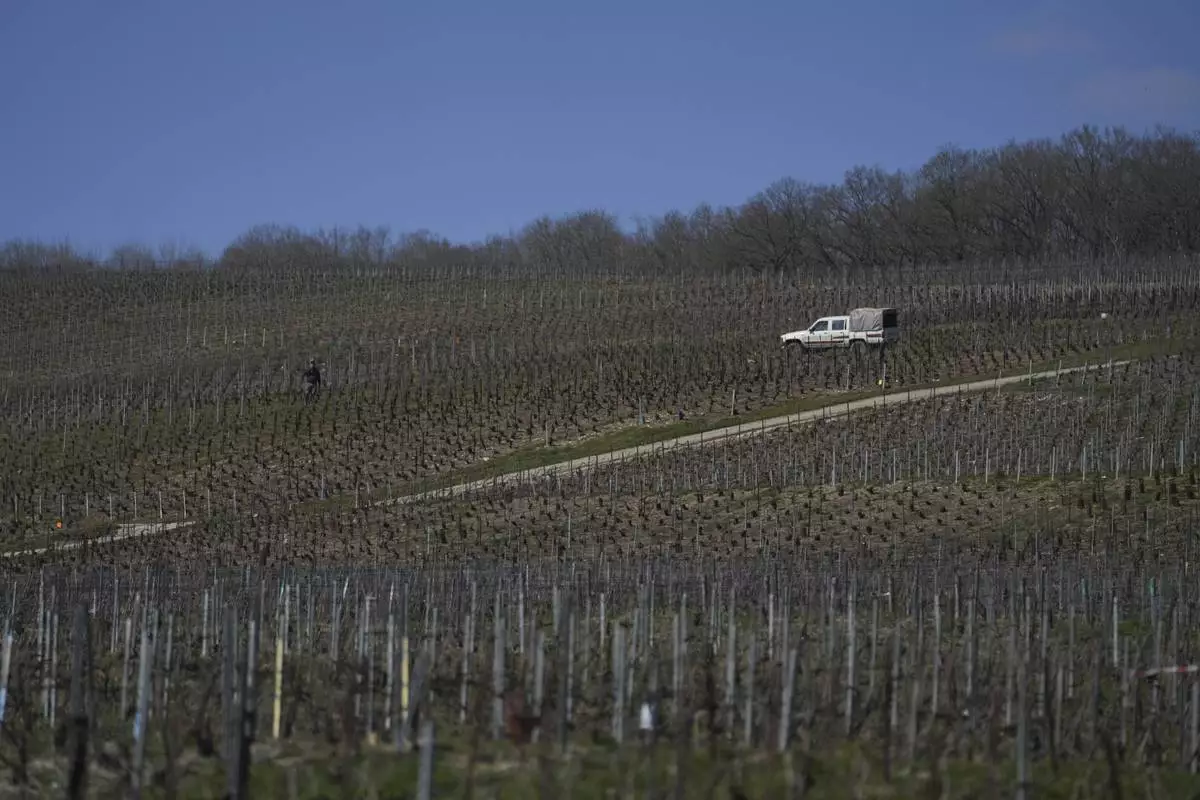
View of champagne vineyards in Cuchery, eastern France, Monday, March 17, 2025. (AP Photo/Thibault Camus)
View of champagne vineyards in Cuchery, eastern France, Monday, March 17, 2025. (AP Photo/Thibault Camus)

A giant plastic champagne bottle is seen at the entrance of Cuchery, eastern France, Monday, March 17, 2025. (AP Photo/Thibault Camus)
A giant plastic champagne bottle is seen at the entrance of Cuchery, eastern France, Monday, March 17, 2025. (AP Photo/Thibault Camus)

View of champagne vineyards in Cuchery, eastern France, Monday, March 17, 2025. (AP Photo/Thibault Camus)
View of champagne vineyards in Cuchery, eastern France, Monday, March 17, 2025. (AP Photo/Thibault Camus)

Bottles of champagne are packed to be export at the wine making facility of wine grower David Levasseur in Cuchery, eastern France, Monday, March 17, 2025. (AP Photo/Thibault Camus)
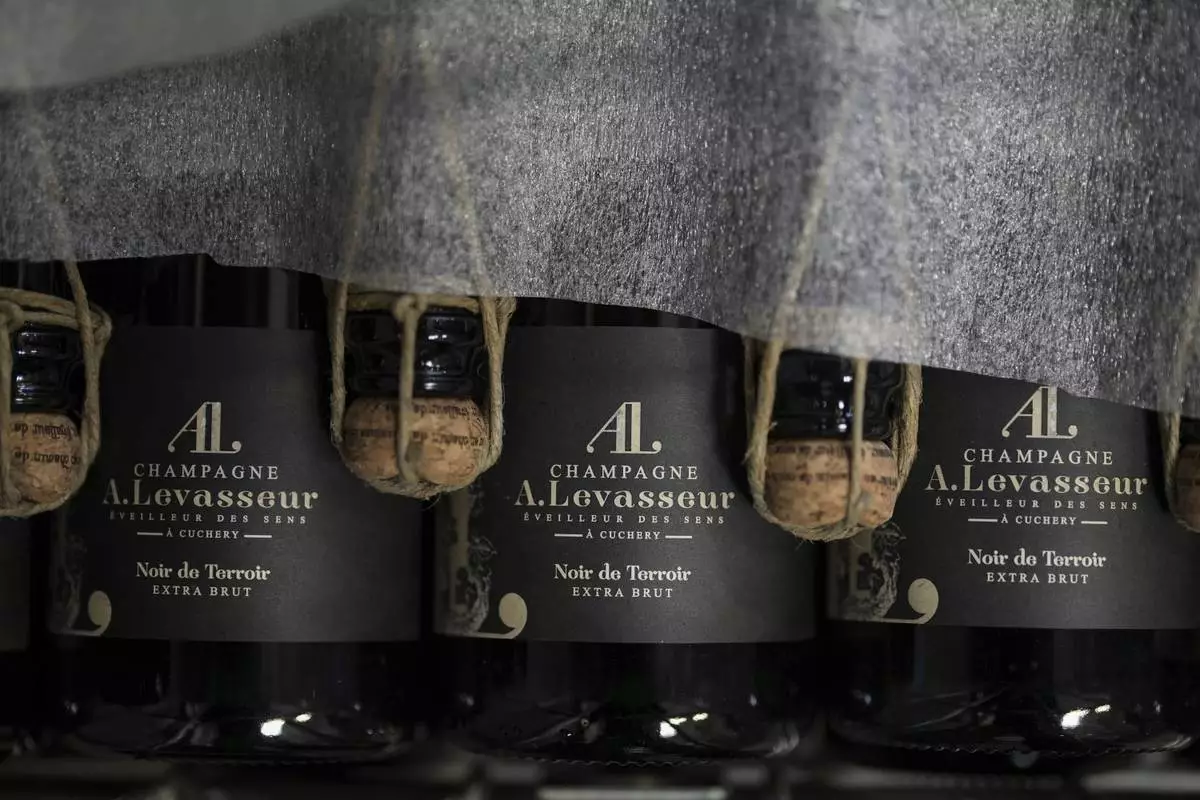
Bottles of champagne are packed to be export at the wine making facility of wine grower David Levasseur in Cuchery, eastern France, Monday, March 17, 2025. (AP Photo/Thibault Camus)
Bottles of champagne are packed to be exported at the wine making facility of wine grower David Levasseur in Cuchery, eastern France, Monday, March 17, 2025. (AP Photo/Thibault Camus)

Bottles of champagne are packed to be exported at the wine making facility of wine grower David Levasseur in Cuchery, eastern France, Monday, March 17, 2025. (AP Photo/Thibault Camus)

A winegrower works in a plot of champagne wine in Cuchery, eastern France, Monday, March 17, 2025. (AP Photo/Thibault Camus)
A winegrower works in a plot of champagne wine in Cuchery, eastern France, Monday, March 17, 2025. (AP Photo/Thibault Camus)

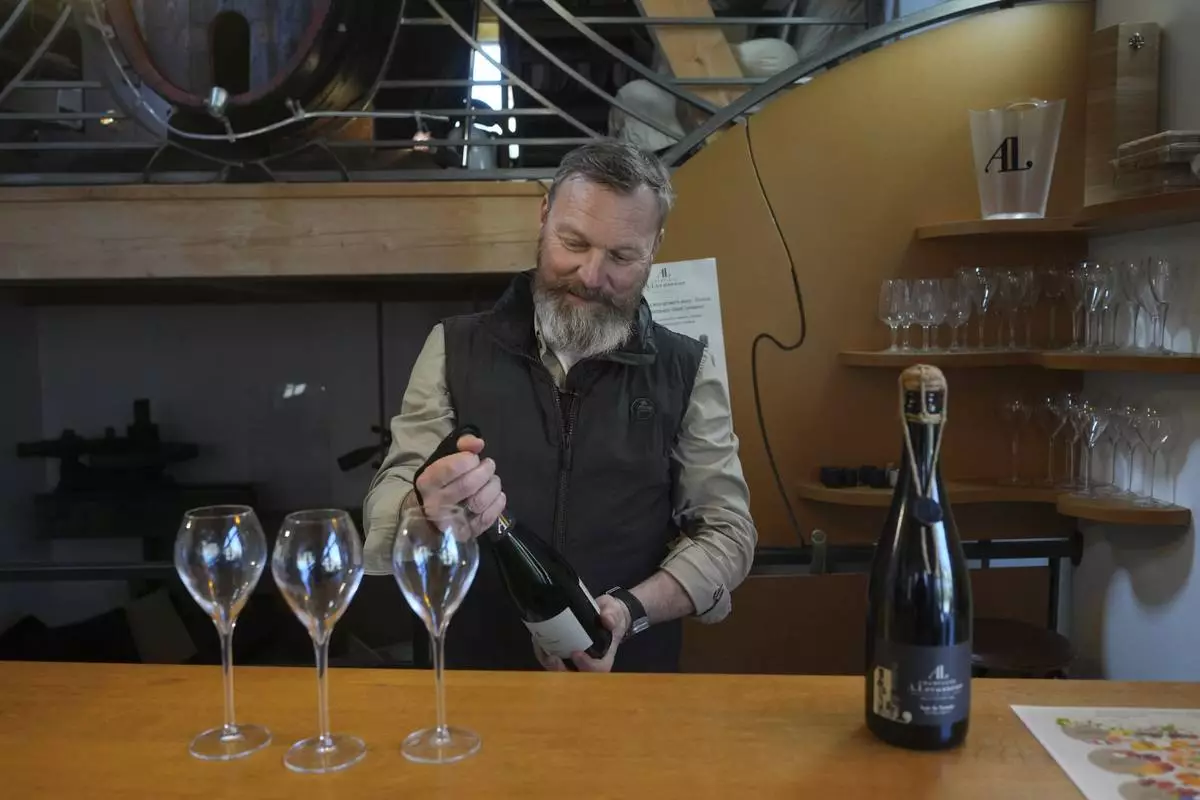
French wine grower David Levasseur opens a bottle of champagne in his wine making facility in Cuchery, eastern France, Monday, March 17, 2025. (AP Photo/Thibault Camus)
French wine grower David Levasseur opens a bottle of champagne in his wine making facility in Cuchery, eastern France, Monday, March 17, 2025. (AP Photo/Thibault Camus)

The NFL set a record for fewest punts per game in 2025, and wild-card weekend was filled with fourth-down fun and folly as punters were mostly spectators, especially Chicago's Tory Taylor, who never stepped off the sideline in the Bears' come-from-behind win over the Green Bay Packers.

In all, teams converted 15 of 29 fourth down attempts on wild-card weekend, when there were only 41 punts, nine of them Monday night in the Houston Texans' 30-6 rout of Aaron Rodgers and the Pittsburgh Steelers.

Bears first-year coach Ben Johnson was particularly aggressive, going for it a half-dozen times on fourth down Saturday night, including two backfires in the first half that led to a pair of Green Bay touchdowns and put the Bears in a 21-3 halftime hole.

Caleb Williams was intercepted on fourth-and-6 from the Packers 40-yard line, leading to Jordan Love's 18-yard touchdown throw, and Williams threw incomplete on fourth-and-5 from his own 32. That one led to Love's TD throw on fourth-and-goal from the Bears 2 that gave Green Bay an 18-point halftime cushion.

The Packers couldn't capitalize on another turnover on downs by Chicago just before halftime because Brandon McManus missed a 55-yard field goal on the final play after Williams threw incomplete deep on fourth-and-4 from the Green Bay 37.

When Prime Video's sideline reporter Kaylee Hartung asked the Bears' coach about his aggressive approach and going for it on fourth down multiple times on his own side of the field, Johnson replied, “Yeah, we want to maximize our possessions and we want to go for fourth-down plays."

Her follow-up was about how to slow down Green Bay's efficient offense.

“That's a big reason why we're being aggressive on offense, so that we can extend our drives and score points ourselves,” Johnson said. “It's a really good offense we're going against.”

Although the Bears would convert just twice on their six fourth downs — Green Bay was 3 for 3 on fourth down — that strategy paid off in the end. Williams threw a 27-yard pass to Rome Odunze to the Packers' 30-yard line, which led to the TD that pulled Chicago to 27-24 with 4:21 remaining.

Johnson said the game plan featured an aggressive fourth-down mentality, and "I think where it gets misconstrued is, there’s a lack of confidence in your defense when you do that. I think the opposite, I think it’s because I have confidence in our defense and their ability to stop teams in the red zone."

“I’m never going to apologize for being aggressive or doing things that might be a little unorthodox,” Johnson added, "if it’s what we deem is best for us to win a ballgame.”

Johnson was the Lions' offensive coordinator when Detroit blew a 17-point halftime lead and lost the NFC championship to San Francisco 34-31 after the 2023 season. In that game, Lions coach Dan Campbell went for it on fourth down twice in field-goal range but came up short, later saying he'd do it again if he could.

Those failures didn't curtail the Lions' aggressive fourth-down philosophy, one that Johnson took to Chicago when he was hired by the Bears a year ago.

He had plenty of company over the weekend as a trend from the regular season continued. There were just 3.55 punts per game per team this season and that figure fell in the first round of the playoffs with teams averaging just 3.41 punts per game.

The Panthers and Rams got the fun going Saturday when early fourth-down failures led to touchdowns by each team.

Trevor Lawrence thought he had the first down when the Jaguars went for it on fourth-and-2 from the Buffalo 9 only to see the review reveal his shin had hit the ground shy of the first-down marker, a fourth-down faux pas that proved pivotal in Jacksonville's 27-24 loss to the Bills.

The Bills twice went for it on fourth-and-1 deep in Jaguars territory. Josh Allen had a four-yard keeper on the first one and was carried nine yards on an astonishing tush push to the 1 that also led to a Buffalo touchdown.

The 49ers didn't attempt a single fourth-down conversion in their 23-19 win at Philadelphia, where the Eagles were 3-for-5 on fourth down.

The Patriots converted their only fourth-down try, on fourth-and-4 from the Chargers' 30, which led to a field goal. When the Chargers took a delay after failing to induce an offsides call and then punted from midfield, NBC analyst Cris Collinsworth said, “I think Jim Harbaugh's been watching the games this weekend.”

And when Steelers coach Mike Tomlin chose to take the three points with a 32-yard field goal try rather that chancing it on fourth-and-3 from the Houston 14 Monday night, ESPN analyst Troy Aikman commented: “We're in a time as we all know when a lot of offenses would be going for it. ... But points are going to be (at) a premium. You've got two defenses that are capable of dominating their opponent. Get 'em when you can.”

Well, points certainly were at a premium for Pittsburgh, which hung in there most of the night before the Texans' 23-0 fourth-quarter blitz in what might have been Rodgers' farewell game.

If so, Rodgers' final pass was a pick-6 by safety Calen Bullock, whose 50-yard interception return for a touchdown came on ... you guessed it, fourth down.

AP NFL: https://apnews.com/hub/NFL

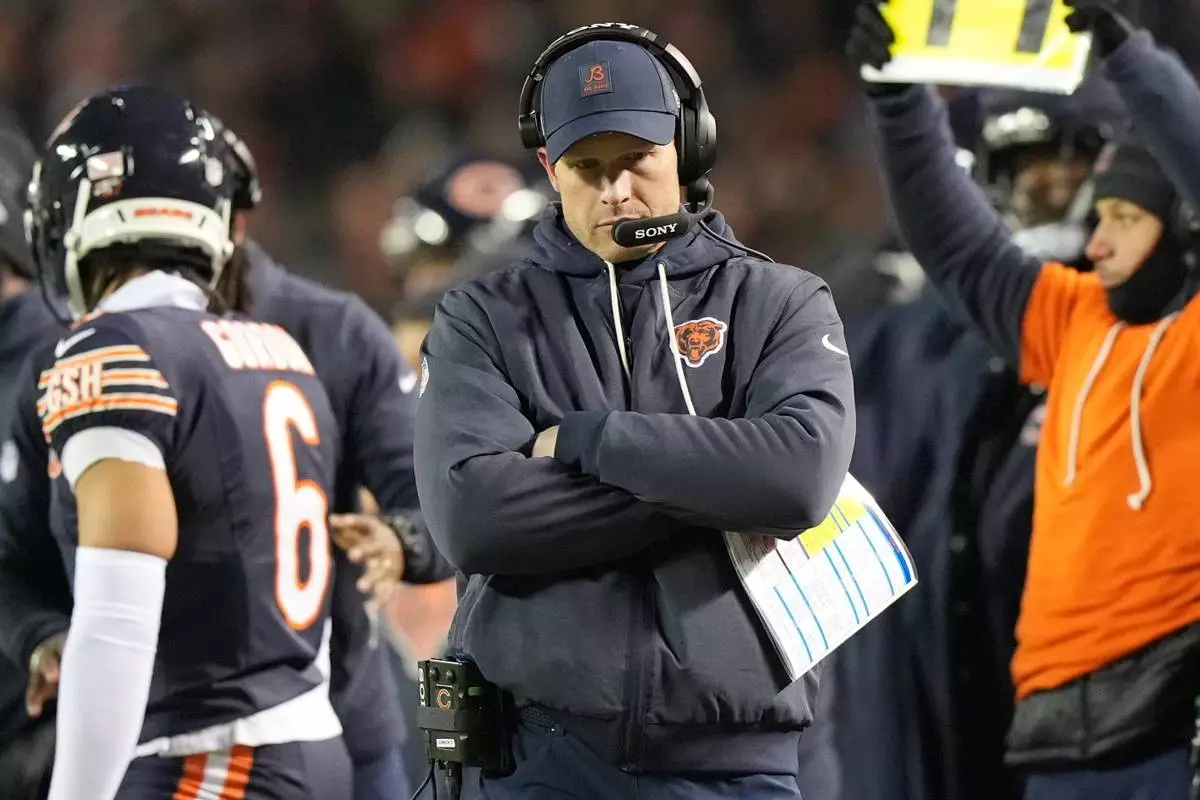
Chicago Bears head coach Ben Johnson reacts during the first half of an NFL wild-card playoff football game against the Green Bay Packers Saturday, Jan. 10, 2026, in Chicago. (AP Photo/Nam Huh)

Chicago Bears head coach Ben Johnson reacts during the first half of an NFL wild-card playoff football game against the Green Bay Packers Saturday, Jan. 10, 2026, in Chicago. (AP Photo/Nam Huh)

Recommended Articles