LONDON (AP) — Oleg Gordievsky, a Soviet KGB officer who helped change the course of the Cold War by covertly passing secrets to Britain, has died. He was 86.
Gordievsky died March 4 in England, where he had lived since defecting in 1985. Police said Saturday that they are not treating his death as suspicious.
Click to Gallery
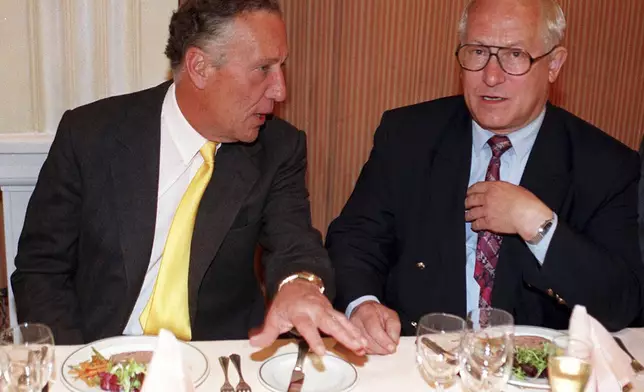
FILE - File photo dated 23/04/97 of author Frederick Forsyth, left. with Foyles luncheon chairman Oleg Gordievsky, at the Foyle's Literary,in London. Gordievsky died March 4 in England at the age of 86. (David Cheskin/PA via AP)
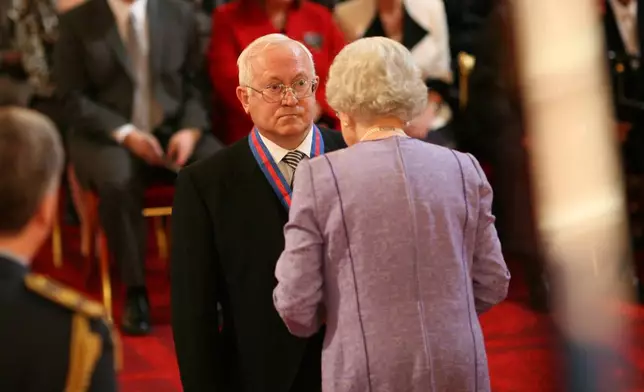
Former Soviet spy Oleg Gordievsky after receives the Companion of the Most Distinguished Order of St Michael and Saint George from Queen Elizabeth II at Buckingham Palace in London, Oct. 17, 2007. (Martin Keene/PA via AP, file)
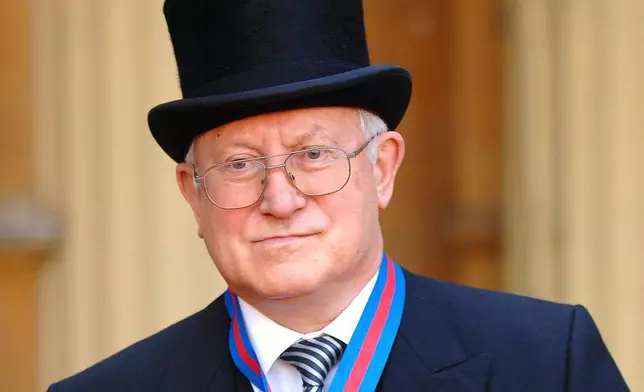
FILE- Former Soviet spy Oleg Gordievsky after receiving the Companion of the Most Distinguished Order of St Michael and Saint George from Queen Elizabeth II at Buckingham Palace in London, Oct. 17, 2007. (Fiona Hanson/PA via AP, file)
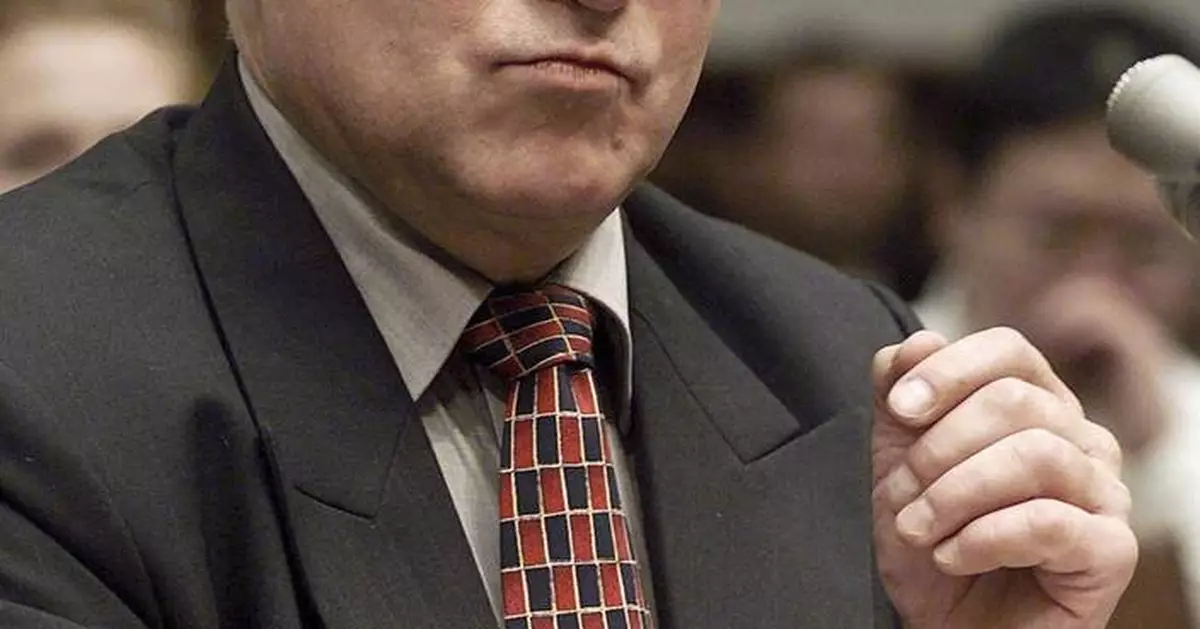
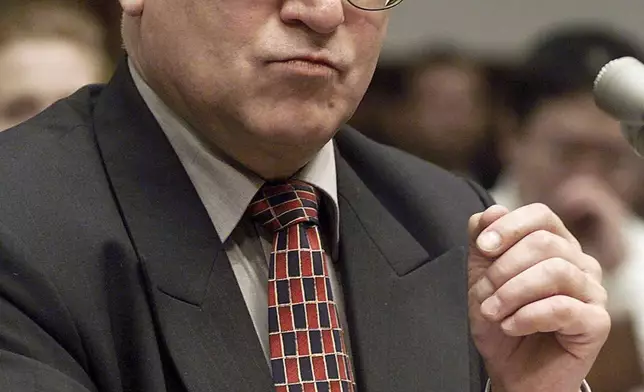
FILE - In this Oct. 26, 1999 file photo, Oleg Gordievsky, a former deputy head of the KGB in London, prepares to testify before a House Armed Services Subcommittee in Washington. He died March 4 in England at the age of 86. (AP Photo/Dennis Cook, File)
Historians consider Gordievsky one of the era’s most important spies. In the 1980s, his intelligence helped avoid a dangerous escalation of nuclear tensions between the USSR and the West.
Born in Moscow in 1938, Gordievsky joined the KGB in the early 1960s, serving in Moscow, Copenhagen and London, where he became KGB station chief.
He was one of several Soviet agents who grew disillusioned with the USSR after Moscow’s tanks crushed the Prague Spring freedom movement in 1968, and was recruited by Britain's MI6 in the early 1970s.
The 1990 book “KGB: The Inside Story,” co-authored by Gordievsky and British intelligence historian Christopher Andrew, says Gordievsky came to believe that “the Communist one-party state leads inexorably to intolerance, inhumanity and the destruction of liberties.” He decided that the best way to fight for democracy “was to work for the West.”
He worked for British intelligence for more than a decade during the chilliest years of the Cold War.
In 1983, Gordievsky warned the U.K. and U.S. that the Soviet leadership was so worried about a nuclear attack by the West that it was considering a first strike. As tensions spiked during a NATO military exercise in Germany, Gordievsky helped reassure Moscow that it was not precursor to a nuclear attack.
Soon after, U.S. President Ronald Reagan began moves to ease nuclear tensions with the Soviet Union.
In 1984, Gordievsky briefed soon-to-be Soviet leader Mikhail Gorbachev ahead of his first visit to the U.K. — and also briefed the British on how to approach the reformist Gorbachev. Gorbachev's meeting with Prime Minister Margaret Thatcher was a huge success.
Ben Macintyre, author of a book about the double agent, “The Spy and the Traitor,” told the BBC that Gordievsky managed “in a secret way to launch the beginning of the end of the Cold War.”
Gordievsky was called back to Moscow for consultations in 1985, and decided to go despite fearing — correctly — that his role as a double agent had been exposed. He was drugged and interrogated but not charged, and Britain arranged an undercover operation to spirit him out of the Soviet Union — smuggled across the border to Finland in the trunk of a car.
He was the most senior Soviet spy to defect during the Cold War. Documents declassified in 2014 showed that Britain considered Gordievsky so valuable that Thatcher sought to cut a deal with Moscow: If Gordievsky’s wife and daughters were allowed to join him in London, Britain would not expel all the KGB agents he had exposed.
Moscow rejected the offer, and Thatcher ordered the expulsion of 25 Russians, despite objections from Foreign Secretary Geoffrey Howe, who fared it could scuttle relations just as Gorbachev was easing the stalemate between Russia and the West.
Moscow responded by expelling 25 Britons, sparking a second round in which each side kicked out six more officials. But, despite Howe’s fears, diplomatic relations were never severed.
Gordievsky’s family was kept under 24-hour KGB surveillance for six years before being allowed to join him in England in 1991. He lived the rest of his life under U.K. protection in the quiet town of Godalming, 40 miles (64 kilometers) southwest of London.
In Russia, Gordievsky was sentenced to death for treason. In Britain, Queen Elizabeth II appointed him a Companion of the Order of St. Michael and St. George in 2007 for “services to the security of the United Kingdom.” It is the same accolade held by the fictional British spy James Bond.
In 2008, Gordievsky claimed he had been poisoned and spent 34 hours in a coma after taking tainted sleeping pills given to him by a Russian business associate.
The risks he faced were underscored in 2018 when former Russian intelligence officer Sergei Skripal and his daughter were poisoned and seriously sickened with a Soviet-made nerve agent in the English city of Salisbury, where he had been living quietly for years.
The Surrey Police force said officers were called to an address in Godalming on March 4, where “an 86-year-old man was found dead at the property.”
It said counterterrorism officers are leading the investigation, but “the death is not currently being treated as suspicious” and “there is nothing to suggest any increased risk to members of the public.”
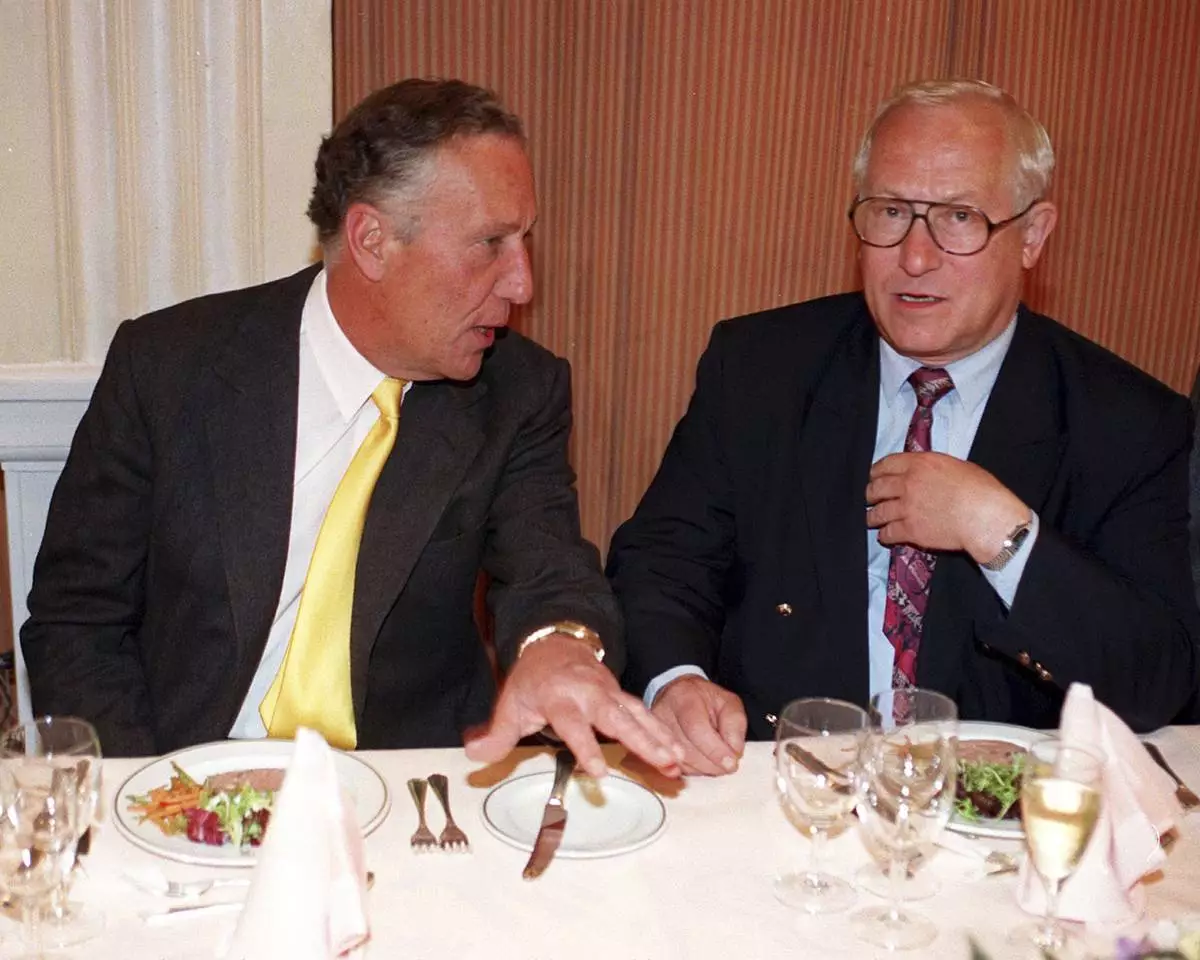
FILE - File photo dated 23/04/97 of author Frederick Forsyth, left. with Foyles luncheon chairman Oleg Gordievsky, at the Foyle's Literary,in London. Gordievsky died March 4 in England at the age of 86. (David Cheskin/PA via AP)
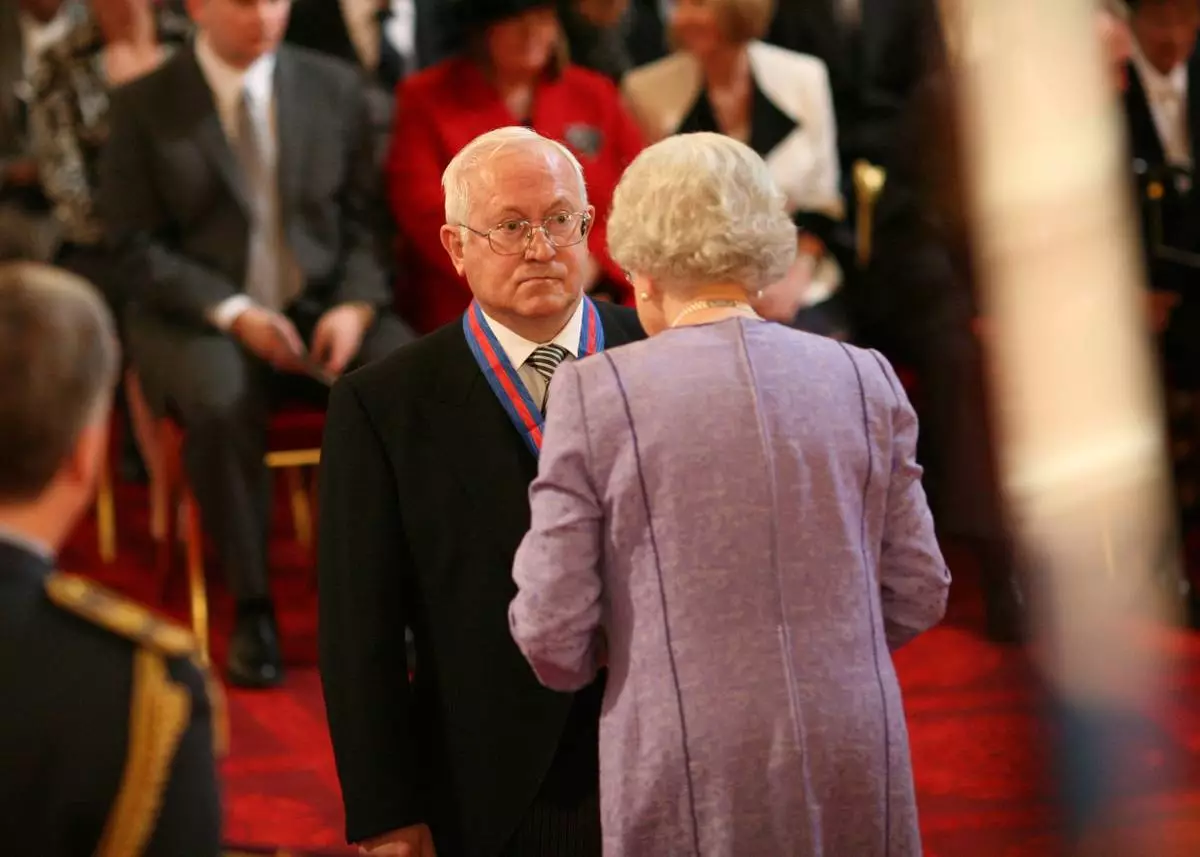
Former Soviet spy Oleg Gordievsky after receives the Companion of the Most Distinguished Order of St Michael and Saint George from Queen Elizabeth II at Buckingham Palace in London, Oct. 17, 2007. (Martin Keene/PA via AP, file)
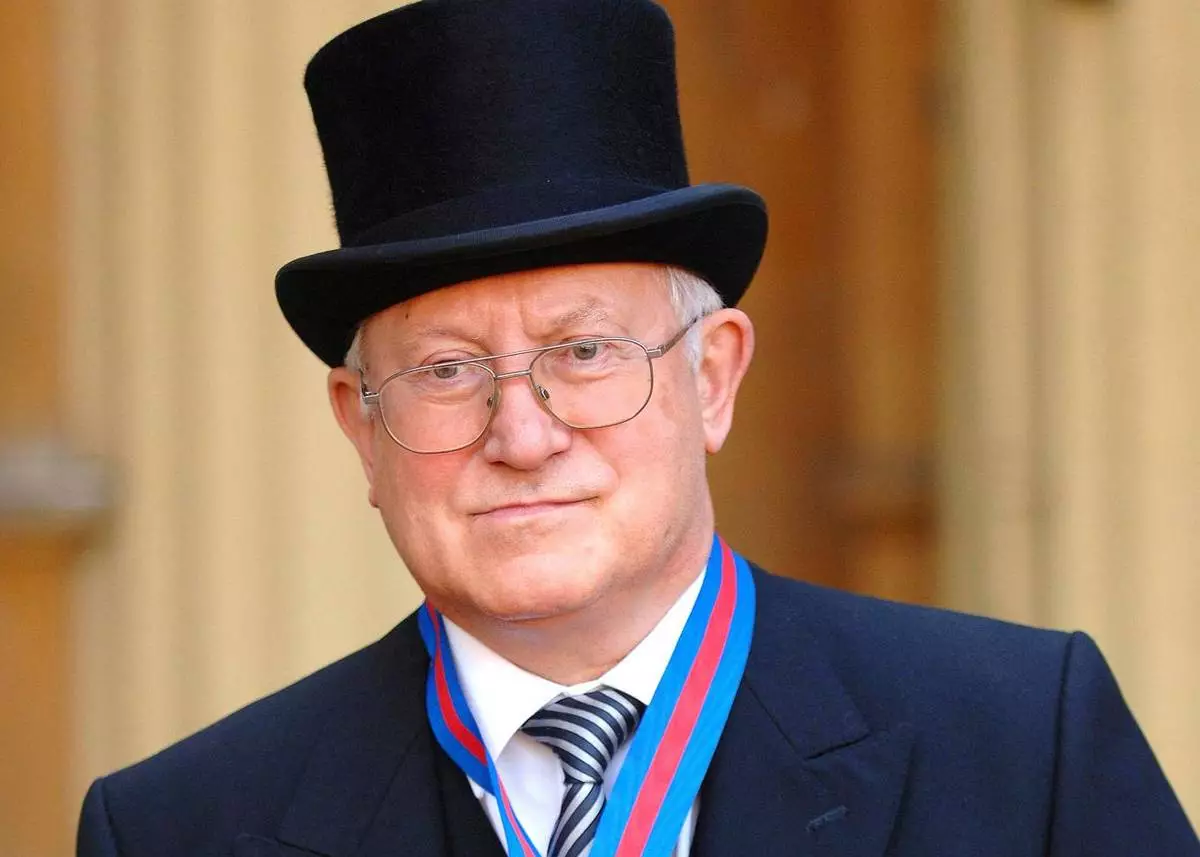
FILE- Former Soviet spy Oleg Gordievsky after receiving the Companion of the Most Distinguished Order of St Michael and Saint George from Queen Elizabeth II at Buckingham Palace in London, Oct. 17, 2007. (Fiona Hanson/PA via AP, file)
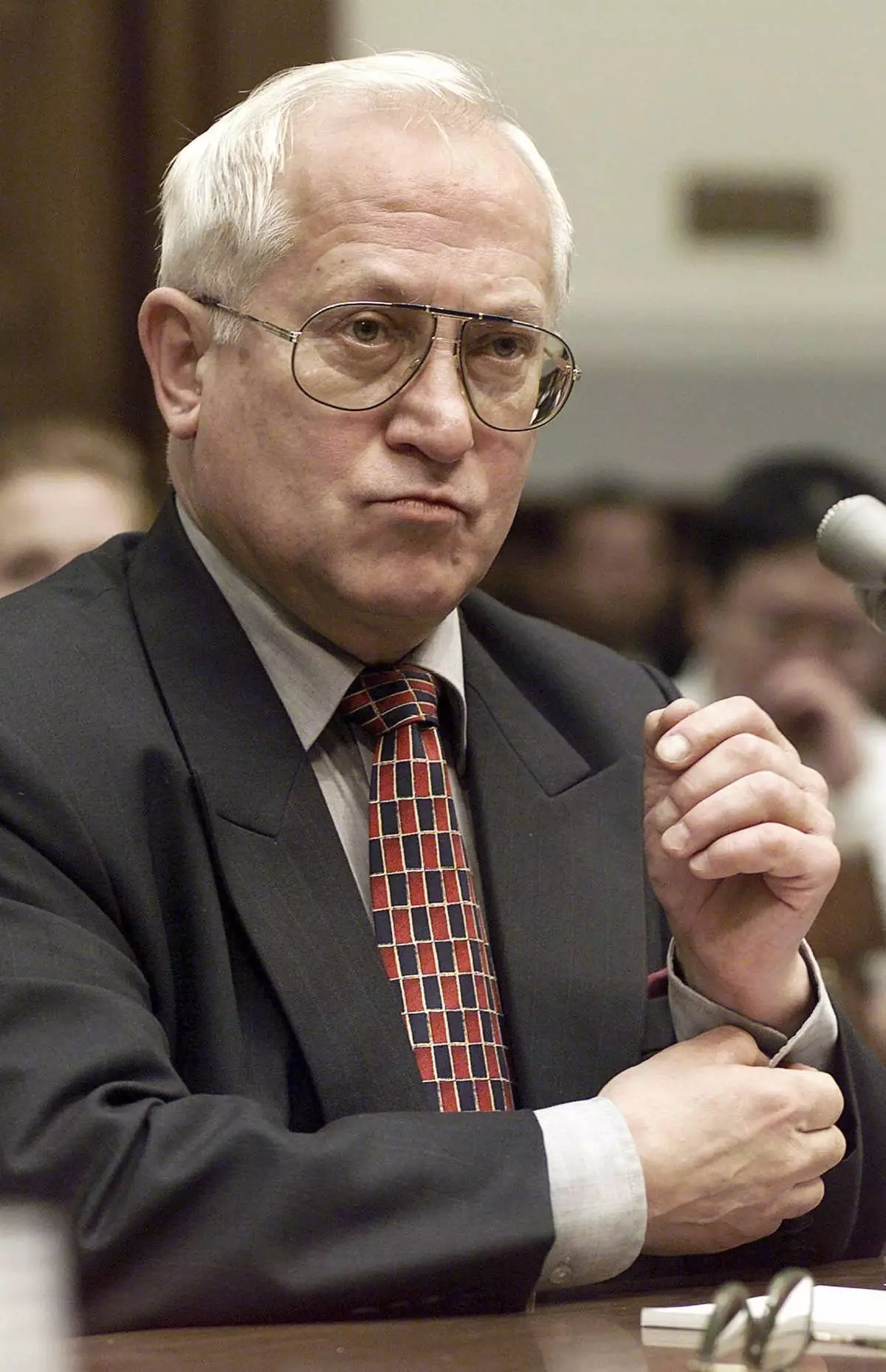
FILE - In this Oct. 26, 1999 file photo, Oleg Gordievsky, a former deputy head of the KGB in London, prepares to testify before a House Armed Services Subcommittee in Washington. He died March 4 in England at the age of 86. (AP Photo/Dennis Cook, File)
U.S. President Donald Trump says Iran has proposed negotiations after his threat to strike the Islamic Republic as a crackdown on demonstrators has led to hundreds of deaths.
Trump said late Sunday his administration was in talks to set up a meeting with Tehran, but cautioned that he may have to act before then as reports of deaths mount and Iran's government continues to arrest protesters.
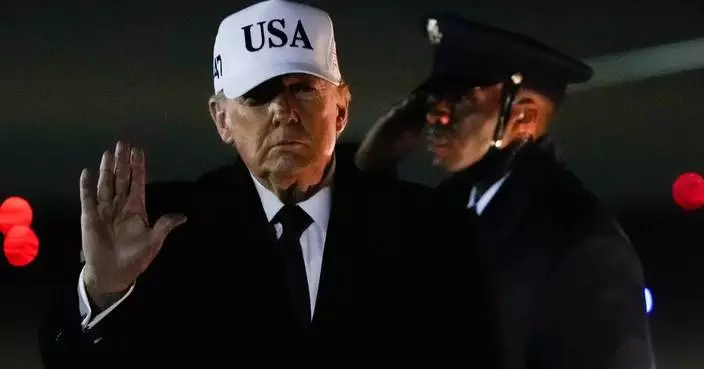
“Iran called, they want to negotiate,” Trump told reporters on Air Force One.
Iran did not acknowledge Trump’s comments immediately. It has previously warned the U.S. military and Israel would be “legitimate targets” if America uses force to protect demonstrators.
The U.S.-based Human Rights Activists News Agency, which has accurately reported on past unrest, said at least 599 people have been killed, including 510 protesters and 89 members of security forces. It said over 10,600 people have been detained during two weeks of protests. The group relies on supporters in Iran cross-checking information.
With the internet down in Iran and phone lines cut off, gauging the demonstrations from abroad has grown more difficult. Iran’s government has not offered overall casualty figures.
The Latest:
Activists said the death toll from ongoing protests have at least 646 people. The U.S.-based Human Rights Activists News Agency, which has been accurate in previous unrest in recent years and gave the latest death toll early Tuesday. It relies on supporters in Iran crosschecking information. It said 512 of the dead were protesters and 134 were security force members.
More than 10,700 people also have been detained over the two weeks of protests, said the U.S.-based Human Rights Activists News Agency, which has been accurate in previous unrest in recent years and gave the latest death toll early Tuesday. It relies on supporters in Iran crosschecking information. It said 512 of the dead were protesters and 134 were security force members.
In New Zealand, two people were arrested Tuesday during a protest outside the Iranian embassy in Wellington, authorities said.
About 20 people protested outside the embassy, while police officers monitored the situation, the police said in a statement. Officers were considering wilful damage charges against the pair arrested.
“Police recognise the lawful right to protest, and maintained a presence to ensure the safety of all involved,” a statement said. Radio New Zealand reported that a man climbed onto a fence at the embassy to erect a pre-1979 Iranian flag, before it was removed by someone from inside the embassy.
Meanwhile, foreign ministry officials in Wellington have reminded New Zealanders of advice that they shouldn’t travel to Iran and should leave immediately if they are there. The advisory has been in place since November 2024.
President Donald Trump said Monday that Iran’s trade partners will face 25% tariffs from the United States as he looks to pressure Tehran over its violent protest crackdown that’s left nearly 600 dead across the country.
The U.S. president has repeatedly threatened Tehran with U.S. military action, if his administration found the Islamic Republic was using deadly force against antigovernment protesters. It’s a redline that Trump says he believes Iran is “starting to cross” and has left him and his national security team weighing “very strong options.”
Trump announced the tariffs in a social media posting, saying they would be “effective immediately.”
China, Brazil, Turkey and Russia are among economies that do business with Tehran.
The top diplomats for Iran and Britain have traded sharp statements after speaking by phone.
U.K. Foreign Secretary Yvette Cooper said she told Iranian Foreign Minister Abbas Araghchi that Iran must halt the violence aimed at its people. She wrote on X that the killing and repression of peaceful protesters is “horrific.”
Araghchi responded by saying the U.K. should stay out of Iran’s internal affairs. He also criticized security at the Iranian embassy in London, where a demonstrator on Saturday scaled a wall and replaced the Islamic Republic’s flag with the banner flown before the Western-backed shah was overthrown in 1979.
“If the U.K. cannot uphold its duty to protect diplomatic missions, Iran would be left with no choice but to consider evacuating our personnel,” Araghchi said.
White House press secretary Karoline Leavitt has told reporters that airstrikes are among the “many, many options” that President Donald Trump is considering but that “diplomacy is always the first option for the president.”
Trump on Sunday said Iranian officials have reached out for talks. He has threatened to take military action against the Islamic Republic for its crackdown on the protests.
“What you’re hearing publicly from the Iranian regime is quite different from the messages the administration is receiving privately, and I think the president has an interest in exploring those messages,” Leavitt said. “However, with that said, the president has shown he’s unafraid to use military options if and when he deems necessary, and nobody knows that better than Iran.”
The U.S. last year bombed Iranian nuclear sites when it inserted itself into the 12-day war between Israel and Iran.
The executive secretary of Russia’s Security Council has condemned what he described as foreign interference in Iran’s internal affairs.
The council said in a statement carried by Russian news agencies that Sergei Shoigu spoke by phone Monday with his counterpart Ali Larijani, secretary of the Supreme National Security Council of Iran.
The statement said Shoigu also expressed condolences over the numerous casualties, without elaboration.
Iran has alleged foreign influence in the protests.
The ban was announced Monday by the president of the European Parliament, Roberta Metsola.
“This House will not aid in legitimizing this regime that has sustained itself through torture, repression and murder,” Metsola wrote on X. She also praised protesters who “continue to stand up for their rights and their liberty.”
— The Iranian government seems to be publicizing the killing of demonstrators for the first time to dissuade others from joining in, said Kamran Matin, an associate professor of international relations at the University of Sussex in England and an expert on Iran. “It’s broadcasting some of the footage, both of those killed but also of the actual protests. It seems to be intended to intimidate protesters from returning to the streets.” He also said that Trump’s primary aim is to change the behavior of the Iranian regime, not necessarily the regime itself.
— Although some observers have speculated that Venezuela may provide a template for creating a new Iranian government, the situation in Tehran is very different, said Iran expert Siavush Randjbar-Daemi at the University of St. Andrews. He said there is no similar figure in Iran to interim Venezuelan President Delcy Rodriguez, who took over after U.S. forces arrested Nicolás Maduro. “There’s nobody who the Americans can really talk to like that,’’ he said.
A senior Turkish official voiced opposition to foreign interventions in Iran, warning that such actions could worsen the country’s crisis.
Omer Celik, spokesman for President Recep Tayyip Erdogan’s ruling party, acknowledged on Monday that Iran faces internal challenges but stressed they must be resolved through “its own dynamics and the will of the state.”
“We would never wish for any chaos to emerge in our neighbor Iran,” Celik said, adding that outside interference would only produce “worse outcomes.”
He cautioned that regional instability could escalate further if external involvement is driven by what he described as “Israeli provocations.”
Video circulating online purports to show dozens of bodies in a morgue on the outskirts of Iran’s capital.
People with knowledge of the facility and the U.S.-based Human Rights Activists News Agency said Monday that the video shows the Kahrizak Forensic Medicine Center.
People are seen walking by bodies in body bags laid out in a large room, attempting to identify them. Another video, widely shared by activists, purportedly shows people gathered around a television monitor at the morgue, looking at images of corpses’ faces. Outside, people can be heard wailing in grief. The footage matches other images of the facility online.
—- By Jon Gambrell in Dubai, United Arab Emirates, and Melanie Lidman in Jerusalem
A witness told the AP that the streets of Tehran empty at the sunset call to prayers each night.
Part of that stems from the fear of getting caught in the crackdown. Police sent the public a text message that warned: “Given the presence of terrorist groups and armed individuals in some gatherings last night and their plans to cause death, and the firm decision to not tolerate any appeasement and to deal decisively with the rioters, families are strongly advised to take care of their youth and teenagers.”
Another text, addressed “Dear parents,” which claimed to come from the intelligence arm of the paramilitary Revolutionary Guard, also directly warned people not to take part in demonstrations.
The witness spoke to the AP on condition of anonymity due to the ongoing crackdown.
—- By Jon Gambrell in Dubai, United Arab Emirates
Iran drew tens of thousands of pro-government demonstrators to the streets Monday in a show of power after nationwide protests challenging the country’s theocracy.
Iranian state television showed images of demonstrators thronging Tehran toward Enghelab Square in the capital.
It called the demonstration an “Iranian uprising against American-Zionist terrorism,” without addressing the underlying anger in the country over the nation’s ailing economy. That sparked the protests over two weeks ago.
State television aired images of such demonstrations around the country, trying to signal it had overcome the protests, as claimed by Iranian Foreign Minister Abbas Araghchi earlier in the day.
China says it opposes the use of force in international relations and expressed hope the Iranian government and people are “able to overcome the current difficulties and maintain national stability.”
Chinese Foreign Ministry spokesperson Mao Ning said Monday that Beijing “always opposes interference in other countries’ internal affairs, maintains that the sovereignty and security of all countries should be fully protected under international law, and opposes the use or threat of use of force in international relations.”
German Chancellor Friedrich Merz condemned “in the strongest terms the violence that the leadership in Iran is directing against its own people.”
He said it was a sign of weakness rather than strength, adding that “this violence must end.”
Merz said during a visit to India that the demonstrators deserve “the greatest respect” for the courage with which “they are resisting the disproportional, brutal violence of Iranian security forces.”
He said: “I call on the Iranian leadership to protect its population rather than threatening it.”
Iran’s Foreign Ministry spokesman on Monday suggested that a channel remained open with the United States.
Esmail Baghaei made the comment during a news conference in Tehran.
“It is open and whenever needed, through that channel, the necessary messages are exchanged,” he said.
However, Baghaei said such talks needed to be “based on the acceptance of mutual interests and concerns, not a negotiation that is one-sided, unilateral and based on dictation.”
The semiofficial Fars news agency in Iran, which is close to the paramilitary Revolutionary Guard, on Monday began calling out Iranian celebrities and leaders on social media who have expressed support for the protests over the past two weeks, especially before the internet was shut down.
The threat comes as writers and other cultural leaders were targeted even before protests. The news agency highlighted specific celebrities who posted in solidarity with the protesters and scolded them for not condemning vandalism and destruction to public property or the deaths of security forces killed during clashes. The news agency accused those celebrities and leaders of inciting riots by expressing their support.
Canada said it “stands with the brave people of Iran” in a statement on social media that strongly condemned the killing of protesters during widespread protests that have rocked the country over the past two weeks.
“The Iranian regime must halt its horrific repression and intimidation and respect the human rights of its citizens,” Canada’s government said on Monday.
Iran’s foreign minister claimed Monday that “the situation has come under total control” after a bloody crackdown on nationwide protests in the country.
Abbas Araghchi offered no evidence for his claim.
Araghchi spoke to foreign diplomats in Tehran. The Qatar-funded Al Jazeera satellite news network, which has been allowed to work despite the internet being cut off in the country, carried his remarks.
Iran’s foreign minister alleged Monday that nationwide protests in his nation “turned violent and bloody to give an excuse” for U.S. President Donald Trump to intervene.
Abbas Araghchi offered no evidence for his claim, which comes after over 500 have been reported killed by activists -- the vast majority coming from demonstrators.
Araghchi spoke to foreign diplomats in Tehran. The Qatar-funded Al Jazeera satellite news network, which has been allowed to work despite the internet being cut off in the country, carried his remarks.
Iran has summoned the British ambassador over protesters twice taking down the Iranian flag at their embassy in London.
Iranian state television also said Monday that it complained about “certain terrorist organization that, under the guise of media, spread lies and promote violence and terrorism.” The United Kingdom is home to offices of the BBC’s Persian service and Iran International, both which long have been targeted by Iran.

People attend a rally in Frankfurt, Germany, Monday, Jan. 12, 2026. (Boris Roessler/dpa via AP)
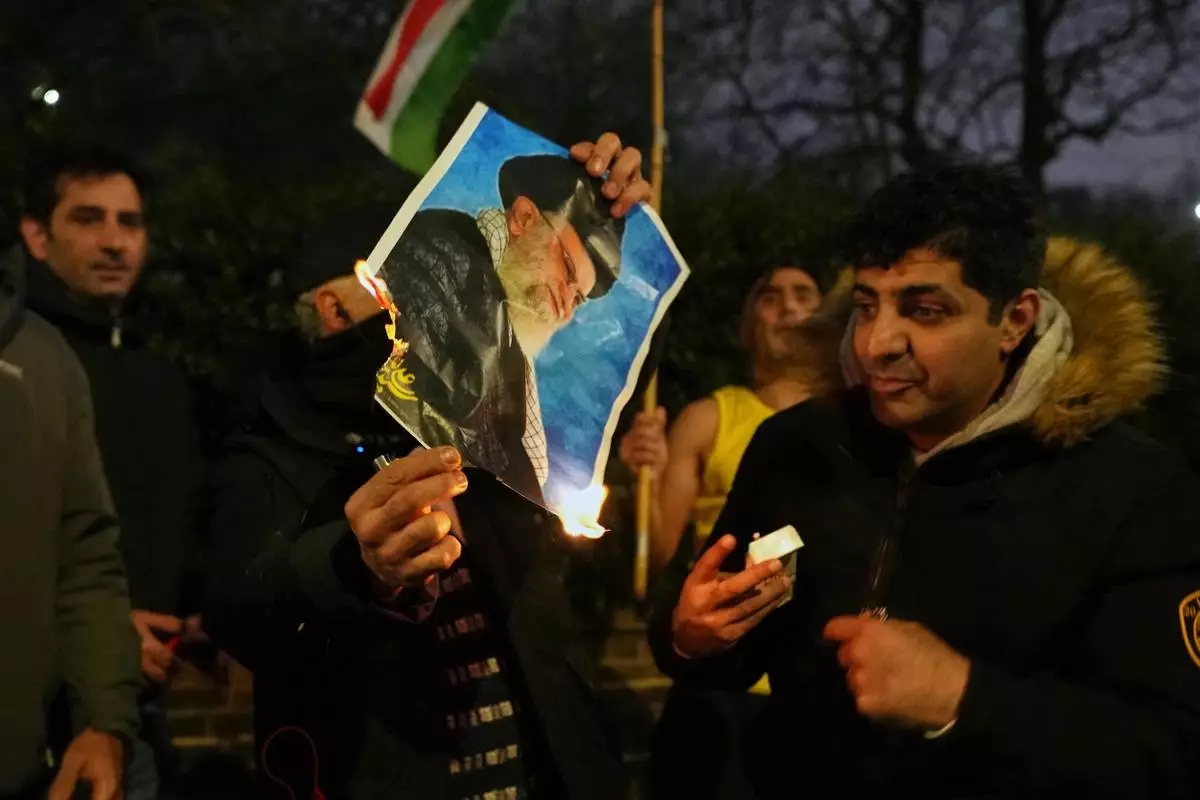
A picture of Ayatollah Ali Khamenei is set alight by protesters outside the Iranian Embassy in London, Monday, Jan. 12, 2026. (AP Photo/Alastair Grant)
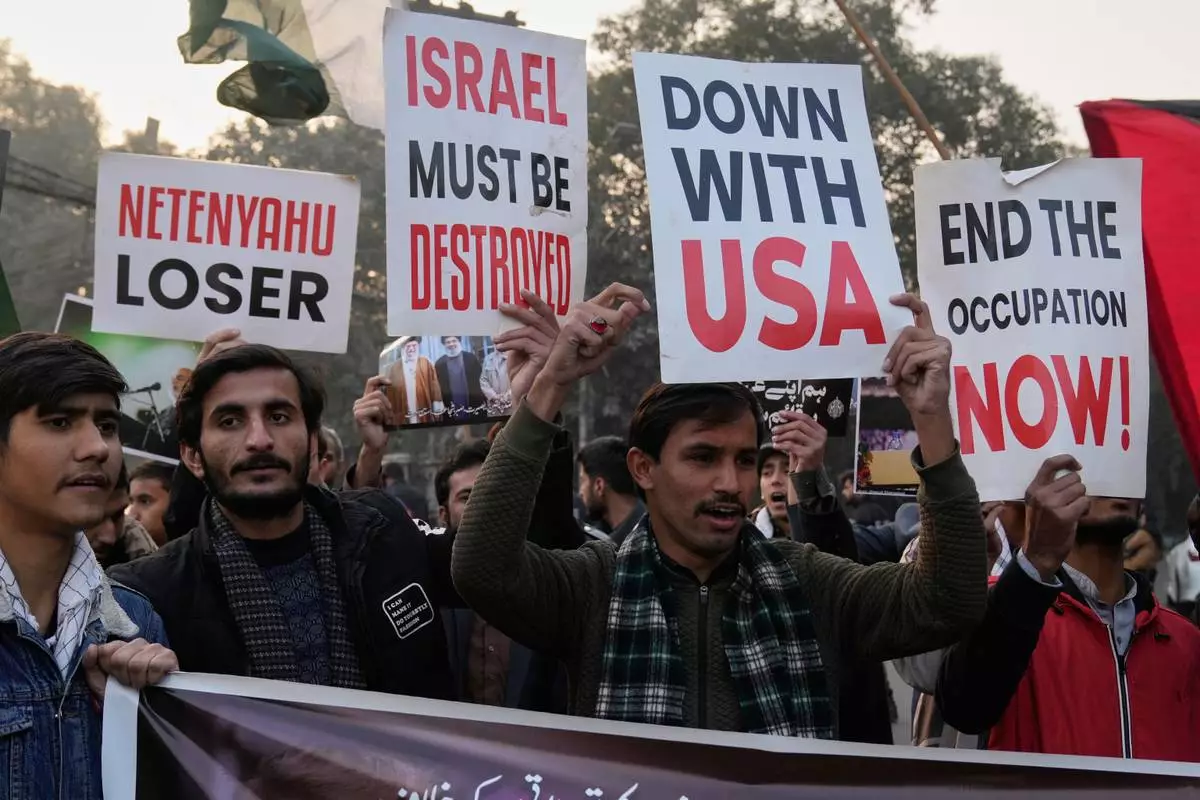
Shiite Muslims hold placards and chant slogans during a protest against the U.S. and show solidarity with Iran in Lahore, Pakistan, Sunday, Jan. 11, 2026. (AP Photo/K.M. Chaudary)
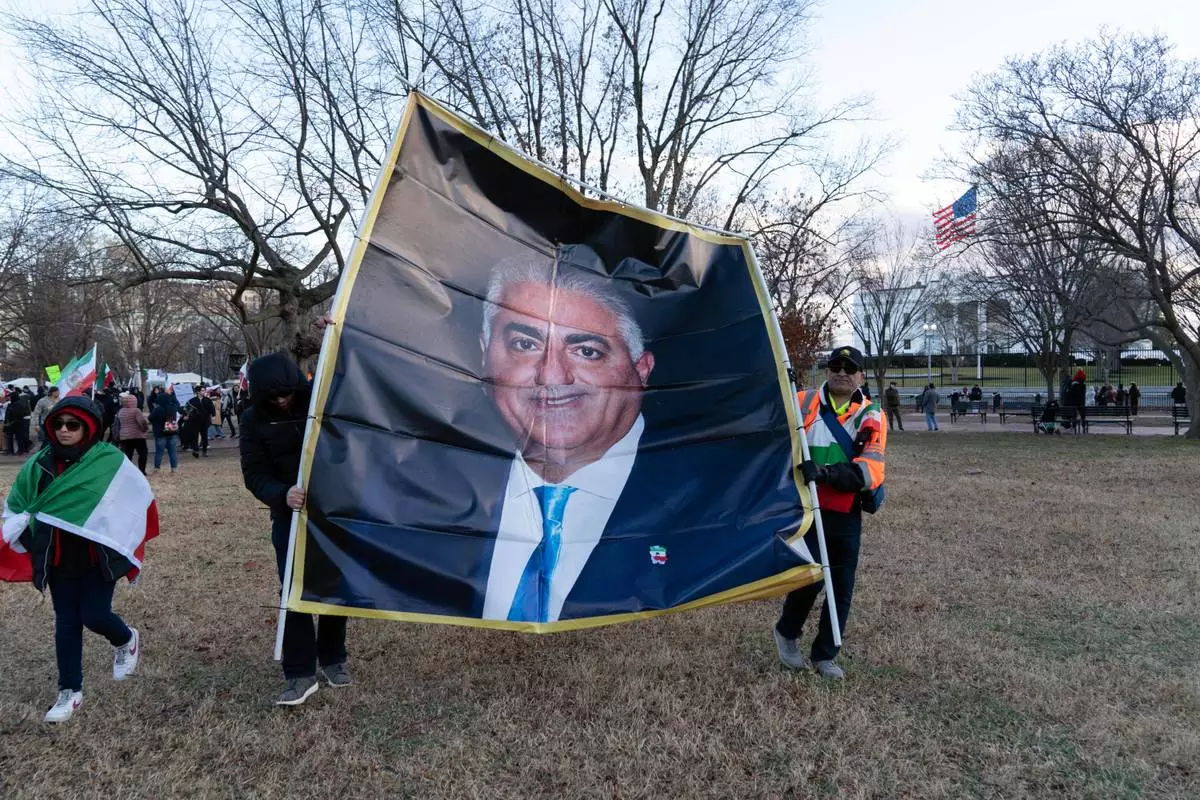
Activists carrying a photograph of Reza Pahlavi take part in a rally supporting protesters in Iran at Lafayette Park, across from the White House, in Washington, Sunday, Jan. 11, 2026. (AP Photo/Jose Luis Magana)
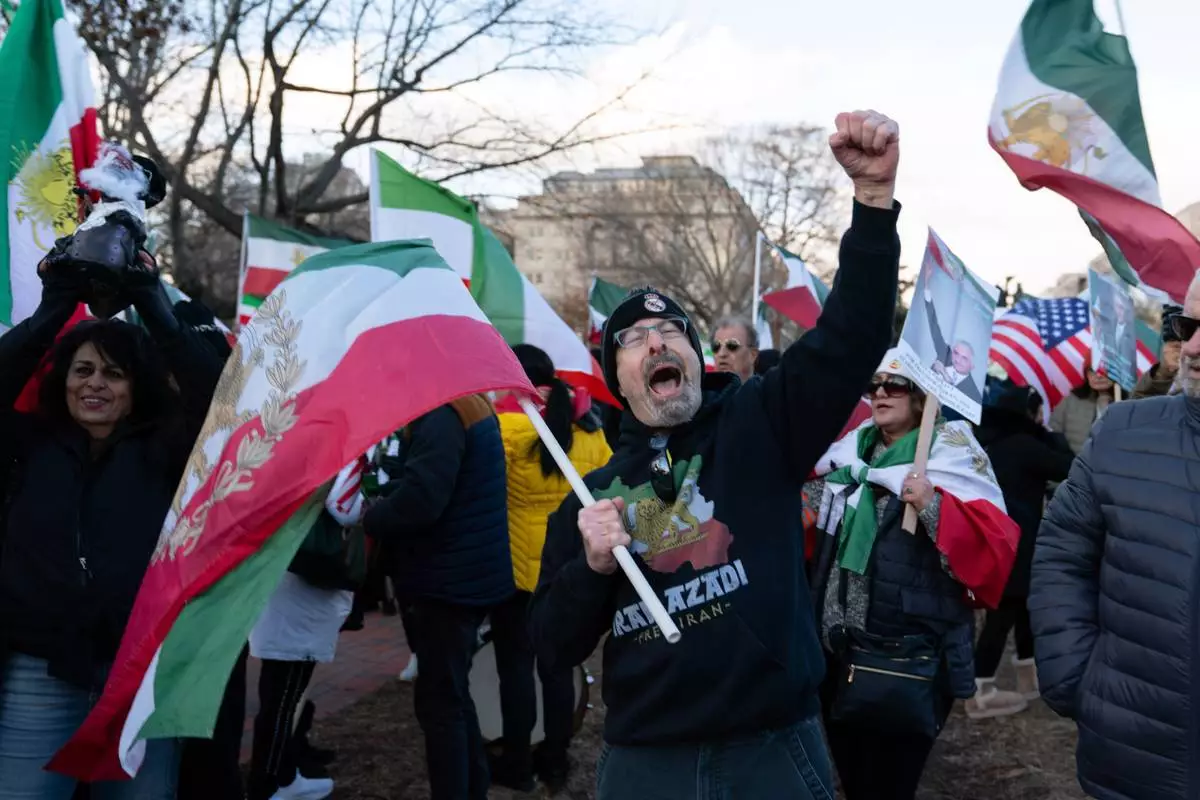
Activists take part in a rally supporting protesters in Iran at Lafayette Park, across from the White House in Washington, Sunday, Jan. 11, 2026. (AP Photo/Jose Luis Magana)
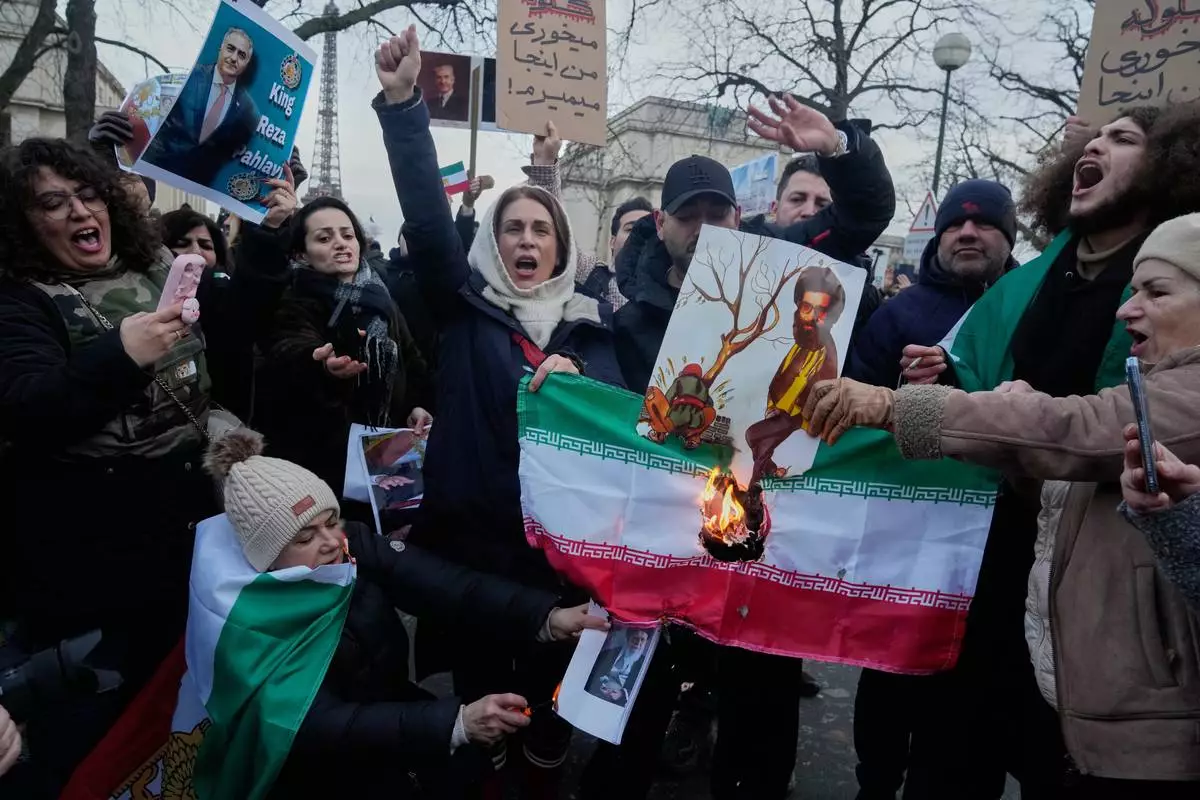
Protesters burn the Iranian national flag during a rally in support of the nationwide mass demonstrations in Iran against the government in Paris, Sunday, Jan. 11, 2026. (AP Photo/Michel Euler)