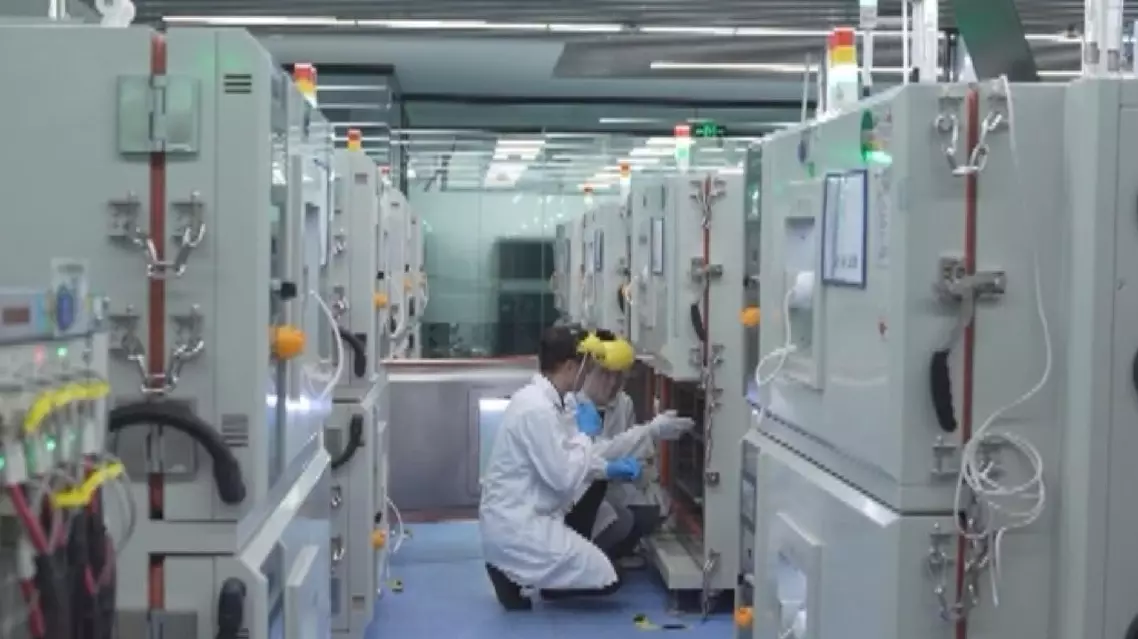
China has achieved fruitful results in developing core technologies in the field of intelligent connected new-energy vehicles (NEVs) such as the all-solid-state lithium batteries and the Chinese-made BeiDou Navigation Satellite System (BDS). Compared to the commonly used lithium-ion batteries in current NEVs, all-solid-state lithium batteries offer advantages such as higher safety, higher energy density, longer life span, and faster charging speed, making them as the "ultimate solution" for the next generation of power batteries.
China's solid-state batteries are projected to be integrated into NEVs by 2027, with mass production and widespread application anticipated by 2030, said a person in charge of China EV100, a new energy vehicle industry think tank.
"By the end of this year or next year, there will be some [battery] loading tests. The scale should be relatively large in 2027, but it will still be a verification phase for running tests. By 2030, there should be mass-produced products," said Ouyang Minggao, an academician with the Chinese Academy of Sciences and vice chairman of China EV100.
In addition, as many new energy vehicle companies begin to focus on intelligent driving, satellite navigation has become a key technology.
At the Vehicle BDS Comprehensive PNT (positioning, navigation, and timing) Lab in north China's Tianjin Municipality, researchers train artificial intelligence based on monitoring data to identify characteristics of satellite navigation interference sources during the vehicle driving process, thereby creating a national database of satellite signal interference.
"We have initially planned for eight typical Interference scenarios and 24 typical operating conditions, and proposed approximately 90 cases for validation test. We have also established four dimensions and 15 quantitative indicators to analyze the safety level of the product," said Gu Hongjian, deputy general manager of China Auto Information Technology (Tianjin) Co., Ltd.
China achieves fruitful results in developing core technologies related with intelligent connected NEVs
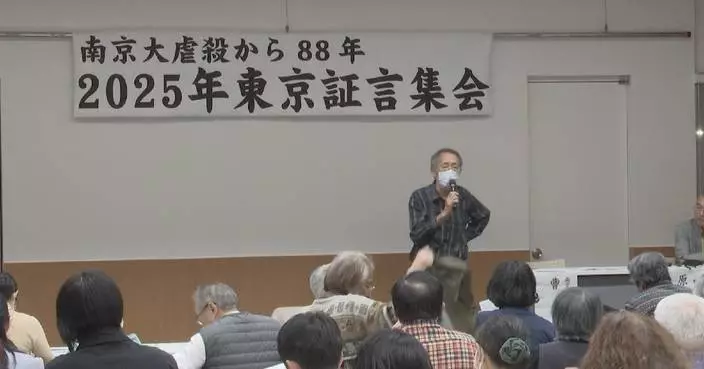
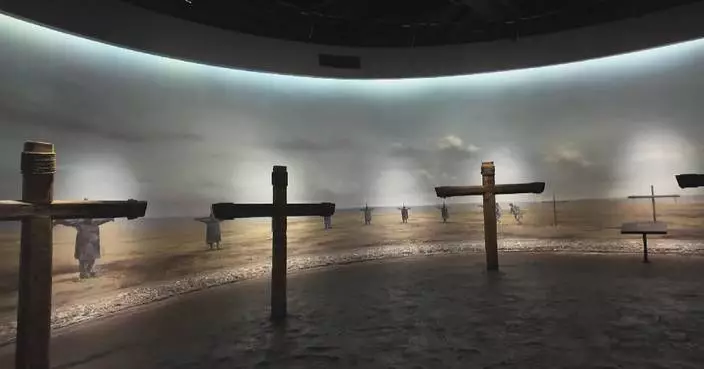
Candlelight memorials were held across China on Saturday to honor the victims of the Nanjing Massacre during Japan's aggression against China in 1937.
The Nanjing Massacre took place when Japanese troops captured the then-Chinese capital on Dec. 13, 1937. Over the course of six weeks, they proceeded to kill approximately 300,000 Chinese civilians and unarmed soldiers in one of the most barbaric episodes of WWII.
Saturday marks the 12th National Memorial Day for Nanjing Massacre Victims.
In Nanjing, now the capital of east China's Jiangsu Province, a candlelight memorial and international peace rally was held on Saturday night, joined by around 200 participants from China and across the world.
As night fell over the city, people from different walks of life gathered at the square of the Memorial Hall of the Victims in Nanjing Massacre by Japanese Invaders to pay tribute to those killed.
Participants included representatives of inheritors of the historical memory of the Nanjing Massacre, descendants of international friends who aided China during the war, and young students. Dressed in plain attire, they took part in the solemn commemorative event.
Five representatives from various sectors passed along illuminated bouquets of Zijin grass, known as February orchid in Nanjing and radish flower in Japan, jointly forming a light display spelling out the word "Peace." Candles were also arranged into the shape of a dove, symbolizing the shared hope for lasting peace.
"This history is deeply cruel and painful, but we must remember it. Only by remembering history can we truly cherish the peace we enjoy today. When I grow up, I hope to work together with others to safeguard peace," said Yue Cen, a student from Nanjing Foreign Language School's Xianlin Campus.
A similar candlelight memorial was also held in Shenyang, the capital of northeast China's Liaoning province, where the September 18 Incident in 1931 marked the start of Japan's 14-year invasion of China.
More than 200 representatives from various sectors gathered at the 9.18 Historical Museum to pay tribute, lighting candles in memory of the Nanjing Massacre victims.
"On the National Memorial Day, the nation remembers its suffering. It reminds us to cherish the peace that was won at the cost of lives. I will study harder, strengthen my abilities, and contribute my youth to national rejuvenation," said Li Shuhang, a student from Shenyang University.
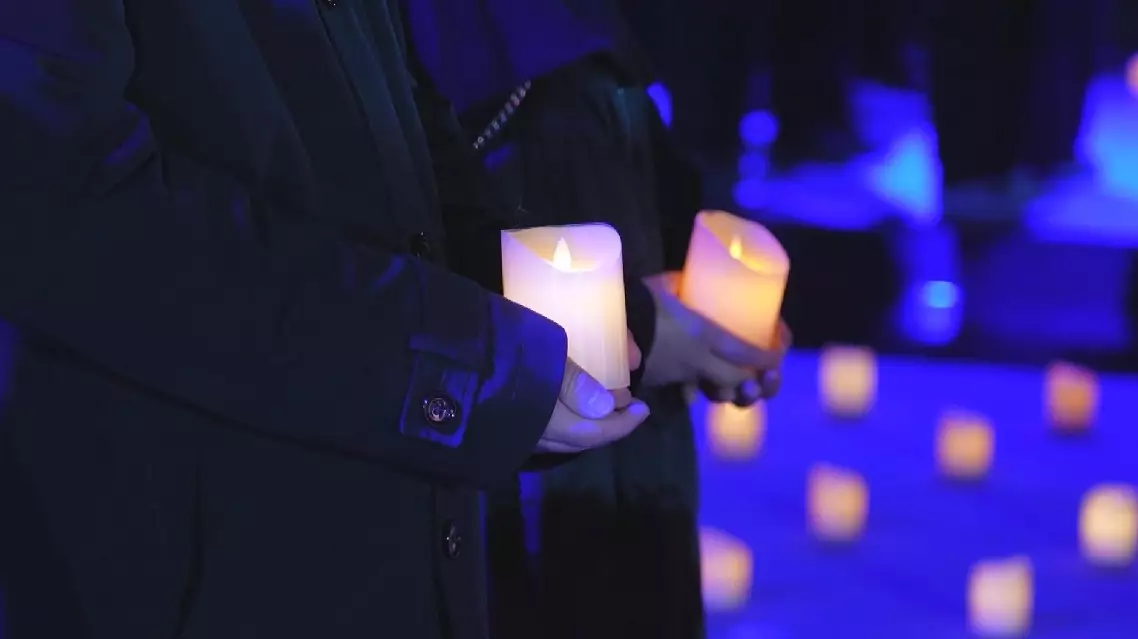
Candlelight memorials held in China for Nanjing Massacre victims