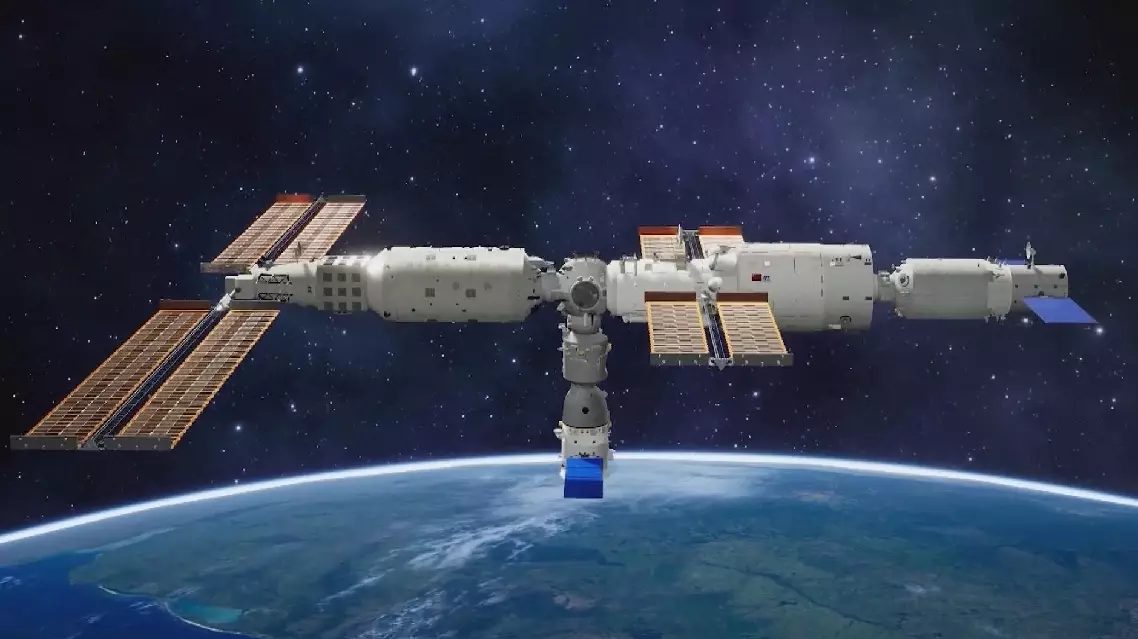
China's space station is set to welcome a new life form, planaria, following previous experiments involving zebrafish and fruit flies, according to the Technology and Engineering Center for Space Utilization under the Chinese Academy of Sciences.
Planaria is a kind of flatworm with amazing regeneration abilities. The planarias can regrow complete heads or tails when cut, making them ideal models for studying tissue regeneration.
According to the researchers from the Technology and Engineering Center for Space Utilization, the new experiment will utilize the "small universal biological cultivation module" of the "life ecosystem experiment cabinet" aboard the space station.
Researchers will study the specific effects of the space environment on the regeneration process and physiological behavior of planaria to gain a deeper understanding of this mechanism.
Two animals, zebrafish and fruit flies, have been involved in the scientific research on China's space station.
In April 2024, a container with four zebrafish and four grams of Ceratophyllum was sent to the space station by Shenzhou-18 manned spaceship, allowing researchers to study the impact of microgravity on the proteins in the vertebrate's bones and muscles.
In last November, a batch of fruit flies arrived in China's space station aboard Tianzhou-8 cargo craft, helping researchers explore how hypomagnetic and microgravity conditions impact living organisms' genes, behaviors and reproductive capacity.
China's space station to welcome planaria for scientific research
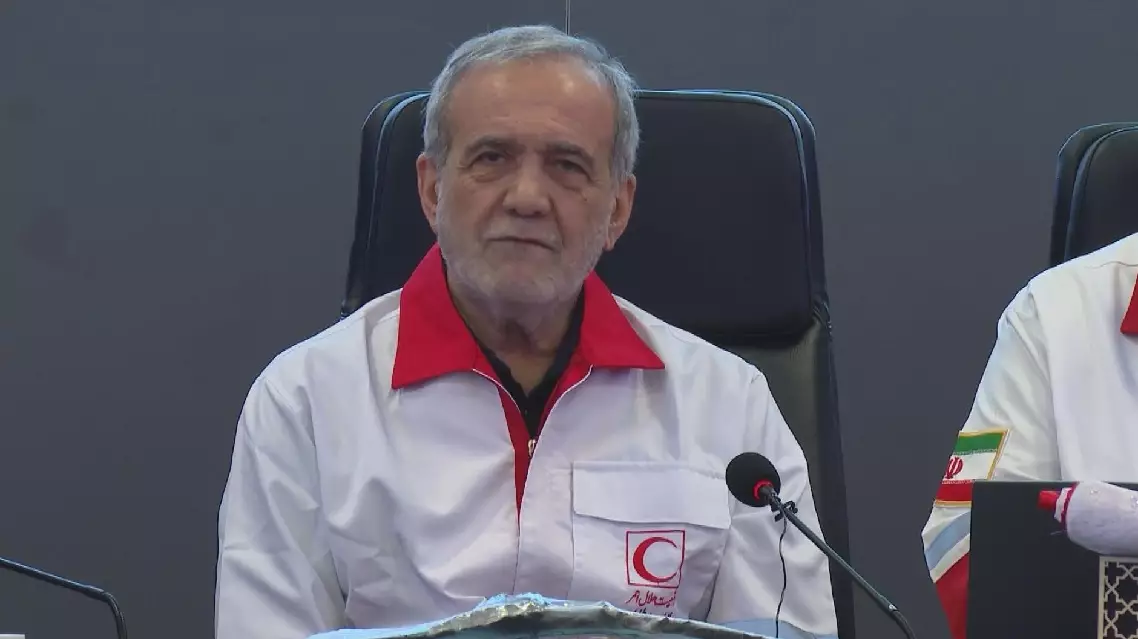
Iranian President Masoud Pezeshkian on Wednesday condemned U.S.-Israeli attacks on Iranian civil facilities including schools and hospitals as unjustifiable under international law and humanitarian principles.
Iran does not seek war and instability and always insists on dialogue and constructive engagement with other countries, Pezeshkian said in a meeting with a group of medical staff in Tehran.
Pezeshkian condemned the U.S.-Israeli war against Iran, saying Iran had committed no crime.
"When they [the United States and Iran] attack schools, and maternity wards in hospitals, they don't respect any humanitarian principles. It's shameful and the world needs to see this. They claim we are terrorists, but they are the real terrorists who massacre anyone, anywhere, anytime they want. Now they stand on the stage and talk about human rights. It's shameful," he said.
Pezeshkian stated that the unity and cohesion of the Iranian people had thwarted enemy plots. He also praised the professionalism shown by the Iranian Red Crescent Society during the war.
The 40-day U.S.-Israeli attacks on Iran, starting Feb 28, killed Iran's then Supreme Leader Ali Khamenei, along with senior military commanders and more than 3,000 civilians. Iran responded with waves of missile and drone strikes targeting Israel and U.S. assets in the Middle East.
A two-week ceasefire between Iran and the United States took effect on April 8. Lengthy talks between Iranian and U.S. delegations were later held in Pakistan's Islamabad, but failed to produce an agreement.
Attacks targeting civil facilities unjustifiable under international law: Iranian president