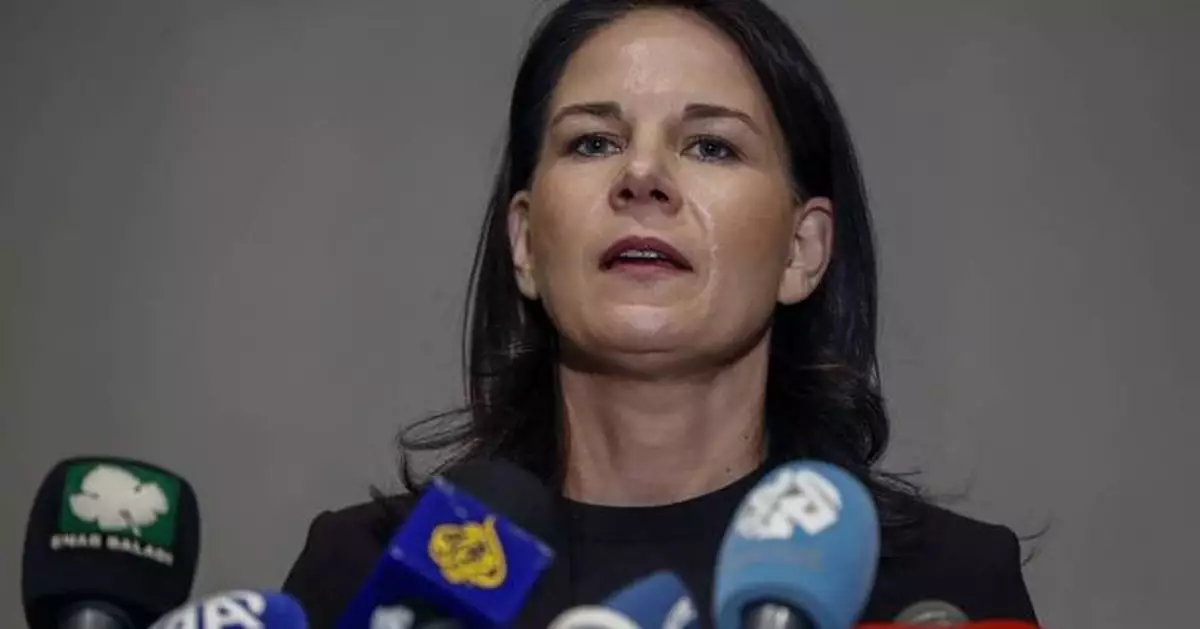
BERLIN (AP) — The German government said Saturday that it is temporarily closing its embassy in South Sudan.
“After years of fragile peace, South Sudan is once again on the brink of civil war,” German Foreign Minister Annalena Baerbock said on social media platform Bluesky.
The crisis team of the German Foreign Office "has therefore decided to close the embassy in the capital Juba for the time being. The safety of the employees has top priority," she added.
Baerbock also wrote that South Sudan President Salva Kiir and his rival, Vice President Riek Machar, “are plunging the country into a spiral of violence. They have a responsibility to stop the senseless violence and finally implement the peace agreement.”
South Sudan has been plagued by political instability and violence since it gained independence from Sudan in 2011.
In 2018, a peace deal signed between Machar and Kiir ended a five-year civil war in which more than 400,000 people were killed. Machar serves as the country’s first vice president in a government of national unity, even though his political group opposes Kiir.
The political rivalry between the two men is widely seen as a major obstacle to peace in South Sudan, with Kiir suspicious of his deputy’s ambitions and Machar calling Kiir a dictator.
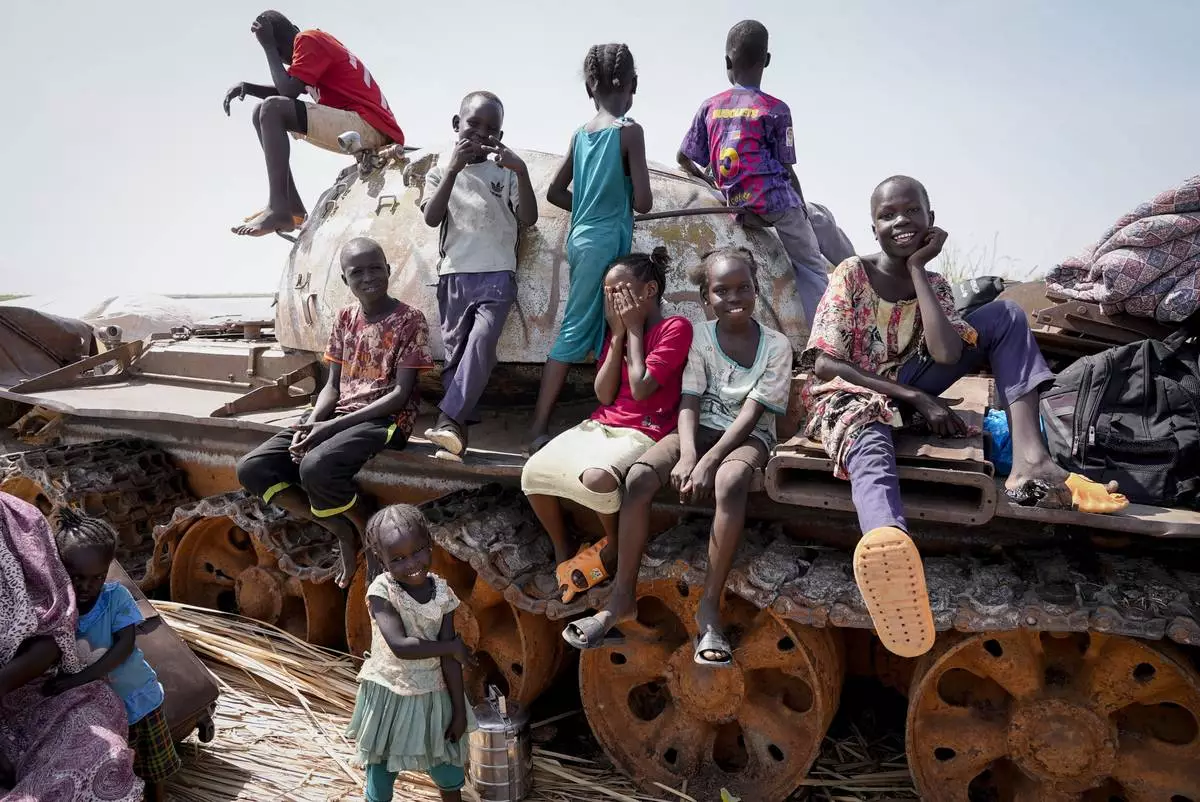
FILE - Children sit and play on the remains of a tank, at the river port in Renk, South Sudan on May 17, 2023. (AP Photo/Sam Mednick, file)
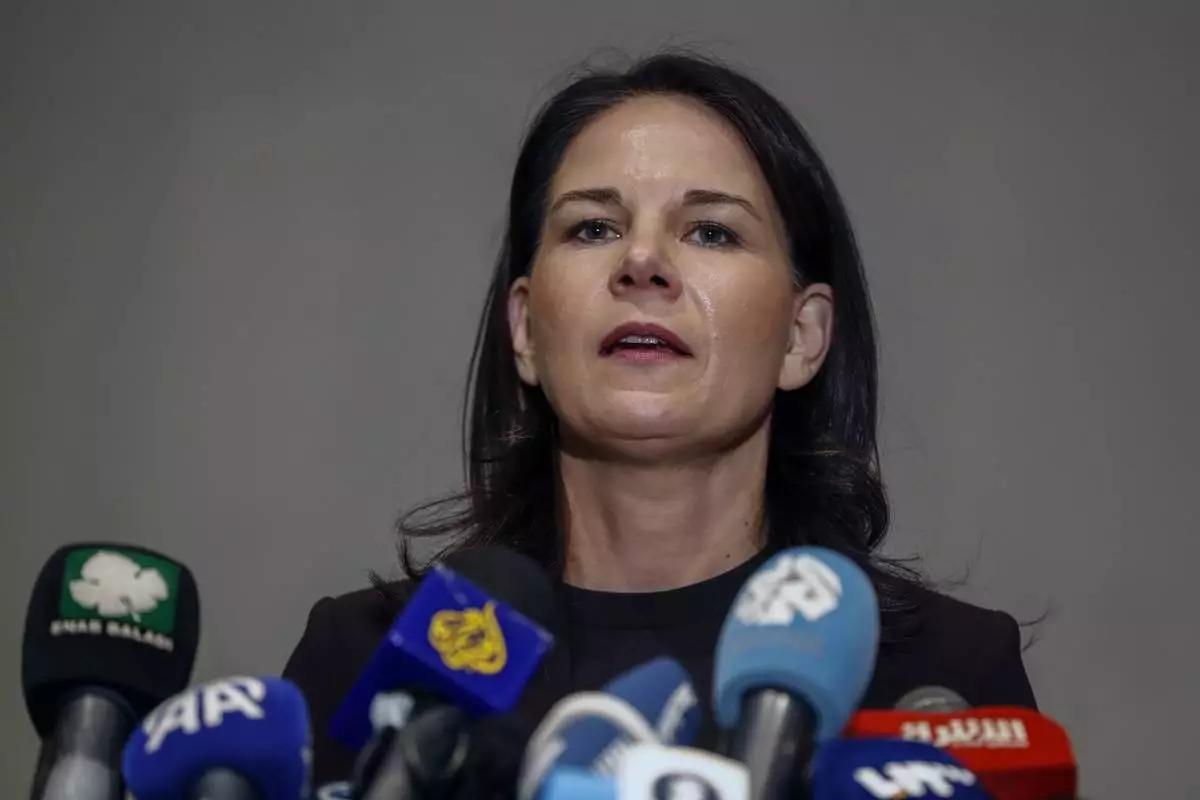
FILE - Germany's Foreign Minister Annalena Baerbock speaks during a press conference in Damascus, Syria, Thursday, March 20, 2025. (AP Photo/Omar Sanadiki, file)
Iran eased some restrictions on its people and for the first time in days allowed them to make phone calls abroad via their mobile phones on Tuesday. It did not ease restrictions on the internet or allow texting services to be restored as the toll from days of bloody protests against the state rose to at least 646 people killed.
Although Iranians were able to call abroad, people outside the country could not call them, several people in the capital told The Associated Press.
The witnesses, who spoke on condition of anonymity for fear of reprisal, said SMS text messaging still was down and internet users inside Iran could not access anything abroad, although there were local connections to government-approved websites.
It was unclear if restrictions would ease further after authorities cut off all communications inside the country and to the outside world late Thursday.
Here is the latest.
The French Foreign Ministry said it has “reconfigured” its embassy in Tehran after reports that the facility's nonessential staff left Iran earlier this week.
The embassy's nonessential staff left the country Sunday and Monday, French news agency Agence France-Presse reported.
The ambassador remained on site and the embassy continued to function, the ministry said late Monday night.
Angela Charlton contributed from Paris.
German Chancellor Friedrich Merz said he believes the Iranian government is in its “final days and weeks,” as he renewed a call for Iranian authorities to end violence against demonstrators immediately.
“If a regime can only keep itself in power by force, then it’s effectively at the end,” Merz said Tuesday during a visit to Bengaluru, India. “I believe we are now seeing the final days and weeks of this regime. In any case, it has no legitimacy through elections in the population. The population is now rising up against this regime.”
Merz said he hoped there is “a possibility to end this conflict peacefully," adding that Germany is in close contact with the U.S. and European governments.
The Israeli military said it continues to be “on alert for surprise scenarios” due to the ongoing protests in Iran, but has not made any changes to guidelines for civilians, as it does prior to a concrete threat.
“The protests in Iran are an internal matter,” Israeli military spokesperson Brig. Gen. Effie Defrin wrote on X.
Israel attacked Iran’s nuclear program over the summer, resulting in a 12-day war that killed nearly 1,200 Iranians and almost 30 Israelis. Over the past week, Iran has threatened to attack Israel if Israel or the U.S. attacks.
Mobile phones in Iran were able to call abroad Tuesday after a crackdown on nationwide protests in which the internet and international calls were cut. Several people in Tehran were able to call The Associated Press.
The AP bureau in Dubai, United Arab Emirates, was unable to call those numbers back.
Witnesses said the internet remained cut off from the outside world. Iran cut off the internet and calls on Thursday as protests intensified.
Activists said the death toll from ongoing protests have at least 646 people.
The U.S.-based Human Rights Activists News Agency, which has been accurate in previous unrest in recent years and gave the latest death toll early Tuesday. The agency relies on supporters in Iran cross-checking information.
The agency said 512 of the dead were protesters and 134 were security force members.
More than 10,700 people have been detained over the two weeks of protests, the agency said.
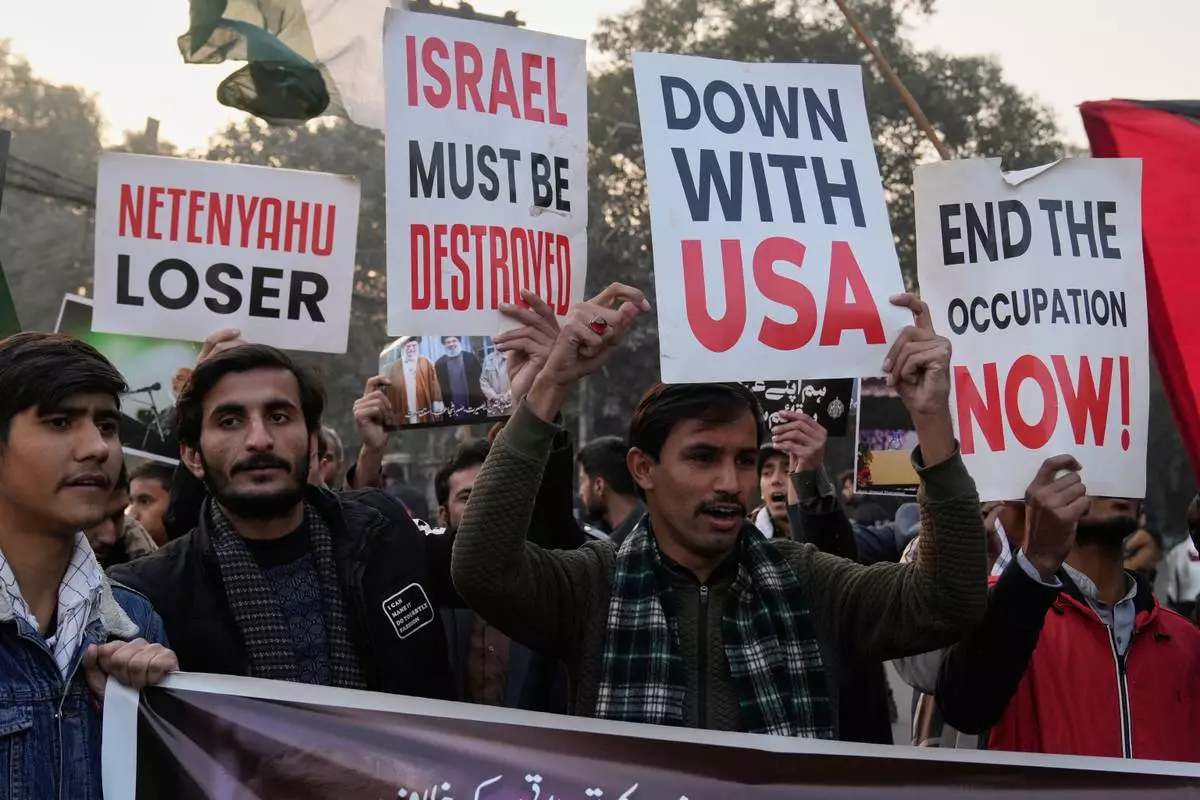
Shiite Muslims hold placards and chant slogans during a protest against the U.S. and show solidarity with Iran in Lahore, Pakistan, Sunday, Jan. 11, 2026. (AP Photo/K.M. Chaudary)
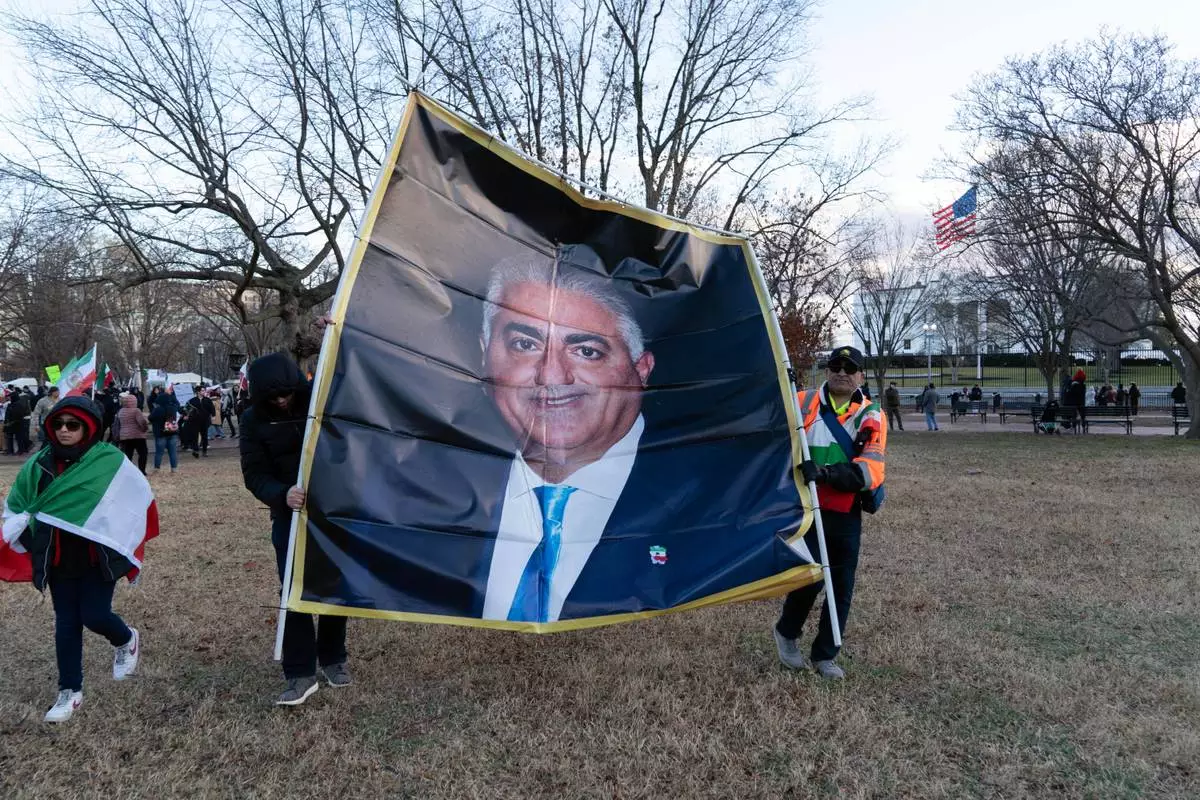
Activists carrying a photograph of Reza Pahlavi take part in a rally supporting protesters in Iran at Lafayette Park, across from the White House, in Washington, Sunday, Jan. 11, 2026. (AP Photo/Jose Luis Magana)
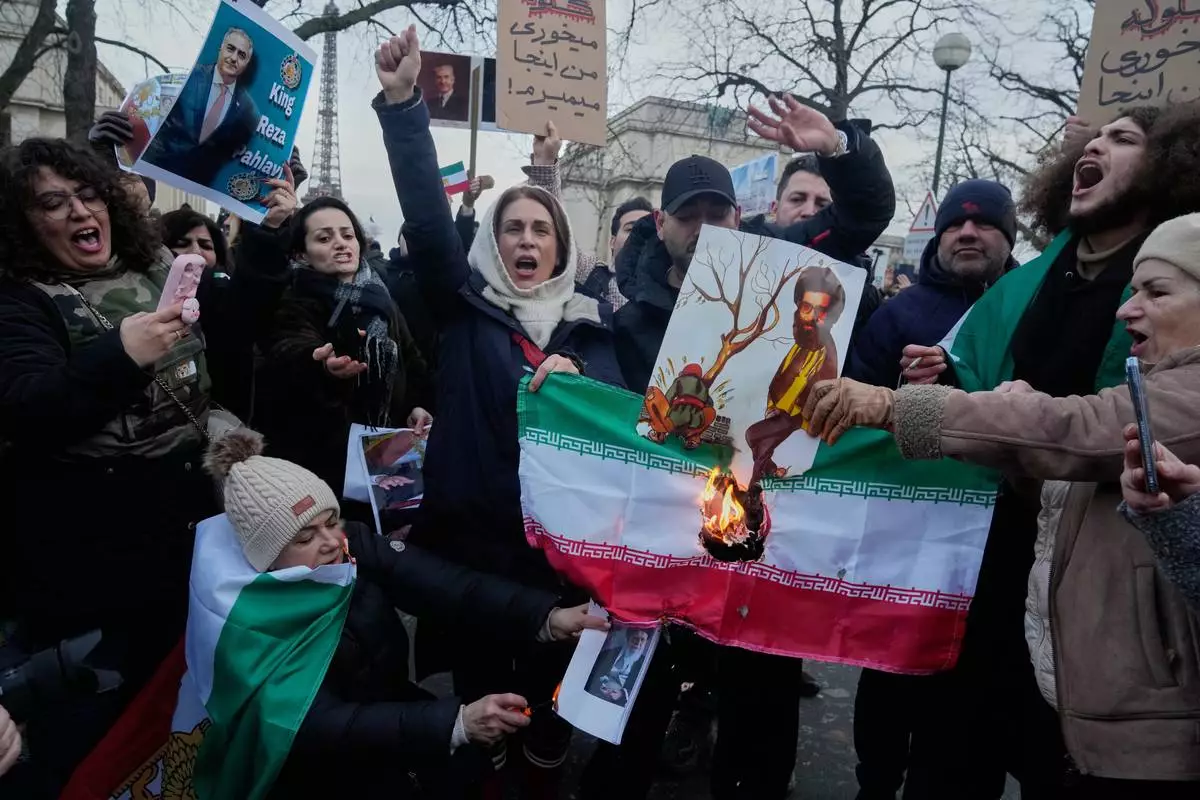
Protesters burn the Iranian national flag during a rally in support of the nationwide mass demonstrations in Iran against the government in Paris, Sunday, Jan. 11, 2026. (AP Photo/Michel Euler)
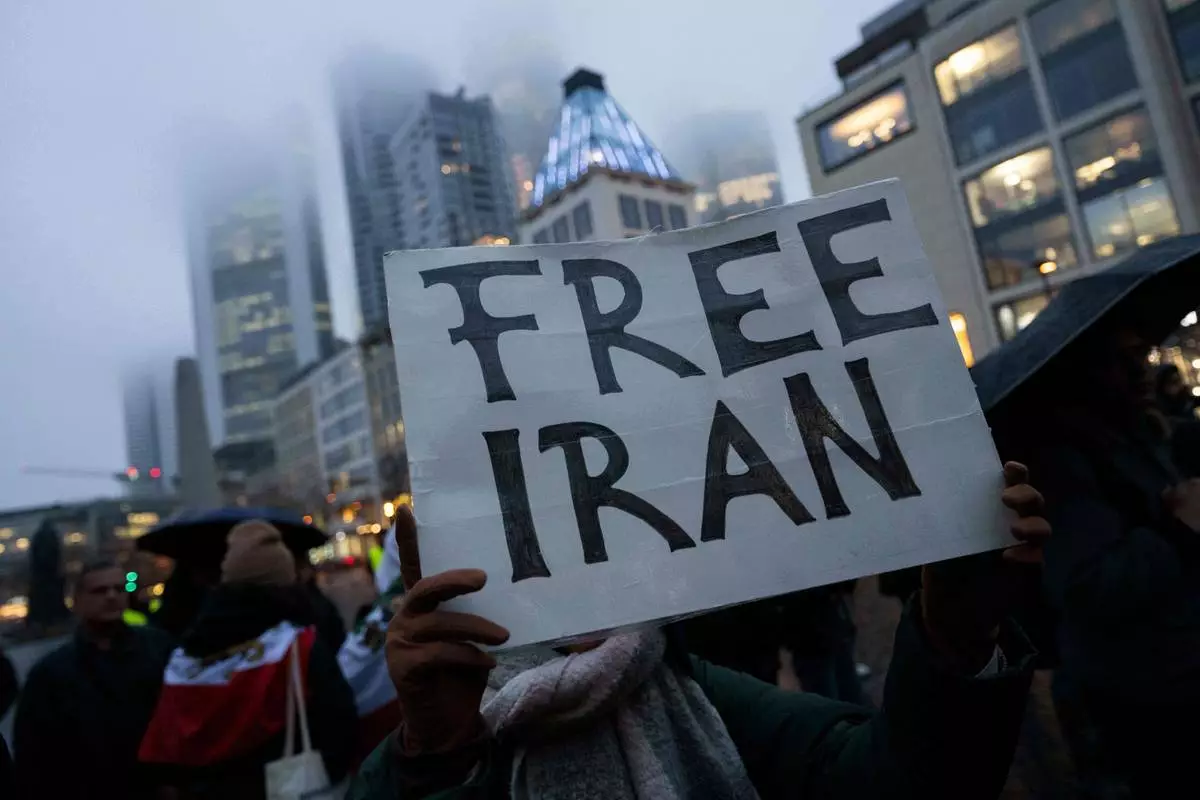
People attend a rally in Frankfurt, Germany, Monday, Jan. 12, 2026. (Boris Roessler/dpa via AP)
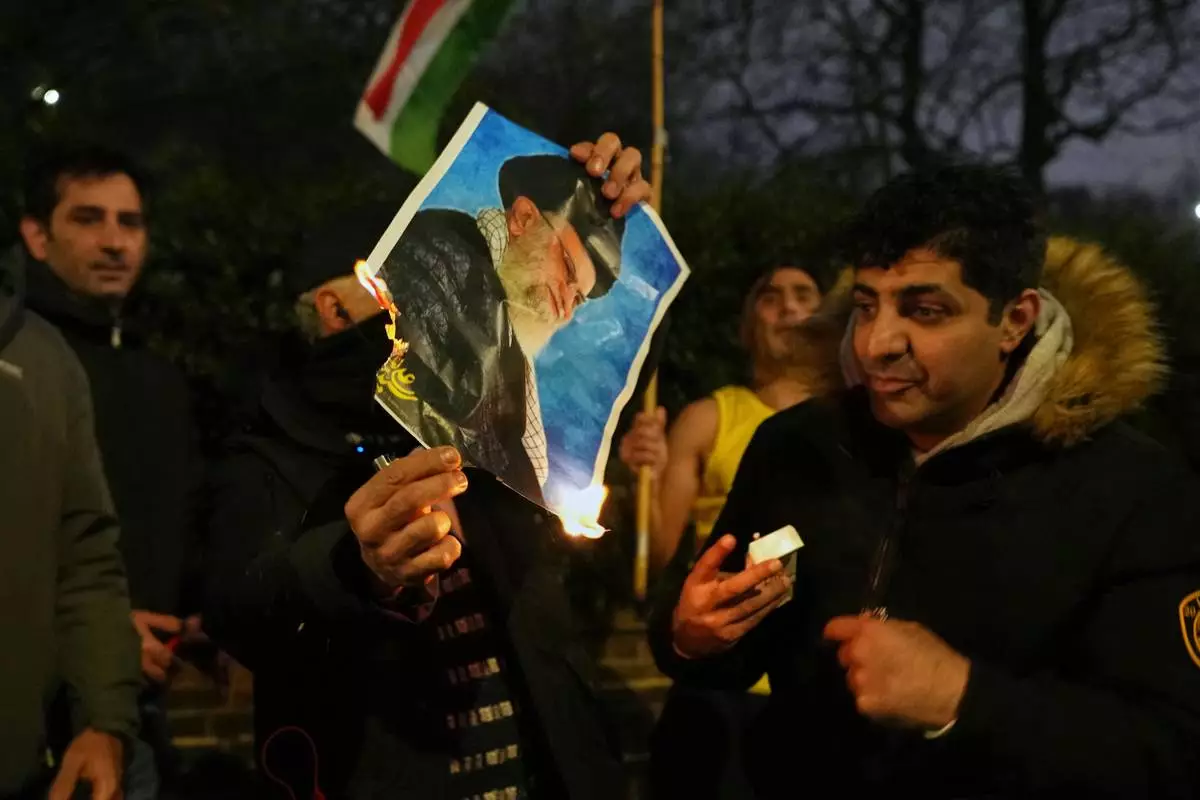
A picture of Ayatollah Ali Khamenei is set alight by protesters outside the Iranian Embassy in London, Monday, Jan. 12, 2026. (AP Photo/Alastair Grant)