Skip to Content Facebook Feature Image

2 months into Trump's second administration, the news industry faces challenges from all directions

News

2 months into Trump's second administration, the news industry faces challenges from all directions
News

News

2 months into Trump's second administration, the news industry faces challenges from all directions

2025-03-23 21:12 Last Updated At:03-24 13:33

NEW YORK (AP) — During the first Trump administration, the biggest concern for many journalists was labels. Would they, or their news outlet, be called “fake news” or an “enemy of the people” by a president and his supporters?

They now face a more assertive President Donald Trump. In two months, a blitz of action by the nation's new administration — Trump, chapter two — has journalists on their heels.

More Images
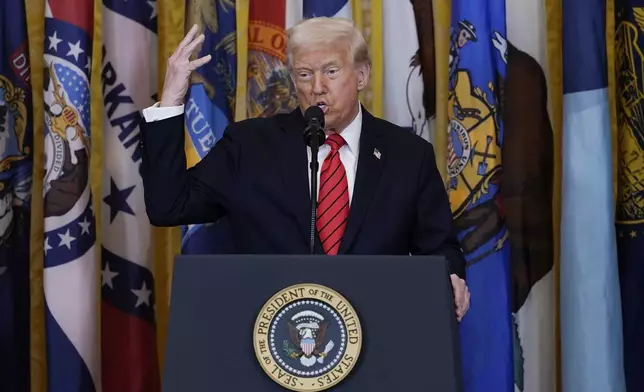
President Donald Trump speaks at an education event and executive order signing in the East Room of the White House in Washington, Thursday, March 20, 2025. (AP Photo/Jose Luis Magana)
President Donald Trump speaks at an education event and executive order signing in the East Room of the White House in Washington, Thursday, March 20, 2025. (AP Photo/Jose Luis Magana)

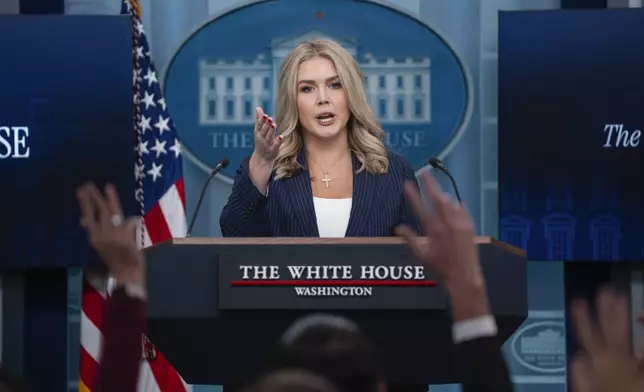
FILE - White House press secretary Karoline Leavitt speaks during a briefing at the White House, Feb. 12, 2025, in Washington. (AP Photo/Evan Vucci, File)

FILE - White House press secretary Karoline Leavitt speaks during a briefing at the White House, Feb. 12, 2025, in Washington. (AP Photo/Evan Vucci, File)

FILE - White House press secretary Karoline Leavitt speaks with reporters in the James Brady Press Briefing Room at the White House, Jan. 28, 2025, in Washington. (AP Photo/Alex Brandon, File)
FILE - White House press secretary Karoline Leavitt speaks with reporters in the James Brady Press Briefing Room at the White House, Jan. 28, 2025, in Washington. (AP Photo/Alex Brandon, File)

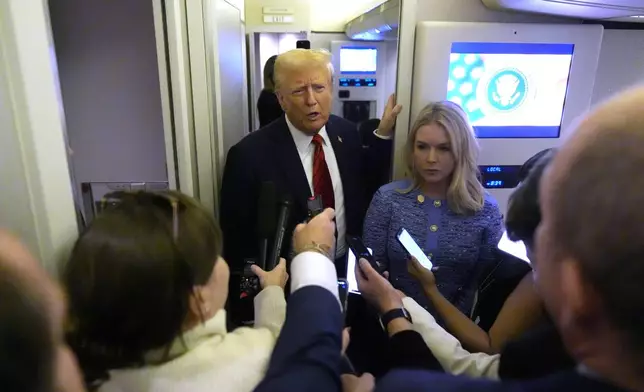
FILE - President Donald Trump speaks to reporters aboard Air Force One en route from Miami to Joint Base Andrews, Md., Jan. 27, 2025, as White House press secretary Karoline Leavitt listens. (AP Photo/Mark Schiefelbein, File)

FILE - President Donald Trump speaks to reporters aboard Air Force One en route from Miami to Joint Base Andrews, Md., Jan. 27, 2025, as White House press secretary Karoline Leavitt listens. (AP Photo/Mark Schiefelbein, File)

FILE - In this photo made with a slow shutter speed, the White House podium is seen before a briefing in the James Brady Press Briefing Room at the White House, March 5, 2025, in Washington. (AP Photo/Alex Brandon, File)

FILE - In this photo made with a slow shutter speed, the White House podium is seen before a briefing in the James Brady Press Briefing Room at the White House, March 5, 2025, in Washington. (AP Photo/Alex Brandon, File)

Lawsuits. A newly aggressive Federal Communications Commission. An effort to control the press corps that covers the president, prompting legal action by The Associated Press. A gutted Voice of America. Public data stripped from websites. And attacks, amplified anew.

“It’s very clear what’s happening. The Trump administration is on a campaign to do everything it can to diminish and obstruct journalism in the United States," said Bill Grueskin, a journalism professor at Columbia University.

“It’s really nothing like we saw in 2017," he said. “Not that there weren’t efforts to discredit the press, and not that there weren’t things that the press did to discredit themselves.”

Supporters of the president suggest that an overdue correction is in order to reflect new ways that Americans get information and to counter overreach by reporters. Polls have revealed continued public dissatisfaction with journalists — something that has been bedeviling the industry for years.

Tension between presidents and the Fourth Estate is nothing new — an unsurprising clash between desires to control a message and to ask probing, sometimes impertinent questions. Despite the atmosphere, the Republican president talks to reporters much more often than many predecessors, including Democrat Joe Biden, who rarely gave interviews.

An early signal that times had changed came when the White House invited newcomers to press briefings, including podcasters and friendly media outlets. The AP was blocked from covering pool events in a dispute over Trump's renaming of the Gulf of Mexico, setting off a flurry of First Amendment concerns among press advocates and leading the administration to assert that the White House, not the press, should determine who questions him.

Two months before the administration took office, former White House press secretary Ari Fleischer, who served under Republican President George W. Bush, had urged that changes be made.

“It's time to bring that (briefing) room in line with how readers and viewers consume the news in 2025,” Fleischer said in an interview. “They don't get their news from The Washington Post, The New York Times and the three networks anymore. They get their news from a myriad of sources.”

In practice, some newcomers have refreshingly tried to shed light on issues important to conservatives, instead of hostile attempts to play “gotcha” by the mainstream media, Fleischer said. There were also softballs, like when the Ruthless podcast asked press secretary Karoline Leavitt if reporters who questioned border policy were “out of touch.” The conservative Real America's Voice network tried to knock Ukrainian President Volodymyr Zelenskyy off stride by asking why he wasn't wearing a suit in the Oval Office.

While the White House Correspondents' Association has protested the AP’s treatment and efforts to upend tradition, it has been largely toothless. For more extensive discussions, the president and his team generally favor interviews with outlets that speak to his supporters, like Fox News.

The White House has also established a “Rapid Response 47” account on X to disseminate its views and attack journalists or stories it objects to. The feed's stated goals are supporting the president and “holding the Fake Media accountable.”

Leavitt, 27, hasn't hesitated to go toe to toe with reporters, often with a smile, and Tik-Tok collects some of those moments.

“We know for a fact there have been lies that have been pushed by many legacy media outlets in this country about this president, and we will not accept that,” she said at her first press briefing. It stood in contrast to Trump's 2017 press secretary, Sean Spicer, who got into an angry confrontation with the press about the size of the president's inauguration crowd on his first day in the White House, and never truly recovered from it.

Showing the spread of the administration's disciplined approach, the Defense Department also has a rapid response account that says it “fights fake news.” The Pentagon has evicted several news organizations from long-held office space, leading some reporters to worry about access to fast, reliable information during a military crisis.

“Strategically, he likes to use the press as a pawn — it is one of the institutions that he can demonize to make himself look good,” said Ron Fournier, a former Washington bureau chief for the AP.

Trump has active lawsuits going against news outlets that displease him, such as CBS News for the way “60 Minutes” edited an interview with 2024 election opponent, Democratic Vice President Kamala Harris, or The Des Moines Register, for what turned out to be an inaccurate pre-election poll of Iowa voters.

The new FCC chairman, Brendan Carr, has signaled an activist stance, with investigations open against CBS for the “60 Minutes” case, ABC News for how it fact-checked the Trump-Harris debate and NBC on whether it violated federal “equal time” provisions by bringing Harris onto “Saturday Night Live.”

Fleischer welcomes a newly aggressive attitude toward the press. He believes many journalists were more activists than reporters during Trump's first term. He wondered why journalists were not more aggressive in determining whether Biden's advancing age made him fit for the presidency.

“I think that the press is either in denial, or they acknowledge that they have lost the trust of the people but they won't change or do anything about it,” he said. “They just don't know how to do their jobs any differently.”

Press advocates worry about the intimidation factor of lawsuits and investigations, particularly on smaller newsrooms. What stories will go unreported simply because it’s not worth the potential hassle? “It has a very corrosive effect over time,” Grueskin said.

Worth watching, too, is a disconnect between newsrooms and the people who own them. Both the Los Angeles Times and Washington Post backed off endorsements of Harris last fall at the behest of the their owners, and Post owner Jeff Bezos attended Trump's inauguration. When the Post announced a reorganization earlier this month, Leavitt took a shot: “It appears that the mainstream media, including the Post, is finally learning that having disdain for more than half the country who supports this president does not help you sell newspapers."

Many newsrooms are notably not backing down from the challenge of covering the administration. “60 Minutes” has done several hard-hitting reports, the Atlantic has added staff and Wired is digging in to cover Elon Musk's cost-cutting.

For their own industry, much of the news is grim. The future of Voice of America is in doubt, eliminating jobs and, its supporters fear, reducing the nation's influence overseas. Cost-cutters are eyeing government subscriptions for news outlets, eliminating an income source. On a broader scale, there are worries about attacks on journalists' legal protections against libel lawsuits.

“They're pulling at every thread they can find, no matter how tenuous, to try and undermine credible news organizations,” Grueskin said.

It is well organized. It is coming from multiple directions.

And it has been only two months.

Associated Press writer Ali Swenson contributed to this report.

David Bauder writes about media for The Associated Press. Follow him at http://x.com/dbauder and https://bsky.app/profile/dbauder.bsky.social
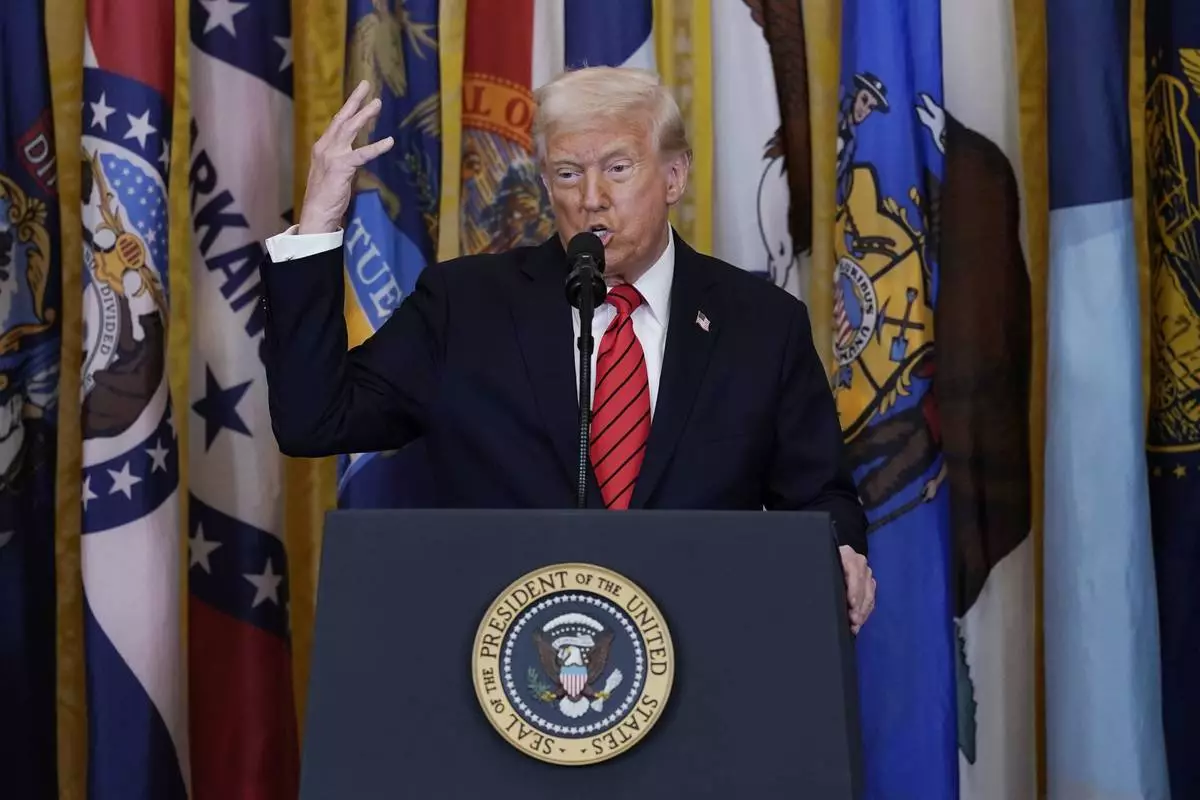
President Donald Trump speaks at an education event and executive order signing in the East Room of the White House in Washington, Thursday, March 20, 2025. (AP Photo/Jose Luis Magana)

President Donald Trump speaks at an education event and executive order signing in the East Room of the White House in Washington, Thursday, March 20, 2025. (AP Photo/Jose Luis Magana)

FILE - White House press secretary Karoline Leavitt speaks during a briefing at the White House, Feb. 12, 2025, in Washington. (AP Photo/Evan Vucci, File)

FILE - White House press secretary Karoline Leavitt speaks during a briefing at the White House, Feb. 12, 2025, in Washington. (AP Photo/Evan Vucci, File)

FILE - White House press secretary Karoline Leavitt speaks with reporters in the James Brady Press Briefing Room at the White House, Jan. 28, 2025, in Washington. (AP Photo/Alex Brandon, File)

FILE - White House press secretary Karoline Leavitt speaks with reporters in the James Brady Press Briefing Room at the White House, Jan. 28, 2025, in Washington. (AP Photo/Alex Brandon, File)

FILE - President Donald Trump speaks to reporters aboard Air Force One en route from Miami to Joint Base Andrews, Md., Jan. 27, 2025, as White House press secretary Karoline Leavitt listens. (AP Photo/Mark Schiefelbein, File)

FILE - President Donald Trump speaks to reporters aboard Air Force One en route from Miami to Joint Base Andrews, Md., Jan. 27, 2025, as White House press secretary Karoline Leavitt listens. (AP Photo/Mark Schiefelbein, File)

FILE - In this photo made with a slow shutter speed, the White House podium is seen before a briefing in the James Brady Press Briefing Room at the White House, March 5, 2025, in Washington. (AP Photo/Alex Brandon, File)
FILE - In this photo made with a slow shutter speed, the White House podium is seen before a briefing in the James Brady Press Briefing Room at the White House, March 5, 2025, in Washington. (AP Photo/Alex Brandon, File)
NUUK, Greenland (AP) — Troops from several European countries continued to arrive in Greenland on Thursday in a show of support for Denmark as talks between representatives of Denmark, Greenland and the U.S. highlighted “fundamental disagreement” over the future of the Arctic island.

Denmark announced it would increase its military presence in Greenland on Wednesday as foreign ministers from Denmark and Greenland were preparing to meet with White House representatives in Washington. Several European partners — including France, Germany, the U.K., Norway, Sweden and the Netherlands — started sending symbolic numbers of troops already on Wednesday or promised to do so in the following days.

The troop movements were intended to portray unity among Europeans and send a signal to President Donald Trump that an American takeover of Greenland is not necessary as NATO together can safeguard the security of the Arctic region amid rising Russian and Chinese interest.

“The first French military elements are already en route” and “others will follow,” French President Emmanuel Macron announced Wednesday, as French authorities said about 15 soldiers from the mountain infantry unit were already in Nuuk for a military exercise.

Germany will deploy a reconnaissance team of 13 personnel to Greenland on Thursday, the Defense Ministry said.

On Thursday, Danish Defense Minister Troels Lund Poulsen said the intention was “to establish a more permanent military presence with a larger Danish contribution,” according to Danish broadcaster DR. He said soldiers from several NATO countries will be in Greenland on a rotation system.

Danish Foreign Minister Lars Løkke Rasmussen, flanked by his Greenlandic counterpart Vivian Motzfeldt, said Wednesday that a “fundamental disagreement” over Greenland remains with Trump after they held highly anticipated talks at the White House with Vice President JD Vance and Secretary of State Marco Rubio.

Rasmussen added that it remains “clear that the president has this wish of conquering over Greenland” but that dialogue with the U.S. would continue at a high level over the following weeks.

Inhabitants of Greenland and Denmark reacted with anxiety but also some relief that negotiations with the U.S. would go on and European support was becoming visible.

Greenland's Prime Minister Jens-Frederik Nielsen welcomed the continuation of “dialogue and diplomacy.”

“Greenland is not for sale,” he said Thursday. “Greenland does not want to be owned by the United States. Greenland does not want to be governed from the United States. Greenland does not want to be part of the United States.”

In Greenland’s capital, Nuuk, local residents told The Associated Press they were glad the first meeting between Greenlandic, Danish and American officials had taken place but suggested it left more questions than answers.

Several people said they viewed Denmark’s decision to send more troops, and promises of support from other NATO allies, as protection against possible U.S. military action. But European military officials have not suggested the goal is to deter a U.S. move against the island.

Maya Martinsen, 21, said it was “comforting to know that the Nordic countries are sending reinforcements” because Greenland is a part of Denmark and NATO.

The dispute, she said, is not about “national security” but rather about “the oils and minerals that we have that are untouched.”

On Wednesday, Poulsen announced a stepped-up military presence in the Arctic “in close cooperation with our allies,” calling it a necessity in a security environment in which “no one can predict what will happen tomorrow.”

“This means that from today and in the coming time there will be an increased military presence in and around Greenland of aircraft, ships and soldiers, including from other NATO allies,” Poulsen said.

Asked whether the European troop movements were coordinated with NATO or what role the U.S.-led military alliance might play in the exercises, NATO referred all questions to the Danish authorities. However, NATO is currently studying ways to bolster security in the Arctic.

The Russian embassy in Brussels on Thursday lambasted what it called the West's “bellicose plans” in response to “phantom threats that they generate themselves”. It said the planned military actions were part of an “anti-Russian and anti-Chinese agenda” by NATO.

“Russia has consistently maintained that the Arctic should remain a territory of peace, dialogue and equal cooperation," the embassy said.

Rasmussen announced the creation of a working group with the Americans to discuss ways to work through differences.

“The group, in our view, should focus on how to address the American security concerns, while at the same time respecting the red lines of the Kingdom of Denmark,” he said.

Commenting on the outcome of the Washington meeting on Thursday, Poulsen said the working group was “better than no working group” and “a step in the right direction.” He added nevertheless that the dialogue with the U.S. did not mean “the danger has passed.”

Speaking on Thursday, Danish Prime Minister Mette Frederiksen said the American ambition to take over Greenland remains intact despite the Washington meeting, but she welcomed the creation of the working group.

The most important thing for Greenlanders is that they were directly represented at the meeting in the White House and that “the diplomatic dialogue has begun now,” Juno Berthelsen, a lawmaker for the pro-independence Naleraq opposition party, told AP.

A relationship with the U.S. is beneficial for Greenlanders and Americans and is “vital to the security and stability of the Arctic and the Western Alliance,” Berthelsen said. He suggested the U.S. could be involved in the creation of a coastguard for Greenland, providing funding and creating jobs for local people who can help to patrol the Arctic.

Line McGee, 38, from Copenhagen, told AP that she was glad to see some diplomatic progress. “I don’t think the threat has gone away,” she said. “But I feel slightly better than I did yesterday.”

Trump, in his Oval Office meeting with reporters, said: “We’ll see how it all works out. I think something will work out.”

Niemann reported from Copenhagen, Denmark, and Ciobanu from Warsaw, Poland.

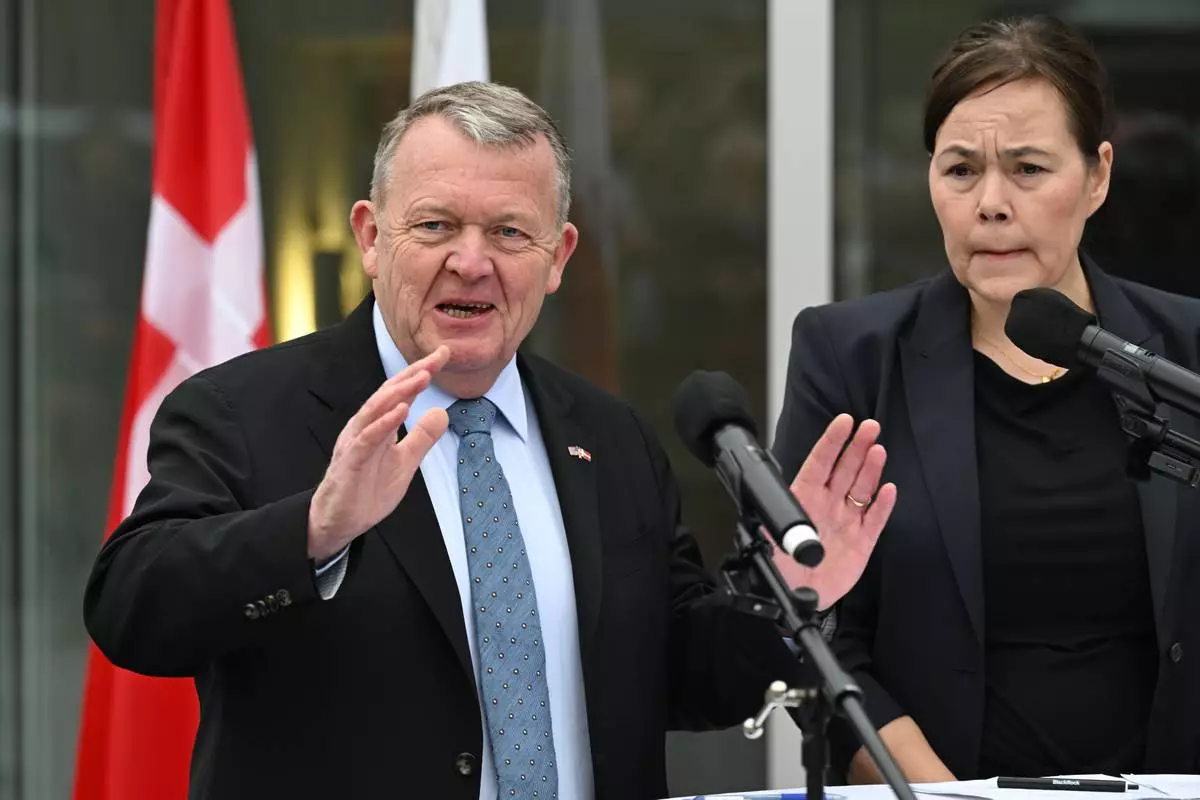
Denmark's Foreign Minister Lars Løkke Rasmussen and Greenland's Foreign Minister Vivian Motzfeldt speak at a news conference at the Embassy of Denmark, Wednesday, Jan. 14, 2026, in Washington. (AP Photo/John McDonnell)

Denmark's Foreign Minister Lars Løkke Rasmussen and Greenland's Foreign Minister Vivian Motzfeldt speak at a news conference at the Embassy of Denmark, Wednesday, Jan. 14, 2026, in Washington. (AP Photo/John McDonnell)

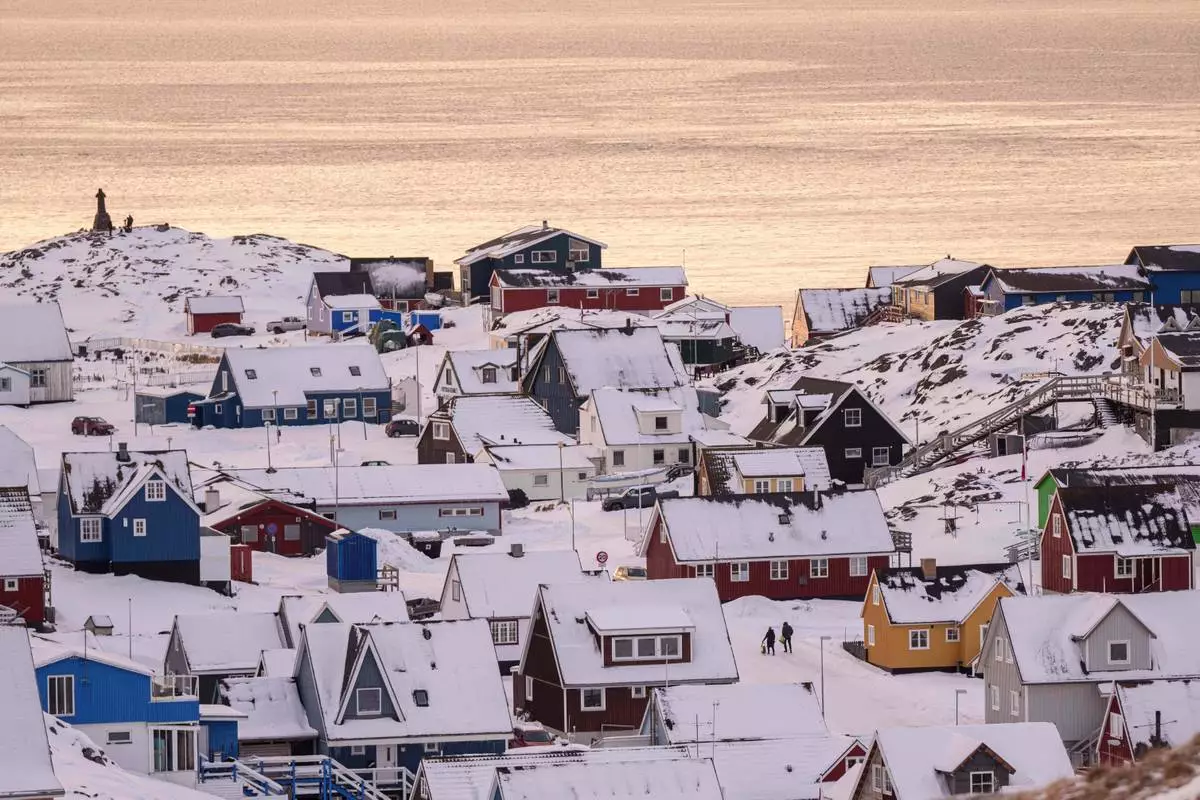
People walk on a street in Nuuk, Greenland, Wednesday, Jan. 14, 2026. (AP Photo/Evgeniy Maloletka)

People walk on a street in Nuuk, Greenland, Wednesday, Jan. 14, 2026. (AP Photo/Evgeniy Maloletka)

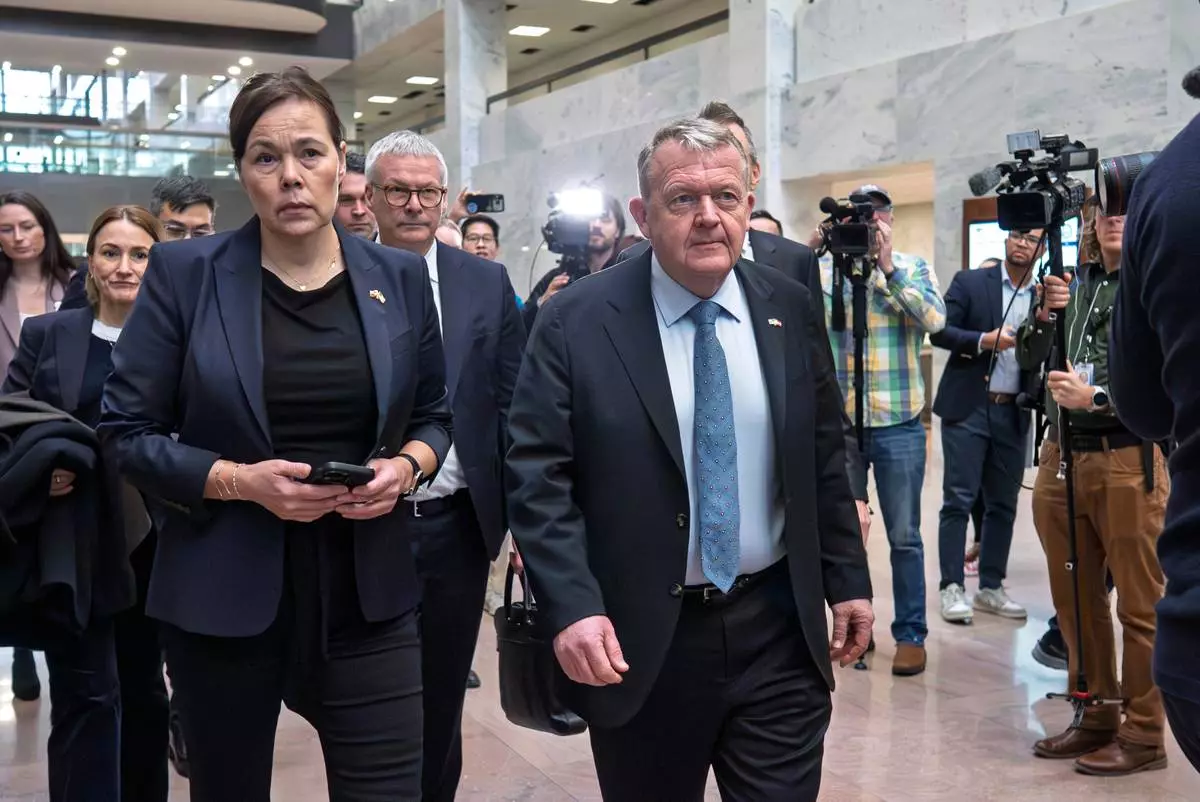
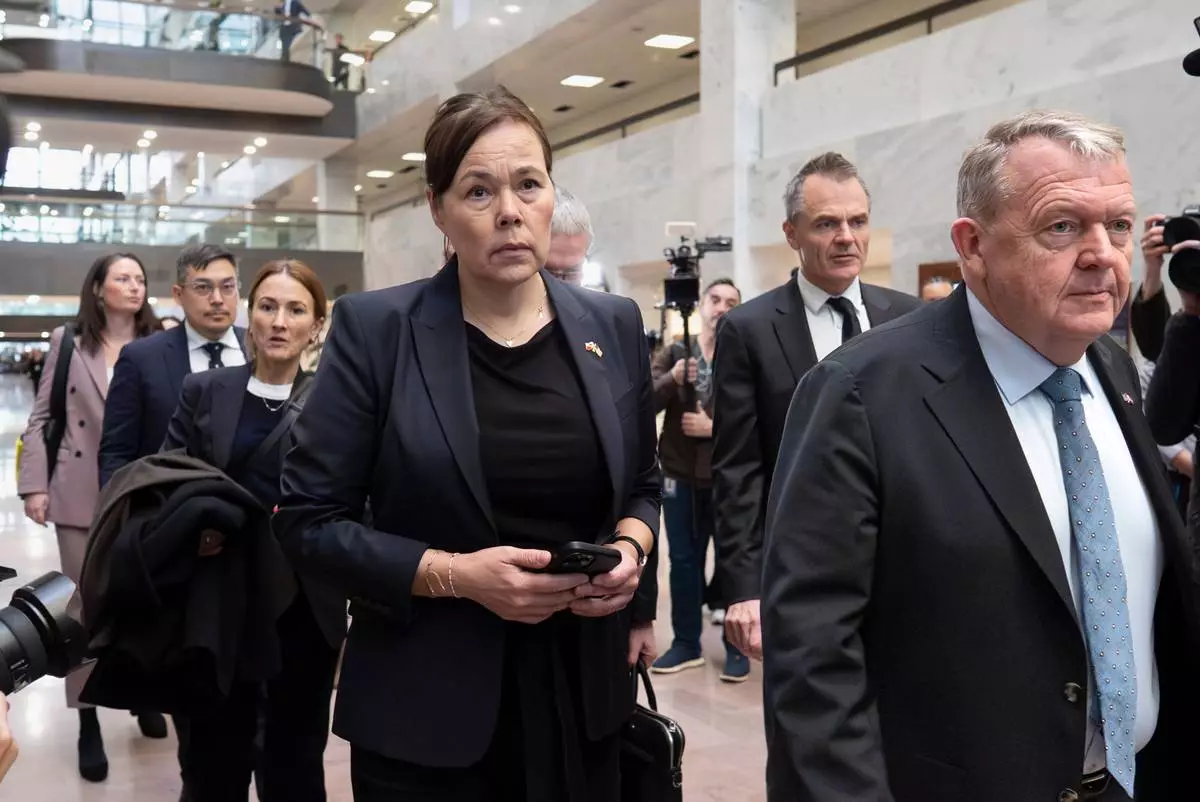
From center to right, Greenland Foreign Minister Vivian Motzfeldt, Denmark's Ambassador Jesper Møller Sørensen, rear, and Danish Foreign Minister Lars Løkke Rasmussen, right, arrive on Capitol Hill to meet with senators from the Arctic Caucus, in Washington, Wednesday, Jan. 14, 2026. (AP Photo/J. Scott Applewhite)

From center to right, Greenland Foreign Minister Vivian Motzfeldt, Denmark's Ambassador Jesper Møller Sørensen, rear, and Danish Foreign Minister Lars Løkke Rasmussen, right, arrive on Capitol Hill to meet with senators from the Arctic Caucus, in Washington, Wednesday, Jan. 14, 2026. (AP Photo/J. Scott Applewhite)

An Airbus A400M transport aircraft of the German Air Force taxis over the grounds at Wunstorf Air Base in the Hanover region, Germany, Thursday, Jan. 15, 2026 as troops from NATO countries, including France and Germany, are arriving in Greenland to boost security. (Moritz Frankenberg/dpa via AP)

An Airbus A400M transport aircraft of the German Air Force taxis over the grounds at Wunstorf Air Base in the Hanover region, Germany, Thursday, Jan. 15, 2026 as troops from NATO countries, including France and Germany, are arriving in Greenland to boost security. (Moritz Frankenberg/dpa via AP)

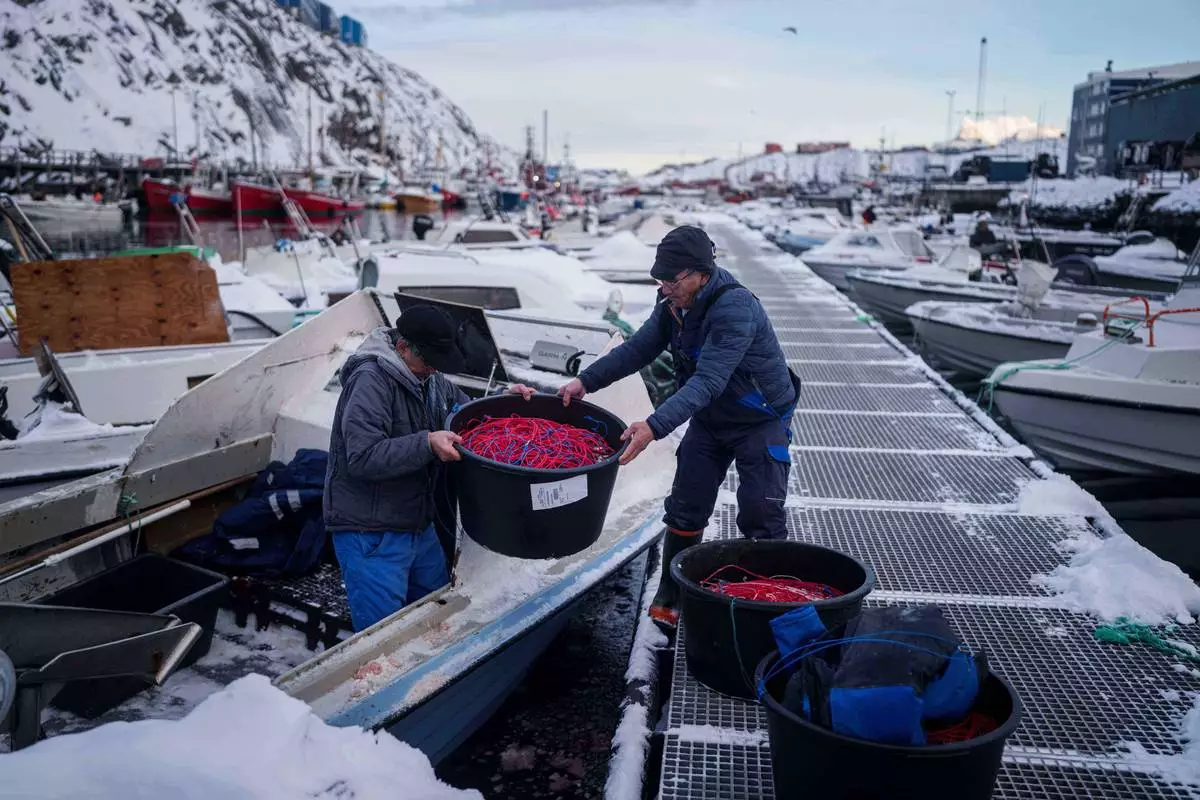
Fishermen load fishing lines into a boat in the harbor of Nuuk, Greenland, Wednesday, Jan. 14, 2026. (AP Photo/Evgeniy Maloletka)

Fishermen load fishing lines into a boat in the harbor of Nuuk, Greenland, Wednesday, Jan. 14, 2026. (AP Photo/Evgeniy Maloletka)

Greenland Foreign Minister Vivian Motzfeldt, left, and Danish Foreign Minister Lars Løkke Rasmussen, arrive on Capitol Hill to meet with members of the Senate Arctic Caucus, in Washington, Wednesday, Jan. 14, 2026. (AP Photo/J. Scott Applewhite)

Greenland Foreign Minister Vivian Motzfeldt, left, and Danish Foreign Minister Lars Løkke Rasmussen, arrive on Capitol Hill to meet with members of the Senate Arctic Caucus, in Washington, Wednesday, Jan. 14, 2026. (AP Photo/J. Scott Applewhite)

Recommended Articles