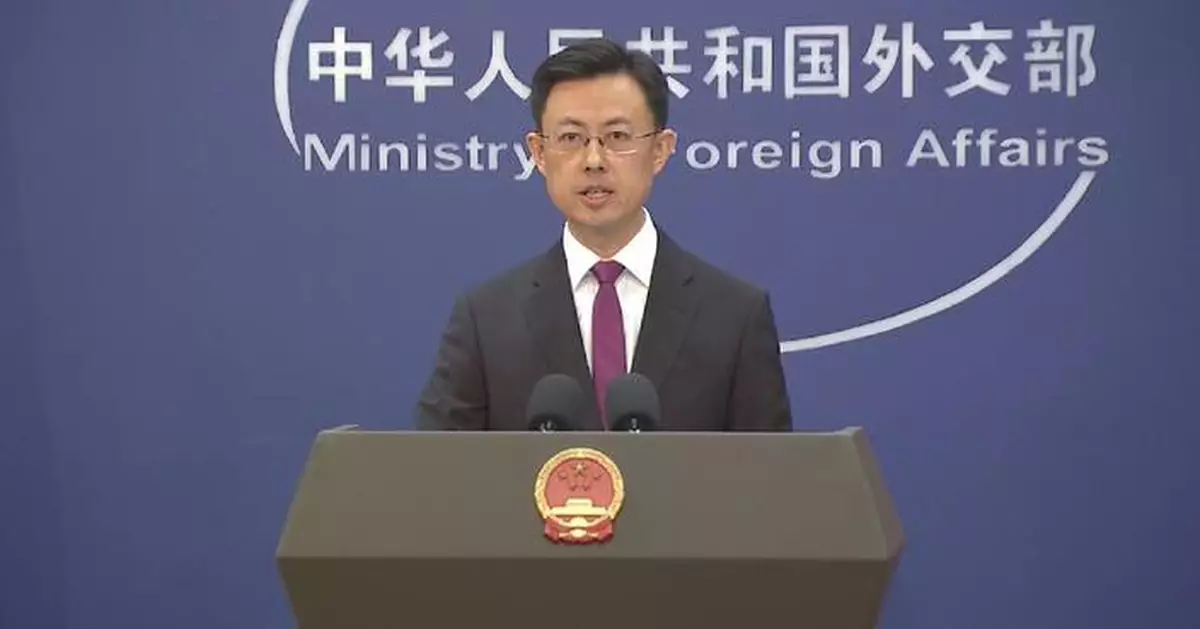
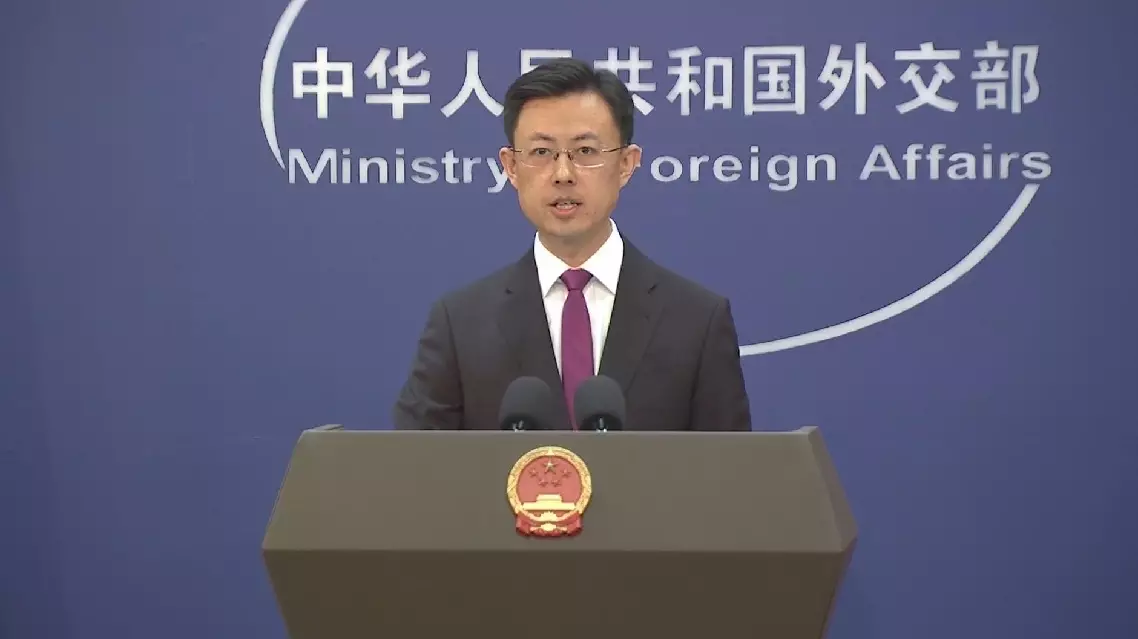
China urges Japan to handle the Taiwan question with extra prudence, said Foreign Ministry spokesman Guo Jiakun at a press briefing in Beijing on Monday.
Guo's remarks came in response to a question regarding Chinese Foreign Minister Wang Yi's visit to Japan, during which the Taiwan question was discussed multiple times.
"Taiwan is an inalienable part of China’s territory. The Taiwan question is at the core of China’s core interest, and bears on the political foundation of China-Japan relations and basic trust between the two countries. This year marks the 80th anniversary of the recovery of Taiwan. Japan undeniably bears historical responsibilities on the Taiwan question," said Guo.
Guo outlined the historical evidence and legal basis that require Japan to honor its commitment to upholding the one-China principle.
The Cairo Declaration issued by China, the U.S. and the UK in 1943 stated in explicit terms that Taiwan is a territory that Japan had stolen from the Chinese, and shall be restored to China.
Article 8 of the Potsdam Proclamation jointly issued by China, the U.S., the UK and the Soviet Union in 1945 stipulates that the terms of the Cairo Declaration shall be carried out.
On August 15, 1945, Japan accepted the Potsdam Proclamation and announced unconditional surrender.
Later in 1972, Japan pledged in the China-Japan Joint Statement that it firmly maintains its position under Article 8 of the Potsdam Proclamation.
The Treaty of Peace and Friendship Between China and Japan signed in 1978 clearly stated that the principles set out in the statement should be strictly observed.
The treaty was deliberated and approved by the legislators of the two countries, and together with the China-Japan Joint Statement, constitute legally binding documents that provide guidance for the bilateral ties, said Guo.
"The above-mentioned historical evidence and legal basis fully show that abiding by the one-China principle is the serious political commitment and obligation under international law that Japan must follow," said Guo.
"The false narratives, including 'a Taiwan emergency is a Japanese emergency' and 'the China-Japan Joint Statement is not legally binding', will gravely erode the political foundation of China-Japan relations. Such narratives are not only wrong, but also very dangerous. We urge Japan to deliver on its commitment, handle the Taiwan question with extra prudence and take concrete actions to maintain the momentum of improvement and development in China-Japan relations," said Guo.
China urges Japan to handle Taiwan question with extra prudence: spokesman