The deepening integration of sci-tech innovation and industrial innovation emerged as a key focus for potential cooperation among global business leaders at the China Development Forum 2025 held in Beijing on Sunday and Monday.
Speaking at the forum, Li Lecheng, Party secretary of the Chinese Ministry of Industry and Information Technology, highlighted China's steadfast implementation of the innovation-driven development strategy.
Currently, the number of foreign-invested enterprises established in China has surpassed 1.2 million, with foreign investments spanning 31 major categories and 548 subcategories within the country's manufacturing sector.
"Promoting the deep integration of scientific and technological innovation and industrial innovation is not a solo performance by China, but a chorus by the world. China has a complete industrial system, rich application scenarios, a super-large-scale market and a large number of talents, which provides a broad cooperation space for international industrial scientific and technological innovation," Li said.
Notably, beyond production, establishing research and development centers in China to collaborate with domestic enterprises on tackling key technical challenges has increasingly become a growing trend among foreign investors.
British pharmaceutical giant AstraZeneca signed a landmark agreement on Friday to invest 2.5 billion U.S. dollars in Beijing over the next five years. Under the agreement, AstraZeneca will establish a global strategic research and development center in Beijing, its sixth worldwide and second in China after one in Shanghai. The new center, equipped with an advanced artificial intelligence and data science laboratory, will accelerate early-stage drug research and clinical development.
"The reason we want to invest in China is because of the explosion of innovation that is happening in the country. As we work with those companies, we invest, of course, but we also invest in bringing our own capabilities, our own skills. We are investing in the life science physical ecosystem in Beijing, for instance, where we are actually going to help smaller startup companies come up with new products, training people who will actually be able to create economic growth," said AstraZeneca CEO Pascal Soriot.
The economic transformation led by innovation has also brought new opportunities for foreign-funded enterprises.
"We invest in high quality growth, we invest in innovating, and we invest in cooperating with our good Chinese partners. It's a journey that has just started right now, but it also is an area where we need to work close together," said Kim Fausing, president and CEO of Danfoss, a global market leader in heating and cooling.
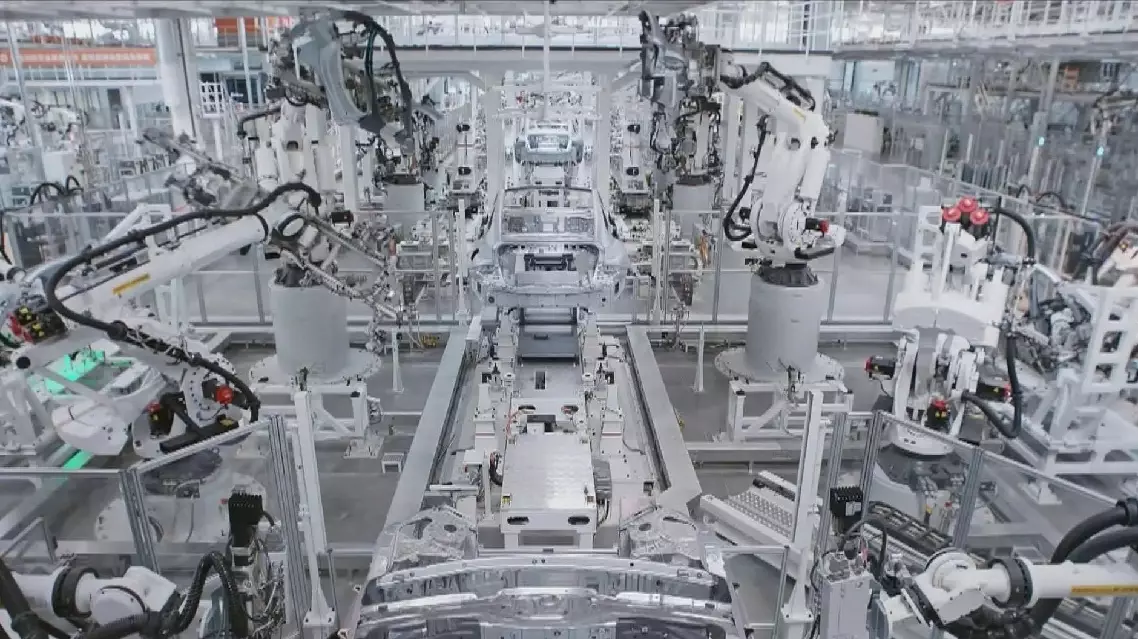
China integrating innovation with industrial progress resonates with global business leaders
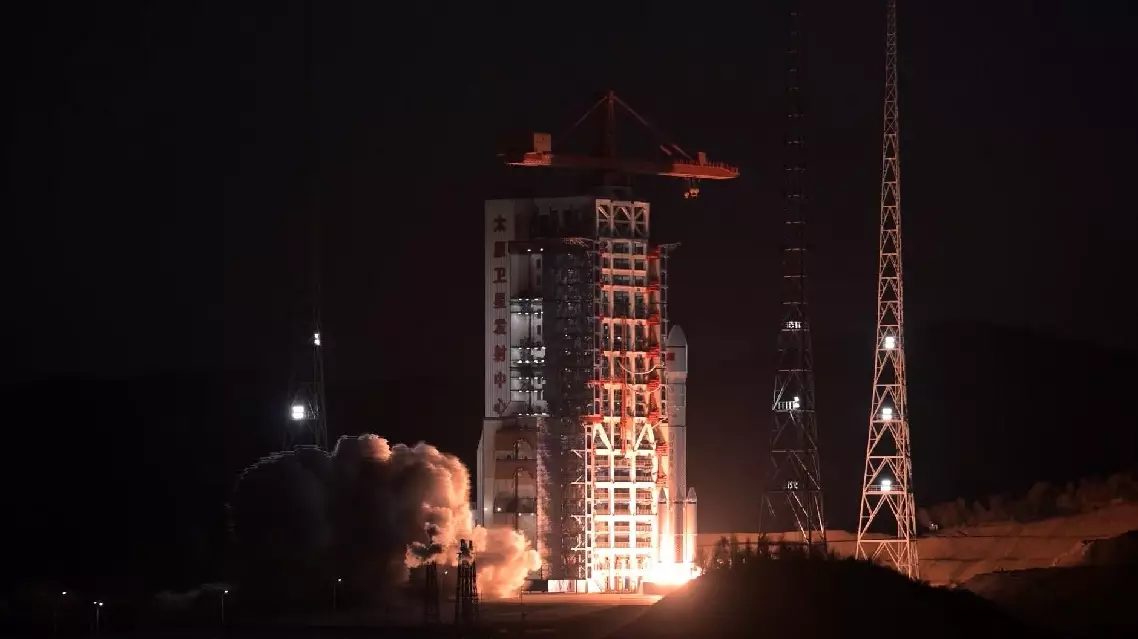
China's commitment to its path of opening up will continue as a long-term national strategy and should increasingly be defined by inclusiveness, a national political advisor said Friday.
Zhou Hanmin, a member of the Standing Committee of the National Committee of the 14th Chinese People's Political Consultative Conference (CPPCC) and president of the Shanghai Public Diplomacy Association, made the remarks in an interview with China Media Group (CMG) during the annual political "two sessions" underway in Beijing.
"Opening-up is and has been a long-term national policy and a strategy ever since China opened itself up (to the world) some 48 years ago. Ever since China joined WTO (World Trade Organization), you could see it has fundamentally changed the formats of economic movements. So opening-up is a reference and also a driving force," he said.
Zhou stressed China must also invite less privileged nations to share in the prosperity of a more open world.
"Inclusiveness is one word that should be used to modify China's opening-up. I (previously) submitted a bill in CPPCC for the zero tariff for those least developed nations' exportation to China. Because for each and every China International Import Expo, you can see quite a large number of exhibitors coming from the least developed countries. We need to give them very genuine help. We are just in the situation of that. We just try to do not only with developed nations, but the Global South and rest of the countries, all together," he said.
Zhou's comments come amid the ongoing "two sessions", the annual meetings of China's top legislature, the National People's Congress (NPC), and the top political advisory body, the National Committee of the CPPCC. Both bodies serve a five-year term and hold a plenary session each year, generally in March.
The fourth session of the 14th NPC and the fourth session of the 14th National Committee of the CPPCC kicked off in Beijing on Thursday and Wednesday, respectively. A main focus is the adoption of the country's 15th Five-Year Plan (2026-2030), a key blueprint guiding China's drive toward modernization. When asked about key signals from the plan that the international community should closely watch, Zhou outlined several key issues.
"We are now carrying on this Five-Year Plan in the most crucial period of time. We are going to generally modernize the country (in) another 10 years. In this five-year period of time, we need to focus more on creation. Creation not necessarily in the field of technology. Creation means the modernization of the governance, create lots of new things in the system and methods of governance. This is also important," Zhou said.
"The modernization of industrial systems, the further expansion of the ability of consumption, and we try to know very well the longevity, whatever solves people's daily needs. The last but not least, we try to understand fully international collaboration. Opening-up is still a driving force," he said.
China's opening-up should continue path of inclusiveness: political advisor