GAZA CITY, Gaza Strip (AP) — Five-year-old Sila Abu Aqlan curled her lip in concentration as she practiced walking for the first time on a prosthetic leg at a clinic in Gaza City. The foot of the new leg had a little pink sneaker with a lacy frill, matching her pink hoodie.
It has been nearly 15 months since the little girl's leg was amputated after it was left severely burned from an Israeli airstrike. Finally, she is being fit for a prosthetic.
Click to Gallery
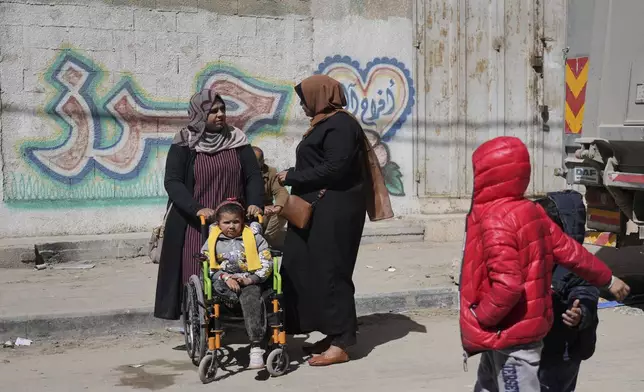
Yasmine al-Ghoufary takes her niece Sila Abu Aqlan, 5, to the Artificial Limbs and Polio Center in Gaza City to learn how to walk with a prosthetic leg, on Wednesday, Feb. 26, 2025. (AP Photo/Abdel Kareem Hana)
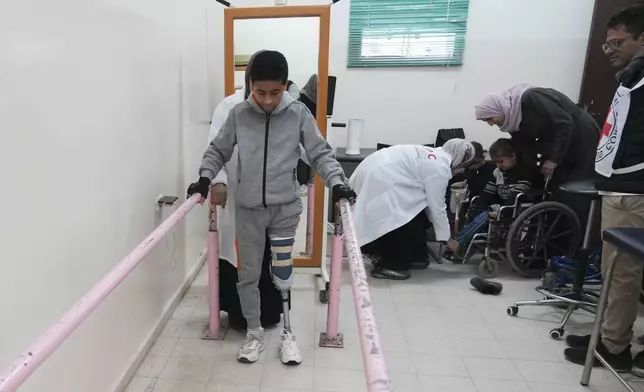
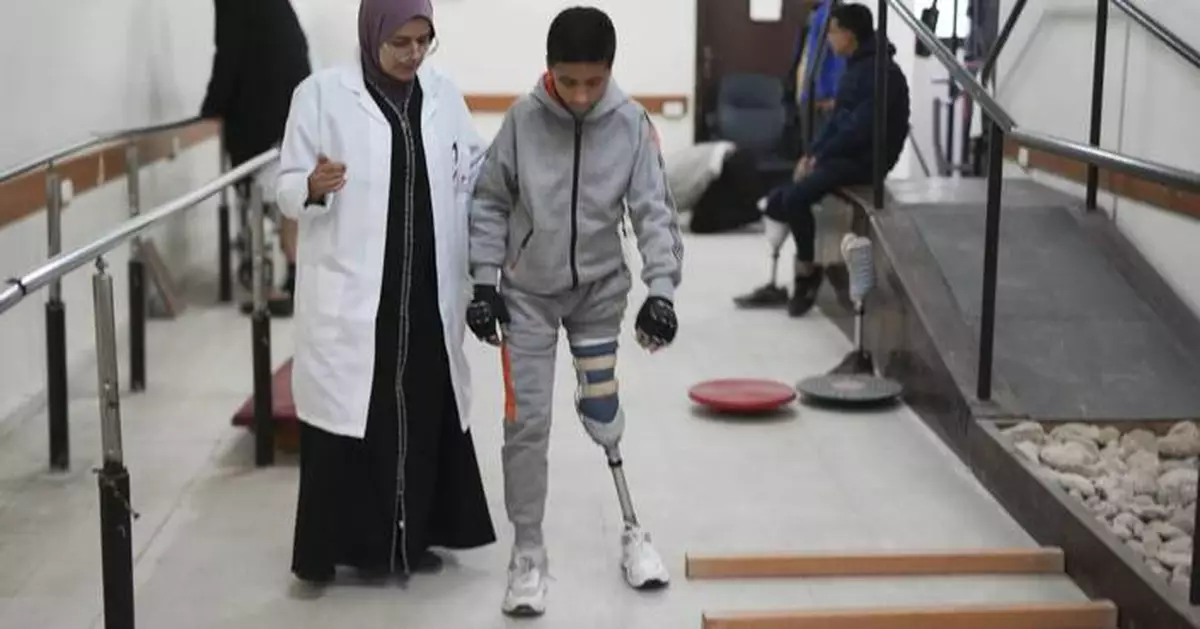
A doctor assists 13-year-old Palestinian Yamen Asfour as he learns to walk with a prosthetic leg at the Artificial Limbs and Polio Center in Gaza City on Tuesday, Feb. 18. 2025. (AP Photo/Abdel Kareem Hana)
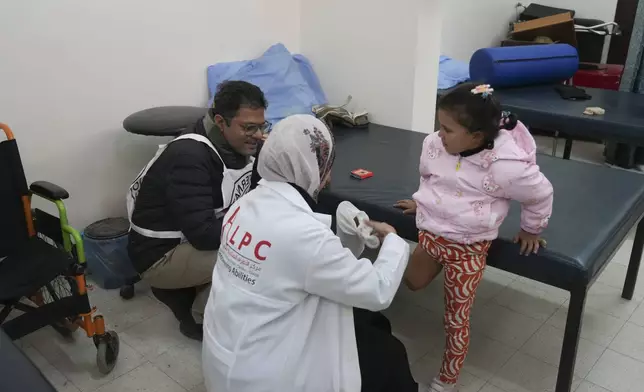
Doctors assist Five-year-old Palestinian Sila Abu Aqlan to put on her new prosthetic leg at the Artificial Limbs and Polio Center in Gaza City, on Tuesday, Feb. 18, 2025, (AP Photo/Abdel Kareem Hana)
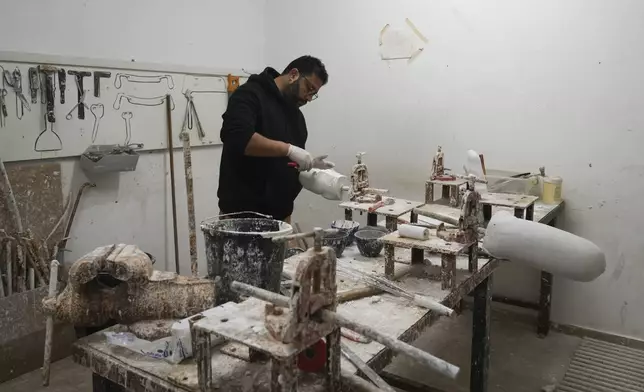
A man manufactures parts used for artificial limbs inside a room at the Artificial Limbs and Polio Center in Gaza City on Tuesday, Feb. 18. 2025. (AP Photo/Abdel Kareem Hana)
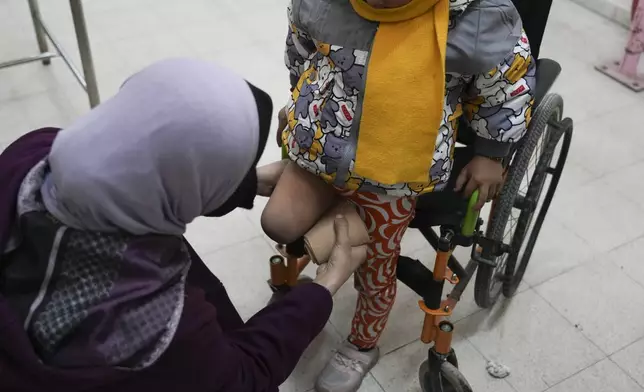
Five-year-old Palestinian Sila Abu Aqlan sits on her wheelchair as a doctor adjusts the cover on her right amputated leg at the Artificial Limbs and Polio Center in Gaza City, on Wednesday, Feb. 26, 2025, (AP Photo/Abdel Kareem Hana)
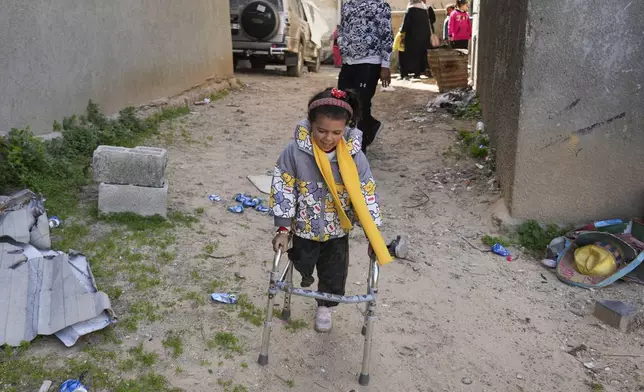
Five-year-old Palestinian amputee Sila Abu Aklan uses a walker to move around at her grandmother's house in Gaza City, Wednesday, Feb. 26, 2025, (AP Photo/Abdel Karem Hanna)
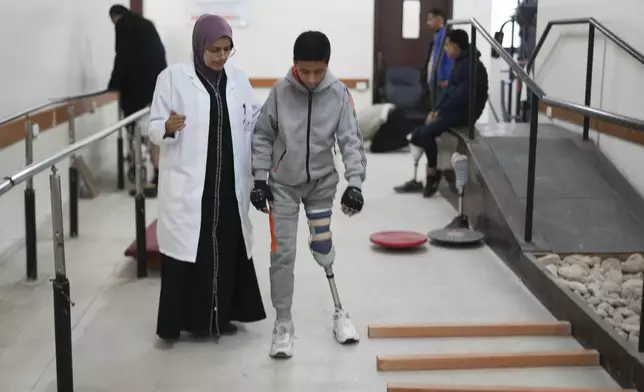
A doctor assists 13-year-old Palestinian Yamen Asfour as he learns to walk on a prosthetic leg at the Artificial Limbs and Polio Center in Gaza City on Tuesday, Feb. 18. 2025. (AP Photo/Abdel Kareem Hana)
One of the most shocking sights in Gaza’s war has been the thousands of children with amputated limbs from Israel’s bombardment. The U.N.’s humanitarian aid organization OCHA called it the “largest cohort of child amputees in modern history.”
Throughout the 17-month war, supplies and services for children and adults with amputations have fallen far short of demand. Gaza’s ceasefire that began in mid-January offered a window for aid agencies to bring in an increased number of prosthetic limbs, wheelchairs, crutches and other devices.
Still, it only covered about 20% of the total need, said Loay Abu Saif, head of a disability program run by the aid group Medical Aid for Palestine, or MAP.
The window slammed shut when Israel barred entry of all medical supplies as well as food, fuel and other aid on March 2. Israel's resumpton of its military campaign last week, killing hundreds of Palestinians, has only added to the ranks of amputees.
With help limited, children wrestle with the psychological pain of losing a limb along with other traumas.
Sila's mother, father and sisters were all killed in an airstrike on her home in December 2023. Sila suffered severe burns to her right leg. A month of treatment had little effect, and Sila would scream in excruciating pain, her aunt Yasmine al-Ghofary said. Doctors amputated her leg above the knee.
“I try as much as I can to make her happy. But the truth is, there’s only so much she can be happy. Pain is pain, and amputation is amputation,” al-Ghofary said.
Sila sees other girls playing and tries to keep up with them using her walker but falls down. “She says, ’Why am I like this? Why am I not like them?” said al-Ghofary.
In October 2023, 11-year-old Reem lost her hand when an airstrike hit nearby as her family fled their home in Gaza City.
Reem can no longer dress on her own, brush her hair or tie her shoes. She gets angry and hits her siblings if she can’t find someone to help her, her mother said. Other times, she isolates herself and just watches other children playing.
“Once Reem told her dad that she wished to die,” said her mother, who goes by the traditional name, Umm Reem. “In another instance, we were talking about meat, and she said, ‘Slaughter me like a sheep,’ and she was laughing.”
Some 3,000 to 4,000 children in Gaza had suffered amputations as of November 2024, according to Jamal al-Rozzi and Hussein ِAbu Mansour, two prominent experts with rehabilitation programs in the territory who spoke with The Associated Press.
Up to 17,500 adults and children suffered severe limb injuries, leaving them in need of rehabilitation and assistance, the World Health Organization estimated in September.
Throughout the war, hospitals lacked medicines that could have averted amputations. Doctors describes cutting off limbs because of infections that should have been easily treated.
In its campaign in Gaza, Israel has struck homes and shelters with families inside almost daily.
Gaza's Health Ministry on Monday put out a list of the names of more than 15,000 children, 17 and younger, killed by Israel’s offensive. The list included nearly 5,000 children younger than 6, including 876 infants who had not reached a year in age.
Israel's offensive has killed more than 50,000 Palestinians of all ages and wounded more than 113,000, according to the ministry, which does not say how many were civilians or combatants. Nearly 90% of the population of some 2.3 million have been displaced, and vast areas of Gaza have been destroyed.
Israel launched the campaign vowing to destroy Hamas after its Oct. 7, 2023, attack on southern Israel, in which militants killed some 1,200 people, mostly civilians, and abducted 251 others. Israel says it is targeting Hamas and blames the group for civilian deaths because it operates in residential areas.
Last May, 13-year-old Moath Abdelaal's leg was amputated above the knee after an Israeli airstrike in the southern city of Rafah.
The family had to flee to a tent camp outside the neighboring city of Khan Younis. During the ceasefire, they moved back to their hometown Jabaliya in northern Gaza, but their home had been destroyed, so they live in a tent by the ruins, said his father, Hussein Abdelaal.
Moath’s psychological state is worsening, his father said. Moving with crutches around the rubble is difficult. Doctors had to amputate more from his leg, almost up to his hip, because of complications. The boy learned that a number of his friends in the neighborhood had been killed, Abdelaal said.
“He has been having a hard time coping with his new situation. He’s not sleeping well next to his siblings. It’s difficult to see our son like that,” said Abdelaal.
Sila is being treated at the Artificial Limbs and Polio Center in Gaza City, a program launched by the International Committee of the Red Cross that has provided physical therapy, wheelchairs and prosthetics to hundreds of Palestinians suffering from amputations or paralysis.
But supplies are limited. Wheelchairs are urgently needed, with 50 to 60 people a day asking for them in northern Gaza alone, said Mahmoud Shalabi with MAP.
Al-Rozzi, executive director of the National Rehabilitation Society in the Gaza Strip, said Israel blocks materials to manufacture prosthetics from entering Gaza on grounds they could have dual or military uses.
COGAT, the Israeli military body overseeing aid, said there have never been limitations on medical supplies to Gaza, including wheelchairs, prosthetics and crutches.
Some child amputees have been evacuated out of Gaza for treatment. But the pace of medical evacuations has remained slow, at a few dozen a day, and was reduced after Israel's strikes last week. As many as 13,000 patients of all kinds are waiting their chance to get out.
Asmaa al-Nashash wants nothing more than for her 11-year-old son Abdulrahman to go abroad for a prosthetic leg.
The boy was selling items from a stand at a U.N. school-turned-shelter in the built-up Nuseirat refugee camp when an airstrike hit, she said. Shrapnel tore through his leg, and doctors couldn’t save it.
Since then, he often sits alone playing games on her phone because he can’t play football with other children, she said. Other kids bully him, calling him the “one-legged boy.”
“My heart gets torn into pieces when I see him like this and I can do nothing for him,” she said.
Khaled reported from Cairo. Associated Press reporter Melanie Lidman in Tel Aviv, Israel, contributed to this report.
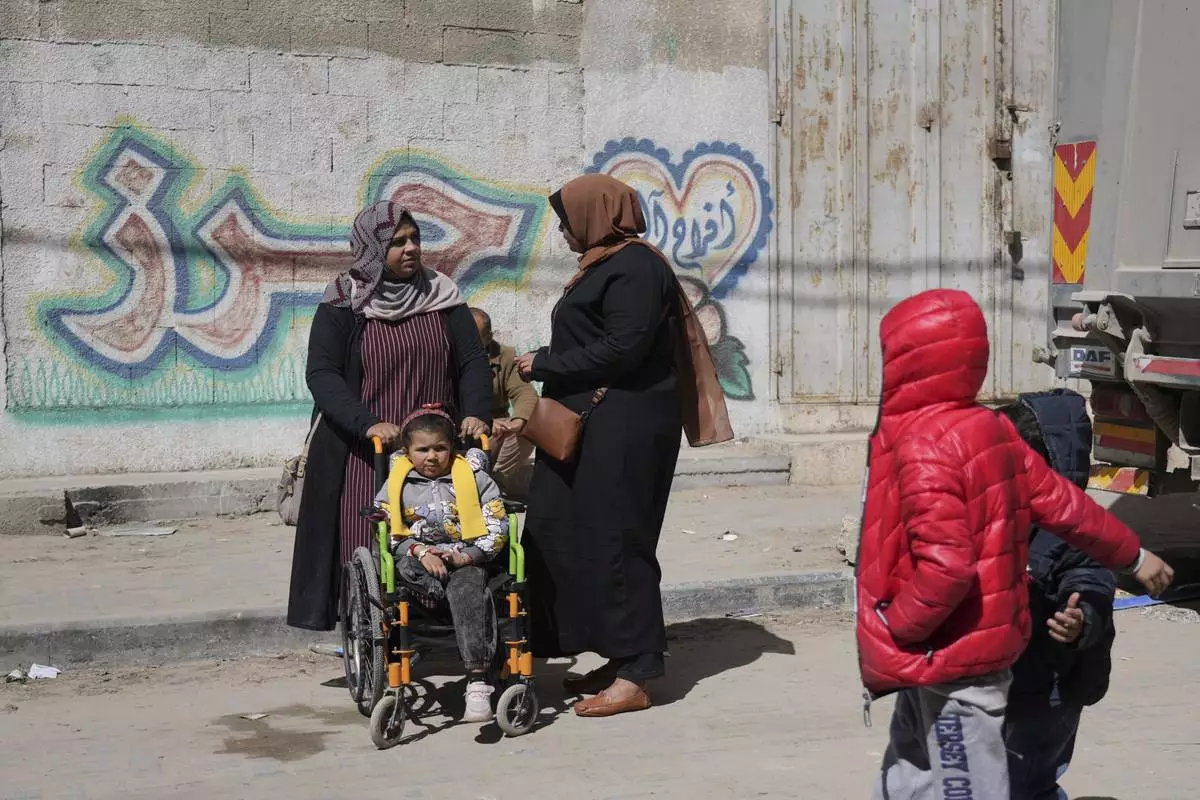
Yasmine al-Ghoufary takes her niece Sila Abu Aqlan, 5, to the Artificial Limbs and Polio Center in Gaza City to learn how to walk with a prosthetic leg, on Wednesday, Feb. 26, 2025. (AP Photo/Abdel Kareem Hana)
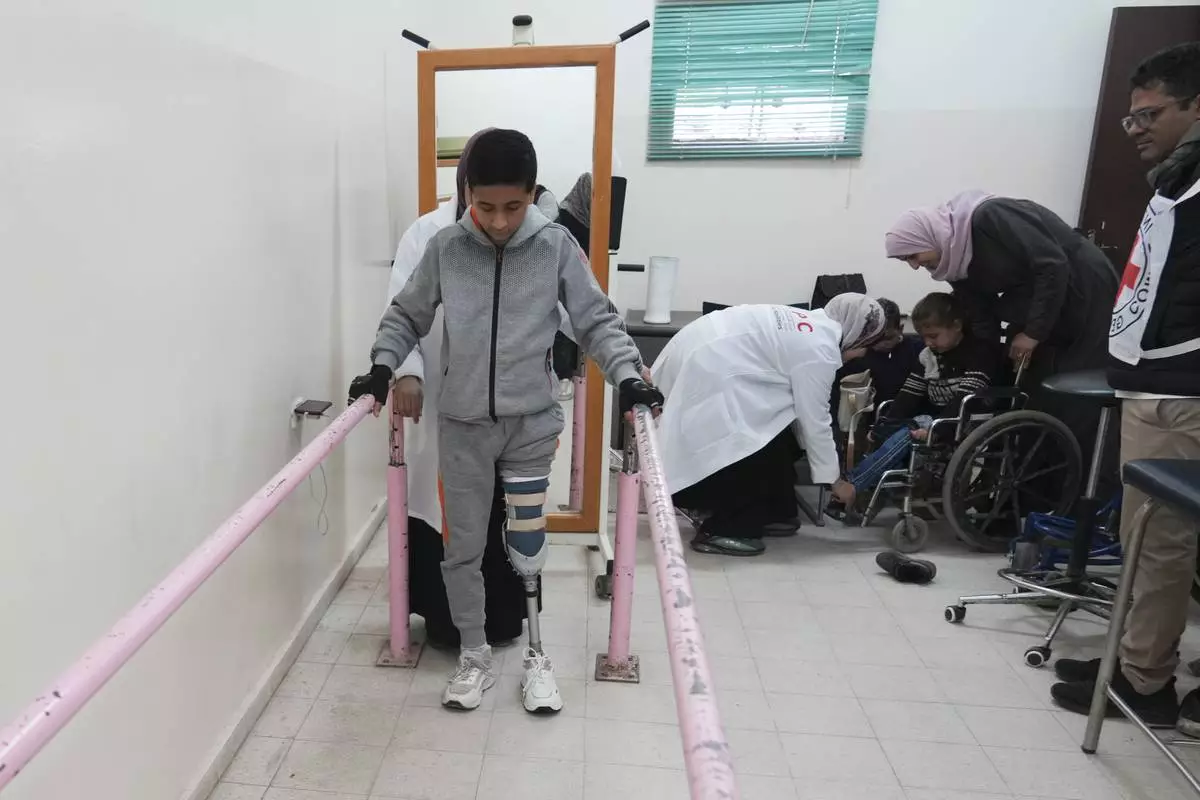
A doctor assists 13-year-old Palestinian Yamen Asfour as he learns to walk with a prosthetic leg at the Artificial Limbs and Polio Center in Gaza City on Tuesday, Feb. 18. 2025. (AP Photo/Abdel Kareem Hana)
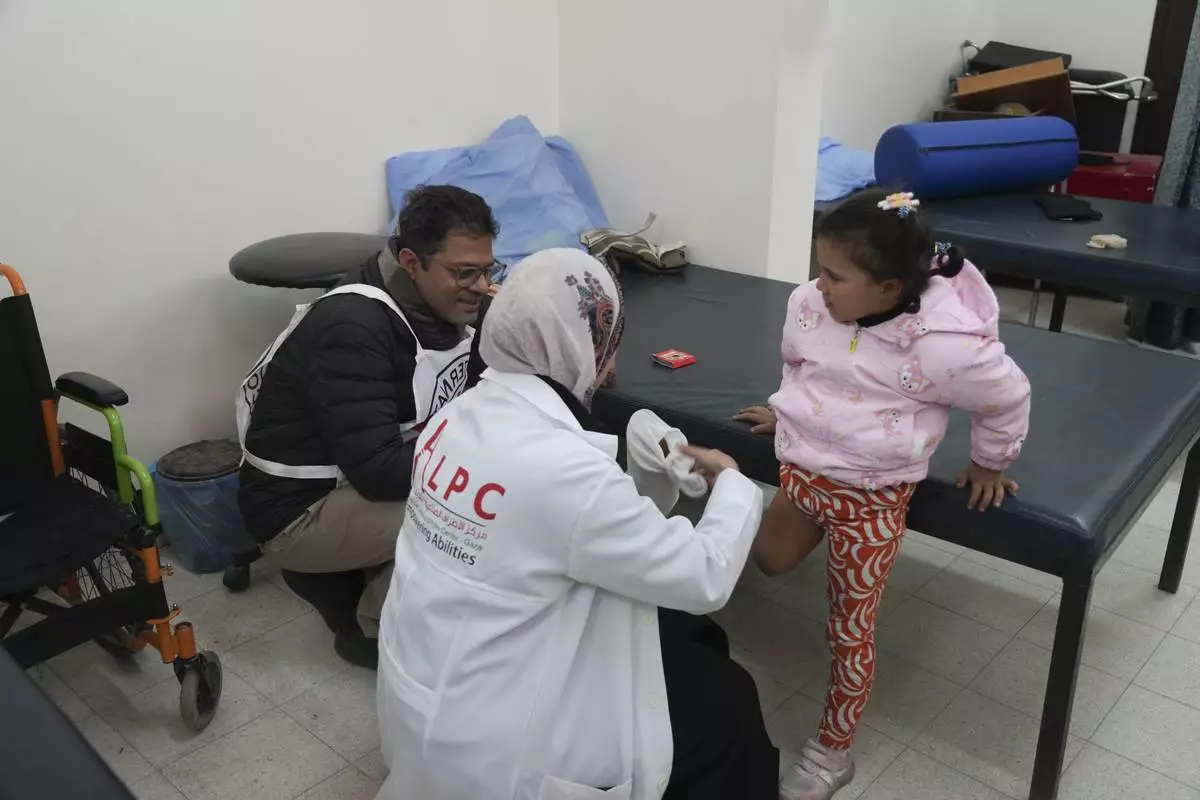
Doctors assist Five-year-old Palestinian Sila Abu Aqlan to put on her new prosthetic leg at the Artificial Limbs and Polio Center in Gaza City, on Tuesday, Feb. 18, 2025, (AP Photo/Abdel Kareem Hana)
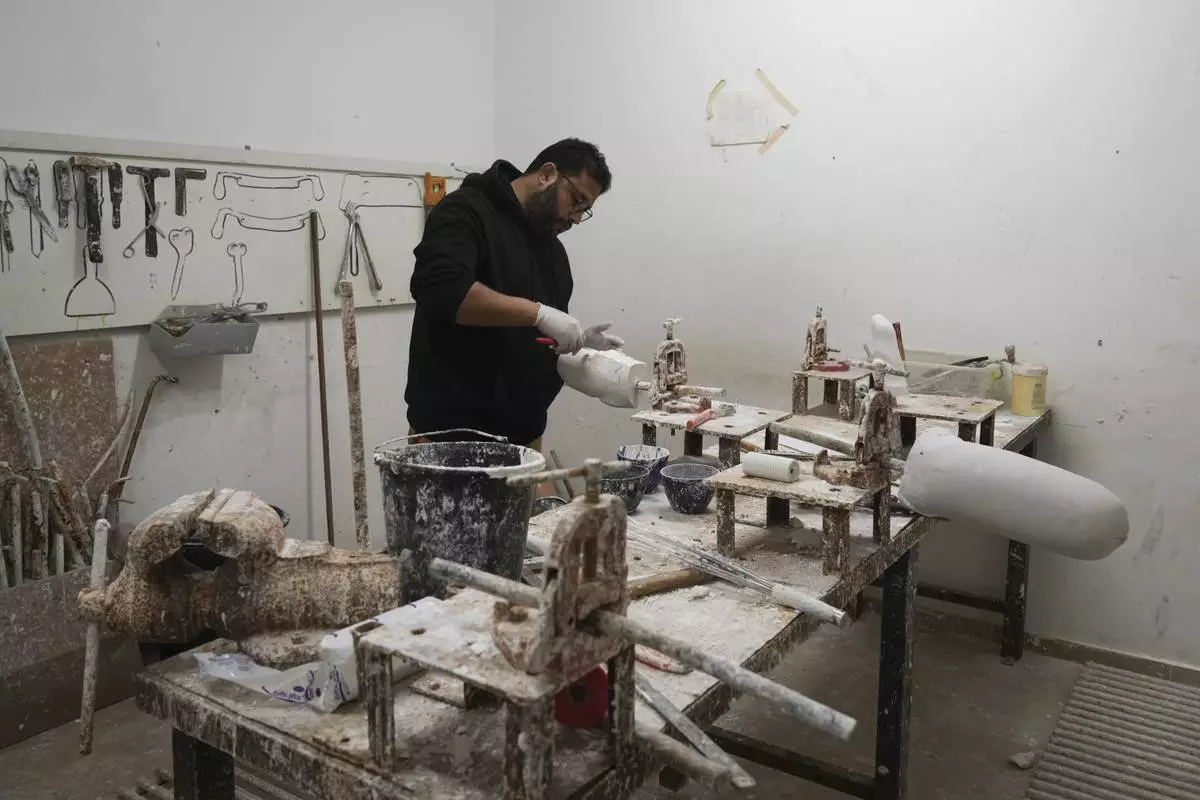
A man manufactures parts used for artificial limbs inside a room at the Artificial Limbs and Polio Center in Gaza City on Tuesday, Feb. 18. 2025. (AP Photo/Abdel Kareem Hana)
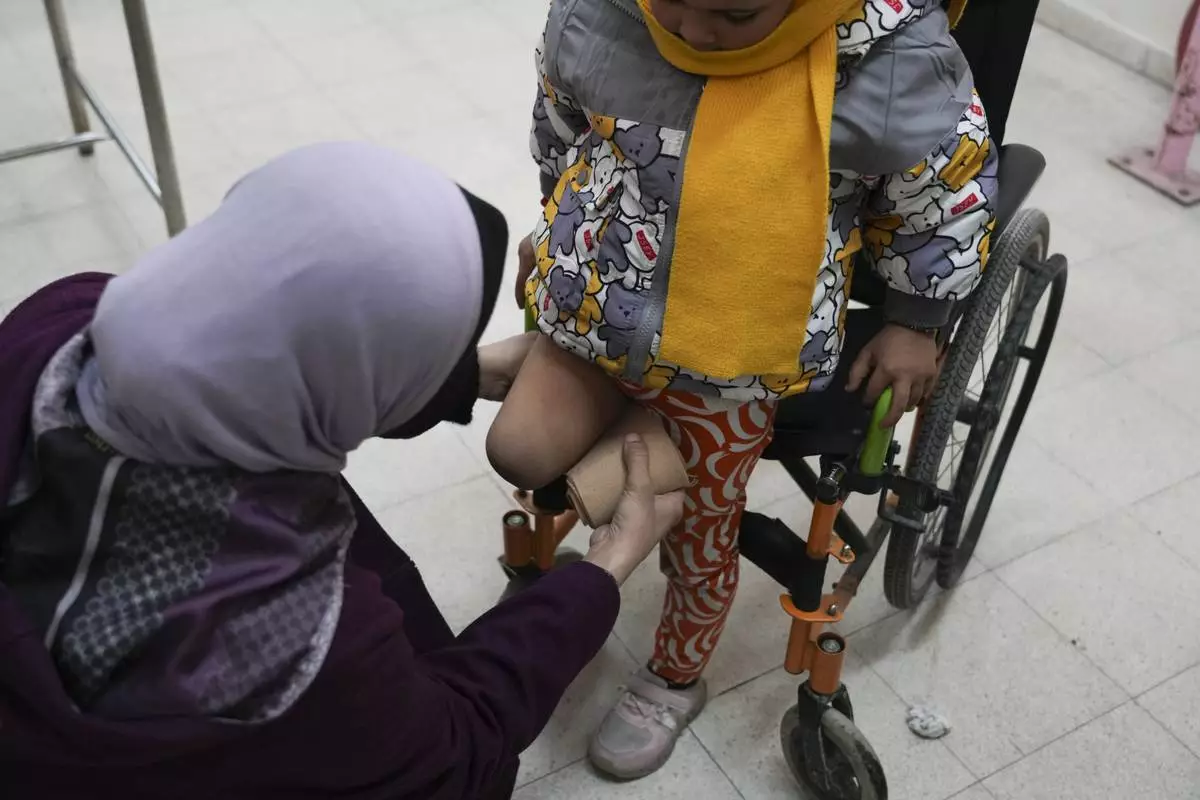
Five-year-old Palestinian Sila Abu Aqlan sits on her wheelchair as a doctor adjusts the cover on her right amputated leg at the Artificial Limbs and Polio Center in Gaza City, on Wednesday, Feb. 26, 2025, (AP Photo/Abdel Kareem Hana)
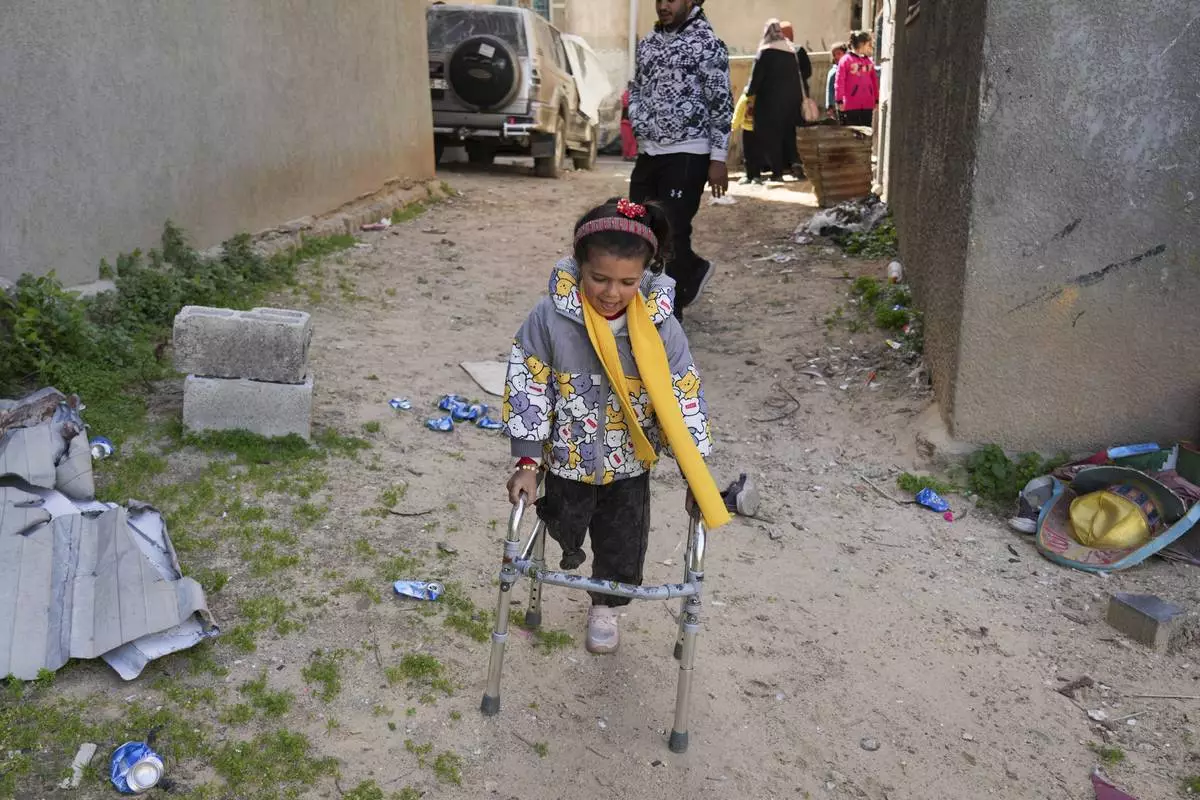
Five-year-old Palestinian amputee Sila Abu Aklan uses a walker to move around at her grandmother's house in Gaza City, Wednesday, Feb. 26, 2025, (AP Photo/Abdel Karem Hanna)
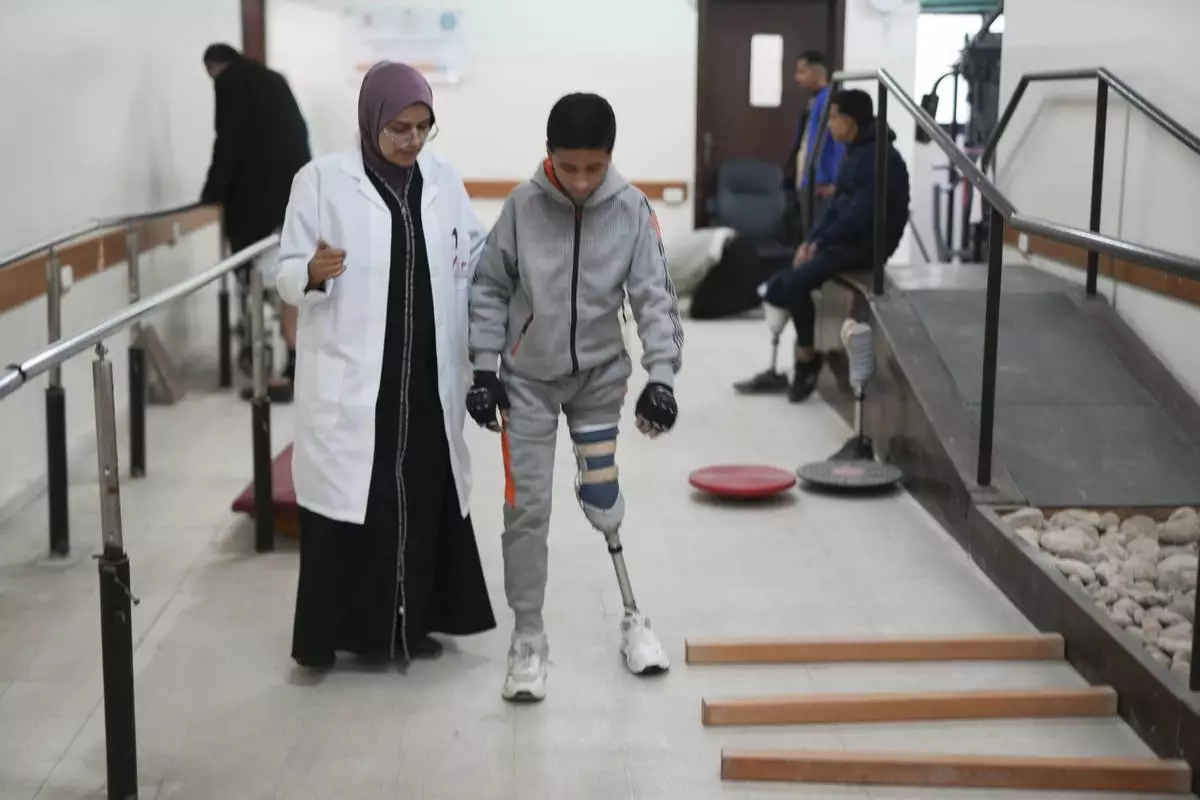
A doctor assists 13-year-old Palestinian Yamen Asfour as he learns to walk on a prosthetic leg at the Artificial Limbs and Polio Center in Gaza City on Tuesday, Feb. 18. 2025. (AP Photo/Abdel Kareem Hana)