WASHINGTON (AP) — The Trump administration's use of a popular messaging app to discuss sensitive military plans — with a journalist on the text chain — is raising questions about security and the importance of safeguarding the nation's secrets.
It's also highlighting the differences between classified and public information, and demonstrating that even encrypted apps like Signal can lead to embarrassing leaks if the humans doing the texting don't follow basic security tips.
President Donald Trump's administration says no classified material was leaked when senior officials used Signal to discuss upcoming attack plans against the Houthi rebels in Yemen — even though a journalist was on the chat.
But even if the information had been declassified by the Pentagon, it contained details that would have been highly valuable to the Houthis or other adversaries, showing how sometimes the decision of what to classify is a judgment call.
The federal government routinely classifies vast amounts of information pertaining to military and intelligence operations. The material ranges from top secret nuclear programs or the identities of undercover agents all the way to mundane records that would be of little interest to anyone, let alone America's adversaries. In 2011, for example, the CIA finally declassified its recipe for invisible ink — from 1917.
Advocates for open government have long complained that the push for secrecy goes too far, by protecting information that could shine a light on government activities or matters of public interest, including about UFO sightings and a 60-year-old presidential assassination.
While the public typically calls any information withheld by the government “classified,” that term only refers to the three broad categories used to “classify” information based on the need for secrecy: confidential, secret and top secret.
While files marked “confidential” contain information that's not meant to be released, the need for security or access restrictions isn't as great as for material considered “top secret,” which includes the nation's nuclear secrets and other material that, if released, could pose a grave danger to national security.
While the Pentagon hasn't offered classification details about the information in the Signal chats, information about upcoming military strikes is typically tightly guarded to ensure adversaries don't have advance warning that could jeopardize the mission or put American service members at risk.
The Pentagon closely guards even some publicly available information. Material categorized as “controlled unclassified information," while not secret, is still considered sensitive enough that military service members are prohibited from discussing it on unsecured devices like personal phones.
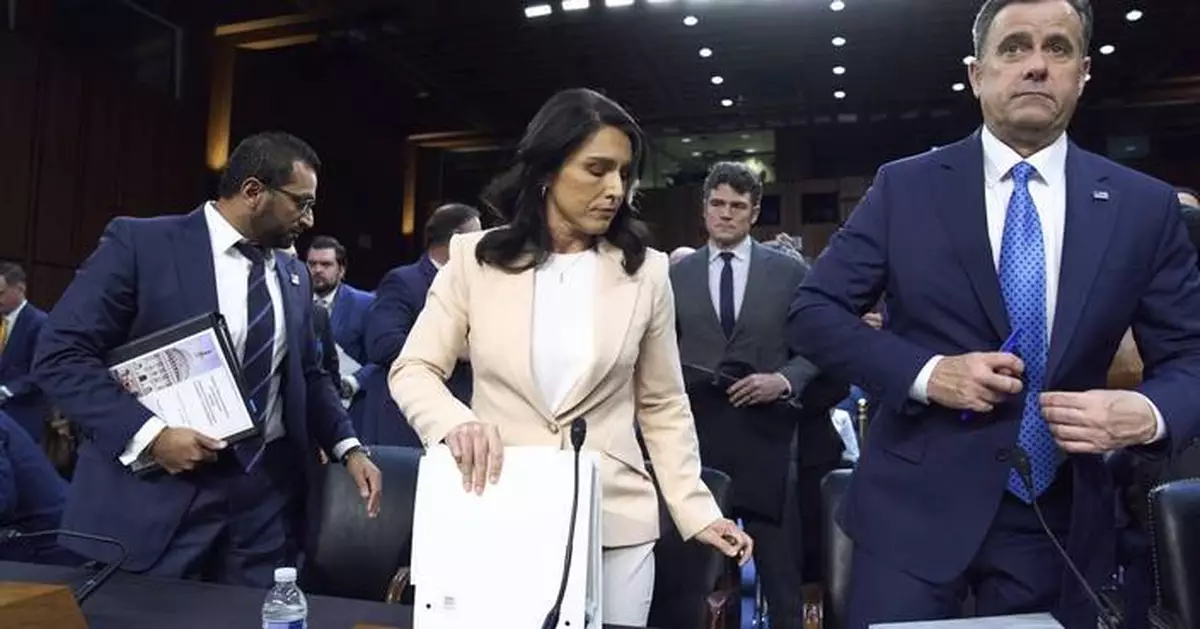
Director of National Intelligence Tulsi Gabbard and CIA Director John Ratcliffe were asked about that policy during a Senate hearing this week as they were grilled over the Signal chat. Democratic Sen. Mark Kelly of Arizona noted that Department of Defense policy "prohibits discussion of even what is called controlled unclassified information on unsecured devices,” and asked if Ratcliffe and Gabbard, who oversees the nation’s 18 intelligence agencies, were aware of that rule.
“I haven’t read that policy,” Gabbard said.
“I’m not familiar with the DOD policy,” Ratcliffe said.
The power to classify or declassify lies in the hands of top federal officials, including the president and Cabinet secretaries. For military information like the attack plans discussed over Signal, the power lies with Defense Secretary Pete Hegseth, who has faced demands that he resign over the leak.
The president's ability to declassify information has been invoked when presidents have been accused of mishandling secrets. Trump ally Kash Patel, now the FBI director, has said he witnessed Trump declassify material that was taken after his first term to the president’s Trump’s Mar-a-Lago resort, but no evidence has emerged to support that claim.
The Pentagon hasn't said whether Hegseth declassified the attack plans before or after the Signal conversation, but Ratcliffe, Gabbard and the White House have all said the chats contained no classified information.
"I haven’t participated in any Signal group messaging that relates to any classified information at all,” Ratcliffe proclaimed at one point.
That explanation has failed to satisfy Democrats who say that plans for imminent military strikes are regularly classified. National security experts agree. They say it would be highly unusual for the Pentagon to publicize such information and that any lower-level officer caught leaking such material on Signal would face serious repercussions.
For many consumers, encrypted apps like Signal can offer greater protections for everyday conversations. But that doesn't mean they're secure enough for government secrets, or immune to human error, as the inclusion of a reporter on the text chain shows.
Senior federal officials who handle classified data receive extensive training about the need to use approved devices and platforms to discuss government secrets. Intelligence and national security agencies have whole departments devoted to cybersecurity and the protection of state secrets.
Government cybersecurity officials have recommended that federal employees use encrypted apps like Signal, which can offer greater security for routine communication, and Ratcliffe said this week it was a “ permissible ” app for senior officials to use. But the app is only as secure as the device it's downloaded onto.
The government’s most sensitive information is typically discussed in a facility known as a sensitive compartmented information facility, or SCIF, which is designed to allow officials to review or discuss secrets without fear of eavesdropping or cyber intrusion.
Any senior official using a personal device to discuss classified material could be at risk of cyberespionage, said Michael Williams, an expert on international relations and national security at Syracuse University.
“Signal may be encrypted, but it's the devices that are really the issue,” Williams said. “All of these people are being targeted.”
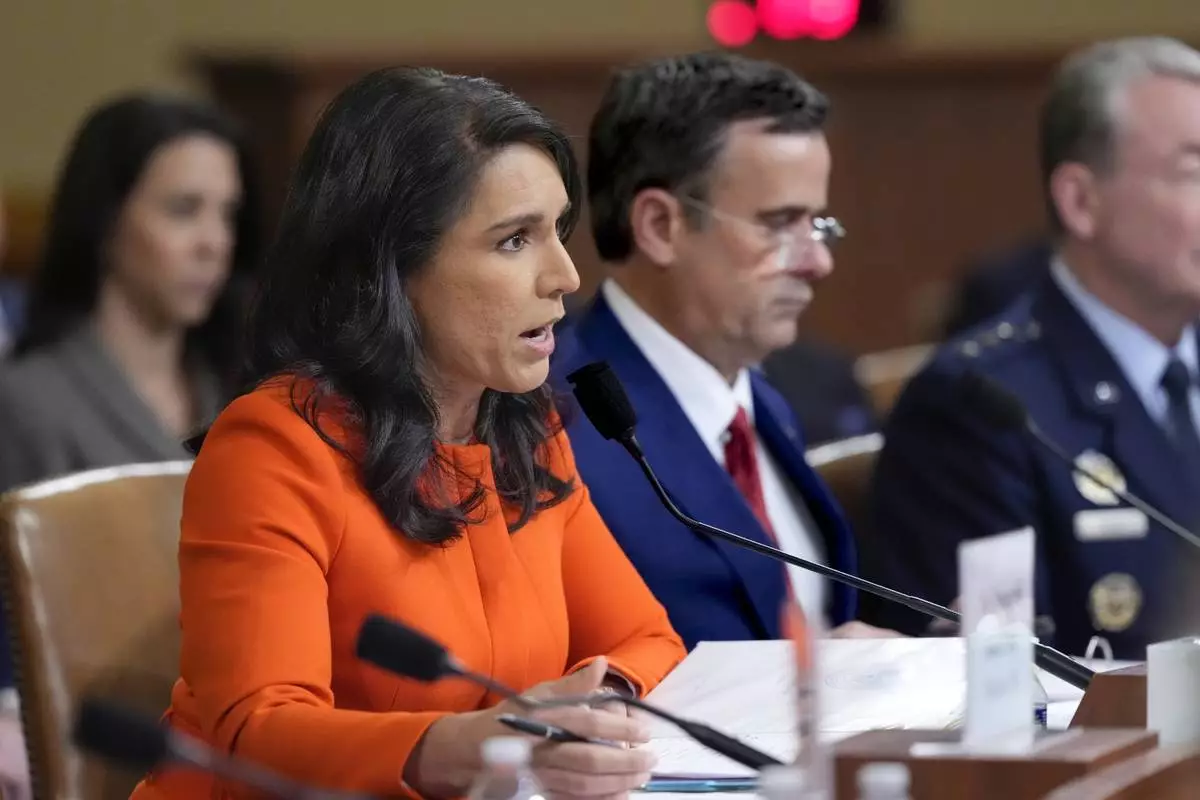
Director of National Intelligence Tulsi Gabbard, left, joined by CIA Director John Ratcliffe, testifies as the House Intelligence Committee holds a hearing on worldwide threats, at the Capitol, in Washington, Wednesday, March 26, 2025. (AP Photo/J. Scott Applewhite)
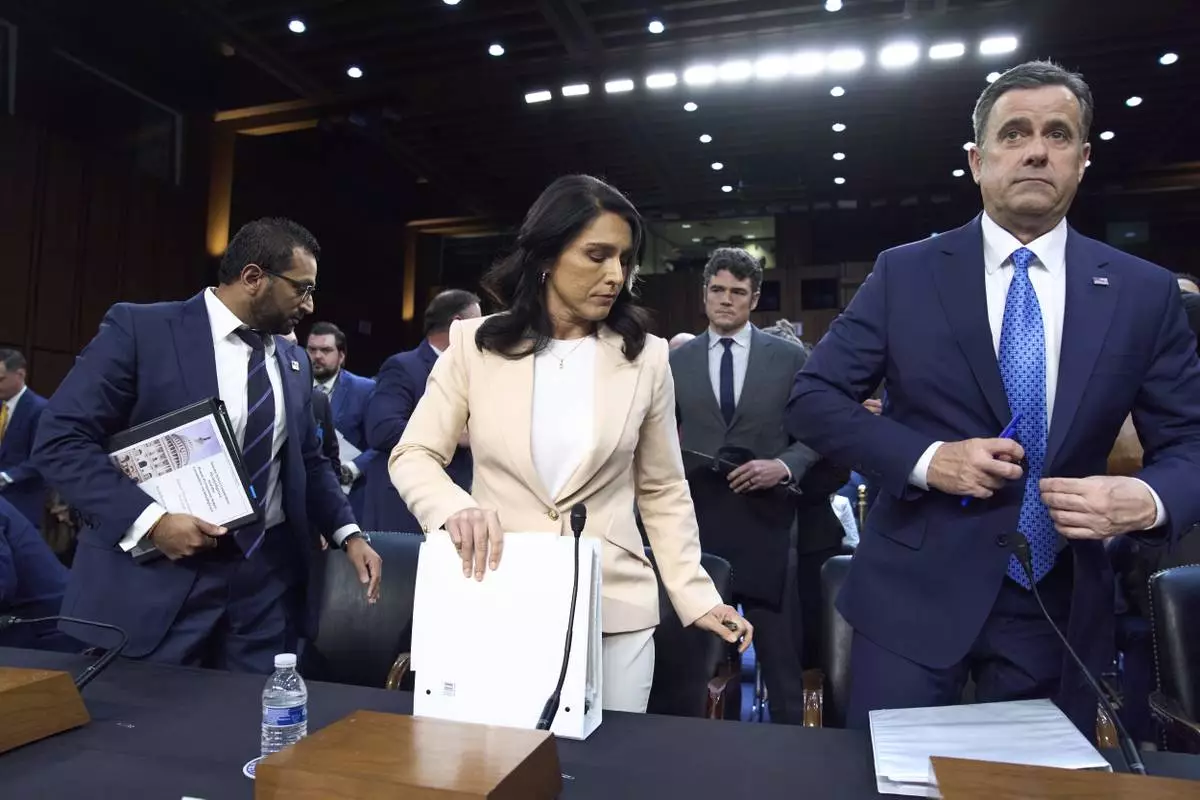
Director of National Intelligence Tulsi Gabbard, center, is flanked by FBI Director Kash Patel, left, and CIA Director John Ratcliffe, as the Senate Intelligence Committee holds its worldwide threats hearing, on Capitol Hill in Washington, Tuesday, March 25, 2025. (AP Photo/J. Scott Applewhite)
WASHINGTON (AP) — The United States said Sunday it rescued a service member missing behind enemy lines since Iran downed a fighter jet, as President Donald Trump escalated pressure on Tehran with renewed threats to reopen the Strait of Hormuz.
Trump wrote in a social media post that the aviator is injured but “will be just fine,” adding that the rescue involved “dozens of aircraft” and that the U.S. had been monitoring his location in the lead-up to his rescue.
“This brave Warrior was behind enemy lines in the treacherous mountains of Iran, being hunted down by our enemies, who were getting closer and closer by the hour,” Trump wrote.
The airman's extraction followed a frantic U.S. search-and-rescue operation after the Friday crash of the F-15E Strike Eagle, as Iran also promised a reward for anyone who turned in an “enemy pilot.”
A second crew member was rescued earlier.
The fighter jet was the first U.S. aircraft to have crashed in Iranian territory since the war, now in its sixth week, erupted.
Trump said last week that the U.S. had “decimated” Iran and would finish the war “very fast.” Two days later, Iran shot down two U.S. military planes, showing the ongoing perils of the bombing campaign and the ability of a degraded Iranian military to continue to hit back.
The other jet to go down was a U.S. A-10 attack aircraft. Neither the status of the crew nor exactly where it crashed was immediately known.
On Sunday, Iran’s state TV aired a video showing thick black smoke rising into the air, claiming that they had shot down an American transport plane and two helicopters that were part of the rescue operation. However, a regional intelligence official briefed on the mission told The Associated Press that the U.S. military blew up two transport planes due to a technical malfunction, forcing it to bring in additional aircraft to complete the rescue.
The official spoke on condition of anonymity to discuss the covert mission.
In Kuwait, an Iranian drone attack caused significant damage to two power plants and put a water desalination station out of service, according to the Ministry of Electricity. No injuries were reported from the attack, the ministry said.
In Bahrain, the national oil company said that a drone attack caused a fire at one of its storage facilities, which was extinguished. It said the damage was still being assessed and no injuries had been reported.
In the United Arab Emirates, authorities responded to multiple fires at the Borouge petrochemicals plant, a joint venture of the Abu Dhabi National Oil Co. and Borealis of Austria. They say the fires were caused by falling debris following successful interceptions by air defense systems, but production at the plant in Ruwais, near the UAE’s western border with Saudi Arabia, has halted.
The strike came a day after Israel struck a petrochemical plant in Iran that Prime Minister Benjamin Netanyahu said generated revenue that it had used to fund the war.
The war began with joint U.S.-Israel strikes on Feb. 28 and has killed thousands, shaken global markets, cut off key shipping routes and spiked fuel prices. Both sides have threatened and hit civilian targets, bringing warnings of possible war crimes.
Trump renewed his threats for Iran to open up the Strait of Hormuz by Monday or face devastating consequences, writing Saturday in a social media post: “Remember when I gave Iran ten days to MAKE A DEAL or OPEN UP THE HORMUZ STRAIT. Time is running out — 48 hours before all Hell will reign down on them.”
The waterway is a critical chokepoint for global energy shipments, especially oil and gas moving from the Persian Gulf to Europe and Asia. Disruptions there have injected volatility into the market and pushed oil and gas-importing countries to seek alternative sources.
“The doors of hell will be opened to you” if Iran’s infrastructure is attacked, Gen. Ali Abdollahi Aliabadi with the country’s joint military command said late Saturday in response to Trump’s renewed threat, state media reported. In turn, the general threatened all infrastructure used by the U.S. military in the region.
But Pakistan’s Foreign Ministry spokesperson, Tahir Andrabi, told the AP that his government’s efforts to broker a ceasefire are “right on track” after Islamabad last week said that it would soon host talks between the U.S. and Iran.
Mediators from Pakistan, Turkey and Egypt were working to bring the U.S. and Iran to the negotiating table, according to two regional officials.
The proposed compromise includes a cessation of hostilities to allow a diplomatic settlement, according to a regional official involved in the efforts and a Gulf diplomat briefed on the matter. They spoke on condition of anonymity to discuss closed-door diplomacy.
Iran’s parliamentary speaker, Mohammad Bagher Qalibaf, issued a veiled threat late Friday to disrupt traffic through a second strategic waterway in the region, the Bab el-Mandeb.
The strait, 32 kilometers (20 miles) wide, links the Red Sea with the Gulf of Aden and the Indian Ocean. More than a tenth of seaborne global oil and a quarter of container ships pass through it.
“Which countries and companies account for the highest transit volumes through the strait?” Qalibaf wrote.
More than 1,900 people have been killed in Iran since the war began.
In Gulf Arab states and the occupied West Bank, more than two dozen people have died, while 19 have been reported dead in Israel and 13 U.S. service members have been killed. In Lebanon, more than 1,400 people have been killed and more than 1 million people have been displaced. Ten Israeli soldiers have died there.
This report has been corrected to show that Borealis is an Austrian company and not Australian.
Metz reported from Jerusalem and Magdy from Cairo. Jon Gambrell in Dubai, United Arab Emirates and Munir Ahmed in Islamabad contributed to this report.
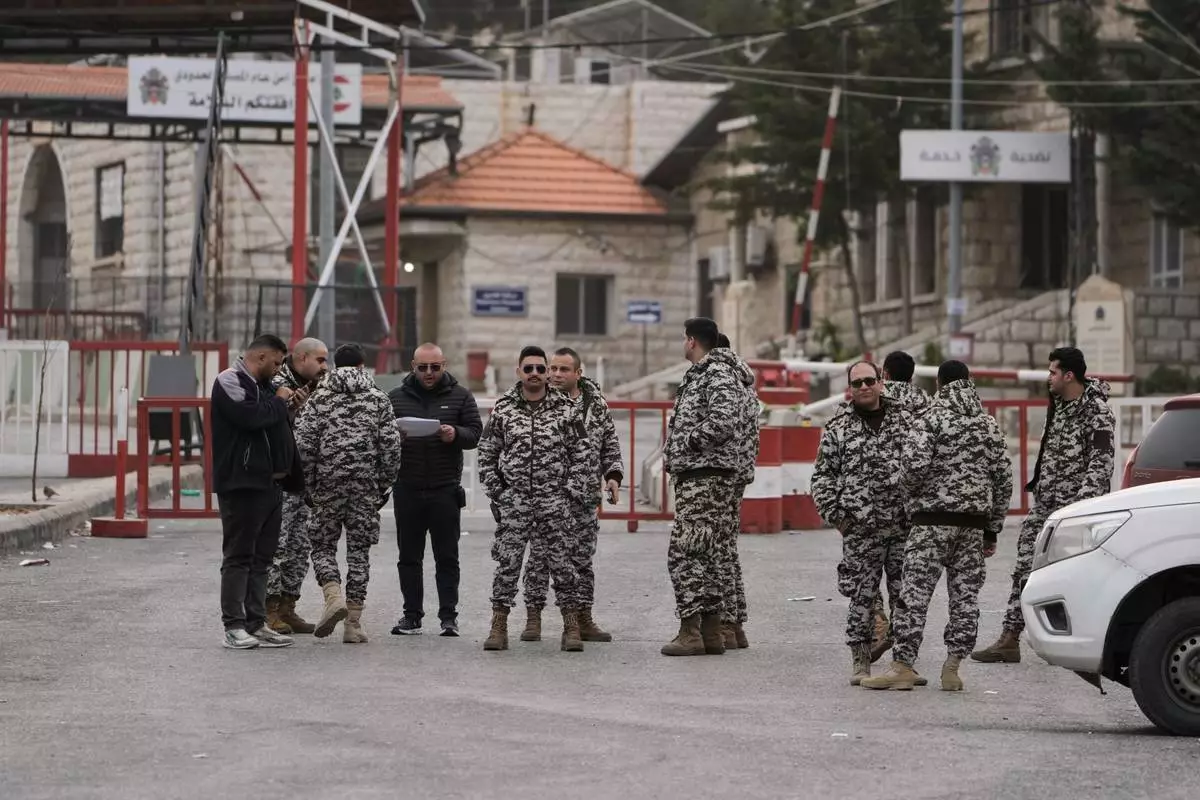
Members of Lebanon's General Security stand at the Masnaa border crossing in the Bekaa valley, eastern Lebanon, Sunday, April 5, 2026. (AP Photo/Bilal Hussein)
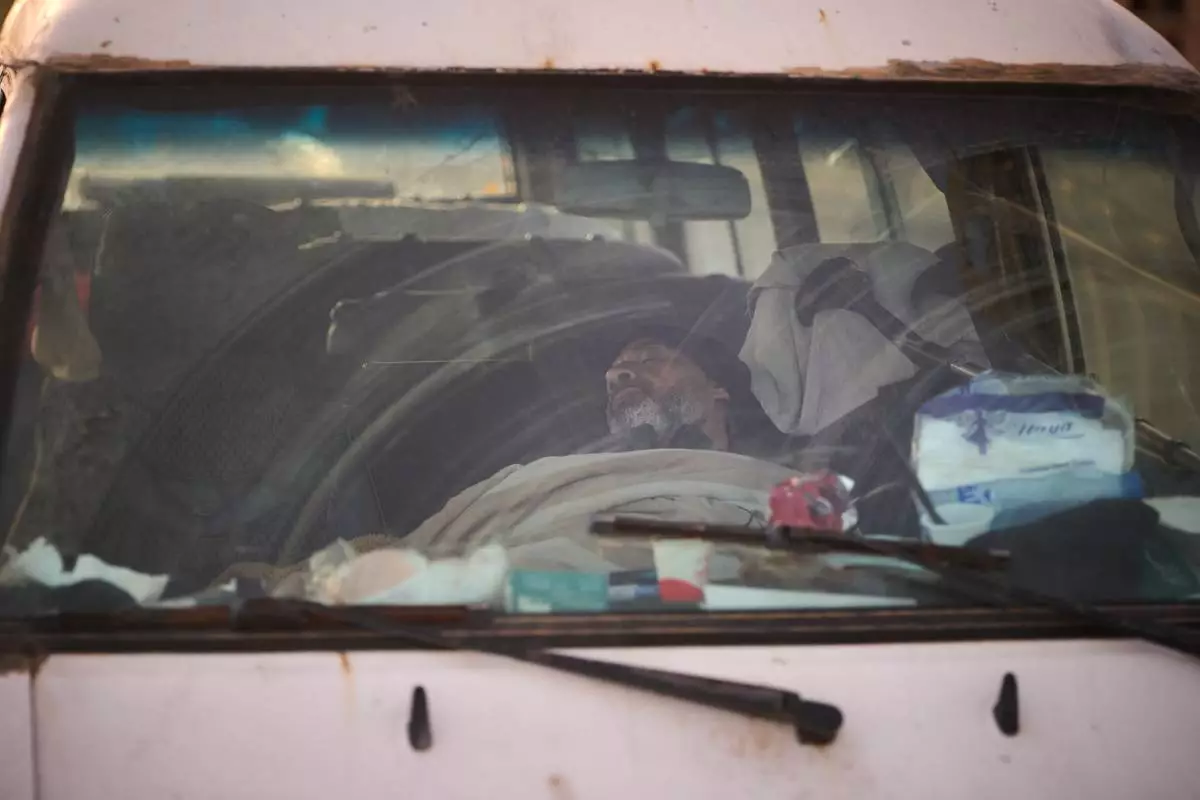
A man, who fled Israeli bombings in southern Lebanon with his family, sleeps in his car used as shelter, along a seaside promenade in downtown Beirut, Lebanon, Sunday, April 5, 2026. (AP Photo/Emilio Morenatti)
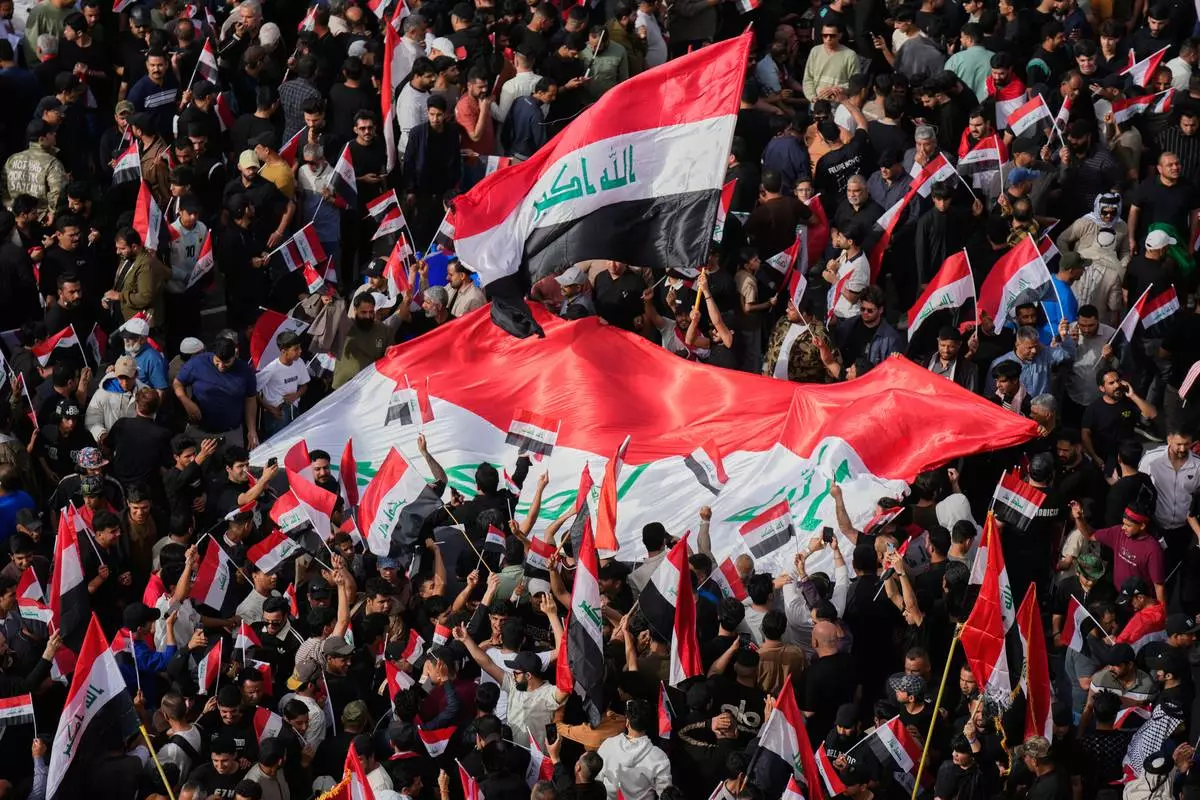
Followers of Iraq's Shiite cleric Muqtada al-Sadr chant slogans as they wave national Iraqi flag during a protest against U.S. and Israeli attacks on multiple cities across Iran, in Tahrir Square, Baghdad, Baghdad, Iraq, Saturday, April 4, 2026. (AP Photo/Hadi Mizban)
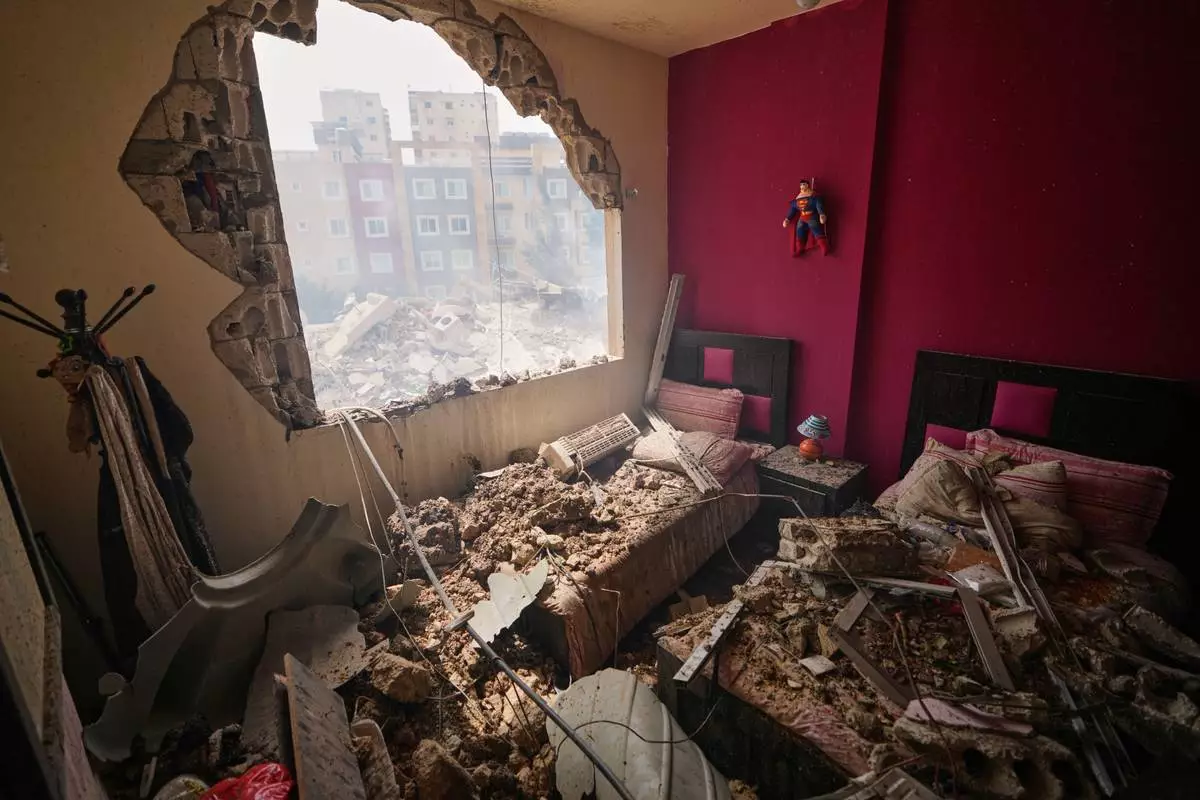
A bedroom is damaged in a building struck in an Israeli airstrike in the southern port city of Tyre, Lebanon, Saturday, April 4, 2026. (AP Photo/Mohammed Zaatari)
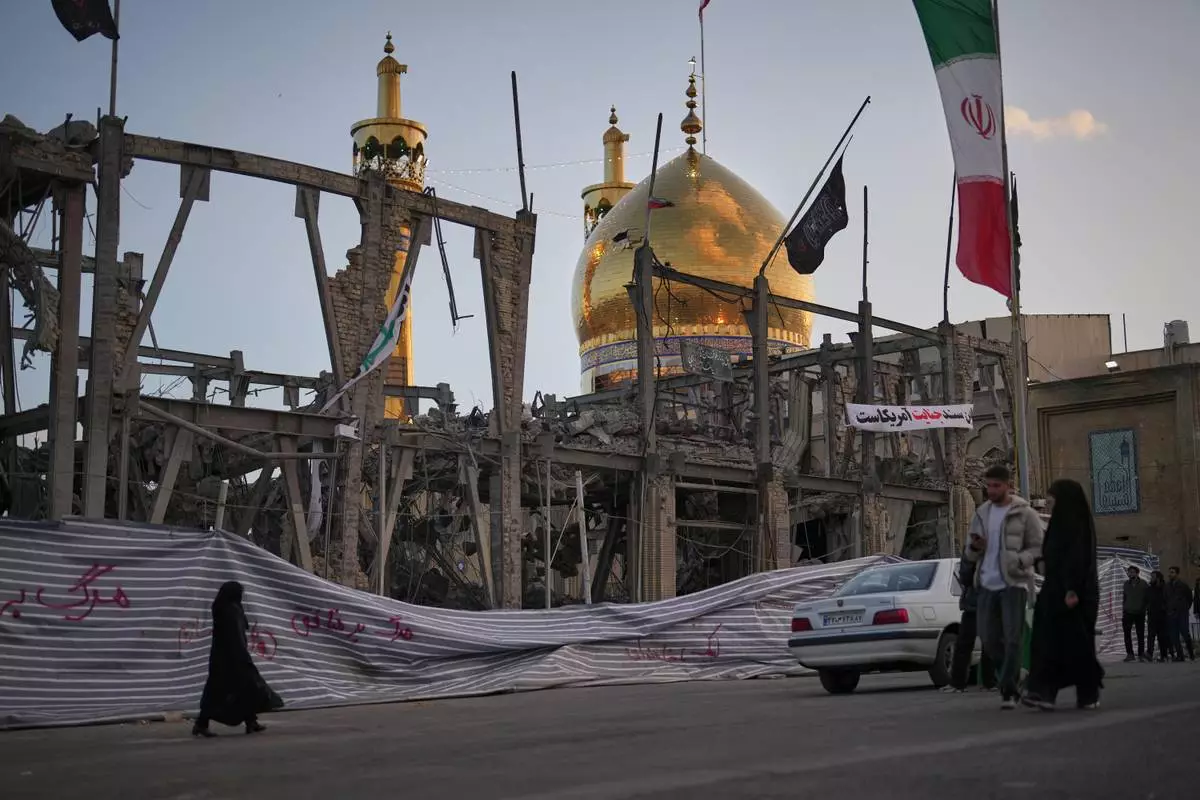
Pedetrians walk by a destroyed building within the Grand Hosseiniyeh, with the mosque visible in the background, which officials at the site say was hit by U.S.-Israeli airstrikes Tuesday, in Zanjan, Iran, Saturday, April 4, 2026. (AP Photo/Francisco Seco)
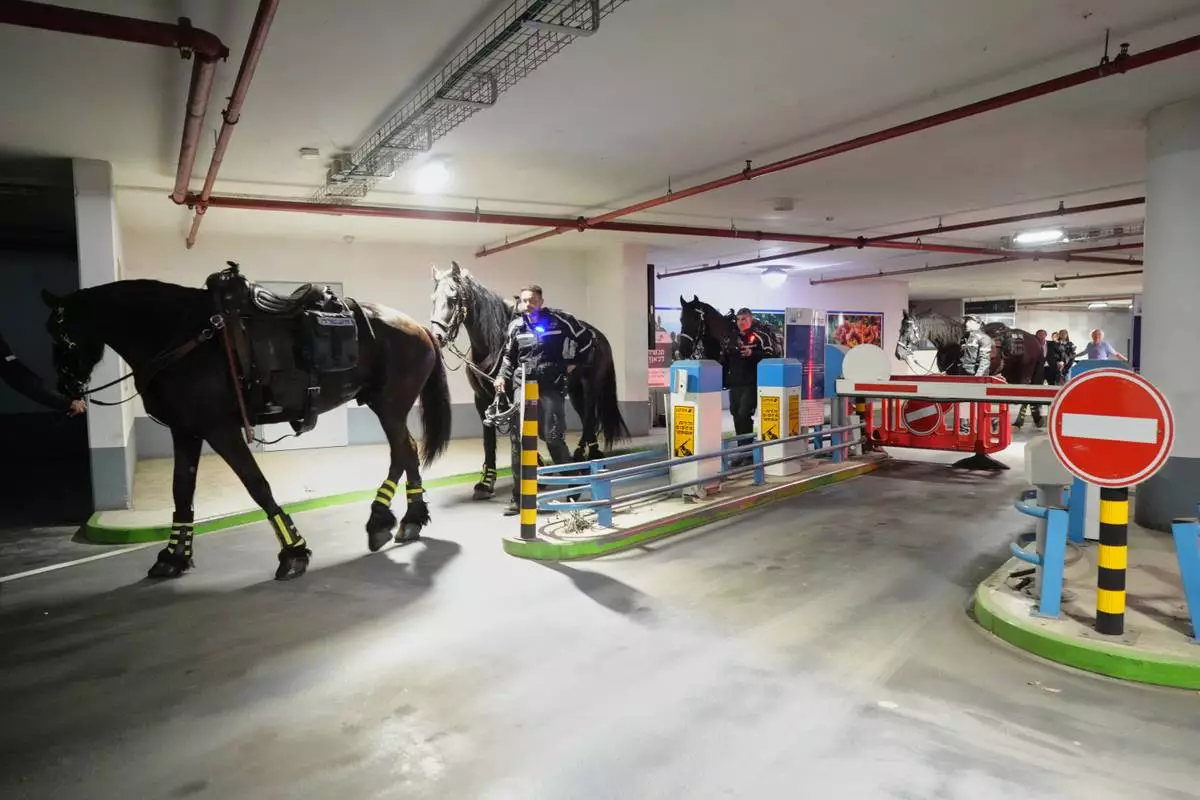
Police officers and their horses take cover in an underground parking garage as sirens warn of an incoming missile fired from Yemen in Tel Aviv, Israel, Saturday, April 4, 2026. (AP Photo/Maya Levin)
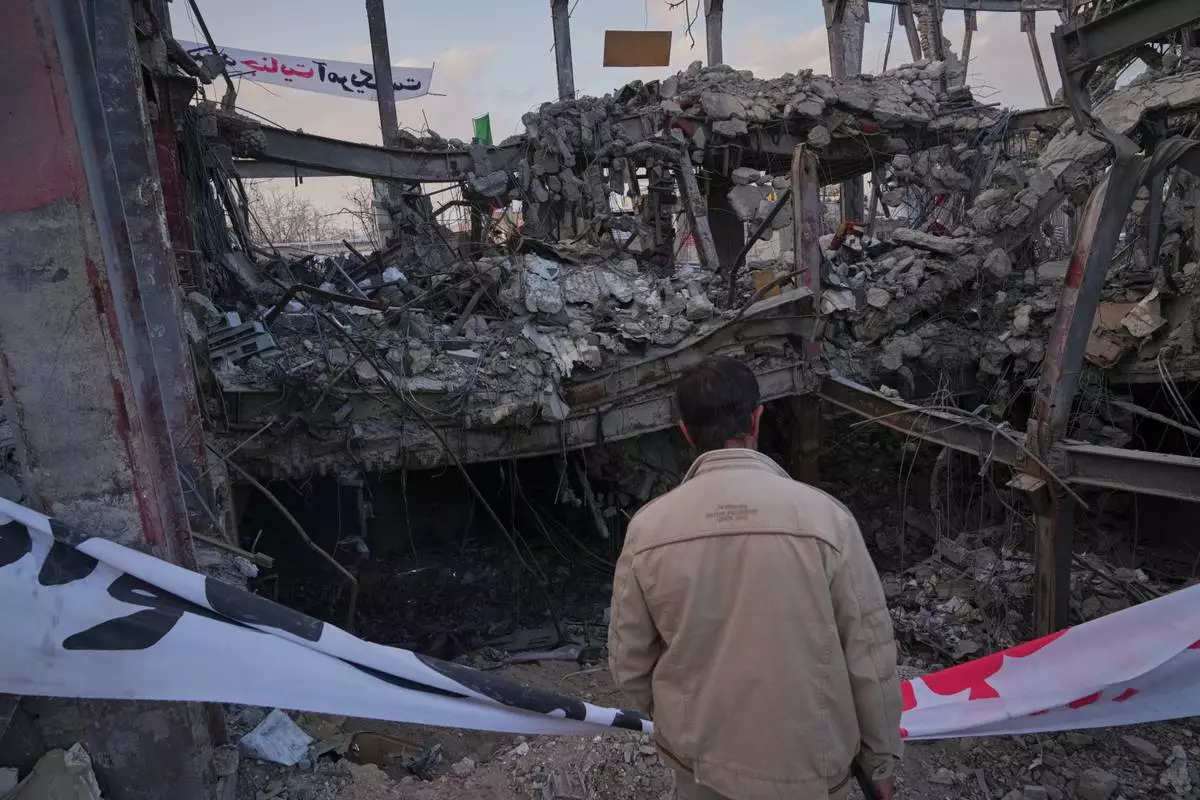
A man looks at a destroyed building within the Grand Hosseiniyeh complex that officials say was hit by U.S.-Israeli airstrikes Tuesday in Zanjan, Iran, Saturday, April 4, 2026. (AP Photo/Francisco Seco)