Skip to Content Facebook Feature Image

Chinese carmakers advance smart driving with AI, BeiDou systems

China

China

China

Chinese carmakers advance smart driving with AI, BeiDou systems

2025-03-30 17:39 Last Updated At:21:07

China's rapid advancements in artificial intelligence (AI) and BeiDou Navigation Satellite System (BDS) are reshaping intelligent driving technology, empowering vehicles with comprehensive sensory enhancements.

These advancements equip vehicles with dialect identification software that recognizes 56 regional Chinese dialects. An in-cabin camera provides real-time monitoring of the driver, issuing timely alerts to combat drowsy driving. Additionally, the AI-powered suspension system adjusts the vehicle's posture with millisecond-level precision.

Leveraging a large-scale model trained on 30 billion kilometers of driving data, the system can anticipate sudden road conditions up to five seconds in advance, greatly enhancing driving safety.

"The automotive industry is accelerating its integration with AI. Many vehicle manufacturers have already equipped their products with a large number of such advanced models. Currently, many enterprises and automakers have proposed to build AI-driven companies, by transforming themselves from the foundational level," said Zhang Yongwei, secretary-general of China EV100, an NEV industry think tank.

Meanwhile, BeiDou's application has taken center stage in the car manufacturing sector, with Qianxun SI, a global leader in high-precision positioning, introducing the world’s first lane-level navigation service to support ADAS in 2 million intelligent connected vehicles.

"By integrating BeiDou satellite capabilities with ground-based systems, big data, and AI, we empower smart vehicles to execute spatial-temporal planning, decision-making, and control during operation," said Chen Jinpei, CEO of Qianxun SI.

Geely, the first Chinese auto giant to incorporate DeepSeek’s AI models into its in-vehicle infotainment system, has boosted interaction speed by 40 percent and achieved 98 percent accuracy in intent recognition. The company has also unveiled the revolutionary 'Full-Domain AI for Smart Vehicles' system, featuring cutting-edge innovations such as voice models, AI digital chassis, and intelligent cabins.

"Via AI models, our system enables real-time perception of external temperature, humidity, altitude, and slope, to make smart decisions. It reduces fuel consumption by approximately 10 percent to 15 percent," said Gan Jiayue, CEO of Geely.

Chinese carmakers advance smart driving with AI, BeiDou systems
Chinese carmakers advance smart driving with AI, BeiDou systems

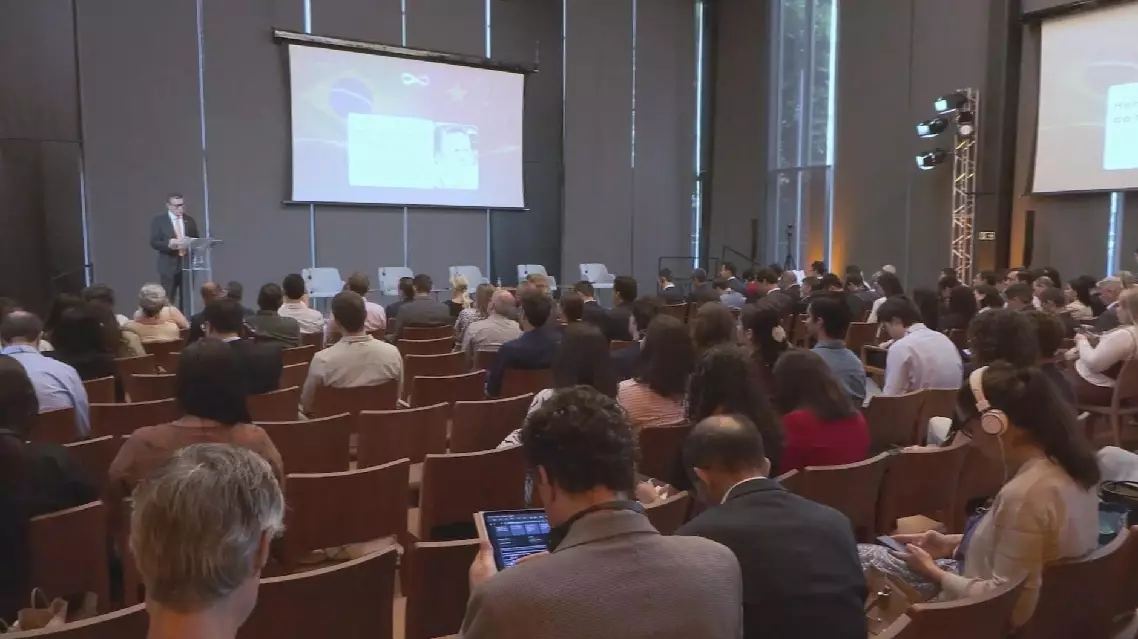
The first Brazil-China Forum on Trade and Tourism was held in Rio de Janeiro, Brazil, gathering around 250 business leaders, government officials, and investors from both countries to explore avenues for strengthened cooperation.

The forum was part of the Brazilian platform TursiMall, which was held from Thursday to Saturday last week. It marked the first dedicated bilateral forum on tourism, commerce, and creative industries, particularly in the film sector.

The event, which featured a series of speakers and panel discussions, was supported by China National Offshore Oil Corporation and China Mobile.

Participants discussed a broad spectrum of topics, with particular emphasis on accelerating a strategic move to promote currency autonomy.

"China has created a synchronicity among the BRICS countries in a way that will make this new form of compensation intensify. As it intensifies, more and more people will be freed from the prison (of the dollar)," said Adair Carneiro, president of the Federation of Foreign Trade Chambers.

Tourism was also a key focus at the forum. Brazil has reciprocated China's visa-free travel policy for Brazilians, aiming to boost bilateral tourism and economic exchange.

Wang Haitao, China's Vice Consul General in Rio de Janeiro, believes this will generate significant economic benefit for both countries.

"Last year, 100,000 Chinese visited Brazil. It was a record even compared to the population of China," said Wang.

The event was expected to generate up to 25 million reais, or about 5 million U.S. dollars, in new business deals, as delegates learned of each other's core industries and market focuses.

Organizers also announced plans to host a Brazilian edition of the Canton Fair, one of the world's largest trade exhibitions, scheduled to take place in Rio in November.

Living up to the forum's stated goal of "generating concrete business opportunities," several agreements were signed by both Chinese and Brazilian business leaders, whose optimism is clearly on the rise.

Inaugural Brazil-China forum on trade, tourism sparks opportunities for cooperation

Inaugural Brazil-China forum on trade, tourism sparks opportunities for cooperation

Recommended Articles