Skip to Content Facebook Feature Image

Trump tariff tumult has ripples for sporting goods, puts costly hockey gear in price-hike crosshair

News

Trump tariff tumult has ripples for sporting goods, puts costly hockey gear in price-hike crosshair
News

News

Trump tariff tumult has ripples for sporting goods, puts costly hockey gear in price-hike crosshair

2025-03-31 23:23 Last Updated At:23:30

MINNEAPOLIS (AP) — Calls from the U.S. to Roustan Hockey headquarters in Canada in recent weeks have been anything but routine, as bulk orders of name-brand sticks have suddenly become complicated conversations.

“These customers want to know: When their orders ship, will they have to pay an additional 25% tariff? And we respond by saying, 'Well, right now we don’t know, so they postpone their order or cancel their order because they want to know before they order what the cost is going to be,” said Graeme Roustan, who owns the company that makes and sells more than 100,000 hockey sticks annually to the U.S. market.

More Images
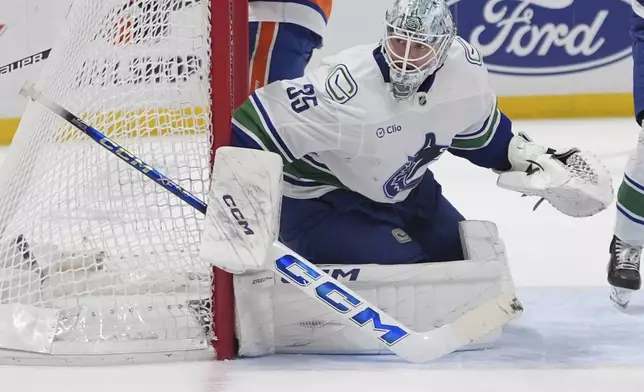
Vancouver Canucks goaltender Thatcher Demko protects the net during the second period of an NHL hockey game against the New York Islanders Wednesday, March 26, 2025, in Elmont, N.Y. (AP Photo/Frank Franklin II)
Vancouver Canucks goaltender Thatcher Demko protects the net during the second period of an NHL hockey game against the New York Islanders Wednesday, March 26, 2025, in Elmont, N.Y. (AP Photo/Frank Franklin II)

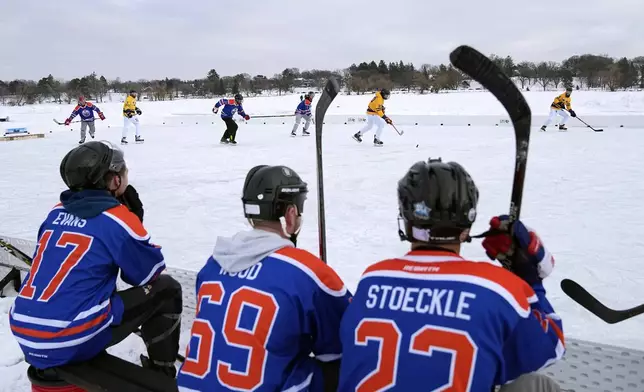
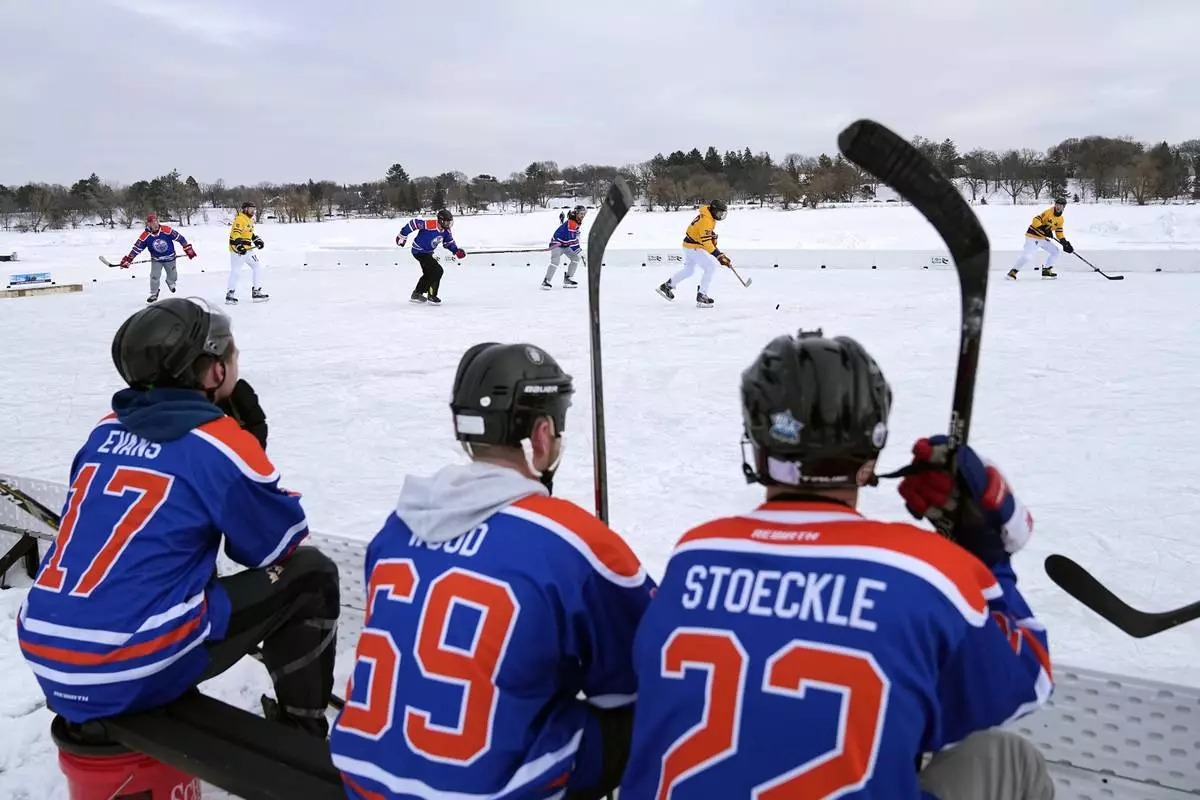
FILE - A group of teammates watch play during the U.S. pond hockey championships at Lake Nokomis, Friday, Jan. 20, 2023, in Minneapolis. (AP Photo/Abbie Parr, File)
FILE - A group of teammates watch play during the U.S. pond hockey championships at Lake Nokomis, Friday, Jan. 20, 2023, in Minneapolis. (AP Photo/Abbie Parr, File)

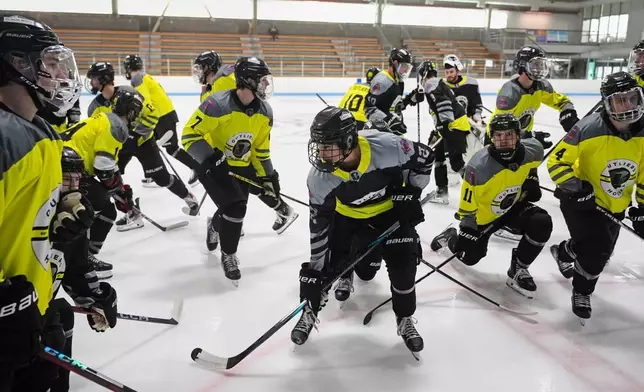
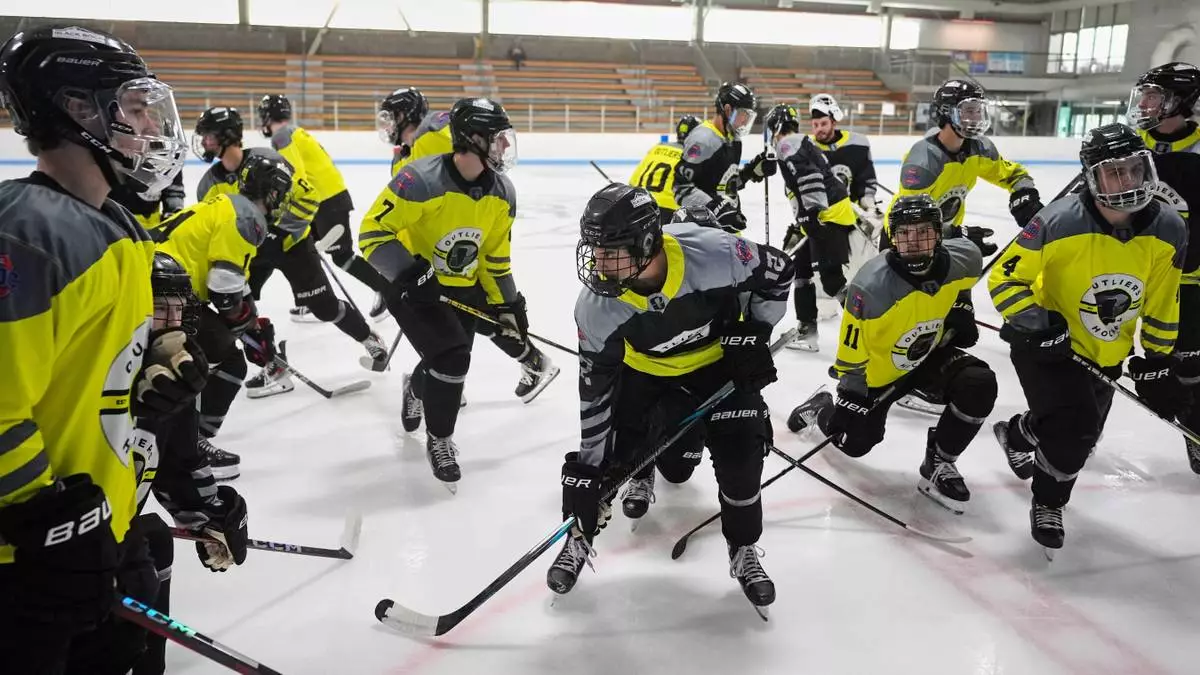
FILE - The Utah Outliers hockey team practices Thursday, Sept. 19, 2024, in West Valley City, Utah. (AP Photo/Rick Bowmer, File)
FILE - The Utah Outliers hockey team practices Thursday, Sept. 19, 2024, in West Valley City, Utah. (AP Photo/Rick Bowmer, File)

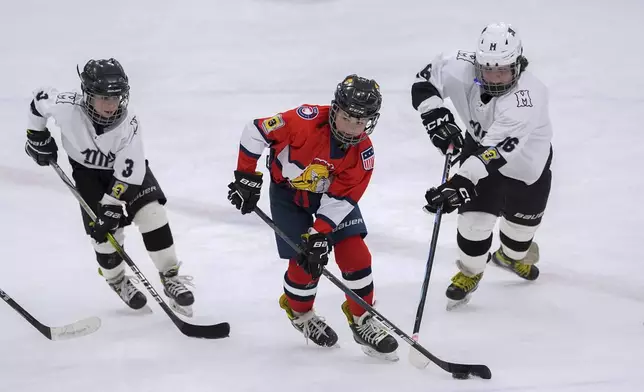
FILE - An Orono player, center, skates with the puck ahead of Minneapolis players during a 10-and-under youth hockey game Sunday, Feb. 4, 2024, in Minneapolis. (AP Photo/Abbie Parr, File)
FILE - An Orono player, center, skates with the puck ahead of Minneapolis players during a 10-and-under youth hockey game Sunday, Feb. 4, 2024, in Minneapolis. (AP Photo/Abbie Parr, File)

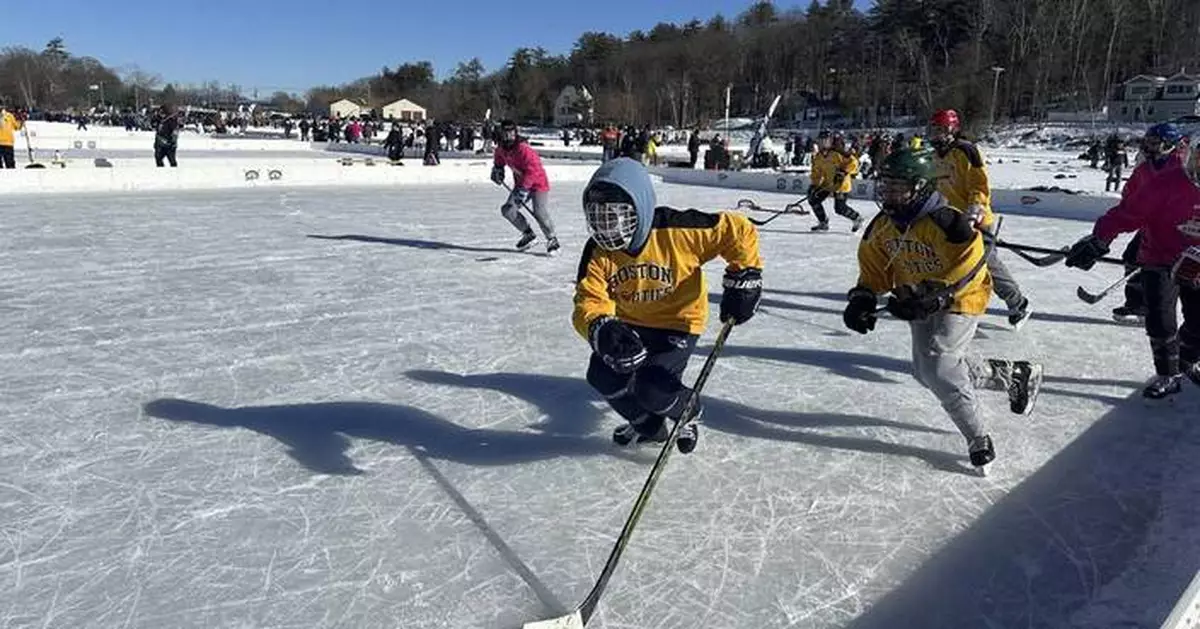
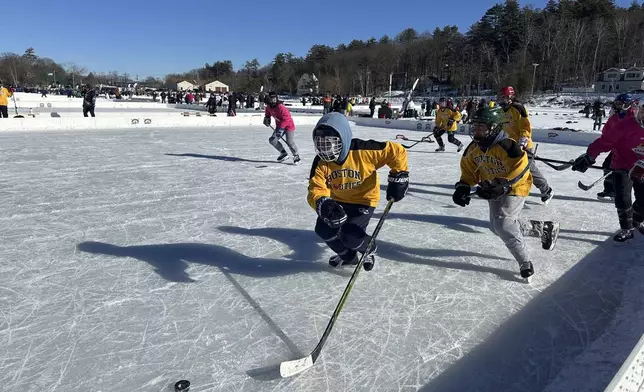
FILE - Hockey players go for the puck during the final of the women's open division at the pond hockey classic in Meredith, N.H., on Sunday, Feb. 4, 2024. (AP Photo/Nick Perry, File)

FILE - Hockey players go for the puck during the final of the women's open division at the pond hockey classic in Meredith, N.H., on Sunday, Feb. 4, 2024. (AP Photo/Nick Perry, File)

The prospect of 25% tariffs by President Donald Trump on Canadian imports, currently paused for some goods but facing full implementation on Wednesday, has caused headaches if not havoc throughout the commercial ecosystem. The sports equipment industry is certainly no exception, with so many of the products manufactured for sports -loving Americans outside of the U.S.

No two countries in the world are intertwined athletically more than Canada and the U.S. are with hockey, either, making mere talk of a trade war a spreadsheet-shuffler — and potentially a budget-buster — for businesses based around the rink and the consumers of their products.

Roustan Hockey bought the Christian and Northland brands that originated in Minnesota and now manufactures them with other products under its umbrella in Brantford, Ontario, the town where Wayne Gretzky grew up about 60 miles (100 kilometers) southwest of Toronto. About 40% of Roustan's business is with the U.S. market, and about 90% of sales of Christian and Northland gear go to American customers.

“Our business with the U.S. is steady right now because people are trying to get their orders in before the tariffs take effect, but I’m very concerned that once the tariffs go into effect that there will be people in, say, Minnesota who will think twice about buying a Christian or a Northland stick because of the 25% tariff,” Roustan said in a phone interview. “So the unknown is still unknown.”

Many pieces of retail hockey equipment originate in Asia, including China. Mexico is another player in the market, home to a factory for Warrior brand sticks, for example. Those countries are in the tariff crosshairs, too.

“Whether it’s in effect for a week or gets retracted or whether it’s a future date where we’re going to have some announcement, all that makes it very challenging to run and operate a business,” said Todd Smith, the chief executive officer of the Sports & Fitness Industry Association. “The general viewpoint is uneasiness and confusion.”

Roustan bought Bauer's hockey outfitting business from Nike in 2008 and oversaw that company for four years. By the time Roustan assumed control, he said, Bauer — born in Canada in 1927 and a ubiquitous name in the sport — had shifted all of its manufacturing sites to Asia for cost savings on labor and facilities.

“The industry has done an admirable job of manufacturing across the globe while doing as much as they possibly can domestically,” Smith said. “The components made internationally are made internationally because we don’t have the manufacturing capability in the U.S. and we don’t have the workforce.”

In hockey, of course, a lot of gear is required to take the ice. That gear is also notoriously expensive, which puts this sport as subject to the tariff tumult as any. Just in North America, hockey equipment is a $1.3 billion business and growing, as estimated by Grand View market research. Any added cost from the import tax will almost certainly trickle down to the consumer.

Organizations like SFIA have long had an eye on rising costs of youth sports, concerned about the effect on participation and driven to increase accessibility to all activities in underprivileged communities.

“If folks aren’t aware of it now, they should be well aware that tariffs are bad for sports across the board,” Smith said.

Most families with kids in sports are busy enough shuttling those young athletes to practices and shopping for the next round of gear that topics like international politics, global economics and commercial supply chains usually get the backseat.

Tariffs might drive up the price of hockey sticks? Well, just add that to the pile.

For Jeremiah Lamont and his family in Minneapolis, staying on top of the equipment inventory for two hockey-playing boys is enough of project on its own. Paying for it is another story, as his 12-year-old son Max enters each new stage of competition.

“The youth skates cost about $200. Well, his foot grows a half-inch, he can’t get into the youth ones, and now those same skates are $450,” Lamont said, estimating the current total cost of gear at more than $1,500, some of which must be annually replaced.

Ice time and travel costs sold separately, of course.

“He likes it. It's good for him. So we just figure, ‘Why not?’" Lamont said.

The sticker shock is real for hockey newbies, as Kelley Baer and her family in Colorado found out when now-13-year-old Brian got going on the ice. Sticks, skates, helmets, shin guards, elbow and shoulder pads, chest protectors, neck guards, they all add up.

Those sticks don't always last the season, either, that vital-yet-fragile piece of equipment perpetually at risk for fracturing from an awkward hit — or in a moment of frustration. In the NHL, a replacement is always at the ready. A pile of sticks is a luxury many young players don't have.

“I’m like, “No, no, no, no, no! That is a $400 stick. Do not slam that thing on the ice!” Baer said. “We always laugh about that, but it's also very serious. We used it as a gateway of a conversation about showing your emotions on the ice and how you’ve got to be able to contain that as a leader. If you start losing your mind and slamming your stick, that’s a disadvantage for you.”

The life lessons in sports run as deep as the passions that fuel this giant slice of economy and culture.

“Yes, it’s expensive and we are fortunate in that we can afford it,” Baer said. “He's our kid, and we love him. We want to support him in what he wants to do, and we’ll figure out a way.”

AP sports: https://apnews.com/sports
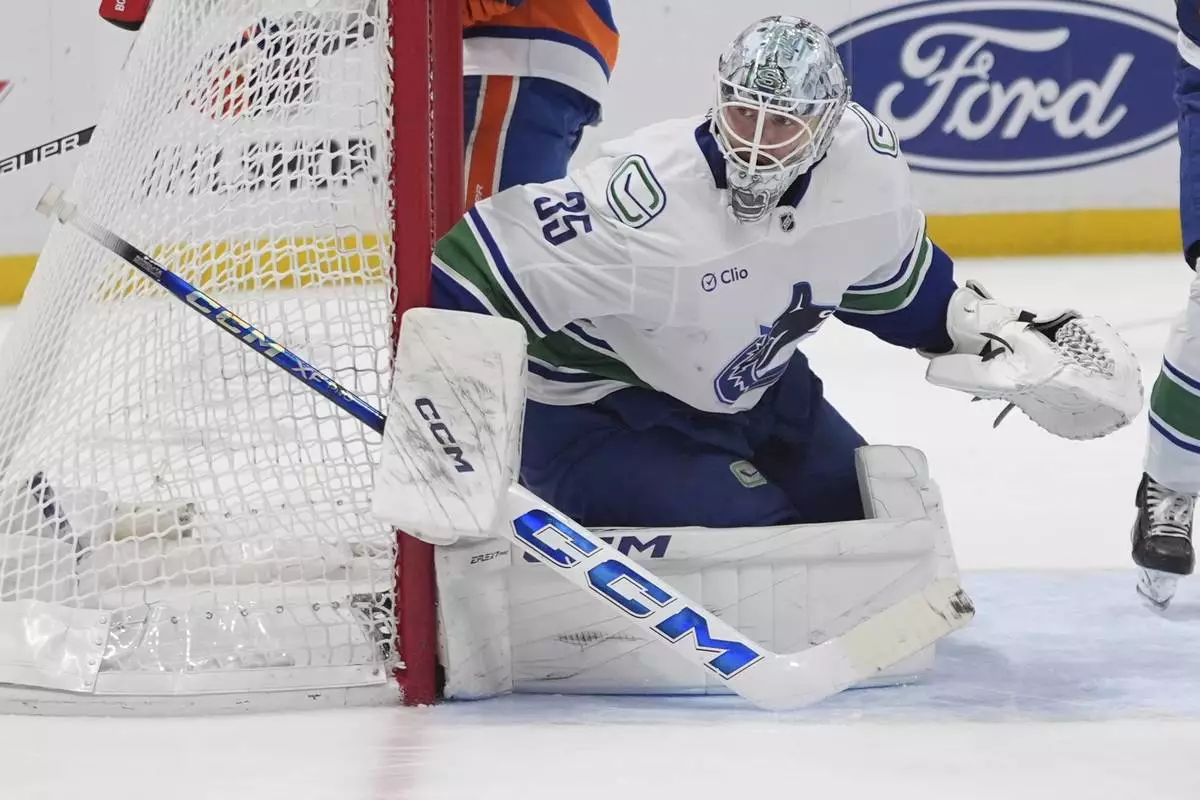
Vancouver Canucks goaltender Thatcher Demko protects the net during the second period of an NHL hockey game against the New York Islanders Wednesday, March 26, 2025, in Elmont, N.Y. (AP Photo/Frank Franklin II)
Vancouver Canucks goaltender Thatcher Demko protects the net during the second period of an NHL hockey game against the New York Islanders Wednesday, March 26, 2025, in Elmont, N.Y. (AP Photo/Frank Franklin II)

FILE - A group of teammates watch play during the U.S. pond hockey championships at Lake Nokomis, Friday, Jan. 20, 2023, in Minneapolis. (AP Photo/Abbie Parr, File)
FILE - A group of teammates watch play during the U.S. pond hockey championships at Lake Nokomis, Friday, Jan. 20, 2023, in Minneapolis. (AP Photo/Abbie Parr, File)

FILE - The Utah Outliers hockey team practices Thursday, Sept. 19, 2024, in West Valley City, Utah. (AP Photo/Rick Bowmer, File)
FILE - The Utah Outliers hockey team practices Thursday, Sept. 19, 2024, in West Valley City, Utah. (AP Photo/Rick Bowmer, File)

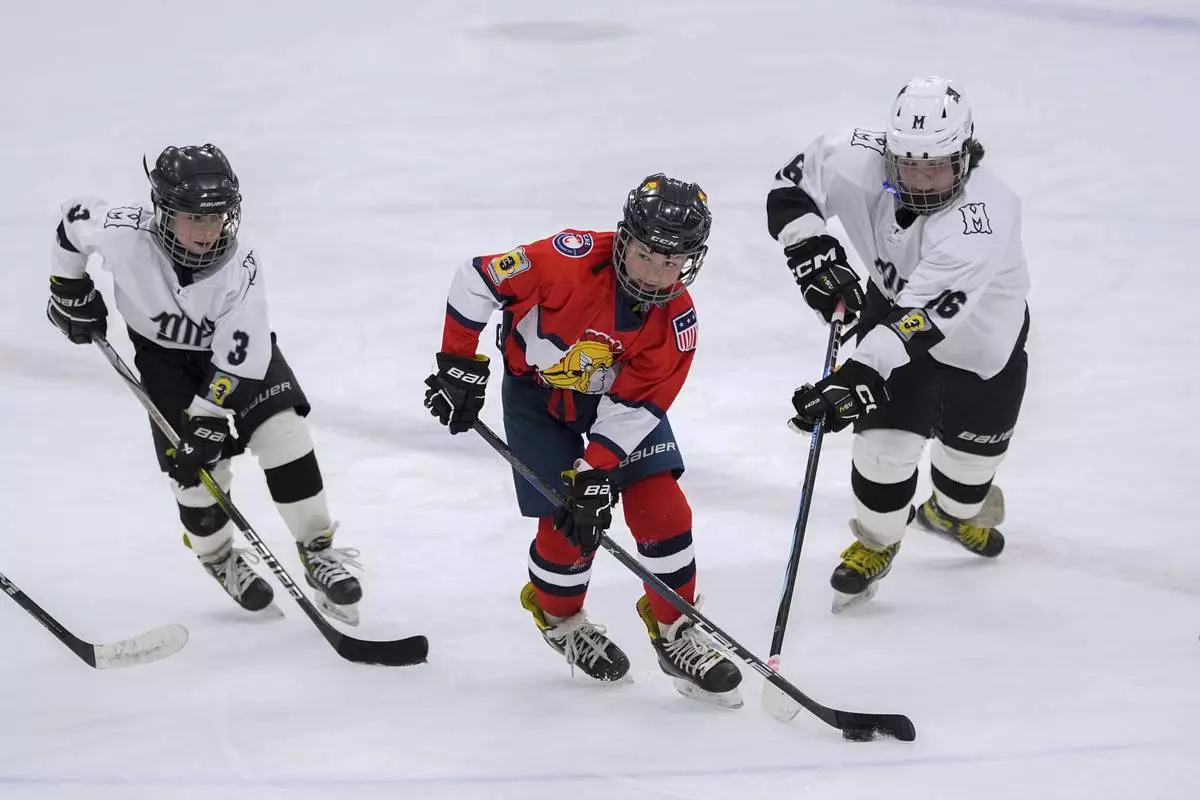
FILE - An Orono player, center, skates with the puck ahead of Minneapolis players during a 10-and-under youth hockey game Sunday, Feb. 4, 2024, in Minneapolis. (AP Photo/Abbie Parr, File)
FILE - An Orono player, center, skates with the puck ahead of Minneapolis players during a 10-and-under youth hockey game Sunday, Feb. 4, 2024, in Minneapolis. (AP Photo/Abbie Parr, File)

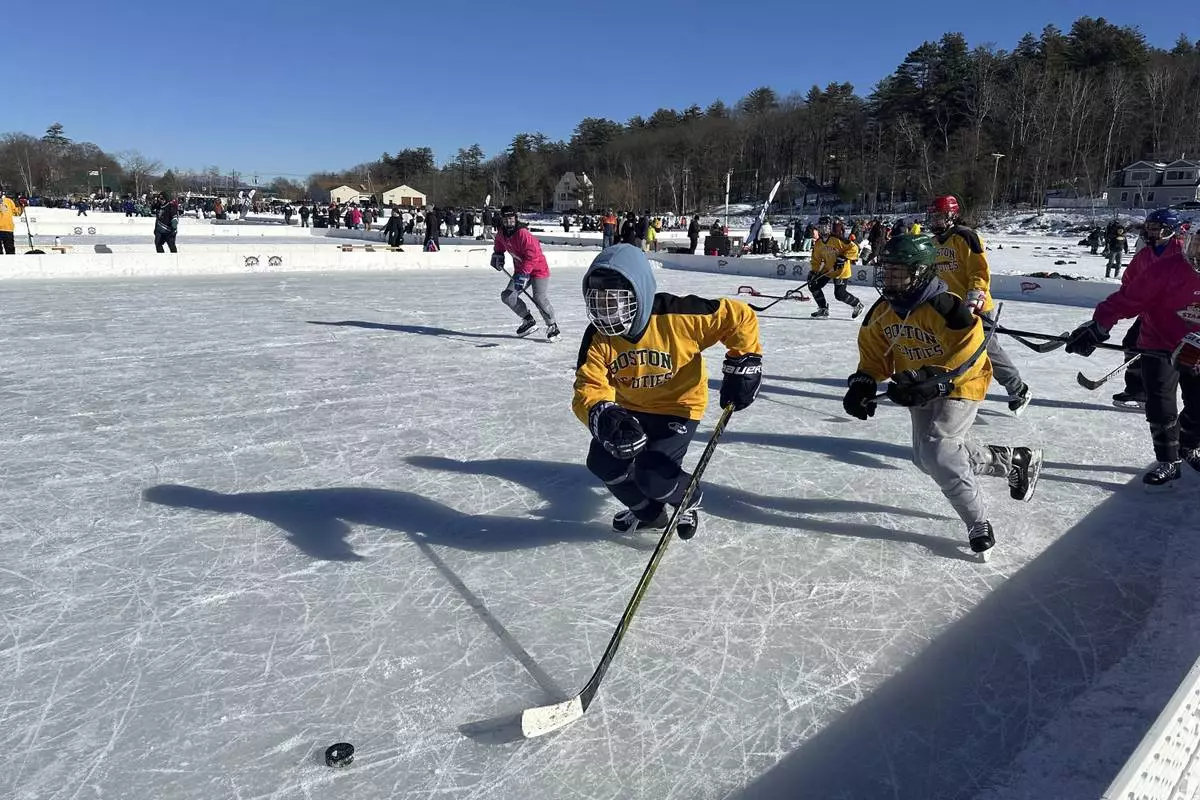
FILE - Hockey players go for the puck during the final of the women's open division at the pond hockey classic in Meredith, N.H., on Sunday, Feb. 4, 2024. (AP Photo/Nick Perry, File)
FILE - Hockey players go for the puck during the final of the women's open division at the pond hockey classic in Meredith, N.H., on Sunday, Feb. 4, 2024. (AP Photo/Nick Perry, File)

Federal Reserve Chair Jerome Powellsaid Sunday the Department of Justice has served the central bank with subpoenas and threatened it with a criminal indictment over his testimony this summer about the Fed’s building renovations.

The move represents an unprecedented escalation in President Donald Trump’s battle with the Fed, an independent agency he's repeatedly attacked for not cutting its key interest rate as sharply as he prefers. The renewed fight will likely rattle financial markets Monday and could over time escalate borrowing costs for mortgages and other loans.

The subpoenas relate to Powell’s testimony before the Senate Banking Committee in June, the Fed chair said, regarding the Fed’s $2.5 billion renovation of two office buildings, a project Trump has criticized as excessive.

Here's the latest:

Stocks are falling on Wall Street after Federal Reserve Chair Jerome Powell said the Department of Justice had served the central bank with subpoenas and threatened it with a criminal indictment over his testimony about the Fed’s building renovations.

The S&P 500 fell 0.3% in early trading Monday. The Dow Jones Industrial Average lost 384 points, or 0.8%, and the Nasdaq composite fell 0.2%.

Powell characterized the threat of criminal charges as pretexts to undermine the Fed’s independence in setting interest rates, its main tool for fighting inflation. The threat is the latest escalation in President Trump’s feud with the Fed.

▶ Read more about the financial markets

She says she had “a very good conversation” with Trump on Monday morning about topics including “security with respect to our sovereignties.”

Last week, Sheinbaum had said she was seeking a conversation with Trump or U.S. Secretary of State Marco Rubio after the U.S. president made comments in an interview that he was ready to confront drug cartels on the ground and repeated the accusation that cartels were running Mexico.

Trump’s offers of using U.S. forces against Mexican cartels took on a new weight after the Trump administration deposed Venezuelan President Nicolás Maduro. Sheinbaum was expected to share more about their conversation later Monday.

A leader of the Canadian government is visiting China this week for the first time in nearly a decade, a bid to rebuild his country’s fractured relations with the world’s second-largest economy — and reduce Canada’s dependence on the United States, its neighbor and until recently one of its most supportive and unswerving allies.

The push by Prime Minster Mark Carney, who arrives Wednesday, is part of a major rethink as ties sour with the United States — the world’s No. 1 economy and long the largest trading partner for Canada by far.

Carney aims to double Canada’s non-U.S. exports in the next decade in the face of President Trump’s tariffs and the American leader’s musing that Canada could become “the 51st state.”

▶ Read more about relations between Canada and China

The comment by a Chinese Foreign Ministry spokesperson came in response to a question at a regular daily briefing. President Trump has said he would like to make a deal to acquire Greenland, a semiautonomous region of NATO ally Denmark, to prevent Russia or China from taking it over.

Tensions have grown between Washington, Denmark and Greenland this month as Trump and his administration push the issue and the White House considers a range of options, including military force, to acquire the vast Arctic island.

Danish Prime Minister Mette Frederiksen has warned that an American takeover of Greenland would mark the end of NATO.

▶ Read more about the U.S. and Greenland

Trump said Sunday that he is “inclined” to keep ExxonMobil out of Venezuela after its top executive was skeptical about oil investment efforts in the country after the toppling of former President Nicolás Maduro.

“I didn’t like Exxon’s response,” Trump said to reporters on Air Force One as he departed West Palm Beach, Florida. “They’re playing too cute.”

During a meeting Friday with oil executives, Trump tried to assuage the concerns of the companies and said they would be dealing directly with the U.S., rather than the Venezuelan government.

Some, however, weren’t convinced.

“If we look at the commercial constructs and frameworks in place today in Venezuela, today it’s uninvestable,” said Darren Woods, CEO of ExxonMobil, the largest U.S. oil company.

An ExxonMobil spokesperson did not immediately respond Sunday to a request for comment.

▶ Read more about Trump’s comments on ExxonMobil

Trump’s motorcade took a different route than usual to the airport as he was departing Florida on Sunday due to a “suspicious object,” according to the White House.

The object, which the White House did not describe, was discovered during security sweeps in advance of Trump’s arrival at Palm Beach International Airport.

“A further investigation was warranted and the presidential motorcade route was adjusted accordingly,” White House press secretary Karoline Leavitt said in a statement Sunday.

The president, when asked about the package by reporters, said, “I know nothing about it.”

Anthony Guglielmi, the spokesman for U.S. Secret Service, said the secondary route was taken just as a precaution and that “that is standard protocol.”

▶ Read more about the “suspicious object”

Trump said Iran wants to negotiate with Washington after his threat to strike the Islamic Republic over its bloody crackdown on protesters, a move coming as activists said Monday the death toll in the nationwide demonstrations rose to at least 544.

Iran had no direct reaction to Trump’s comments, which came after the foreign minister of Oman — long an interlocutor between Washington and Tehran — traveled to Iran this weekend. It also remains unclear just what Iran could promise, particularly as Trump has set strict demands over its nuclear program and its ballistic missile arsenal, which Tehran insists is crucial for its national defense.

Iranian Foreign Minister Abbas Araghchi, speaking to foreign diplomats in Tehran, insisted “the situation has come under total control” in fiery remarks that blamed Israel and the U.S. for the violence, without offering evidence.

▶ Read more about the possible negotiations and follow live updates

Fed Chair Powell said Sunday the DOJ has served the central bank with subpoenas and threatened it with a criminal indictment over his testimony this summer about the Fed’s building renovations.

The move represents an unprecedented escalation in Trump’s battle with the Fed, an independent agency he has repeatedly attacked for not cutting its key interest rate as sharply as he prefers. The renewed fight will likely rattle financial markets Monday and could over time escalate borrowing costs for mortgages and other loans.

The subpoenas relate to Powell’s testimony before the Senate Banking Committee in June, the Fed chair said, regarding the Fed’s $2.5 billion renovation of two office buildings, a project that Trump has criticized as excessive.

Powell on Sunday cast off what has up to this point been a restrained approach to Trump’s criticisms and personal insults, which he has mostly ignored. Instead, Powell issued a video statement in which he bluntly characterized the threat of criminal charges as simple “pretexts” to undermine the Fed’s independence when it comes to setting interest rates.

▶ Read more about the subpoenas

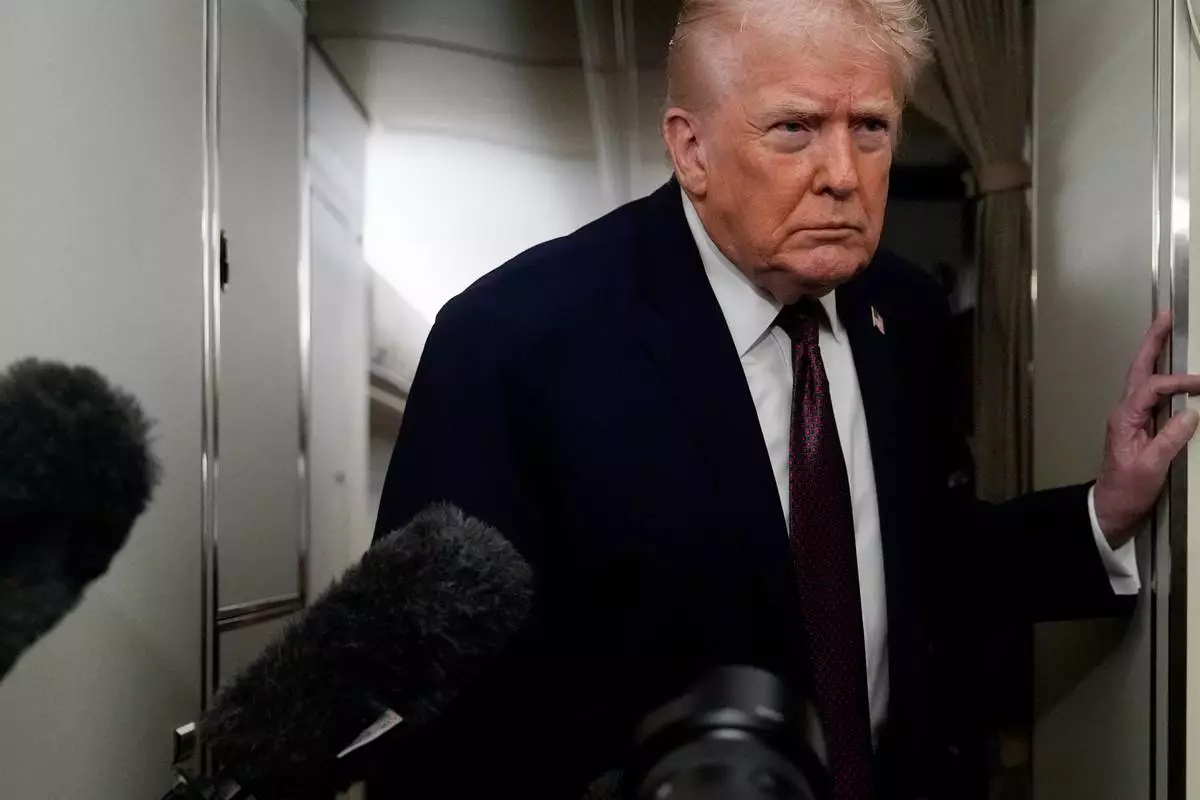
President Donald Trump speaks to reporters while in flight on Air Force One to Joint Base Andrews, Md., Sunday, Jan. 11, 2026. (AP Photo/Julia Demaree Nikhinson)

President Donald Trump speaks to reporters while in flight on Air Force One to Joint Base Andrews, Md., Sunday, Jan. 11, 2026. (AP Photo/Julia Demaree Nikhinson)

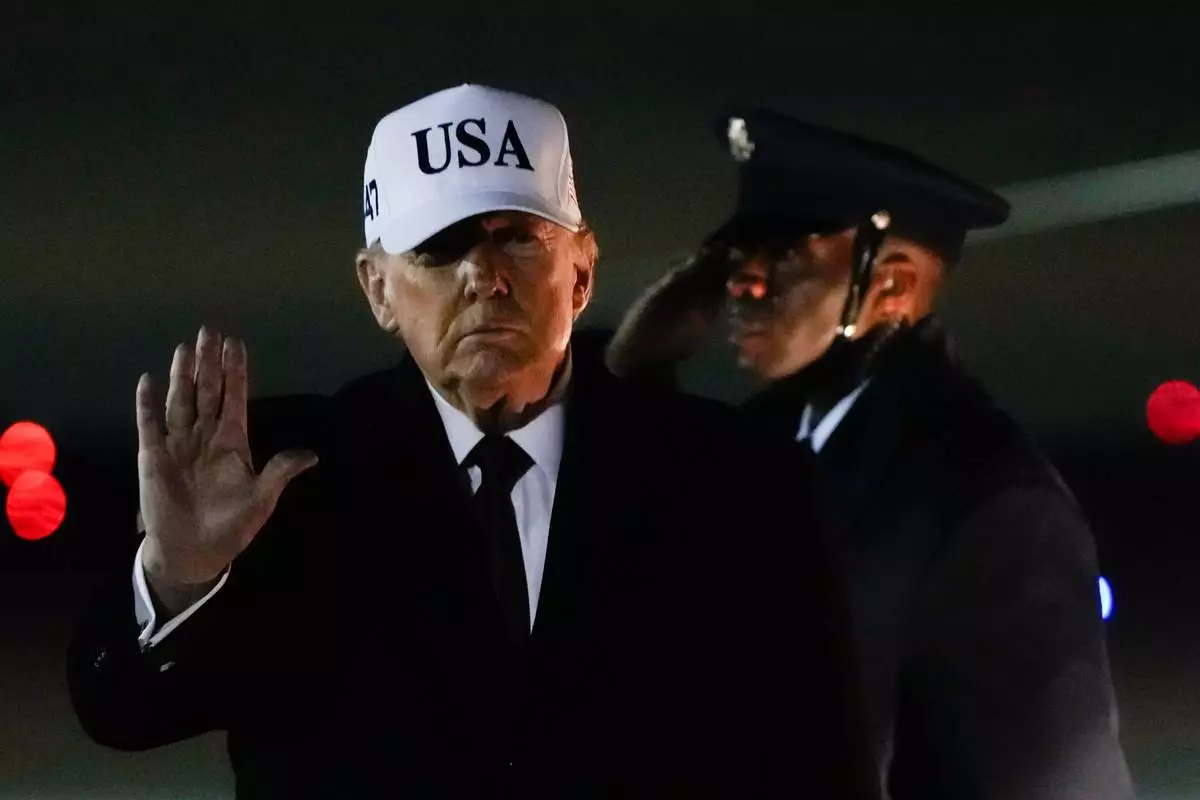
President Donald Trump waves after arriving on Air Force One from Florida, Sunday, Jan. 11, 2026, at Joint Base Andrews, Md. (AP Photo/Julia Demaree Nikhinson)

President Donald Trump waves after arriving on Air Force One from Florida, Sunday, Jan. 11, 2026, at Joint Base Andrews, Md. (AP Photo/Julia Demaree Nikhinson)

Recommended Articles