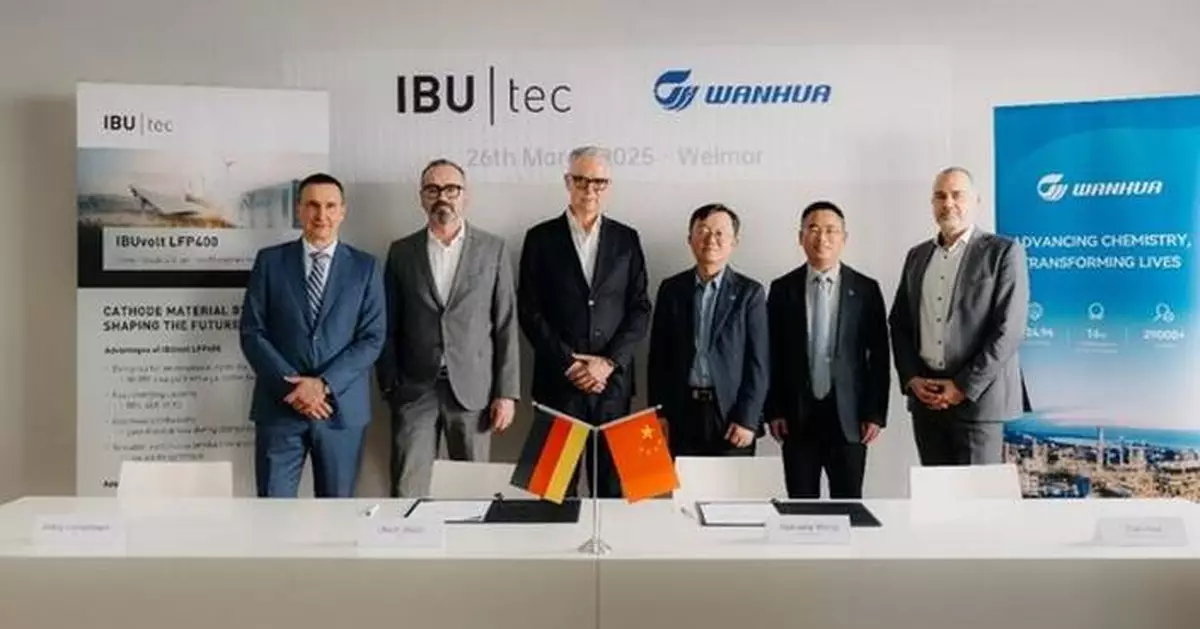
WEIMAR, Germany, March 31, 2025 /PRNewswire/ -- On March 26th, Wanhua Chemical Group Battery Technology Co., Ltd ("Wanhua Chemical") and IBU-tec ( "IBU-tec"), the leading European manufacturer of lithium iron phosphate materials, successfully held a signing ceremony for the Joint Research and Development Agreement (JDA) in Weimar, Germany. The partnership with IBU-tec does not affect the progress of concrete talks with further companies on far-reaching cooperation, which Wanhua Chemical is currently conducting.
Within the framework of the partnership, IBU-tec and Wanhua Chemical will carry out a scale-up towards the industrial scale in the coming months. The partners expect to have reliable results in the third quarter of the current year as to whether the joint development will meet market requirements in Europe and North America. If this is the case, it will open up extensive potential for the production of an LFP cathode material in Germany that would be part of a European value chain in the battery sector.
Dr. Hua Weiqi, Executive Vice President of Wanhua Chemical, Mr. Wang Xiaoxing, General Manager of Wanhua Battery Industry Company Limited, Mr. Jörg Leinenbach, CEO of IBU-tec and Mr. Ulrich Weitz, CPO of IBU-tec, attended the signing ceremony. This event marks the formal opening of the in-depth cooperation between the two parties in the field of lithium iron phosphate (LFP) materials.
In the field of battery materials, lithium iron phosphate has gradually become a mainstream product in the new energy automobile and energy storage market with its advantages of high safety and long cycle life. In recent years, Wanhua Chemical has established a technology platform integrating battery material technology development, equipment technology development, and electric core application technology research, and its lithium iron phosphate products have been upgraded continuously. In this cooperation, the company will establish a local supply chain to supply LFP materials to European customers.
Dr. Hua Weiqi said: LFP shows the dominant position (almost 80% share in EV in Chinese market), and is almost the only commercially available solution for energy storage. Wanhua Chemical adheres to the globalization strategy and has set up 7 R&D centers in Beijing, Shanghai, Hungary, Spain, etc., 9 production bases and more than 10 overseas sales organizations, and IBU-tec, as a local German Li-ion material factory, focuses on the R&D and production of LFP, and owns a mature R&D and production system.
In the future, the two sides will also discuss the establishment of a joint laboratory in Europe, to begin cooperation in the field of battery innovation and R&D, to provide strong local R & D support for the development of the European battery industry.
About Wanhua Chemical:
Wanhua Chemical is a globally operated chemical new materials company, ranking 16th of C&EN's Global Top 50 chemical companies, with over 30000 employees worldwide. Its business covers polyurethanes, petrochemicals, performance chemicals, emerging materials and future industries. The industries include homeware and furniture, sports and leisure, automobiles and transportation, building and construction, electronics and electrical appliances, personal care, and green energy.
** The press release content is from PR Newswire. Bastille Post is not involved in its creation. **
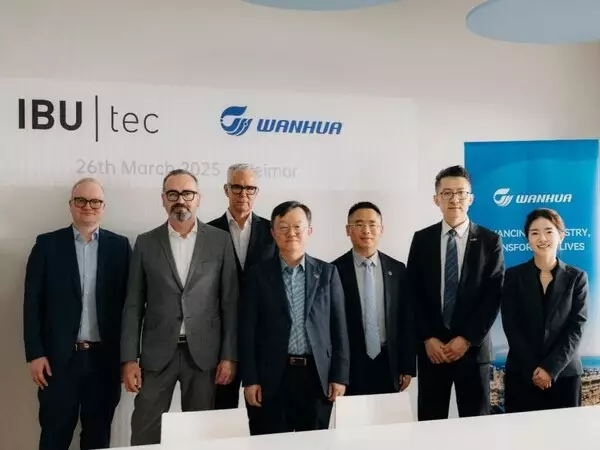
Wanhua Chmeical and IBU-tec signed a Joint Development Agreement for the development of a European LFP battery material, creating the basis for a European value chain in the battery sector
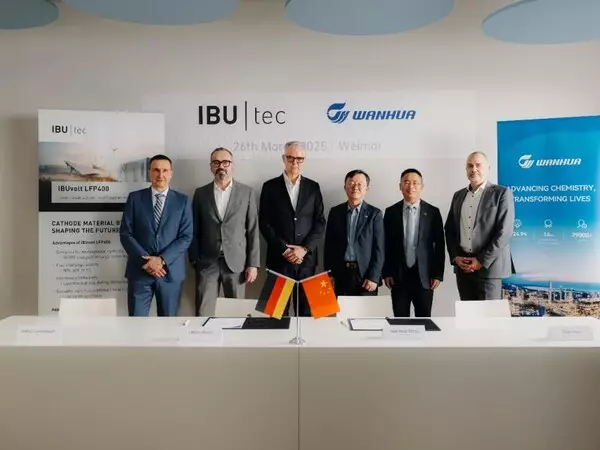
Wanhua Chmeical and IBU-tec signed a Joint Development Agreement for the development of a European LFP battery material, creating the basis for a European value chain in the battery sector
Upgraded Senior Living Pavilion Debuts with AI Smart Elderly Care Technology as Key Highlight
HONG KONG, June 25, 2026 /PRNewswire/ -- Organised by Exhibition Group, Hong Kong's largest one-stop home exhibition, "In-Home Expo 2026" (the "Expo"), officially opened today at Hall 1 of the Hong Kong Convention and Exhibition Centre, running from today through 28 June (Sunday). This year's Expo features seven major themed zones: Building Materials/ Equipment/ Tools, Interior Design/Decoration/Custom-made Furniture, Home Appliances/ Smart Home Products/ Home Goods/Kitchenware, Bedroom Essentials/ Furniture/ Sofa, Health Equipment/ Home Purification/ Cleaning, Senior Living Products & Services, and Other Professional Home Services & Products, with over 900 booths in total, comprehensively catering to the home living needs of diverse demographics. The Expo brings together numerous quality brands, showcasing the latest in-home design concepts, décor materials, and smart furniture. Multiple interior design firms, renovation companies, and various home service exhibitors are also participating, allowing visitors to experience the limitless possibilities of home living in one visit, creating a one-stop platform for finding design inspiration and realising their ideal homes.
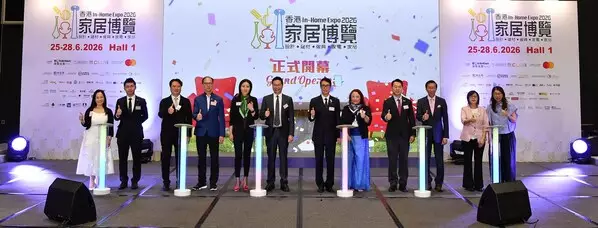
The opening ceremony was officiated by Hon. Shiu Ka-fai, Member of the CPPCC National Committee and Legislative Council Member (Functional Constituency - Wholesale and Retail); Prof. Karen Chan, Deputy Chairman of the Federation of Hong Kong Industries and Chairman of Hong Kong Q-Mark Council; Ms. May Leung, Chairman of the Professional Validation Council of Hong Kong Industries; Mr. Ricky Chan, Vice Chairman of the Hong Kong Design Committee under Group 31 (Design) of the Federation of Hong Kong Industries; Mr. Allen Kwong, Chairman of Hong Kong Furniture and Decoration Trade Association; Dr. Michael Chan, Honorary Chairman of the Hong Kong Institute of Marketing; Mr. Alex Au Yeung, Chairman of Hong Kong Professional Interior Designer Association; Mr. Dicky Louie, Chairman of Hong Kong Decoration & Engineering Association; Ms. Helle Kwan, Senior Associate Director of Market Promotion, Communications and Research Department of Ricacorp Properties Limited; Ms. Helena Chen, Senior Vice President, General Manager, Hong Kong & Macau, Mastercard; Ms. Queenie Yu, Assistant Vice President, Marketing, The Club and Mr. Carl Wong, Chairman of Exhibition Group.
Mr. Carl Wong, Chairman of Exhibition Group, said: "In-Home Expo exceeded 400,000 visitors last year, fully demonstrating the strong demand among citizens for quality home products. This year's Expo has been upgraded once again in terms of product variety, and interactive experiences. We are particularly optimistic about the enormous potential of the silver economy — the elderly technology market in Hong Kong is projected to grow at double-digit rates over the next decade. This year, the Senior Living Pavilion has been comprehensively expanded into an integrated platform combining product experience, professional seminars, and health assessments, marking a new milestone as the Expo evolves from a traditional home exhibition to one that addresses the living needs of all ages. We hope to drive industry innovation through the Expo, enabling citizens to find solutions that suit their needs and inject fresh inspiration into their lives."
Elderly Technology Takes Centre Stage AI Mattresses and Walking-Assist Robots Debut at the Venue
According to projections, by 2046, those aged 65 and above will account for 36% of Hong Kong's population, representing enormous and undeniable silver market potential. This year, the Expo continues to present the "Senior Living Pavilion", a dedicated zone specially designed for seniors, committed to providing safe, comfortable, and convenient home environments. The pavilion showcases a range of tailor-made home products and services for the elderly, covering barrier-free home design, smart home technology, health care products, and social activity spaces. The Senior Living Pavilion has been comprehensively upgraded this year, focusing on the innovation and application of elderly technology in the home industry. The exhibition floor gathers a wealth of smart home technology and health equipment targeting pain points in senior living, including AI smart mattresses with AI spinal support, sleep monitoring, and smart heating functions, as well as pneumatic circulation therapy devices that promote blood circulation and effectively prevent thrombosis, along with medical-grade products such as walking-assist robots and electric nursing transfer lifts, offering seniors more thoughtful and technology-driven home solutions.
Industry Seminars Explore Ageing in Place Social Enterprise Activities Care for Seniors' Physical and Mental Well-being
During the Expo, the Hong Kong Furniture Council under the Federation of Hong Kong Industries will host the "'NEXT In Home' 2026 Ageing in Place and Elderly Technology Seminar", bringing together industry leaders and academics to explore the latest development trends in elderly technology in depth. The main stage also incorporates extensive health education content, including "Senior Chair Yoga" sessions, as well as talks by professional therapists and nurses on "Home Safety and Accident Prevention Tips for the Elderly" and management of chronic cardiovascular diseases, addressing the physical and mental well-being of senior citizens.
Social enterprise brand Power Angels Social Enterprise Limited (Booth No.: 1N-U21) is also hosting an "Ageing at Home, Safety from Multiple Angles" seminar series and health assessment activities at its booth. The programme brings together professional nurses, physiotherapists, community nutritionists, and social welfare organisation representatives, offering on-site cardiovascular management and foot care sharing sessions, daily "Fall Risk Assessments", home choking first-aid demonstrations, expert guidance on homemade soft meals, explanations of elderly home repair subsidies, and micro-films on dementia awareness along with mindfulness art workshops, exploring smart ageing solutions.
To further promote silver consumption, the organisers have introduced a special offer allowing persons aged 65 or above to enter free of charge upon presenting a Senior Citizen Card or identity document, actively fostering a senior-friendly consumer environment and supporting the growth of the silver economy.
Multiple Heavyweight Brands Debut at the Expo Limited-Time Offers Available from Today
This year's Expo welcomes several heavyweight brands making their debut, bringing an entirely new lineup to the venue. The Hong Kong and China Gas Company Limited (Booth No.: 1D-J01) makes its first appearance, presenting its Towngas Lifestyle brand TGC kitchen cabinet package offers (packages from $25,000 with 10% off the total), inverter window-type air conditioners (special price $4,490 with free basic installation), and a must-have three-piece cooker set for new homes at a limited-time reduced price of $9,470. They are also launching an innovative "Elderly Home Safety Assessment Service" for the first time, providing families with one-stop living solutions. DSG Energy Limited (Booth No.: 1B-X51) is also debuting at the Expo, showcasing products from the DSG Home online store, including the Korea King Korean-made ceramic non-stick cookware set at an exhibition-exclusive price of $829 (original price $1,467), with a complimentary silicone kitchen utensil set for purchases made during the limited-time promotion. DrGo, the healthcare brand under HKT, is also present at the venue, offering free designated general practitioner video consultations with basic 3-day prescription medication and standard delivery service on-site, limited to 100 places on a first-come, first-served basis. Additional exclusive offers from DrGo One Wellness (Booth No.: 1N-U83) are also available on-site.
The Expo also brings together multiple brands offering both stylish and practical products and exclusive deals, catering to the needs of families seeking to create their ideal smart home. Visitors seeking flexible use of space should note the I403 Zero-Wall Electric Sofa Bed by CASA REPUBLIC (COM) LIMITED (Booth No.: 1D-K65), featuring Hong Kong-exclusive "Cloud Feel" technology that transforms into a 2-metre bed at the touch of a button without needing wall support, redefining the concept of traditional sofa beds and freeing up more usable space for compact Hong Kong homes. Visitors focused on home security should not miss SPU (Hong Kong) Limited (Booth No.: 1E-B15) and its cross-sector collaboration with a local illustrator on the new Delta Electronic Door Lock K1, featuring eye-catching design, with selected door locks at the venue priced from just $1,900 including installation and two-year warranty, combining stylish appearance with practical functionality. Kitchen appliance enthusiasts should look out for the Bosch BDC7111B0 Drawer-Style Steam Oven, an exhibition-exclusive debut by WBL Limited (Booth No.: 1D-J15), featuring an ultra-slim 14cm body, 10L large capacity, and smart recipe functions, perfectly suited to Hong Kong's compact kitchens or open-plan kitchen spaces, bringing an entirely new cooking experience to small homes. In the smart home category, Mass Winning Limited (Booth No.: 1A-ZD20) presents the DREAME FP10 Active Hair Collection Pet Air Purifier, equipped with the world's first visualised sealed sterilisation hair collection chamber that actively captures pet hair with powerful suction, achieving a sterilisation rate of up to 99.9%. Targeting common issues of floating hair, odours, and allergens in Hong Kong pet-owning households, the first 10 purchasers will receive a complimentary pet top mount worth $1,299, while stocks last. Visitors planning to renovate their new homes should not miss Kreative Mind Design Limited (Booth No.: 1D-H27), where orders for custom-made furniture placed during the Expo that reach specified amounts will receive a complimentary branded electrical appliance, including hair dryers, vacuum cleaners, air purifiers, water dispensers, refrigerators, and televisions, offering generous rewards to complement new home move-ins.
To meet visitors' home renovation needs, the organisers have collaborated with multiple exhibiting brands to compile the "Home Renovation Guide", a practical handbook integrating various on-site offers to provide visitors with one-stop consumption navigation. Limited copies are distributed daily on a first-come, first-served basis while stocks last.
Electrical Appliance Outlet with Discounts Up to 90% Off Over 25 Free Expert Seminars
The In-Home Expo features a large-scale Electrical Appliance Outlet, presented by Tung Yuen Electrical Co., Ltd. (Booth No.: 1A-ZF01), offering major clearance deals on a wide range of household appliances including steam irons, electric kettles, induction cookers, and speakers. Daily limited-quantity offers are available at discounts of up to 90% off. In addition, over 25 free seminars and consultation sessions will be held during the In-Home Expo, inviting industry experts to share home-related knowledge. Featured speakers include renowned feng shui consultant Master Szeto Fat Ching, as well as the first-ever appearance of Jessica Jim — daughter of Jim Chai Nam, Vice Chairman of the Hong Kong Building Inspectors Association — and professional building inspector Mr. Chan Chi Hong (Hong Sir). Seminar topics cover home renovation, storage and organisation, building inspection essentials, and other practical subjects, helping visitors create a safe and comfortable home environment. Furthermore, visitors can participate daily in the brand-new "In-Home Duck Angler Challenge" prize game zone, taking on fun interactive challenges for a chance to win fabulous prizes.
Double Rewards for Spending Over 7,700 Prizes to Be Won
The venue features a special "Mastercard Scratch Card Lucky Draw" where customers who spend a minimum of $500 on a single invoice using Mastercard at designated booths within the venue will receive one lucky draw entry, $1,000 for two entries, and so on (maximum 10 entries per receipt). Prizes include large home appliances and home gifts, with instant results upon scratching. (Trade Promotion Competition Licence Numbers: 061461, 061462; terms and conditions apply.) On-site event activities and prize game zones will collectively give away over 7,700 prizes with a total value exceeding HK$600,000.
Furthermore, Exhibition Group continues to partner with The Club under HKT to implement the new "Point2Purchase Consumption Vouchers" programme. Since its launch last year, the programme has been piloted across multiple exhibitions with positive response. Over 4 million members of The Club can convert accumulated points into exhibition-exclusive consumption vouchers through the app, redeem physical vouchers at dedicated counters at the venue, and use them immediately at designated booths, achieving a triple-win outcome of "stimulating the local economy, boosting exhibitor turnover, and rewarding consumers".
In-Home Expo 2026
| Date | 25 June, 2026 to 28 June, 2026 (Thursday to Sunday) |
| Time | 25 to 27 May (Thursday to Saturday): 12:00-21:00
28 June (Sunday): 12:00-19:00 |
| Venue | Hall 1, HKCEC (Exhibition Centre Station (Exit B3) or Wan Chai Station (Exit A5)) |
| Website | https://www.exhibitiongroup.com.hk/exhibitions/inhome2026 |
Date
25 June, 2026 to 28 June, 2026 (Thursday to Sunday)
Time
25 to 27 May (Thursday to Saturday): 12:00-21:00
28 June (Sunday): 12:00-19:00
Venue
Hall 1, HKCEC (Exhibition Centre Station (Exit B3) or Wan Chai Station (Exit A5))
Website
https://www.exhibitiongroup.com.hk/exhibitions/inhome2026
About In-Home Expo
Since its debut in 2013, the In-Home Expo has been dedicated to creating a high-quality and unique home exhibition, held annually in May or June. It provides visitors with a one-stop destination for the latest home products and services. Starting in 2022, the Expo also introduced the "In-Home Expo Autumn" every September. With two home expos held each year, the event aims to offer visitors a comprehensive understanding of the most complete range of home products available in the market, including interior design, furniture, building materials, home goods, and appliances.
Not only does the exhibition offer consumers a wide variety of choices, but it also creates limitless business opportunities for the industry, driving the discovery of market potential and new opportunities. The event also fosters communication and development within the home industry.
About Exhibition Group
Exhibition Group Limited is one of Hong Kong's renowned exhibition companies. Our core team has been assembled since 2003, bringing together a group of innovative, experienced, and professional exhibition talents. As a leading event management company, specializing in the planning and operation of world-class public exhibitions, conferences, and trade fairs, covering a wide range of industries. With years of industry experience, we are committed to the development of exhibition and marketing businesses, gaining a prestigious reputation within the exhibition industry.
Our company organizes a variety of themed exhibitions and marketing projects, which not only receive substantial support from the business community and exhibitors but also effectively attract a large number of public participants. Each event has garnered rave reviews, resulting in a win-win situation for exhibitors in both product promotion and sales. Notable exhibitions include the Pet Show, In-Home Expo, Premium Pet Supplies Expo, Hong Kong Cat Expo, Hong Kong Holiday & Travel Expo, Extracurricular Activities Festival cum Teaching Materials and Supplies Expo, and Hong Kong Outdoor & Sports Expo, among others. In recent years, our company has been honored with several awards, including the "Outstanding Award for Pandemic Resilience," "ESG Commendation Awards," and "Innovative Exhibition Planning," recognizing our business development achievements across various sectors.
This press release is distributed by Market Hubs Holdings Limited.
For Media Enquiry,
Market Hubs Holdings Limited
Lierence Li
Debbie So
+852 3998-4900
+852 3998-4900
lierence@markethubsgroup.com
debbie@markethubsgroup.com
** This press release is distributed by PR Newswire through automated distribution system, for which the client assumes full responsibility. **
Hong Kong's Largest Home Exhibition "In-Home Expo 2026" Opens Today