Skip to Content Facebook Feature Image

Netanyahu says Israel will establish a new security corridor across Gaza to pressure Hamas

News

Netanyahu says Israel will establish a new security corridor across Gaza to pressure Hamas
News

News

Netanyahu says Israel will establish a new security corridor across Gaza to pressure Hamas

2025-04-03 04:12 Last Updated At:04:20

DEIR AL-BALAH, Gaza Strip (AP) — Prime Minister Benjamin Netanyahu said Wednesday that Israel is establishing a new security corridor across the Gaza Strip to pressure Hamas, suggesting it would cut off the southern city of Rafah, which Israel has ordered evacuated, from the rest of the Palestinian territory.

The announcement came after Netanyahu's defense minister said Israel would seize large areas of Gaza and add them to its so-called security zones. A wave of Israeli strikes, meanwhile, killed more than 40 Palestinians, nearly half of them women and children, according to Palestinian health officials.

More Images
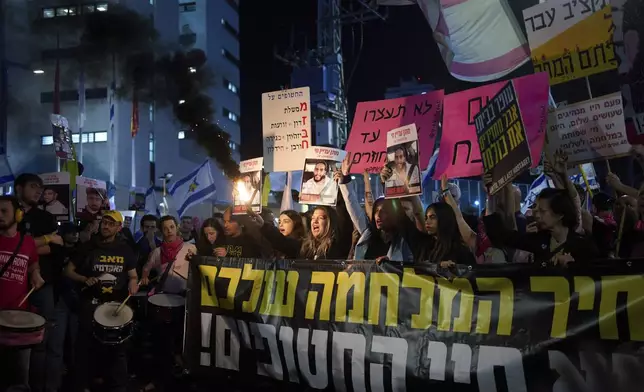
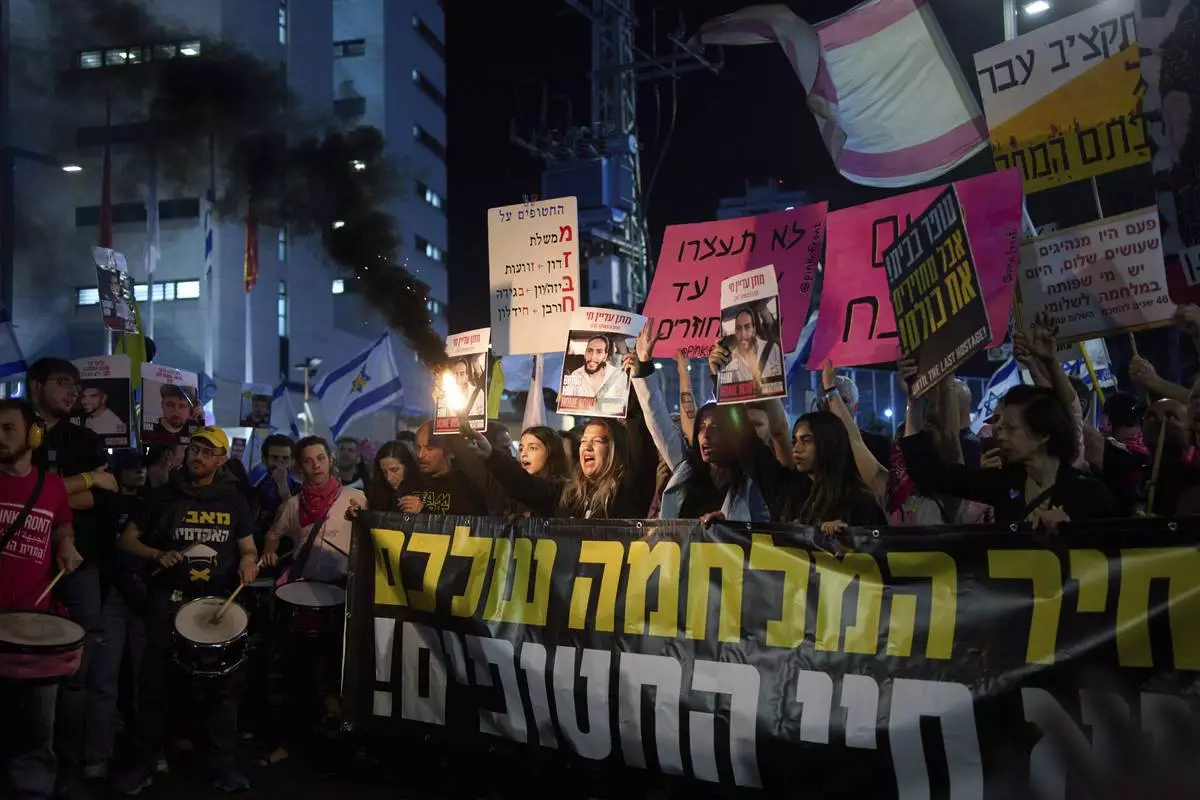
People take part in a protest demanding the immediate release of hostages held by Hamas in the Gaza Strip, in Tel Aviv, Israel, Saturday, March 29, 2025. (AP Photo/Maya Alleruzzo)
People take part in a protest demanding the immediate release of hostages held by Hamas in the Gaza Strip, in Tel Aviv, Israel, Saturday, March 29, 2025. (AP Photo/Maya Alleruzzo)

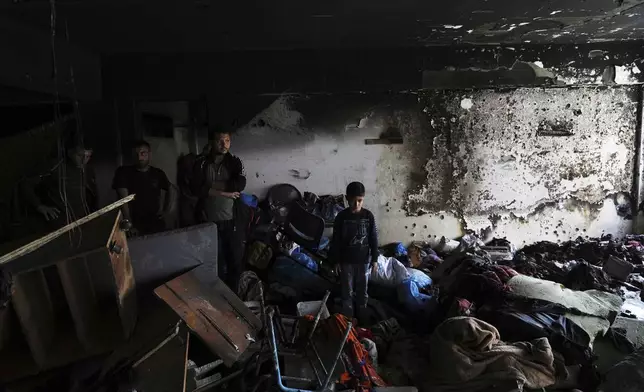
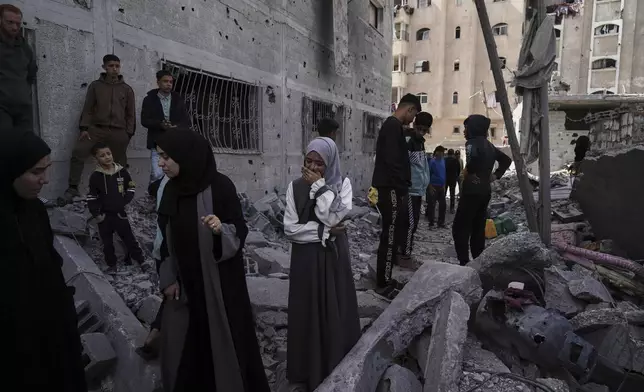
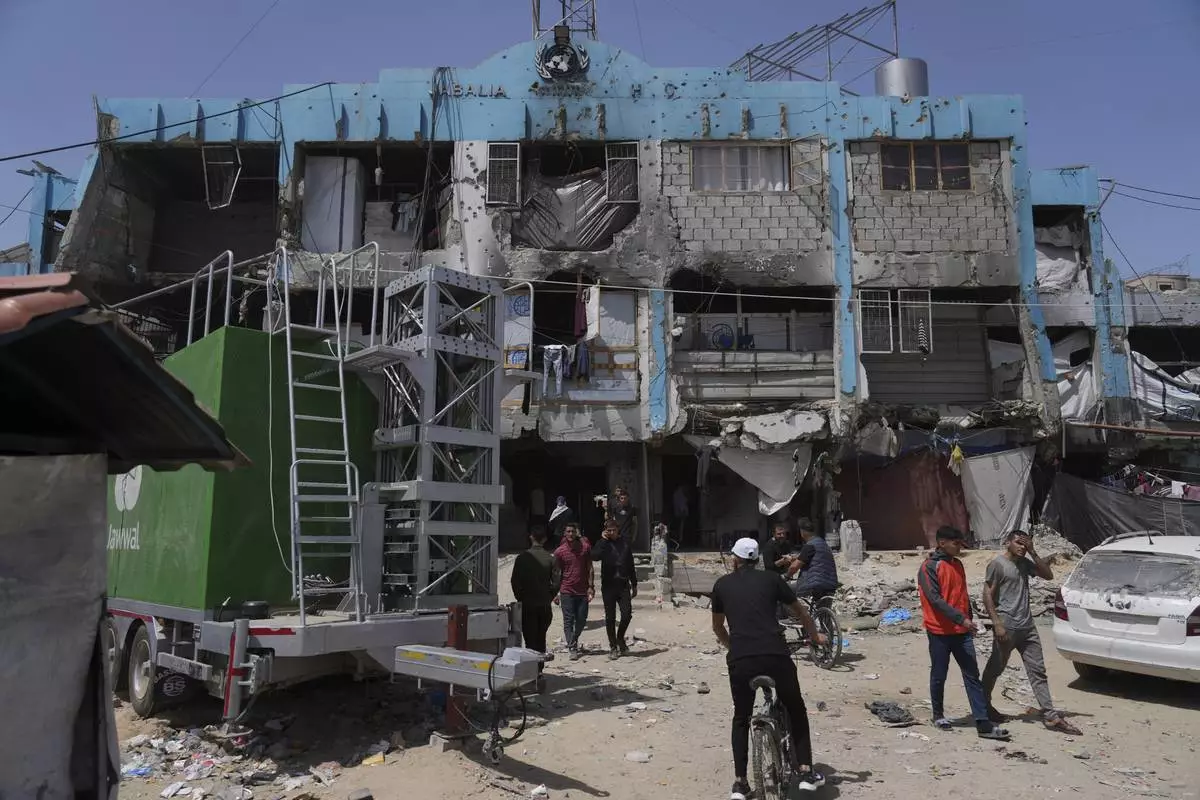
Palestinians inspect a UN building after it was hit by an Israeli strike, in Jabaliya, northern Gaza Strip on Wednesday, April 2, 2025. (AP Photo/Jehad Alshrafi)
Palestinians inspect a UN building after it was hit by an Israeli strike, in Jabaliya, northern Gaza Strip on Wednesday, April 2, 2025. (AP Photo/Jehad Alshrafi)

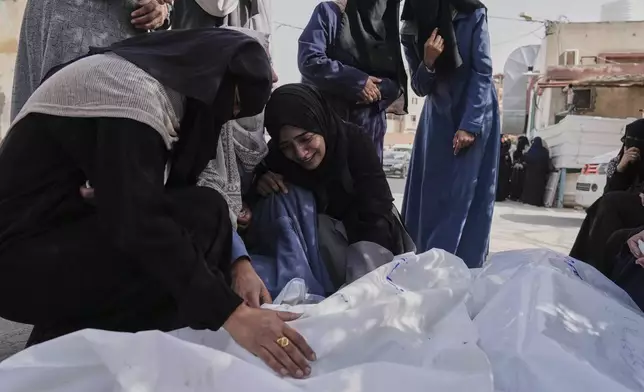
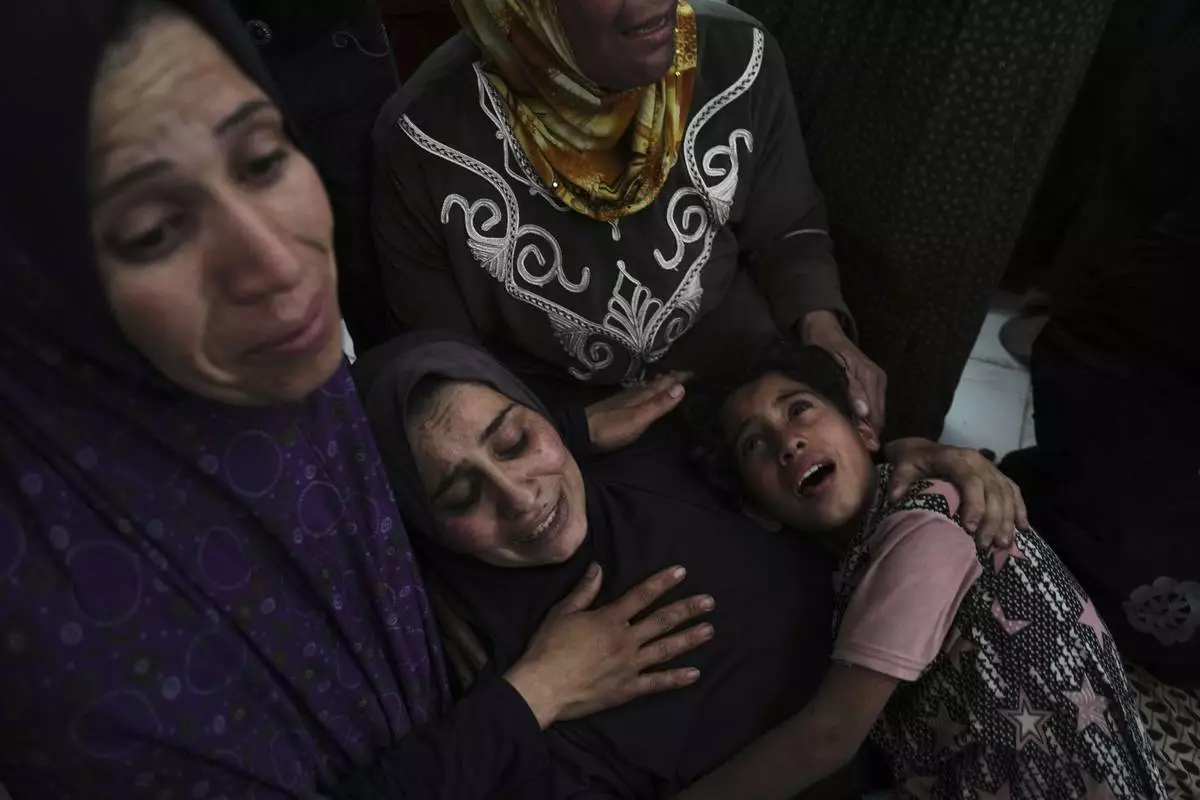
Palestinians react next to the bodies of their relatives, killed in an Israeli army strike, before their burial at a hospital in Khan Younis, Gaza Strip on Wednesday, April 2, 2025. (AP Photo/Abdel Kareem Hana)
Palestinians react next to the bodies of their relatives, killed in an Israeli army strike, before their burial at a hospital in Khan Younis, Gaza Strip on Wednesday, April 2, 2025. (AP Photo/Abdel Kareem Hana)

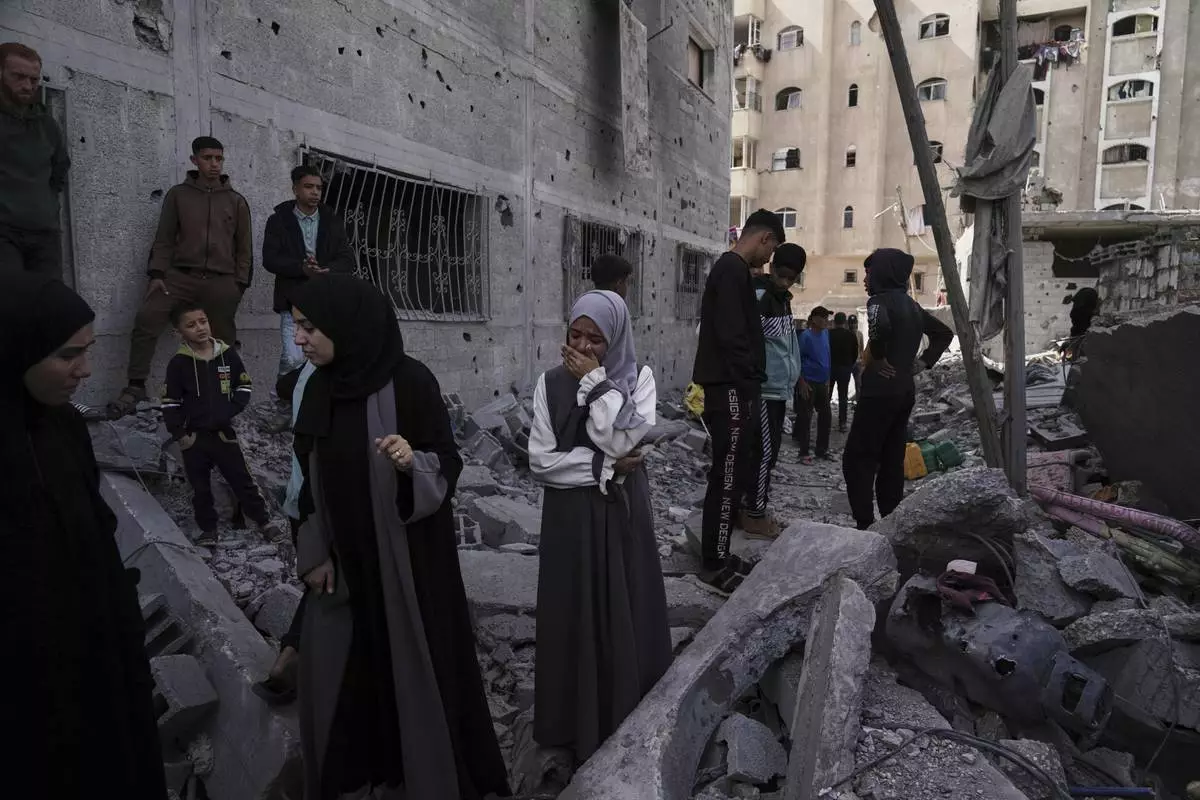
Palestinians inspect the site hit by an Israeli strike in Khan Younis, Gaza Strip on Wednesday, April 2, 2025. (AP Photo/Abdel Kareem Hana)
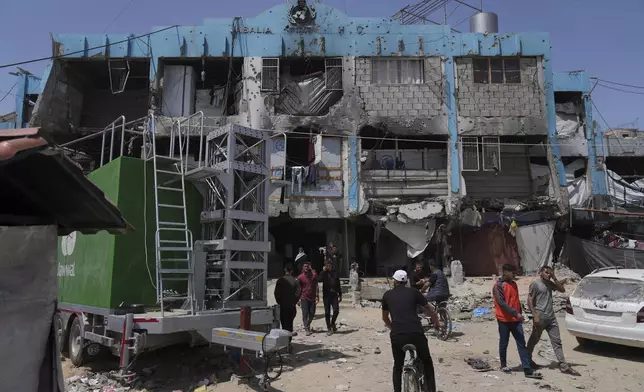
Palestinians inspect the site hit by an Israeli strike in Khan Younis, Gaza Strip on Wednesday, April 2, 2025. (AP Photo/Abdel Kareem Hana)

Palestinians inspect a UN building after it was hit by an Israeli strike, in Jabaliya, northern Gaza Strip on Wednesday, April 2, 2025. (AP Photo/Jehad Alshrafi)
Palestinians inspect a UN building after it was hit by an Israeli strike, in Jabaliya, northern Gaza Strip on Wednesday, April 2, 2025. (AP Photo/Jehad Alshrafi)

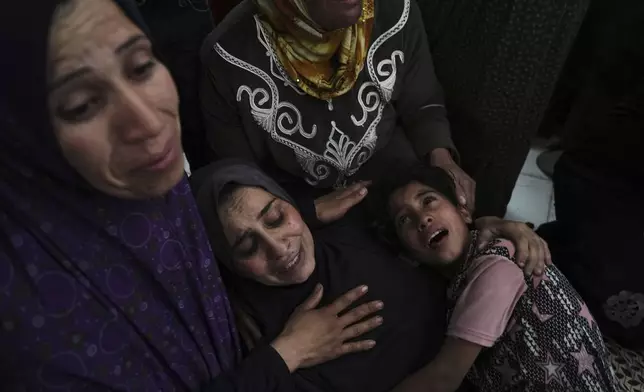
Palestinians grieve over the bodies of their relatives, who were killed in an Israeli airstrike, as they prepare for burial at a hospital in Beit Lahiya, Gaza Strip, on Wednesday, April 2, 2025. (AP Photo/Jehad Alshrafi)
Palestinians grieve over the bodies of their relatives, who were killed in an Israeli airstrike, as they prepare for burial at a hospital in Beit Lahiya, Gaza Strip, on Wednesday, April 2, 2025. (AP Photo/Jehad Alshrafi)

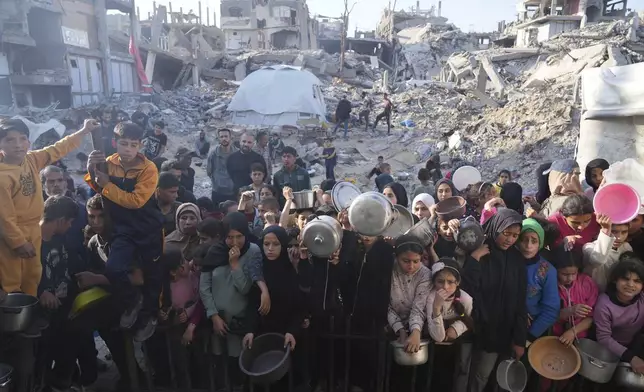
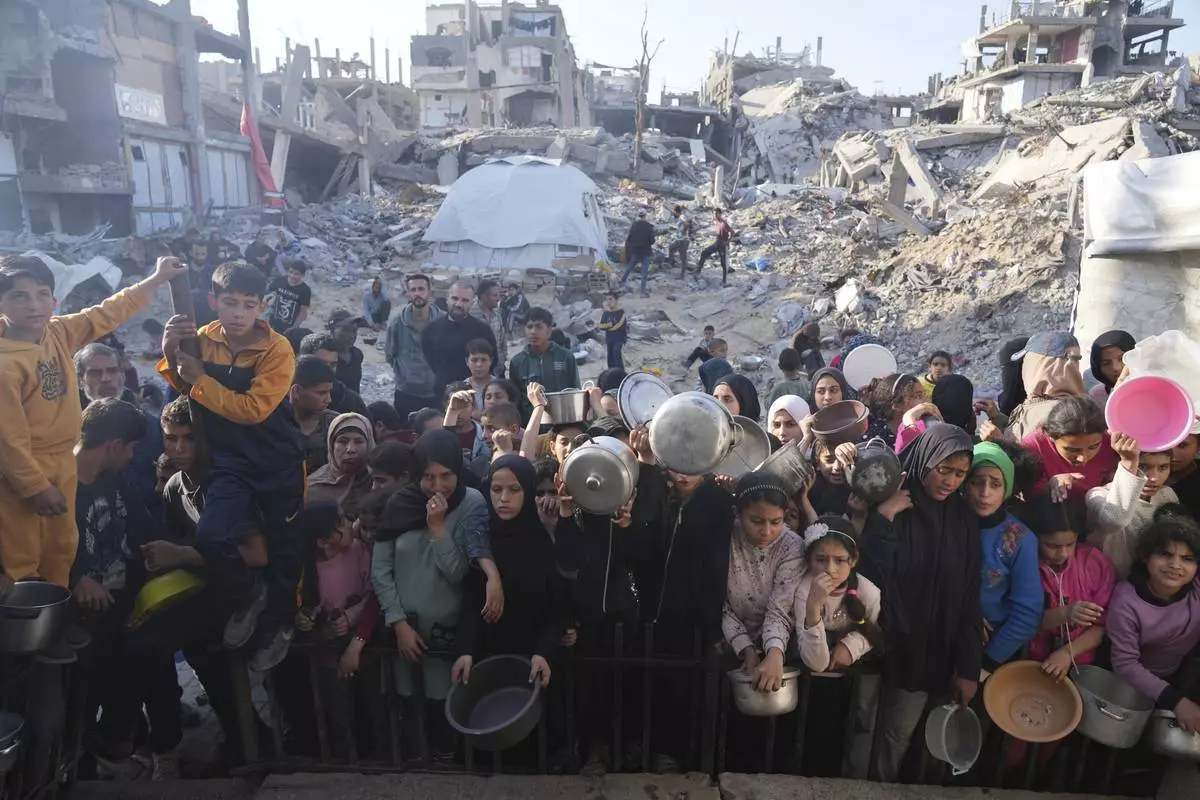
FILE - Palestinians wait for donated food at a distribution center in Beit Lahiya, northern Gaza Strip, Sunday, March 16, 2025. (AP Photo/Abdel Kareem Hana, File)
FILE - Palestinians wait for donated food at a distribution center in Beit Lahiya, northern Gaza Strip, Sunday, March 16, 2025. (AP Photo/Abdel Kareem Hana, File)

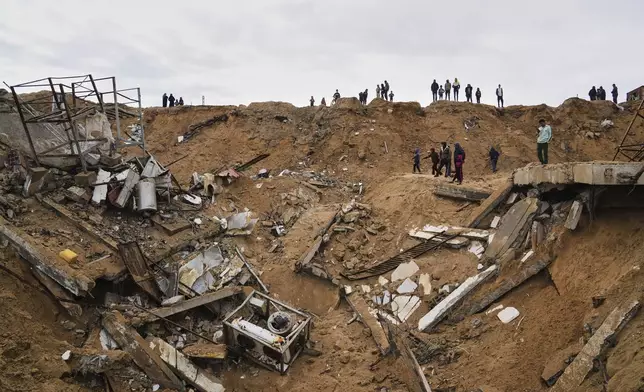
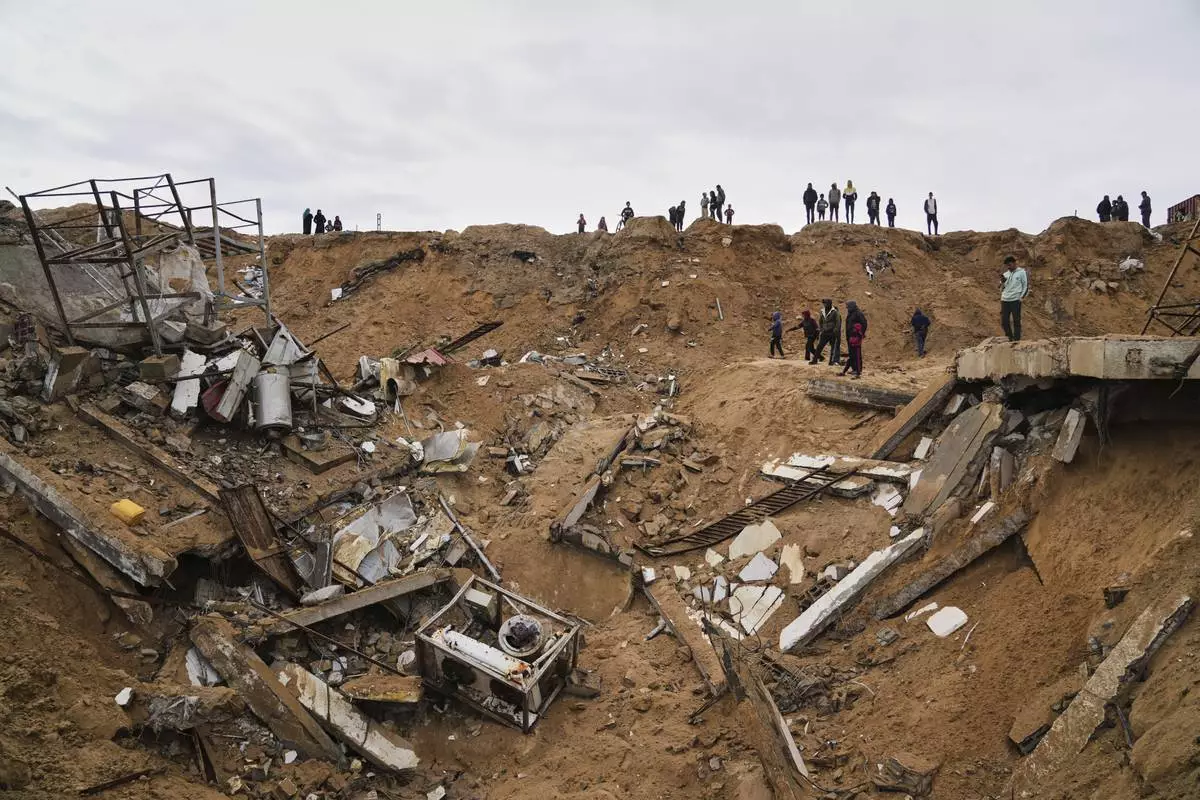
FILE - Palestinians inspect the rubble caused by an Israeli bombardment in Deir al-Balah, Gaza Strip on Saturday, March 22, 2025. (AP Photo/Abdel Kareem Hana, File)
FILE - Palestinians inspect the rubble caused by an Israeli bombardment in Deir al-Balah, Gaza Strip on Saturday, March 22, 2025. (AP Photo/Abdel Kareem Hana, File)

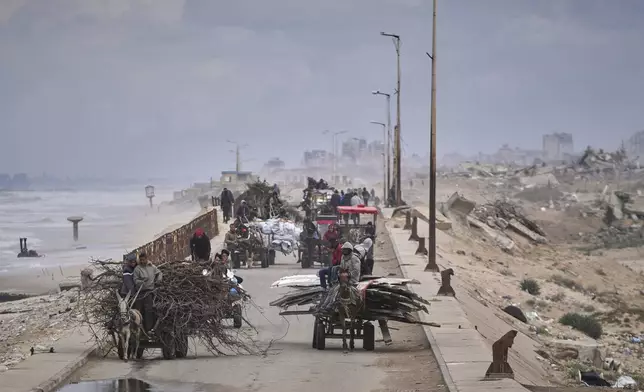
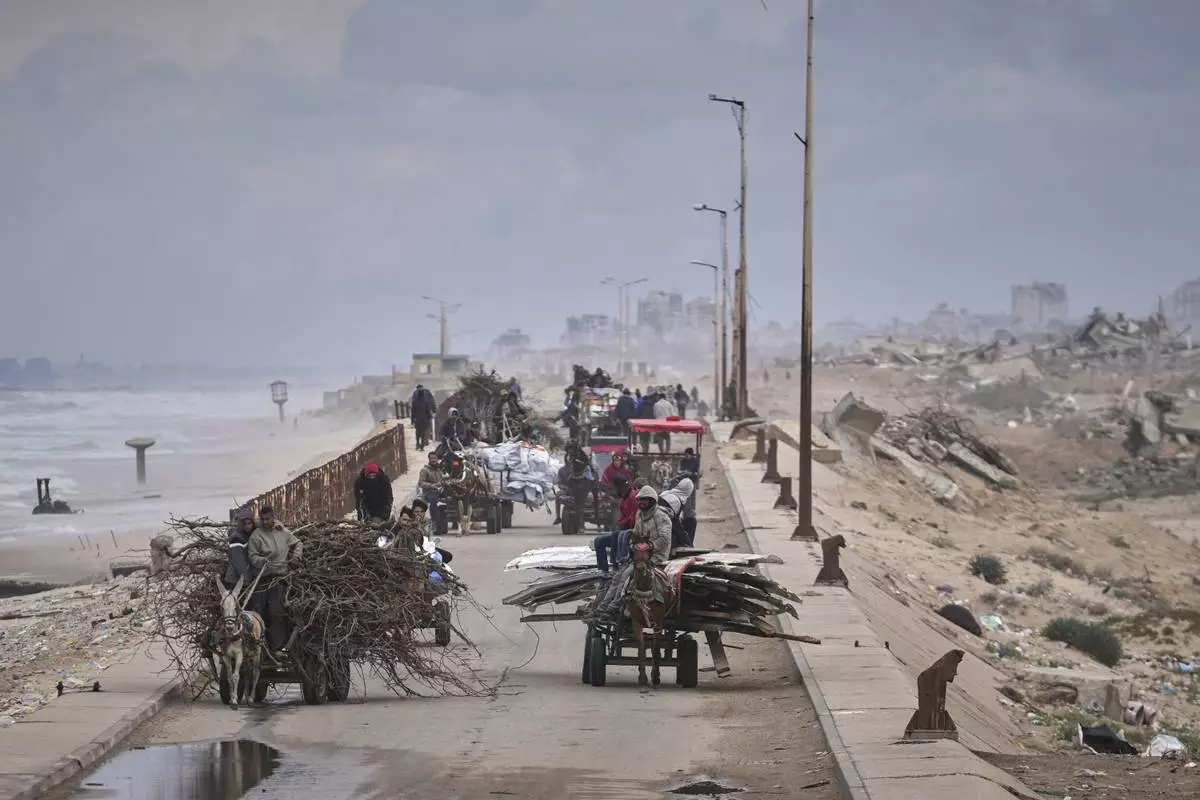
FILE - Displaced Palestinians carry their belongings on the outskirts of Gaza City, Friday March 21, 2025. (AP Photo/Abdel Kareem Hana, File)
FILE - Displaced Palestinians carry their belongings on the outskirts of Gaza City, Friday March 21, 2025. (AP Photo/Abdel Kareem Hana, File)

FILE - Palestinians who fled Rafah after Israeli evacuation orders arrive in Khan Younis, Gaza, on Sunday, March 23, 2025. (AP Photo/Abdel Kareem Hana, File)
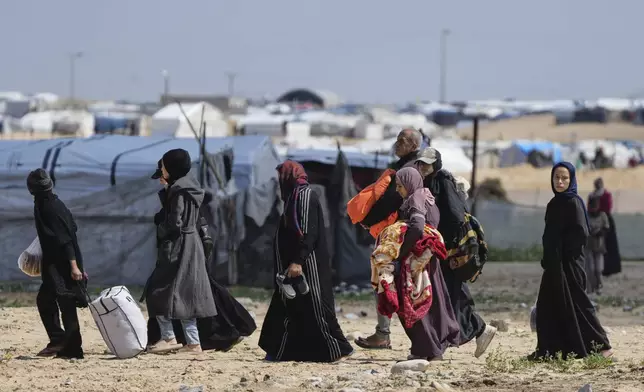
FILE - Palestinians who fled Rafah after Israeli evacuation orders arrive in Khan Younis, Gaza, on Sunday, March 23, 2025. (AP Photo/Abdel Kareem Hana, File)

FILE - Displaced Palestinians arrive in Khan Younis, Gaza, on Sunday, March 23, 2025. (AP Photo/Abdel Kareem Hana, File)
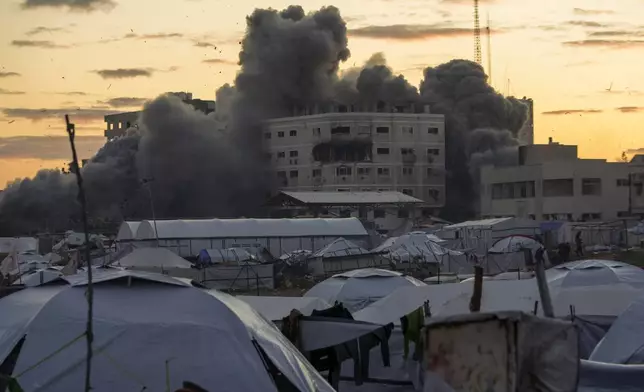
FILE - Displaced Palestinians arrive in Khan Younis, Gaza, on Sunday, March 23, 2025. (AP Photo/Abdel Kareem Hana, File)

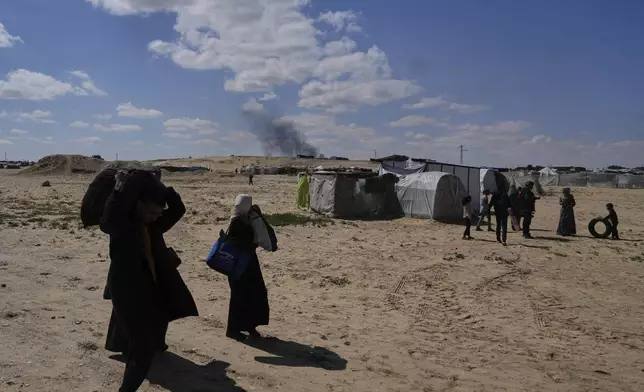
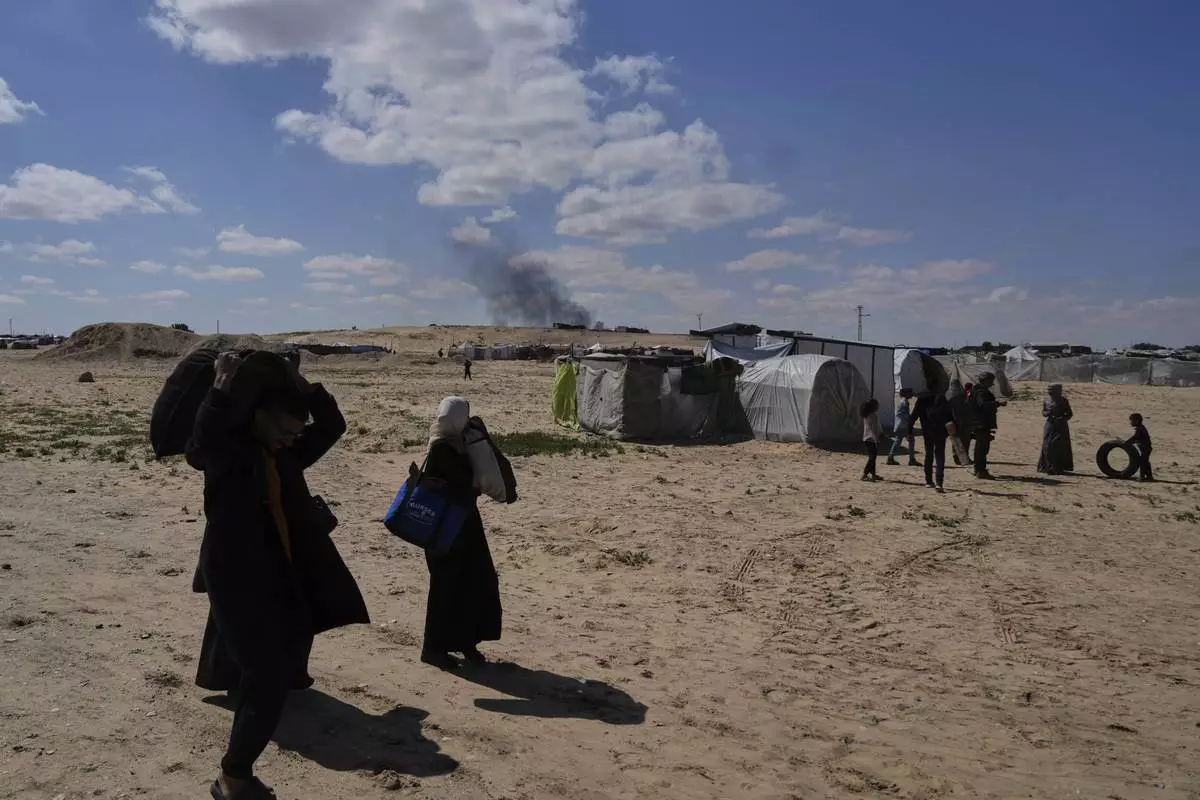
FILE - Behind a tent camp for displaced Palestinians, smoke rises from a building after it was targeted by an Israeli army strike in Gaza City, Saturday, March 22, 2025. (AP Photo/Jehad Alshrafi, File)
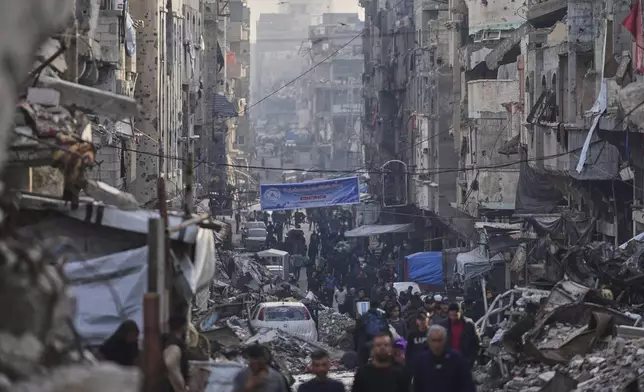
FILE - Behind a tent camp for displaced Palestinians, smoke rises from a building after it was targeted by an Israeli army strike in Gaza City, Saturday, March 22, 2025. (AP Photo/Jehad Alshrafi, File)

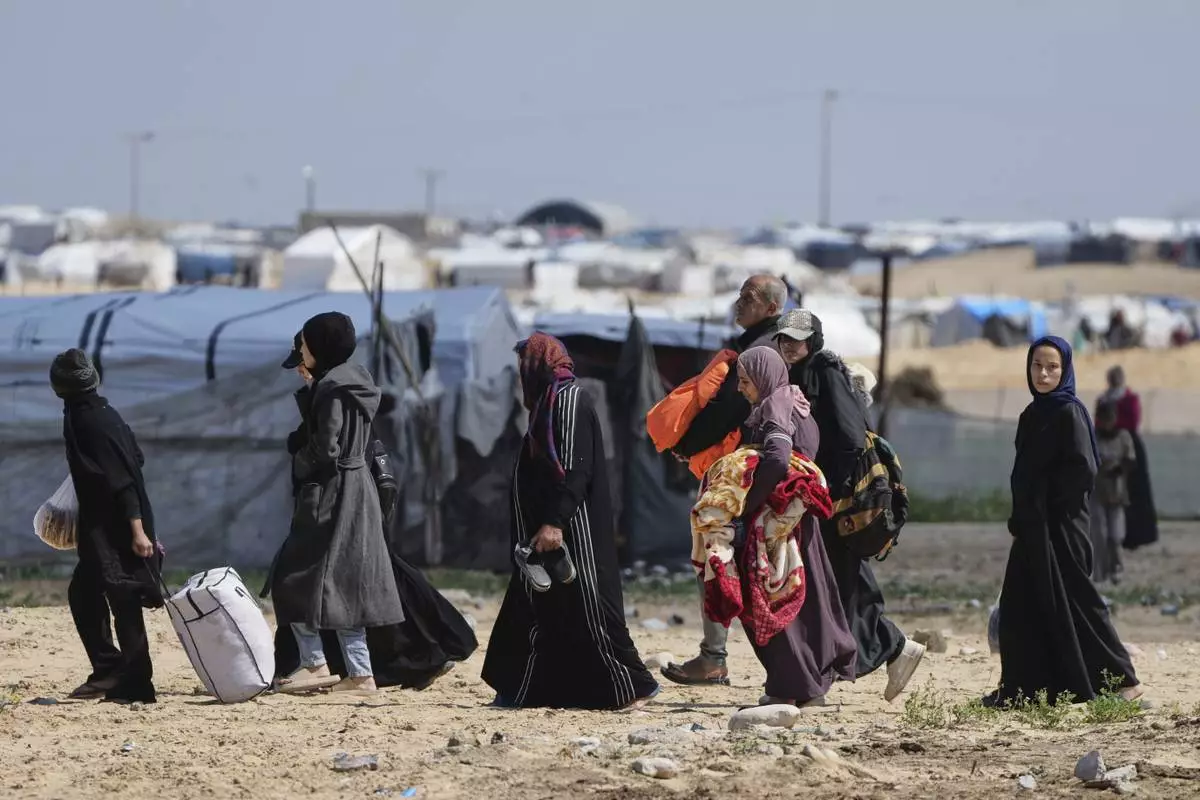
FILE - Palestinians walk through Al-Shati camp, Gaza City, Tuesday, March 25, 2025. (AP Photo/Jehad Alshrafi, File)
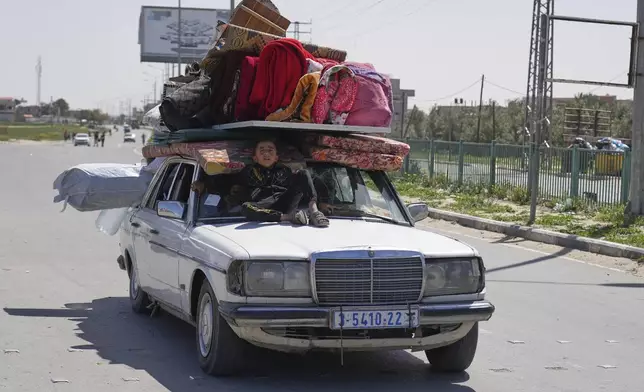
FILE - Palestinians walk through Al-Shati camp, Gaza City, Tuesday, March 25, 2025. (AP Photo/Jehad Alshrafi, File)

FILE - Palestinians who fled Rafah after Israeli evacuation orders, arrive in Khan Younis, Gaza, on Monday, March 31, 2025. (AP Photo/Abdel Kareem Hana, File)
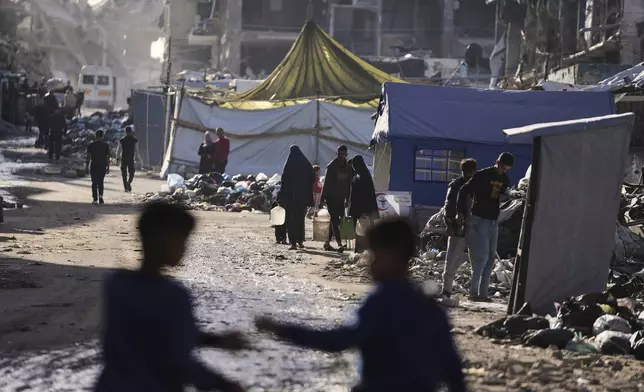
FILE - Palestinians who fled Rafah after Israeli evacuation orders, arrive in Khan Younis, Gaza, on Monday, March 31, 2025. (AP Photo/Abdel Kareem Hana, File)

FILE - Displaced Palestinians carry water in Jabaliya, Gaza Strip on Monday, March 31, 2025. (AP Photo/Jehad Alshrafi, File)

FILE - Displaced Palestinians carry water in Jabaliya, Gaza Strip on Monday, March 31, 2025. (AP Photo/Jehad Alshrafi, File)

Israel has vowed to escalate the nearly 18-month war with Hamas until the militant group returns dozens of remaining hostages, disarms and leaves the territory. Israel ended a ceasefire in March and has imposed a monthlong halt on all imports of food, fuel and humanitarian aid.

Netanyahu described the new axis as the Morag corridor, using the name of a Jewish settlement that once stood between Rafah and Khan Younis, suggesting it would run between the two southern cities. He said it would be "a second Philadelphi corridor " referring to the Gaza side of the border with Egypt further south, which has been under Israeli control since last May.

Israel has reasserted control over the Netzarim corridor, also named for a former settlement, that cuts off the northern third of Gaza, including Gaza City, from the rest of the narrow coastal strip. Both of the existing corridors run from the Israeli border to the Mediterranean Sea.

“We are cutting up the strip, and we are increasing the pressure step by step, so that they will give us our hostages,” Netanyahu said.

The Western-backed Palestinian Authority, led by rivals of Hamas, expressed its “complete rejection” of the planned corridor. Its statement also called for Hamas to give up power in Gaza, where the militant group has faced rare protests recently.

In northern Gaza, an Israeli airstrike hit a U.N. building in the built-up Jabaliya refugee camp, killing 15 people, including nine children and two women, according to the Indonesian Hospital. The Israeli military said it struck Hamas militants in a command and control center.

The building, previously a clinic, had been converted into a shelter for displaced people, with more than 700 residing there, according to Juliette Touma, a spokesperson for the U.N. agency for Palestinian refugees, the main aid provider in Gaza. No U.N. staff were wounded in the strike.

She said U.N. staff warned people about the dangers of remaining there after Wednesday's strike but that many chose to stay, “simply because they have absolutely nowhere else to go.”

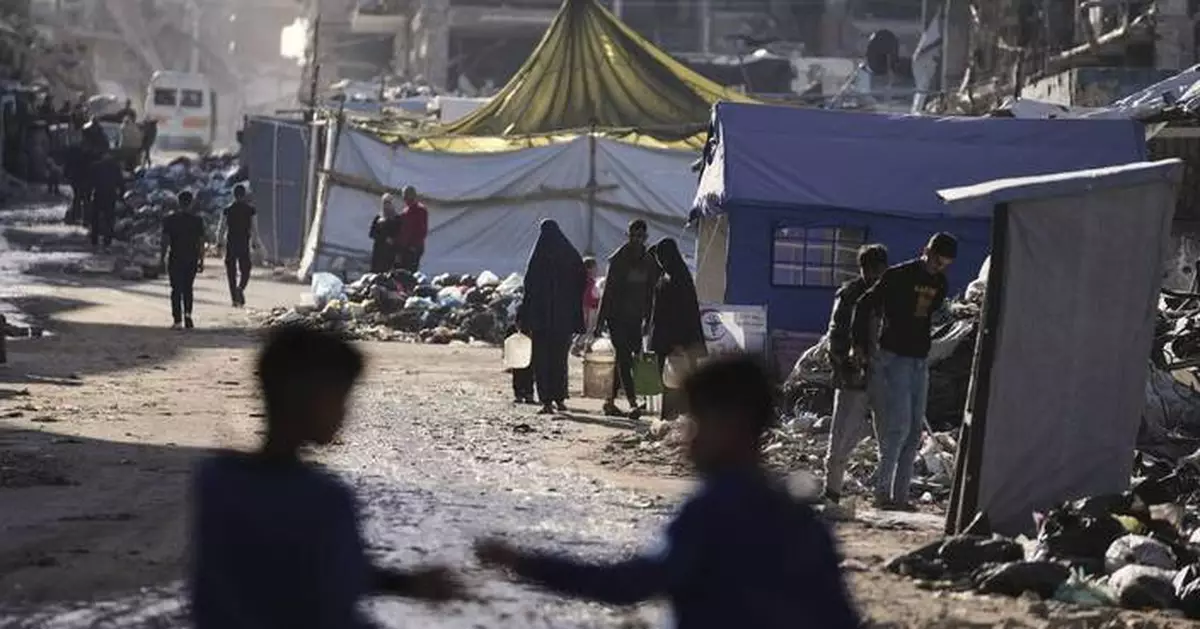
More than 60% of Gaza is now considered a “no-go” zone because of Israeli evacuation orders, according to Olga Cherevko, a spokesperson for the U.N. humanitarian aid office. Hundreds of thousands people are living in squalid tent camps along the coast or in the ruins of their destroyed homes.

Israeli Defense Minister Israel Katz earlier said Israel would seize “large areas” and add them to its security zones, apparently referring to an existing buffer zone along Gaza's entire perimeter. He called on Gaza residents to “expel Hamas and return all the hostages,” saying “this is the only way to end the war.”

On Sunday, Netanyahu said Israel plans to maintain overall security control of Gaza after the war and implement President Donald Trump's proposal to resettle much of its population elsewhere through what the Israeli leader referred to as “voluntary emigration.”

Palestinians have rejected the plan, viewing it as expulsion from their homeland after Israel's offensive left much of it uninhabitable, and human rights experts say implementing the plan would likely violate international law.

Hamas has said it will only release the remaining 59 hostages — 24 of whom are believed to be alive — in exchange for the release of more Palestinian prisoners, a lasting ceasefire and an Israeli pullout. The group has rejected demands that it lay down its arms or leave the territory.

The decision to resume the war has fueled protests in Israel, where many fear it has put the hostages at grave risk and are calling for another ceasefire and exchange with Hamas.

The Hostage Families Forum, which represents most captives’ families, said they were “horrified to wake up this morning to the Defense Minister’s announcement about expanding military operations in Gaza.”

The group called on the Trump administration, which took credit for brokering the ceasefire but has supported Israel's decision to end it, to do everything possible to free the remaining captives.

“Our highest priority must be an immediate deal to bring ALL hostages back home — the living for rehabilitation and those killed for proper burial — and end this war,” the group said.

In addition to the 15 killed in northern Gaza, Israeli airstrikes overnight into Wednesday killed another 28 people across the territory, according to local hospitals. The Nasser Hospital in the southern city of Khan Younis said the dead included five women, one of them pregnant, and two children.

Israel says it targets only militants and makes every effort to spare civilians, blaming Hamas for their deaths because the militants operate in densely populated areas.

Two projectiles were fired out of Gaza late Wednesday and intercepted, the Israeli military said. It later issued evacuation orders for several communities in northern Gaza, “with a focus on shelters,” indicating it would soon carry out retaliatory strikes.

The war began when Hamas-led militants attacked southern Israel on Oct. 7, 2023, killing around 1,200 people, mostly civilians, and taking 251 hostages, most of whom have since been released in ceasefire agreements and other deals. Israel rescued eight living hostages and has recovered dozens of bodies.

Israel’s offensive has killed more than 50,000 Palestinians, according to Gaza’s Health Ministry, which doesn’t say whether those killed are civilians or combatants. Israel says it has killed around 20,000 militants, without providing evidence.

The war has left vast areas of Gaza in ruins and at its height displaced around 90% of the population.

Scharf reported from Jerusalem. Associated Press writers Elena Becatoros in Athens, Greece; Bassem Mroue in Beirut; and Sam Mednick in Tel Aviv, Israel, contributed to this report.

Follow AP’s war coverage at https://apnews.com/hub/israel-hamas-war
People take part in a protest demanding the immediate release of hostages held by Hamas in the Gaza Strip, in Tel Aviv, Israel, Saturday, March 29, 2025. (AP Photo/Maya Alleruzzo)
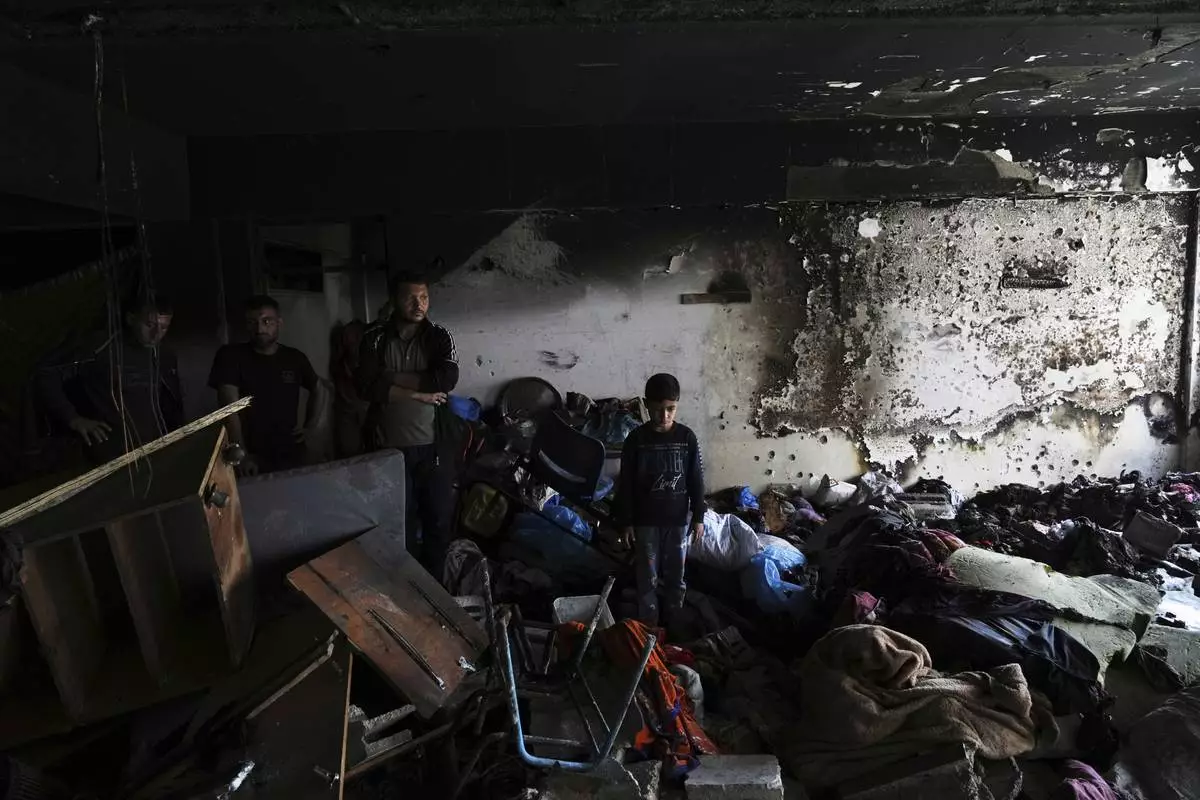
People take part in a protest demanding the immediate release of hostages held by Hamas in the Gaza Strip, in Tel Aviv, Israel, Saturday, March 29, 2025. (AP Photo/Maya Alleruzzo)

Palestinians inspect a UN building after it was hit by an Israeli strike, in Jabaliya, northern Gaza Strip on Wednesday, April 2, 2025. (AP Photo/Jehad Alshrafi)
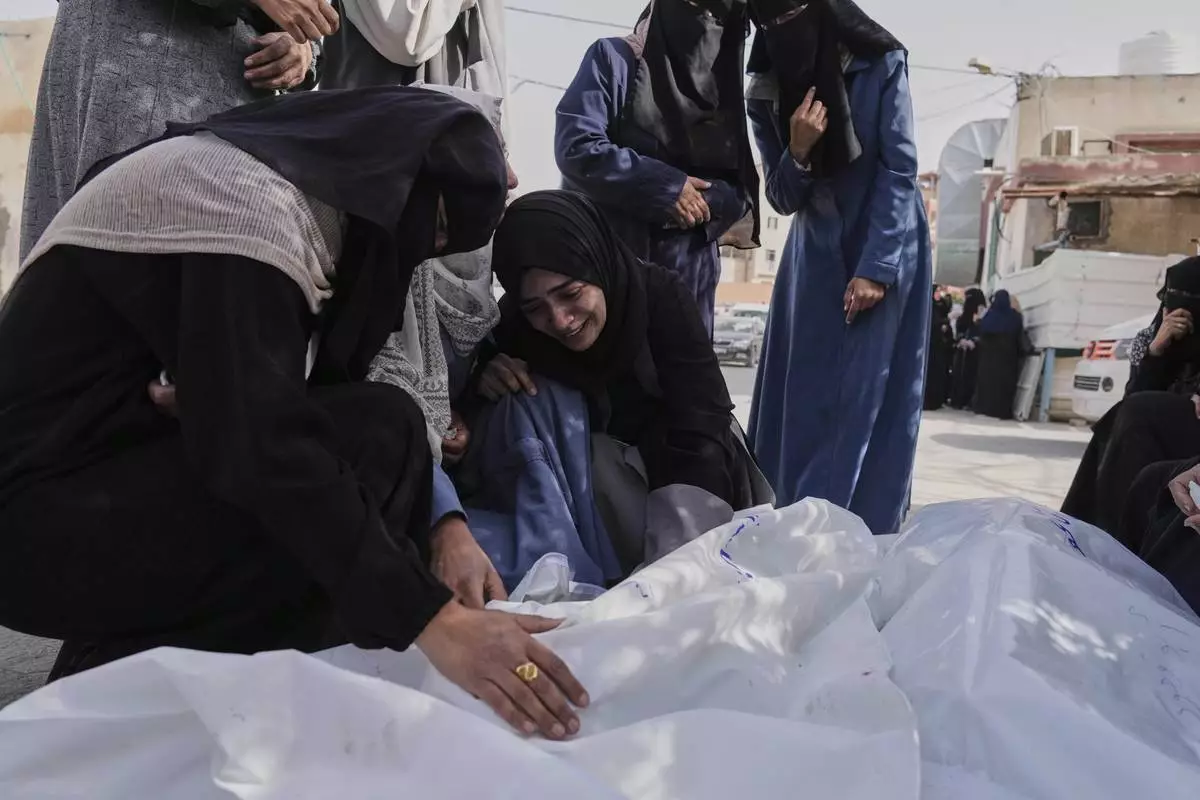
Palestinians inspect a UN building after it was hit by an Israeli strike, in Jabaliya, northern Gaza Strip on Wednesday, April 2, 2025. (AP Photo/Jehad Alshrafi)

Palestinians react next to the bodies of their relatives, killed in an Israeli army strike, before their burial at a hospital in Khan Younis, Gaza Strip on Wednesday, April 2, 2025. (AP Photo/Abdel Kareem Hana)
Palestinians react next to the bodies of their relatives, killed in an Israeli army strike, before their burial at a hospital in Khan Younis, Gaza Strip on Wednesday, April 2, 2025. (AP Photo/Abdel Kareem Hana)

Palestinians inspect the site hit by an Israeli strike in Khan Younis, Gaza Strip on Wednesday, April 2, 2025. (AP Photo/Abdel Kareem Hana)
Palestinians inspect the site hit by an Israeli strike in Khan Younis, Gaza Strip on Wednesday, April 2, 2025. (AP Photo/Abdel Kareem Hana)

Palestinians inspect a UN building after it was hit by an Israeli strike, in Jabaliya, northern Gaza Strip on Wednesday, April 2, 2025. (AP Photo/Jehad Alshrafi)
Palestinians inspect a UN building after it was hit by an Israeli strike, in Jabaliya, northern Gaza Strip on Wednesday, April 2, 2025. (AP Photo/Jehad Alshrafi)

Palestinians grieve over the bodies of their relatives, who were killed in an Israeli airstrike, as they prepare for burial at a hospital in Beit Lahiya, Gaza Strip, on Wednesday, April 2, 2025. (AP Photo/Jehad Alshrafi)
Palestinians grieve over the bodies of their relatives, who were killed in an Israeli airstrike, as they prepare for burial at a hospital in Beit Lahiya, Gaza Strip, on Wednesday, April 2, 2025. (AP Photo/Jehad Alshrafi)

FILE - Palestinians wait for donated food at a distribution center in Beit Lahiya, northern Gaza Strip, Sunday, March 16, 2025. (AP Photo/Abdel Kareem Hana, File)
FILE - Palestinians wait for donated food at a distribution center in Beit Lahiya, northern Gaza Strip, Sunday, March 16, 2025. (AP Photo/Abdel Kareem Hana, File)

FILE - Palestinians inspect the rubble caused by an Israeli bombardment in Deir al-Balah, Gaza Strip on Saturday, March 22, 2025. (AP Photo/Abdel Kareem Hana, File)
FILE - Palestinians inspect the rubble caused by an Israeli bombardment in Deir al-Balah, Gaza Strip on Saturday, March 22, 2025. (AP Photo/Abdel Kareem Hana, File)

FILE - Displaced Palestinians carry their belongings on the outskirts of Gaza City, Friday March 21, 2025. (AP Photo/Abdel Kareem Hana, File)
FILE - Displaced Palestinians carry their belongings on the outskirts of Gaza City, Friday March 21, 2025. (AP Photo/Abdel Kareem Hana, File)

FILE - Palestinians who fled Rafah after Israeli evacuation orders arrive in Khan Younis, Gaza, on Sunday, March 23, 2025. (AP Photo/Abdel Kareem Hana, File)
FILE - Palestinians who fled Rafah after Israeli evacuation orders arrive in Khan Younis, Gaza, on Sunday, March 23, 2025. (AP Photo/Abdel Kareem Hana, File)

FILE - Displaced Palestinians arrive in Khan Younis, Gaza, on Sunday, March 23, 2025. (AP Photo/Abdel Kareem Hana, File)
FILE - Displaced Palestinians arrive in Khan Younis, Gaza, on Sunday, March 23, 2025. (AP Photo/Abdel Kareem Hana, File)

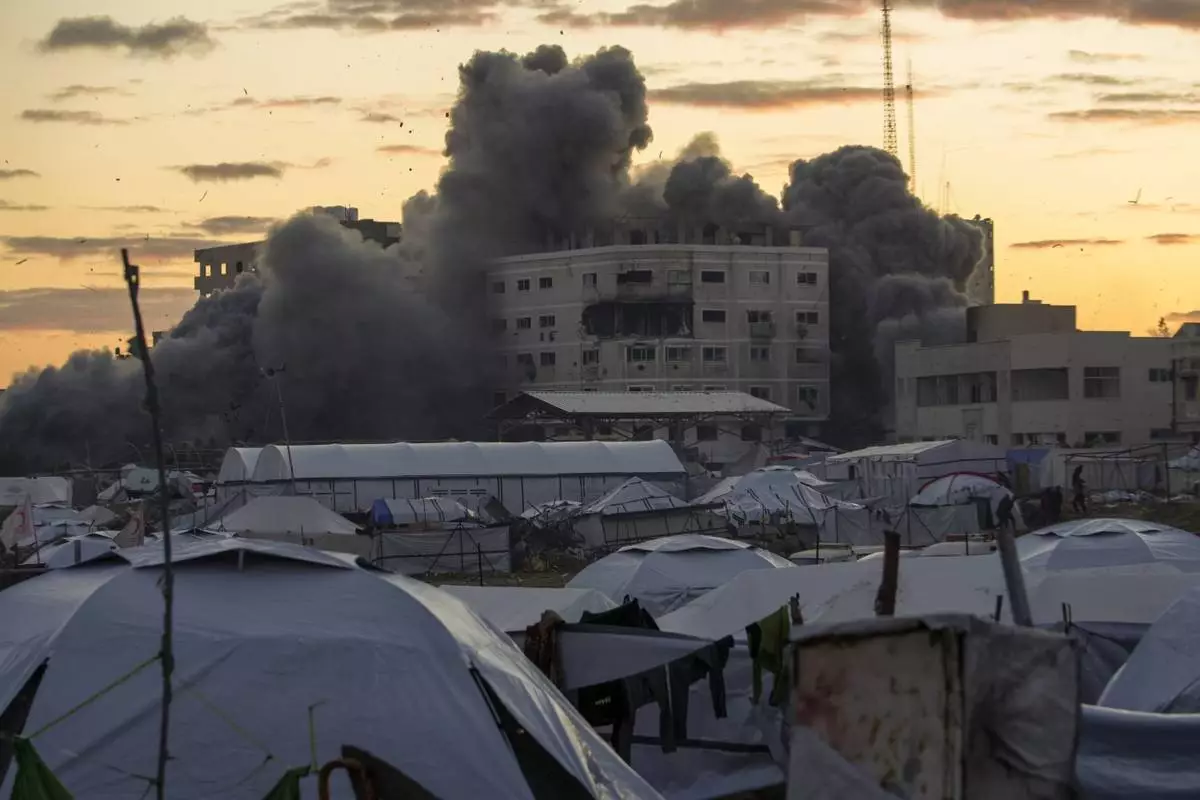
FILE - Behind a tent camp for displaced Palestinians, smoke rises from a building after it was targeted by an Israeli army strike in Gaza City, Saturday, March 22, 2025. (AP Photo/Jehad Alshrafi, File)
FILE - Behind a tent camp for displaced Palestinians, smoke rises from a building after it was targeted by an Israeli army strike in Gaza City, Saturday, March 22, 2025. (AP Photo/Jehad Alshrafi, File)

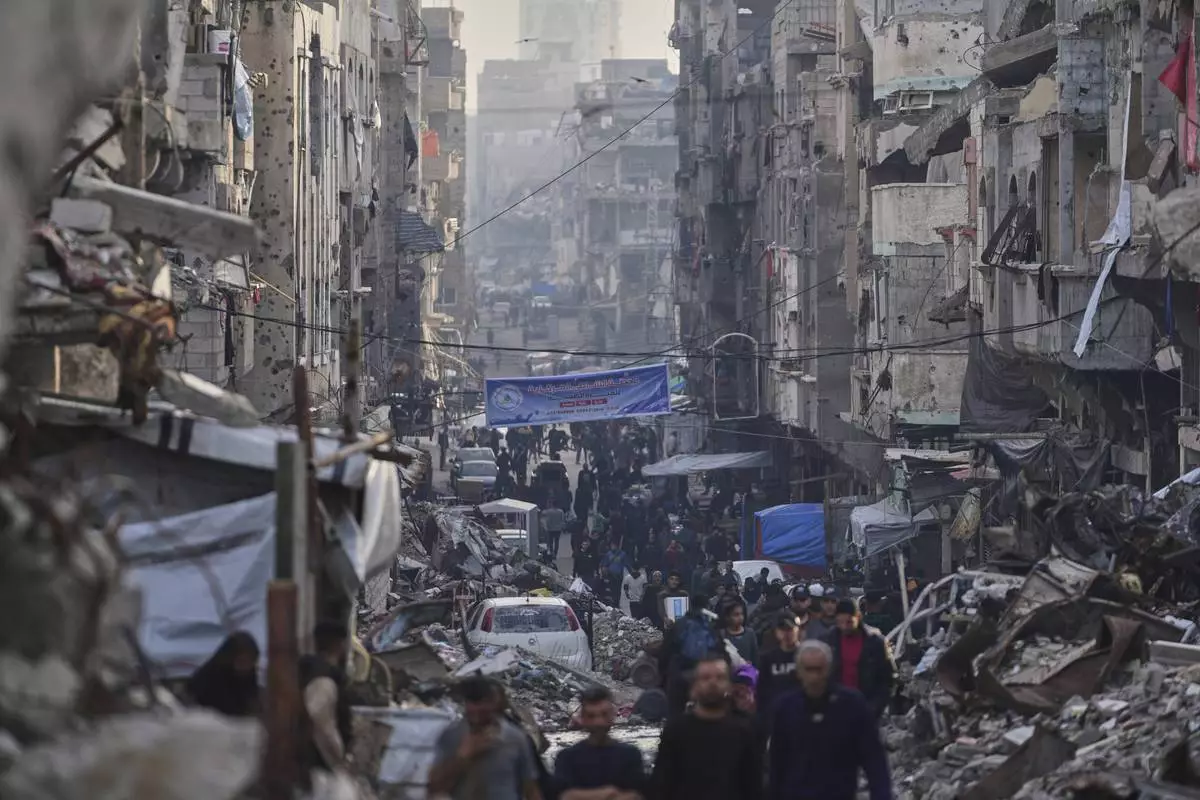
FILE - Palestinians walk through Al-Shati camp, Gaza City, Tuesday, March 25, 2025. (AP Photo/Jehad Alshrafi, File)
FILE - Palestinians walk through Al-Shati camp, Gaza City, Tuesday, March 25, 2025. (AP Photo/Jehad Alshrafi, File)

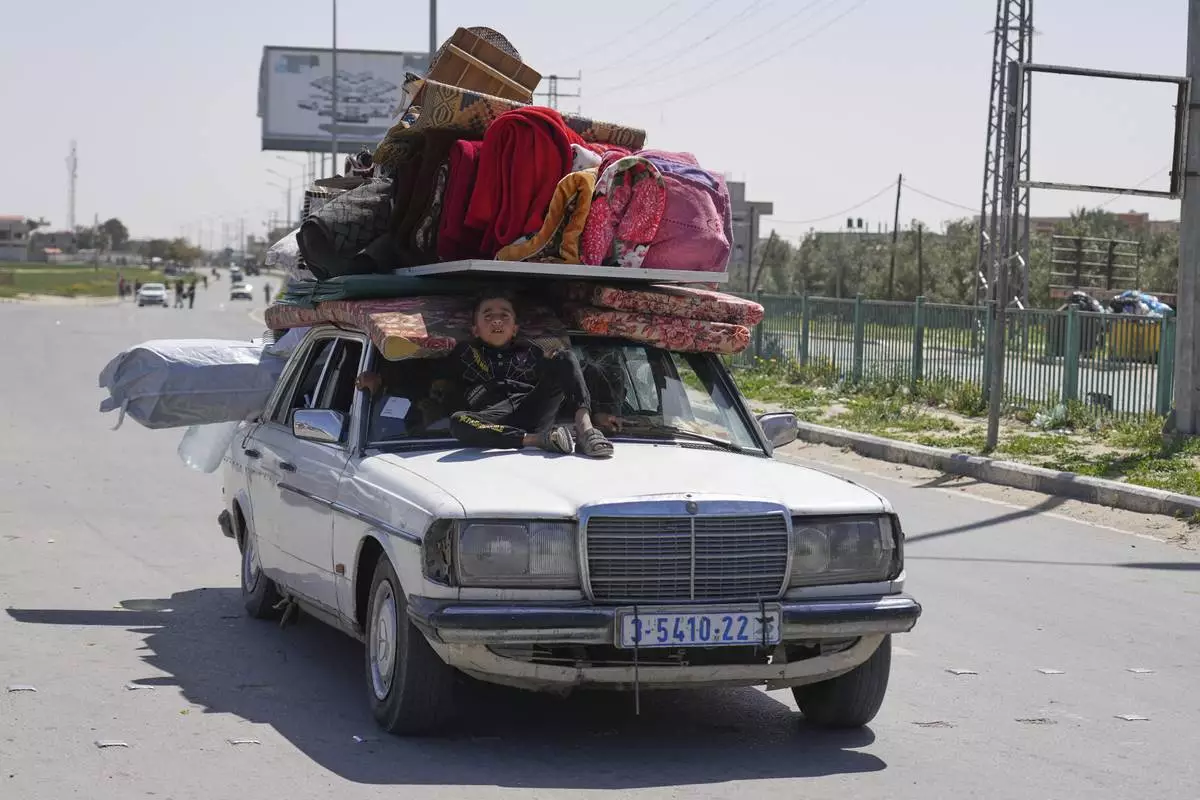
FILE - Palestinians who fled Rafah after Israeli evacuation orders, arrive in Khan Younis, Gaza, on Monday, March 31, 2025. (AP Photo/Abdel Kareem Hana, File)
FILE - Palestinians who fled Rafah after Israeli evacuation orders, arrive in Khan Younis, Gaza, on Monday, March 31, 2025. (AP Photo/Abdel Kareem Hana, File)

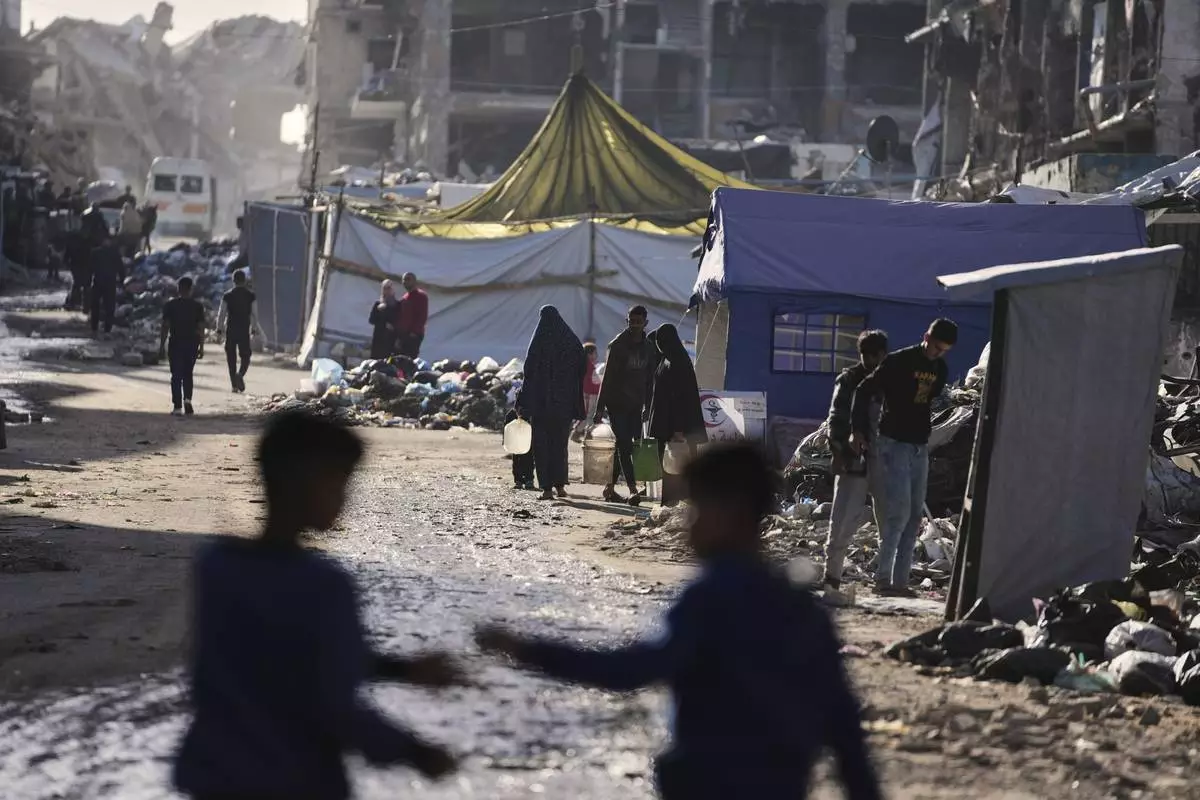
FILE - Displaced Palestinians carry water in Jabaliya, Gaza Strip on Monday, March 31, 2025. (AP Photo/Jehad Alshrafi, File)
FILE - Displaced Palestinians carry water in Jabaliya, Gaza Strip on Monday, March 31, 2025. (AP Photo/Jehad Alshrafi, File)
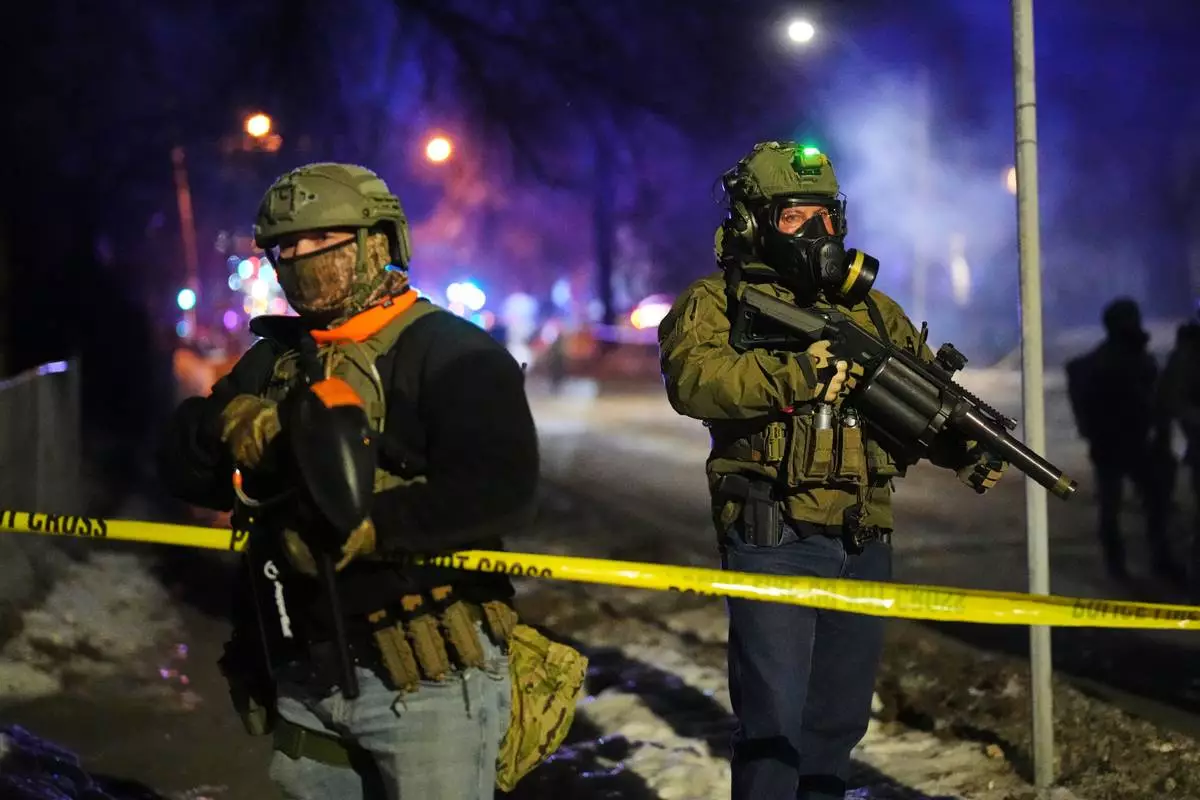
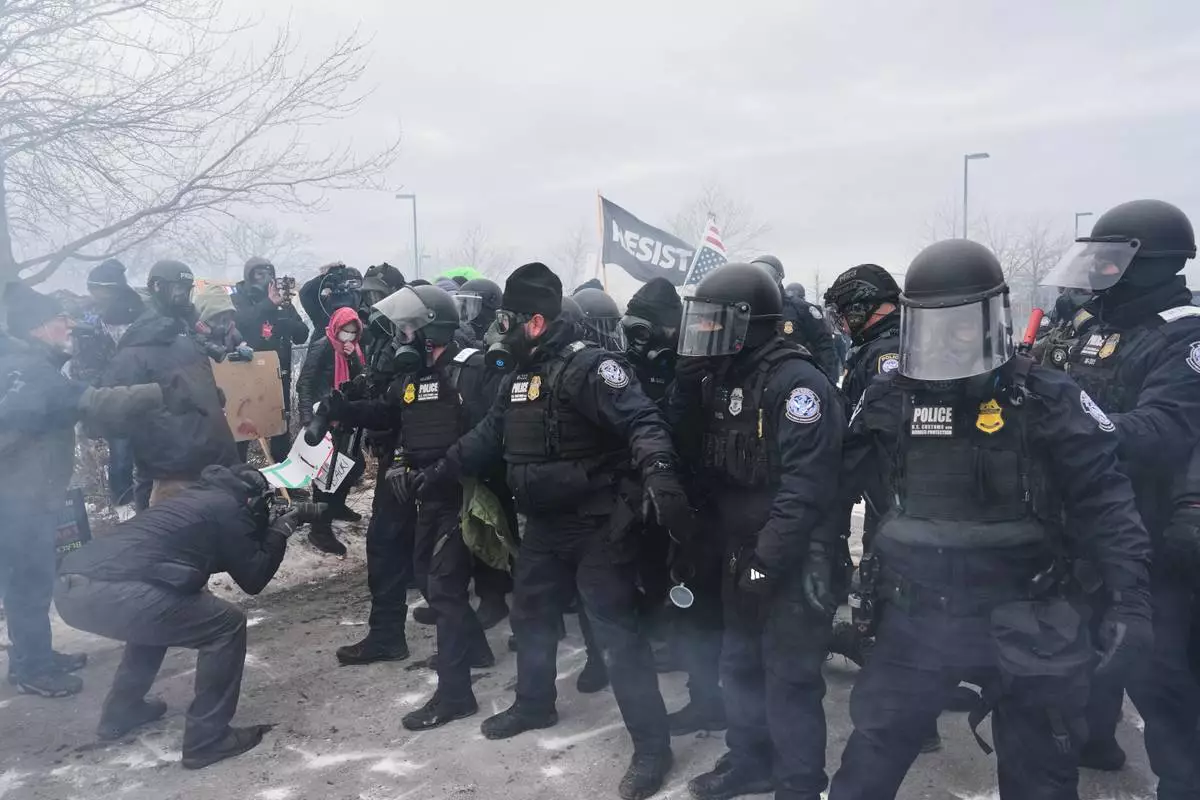
Federal immigration agents deployed to Minneapolis have used aggressive crowd-control tactics that have become a dominant concern in the aftermath of the deadly shooting of a woman in her car last week.

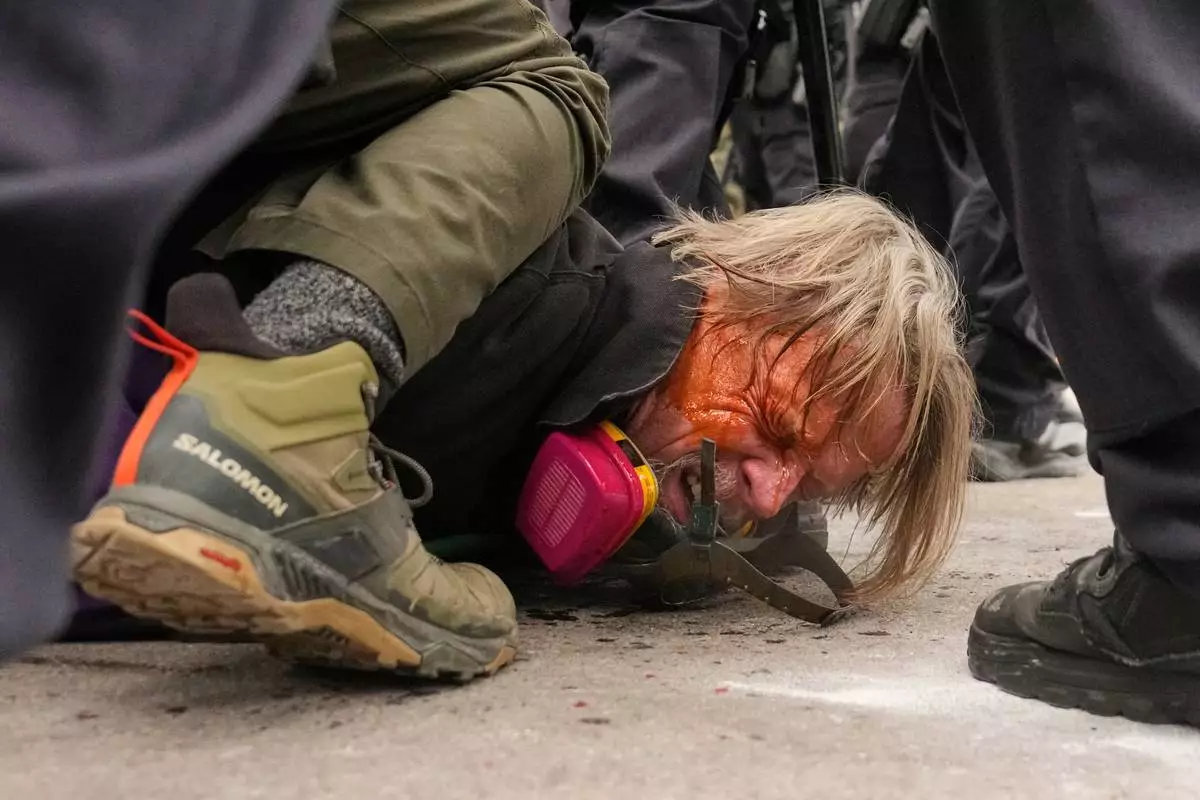
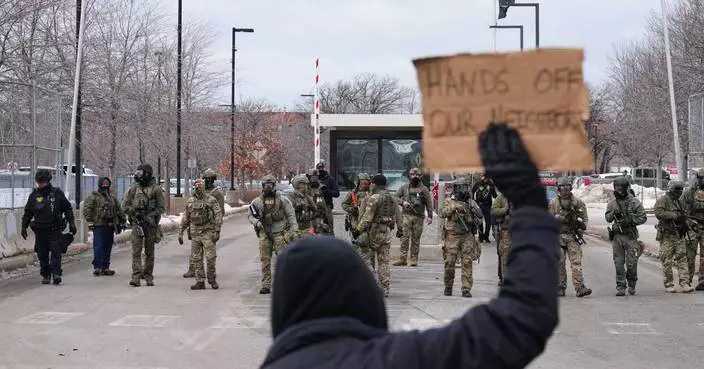
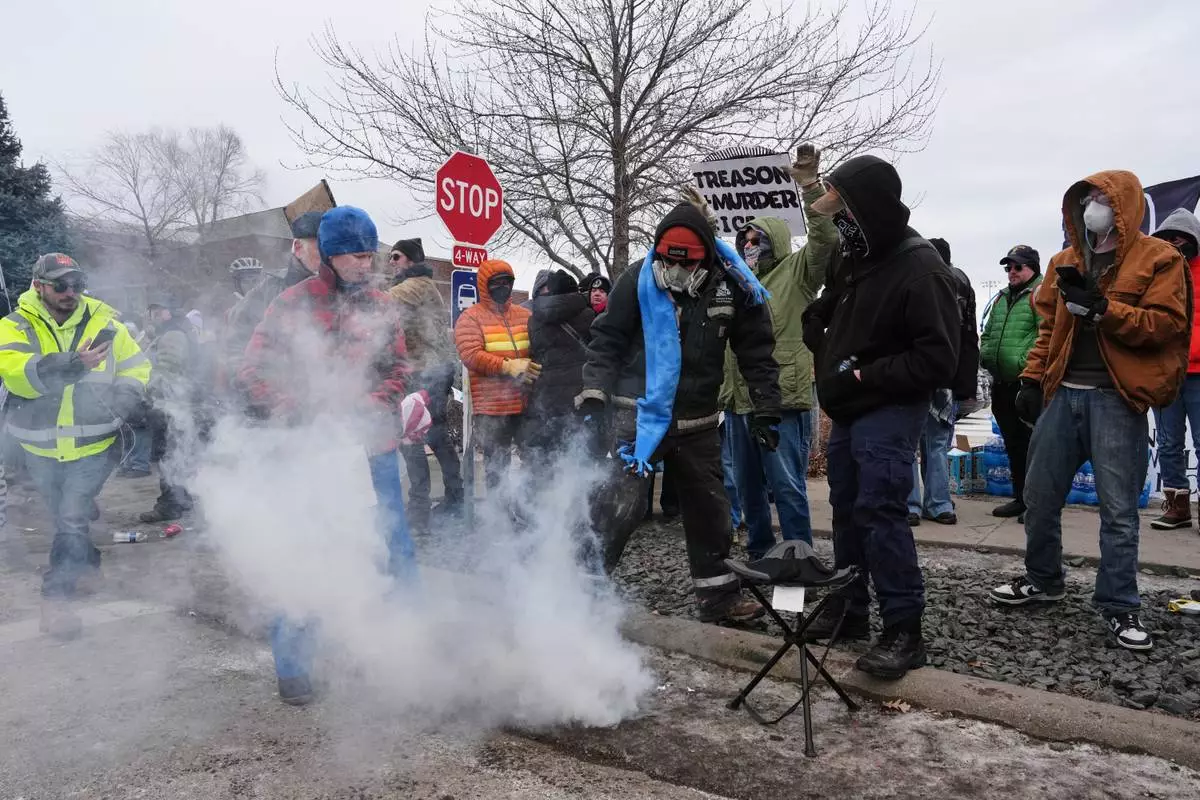
They have pointed rifles at demonstrators and deployed chemical irritants early in confrontations. They have broken vehicle windows and pulled occupants from cars. They have scuffled with protesters and shoved them to the ground.

The government says the actions are necessary to protect officers from violent attacks. The encounters in turn have riled up protesters even more, especially as videos of the incidents are shared widely on social media.

What is unfolding in Minneapolis reflects a broader shift in how the federal government is asserting its authority during protests, relying on immigration agents and investigators to perform crowd-management roles traditionally handled by local police who often have more training in public order tactics and de-escalating large crowds.

Experts warn the approach runs counter to de-escalation standards and risks turning volatile demonstrations into deadly encounters.

The confrontations come amid a major immigration enforcement surge ordered by the Trump administration in early December, which sent more than 2,000 officers from across the Department of Homeland Security into the Minneapolis-St. Paul area. Many of the officers involved are typically tasked with arrests, deportations and criminal investigations, not managing volatile public demonstrations.

Tensions escalated after the fatal shooting of Renee Good, a 37-year-old woman killed by an immigration agent last week, an incident federal officials have defended as self-defense after they say Good weaponized her vehicle.

The killing has intensified protests and scrutiny of the federal response.

On Monday, the American Civil Liberties Union of Minnesota asked a federal judge to intervene, filing a lawsuit on behalf of six residents seeking an emergency injunction to limit how federal agents operate during protests, including restrictions on the use of chemical agents, the pointing of firearms at non-threatening individuals and interference with lawful video recording.

“There’s so much about what’s happening now that is not a traditional approach to immigration apprehensions,” said former Immigration and Customs Enforcement Director Sarah Saldaña.

Saldaña, who left the post at the beginning of 2017 as President Donald Trump's first term began, said she can't speak to how the agency currently trains its officers. When she was director, she said officers received training on how to interact with people who might be observing an apprehension or filming officers, but agents rarely had to deal with crowds or protests.

“This is different. You would hope that the agency would be responsive given the evolution of what’s happening — brought on, mind you, by the aggressive approach that has been taken coming from the top,” she said.

Ian Adams, an assistant professor of criminal justice at the University of South Carolina, said the majority of crowd-management or protest training in policing happens at the local level — usually at larger police departments that have public order units.

“It’s highly unlikely that your typical ICE agent has a great deal of experience with public order tactics or control,” Adams said.

DHS Secretary Tricia McLaughlin said in a written statement that ICE officer candidates receive extensive training over eight weeks in courses that include conflict management and de-escalation. She said many of the candidates are military veterans and about 85% have previous law enforcement experience.

“All ICE candidates are subject to months of rigorous training and selection at the Federal Law Enforcement Training Center, where they are trained in everything from de-escalation tactics to firearms to driving training. Homeland Security Investigations candidates receive more than 100 days of specialized training," she said.

Ed Maguire, a criminology professor at Arizona State University, has written extensively about crowd-management and protest- related law enforcement training. He said while he hasn't seen the current training curriculum for ICE officers, he has reviewed recent training materials for federal officers and called it “horrifying.”

Maguire said what he's seeing in Minneapolis feels like a perfect storm for bad consequences.

“You can't even say this doesn't meet best practices. That's too high a bar. These don't seem to meet generally accepted practices,” he said.

“We’re seeing routinely substandard law enforcement practices that would just never be accepted at the local level,” he added. “Then there seems to be just an absence of standard accountability practices.”

Adams noted that police department practices have "evolved to understand that the sort of 1950s and 1960s instinct to meet every protest with force, has blowback effects that actually make the disorder worse.”

He said police departments now try to open communication with organizers, set boundaries and sometimes even show deference within reason. There's an understanding that inside of a crowd, using unnecessary force can have a domino effect that might cause escalation from protesters and from officers.

Despite training for officers responding to civil unrest dramatically shifting over the last four decades, there is no nationwide standard of best practices. For example, some departments bar officers from spraying pepper spray directly into the face of people exercising Constitutional speech. Others bar the use of tear gas or other chemical agents in residential neighborhoods.

Regardless of the specifics, experts recommend that departments have written policies they review regularly.

“Organizations and agencies aren’t always familiar with what their own policies are,” said Humberto Cardounel, senior director of training and technical assistance at the National Policing Institute.

“They go through it once in basic training then expect (officers) to know how to comport themselves two years later, five years later," he said. "We encourage them to understand and know their training, but also to simulate their training.”

Adams said part of the reason local officers are the best option for performing public order tasks is they have a compact with the community.

“I think at the heart of this is the challenge of calling what ICE is doing even policing,” he said.

"Police agencies have a relationship with their community that extends before and after any incidents. Officers know we will be here no matter what happens, and the community knows regardless of what happens today, these officers will be here tomorrow.”

Saldaña noted that both sides have increased their aggression.

“You cannot put yourself in front of an armed officer, you cannot put your hands on them certainly. That is impeding law enforcement actions,” she said.

“At this point, I’m getting concerned on both sides — the aggression from law enforcement and the increasingly aggressive behavior from protesters.”

Law enforcement officers at the scene of a reported shooting Wednesday, Jan. 14, 2026, in Minneapolis. (AP Photo/Adam Gray)

Law enforcement officers at the scene of a reported shooting Wednesday, Jan. 14, 2026, in Minneapolis. (AP Photo/Adam Gray)

Federal immigration officers confront protesters outside Bishop Henry Whipple Federal Building, Thursday, Jan. 15, 2026, in Minneapolis. (AP Photo/Adam Gray)

Federal immigration officers confront protesters outside Bishop Henry Whipple Federal Building, Thursday, Jan. 15, 2026, in Minneapolis. (AP Photo/Adam Gray)

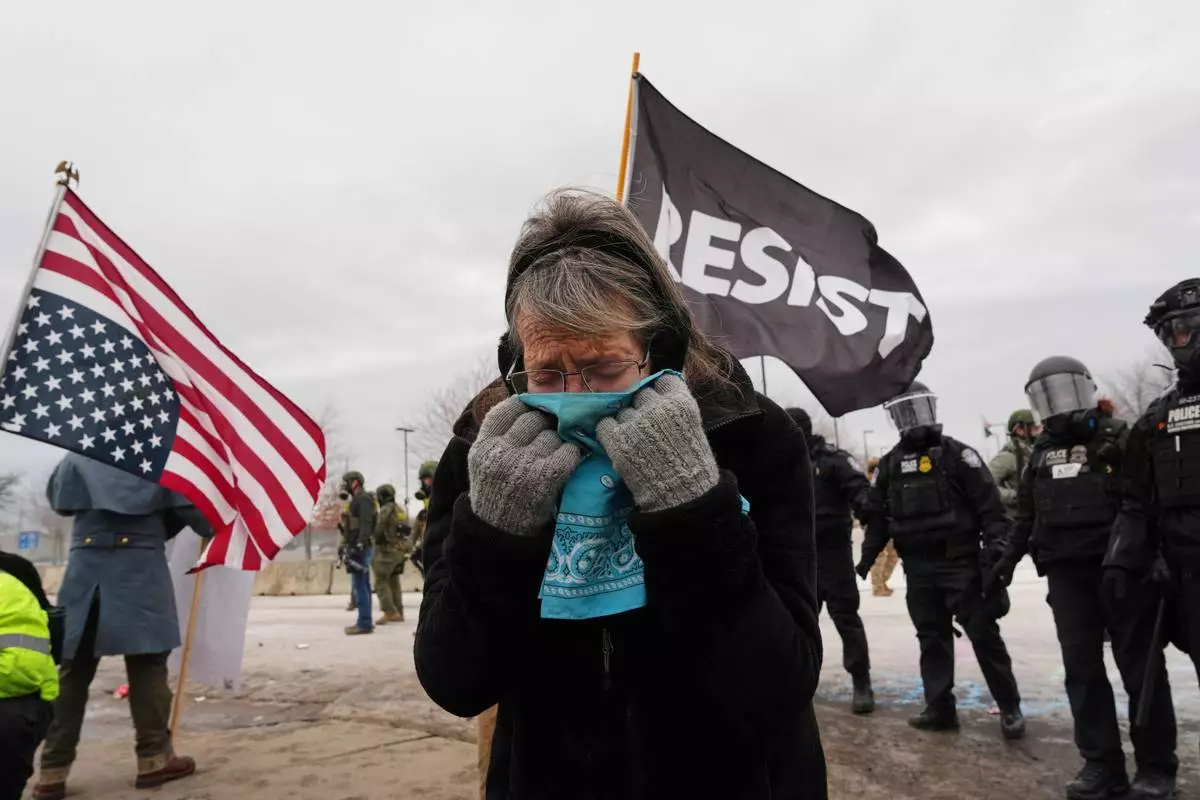
People cover tear gas deployed by federal immigration officers outside Bishop Henry Whipple Federal Building, Thursday, Jan. 15, 2026, in Minneapolis. (AP Photo/Adam Gray)

People cover tear gas deployed by federal immigration officers outside Bishop Henry Whipple Federal Building, Thursday, Jan. 15, 2026, in Minneapolis. (AP Photo/Adam Gray)

A man is pushed to the ground as federal immigration officers confront protesters outside Bishop Henry Whipple Federal Building, Thursday, Jan. 15, 2026, in Minneapolis. (AP Photo/John Locher)

A man is pushed to the ground as federal immigration officers confront protesters outside Bishop Henry Whipple Federal Building, Thursday, Jan. 15, 2026, in Minneapolis. (AP Photo/John Locher)

A woman covers her face from tear gas as federal immigration officers confront protesters outside Bishop Henry Whipple Federal Building, Thursday, Jan. 15, 2026, in Minneapolis. (AP Photo/Adam Gray)

A woman covers her face from tear gas as federal immigration officers confront protesters outside Bishop Henry Whipple Federal Building, Thursday, Jan. 15, 2026, in Minneapolis. (AP Photo/Adam Gray)

Recommended Articles