Long-standing challenges in Mexico's automotive industry have been exacerbated with the implementation of the U.S. tariff on imported cars, which took effect Thursday, fueling uncertainty and job losses.
Last month, U.S. President Donald Trump announced a 25 percent tariff on all imported automobiles.
Ciudad Juarez, one of Mexico's largest trade ports and a key manufacturing hub, is now facing even greater challenges as rising trade protectionism deepens existing pressures.
At a medal parts manufacturing factory that has been in operation for over 30 years, the workforce has drastically reduced from 60 workers to just 25 due to uncertainty about the future.
Even before the U.S. tariffs on imported cars took effect, mounting pressure had already begun to ripple through the industry, prompting many companies to suspend investment and procurement plans.
"Some 95 percent of the products exported from Chihuahua, where Ciudad Juarez is located, are industrial manufactured goods. We have held multiple meetings to discuss solutions. In fact, over the past year and a half, more than 55,000 factory workers here in the city have lost their jobs," said the owner of the factory.
The automotive industry is a key pillar of Mexico's economy, generating nearly 100 billion U.S. dollars in output. The auto parts assembly industry alone provides over 900,000 jobs for the country, while automotive assembly companies create 175,000 jobs.
According to statistics from the Mexican Association of Automotive Dealers (AMDA), over 40 percent of the components used by American auto manufacturers are imported from Mexico. Last year, Mexico produced four million cars, approximately three million of which were exported to the U.S.
Industry insiders indicate that due to the high degree of interdependence in the sector between the U.S. and Mexico, along with a shortage of skilled labor, the U.S. goal of bringing automotive manufacturing back to its shores through tariffs is unlikely to be realized in the short term.
Moreover, the established industrial chain in Mexico faces the risk of being disrupted, which will ultimately have repercussions on consumer spending and further exacerbate inflation in the long run.
"Young people from the U.S. are no longer willing to work in the manufacturing sector. I believe there will be no growth in the relocation of automotive parts and vehicles factories in the short term," said Guillermo Rosales Zarate, ADMA's executive president.
"Personally, I hope this avalanche of tariffs doesn't continue; otherwise, it will lead to more significant issues affecting the U.S. economy. If these tariffs remain in place long-term, it will be the American people who suffer the most," said Ricardo Ramos, a professor with the Autonomous University of Ciudad Juarez.
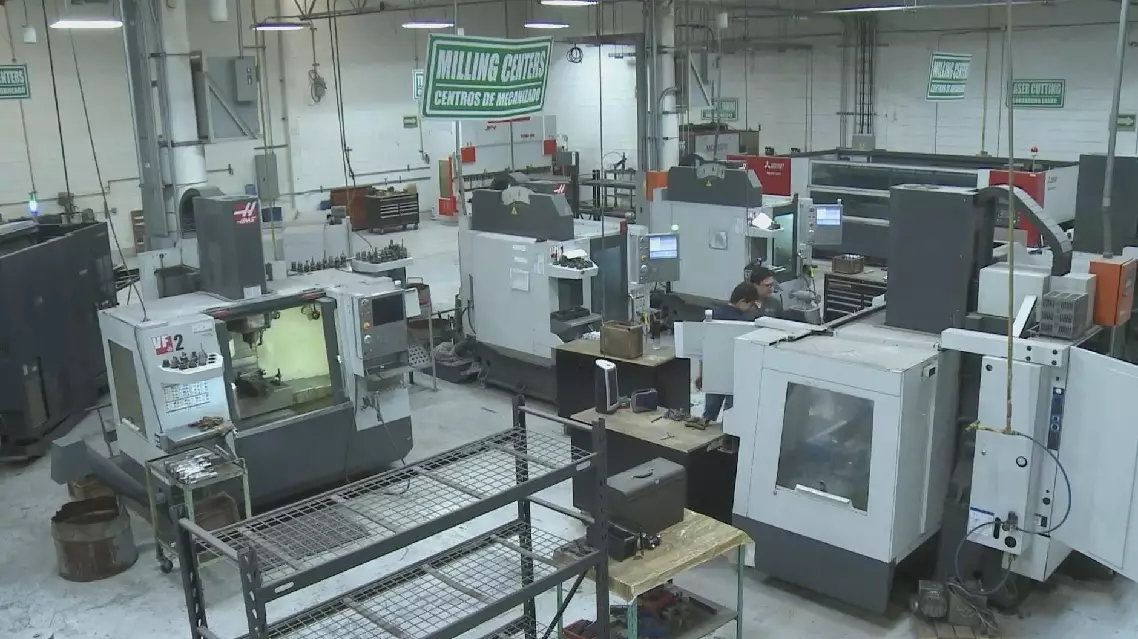
U.S. automotive tariffs deepen industry pressures, halt investments in Mexico