Skip to Content Facebook Feature Image

US tariff move sparks criticism, concern in Germany

China

China

China

US tariff move sparks criticism, concern in Germany

2025-04-04 13:02 Last Updated At:18:57

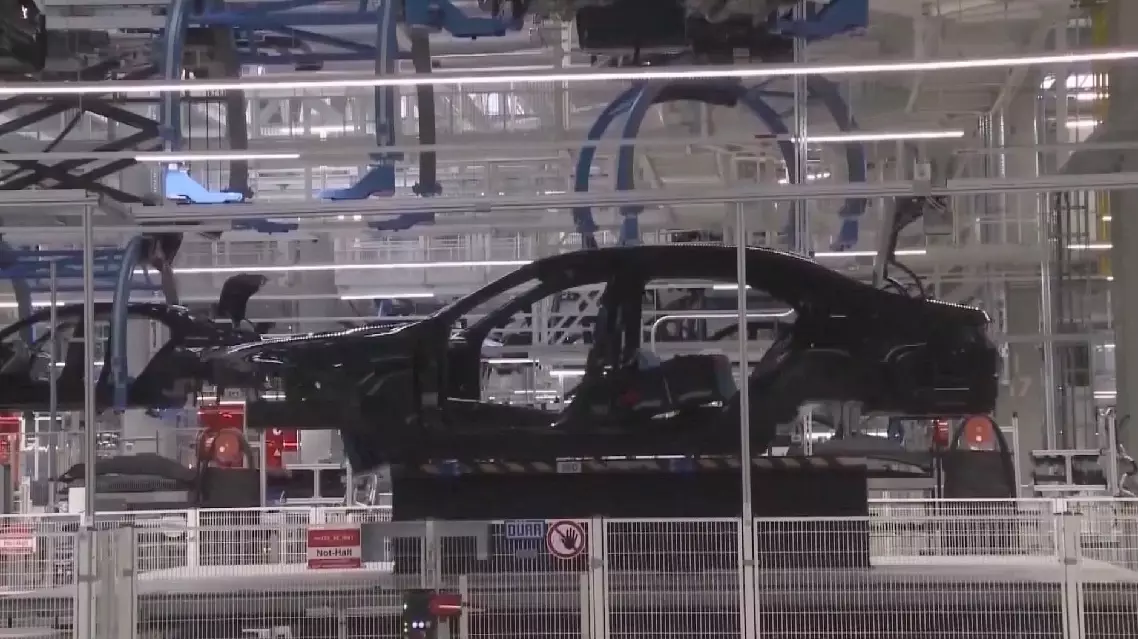
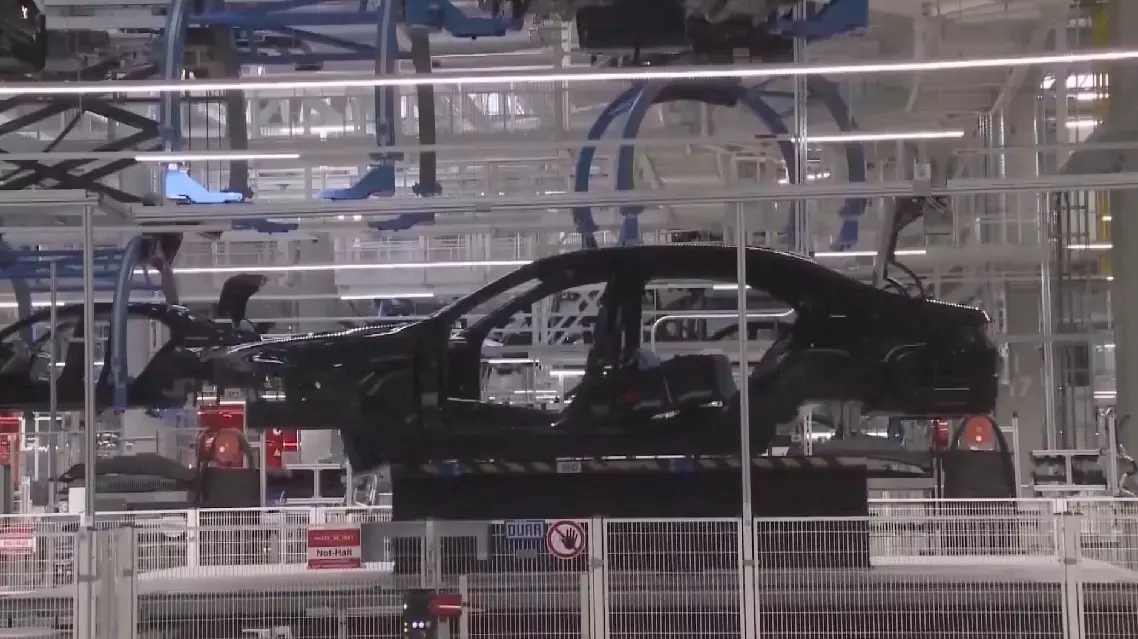
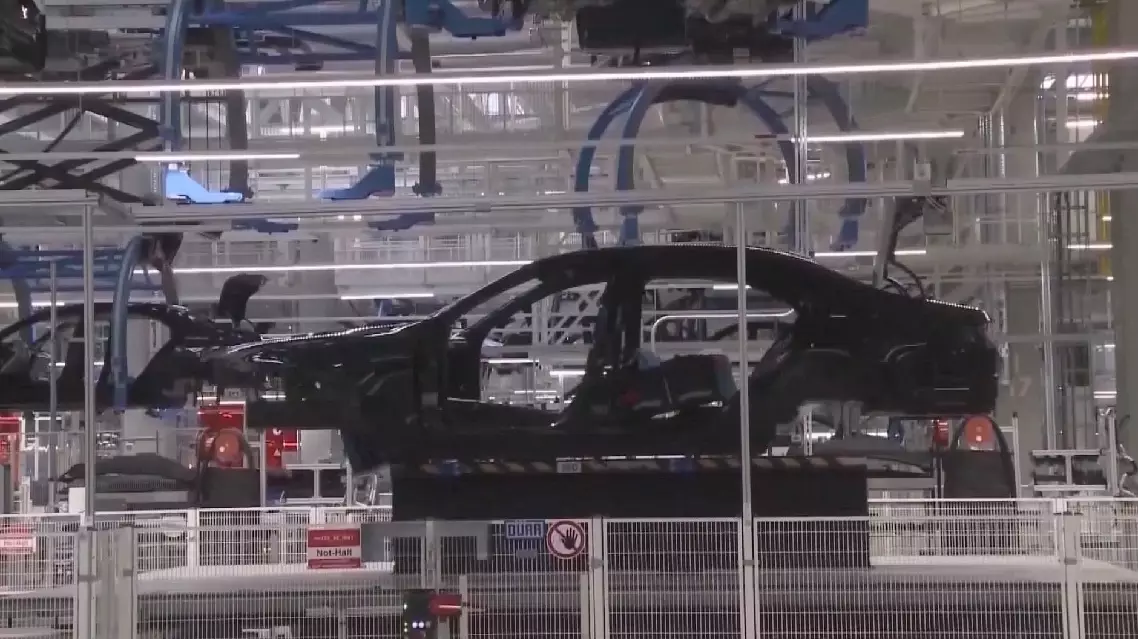
The latest U.S. tariffs on imported vehicles are expected to increase uncertainty in global supply chains and could significantly impact automakers around the world, including those in Germany, German experts said recently.

U.S. President Donald Trump signed an executive order on Wednesday to impose 25 percent tariffs on all imported vehicles, starting from Thursday, while tariffs on auto parts will be fully implemented by May 3.

As one of the world's leading automobile manufacturers, Germany's automotive industry relies heavily on international markets, with the United States serving as a key export destination.

Industry insiders warn that the recent move by the U.S. is likely to increase uncertainty in global market and could have a significant impact on automakers worldwide, including those in Germany.

In a statement released on Thursday, Hildegard Muller, president of the German Association of the Automotive Industry, criticized the U.S. imposition of 25 percent additional tariffs on the automotive industry, calling it a serious blow to global supply chains that could create uncertainty for German car companies and their investments in the U.S.

Trump's policy is not "America First," but "America Isolated," and this protectionist approach will only lead to more losers, ultimately impacting American consumers, businesses, and the global economy, said Muller.

Omer Sahin Ganiyusufoglu, a member of German National Academy of Science and Engineering, said that the tariffs will increase the cost of manufacturing vehicles. Consequently, American consumers will face higher car prices, making it difficult for anyone to win.

"Tariff policies can be implemented swiftly, but it's important to carefully assess their effects. When tariffs are imposed on imported goods, the burden usually falls on consumers or businesses. These tariffs don't genuinely benefit the domestic population, and people will eventually recognize this," said Ganiyusufoglu.

"The U.S. will come to realize that in trying to throw a stone at others, it has ended up hurting itself and damaging its own citizens," he added.

Industry insiders note that the global automotive industry is at a crucial turning point in electrification and digital transformation, with technological innovation and supply chain restructuring as key development focuses. However, the recent U.S. tariff policy creates market uncertainty, prompting companies to reevaluate their global strategies.
US tariff move sparks criticism, concern in Germany
US tariff move sparks criticism, concern in Germany
US tariff move sparks criticism, concern in Germany


US tariff move sparks criticism, concern in Germany
US tariff move sparks criticism, concern in Germany
US tariff move sparks criticism, concern in Germany
From cutting-edge technology exhibitions to retail stores thousands of kilometers away from Europe and Southeast Asia, China-made robot vacuum cleaners are increasingly becoming a popular choice among consumers worldwide.

At electronics retailers in Berlin, Germany, Chinese brands such as Roborock and Dreame occupy prominent positions in dedicated robot vacuum sections, offering a wide range of products priced between 200 and 2,000 euros.

Many local consumers said that when purchasing smart home appliances including robot vacuum cleaners, they tend to give priority to Chinese-made products.

"It's a good price and good quality. It's also the innovation. I have a feeling that the European brands are not innovating enough," said one customer.

"I think they're always on top of the other technologies. They are getting them out faster. A lot of us are switching to the Chinese technology," another consumer said.

Germany is one of the most important overseas markets for China's floor-cleaning robots.

According to data from market research firm GfK, from January to November 2025, more than six out of 10 robot vacuum cleaners sold in Western Europe were Chinese brands.

Industry data also point to a strong global momentum.

According to the International Data Corporation (IDC), global shipments of smart robot vacuum cleaners reached 17.424 million units in the first three quarters of 2025, representing a year-on-year increase of 18.7 percent.

Chinese brands including Roborock, Ecovacs, Dreame, Xiaomi and Narwal ranked among the world's top five in terms of shipment volume, with a combined share of nearly 70 percent of the global market.

At a robot vacuum cleaner manufacturing plant in Huizhou, south China's Guangdong Province, workers were seen stepping up production of newly launched models that recently debuted at the Consumer Electronics Show in the United States, which concluded Friday in Las Vegas, Nevada.

The factory adjusted its production lines as early as December 2025 and stocked inventory in advance for overseas markets to ensure that new products could be delivered to global consumers at the earliest possible time.

"In 2025, Roborock's global shipments exceeded 7.2 million units. Since 2024, overseas revenue has accounted for more than 50 percent of our total revenue. Our products have now been sold to more than 170 countries and regions, serving more than 20 million households worldwide," said Quan Gang, president of Roborock.

At another robot vacuum cleaner manufacturing facility in Dongguan, Guangdong, rising overseas orders have prompted the company to upgrade its production lines with intelligent technologies to further boost capacity. The factory is currently operating at full load to meet a growing demand.

"For 2026, we have already obtained overseas orders worth at least 300 million to 400 million yuan (around 43 million to 57.3 million U.S. dollars). In addition, we've engaged in strategic cooperation with European home appliance group Cebos Group, and our total confirmed orders have exceeded 600 million yuan (around 86 million U.S. dollars)," said Zhang Junbin, founder and CEO of Narwal Robotics.

Chinese robot vacuum brands gain strong global traction

Chinese robot vacuum brands gain strong global traction

Recommended Articles