Major stock indices of the Chinese mainland edged lower amid an absence of market-moving catalysts, said Wang Ying, a market analyst for China Global Television Network (CGTN).
The benchmark Shanghai Composite Index slipped 0.26 percent to 4,101.91 points, while the Shenzhen Component Index fell 0.18 percent to 14,281.08 points
"Mainland markets edged lower in today's trading session, as stocks lacked a clear direction amid an absence of major market-moving catalysts. The People's Bank of China announced cuts to sector-specific interest rates on Thursday to provide an early boost to the economy, signaling it has room for further reductions in banks' cash reserve requirements and for broader rate cuts this year. Market mood was dampened after Shanghai, Shenzhen and Beijing bourses said they would raise the minimum margin requirement for new borrowings to 100 percent from 80 percent, effective January 19th, " said Wang.
"Also, at the close today, the Shanghai Composite Index lost 0.26 percent, while the Shenzhen Component Index fell 0.18 percent, and the blue-chip CSI 300 Index was down 0.41 percent. Notable losers included China Spacesat and BlueFocus Intelligent. Shares of culture and media, mining and energy metal concepts were much under pressure today, leading losses across the board. Bucking the trend, shares of semiconductor industrial chain outperformed, with Union Semiconductor Hefei, Biwin Storage Technology and Shenzhen Longsys Electronics all jumping more than 10 percent. Despite the muted moves, benchmark indices remained close to multi-year highs, boosted by optimism over China's advances in artificial intelligence and expectations for additional policy support in 2026," said Wang.
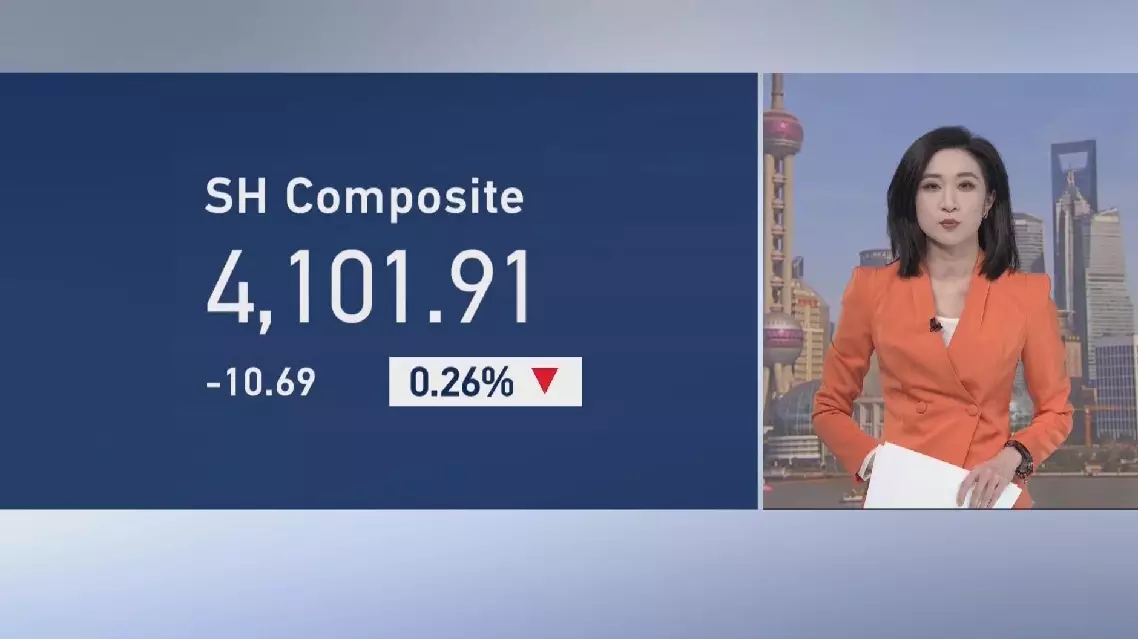
Chinese stock markets edge lower Friday amid absence of major market-moving catalysts: analyst
The Republic of Korea (ROK)'s former impeached President Yoon Suk-yeol on Friday was sentenced to five years in prison on arrest obstruction charges.
The criminal division of the Seoul Central District Court in charge of Yoon's obstruction of justice case handed down the prison sentence to Yoon for abusing the presidential security service to hinder the anti-corruption agency from executing its arrest warrant in January 2025.
The Corruption Investigation Office for High-ranking Officials (CIO) was once thwarted in its attempt to arrest Yoon as the presidential security service formed human shields and bus blockades to prevent investigators from entering the presidential residence.
The team of Cho Eun-suk, an independent counsel who led investigations into Yoon's insurrection and other charges, demanded a 10-year prison term for Yoon.
The court said Yoon privatized the presidential security service for personal safety and private interests by blocking the law enforcement agencies' lawful execution of an arrest warrant and attempting to destroy evidence, pointing out that despite the very bad nature of his crime, he consistently offered unconvincing excuses and showed no remorse.
The court stressed that severe punishment was necessary, considering the need to restore the rule of law damaged by Yoon's crime, but it noted that the fact that he was a first-time offender with no criminal record was considered a favorable factor.
The sentencing, which was broadcast live, was Yoon's first verdict coming from his botched martial law bid.
The first-instance sentencing for Yoon's insurrection charges was scheduled for Feb 19. The special counsel sought a death penalty for Yoon on the charges.
Yoon declared emergency martial law on the night of Dec 3 in 2024, but it was revoked hours later by the National Assembly.
The constitutional court upheld a motion to impeach Yoon in April 2025, officially removing him from office.
The ousted leader was indicted while in detention in January 2025 on charges of leading an insurrection, becoming the first sitting ROK president facing such prosecution.
ROK ex-president Yoon sentenced to 5 years in prison on arrest obstruction charges