Blending ancient philosophy with futuristic technology, the China Pavilion at Expo 2025 Osaka will offer visitors an immersive experience where digital installations respond to touch, motion, and even seasonal changes, said an official on Wednesday.
Themed "Designing Future Society of Our Lives," the World Expo 2025 will be held from April 13 to Oct 13 in Osaka, Japan's third-largest city.
At a press conference held in Beijing, the China Council for the Promotion of International Trade (CCPIT) announced its 3,500-square-meter pavilion for Expo 2025 Osaka - one of the largest foreign self-built facilities at the upcoming world exposition - will open to the public on April 13.
Inspired by traditional Chinese calligraphy scrolls, the pavilion's architectural design embodies the theme of "Building a Community of Life for Man and Nature -- Future Society of Green Development."
The pavilion will include three sections to showcase China's traditional ecological wisdom, modern green development initiatives, and its vision of global cooperation in fostering a sustainable future.
The CCPIT official said the pavilion will highlight 5,000 years of Chinese ecological wisdom, showcase modern green development, and present China's vision for a sustainable future. Visitors can expect an engaging and immersive experience.
"A variety of interactive installations and digital technologies will bring exhibits to life, allowing visitors to appreciate intricate craftsmanship from every angle. AI technology will make the displays move and respond—visitors can scan interactive bookmarks to generate real-time landscape imagery and experiencing the feeling of co-creating a Utopian paradise. More than 10 adorable, portable smart robots will dance gracefully to music," said Li Qingshuang, vice president of the CCPIT.

China Pavilion at Expo 2025 Osaka to offer immersive blend of tradition, technology

China Pavilion at Expo 2025 Osaka to offer immersive blend of tradition, technology
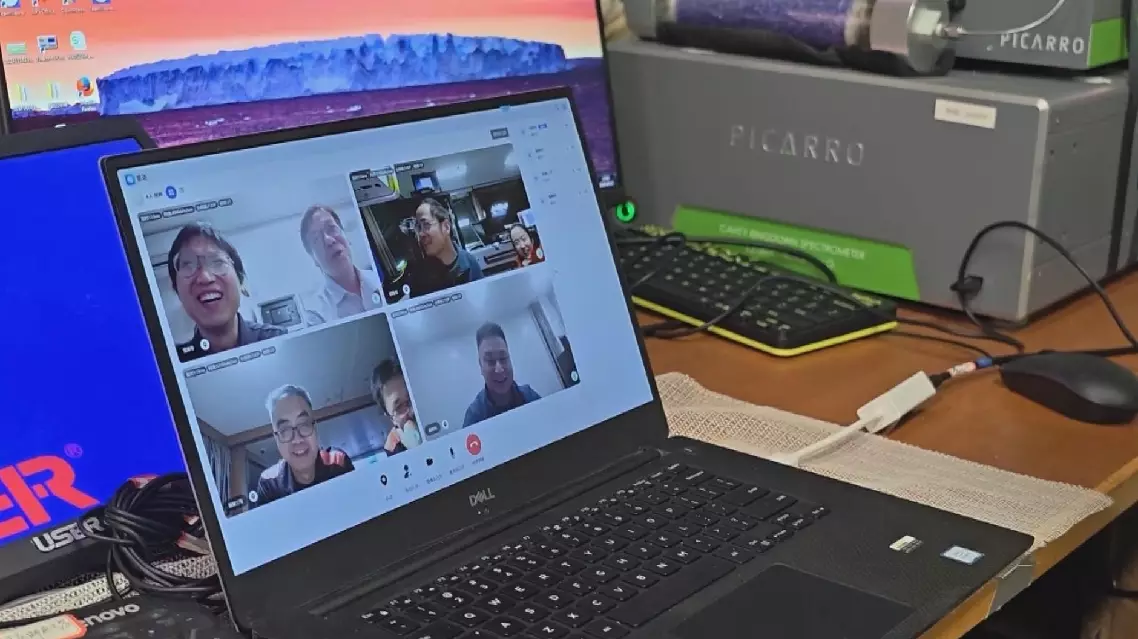
China's 16th Arctic Ocean expedition achieved the country's first video call spanning the North and South Poles on September 25, coinciding with the Mid-Autumn Festival, using a domestically developed satellite system with a delay of no more than one second.
The expedition deployed four vessels -- Xuelong, Xuelong 2, Jidi, and Tansuo 3 -- to study extreme environmental changes in the Arctic amid accelerating global warming. On September 29, China's research icebreakers Xuelong and Xuelong 2 returned to Shanghai after completing their missions, while Jidi and Tansuo 3 continue their expedition tasks and are expected to return in mid-October following a three-month journey.
The expedition team held a satellite video conversation with China's Antarctic Qinling Station, extending festive greetings to their polar scientific research counterparts and testing a large-scale constellation designed to provide global broadband internet and support integrated space-Earth 6G networks.
"This is the first time that China has used a domestically developed communications satellite system to make a video call across the largest latitude span," said Liu Feng, a senior engineer at the National Marine Data and Information Service.
The around-13,000-satellite GW constellation, led by China Satellite Network Group (SatNet), is China's first mega low Earth orbit satellite internet project. During the polar test, the maximum uplink and downlink speed reached around 30 megabits per second, equivalent to taking about 10 minutes to download a 1GB file. The equipment can also be used for emergency rescue and maritime communications.
"During the test period, it also supported real-time communications among Xuelong, Jidi, Tansuo 3, the National Marine Data and Information Service and the Polar Research Center. After Jidi and Tansuo 3 entered ice zone operation areas, their communication could not be guaranteed. So file transfers and navigation logs had to be transmitted through the SatNet equipment," said Zhang Bin, an engineer at the National Marine Data and Information Service. The successful test of the domestically produced satellite communication equipment marks China's independent control over polar region communications. The equipment ensures that data remains within the country, effectively safeguarding data security.
China holds first video call between North, South Poles via homegrown satellite system