Hubei released China's first pricing program for medical services with brain-computer interface (BCI) technologies this week, accelerating the cutting-edge sci-tech's pace entering people's livelihood.
The Healthcare Security Administration of Hubei Province set the maximum prices for the implantation and removal of an invasive BCI implant at 6,552 yuan (about 899.7 U.S. dollars) and 3,139 yuan respectively, and the highest price for a non-invasive BCI adaptation service at 966 yuan.
The BCI technologies are bringing revolutionary changes in the treatments of many patients, according to Professor Jiang Xiaobing with the neurosurgery department under the Union Hospital affiliated to the Tongji Medical College of Huazhong University of Science and Technology.
"For patients with hemiplegia, blindness, or aphasia, we can use BCIs to restore some of their physiological functions. And we can also use BCI technologies to treat patients with Parkinson's disease, epilepsy, or Alzheimer's disease. And currently we don't have very effective therapies to cope with these diseases. So BCIs are bringing hopes for these patients," said Jiang.
"The next three to five years are a critical period in our development of BCI technologies. Their applications to the treatments of, say, cancers and paralyses are definitely different, so relevant products have to go through corresponding procedures (before entering the end market)," said Jiang.
In March, the National Healthcare Security Administration (NHSA) released a pricing guideline for neural system care services, specifying BCIs in an independent category.
According to the NHSA, this move aims to boost the clinical application of the cutting-edge technology to benefit patients in need, against the backdrop of BCIs' rapid development in recent years.
The guideline also outlines the pricing of invasive and non-invasive BCIs respectively based on the distinctive features of the two BCI approaches.
The guideline will pave the way for the swift translation of mature BCI technology into clinical use in the future, and offer a compass for localities nationwide to manage relevant medical services, said the NHSA.

China's first medical service pricing for brain-computer interfaces issued
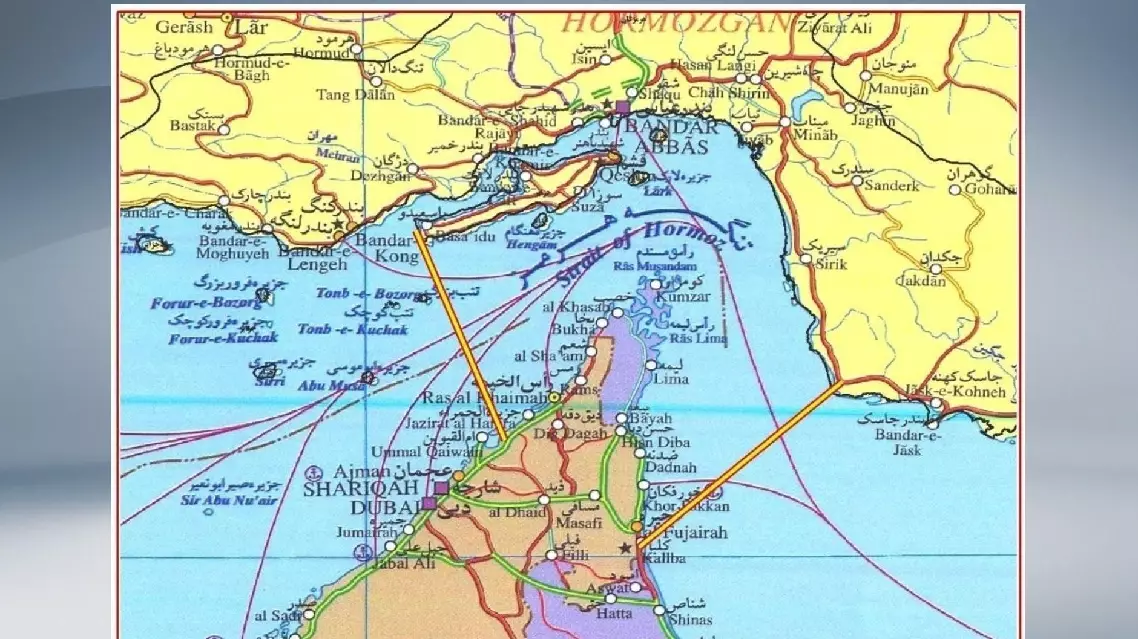
Iran's Islamic Revolution Guard Corps (IRGC) on Monday unveiled a map outlining a new "area of control" in the Strait of Hormuz, a narrow waterway through which about a fifth of the world's oil passes, according to the state-run Islamic Republic of Iran Broadcasting (IRIB).
The zone extends from the southern Iranian coast near Kooh Mobarak to the United Arab Emirates (UAE) port city of Fujairah on the east, and westward to a line between Iran's Qeshm Island and the UAE emirate of Umm al-Quwain in the Persian Gulf.
IRGC spokesman Hossein Mohebi said that the announcement did not represent a change in the overall management of the waterway, according to a report by IRGC's Sepah News outlet. Commercial vessels following transit protocols set by the Guard Navy and coordinating with Iranian authorities along designated routes would be allowed safe passage, he said. Vessels violating those rules could be stopped by force, he warned.
The announcement came a day after U.S. President Donald Trump said the United States would help guide ships stranded in the strait out of restricted waters on Monday.
Iran’s Khatam al-Anbiya Central Headquaters -- the country's top military command -- responded by warning that any foreign forces, particularly U.S. troops, would be targeted if they attempted to enter or approach the strait, according to the official IRNA news agency.
Also on Monday, two missiles struck a U.S. Navy frigate in the strait after it ignored an Iranian warning, the semi-official Fars news agency reported. The vessel had been sailing near the port of Jask in what Iran described as a violation of maritime security rules. The frigate could not continue on its course after the strikes and withdrew from the area, the report said.
However, according to a subsequent report by Axios, a senior U.S. official denied that a U.S. ship was hit by Iranian missiles.
Brad Cooper, chief of U.S. Central Command, told a news conference on Monday the U.S. military had sunk six small Iranian boats in the Strait of Hormuz with air strikes from Apache and MH 60 Seahawk helicopters.
However, Iran's semi-official Tasnim news agency rejected U.S. claims of sinking Iranian boats.
Iran began tightening its grip on the strait on Feb. 28, restricting passage for vessels liked to Israel and the United States after the two countries launched joint strikes on Iranian territory. The United States later imposed its own blockade measures after post-cease-fire talks between the two countries in Islamabad on April 11-12 failed to produce an agreement.
Iran's IRGC unveils map of new "area of control" in Strait of Hormuz