China is to impose a matching 34 percent tariffs on all U.S. imports, plus export controls, and trade restrictions, in response to the U.S. move to impose a 34 percent "reciprocal tariff" on Chinese imports, a spokesperson for the Ministry of Commerce announced on Friday.
The spokesperson said that the U.S. imposition of so-called "reciprocal tariffs" seriously violates WTO rules, harms the legitimate rights and interests of the WTO members, and undermines the multilateral trade system and global economic order.
Calling it a typical act of unilateral bullying that threatens global trade stability, China has filed a complaint against the U.S. move under the WTO dispute settlement mechanism, the spokesperson said.
Meanwhile, the Customs Tariff Commission of the State Council announced on Friday that the imposition of the 34-percent tariffs on all products imported from the United States would take effect on 12:01, April 10, while the U.S. imposition is set to take effect on April 9.
Also on Friday, the Ministry of Commerce issued announcement No.18 of 2025, imposing export controls on seven types of middle-heavy rare earth elements, including samarium, gadolinium, terbium, dysprosium, lutetium, scandium, and yttrium.
The Ministry of Commerce also issued announcement No.21 of 2025, adding 16 U.S. military-related entities to the export control list, prohibiting the export of dual-use items to these entities.
The work mechanism for the unreliable entity list issued announcement No.7 of 2025, which added 11 U.S. companies on the unreliable entity list, prohibiting them from engaging in import and export activities related to China, and prohibiting them from making new investments in China.
The Ministry of Commerce issued announcements No.19 and No.20 of 2025, launching an anti-dumping investigation into imported medical CT tubes originating from the U.S. and other regions, and initiating China's first industry competitiveness investigation into imported medical CT tubes.
Also on Friday, the General Administration of Customs issued announcements No.54 and No.55, stating that in order to protect the health of Chinese consumers and ensure the safety of China's livestock production, it has decided to suspend the qualification of one U.S. company for exporting sorghum to China, suspend the qualification of three U.S. companies for exporting poultry bone meal to China, and suspend the export of poultry products to China from two U.S. companies, as their imports are found problematic in the inspection and quarantine.

China to control export, restrict trade with US plus tariffs

China to control export, restrict trade with US plus tariffs
A major forum on digital economy cooperation and innovation, part of the 2026 Global Digital Economy Conference, was held on Tuesday at the Palais des Nations in Geneva, seeking to build consensus on development pathways and international standards.
More than 150 representatives from government, business, academia and international organizations attended the event for in-depth discussions on frontier trends, international cooperation, and pathways for shared development in the digital economy.
"As a hub of global diplomacy and innovation, Geneva provides the backdrop for us to build consensus, launch digital cooperation, and jointly promote the development of the global digital economy, at a time marked by the establishment of the World Data Organization and with the 2026 Global Digital Economy Conference pending," said You Jing, director of the foreign exchange and cooperation division of the Beijing Economic and Information Bureau.
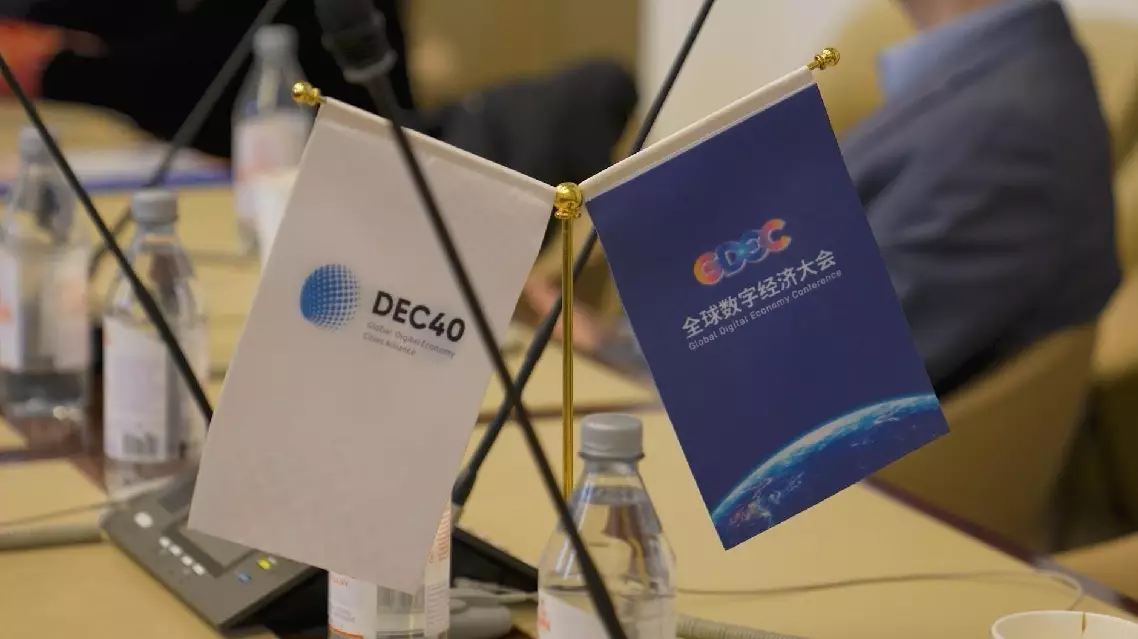
The Global Digital Economy Cities Alliance, known as DEC40, organized the event. With 40 cities as its core members, the DEC40 actively engages with international organizations, multinational corporations, research institutions, and other stakeholders.
During the forum, DEC40 announced the launch of its Geneva office and the addition of 11 Chinese and Swiss companies to its membership, among several other new developments.
"We hope to engage in the development of international standards through deeper exchanges in the future, contributing our share. At the same time, by understanding and communicating about these international standards, we can better apply them to our business, thereby supporting our international expansion," said He Chunming, vice president of Hollysys Technology Group Co., Ltd.
The initiation of a number of flagship programs were also announced by DEC40 in collaboration with international organizations such as the International Telecommunication Union, the International Trade Centre, and the United Nations Institute for Training and Research.
These programs include the joint release of global digital economy lighthouse cases and an international innovation competition focused on AI-generated content.
The forum also featured multiple discussion sessions on emerging trends and international cooperation frameworks in the digital economy.
Jointly initiated by Beijing and over 40 other cities worldwide in July 2025, DEC40 is dedicated to narrowing the global digital divide through technical innovation, transfer, co-creation and sharing, and contributing to the achievement of the UN 2030 Sustainable Development Goals.
The 2026 Global Digital Economy Conference is scheduled to take place in Beijing in early July, with a focus on building digitally friendly cities, alongside the latest outcomes in digital technology application and industrial development.
Experts build consensus on digital economy cooperation and innovation in Geneva