Skip to Content Facebook Feature Image

Microsoft's AI division head wants to create a lasting relationship between chatbots and their users

News

Microsoft's AI division head wants to create a lasting relationship between chatbots and their users
News

News

Microsoft's AI division head wants to create a lasting relationship between chatbots and their users

2025-04-05 01:59 Last Updated At:02:02

Fifty years after the founding of Microsoft, the CEO of its artificial intelligence division has a big task: develop a new product line as integral to daily life as the software giant's past innovations.

“We’re really trying to land this idea that everybody is going to have their own personalized AI companion," said Mustafa Suleyman in an interview with The Associated Press. "It will, over time, have its own name, its own style. It will adapt to you. It may also have its own visual appearance and expressions.”

More Images
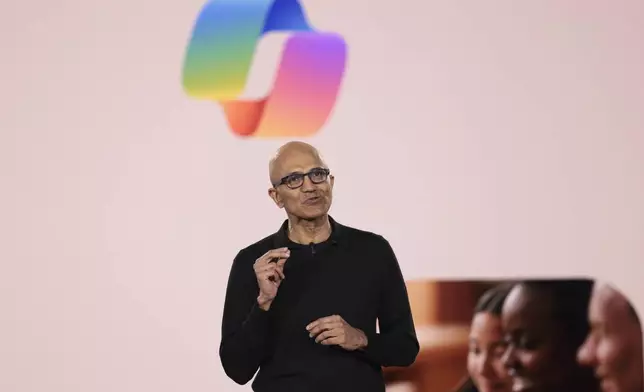
Microsoft Chairman and CEO Satya Nadella speaks during a presentation of the company's AI assistant, Copilot, ahead of a 50th Anniversary presentation at Microsoft headquarters, Thursday, April 3, 2025, in Redmond, Wash. (AP Photo/Jason Redmond)
Microsoft Chairman and CEO Satya Nadella speaks during a presentation of the company's AI assistant, Copilot, ahead of a 50th Anniversary presentation at Microsoft headquarters, Thursday, April 3, 2025, in Redmond, Wash. (AP Photo/Jason Redmond)

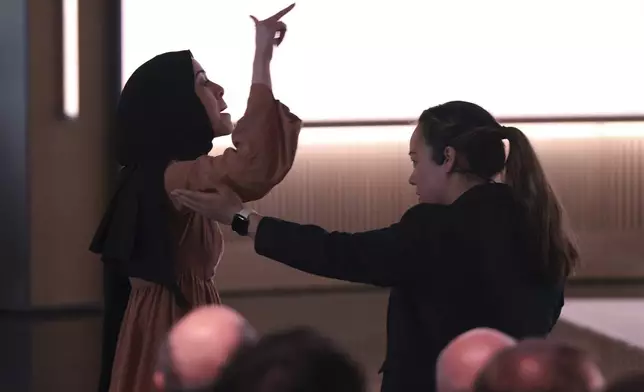
A pro-Palestinian demonstrator is escorted away by security as they interrupt Microsoft AI CEO Mustafa Suleyman during a presentation of the company's AI assistant, Copilot, ahead of a 50th Anniversary presentation at Microsoft headquarters, Thursday, March 14, 2024, in Redmond, Wash. (AP Photo/Jason Redmond)
A pro-Palestinian demonstrator is escorted away by security as they interrupt Microsoft AI CEO Mustafa Suleyman during a presentation of the company's AI assistant, Copilot, ahead of a 50th Anniversary presentation at Microsoft headquarters, Thursday, March 14, 2024, in Redmond, Wash. (AP Photo/Jason Redmond)
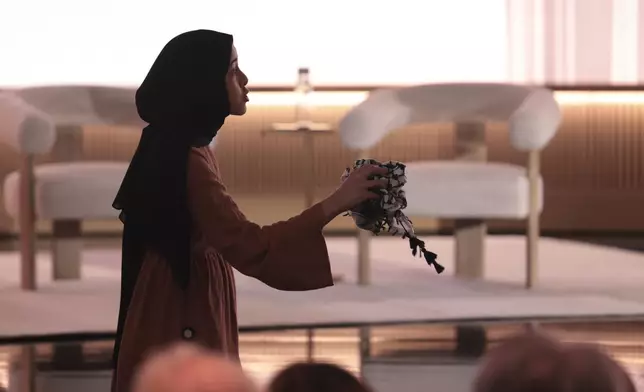
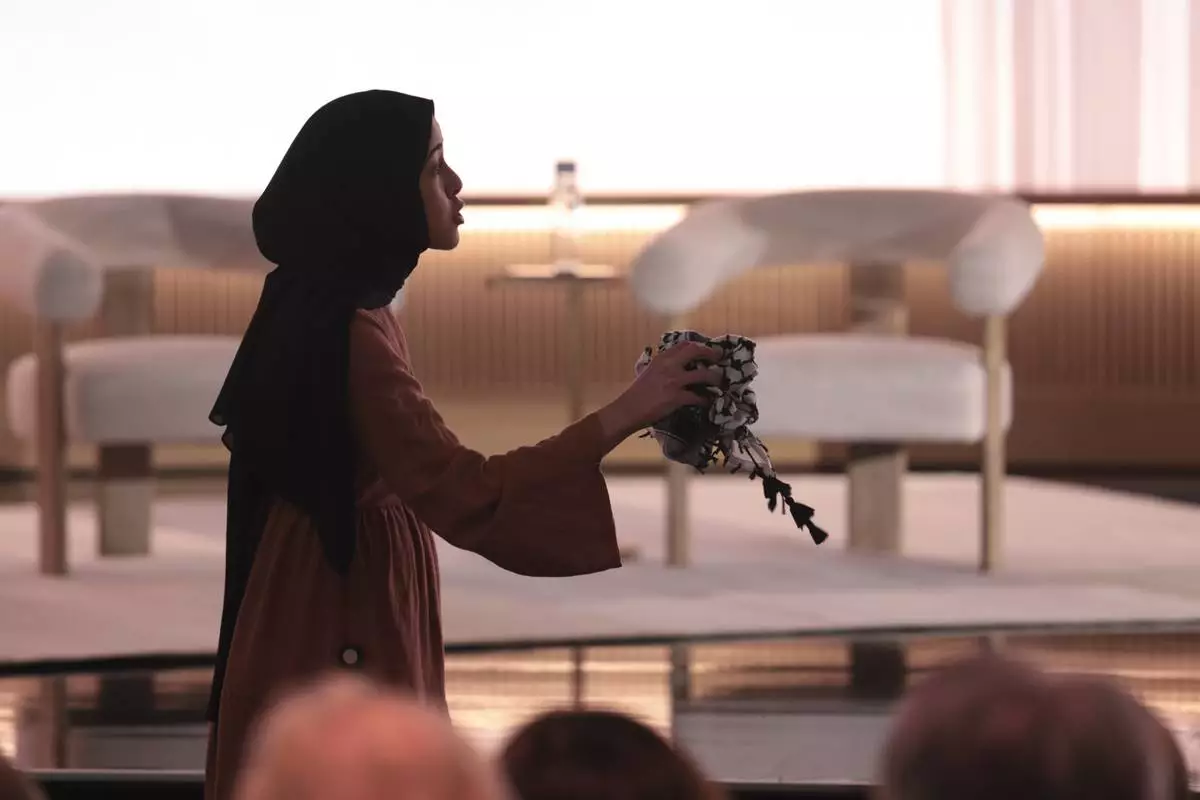
A pro-Palestinian demonstrator holds a kufiyyeh as they interrupt Microsoft AI CEO Mustafa Suleyman during a presentation of the company's AI assistant, Copilot, ahead of a 50th Anniversary presentation at Microsoft headquarters, Thursday, March 14, 2024, in Redmond, Wash. (AP Photo/Jason Redmond)
A pro-Palestinian demonstrator holds a kufiyyeh as they interrupt Microsoft AI CEO Mustafa Suleyman during a presentation of the company's AI assistant, Copilot, ahead of a 50th Anniversary presentation at Microsoft headquarters, Thursday, March 14, 2024, in Redmond, Wash. (AP Photo/Jason Redmond)
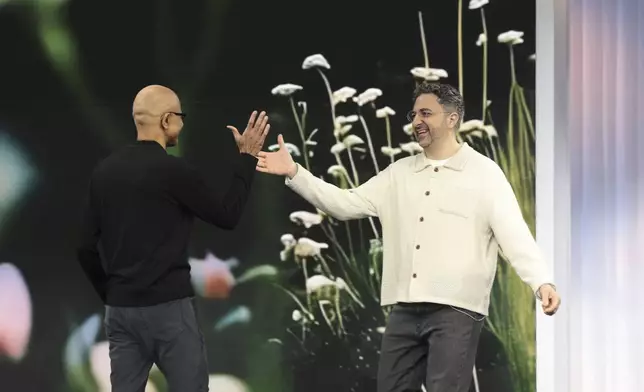
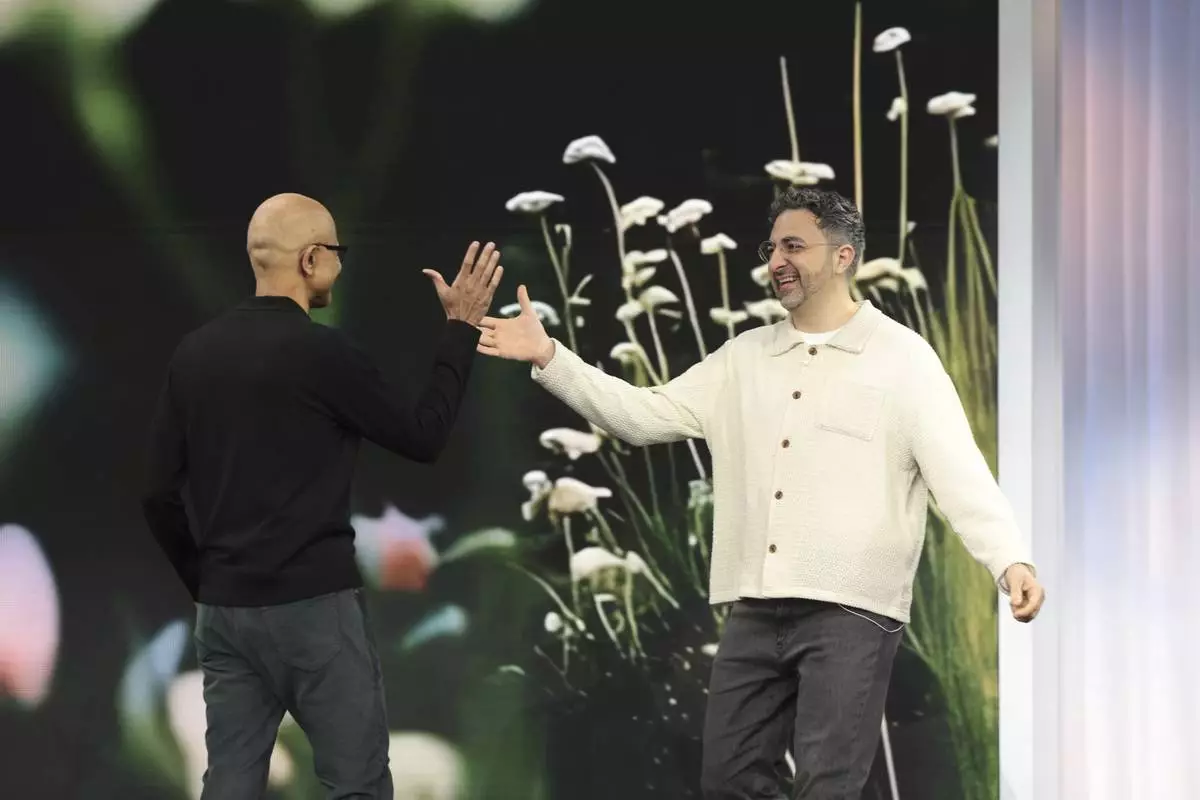
Microsoft AI CEO Mustafa Suleyman, right, is welcomed on stage by Chairman and CEO Satya Nadella during a presentation of the company's AI assistant, Copilot, ahead of a 50th Anniversary presentation at Microsoft headquarters, Thursday, March 14, 2024, in Redmond, Wash. (AP Photo/Jason Redmond)

Microsoft AI CEO Mustafa Suleyman, right, is welcomed on stage by Chairman and CEO Satya Nadella during a presentation of the company's AI assistant, Copilot, ahead of a 50th Anniversary presentation at Microsoft headquarters, Thursday, March 14, 2024, in Redmond, Wash. (AP Photo/Jason Redmond)

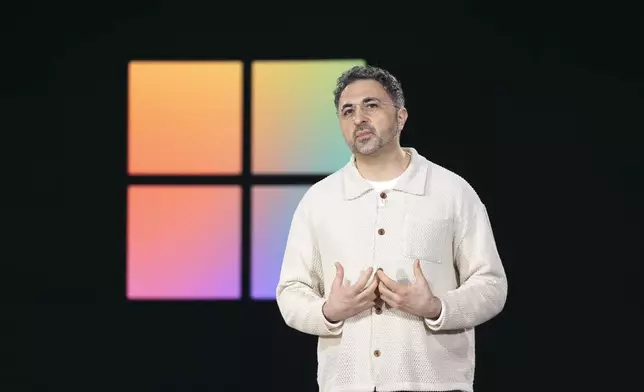
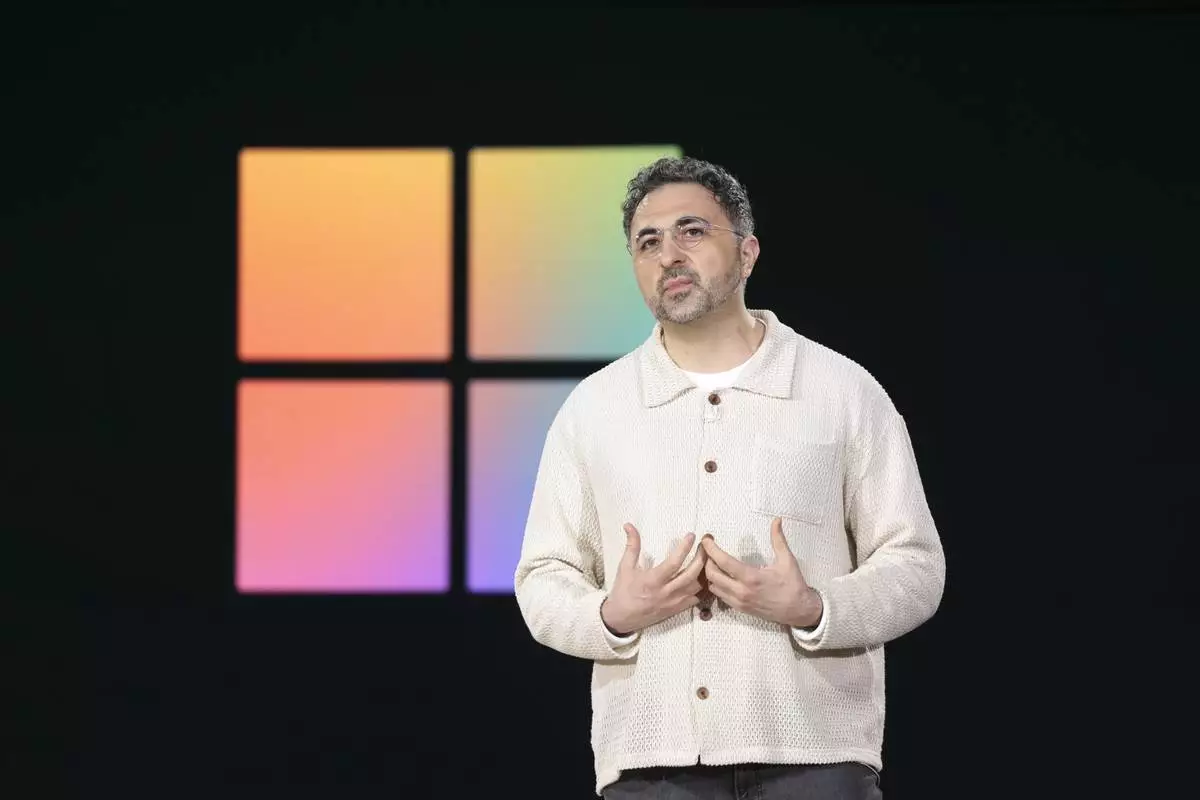
Microsoft AI CEO Mustafa Suleyman speaks during a presentation of the company's AI assistant, Copilot, ahead of a 50th Anniversary presentation at Microsoft headquarters, Thursday, March 14, 2024, in Redmond, Wash. (AP Photo/Jason Redmond)

Microsoft AI CEO Mustafa Suleyman speaks during a presentation of the company's AI assistant, Copilot, ahead of a 50th Anniversary presentation at Microsoft headquarters, Thursday, March 14, 2024, in Redmond, Wash. (AP Photo/Jason Redmond)

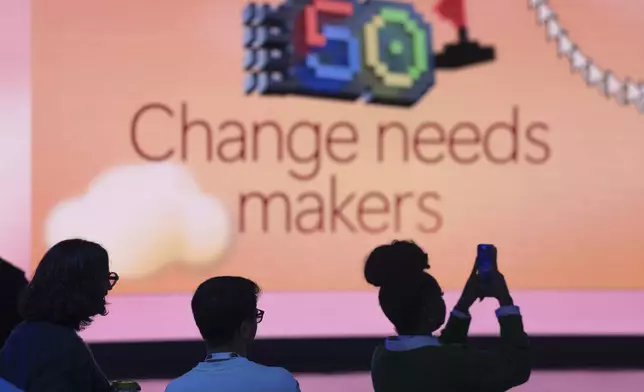
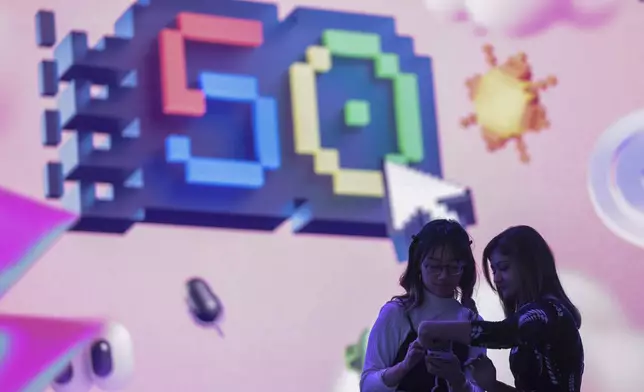
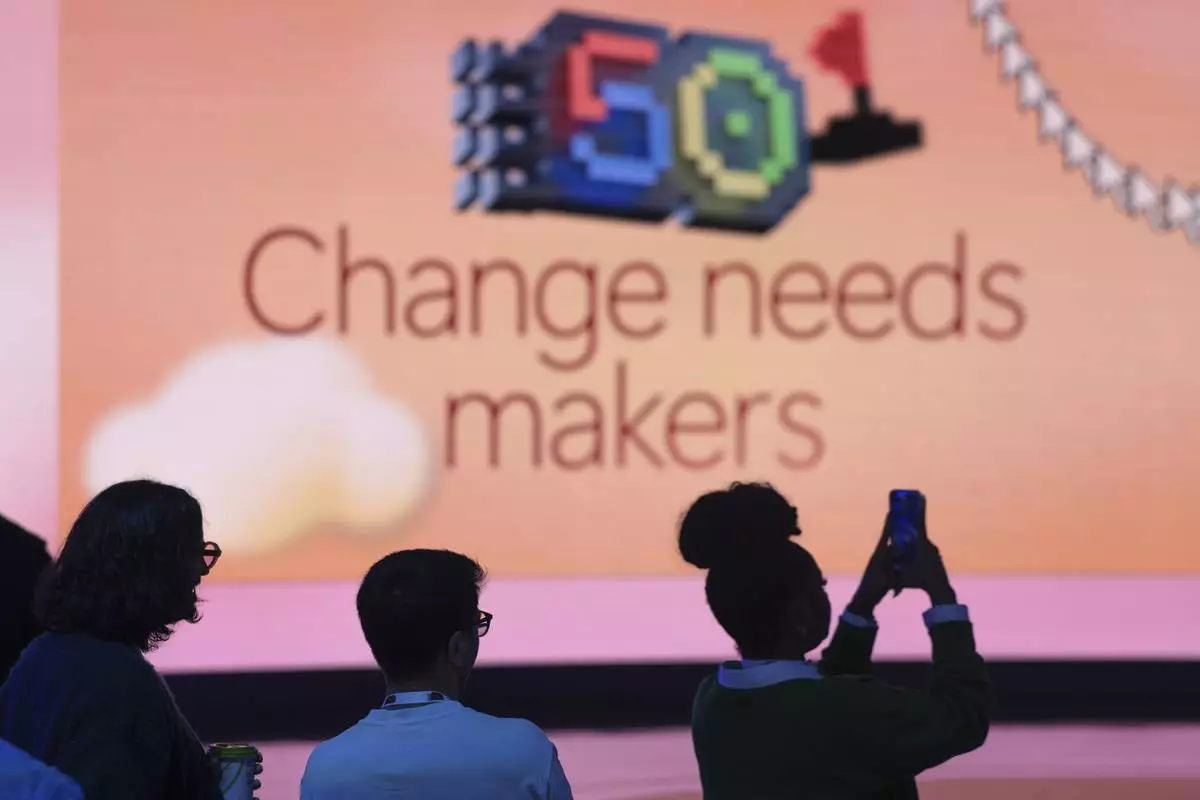
Attendees are pictured before a presentation of Microsoft's AI assistant, Copilot, and celebration of the company's 50th anniversary at Microsoft headquarters, Friday, April 4, 2025, in Redmond, Wash. (AP Photo/Jason Redmond)
Attendees are pictured before a presentation of Microsoft's AI assistant, Copilot, and celebration of the company's 50th anniversary at Microsoft headquarters, Friday, April 4, 2025, in Redmond, Wash. (AP Photo/Jason Redmond)

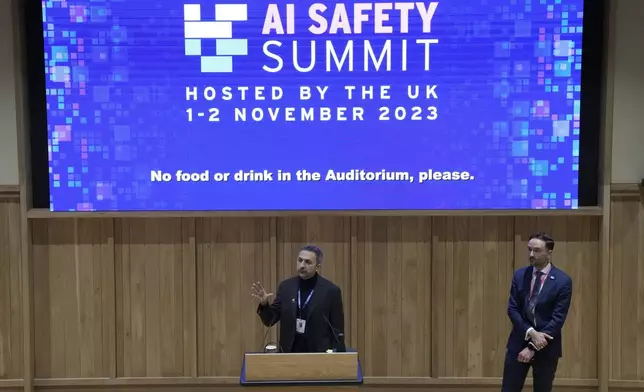
FILE - Mustafa Suleyman co founder and CEO of Inflection AI speaks to journalist during the AI Safety Summit in Bletchley Park, Milton Keynes, England, Wednesday, Nov. 1, 2023. (AP Photo/Alastair Grant, File)
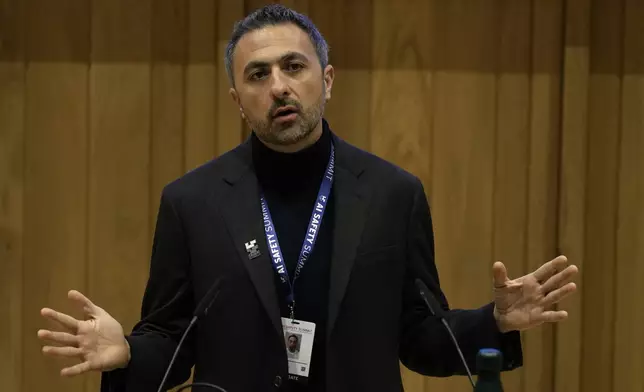
FILE - Mustafa Suleyman co founder and CEO of Inflection AI speaks to journalist during the AI Safety Summit in Bletchley Park, Milton Keynes, England, Wednesday, Nov. 1, 2023. (AP Photo/Alastair Grant, File)
FILE - Mustafa Suleyman co founder and CEO of Inflection AI speaks to journalist during the AI Safety Summit in Bletchley Park, Milton Keynes, England, Wednesday, Nov. 1, 2023. (AP Photo/Alastair Grant, File)

FILE - Mustafa Suleyman co founder and CEO of Inflection AI speaks to journalist during the AI Safety Summit in Bletchley Park, Milton Keynes, England, Wednesday, Nov. 1, 2023. (AP Photo/Alastair Grant, File)

Attendees are pictured before a presentation of the Microsoft's AI assistant, Copilot, and celebration of the company's 50th anniversary at Microsoft headquarters, Friday, April 4, 2025, in Redmond, Wash. (AP Photo/Jason Redmond)

Attendees are pictured before a presentation of the Microsoft's AI assistant, Copilot, and celebration of the company's 50th anniversary at Microsoft headquarters, Friday, April 4, 2025, in Redmond, Wash. (AP Photo/Jason Redmond)

Suleyman laid out that vision on Microsoft's 50th anniversary Friday. The celebration at Microsoft's headquarters in Redmond, Washington featured the first public gathering in more than a decade of co-founder and former CEO Bill Gates with his two successors: Steve Ballmer, who led the company from 2000 to 2014, and the current chief executive, Satya Nadella.

Giving the mic to Suleyman, who joined the company and Nadella's senior leadership team just over a year ago to head a newly formed Microsoft AI division, signals how important getting its AI right is to the company's future — in the next five years if not the next 50.

The company's flagship product of this AI era, Copilot, already combines a chatbot with Microsoft's suite of workaday tools, from Excel spreadsheets and PowerPoint presentations to the Windows operating system that defines how most computers work. But Suleyman is striving for something that sounds a little more like science fiction — a technology that can form a “lasting, meaningful relationship” with its users.

“One that knows your name, gets to know you, has a memory of everything that you’ve shared with it and talked about and really comes to kind of live life alongside you,” he said. “It’s far more than just a piece of software or a tool. It is unlike anything we’ve really ever created."

Some of those updates — such as new “visual memory” capabilities that keep track of a user's digital activity, if they want that — roll out on mobile apps Friday. Other features are still in development, such as an animated avatar — a talking peacock in Suleyman's demo Friday — that would embody a person's AI companion.

Suleyman, 40, came to Microsoft last year with plenty of credentials in the AI business. In his 20s, the British entrepreneur cofounded the legendary DeepMind AI research lab in London, which Google later purchased in 2014. He worked there until 2022, when he left to set up the new company Inflection AI with LinkedIn co-founder Reid Hoffman. Microsoft then scooped up Suleyman and other Inflection leaders without formally acquiring the startup, attracting months of antitrust scrutiny.

He also cowrote a 2023 book, “The Coming Wave,” focused on AI’s promise and the need to limit its potential perils. But unlike DeepMind, or another famous AI research lab, San Francisco-based OpenAI, both of which have explicitly set out to build better-than-human AI known as artificial general intelligence, Suleyman is not too worried about such abstractions in his new job running Microsoft's consumer AI business.

“My goal is really to create a true personal AI companion," he said. “And the definition of AGI sort of feels very far out to me and sort of not what I’m focused on in the next few years.”

The race to build the best AI personal assistant that sticks with consumers is a competitive one. In recent weeks, rivals including Google and Meta Platforms have shaken up the teams in charge of AI research or products. ChatGPT maker OpenAI, which is both Microsoft's most important AI partner and a growing competitor, has also reorganized its leadership. Amazon is also looking to catch up by imbuing its already-ubiquitous digital assistant Alexa with more advanced AI capabilities.

“It’s a super competitive market but this is absolutely foundational to us,” Suleyman said. “Copilot in the workplace, Copilot at home is the future of the company. On the consumer side, we are going to be committed to this for many decades to come. We really think it’s the major platform shift that we have to win.”

Even as competition ramps up, so does wariness from Wall Street and big business customers about whether these AI products are worth their huge costs in computing power and energy.

Suleyman's own daily interactions with Copilot demonstrate the shortcomings of generative AI technology that is prone to confidently spouting falsehoods — known as hallucinations — and still struggles to match some of the commonsense reasoning skills that come naturally to humans.

Asked about how he's using the technology in his daily life, Suleyman scrolled through his phone and candidly revealed his most recent chatbot conversations — including, in preparation for Friday's event, his request for it to calculate Microsoft's all-time cumulative revenue over 50 years.

“It didn’t correctly add up all of the revenue,” he said. “That’s a pretty hard problem, although it got it really close.”

He also recounted more playful encounters, such as a long chat about “whether to put minced beef or chunks of beef” in a chili recipe and uploading a photo of his açai bowl so that Copilot could visually analyze its contents.

“We talked about how many calories were in it -- it was 465 calories -- and does it vary based on how much sweetener is in there and how much honey," Suleyman said. "It couldn’t see the honey, but it could see all the other pieces. And I kind of got into a long back and forth about what is açai and where does it come from.”

Microsoft's own researchers, in collaboration with Carnegie Mellon University, recently published a study that found that generative AI can inhibit critical thinking skills of human workers and lead to overreliance on the technology — a conclusion that Suleyman says he disagrees with.

Making chatbots fun, useful and personable might be key in winning over workers wary of the technology — especially when Gates, Suleyman and other tech leaders from Microsoft and elsewhere have loudly sounded the warning about their coming effects on employment.

“The truth is that the nature of work is going to change,” Suleyman said during a video interview on Microsoft's Teams platform, a way of communicating he said would have been unimaginable 30 to 50 years ago.

“Now, it’s kind of unimaginable to think that you’re going to have a bunch of agents working for you at the office,” he said. “There will be much less of the administration, much less of the drudgery ... which I think is going to free us up as knowledge workers to be a lot more creative and focus on the bigger picture.”

In our home life, too, a personal AI assistant is “going to take care of a tremendous amount of boring, tiring, exhausting administration in the back end. Booking, planning, organizing, buying, sourcing, researching, comparing. We’ve never had anything like that before that can automate all of those things. It’s going to be pretty amazing.”

As he outlined those ideas in his keynote speech Friday, a shouting protester interrupted Suleyman to protest Microsoft's contracts to provide AI and cloud computing services to the Israeli military.

An AP investigation revealed earlier this year that AI models from Microsoft and OpenAI had been used as part of an Israeli military program to select bombing targets during the recent wars in Gaza and Lebanon.

“Thank you, I hear your protest,” Suleyman said repeatedly, before the shouting stopped and he returned to talking about AI companions.
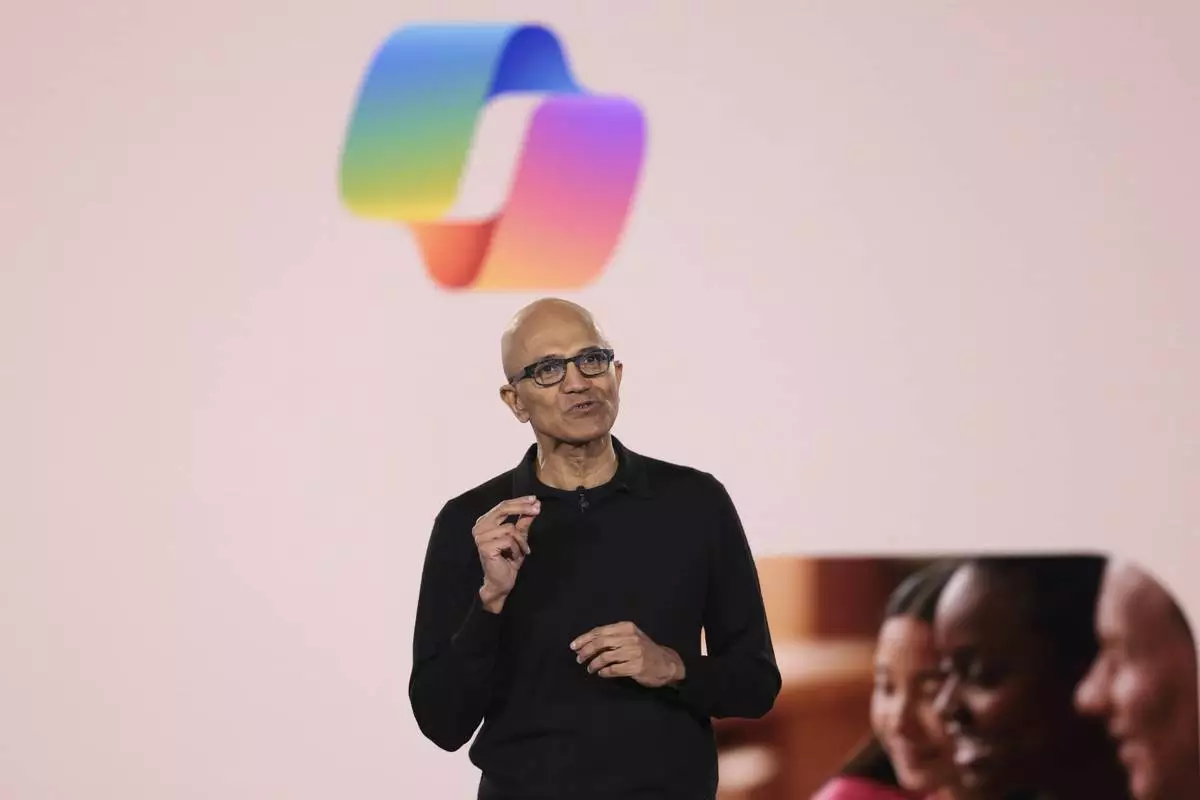
Microsoft Chairman and CEO Satya Nadella speaks during a presentation of the company's AI assistant, Copilot, ahead of a 50th Anniversary presentation at Microsoft headquarters, Thursday, April 3, 2025, in Redmond, Wash. (AP Photo/Jason Redmond)
Microsoft Chairman and CEO Satya Nadella speaks during a presentation of the company's AI assistant, Copilot, ahead of a 50th Anniversary presentation at Microsoft headquarters, Thursday, April 3, 2025, in Redmond, Wash. (AP Photo/Jason Redmond)

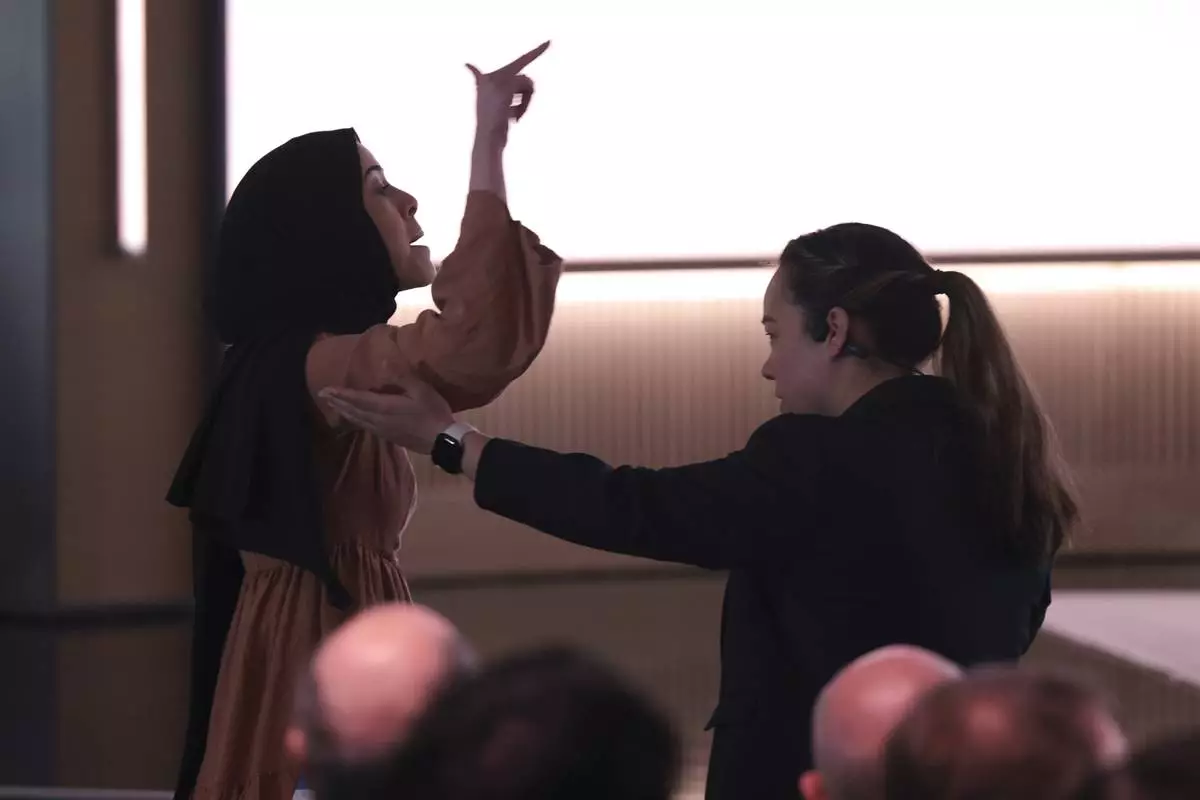
A pro-Palestinian demonstrator is escorted away by security as they interrupt Microsoft AI CEO Mustafa Suleyman during a presentation of the company's AI assistant, Copilot, ahead of a 50th Anniversary presentation at Microsoft headquarters, Thursday, March 14, 2024, in Redmond, Wash. (AP Photo/Jason Redmond)
A pro-Palestinian demonstrator is escorted away by security as they interrupt Microsoft AI CEO Mustafa Suleyman during a presentation of the company's AI assistant, Copilot, ahead of a 50th Anniversary presentation at Microsoft headquarters, Thursday, March 14, 2024, in Redmond, Wash. (AP Photo/Jason Redmond)
A pro-Palestinian demonstrator holds a kufiyyeh as they interrupt Microsoft AI CEO Mustafa Suleyman during a presentation of the company's AI assistant, Copilot, ahead of a 50th Anniversary presentation at Microsoft headquarters, Thursday, March 14, 2024, in Redmond, Wash. (AP Photo/Jason Redmond)
A pro-Palestinian demonstrator holds a kufiyyeh as they interrupt Microsoft AI CEO Mustafa Suleyman during a presentation of the company's AI assistant, Copilot, ahead of a 50th Anniversary presentation at Microsoft headquarters, Thursday, March 14, 2024, in Redmond, Wash. (AP Photo/Jason Redmond)
Microsoft AI CEO Mustafa Suleyman, right, is welcomed on stage by Chairman and CEO Satya Nadella during a presentation of the company's AI assistant, Copilot, ahead of a 50th Anniversary presentation at Microsoft headquarters, Thursday, March 14, 2024, in Redmond, Wash. (AP Photo/Jason Redmond)

Microsoft AI CEO Mustafa Suleyman, right, is welcomed on stage by Chairman and CEO Satya Nadella during a presentation of the company's AI assistant, Copilot, ahead of a 50th Anniversary presentation at Microsoft headquarters, Thursday, March 14, 2024, in Redmond, Wash. (AP Photo/Jason Redmond)

Microsoft AI CEO Mustafa Suleyman speaks during a presentation of the company's AI assistant, Copilot, ahead of a 50th Anniversary presentation at Microsoft headquarters, Thursday, March 14, 2024, in Redmond, Wash. (AP Photo/Jason Redmond)

Microsoft AI CEO Mustafa Suleyman speaks during a presentation of the company's AI assistant, Copilot, ahead of a 50th Anniversary presentation at Microsoft headquarters, Thursday, March 14, 2024, in Redmond, Wash. (AP Photo/Jason Redmond)

Attendees are pictured before a presentation of Microsoft's AI assistant, Copilot, and celebration of the company's 50th anniversary at Microsoft headquarters, Friday, April 4, 2025, in Redmond, Wash. (AP Photo/Jason Redmond)
Attendees are pictured before a presentation of Microsoft's AI assistant, Copilot, and celebration of the company's 50th anniversary at Microsoft headquarters, Friday, April 4, 2025, in Redmond, Wash. (AP Photo/Jason Redmond)

FILE - Mustafa Suleyman co founder and CEO of Inflection AI speaks to journalist during the AI Safety Summit in Bletchley Park, Milton Keynes, England, Wednesday, Nov. 1, 2023. (AP Photo/Alastair Grant, File)
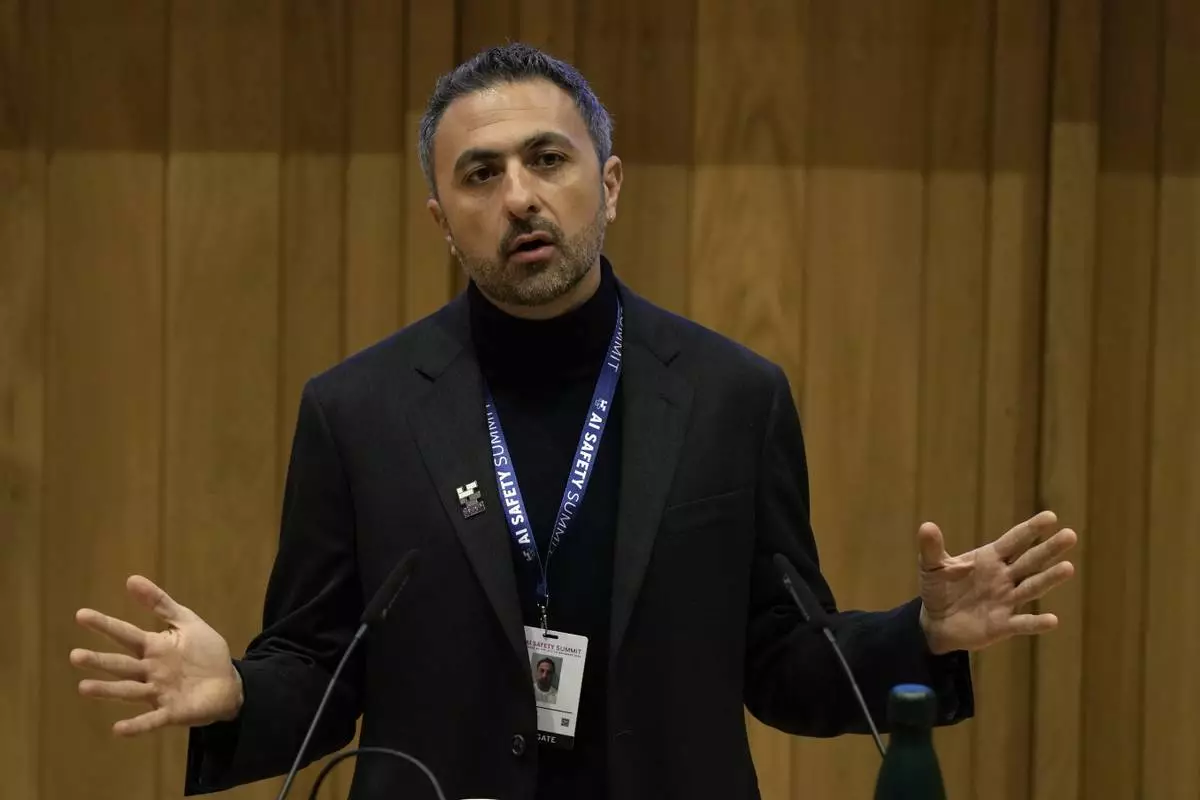
FILE - Mustafa Suleyman co founder and CEO of Inflection AI speaks to journalist during the AI Safety Summit in Bletchley Park, Milton Keynes, England, Wednesday, Nov. 1, 2023. (AP Photo/Alastair Grant, File)
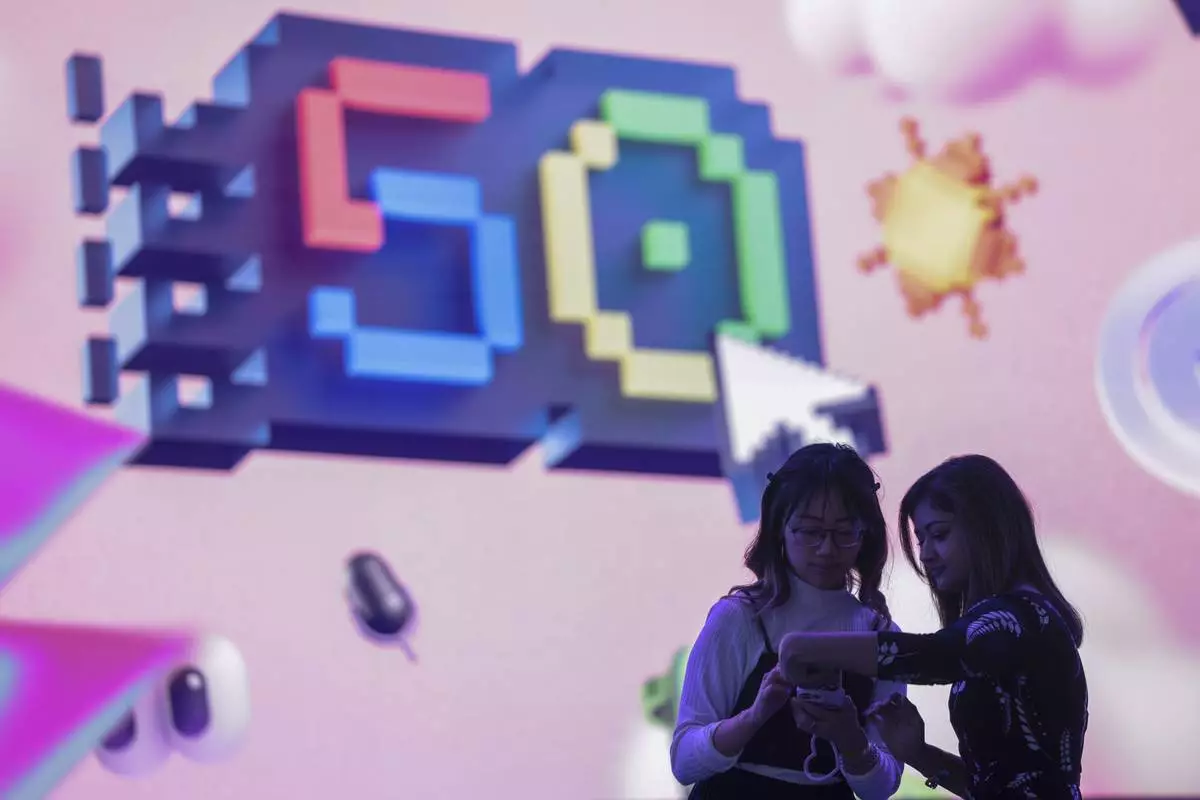
FILE - Mustafa Suleyman co founder and CEO of Inflection AI speaks to journalist during the AI Safety Summit in Bletchley Park, Milton Keynes, England, Wednesday, Nov. 1, 2023. (AP Photo/Alastair Grant, File)

FILE - Mustafa Suleyman co founder and CEO of Inflection AI speaks to journalist during the AI Safety Summit in Bletchley Park, Milton Keynes, England, Wednesday, Nov. 1, 2023. (AP Photo/Alastair Grant, File)

Attendees are pictured before a presentation of the Microsoft's AI assistant, Copilot, and celebration of the company's 50th anniversary at Microsoft headquarters, Friday, April 4, 2025, in Redmond, Wash. (AP Photo/Jason Redmond)
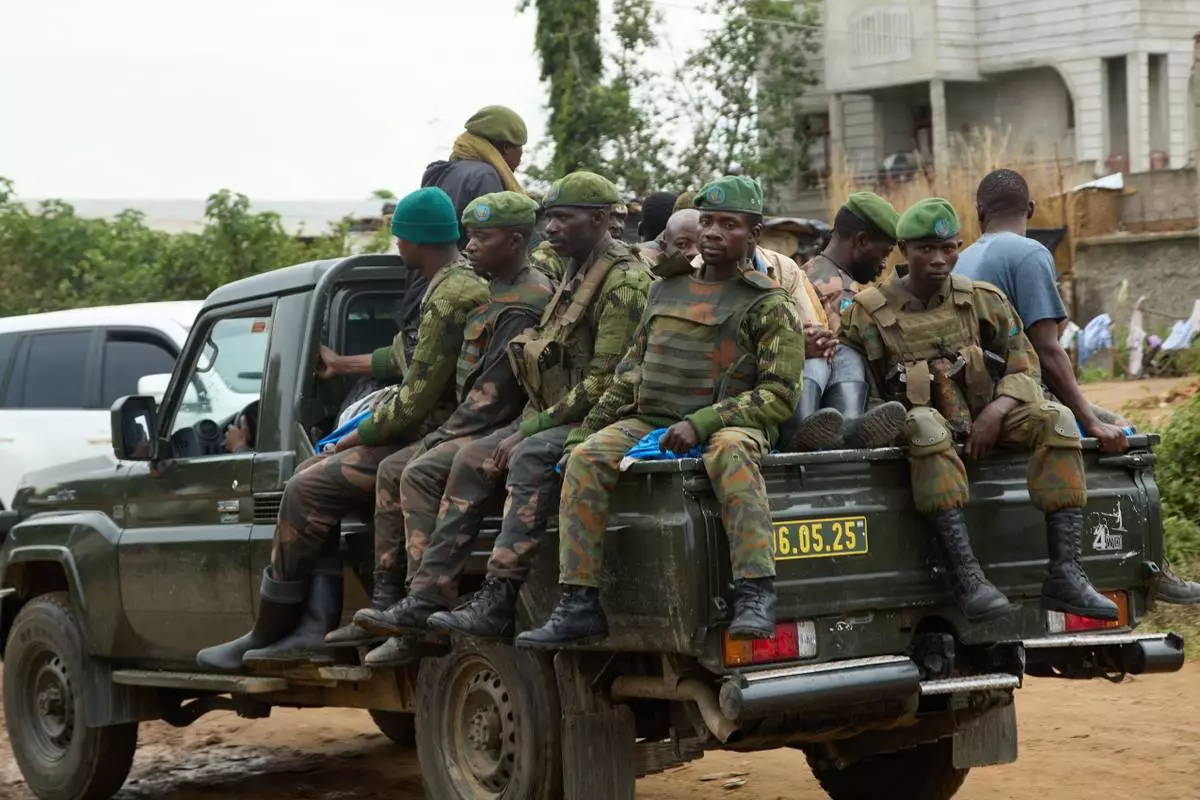

Attendees are pictured before a presentation of the Microsoft's AI assistant, Copilot, and celebration of the company's 50th anniversary at Microsoft headquarters, Friday, April 4, 2025, in Redmond, Wash. (AP Photo/Jason Redmond)

Uvira, CONGO (AP) — A climate of fear reigned Saturday in Uvira, a strategic city in eastern Congo, days after it fell to the Rwanda -backed M23 group, as fighting in the region escalated despite a U.S. mediated peace deal.

The Associated Press gained rare access to the city, which was the Congo government’s last major foothold in South Kivu province after the provincial capital of Bukavu fell to the rebels in February. Its capture allows the rebels to consolidate a broad corridor of influence across the east.

M23 said it took control of Uvira earlier this week, following a rapid offensive launched at the start of the month. Along with the more than 400 people killed, about 200,000 have been displaced, regional officials say.

On Saturday, the situation in Uvira still had not returned to normal. There was absolute silence and no traffic, apart from military jeeps circulating on the empty streets. The banks were closed and people have not resumed their jobs — only a few dared to go out during the day, and no one ventured outside after sunset, with armed M23 fighters patrolling the city.

“Some people left the city, but we stayed," Maria Esther, a 45-year-old mother of 10, told AP. “But the situation hasn’t returned to normal, we haven’t resumed our usual activities because there’s no money circulating.”

Joli Bulambo, another resident of Uvira, said: “People thought that the situation that had happened in Goma with the deaths would be the same here in Uvira, but fortunately, there were not many deaths because God helped."

The rebels’ latest offensive comes despite a U.S.-mediated peace agreement signed last week by the Congolese and Rwandan presidents in Washington.

The United States accused Rwanda of violating the agreement by backing a deadly new rebel offensive in the mineral-rich eastern Congo, and warned that the Trump administration will take action against “spoilers” of the deal.

The accord didn’t include the rebel group, which is negotiating separately with Congo and agreed earlier this year to a ceasefire that both sides accuse the other of violating. However, it obliges Rwanda to halt support for armed groups like M23 and work to end hostilities.

Marco Rubio, U.S. Secretary of State, said on X on Saturday: “Rwanda’s actions in eastern DRC are a clear violation of the Washington Accords signed by President Trump, and the United States will take action to ensure promises made to the President are kept.”

There was no immediate reaction from Rwanda.

The rebels’ advance pushed the conflict to the doorstep of neighboring Burundi, which has maintained troops in eastern Congo for years, heightening fears of a broader regional spillover.

More than 100 armed groups are vying for a foothold in mineral-rich eastern Congo, near the border with Rwanda, most prominently M23. The conflict has created one of the world’s most significant humanitarian crises, with more than 7 million people displaced, according to the U.N. agency for refugees.

Local U.N. partners report that more than 200,000 people have been displaced across the province since Dec. 2. Civilians also have crossed into Burundi, and there have been reports of shells falling in the town of Rugombo, on the Burundian side of the border, raising concerns about the conflict spilling over into Burundian territory.

Congo, the U.S. and U.N. experts accuse Rwanda of backing M23, which has grown from hundreds of members in 2021 to around 6,500 fighters, according to the U.N.

Congo’s Foreign Minister Thérèse Kayikwamba Wagner on Friday accused Rwanda of trampling on the peace agreement, which she described as bringing “hope of a historic turning point.”

She warned, however, that the “entire process … is at stake,” and urged the Security Council to impose sanctions against military and political leaders responsible for the attacks, ban mineral exports from Rwanda and prohibit it from contributing troops to U.N. peacekeeping missions.

“Rwanda continues to benefit, especially financially but also in terms of reputation, from its status as a troop-contributing country to peacekeeping missions,” Wagner told AP.

Bertrand Bisimwa, deputy coordinator of the AFC/M23 rebel movement told AP in an exclusive interview Friday that peace commitments have remained largely theoretical. “Regardless of the ceasefire agreements we sign and the mutual commitments we make, nothing is implemented on the ground,” he said.

Asked about the expansion of M23 operations toward the Uvira region, Bisimwa said the region was a long-standing hot spot of ethnic tensions and violence. “For a long time, people were attacked and killed because of their community affiliation,” he said.

On Friday, Rwanda’s Foreign Minister Olivier Nduhungirehe told diplomats that Congo had declared it would continue fighting in M23 recaptured territories and it was only after M23 retaliated that the international community “suddenly woke up.”

“The DRC has openly declared that it would not observe any ceasefire and would instead continue fighting to recapture territories held by the AFC/M23, even as the peace process unfolded," he said.

While Rwanda denies the claim that it backs M23, it acknowledged last year that it has troops and missile systems in eastern Congo, allegedly to safeguard its security. U.N. experts estimate there are up to 4,000 Rwandan forces in Congo.

Associated Press writers Ruth Alonga in Goma, Congo, and Evelyne Musambi in Nairobi, Kenya, contributed to this report.

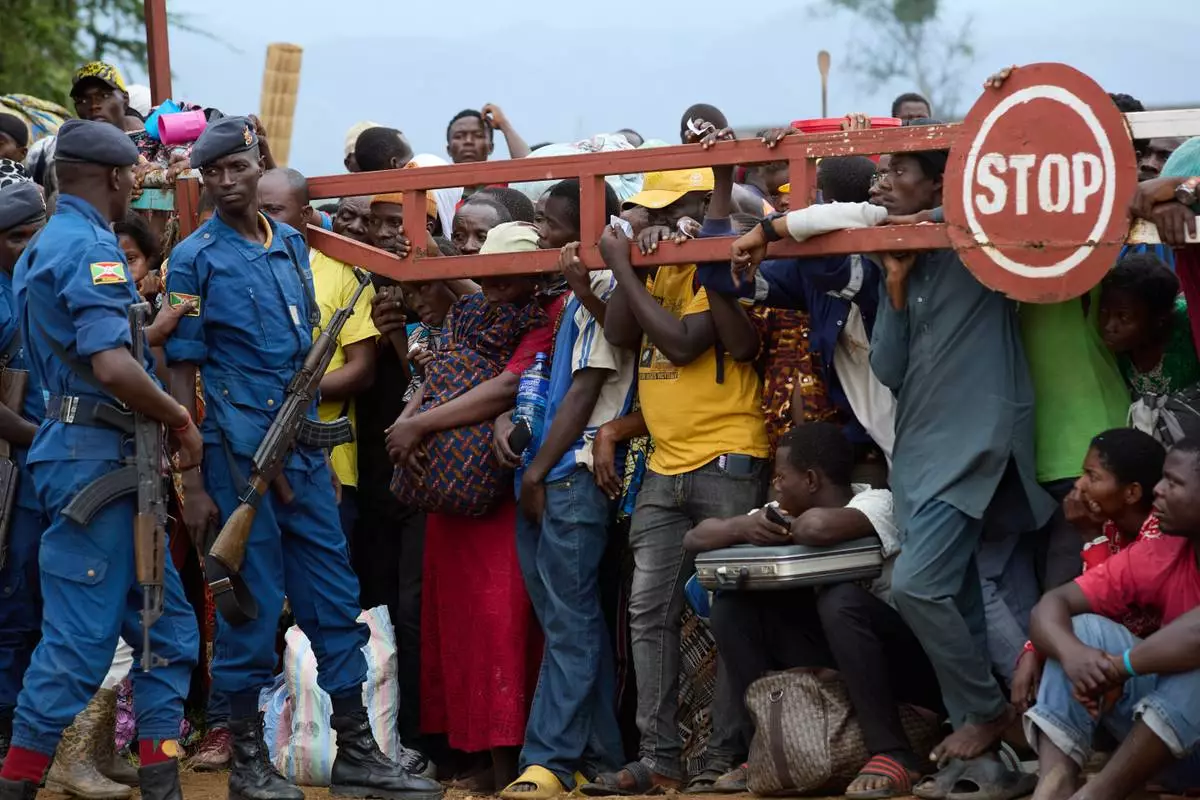
Soldiers patrol as thousands of people fleeing fighting in Congo's South Kivu province arrive in Cibitoke, Kansega, Burundi, Thursday, Dec. 11, 2025. (AP Photo/Berthier Mugiraneza)

Soldiers patrol as thousands of people fleeing fighting in Congo's South Kivu province arrive in Cibitoke, Kansega, Burundi, Thursday, Dec. 11, 2025. (AP Photo/Berthier Mugiraneza)

Internally displaced people (IDPs) fleeing fighting in Congo's South Kivu province arrive in Cibitoke, Kansega, Burundi, Thursday, Dec. 11, 2025. (AP Photo/Berthier Mugiraneza)

Internally displaced people (IDPs) fleeing fighting in Congo's South Kivu province arrive in Cibitoke, Kansega, Burundi, Thursday, Dec. 11, 2025. (AP Photo/Berthier Mugiraneza)

Internally displaced people (IDPs) who fled fighting in Congo's South Kivu province prepare a meal in Cibitoke, Kansega, Burundi, Thursday, Dec. 11, 2025. (AP Photo/Berthier Mugiraneza)

Internally displaced people (IDPs) who fled fighting in Congo's South Kivu province prepare a meal in Cibitoke, Kansega, Burundi, Thursday, Dec. 11, 2025. (AP Photo/Berthier Mugiraneza)

Internally displaced people (IDPs) fleeing fighting in Congo's South Kivu province arrive in Cibitoke, Kansega, Burundi, Thursday, Dec. 11, 2025. (AP Photo/Berthier Mugiraneza)

Internally displaced people (IDPs) fleeing fighting in Congo's South Kivu province arrive in Cibitoke, Kansega, Burundi, Thursday, Dec. 11, 2025. (AP Photo/Berthier Mugiraneza)

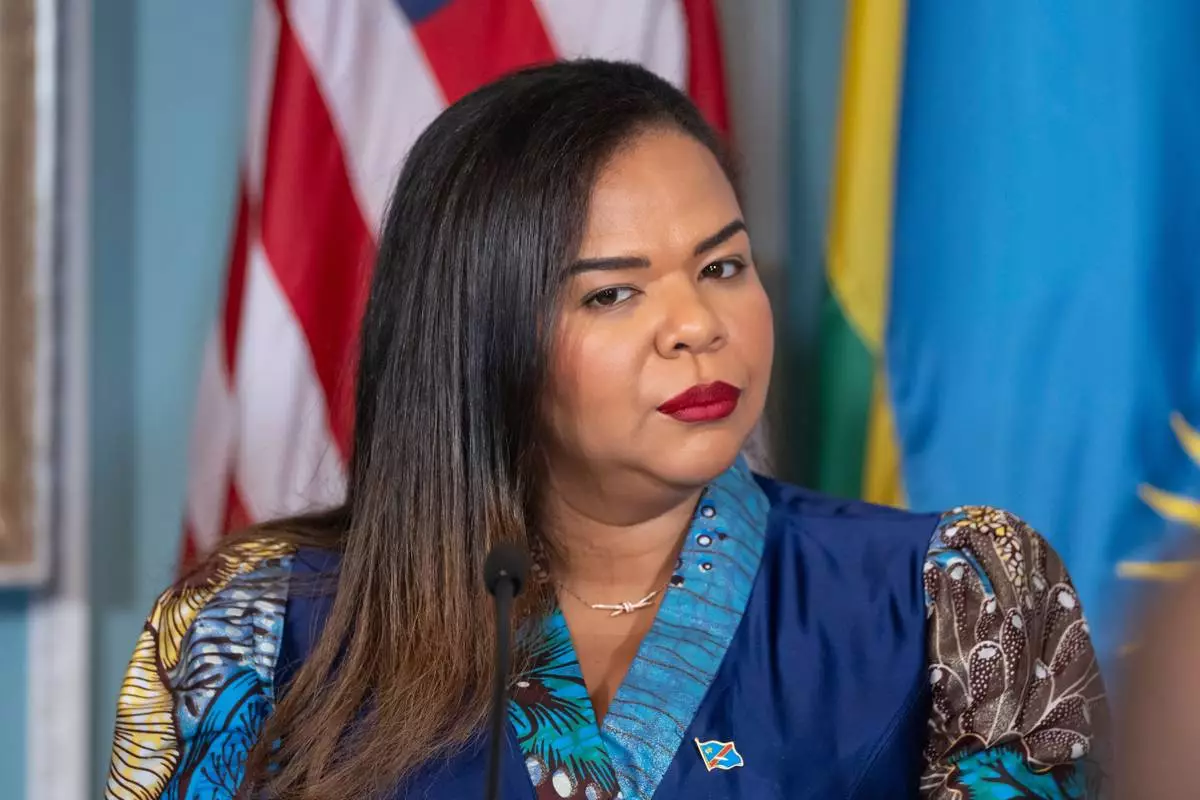
FILE - Democratic Republic of the Congo's Foreign Minister Therese Kayikwamba Wagner attends a signing ceremony for a peace agreement between Rwanda and the Democratic Republic of the Congo at the State Departmentin Washington, June 27, 2025. (AP Pho to/Mark Schiefelbein, File)

FILE - Democratic Republic of the Congo's Foreign Minister Therese Kayikwamba Wagner attends a signing ceremony for a peace agreement between Rwanda and the Democratic Republic of the Congo at the State Departmentin Washington, June 27, 2025. (AP Pho to/Mark Schiefelbein, File)

Recommended Articles