The decades-old Tanzania-Zambia Railway Authority (TAZARA) railway line, built with Chinese assistance, has made significant contributions to the prosperity and development of Africa, according to local people.
The TAZARA railway, known as the "Uhuru Railway" or "Independent Railway," was constructed as a turnkey project between 1970 and 1975 through an interest-free loan from China. Commercial operations started in July 1976, covering 1,860 km from Dar es Salaam in Tanzania to New Kapiri Mposhi in Zambia.
Over its 49 years of operation, the railway has become a vital artery that ensures the economic operation and development of Tanzania, Zambia, and surrounding areas.
For many cross-border traders in Zambia who conduct their businesses between Zambia and Tanzania, the TAZARA trains are the most affordable means of transporting both goods and people.
"I've been using TAZARA since 1996, I'm still using TAZARA. It has advantages. It is cheaper. It is safe. You don't have to experience such (uncomfortable) things," said Vincent Chinyimba, a local passenger.
In addition to aiding in the construction of the railway line, the Chinese government's assistance also provided local residents with relevant professional skills and employment opportunities.
"I went to China and I was doing civil engineering, later engineering under the civil engineering department. We looked for many countries but China came up and offered to do it for us. It was like a miracle and it's a sign of friendship between Zambia and China," said Mathew Phiri, a retired maintenance engineer who worked on TAZARA.
The railway has made a positive contribution to the economic and trade development of both Tanzania and Zambia, as well as the greater African region.
However, due to its deteriorating infrastructure and aging system, the railway's passenger and freight train capacity has not yet met its intended levels, with urgent upgrades and renovations required.
At the 2024 Summit of the Forum on China-Africa Cooperation (FOCAC) in Beijing, China, Tanzania, and Zambia reached a consensus on revitalizing the TAZARA railway.
"Today, TAZARA is facing a lot of challenges, of which again TAZARA needs to be revitalized and China has come back to help. It shows that China is well committed to assisting Africa in all," said Samuel Sholobela, head of commercial services at the Tanzania Zambia Railway Authority.
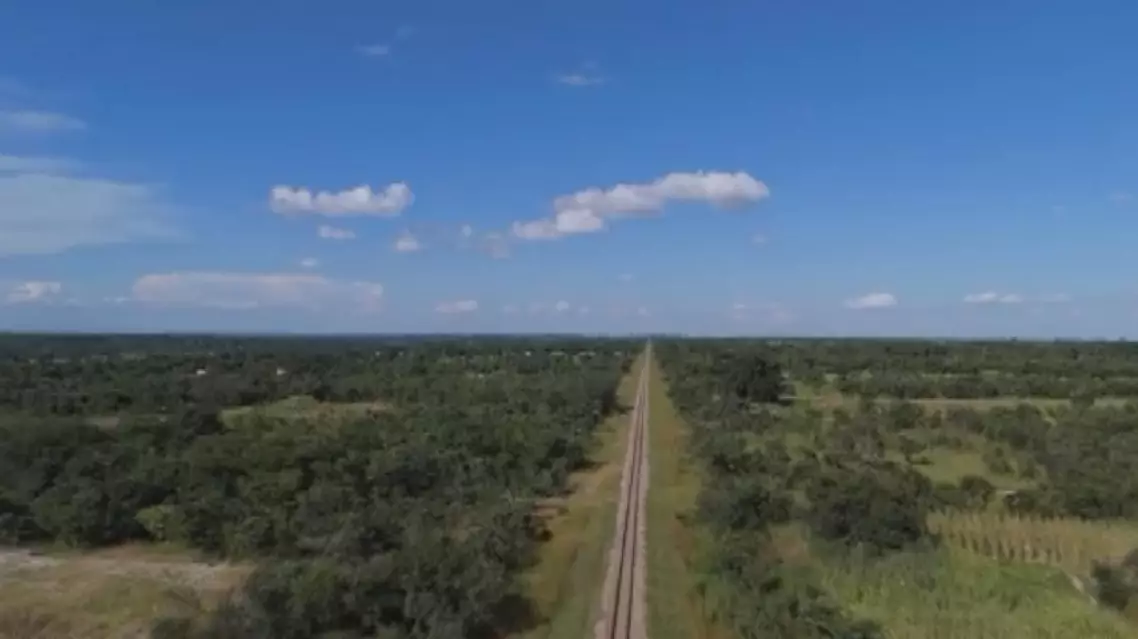
Chinese-built TAZARA railway makes positive contributions to African development
Thousands of protesters flooded the streets of London on Saturday, marching from Westminster to the U.S. embassy to deliver a clear message to the United States and Israel -- stop the war in Iran.
Chanting slogans and carrying banners reading "Stop bombing Iran" and "No war on Iran", demonstrators condemned what they described as unlawful military aggression that they say threatens regional stability and civilian lives.
"What Trump is doing from his base in America -- trying to rule the world. And I think it's disgusting and it's dangerous. It's killing. It's going to kill tens of thousands of people across the Middle East, and it'll have huge ramifications across the world," said a protester in an interview with China Global Television Network.
"I think that Trump and Netanyahu's obvious attempts to push regime change are unacceptable. And it's ultimately the Iranian people and people across the Middle East, normal people, who are going to suffer the most in this war," said another.
The United States and Israel launched coordinated attacks against Iran on Feb. 28, which resulted in the deaths of Iran's Supreme Leader Ali Khamenei, several of his family members and multiple senior Iranian military commanders.
Iran said on Friday evening that since the fighting began, at least 1,332 civilians have been killed, with thousands of others injured.
"A completely immoral, groundless act of aggression, another war crime against Iran," said a third protester.
"They are going in, they're bombing people indiscriminately. Over 160 school children have been killed for no good reason," another protester said, referring to the U.S.-Israeli airstrike on the Shajareh Tayyebeh girls' elementary school in Minab, southern Iran.
Initially, British Prime Minister Keir Starmer said that the United States couldn't use any British bases for military actions in the Middle East. But he later rolled back on his words, saying that the U.S. can use certain bases as long as it is for defensive actions only.
The protesters don't think he has gone far enough. They said that this is an illegal action and should be stopped immediately.
Israeli Prime Minister Benjamin Netanyahu said in a live broadcast statement on Saturday that Israel's attack on Iran will continue with "full force and uncompromising momentum."
Israel has a well-prepared plan with many surprises to undermine "Iranian regime" and "enable change," Netanyahu said.

Thousands march in London to demand halt to US-Israeli strikes on Iran

Thousands march in London to demand halt to US-Israeli strikes on Iran