Russia on Saturday accused Ukraine of carrying out 14 attacks on its energy infrastructure in a single day, while Ukraine dismissed it as false claims.
The Russian Ministry of Defense reported that over the past 24 hours, Russian forces repelled Ukrainian attacks from various directions and launched multiple offensives.
Russian forces hit Ukrainian military airports, military repair facilities, drone production workshops, ammunition depots, and concentrations of active forces and equipment in 147 areas, according to the report.
According to another report by the Russian Ministry of Defense on Saturday, from Friday night to Saturday morning, Russian air defense systems across multiple locations successfully shot down and intercepted 49 Ukrainian drones.
Governor of Samara Region Vyacheslav Fedorishchev said on Saturday that Ukrainian drones attacked an industrial facility in the region, causing a fire.
On the same day, the General Staff of the Ukrainian Armed Forces issued a statement accusing the Russian Defense Ministry of spreading false information. The claim that Ukrainian forces attacked Russian energy infrastructure was false, and the Ukrainian military targeted Russian military objectives only, according to the statement.
The General Staff of the Ukrainian Armed Forces also reported on Saturday that 145 combat engagements occurred across frontline over the past 24 hours.
The Ukrainian air force, missile units and artillery attacked 17 areas where Russian personnel, weapons and military equipment were concentrated, according to the report.
According to another report by the Ukrainian air force on Saturday, Russian forces launched 92 drones at Ukraine from 21:00 Friday to Saturday local time. By 09:00 local time on Saturday, Ukrainian forces confirmed the downing of 51 drones.

Russia, Ukraine dispute on energy facilities attacks
Khalilur Rahman, president of the 81st session of the UN General Assembly, urged the United Nations to confront its shortcomings, pursue reform and broaden participation to regain international trust.
The general debate of the 81st session of the UN General Assembly opened at the UN headquarters in New York city on Tuesday.
While presiding over the opening of the general debate which is themed "Restoring trust, managing transformation: a United Nations that delivers for all," Rahman said that in more than 80 years since its founding, the United Nations has helped avoid new world wars and played an important role in peacekeeping, humanitarian relief and development.
But he cautioned that the United Nations' mere existence should not be treated as a measure of success as prolonged armed conflicts and humanitarian crises show that the United Nations must honestly acknowledge tasks it has failed to complete.
Rahman then outlined three priorities for the United Nations to rebuild its trust from the international community.
"Trust is not given. It is earned. And we earn trust, I believe, in three ways: first, by being unapologetically realistic about where we are falling behind; second, by taking a foundational look at the reforms of the United Nations to deliver better; and third, by making our work inclusive and engaging all relevant stakeholders, from all parts of our society," Rahman said.
On reform, Rahman said measures, such as budget adjustments, merging agencies and streamlining structures, are necessary but far from sufficient.
He argued that reform must tackle deeper and long-standing structural issues, and be actively driven by member states.
He noted that UN member states have an opportunity in this session to show that they have learned from what works, that they are prepared to confront what does not, and that they can build a United Nations capable not simply of surviving change, but of shaping change.
"To seize that opportunity, we must be realistic enough to confront hard truths, bold enough to reform, and inclusive enough to bring the right people to the table," said Rahman.
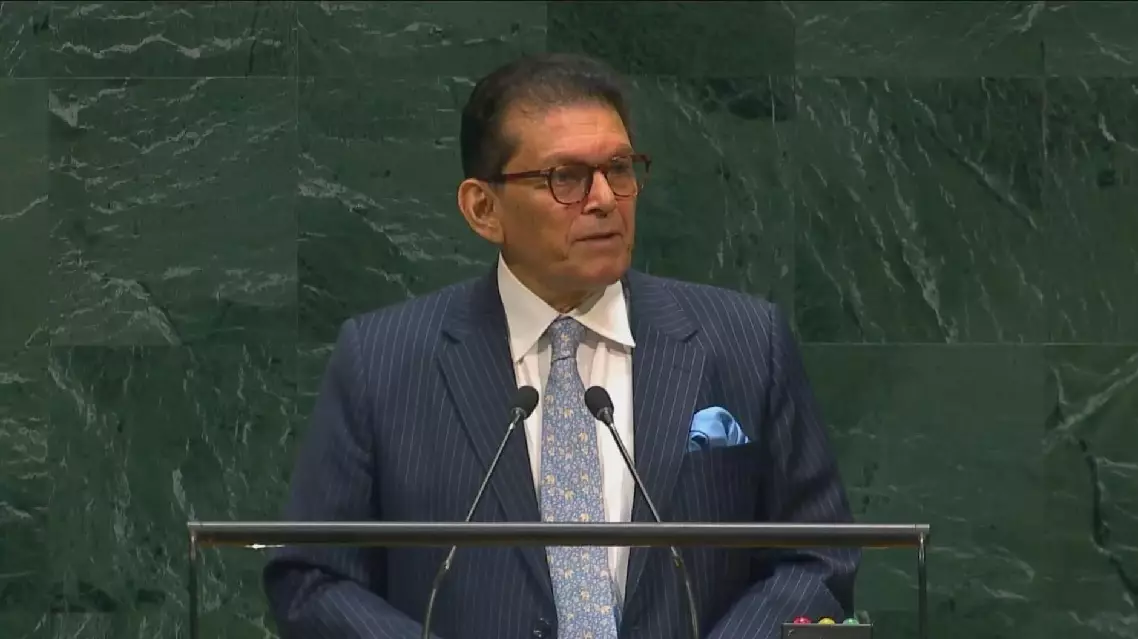
UN General Assembly president calls for deeper reform to rebuild global trust