Skip to Content Facebook Feature Image

Beijing sees surging cross-border travels during Qingming Festival

China

China

China

Beijing sees surging cross-border travels during Qingming Festival

2025-04-06 10:53 Last Updated At:23:27

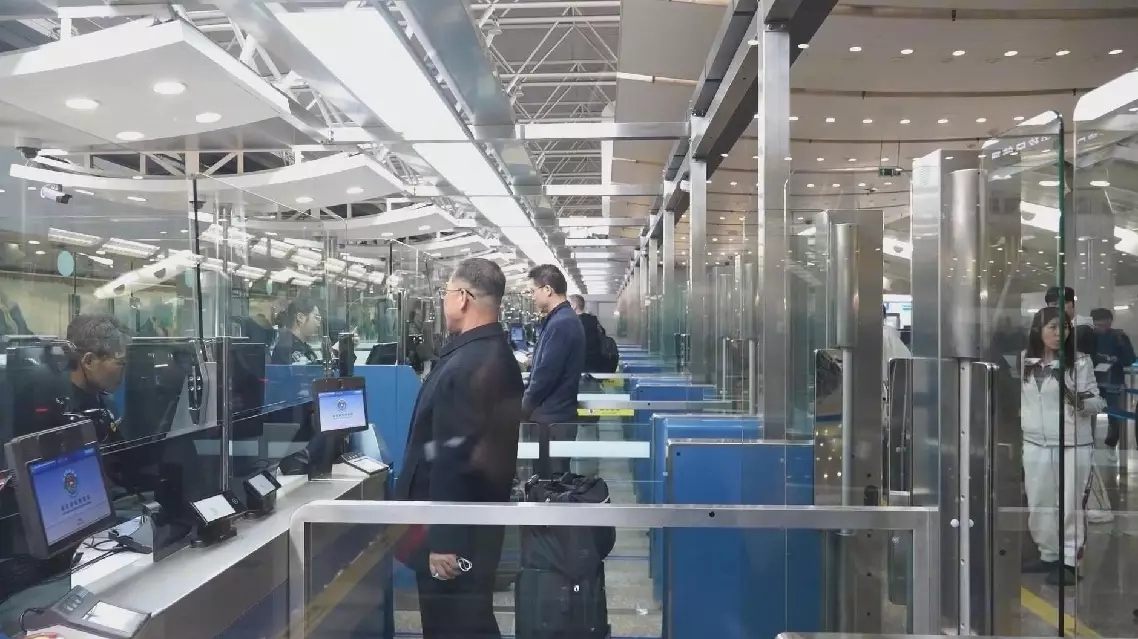
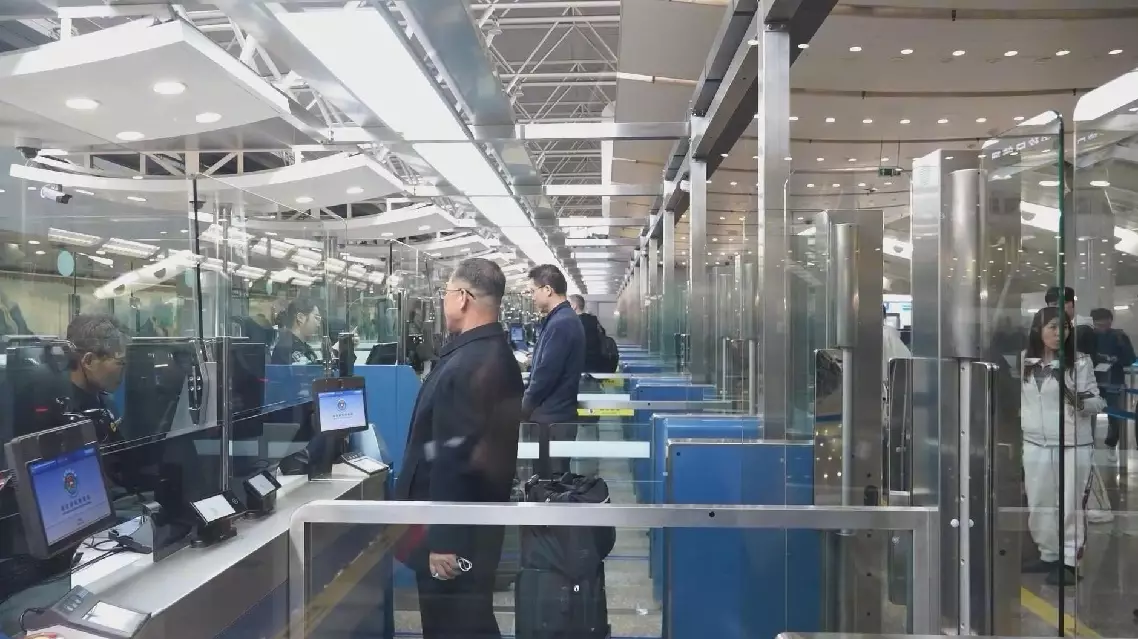
Beijing has experienced a significant rise in both inbound and outbound travelers since the three-day Qingming Festival holiday began on Friday, prompting enhanced measures to ensure smooth border crossings.

Qingming Festival is a traditional Chinese holiday that falls on the 15th day after the Spring Equinox. Often seen as a time to enjoy the greenery of springtime and to visit the graves of ancestors, the holiday has also become a busy period for cultural and tourism activities in China. On Friday, Beijing recorded over 53,000 border crossings, marking a 32-percent increase year on year. Among them, over 9,000 entries were made by foreign nationals, a 51-percent rise year on year.

From Friday to Sunday, Beijing's entry and exit volume is expected to reach 160,000, according to the Beijing General Station of Exit and Entry Frontier Inspection, which has implemented multiple measures aimed at improving the efficiency and experience of travelers in order to handle the surge. These include streamlining temporary entry permit processes, expanding inspection lanes and waiting areas, encouraging the use of electronic boarding passes, and piloting self-service machines for printing foreigner entry cards.

"We've optimized the process for issuing temporary entry permits at both Beijing Capital International Airport and Beijing Daxing International Airport. We've added dedicated channels where travelers can receive permits and complete immigration procedures in the same location," said Liu Yan, deputy director of the border inspection division at the Beijing General Station of Exit and Entry Frontier Inspection. The spike in cross-border tourism is also linked to the implementation of visa exemption policies. As of March 31, Beijing had processed 584,000 foreign entries this year, with 18,000 travelers benefiting from the new policy of 240-hour visa-free transit, a 13.8-percent increase year on year. Most foreign visitors came for tourism, business, or family visits.

"This is the first time for us to come here to China, and we're very excited to be here," said a tourist from Mexico.

To welcome international visitors, Beijing is enhancing its tourism infrastructure.

"Beijing is working to become the top destination for inbound tourism. We've launched one-stop tourism service centers at Beijing Capital International Airport and Beijing Daxing International Airport and introduced the country's first integrated bank and SIM card service products. We're also building a barrier-free payment demonstration zone along the central axis of Beijing," said Zheng Fang, deputy director of the Beijing Municipal Bureau of Culture and Tourism.
Beijing sees surging cross-border travels during Qingming Festival
Beijing sees surging cross-border travels during Qingming Festival

Beijing sees surging cross-border travels during Qingming Festival
Beijing sees surging cross-border travels during Qingming Festival

The Sanya branch of the Peking University (PKU) Hospital of Stomatology based in the tourist resort city of Sanya in south China's tropical Hainan Province -- the country's first national-level regional dental specialty center -- officially opened on Saturday, providing local residents and tourists with access to top-tier dental care without leaving Hainan.

As a key city in the Hainan Free Trade Port and a hub for both tourism and wellness, Sanya has seen rising demand for oral healthcare. Local resources, however, have long been strained.

The newly launched hospital aims to ease the situation. Both its management and medical teams come directly from the main campus of the PKU Hospita of Stomatology in Beijing, ensuring seamless integration and unified standards across diagnoses, treatment, and service quality. The facility comprises of nine specialized buildings, including an emergency outpatient complex and an international medical services building, covering all sub-specialties in dental medicine.

"Since the official start of Hainan Free Trade Port's island-wide special customs operations [on December 18, 2025], the very first zero-tariff items entering the region were advanced dental equipment for our hospital. This enables a wide range of patients in the Hainan region to access the world's latest dental treatment equipment and technology more quickly," said Deng Xuliang, president of the PKU Hospital of Stomatology.

Looking ahead, the main campus of the PKU Hospital of Stomatology will collaborate with medical universities in Hainan to jointly train more specialized professionals for grassroots-level healthcare institutions across the region. Through technical mentorship and integrated training programs, the initiative aims to leverage the policy advantages of the free trade port to build a high-level, comprehensive platform that integrates medical services, education, research, public health, and healthcare management, with particular attention on international patient services and comfort-focused treatment.

"The operation of medical care plus health and wellness programs and of medical care plus tourism projects has jointly contributed to the formation of an internationalized medical care platform in Sanya, which presents a major opportunity for both Sanya and the rest of Hainan, especially as the free trade port enters full operation, making more duty-free medicines and medical devices available locally," said Hu Yulei, director of the Sanya Municipal Health Commission.

Hainan's Sanya opens first national dental specialty center

Hainan's Sanya opens first national dental specialty center

Recommended Articles