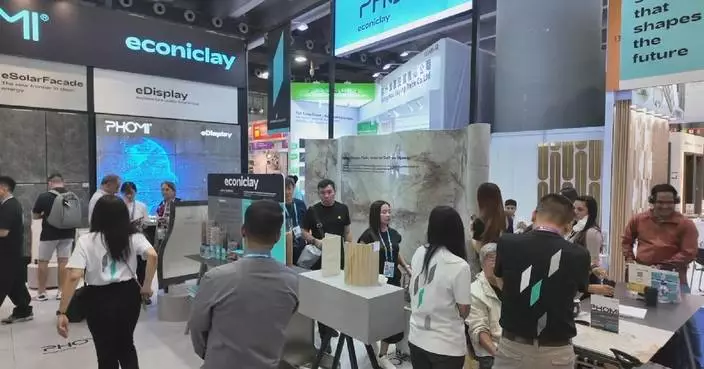
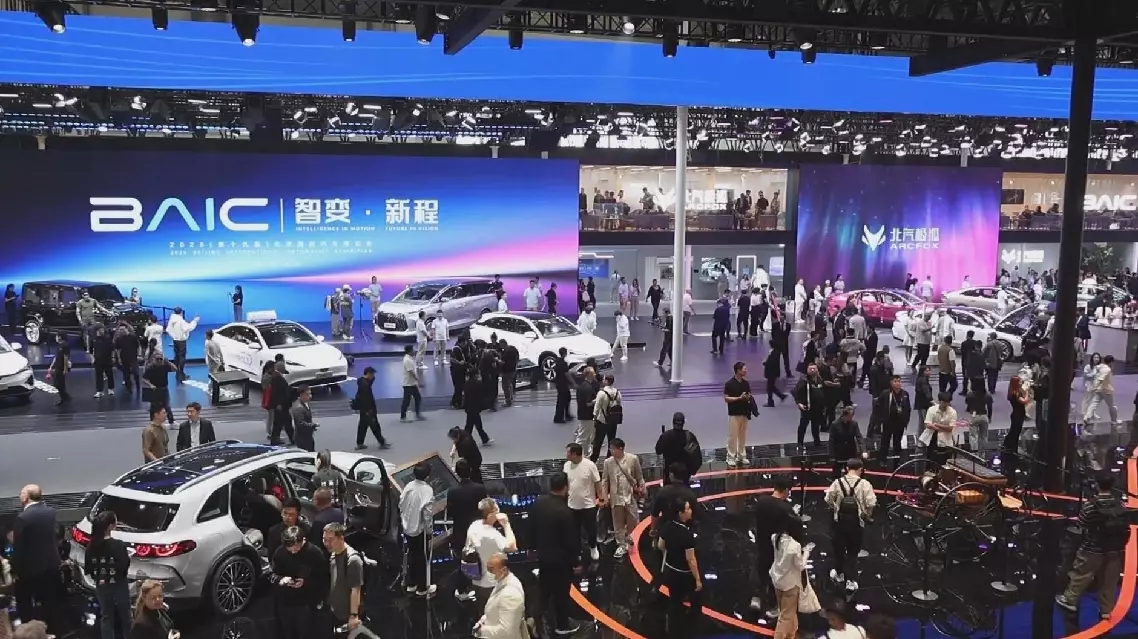
Auto industry insiders were amazed by the depth and breadth of conceptual innovation and technological iteration of China's new energy vehicle (NEV) sector at the 2026 Beijing International Automotive Exhibition (Auto China 2026), which kicked off on Friday.
The event, which runs until May 3, brings together leading automakers, technology companies and supply chain manufacturers from 21 countries and regions worldwide.
A total of 1,451 vehicles, including 71 concept cars, are on display at the ongoing event, with new energy vehicles accounting for over 80 percent of the total, a record high.
From charging rates that have jumped from industry-standard benchmarks in a matter of months, to artificial intelligence systems moving from cars to homes, to vehicle architectures that fuse once-separated systems, exhibitors and international visitors describe an industry moving faster than many expected.
"You see so many launches, so much new products, so much innovation happening so fast here. It's a very interesting place to be. The amount of launches, the amount of electric vehicles, the amount of technology that's being put in there, the improvement in quality is noticeable. You can see the new vehicle versus the next vehicle, start knocking on the door panel and it's all soft touch on the new vehicle. Just a few years ago, that wasn't the case. The speed that it's changed within a matter of months, from Guangzhou auto show to Beijing, you can already see the difference, and you can already see the progress, and that's very exciting. It's not just where you are today, it's the trajectory," said Larry Evans, an American automotive author at CleanTechnica.
SenseAuto, the automotive division of Chinese AI company SenseTime, is among the firms trying to extend vehicle intelligence into other areas of daily life.
Zhang Yiwu, a product manager at the company, presented "Care U", a device designed to bring the firm's in-car assistant into users' homes.
"We previously launched a concept called new family member, which was initially launched as a smart assistant in cars. This time, we've given the smart assistant a small body, allowing it to truly reside in our users' homes and become a genuine new family member. Our small device is called 'Care U', and it can identify who speaks every single word. We are the only company capable of performing voiceprint recognition on every single sentence on such a small device," said Zhang.
Meanwhile, Chinese automotive electronics firm AutoLink used the show to present a next-generation vehicle electronic and electrical architecture.
"Currently, we know that autonomous driving is end-to-end, relying on data training and retraining. In the future, it will not only be like that, but data from autonomous driving, the cockpit, displays, and the chassis will all be integrated to train the model and continuously improve and innovate. When Level 4 autonomous driving vehicles arrive, there will be innovations in safety, interaction, and the interaction between human behavior and the vehicle. It will be completely different," said Li Zhigang, Chief Strategy Officer of AutoLink.
A Belgian automotive industry insider from Dupont, visiting to scout Chinese brands for potential European entry, said the displays were "impressive", and was deeply attracted by flying transportation concepts at the show.
"We were interested to see what's new Chinese brands are doing, new models, indeed, they are introducing, and the ones that maybe come to Europe as well. It's quite impressive, it's totally a different sensation, a bit like a video game. Yes, indeed, it was a kind of motorbike flying, motorbike flying over different roads, different kinds of environments," he said.
Conceptual innovation, technological iteration of China's NEV sector shine at Auto China 2026