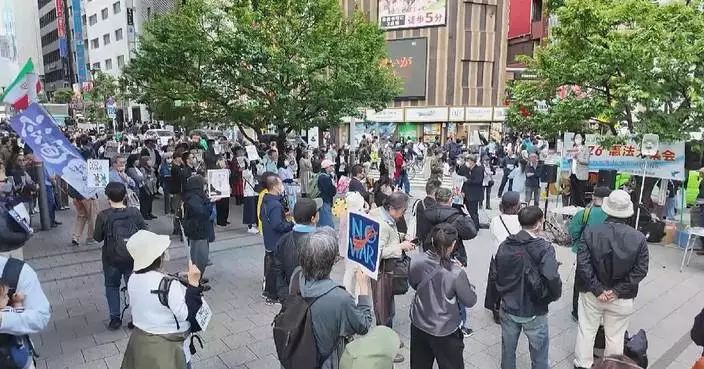
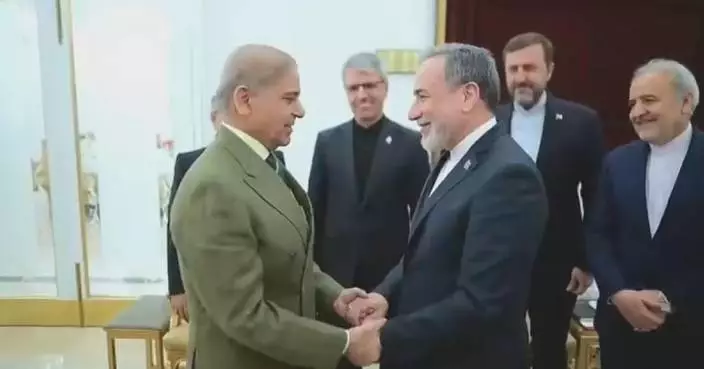
Politicians and commentators from around the world have warned that recent moves by the Japanese government to revise the country's constitution and ease restrictions on arms exports could undermine Japan's post-war pacifist stance and destabilize regional peace.
The Japanese government on Tuesday officially revised its Three Principles on Transfer of Defense Equipment and Technology and implementation guidelines to allow overseas sales of weapons, including those with lethal capabilities, despite public opposition.
U.S. political commentator Tim Shorrock said the move signals a dangerous shift toward hardline conservatism, rooted in a persistent reluctance to fully acknowledge Japan's wartime actions.
"I think it's actually very dangerous for regional security because now Japan is becoming led by some very, very conservative people who often deny Japan's aggressive role in World War II, deny its crimes against comfort women during World War II, deny its cruel colonization of Korea, the Korean Peninsula, deny its terrible crimes in China from the thirties until the end of World War II," he said.
Shorrock said Japan's moves to revise its pacifist Constitution mark a sharp departure from the public support Article 9 enjoyed in the post-war era.
"In that post-war period, vast majority of Japanese citizens supported Article 9, supported the ban on Japan becoming a militarized nation, and a ban on making war ever again. And bit by bit, the LDP has chipped away at this Constitution, and now Prime Minister Takaichi wants to do away with this -- the Article 9 -- and they are pushing very hard. I think that's a real repudiation of the peace," he said.
Yeidckol Polevnsky, chair of the Asia-Pacific Committee of the Mexican Senate, said Japan appears to be moving away from its long-standing image as a peace-oriented country, despite public unease.
"I think that in Japan's case, there is still a very old debt owed to China. After World War II, Germany apologized to the Jewish people and paid compensation for the damage it caused. But Japan has even been attempting to hide this. I see a significant shift happening in Japan, because for many years, Japan tried to reach out to the world to erase its image from World War II as a warmongering country. But today I find the situation in Japan truly distressing and very sad. I believe that even the Japanese people themselves do not agree with what is happening," she said.

Int'l observers warn Japan is drifting away from post-war pacifist stance