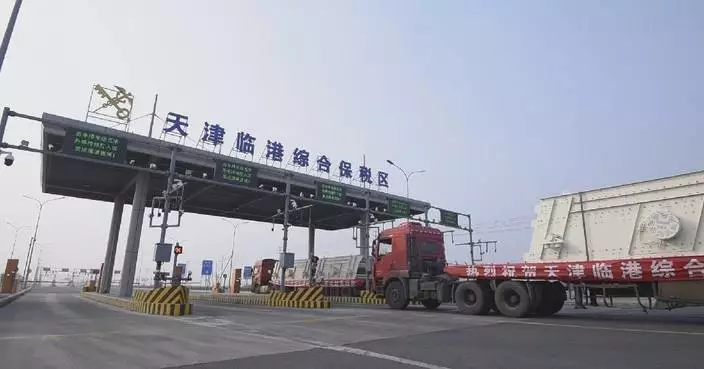
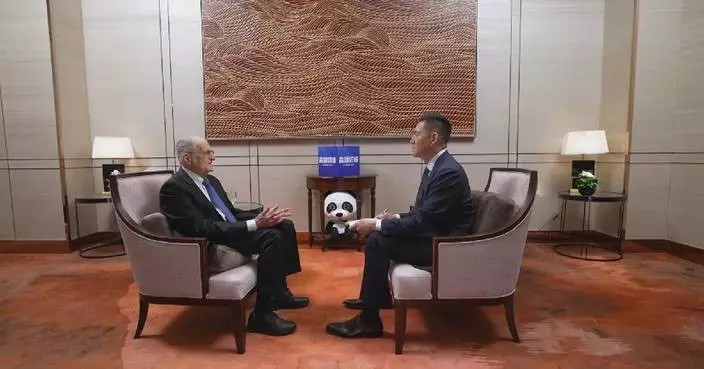
China's sharp countermeasures against U.S. "reciprocal tariffs" demonstrate the country's zero tolerance towards actions that undermine the global multilateral trading system, according to an expert.
Amid widespread opposition, U.S. President Donald Trump on Wednesday signed an executive order on the so-called "reciprocal tariffs", imposing a 10-percent "minimum baseline tariff" on all imported goods and higher rates on certain trading partners. The order took effect from Saturday.
For China, it faces a 34-percent tariff from the United States. That was on top of the existing tariff of 20 percent.
Following the U.S. decision to impose "reciprocal tariffs" on Chinese exports to the United States, China's Customs Tariff Commission of the State Council said Friday that the move taken by the U.S. does not conform to international trade rules, seriously undermines China's legitimate rights and interests, and represents a typical act of unilateral bullying.
It also announced that China will impose additional 34-percent tariffs on all products imported from the United States starting from April 10.
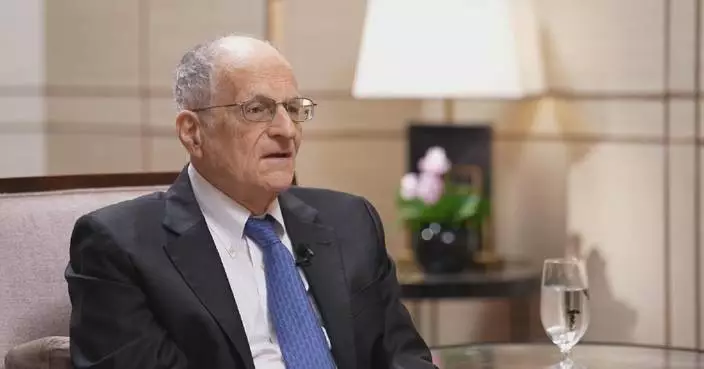
Wang Yaojing, assistant professor of economics with Peking University, pointed out that China's countermeasures shows its clear stance in opposing unilateralism and protectionism.
"China's countermeasures clearly demonstrate zero tolerance against actions that seek to undermine the global multilateral trading ecosystem. These harmful moves have far-reaching consequences for the global economy. And China's countermeasures are both well-prepared and timely," Wang emphasized.

China’s countermeasures show zero tolerance towards US unilateralism, protectionism: expert

China’s countermeasures show zero tolerance towards US unilateralism, protectionism: expert
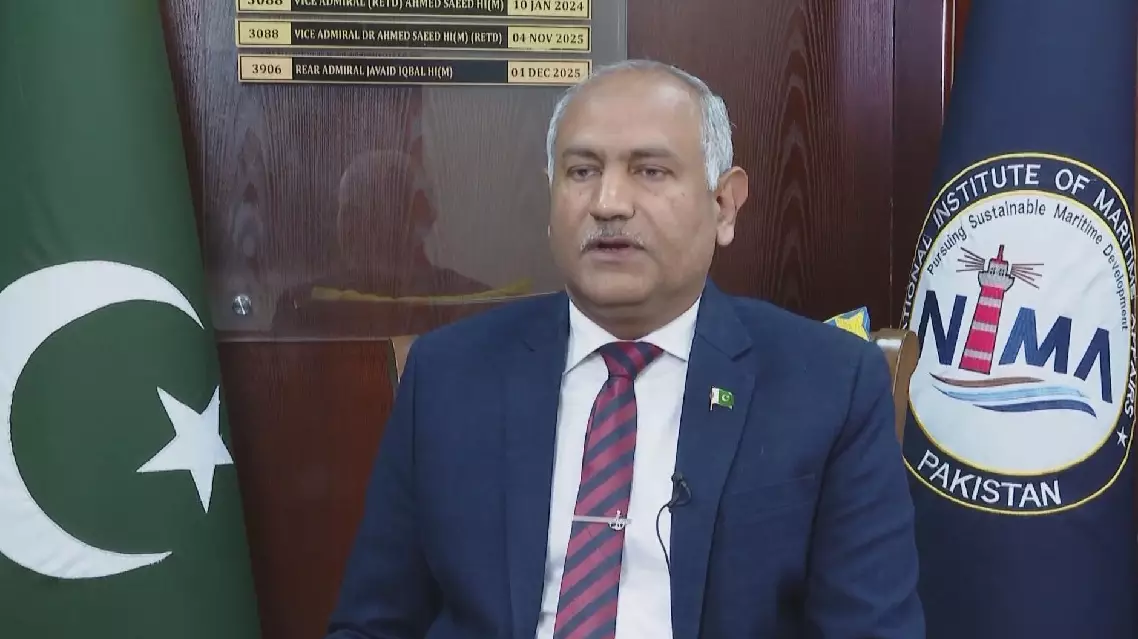
Pakistan's sense of global responsibility and concern over the impact of the ongoing conflict between Iran and the United States and Israel on the world order compel it to mediate between the warring parties, Javed Iqbal, president of the Pakistani National Institute of Maritime Affairs, said on Friday.
Pakistan is a key stakeholder in maritime security in the Strait of Hormuz, and because conflicts in one region can ripple across the world, the country sees mediation as essential to safeguarding its interests and promoting broader regional stability, Iqbal, who is also a senior defense analyst, told the China Global Television Network (CGTN).
"We are a part of not only the global community of nations, but also part of Global South. We are sitting at the mouth of the Strait of Hormuz. We are an important stakeholder in ensuring maritime security in the region, because it's an interconnected world. If there is a threat, it affects everybody. And we have witnessed in the last four weeks that how the oil prices, gas prices have impacted the entire world. The food security crisis is brewing. Prices of the commodities are going up. So Pakistan had to play this role, not only for its own interest, but also in the interest of the global community," he said.
Iqbal also noted that Pakistan is committed to not only ending the conflict, but also addressing its broader consequences, as the Middle East conflict continues to reshape the global order.
"And I think as a responsible nation, we are not only looking at the war termination, but we are also looking at the second order and the third order effects, the post war also, because it's a major, cataclysmic event. I think it will transform the world order. It will reset the global balance of power. It will reset the security order in the Middle East. So it's a very, very important event. And being a critical stakeholder, in the interest of the global security, global peace, and development, Pakistan is playing its due role and acting as a conveyor of the messages between the United States and Iran," he said.
Pakistan has been relaying messages between Iran and the United States, helping bring an end to the conflict. The country will host a quadrilateral meeting of foreign ministers including Türkiye, Egypt and Saudi Arabia on Monday to discuss tensions in the Middle East, according to Pakistan's state media.
Pakistan affirms responsibility to mediate as Middle East conflict reshapes global order: analyst