A Peruvian economist has urged Latin American countries to strengthen cooperation to jointly respond to U.S. abuse of tariffs, warning that Washington's unilateral moves have pushed the world to the brink of a global trade war.
Alejandro Indacochea made the remarks in an exclusive interview with China Media Group (CMG), commenting on the additional tariffs recently announced by the Trump administration.
On April 2, U.S. President Donald Trump signed an executive order on the so-called "reciprocal tariffs," imposing a 10-percent "minimum baseline tariff" on all imports, with higher rates on certain trading partners.
The order, which went into effect on Saturday, specifies that all imports will face an additional 10-percent tariff unless exemptions are granted.
"This marks the start of a trade war in the world. Arbitrarily imposing tariffs is a step backwards - a return to a failed model in the last century. In the long run, a trade war is a lose-lose scenario. Specifically, for the United States, it is faced with a resurgence of inflation. In addition, a serious economic recession will be caused, because higher tariffs will be ultimately paid by consumers," said Indacochea.
As of late Sunday night, U.S. stock futures continued to fall, with the E-Mini Nasdaq 100 Index dropping as much as 6.15 percent before narrowing losses. The broader S&P 500 Index plunged over 10 percent in the last two sessions, and the Nasdaq Composite entered bear market territory.
According to Indacochea, the U.S. administration's protectionist approach has already triggered a sharp stock market sell-off and raised the likelihood of an economic downturn.
"We've already seen that Thursday and Friday were black days for the stock market. The stock market collapsed, and the Nasdaq also posted significant losses. I presume this will continue. The stock market reflects what's ahead. In the United States, analysts are warning there's a 60-percent chance of recession, and if the trade war drags on, we could see 'double inflation'," he said.
Amid mounting pressure, Indacochea called on Latin American countries to partner more closely to mitigate the risks.
"We should promote the integration of South America and Asia, and the Chancay Port is key to the process, because Peru has a geographic advantage. It will also enhance cooperation with Ecuador, who needs to export its bananas and cocoa through Peru. Colombia does not have an FTA (Free Trade Agreement) with China. For Colombia and Bolivia, Peru is the natural gateway for exports. For Brazil as well, it needs to export its goods through Peru," he said.
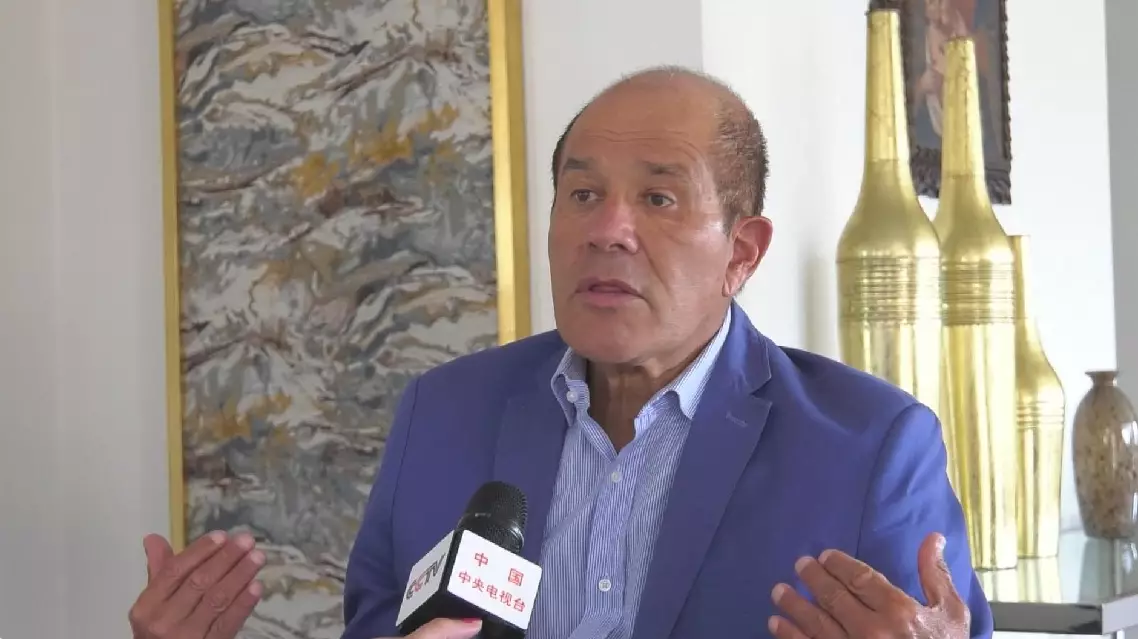
Peruvian economist urges Latin America to unite against US tariffs
Peruvian economist urges Latin America to unite against US tariffs
Peruvian economist urges Latin America to unite against US tariffs