Some of the humanoid robots that will take part in a half-marathon race in Beijing scheduled for later this month have completed their first road test.
The race, set for April 13 in the Beijing Economic-Technological Development Area in the capital city's southeast, will feature both robotic and human athletes competing on the same route but on separate tracks to ensure safety for all participants.
The competition is open to global robot companies, research institutes, robot clubs and universities. So far, 23 organizations have signed up for the competition, and six robot teams have participated in the road test held at midnight on March 28-29.
After all-round inspections and adjustments, a 1.8-meter-tall robot named Tiangong Ultra from the Beijing Innovation Center of Humanoid Robots set off first. The robot finished the race by around two hours and 52 minutes.
The robot departed afterwards is a 1.2-meter-tall humanoid from the Noetix Robotics, a company founded in Beijing in 2023. The main features of the robot are the advanced joint design and drive system, which has highly flexible movement capabilities and can achieve rapid movements, make turnings and complete complex movements, according to its developers at the site.
To complete the 21-kilometer half marathon, each robot has to undergo several battery replacement operations along the way, which took about five minutes each time. Each team showed different technical features and tested different contents. A team from Shanghai mainly focused on the adaptability of the robot's sole to the road surface. "We must work to improve its uphill and downhill capabilities, its endurance, its operating stability, and some algorithm strategies to a higher level," said Bi Bei, head of the structural development of the Shanghai-based Cyan Robotics.
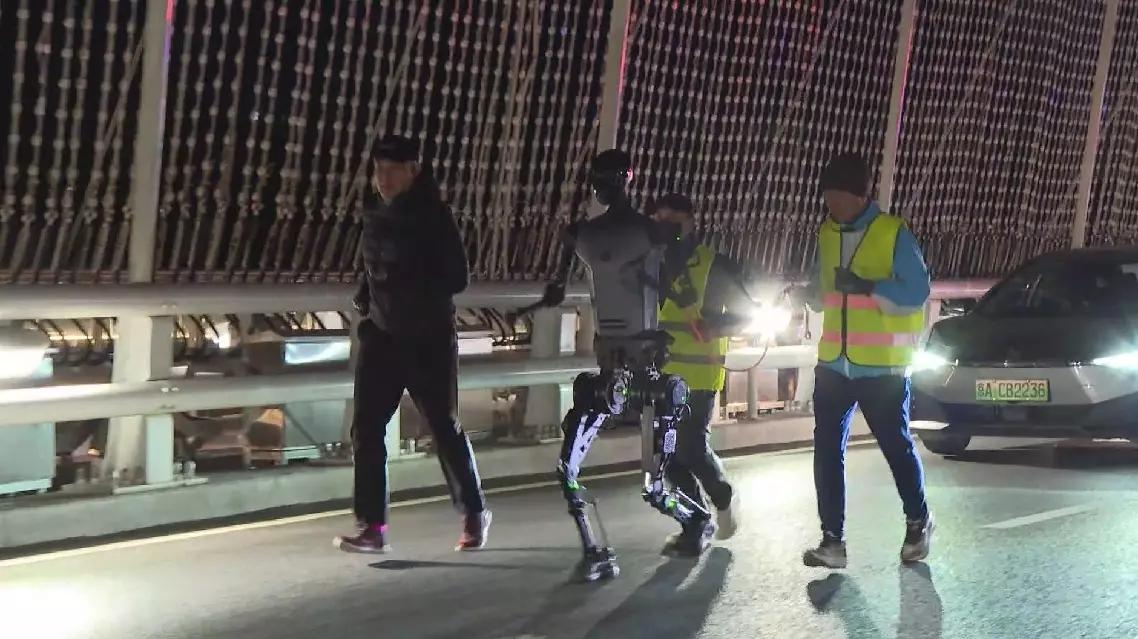
Humanoid robots complete first road test for half-marathon in Beijing
A group of young American pickleball players engaged in vibrant cultural exchanges in China during the Chinese New Year, part of a growing wave of youth exchanges between the two countries.
The young athletes experienced a variety of activities in Shenzhen City, south China's Guangdong Province.
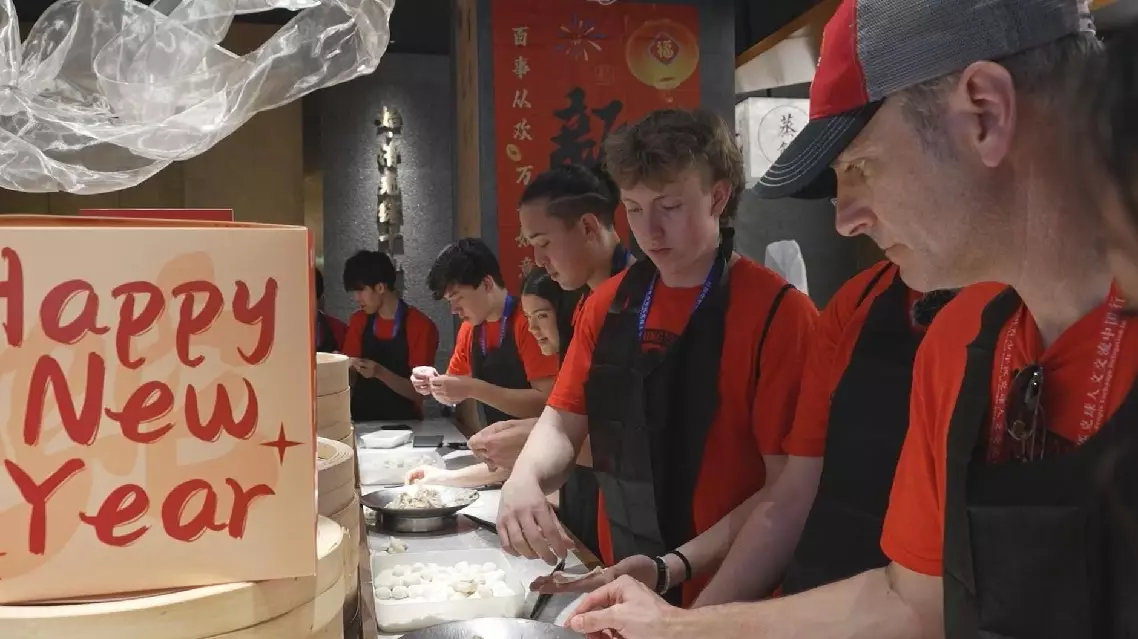
On Monday, the Eve of Chinese New Year, they tried making dumplings, a hands-on lesson in culture and teamwork, and shared their feelings making dumplings.
"A chef came over and showed us how to do it first and how to make it look cool," said Richie Pitot, a student.
"It was fun, but I wasn't very good at it, we weren't very good at it. It was more just having fun with the mistakes. This is their first time - it's our first time being here for Chinese New Year," said Ian Skott Harper, another student.
"The shape of the dumpling, kind of a coin, and togetherness. We were all making them together," said Isaiah Martin Valmonte, also a student.
These "student ambassadors" are in Shenzhen to promote what they describe as "pickleball diplomacy". Beyond the matches, they're diving into Spring Festival traditions.
In 2023, Chinese President Xi Jinping announced during his visit to San Francisco that China would invite 50,000 young Americans to China for exchange and study over five years to increase exchanges between the two peoples, especially between the youths.
The young athletes also visited a flower market to learn about local floral culture that is in particular related to the festival.
"I learned that each flower has its own special significance. I think a large difference is Christmas in the U.S. is cold [in color]. Here, there's every color you could ever imagine. It's warm, it's sunny, it's nice. And I think it's polar opposites. But in a way, they give the same meaning, it's all about family. It's all about connections, and it's all about spending time with the ones you love most," said Ryan Corkery, another student.
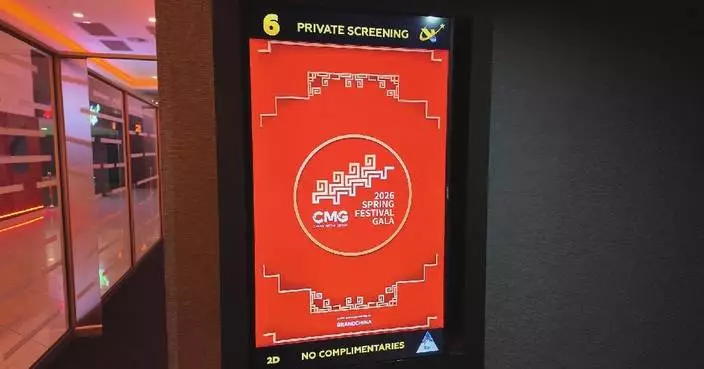
The American pickleball players watched the 2026 Spring Festival Gala on Monday and hosted a celebration of their own, with food, gifts, and plenty of talent.
"People can have differences, different cultures, different beliefs, but it's finding the similarities and building bridges, and that's our mission with pickleball diplomacy, we are honored 55 years later, watching how ping pong diplomacy brought the United States and China together, we are hopeful to be part of that too," said Jeffrey Sullivan, head of the U.S. Delegation of Pickleball Diplomacy.
On Tuesday, the New Year's Day, they visited a cultural heritage theme park to experience ancient Chinese customs.
The young athletes expressed excitement and awe at experiencing the rich cultural heritage such as traditional acrobatics.
"When the trapeze, when the kids were jumping through the hoops and rings that was so crazy, they're so talented. I didn't even think they could get that high in the air. Honestly, it was just beautiful to watch, you saw so much culture and it really told a story about where we are and made me have such a much deeper understanding of China and its culture. And I just I just love it here so much," said Michael Horton, a student.
"It's such a deeper cultural tradition than in the United States. We generally stay up till midnight and watch the ball drop, and that can be a lot of fun. But here there are so many traditions and they're so deep and long running. It's such a connected experience that you definitely don't get in the United States. And it's been such a wonderful experience so far. And I'm so grateful to have been here," said William Massey, another student athlete.
The Spring Festival, also known as the Chinese New Year, fell on Tuesday this year, and the official holiday season lasts nine days from February 15 to 23. The 2026 Chinese New Year marked the start of the Year of the Horse -- the seventh of the 12 zodiac animals in the Chinese zodiac.
American teens embrace dazzling cultural performances at Chinese New Year