Skip to Content Facebook Feature Image

China's Central Huijin increases holdings of exchange-traded funds

China

China

China

China's Central Huijin increases holdings of exchange-traded funds

2025-04-08 02:15 Last Updated At:05:17

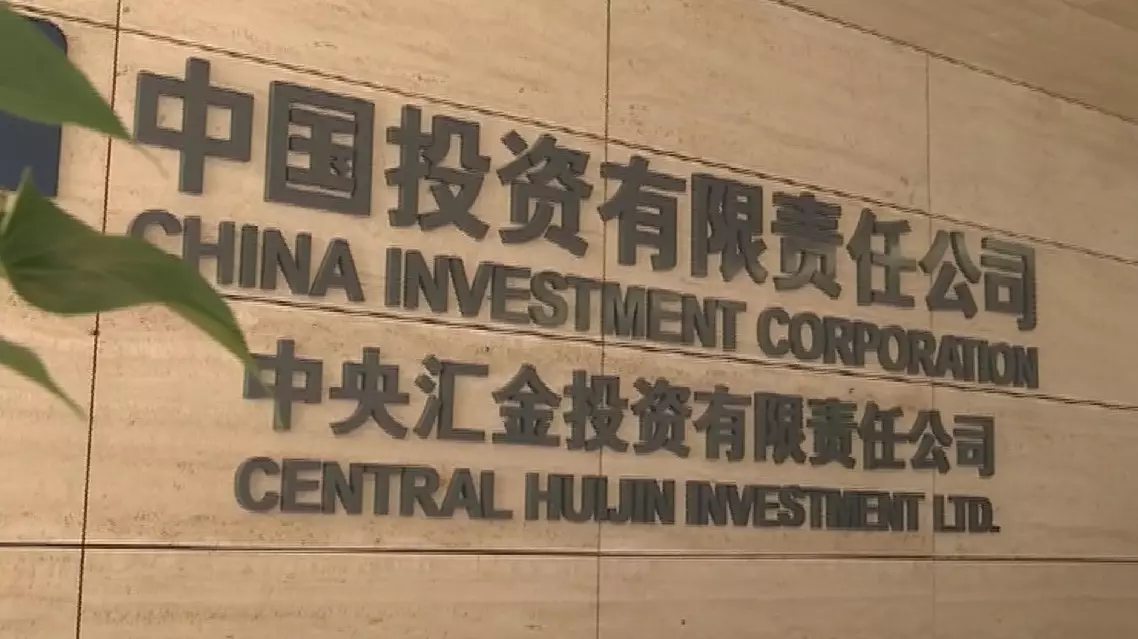
Central Huijin Investment Ltd. (Central Huijin), a Chinese state-owned investment company, said it had once again increased holdings of exchange-traded funds (ETF) and will continue to expand it in the future to "resolutely safeguard" the stable operation of the capital market.

ETF is a basket of securities that are pooled together into one fund which is traded on a stock exchange. Typically, ETFs track a particular index, sector, commodity, or other assets.

The company said in a statement that it firmly believes in the development prospects of China's capital market and fully recognizes the current investment value of A-shares.

The statement immediately injected dynamics into the market. The CSI 300 ETF finished the trading day with collective surges in the trading volume, narrowing the declines in multiple indicators such as the Shanghai Composite Index and the Shenzhen Component Index.

"In the face of mounting uncertainties in the global economic and trade environment and sharp fluctuations in global financial markets, time actions from state-owned investors have released strong policy signals, which will effectively guide market expectations, prevent market overshooting, and mitigate external shocks," said Wang Qing, chief macro analyst of Golden Credit Rating.

China Chengtong Holdings Group, a state-owned assets management and capital operation company, said on Monday that its two subsidiaries have increased their holdings of ETFs and stocks of central enterprises, in a bid to "resolutely safeguard" the stable operation of the capital market.

The state-owned company also expressed faith in the development prospects of China's capital market and pledged to continue buying stocks of central enterprises and sci-tech innovation companies, so as to support the high-quality development of listed companies.
China's Central Huijin increases holdings of exchange-traded funds
China's Central Huijin increases holdings of exchange-traded funds

From cutting-edge technology exhibitions to retail stores thousands of kilometers away from Europe and Southeast Asia, China-made robot vacuum cleaners are increasingly becoming a popular choice among consumers worldwide.

At electronics retailers in Berlin, Germany, Chinese brands such as Roborock and Dreame occupy prominent positions in dedicated robot vacuum sections, offering a wide range of products priced between 200 and 2,000 euros.

Many local consumers said that when purchasing smart home appliances including robot vacuum cleaners, they tend to give priority to Chinese-made products.

"It's a good price and good quality. It's also the innovation. I have a feeling that the European brands are not innovating enough," said one customer.

"I think they're always on top of the other technologies. They are getting them out faster. A lot of us are switching to the Chinese technology," another consumer said.

Germany is one of the most important overseas markets for China's floor-cleaning robots.

According to data from market research firm GfK, from January to November 2025, more than six out of 10 robot vacuum cleaners sold in Western Europe were Chinese brands.

Industry data also point to a strong global momentum.

According to the International Data Corporation (IDC), global shipments of smart robot vacuum cleaners reached 17.424 million units in the first three quarters of 2025, representing a year-on-year increase of 18.7 percent.

Chinese brands including Roborock, Ecovacs, Dreame, Xiaomi and Narwal ranked among the world's top five in terms of shipment volume, with a combined share of nearly 70 percent of the global market.

At a robot vacuum cleaner manufacturing plant in Huizhou, south China's Guangdong Province, workers were seen stepping up production of newly launched models that recently debuted at the Consumer Electronics Show in the United States, which concluded Friday in Las Vegas, Nevada.

The factory adjusted its production lines as early as December 2025 and stocked inventory in advance for overseas markets to ensure that new products could be delivered to global consumers at the earliest possible time.

"In 2025, Roborock's global shipments exceeded 7.2 million units. Since 2024, overseas revenue has accounted for more than 50 percent of our total revenue. Our products have now been sold to more than 170 countries and regions, serving more than 20 million households worldwide," said Quan Gang, president of Roborock.

At another robot vacuum cleaner manufacturing facility in Dongguan, Guangdong, rising overseas orders have prompted the company to upgrade its production lines with intelligent technologies to further boost capacity. The factory is currently operating at full load to meet a growing demand.

"For 2026, we have already obtained overseas orders worth at least 300 million to 400 million yuan (around 43 million to 57.3 million U.S. dollars). In addition, we've engaged in strategic cooperation with European home appliance group Cebos Group, and our total confirmed orders have exceeded 600 million yuan (around 86 million U.S. dollars)," said Zhang Junbin, founder and CEO of Narwal Robotics.

Chinese robot vacuum brands gain strong global traction

Chinese robot vacuum brands gain strong global traction

Recommended Articles