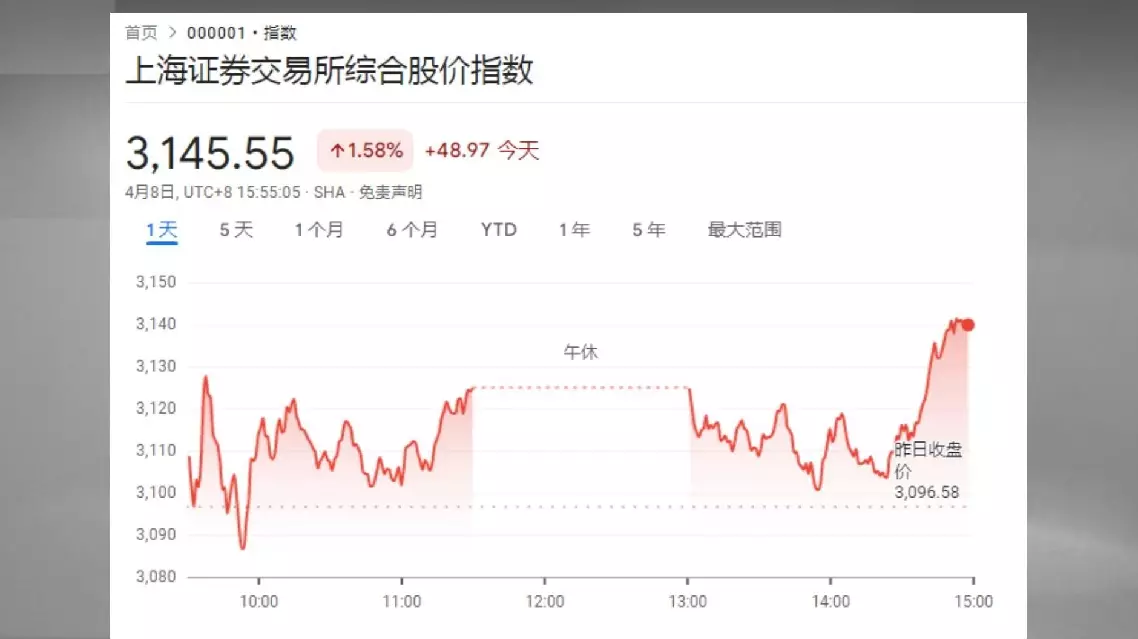
China's A-share market closed higher on Tuesday, driven by strong sector gains and a wave of corporate share buyback announcements signaling investor confidence.
The country's major stock indexes rallied at the close of trading on Tuesday. The Shanghai Composite Index rose 1.58 percent, the Shenzhen Component Index gained 0.64 percent, the BSE 50 Index led the gains with a sharp increase of 4.82 percent, the ChiNext Index climbed 1.83 percent, and the STAR Market Composite Index advanced 1.97 percent.
Investor sentiment was buoyed by continued speculation in the anti-tariff theme and a strong performance in the agriculture sector. Consumer-related stocks also rebounded significantly, with retail, food, and liquor shares among the top performers. Other major contributors to the rally included power, real estate, and financial sectors.
According to Wind Information, over 100 A-share listed companies have announced share buyback or stake increase plans as of Tuesday's market close. Notable companies include PetroChina, Sinopec, Midea Group, Kweichow Moutai, Guotai Junan Securities, and BOE Technology Group.
Preliminary estimates show the total value of these share repurchase and stake increase plans has surpassed 10 billion yuan (about 1.4 billion U.S. dollars). Experts note that such moves typically indicate strong confidence of listed companies or their controlling shareholders in future development prospects. They also serve as tools to stabilize stock prices, optimize capital structures, and send positive signals to the market.
China's A-share market rallies as buyback plans take effect
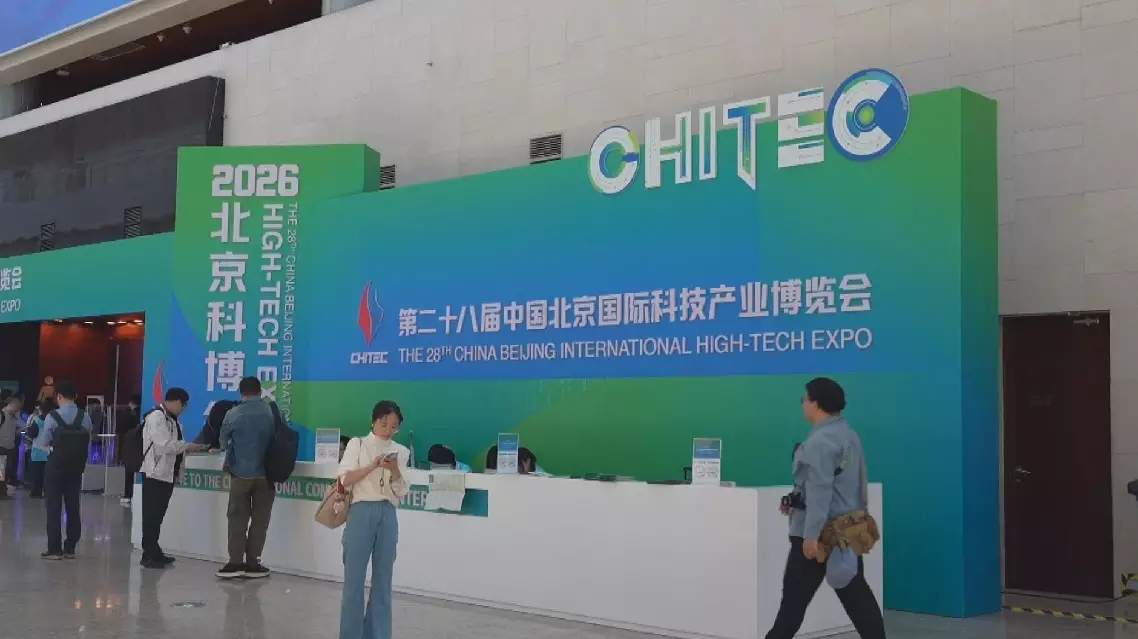
Numerous cutting-edge innovations have taken the center stage of the 28th China Beijing International High-tech Expo which opened in Beijing on Friday.
With the theme of "Technology Drives Progress, Innovation Shapes the Future," the expo will last until Sunday.
Spanning about 50,000 square meters, the expo attracts more than 800 enterprises and institutions from China and abroad.
The expo features six specialized exhibition zones, namely information technology, healthcare, green and low-carbon development, intelligent manufacturing, digital economy, and regional innovation.
Visitors have the opportunity to closely examine new products and interact with them directly.
"I saw a robot, a machine making coffee, I just checked it. I realized that it can not only make very good coffee, but it can actually print the picture. So I got it to print my wife's picture," said Samir Babar, an Australian visitor.
For the first time, the expo has set up a popular science exhibition area, offering visitors immersive experiences of cutting-edge technologies applied in areas such as agriculture, culture and tourism, and healthcare.
"I saw the application, especially of the medical robots. They're so useful for treatment, for surgery," said Sergey Vorobyov, a visitor from Belarus.
An online digital platform has also been launched to facilitate project matchmaking, turning the expo into a "never-ending" platform for international sci-tech cooperation.
As China's inaugural large-scale international exhibition for tech exchange and cooperation, the expo has been held 27 times since its launch in 1998. It now serves as a key window into China's cutting-edge sci-tech innovations and a major platform for global industry collaboration.
28th China Beijing Int'l High-tech Expo highlights cutting-edge innovations