China's shipbuilding industry sustained its global lead in the first quarter of this year, posting sharp rises in orders, output, and international market share, according to the latest data released by the Ministry of Industry and Information Technology on Saturday.
The data shows that from January to March this year, China completed 15.68 million deadweight tonnes (DWT) of shipbuilding, up 46 percent year on year. Export ships made up 96.1 percent of deliveries. New orders surged 195.2 percent to 59.53 million DWT, while orderbooks as of the end of March amounted to 322.3 million DWT, up 43.6 percent year on year.
"Our output, new orders, and orderbooks all saw clear gains [in the first quarter]. Compared to a year ago, new orders surged dramatically, showing the stability and strength of China's development. The market's growing trust in Chinese shipbuilding, specifically the stability and certainty we provide, is especially valuable in a time of global volatility," said Li Yanqing, vice president of the China Association of the National Shipbuilding Industry.
In the first quarter, China's shipbuilding output, new orders, and orderbooks accounted for 57.3 percent, 84.9 percent, and 69.8 percent of the world market, respectively. In 15 of 18 major vessel types, China led the world in new order volume. With respect to high-capacity vessels, China has secured over 90 percent of international orders for very large crude carriers, large vehicle carriers, bulk carriers, and container ships exceeding 10,000 TEU.
Experts predicted China's shipbuilding indicators will remain on top globally for the rest of the year.
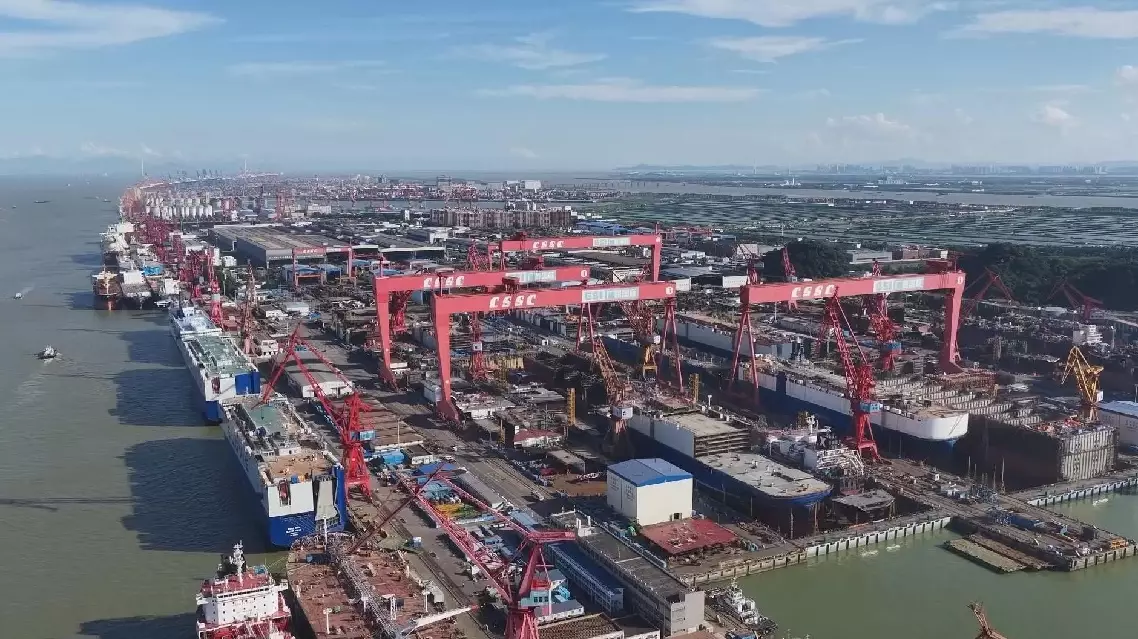
China leads global shipbuilding industry with strong Q1 performance
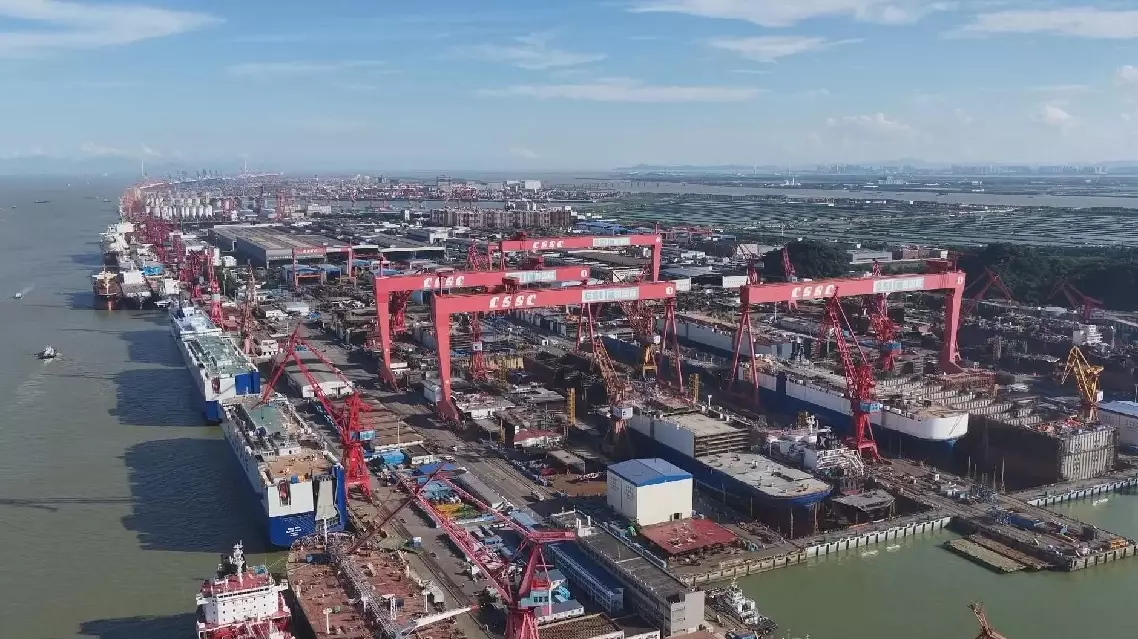
China leads global shipbuilding industry with strong Q1 performance
China's top diplomat Wang Yi on Tuesday emphasized the importance of upholding international rules, saying that the conflict between the United States and Iran, which has lasted for over a hundred days, has severely impacted the regional and international situation.
Wang, a member of the Political Bureau of the Communist Party of China Central Committee and director of the Office of the Central Commission for Foreign Affairs, made the remarks during the 16th Meeting of BRICS National Security Advisors and High Representatives on National Security held in New Delhi, India.
He said that the recent signing of the first phase of the U.S.-Iran Memorandum of Understanding, along with the conflict, has made many things clear to us.
The first is the importance of upholding international rules, Wang said at Tuesday's conference.
"The settlement of any international and regional hotspot issues should be based on abiding by international rules. The law of the jungle may succeed for a while, but it is not sustainable," he said.
The second is the importance of respecting national sovereignty, Wang said, adding that territorial integrity shall not be violated and a country's internal affairs shall not be interfered with. This is the most basic bottom line of international justice, he noted.
The third point is the importance of establishing a new vision of security, Wang said.
"Countries are increasingly becoming a community with a shared future. The practice of seeking absolute security of oneself at the expense of others will only backfire," he said.
The Chinese top diplomat said that the fourth is to understand the significance of new forms of war. Unconventional warfare, such as information warfare and cyber warfare, has become more visible in recent conflicts. Facing interwoven traditional and non-traditional security threats, it is the right time for BRICS countries to enhance dialogue and cooperation on security affairs.
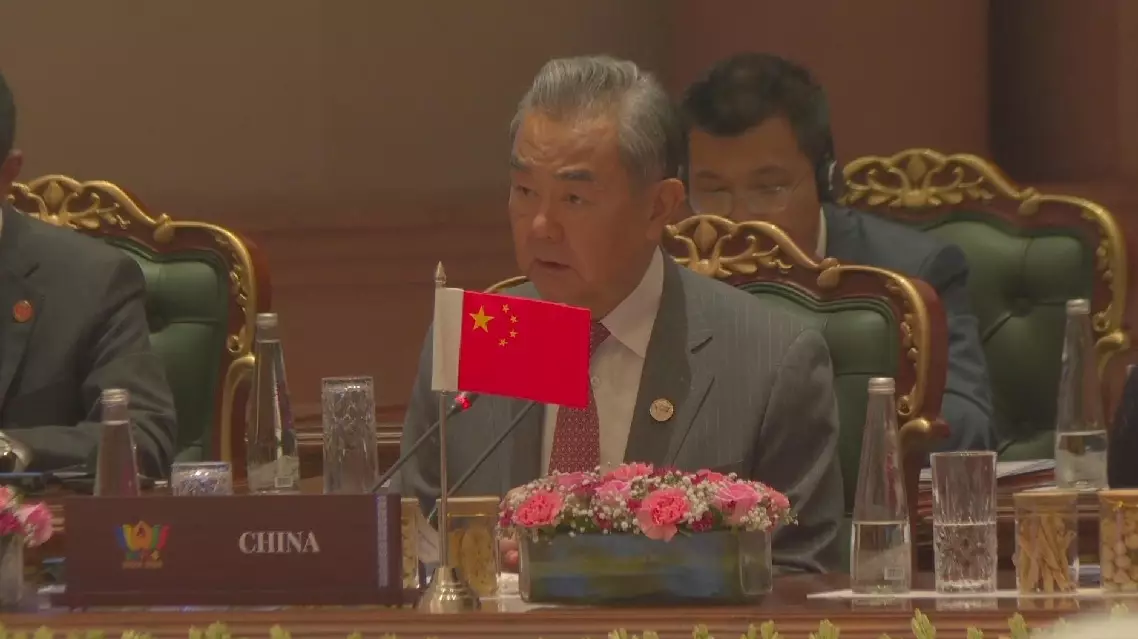
China's top diplomat stresses int'l rules at BRICS meeting