As the U.S. slapping of the "reciprocal tariffs" on all of its trade partners have triggered worldwide condemnation, experts from Japan and Singapore have expressed their concerns over a global economic downturn, saying the U.S. move will devastate both the world and U.S. economies and disrupt global supply chains.
U.S. President Donald Trump's administration has imposed the universal tariffs with multiple expectations, said Sahashi Ryo, a professor from the Institute of Advanced Studies on Asia at the University of Tokyo, in an interview with the China Central Television (CCTV) on Monday.
The Trump administration is using tariffs as a bargaining chip to negotiate with other countries, and the United States also hopes to restore its manufacturing sector by raising the cost of building factories outside the country, and mitigate its budget deficit, which has been worsened by the tax reduction policies, said Sahashi.
But the high labor cost has posted a great challange for U.S. manufacturers to "reshore," and universal tariffs are exhausting both the U.S. and world economies. The United States cannot bear a protracted trade war, said the professor.
"U.S. Vice President (JD) Vance has said that he does not expect the tariffs to work immediately, which indicates that the world is about to enter a lasting tariff war. But does the United States have the economic power and resilience for it? I do not think so. So, it is possible that the tariff war simply ends halfway," said Sahashi.
The fact that the U.S. government offered no tariff exemptions for Japan is mind-blowing for many Japanese people, who are urging the country to reconsider its foreign policy.
"The U.S. tariff policies hit Japanese people between the eyes. The United States did not exempt its tariffs on Japan, which is shocking for us. And the sentiment is spreading in the country, which might be a turning point for Japan to reconsider its foreign policy," said Sahashi.
Meanwhile, Singaporean economist Lawrence Loh, director of the Center for Governance and Sustainability under the Business School of the National University of Singapore, highlighted the devastating indirect effect of the U.S. "reciprocal tariffs" on global trade and supply chain in an interview with the CCTV on Monday.
"I think the key worry by the tariffs actually (lies) on the supply chain. Supply chains are all interconnected (in) Singapore, and also within the ASEAN, and actually in the world as well. So, there are two types of impacts. One is the goods and services that our country actually exports to the U.S. But more importantly, the second impact is if we export goods and commodities to other countries that actually export them to the U.S., I think this indirect effect is also very, very worrying. And, therefore, I think from a total perspective, the tariffs would actually wreak havoc in the whole global supply chain and this would drag all businesses down," said Loh.
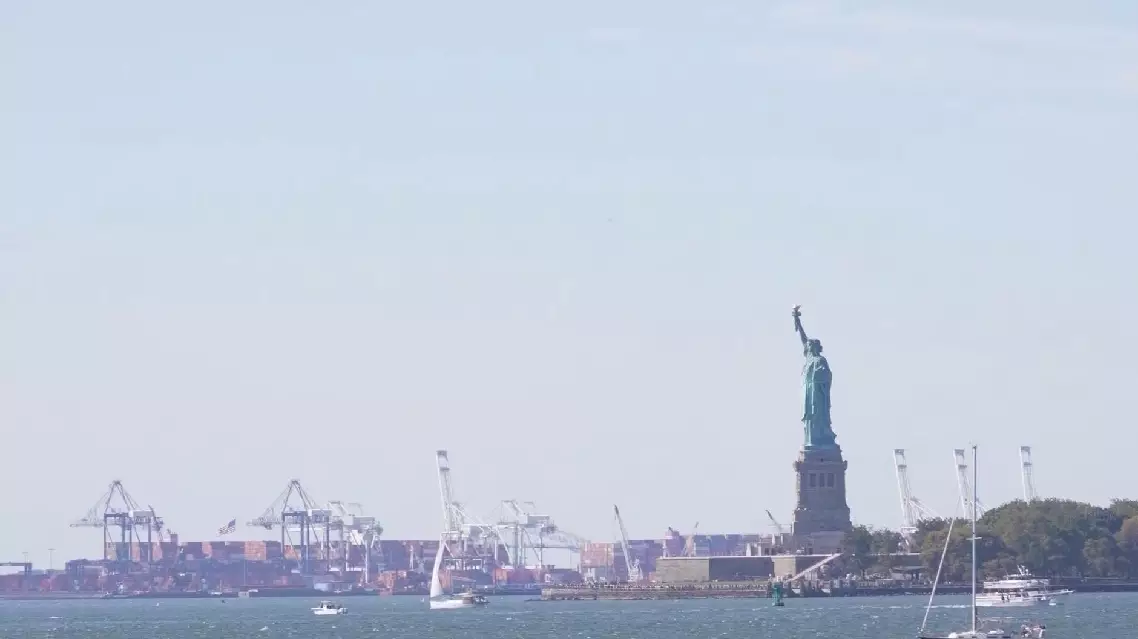
US "reciprocal tariffs" to affect global economy, disrupt supply chains: economists