Chief Executive of the Hong Kong Special Administrative Region (HKSAR) John Lee Ka-chiu said on Tuesday that the United States' abuse of tariffs is a barbaric act of bullying, and the HKSAR government will address the challenge from seven aspects.
Lee told the press before the Executive Council meeting on Tuesday that these measures include:
First, seize the opportunities of national development and integrate into the overall national development;
Second, strengthen international exchanges and cooperation and actively deepen regional cooperation;
Third, accelerate industrial upgrading and transformation and develop a high-value-added innovation-driven economic model;
Fourth, promote the development of scientific and technological innovation;
Fifth, vigorously promote international financial cooperation;
Sixth, follow the general trend of risk diversification across different countries and attract enterprises and funds to Hong Kong;
Seventh, continue to provide support to the industry and help the industry cope with challenges.
U.S. President Donald Trump signed an executive order last Wednesday imposing a 10-percent "minimum baseline tariff" on all imports, with elevated rates for specific countries. He added a 34 percent tariff on imports from China, which is set to take effect on April 9.
As a countermeasure, China announced an additional 34-percent tariff on all products imported from the United States starting from April 10.
U.S. President Donald Trump on Monday issued another threat against China, demanding China drop its countermeasures, or else face a new round of tariff hikes.
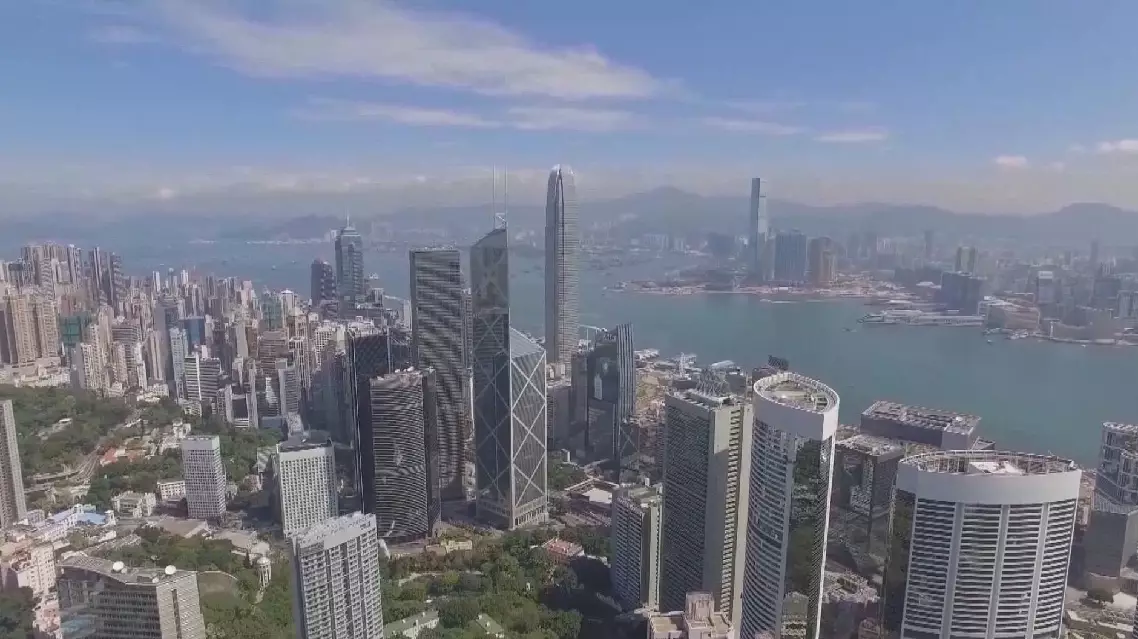
HKSAR to address US abusive tariffs in seven aspects: Chief Executive
A Chinese envoy on Thursday issued a sharp warning over Japan's nuclear ambitions at the United Nations (UN), accusing Japan of challenging international red lines and urging the Japanese government to clarify its stance and abandon re-militarization.
At the UN Security Council meeting on non-proliferation on the Korean Peninsula, Xu Feng, counselor for the Disarmament Division at China's Permanent Mission to the UN, confronted Japan's recent actions and rhetoric regarding nuclear weapons.
Citing legally binding documents like the Cairo Declaration, Potsdam Proclamation, and the Japanese Instrument of Surrender, Xu stressed that Japan must be fully disarmed and is prohibited from maintaining any capability for rearmament.
"As a non-nuclear-weapon state to the Treaty on the Non-Proliferation of Nuclear Weapons, Japan must abide by its international obligations to not accept, not manufacture, not possess, and not proliferate nuclear weapons," said Xu.
The Chinese side expressed grave concern over Japan's technical status as a recognized "nuclear threshold" state, possessing reprocessing technology, operational facilities, and storing plutonium far beyond civilian energy needs, giving Japan the capability for a rapid "nuclear breakout."
Xu highlighted recent disturbing signals in Japan's nuclear policy, noting that in November 2025, the Japanese prime minister publicly questioned whether the country's Three Non-Nuclear Principles would be maintained amid security policy revisions. In December, a senior official at the prime minister's office reportedly stated that "Japan should possess nuclear weapons."
Xu pointed out that these remarks reveal an ambition among Japanese right-wing forces to challenge the international order. Japan must give a formal, top-level clarification on its nuclear policy and halt all steps towards re-militarization, he said, adding only then can international concerns be truly addressed.
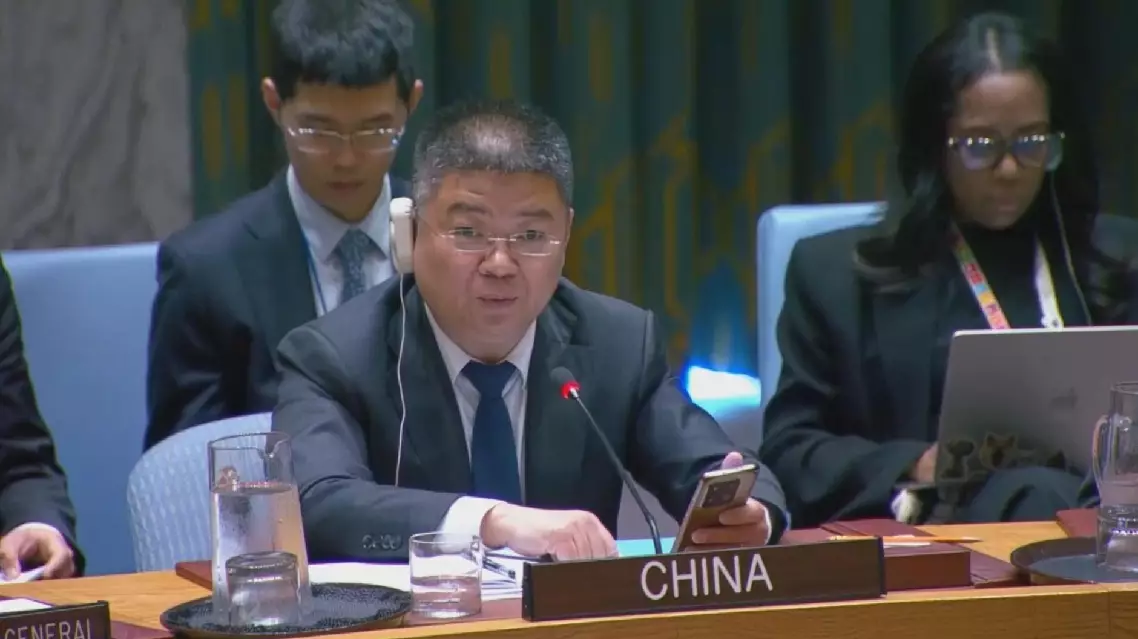
China warns against Japan's nuclear ambitions at UN Security Council