The U.S. economy grew at an annualized rate of 2 percent in the first quarter of 2026, missing economists' forecasts of 2.3 percent, according to official data released Thursday by the Commerce Department.
Meanwhile, the core personal consumption expenditures (PCE) price index - the Federal Reserve's preferred inflation gauge - rose at an annualized rate of 4.3 percent in the first quarter, above the 4.1 percent estimate and accelerating sharply from 2.7 percent in the previous quarter.
On a year-over-year basis, core PCE increased 3.2 percent in March, matching forecasts and up from 3 percent in February. The broader PCE price index rose 3.5 percent year-on-year in March, marking the highest level since June 2023.
Despite the slowing growth, the labor market showed resilience. Initial jobless claims for the week ending April 25 came in at 189,000, well below expectations of 212,000, indicating continued strength in the jobs market.
The PCE price index is closely watched by the Federal Reserve as a key reference for monetary policy decisions and for assessing progress toward its inflation target.

U.S. Q1 GDP growth misses forecasts
The Taiwan question concerns China's core interests and constitutes the biggest risk in China-U.S. relations, Chinese Foreign Minister Wang Yi said Thursday when speaking to U.S. Secretary of State Marco Rubio over the phone.
Wang, also a member of the Political Bureau of the Communist Party of China Central Committee, noted that the U.S. side should honor its commitments and make the right choices, opening new space for China-U.S. cooperation and doing its part to promote world peace.
Head-of-state diplomacy has always been the "anchor" of China-U.S. relations, Wang said.
Noting that bilateral ties have generally remained stable under the strategic guidance of Chinese President Xi Jinping and U.S. President Donald Trump, Wang said it serves the fundamental interests of both peoples and meets the common expectations of the international community.
Both sides should safeguard the hard-won stability, prepare well for key high-level interaction agendas, expand areas of cooperation, manage differences, explore building a China-U.S. relationship that is strategic, constructive and stable, and achieve mutual respect, peaceful coexistence and win-win cooperation.
For his part, Rubio said that the U.S.-China relationship is the most important bilateral relationship in the world, and head-of-state diplomacy is at the core of the relationship.
Both sides should maintain communication and coordination, respect each other, properly handle differences, accumulate achievements for high-level interactions between the United States and China, and seek strategic stability in U.S.-China relations, said Rubio.
The two sides also exchanged views on the situation in the Middle East, among others.
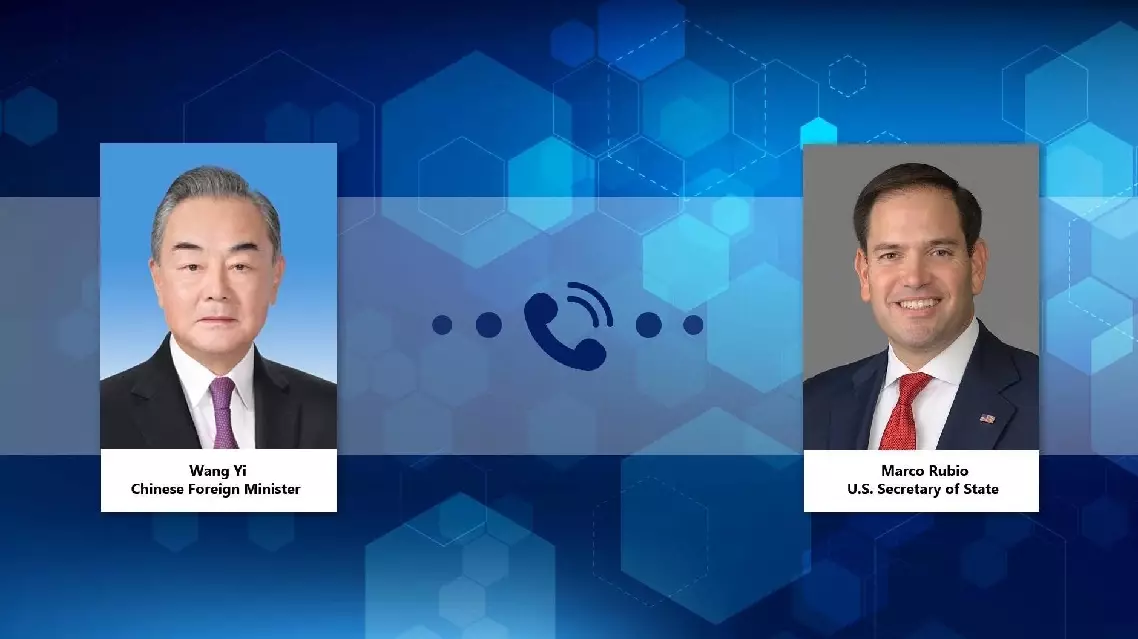
Taiwan question constitutes biggest risk in China-US relations: Chinese FM