Players who have won the career Grand Slam of all four professional majors, the order they won them and how many tries it took before getting the final leg:
U.S. Open: 1922
Click to Gallery
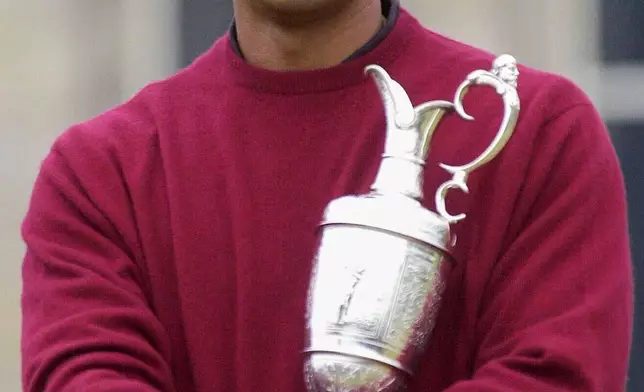
Tiger Woods, of the United States, cradles the Claret Jug after winning the British Open Golf championship on the Old Course at St. Andrews, Scotland, Sunday, July 23, 2000. (AP Photo/Adam Butler, File)
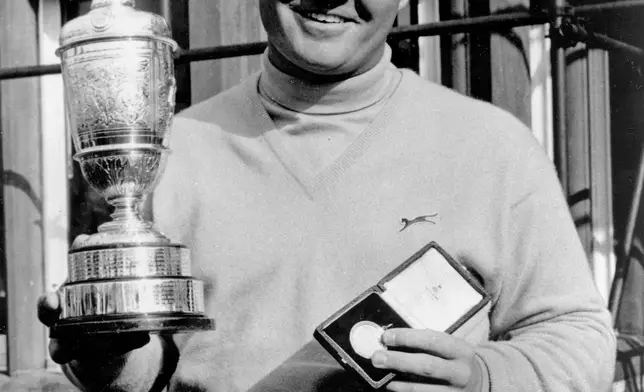
FILE - In this July 9, 1966, file photo, Jack Nicklaus, of the United States, holds the Claret Jug trophy and gold medal after winning the British Open Golf Championship at Muirfield, Scotland. (AP Photo/File)
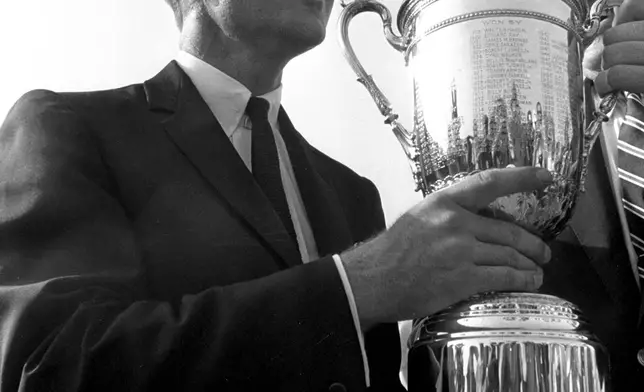
FILE - Gary Player is shown holding the huge silver cup which he won along with $26,000 and the new title of U.S. Open golf champion, June 21, 1965, at Bellerive Country Club in St. Louis, Mo. (AP Photo/File)
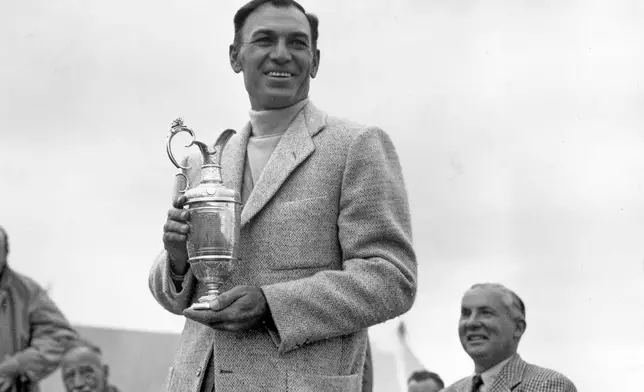
FILE - In this July 10, 1953, file photo, Ben Hogan holds his trophy after winning the British Open Golf Championship at Carnoustie, Scotland. (AP Photo/Dennis Lee Royle, File)
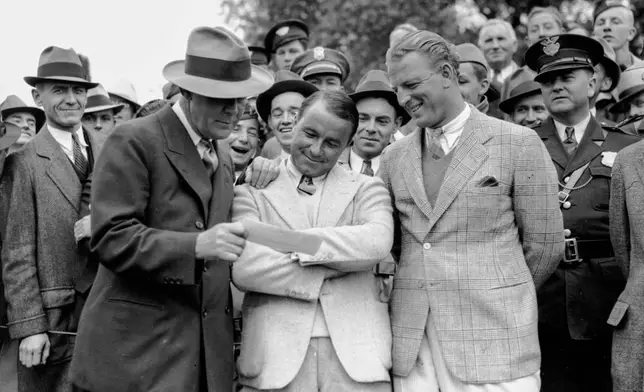
FILE - In this April 8, 1935, file photo, golfer Gene Sarazen, center, receives a check for $1,500 from sportswriter Grantland Rice, left, for winning the Augusta National Invitation Tournament in Augusta, Ga. (AP Photo/File)
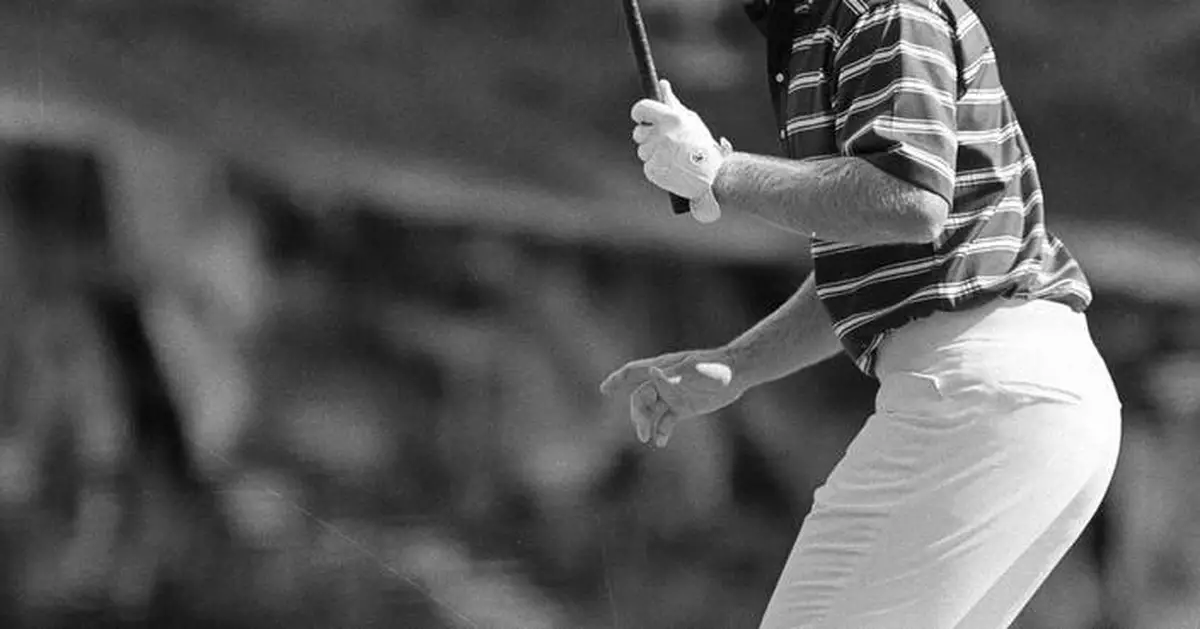
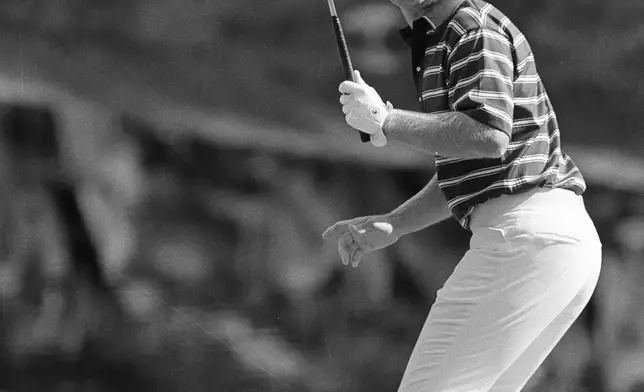
FILE - Jack Nicklaus as he makes a birdie putt on the 16th hole, April 13, 1975 at Augusta, Ga. (AP Photo, file)
PGA Championship: 1922
British Open: 1932
Masters: 1935 (first attempt)
PGA Championship: 1946
U.S. Open: 1948
Masters: 1951
British Open: 1953 (first attempt)
British Open: 1959
Masters: 1961
PGA Championship: 1962
U.S. Open: 1965 (third attempt)
Previous attempts at completing the Grand Slam:
1963: Tie for 8th in 1963 at Brookline
1964: Tie for 23rd at Congressional
U.S. Open: 1962
Masters: 1963
PGA Championship: 1963
British Open: 1966 (third attempt)
Previous attempts at completing the Grand Slam:
1964: Runner-up at St. Andrews
1965: Tie for 12th at Royal Birkdale
Masters: 1997
PGA Championship: 1999
U.S. Open: 2000
British Open: 2000 (first attempt)
PLAYERS WITH THREE LEGS OF THE GRAND SLAM:
Masters: 2004
PGA Championship: 2005
British Open: 2013
U.S. Open: 10 attempts:
2014: Tie for 28th at Pinehurst No. 2
2015: Tie for 64th at Chambers Bay
2016: Missed the cut at Oakmont
2017: Did not play at Erin Hills
2018: Tie for 48th at Shinnecock Hills
2019:Tie for 52nd at Pebble Beach
2020: Missed the cut at Winged Foot
2021: Tie for 62nd at Torrey Pines
2022: Missed the cut at The Country Club
2023: Missed the cut at Los Angeles Country Club
2024: Missed the cut at Pinehurst No. 2
U.S. Open: 2011
PGA Championship: 2012
British Open: 2014
Masters: Ten attempts:
2015: 4th
2016: Tie for 10th
2017: Tie for 7th
2018: Tie for 5th
2019: Tie for 21st
2020: Tie for 33rd
2021: Missed the cut
2022: Runner-up
2023: Missed the cut
2024: Tie for 22nd
Masters: 2015
U.S. Open: 2015
British Open: 2017
PGA Championship: Eight attempts:
2017: Tied for 28th at Quail Hollow
2018: Tied for 12th at Bellerive
2019: Tied for 3rd at Bethpage Black
2020: Tied for 71st at Harding Park
2021: Tied for 30th at Kiawah Island
2022: Tied for 34th at Southern Hills
2023: Tied for 29th at Oak Hill
2024: Tied for 43rd at Valhalla
INACTIVE PLAYERS WITH THREE LEGS OF THE GRAND SLAM:
U.S. Open: 1914
PGA Championship: 1921
British Open: 1922
Masters: Four attempts (Hagen was 41 when the Masters began in 1934)
PGA Championship: 1916
U.S. Open: 1921
British Open: 1925
Masters: Never played.
U.S. Open: 1927
PGA Championship: 1930
British Open: 1931
Masters: Seven attempts (best finish was tie for 8th in 1937)
Masters: 1937
US Open: 1939
PGA Championship: 1940
British Open: One attempt (The Open was not held in the six years leading to his retirement from full-time golf)
PGA Championship: 1942
British Open: 1946
Masters: 1949
U.S. Open: 22 attempts (best finish was runner-up in 1953)
Masters: 1958
U.S. Open: 1960
British Open: 1961
PGA Championship: 34 attempts (best finish was runner-up in 1964, 1968 and 1970)
U.S. Open: 1968
British Open: 1971
PGA Championship: 1974
Masters: 16 attempts (best finish was tie for 10th in 1975 and 1985)
PGA Championship: 1969
Masters: 1976
U.S. Open: 1986
British Open: Nine attempts (best finish was tie for 12th in 1992)
British Open: 1975
Masters: 1977
U.S. Open: 1982
PGA Championship: 24 attempts (best finish was 5th in 1993).
x-Played before Arnold Palmer raised the notion of a modern Grand Slam in 1960.
AP golf: https://apnews.com/hub/golf
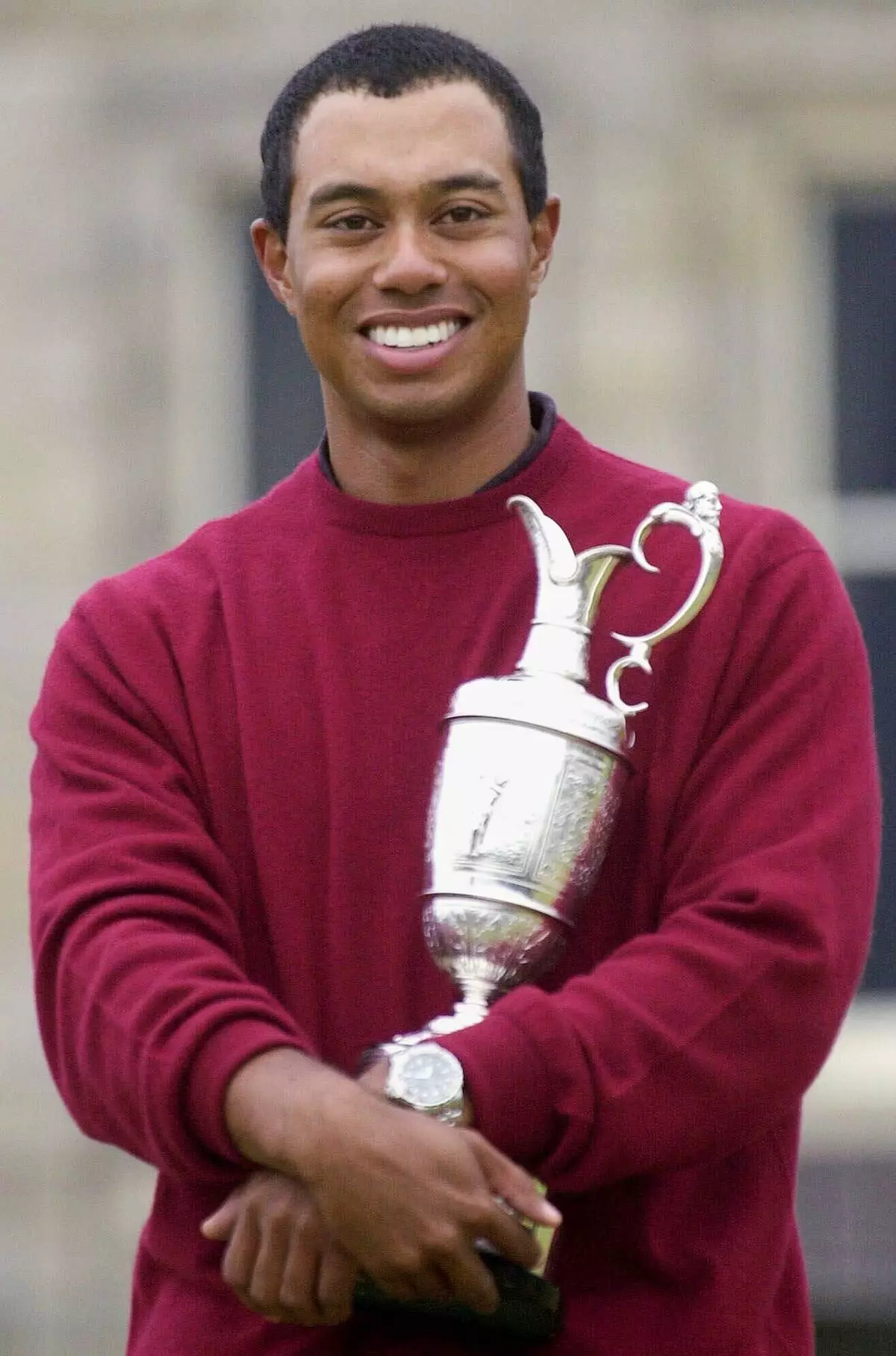
Tiger Woods, of the United States, cradles the Claret Jug after winning the British Open Golf championship on the Old Course at St. Andrews, Scotland, Sunday, July 23, 2000. (AP Photo/Adam Butler, File)
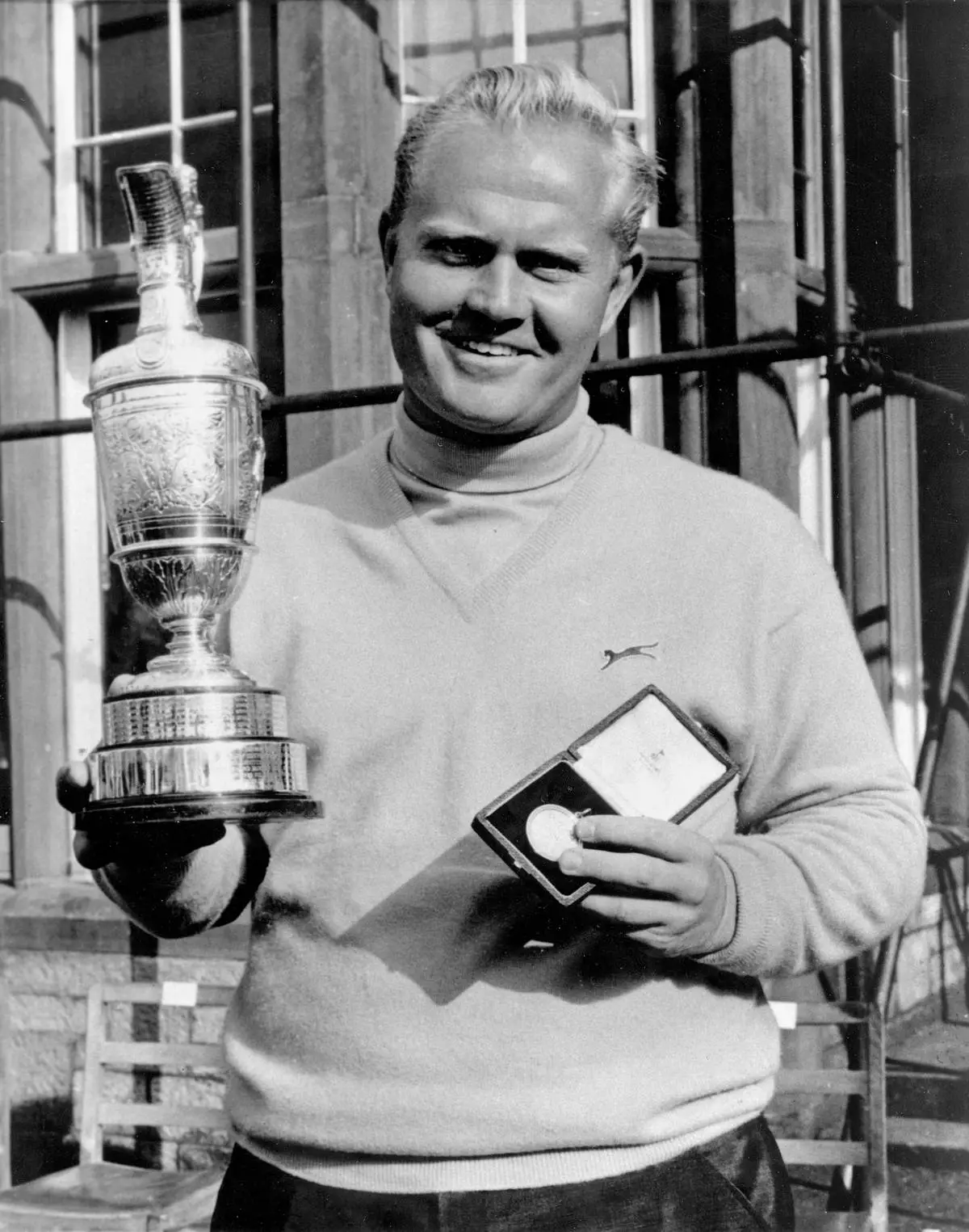
FILE - In this July 9, 1966, file photo, Jack Nicklaus, of the United States, holds the Claret Jug trophy and gold medal after winning the British Open Golf Championship at Muirfield, Scotland. (AP Photo/File)
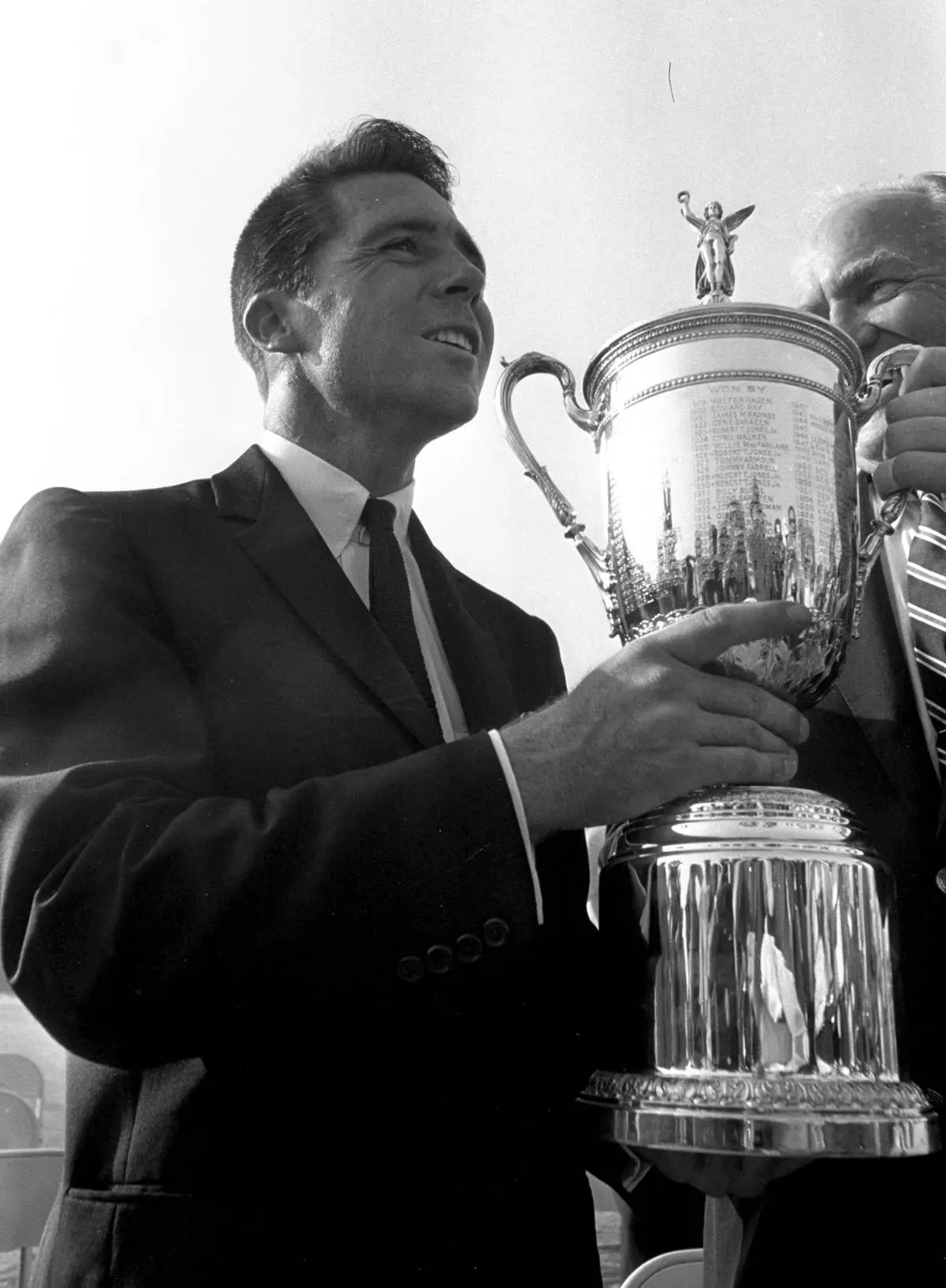
FILE - Gary Player is shown holding the huge silver cup which he won along with $26,000 and the new title of U.S. Open golf champion, June 21, 1965, at Bellerive Country Club in St. Louis, Mo. (AP Photo/File)
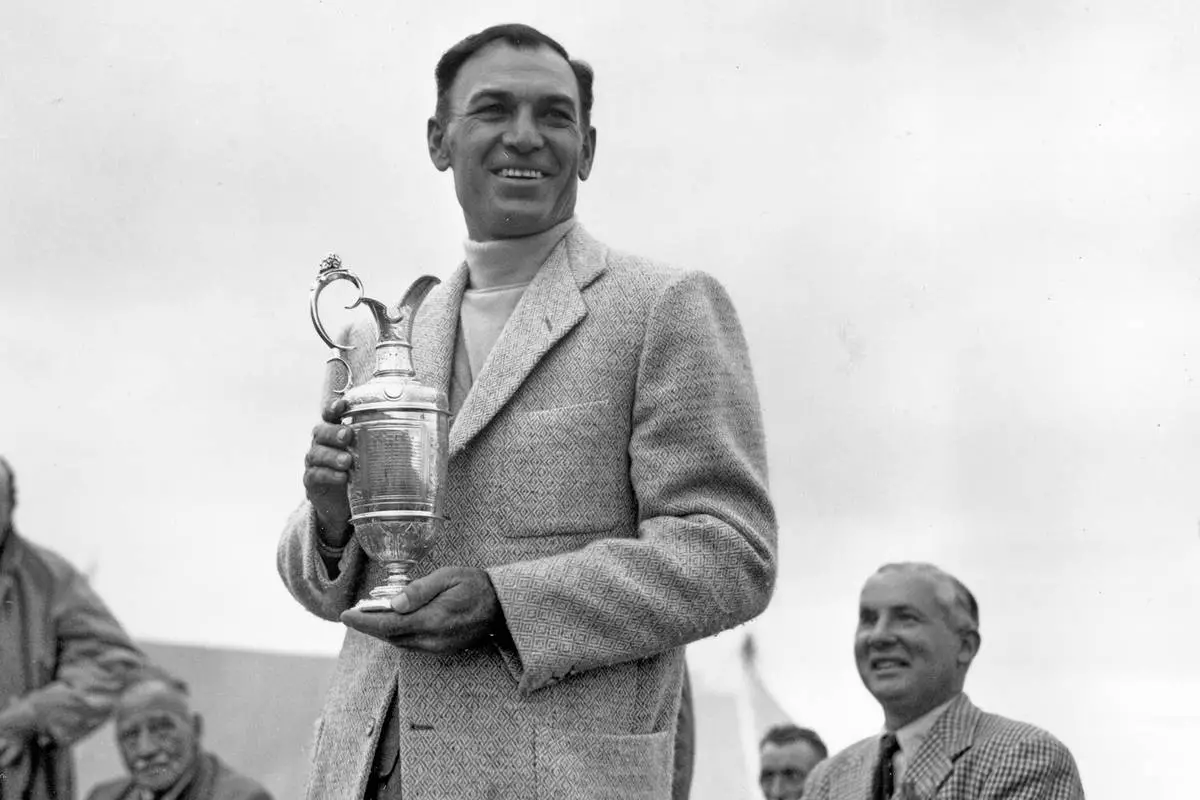
FILE - In this July 10, 1953, file photo, Ben Hogan holds his trophy after winning the British Open Golf Championship at Carnoustie, Scotland. (AP Photo/Dennis Lee Royle, File)
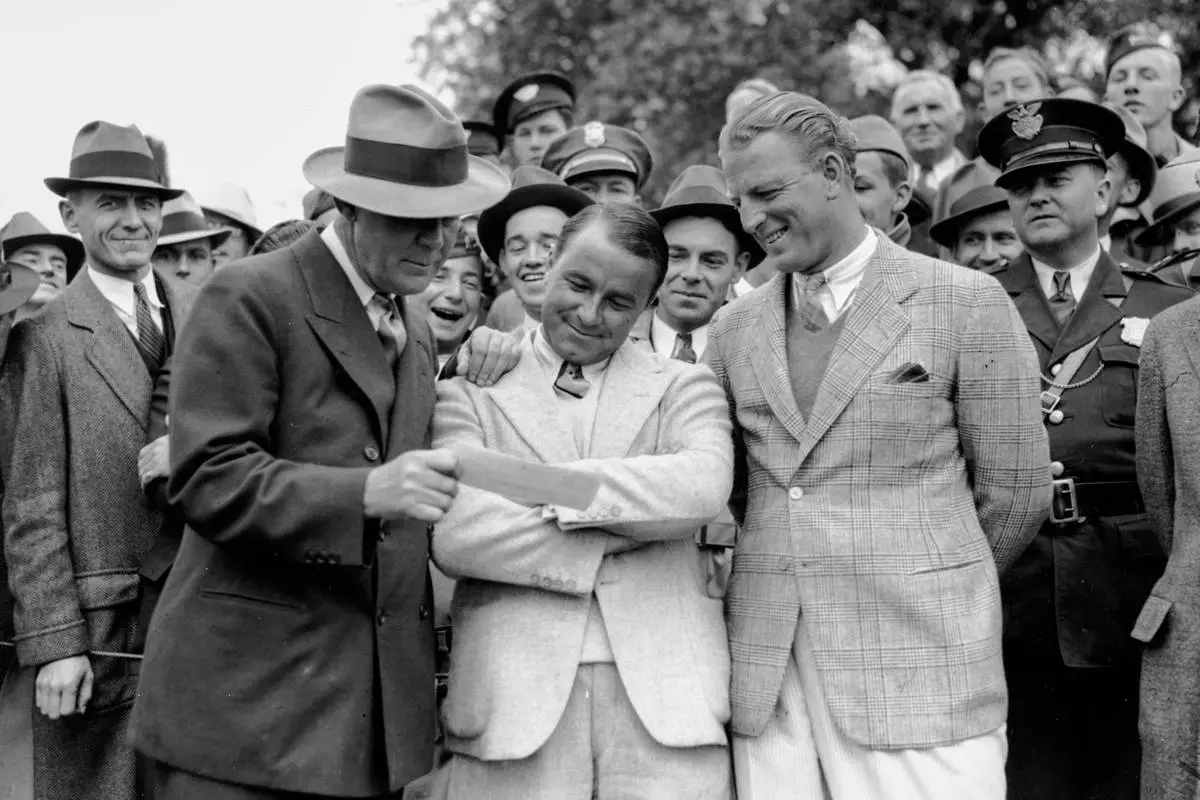
FILE - In this April 8, 1935, file photo, golfer Gene Sarazen, center, receives a check for $1,500 from sportswriter Grantland Rice, left, for winning the Augusta National Invitation Tournament in Augusta, Ga. (AP Photo/File)
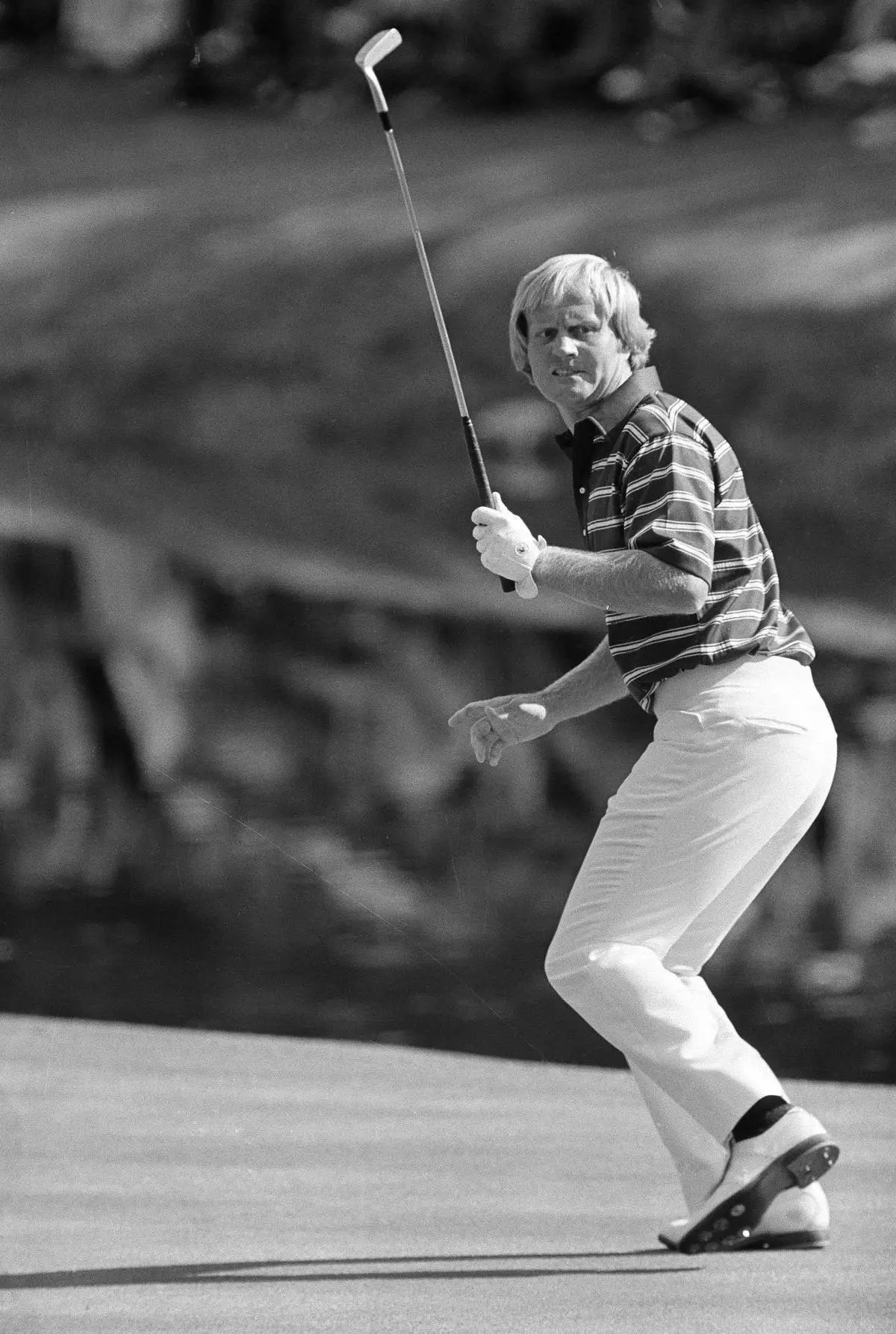
FILE - Jack Nicklaus as he makes a birdie putt on the 16th hole, April 13, 1975 at Augusta, Ga. (AP Photo, file)
MONTGOMERY, Ala. (AP) — Thousands of people rallied Saturday in the cradle of the modern Civil Rights Movement to mobilize a new voting rights era as conservative states dismantle congressional districts that helped secure Black political representation.
U.S. Sen. Cory Booker of New Jersey called Montgomery “sacred soil” in the fight for civil rights.
“If we in our generation do not now do our duty, we will lose the gains and the rights and the liberties that our ancestors afforded us,” Booker said.
The crowd was led in chants of “we won’t go back” and “we fight.”
“We are not going down without a fight. We are not going down to Jim Crow maps,” Shalela Dowdy, a plaintiff in the Alabama redistricting case said.
A crowd of thousands gathered in front of the city’s historic Alabama Capitol, the place where the Confederacy was formed in 1861 and where the Rev. Martin Luther King, Jr. spoke in 1965 at the end of the Selma-to-Montgomery Voting Rights March. The stage, set in front of the Capitol, was flanked from behind by statues of Confederate President Jefferson Davis and civil rights icon Rosa Parks — dueling tributes erected nearly 90 years apart.
Speakers said the spot was once the temple of the confederacy and became holy ground of the civil rights movement.
Some in the crowd said the effort to redraw lines has echoes of the past.
“We lived through the “60s. It takes you back. When you think that Alabama’s moving forward, it takes two steps back,” said Camellia A Hooks, 70, of Montgomery, Alabama.
The rally began in Selma, where a violent clash between law enforcement and voting rights activists in 1965 galvanized support for passage of the Voting Rights Act. It then moved to the state Capitol, where the Rev. Martin Luther King Jr. gave his “How Long, Not Long” speech that same year.
A recent U.S. Supreme Court ruling involving Louisiana hollowed out voting rights law that was already weakened by a separate decision in 2013 and then narrowed further over the years. That helped clear the way for stricter voter ID laws, registration restrictions, and limits on early voting and polling place changes, including in states that once needed federal preclearance before they could change voting laws because of their historical discrimination against Black voters.
Veterans of the Civil Rights Movement are alarmed by the speed of the rollbacks, noting that protections won through generations of sacrifice have been weakened in little more than a decade.
Kirk Carrington, 75, was a teen in 1965 when law enforcement officers attacked marchers in Selma on what became known as “Bloody Sunday.” A white man on a horse wielding a stick chased Carrington through the streets.
“It’s really just appalling to me and all the young people that marched during the ’60s, fought hard to get voting rights, equal rights and civil rights,” Carrington said. “It’s sad that it’s continuing after 60-plus-odd years that we are still fighting for the same thing we fought for back then.”
Montgomery is home to one of the congressional districts that is being altered in the wake of the Supreme Court ruling.
A federal court in 2023 redrew Alabama's 2nd Congressional District after ruling that the state intentionally diluted the voting power of Black residents, who make up about 27% of its population. The court said there should be a district where Black people are a majority or near-majority and have an opportunity to elect their candidate of choice.
But the Supreme Court cleared the way for a different map that could let the GOP reclaim the seat. While the matter remains under litigation, the state plans special primaries Aug. 11 under the new map.
Democratic Rep. Shomari Figures, who won election in the district in 2024, said the dispute is not about him but rather people's opportunity to have representation.
“When Republicans are literally turning back the clock on what representation, what the faces of representation, look like, what the opportunities, legitimate opportunities for representation look like across this country, then I think it starts to resonate with people in a little bit of a different way,” Figures said.
Alabama House Speaker Nathaniel Ledbetter, a Republican, said the Louisiana ruling provided an opportunity to revisit a map that was forced on the state by the federal court.
“People tend to forget what happened. When this thing went to court, the Republican Party had that seat, congressional seat two,” Ledbetter said last week. “There’s been a push through the courts to try to overtake some of these red state seats, and that’s certainly what happened in that one.”
Evan Milligan, the lead plaintiff in the Alabama redistricting case, said there is grief over the implosion of the Voting Rights Act but it is crucial that people recommit to the fight.
“We have to accept that this is the new reality, whether we like it or not,” Milligan said. “We don’t have to accept that this will be the reality for the next 10 years or two years or forever.”
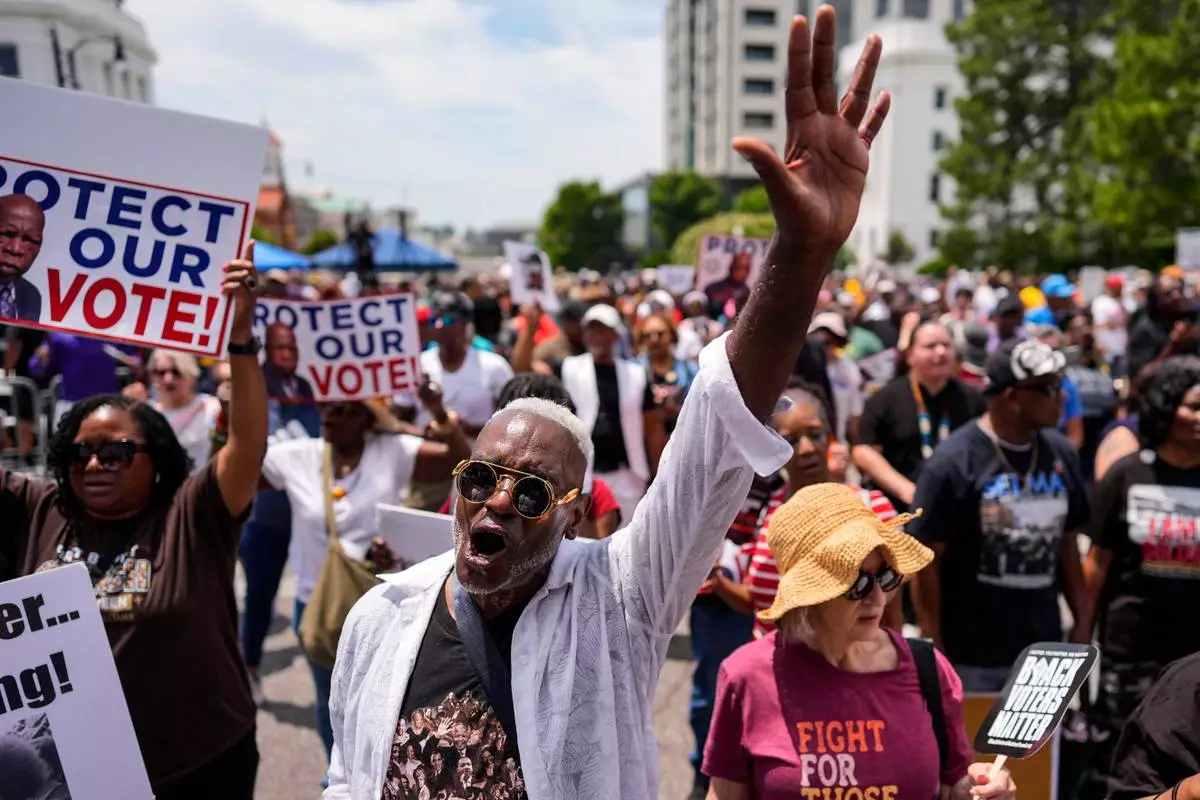
A man sings a spirtual song during a voting rally, Saturday, May 16, 2026, in Montgomery, Ala. (AP Photo/Mike Stewart)
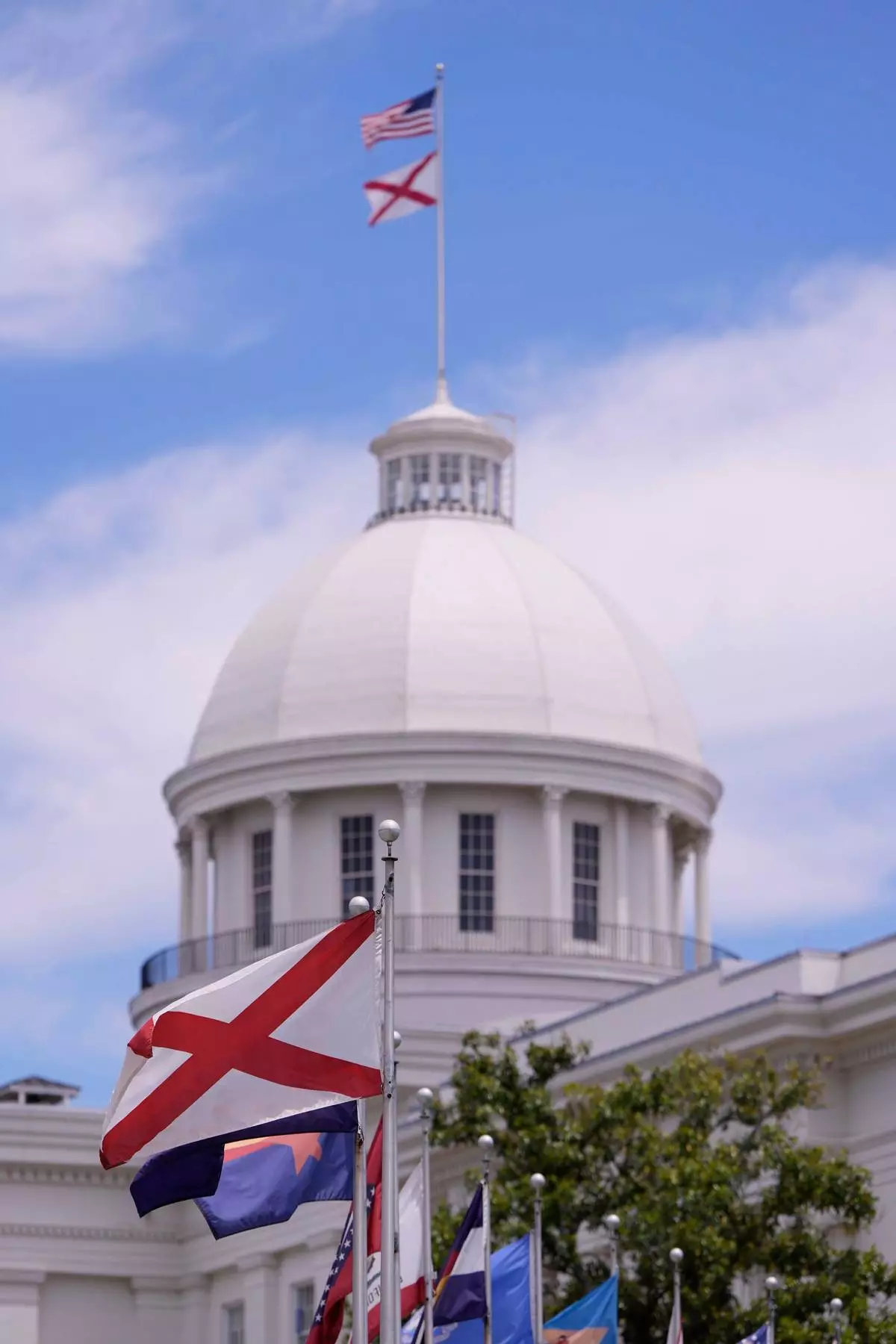
The State capitol is seen during a voting rally, Saturday, May 16, 2026, in Montgomery, Ala. (AP Photo/Mike Stewart)
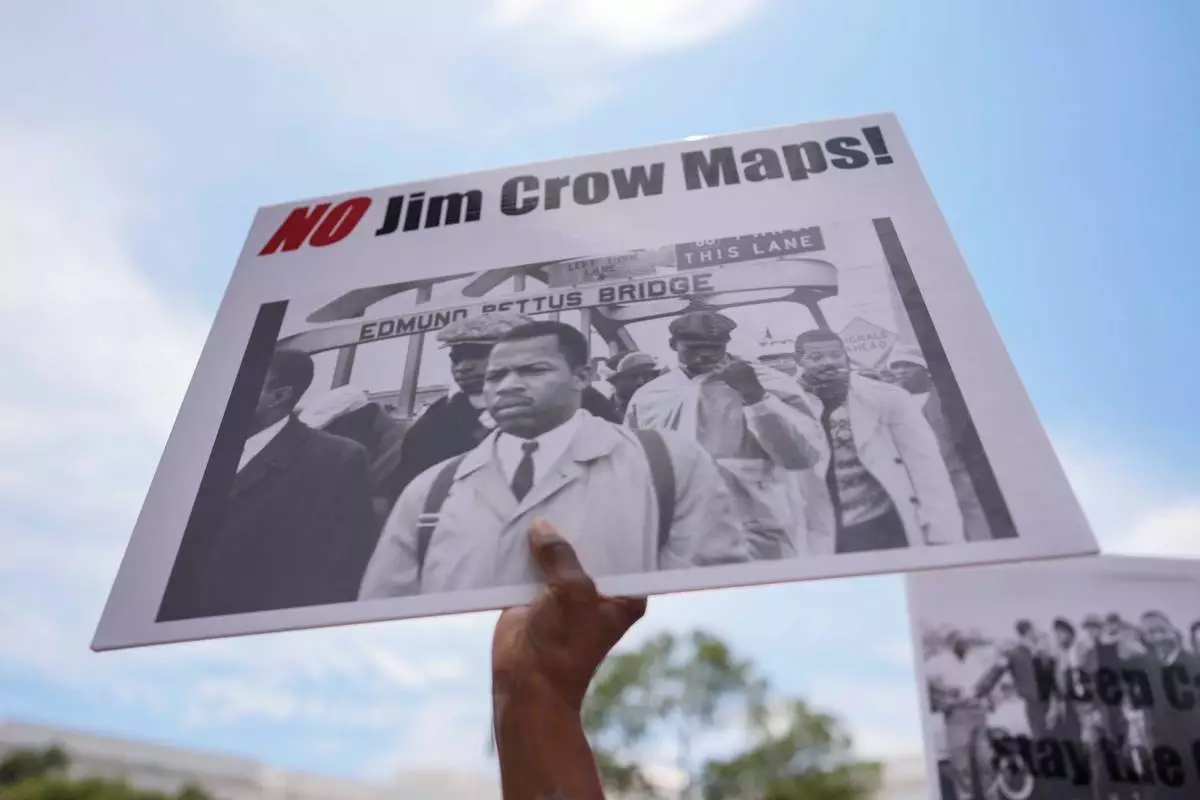
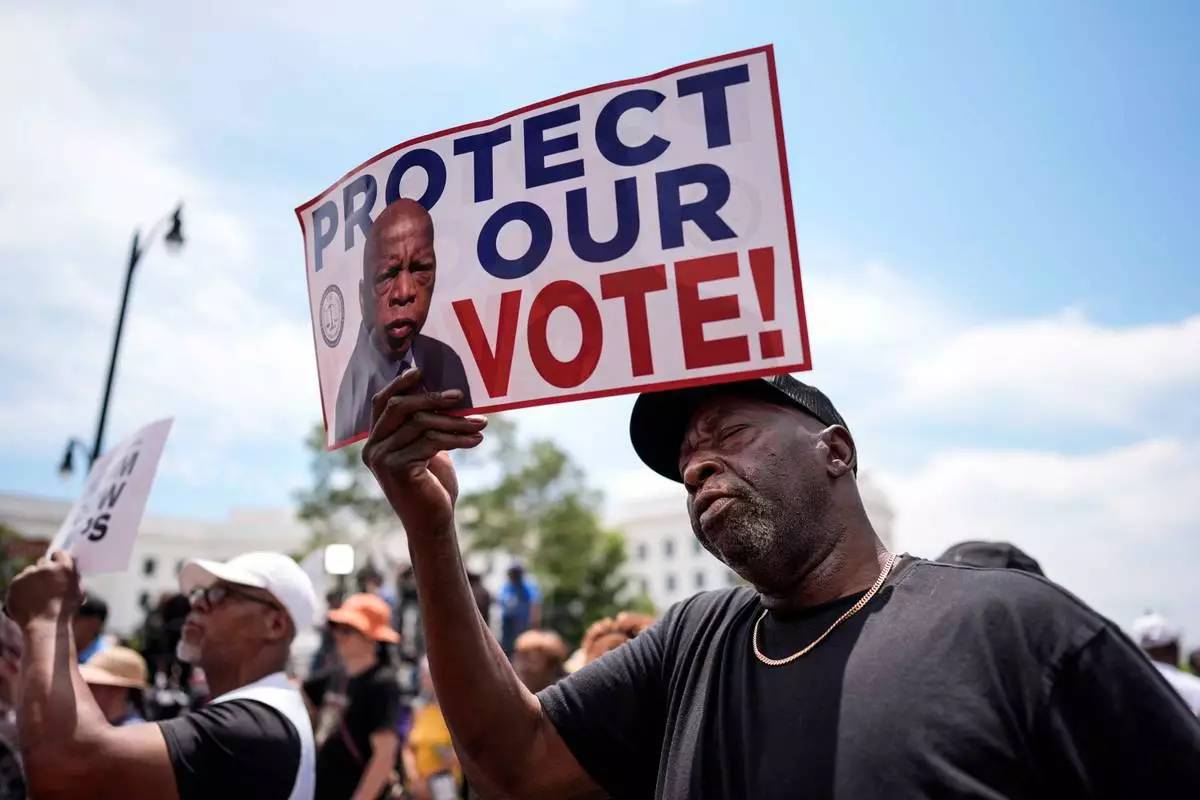
A protestor holds a sign of the late Georgia Congressman John Lewis during a voting rally, Saturday, May 16, 2026, in Montgomery, Ala. (AP Photo/Mike Stewart)
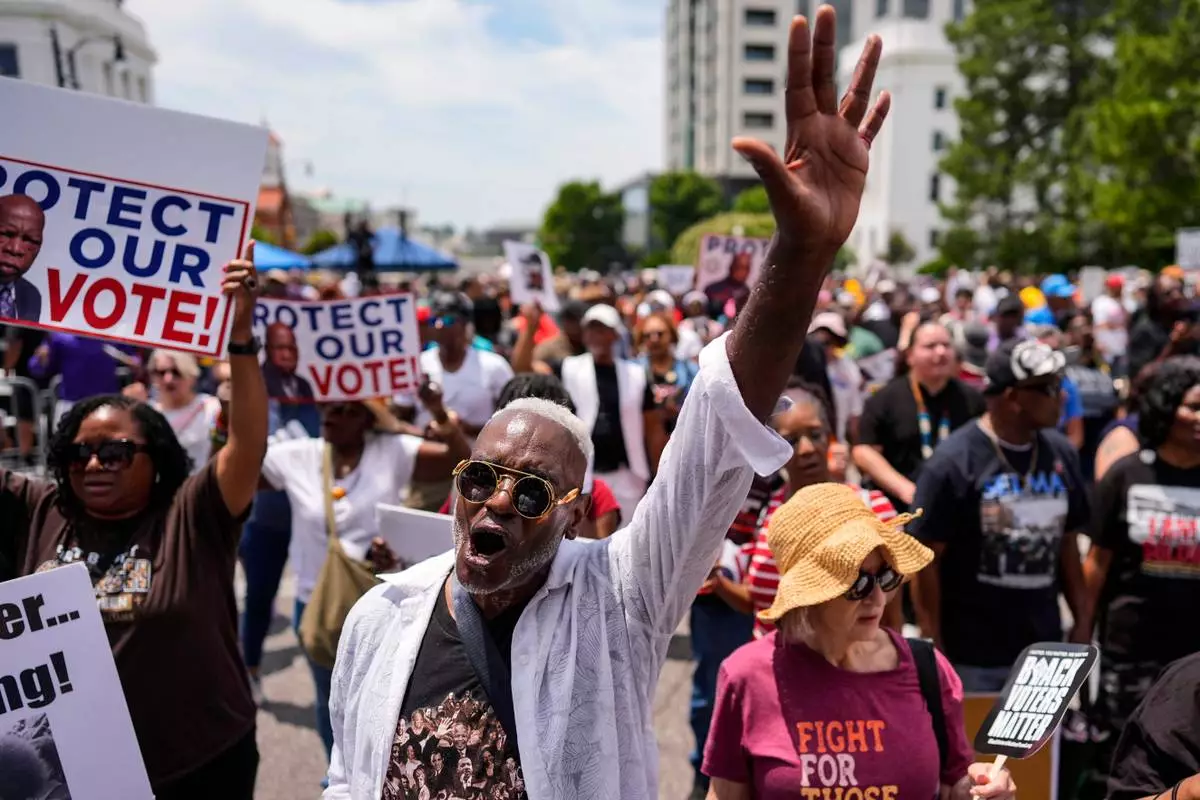
A man sings a spirtual song during a voting rally, Saturday, May 16, 2026, in Montgomery, Ala. (AP Photo/Mike Stewart)
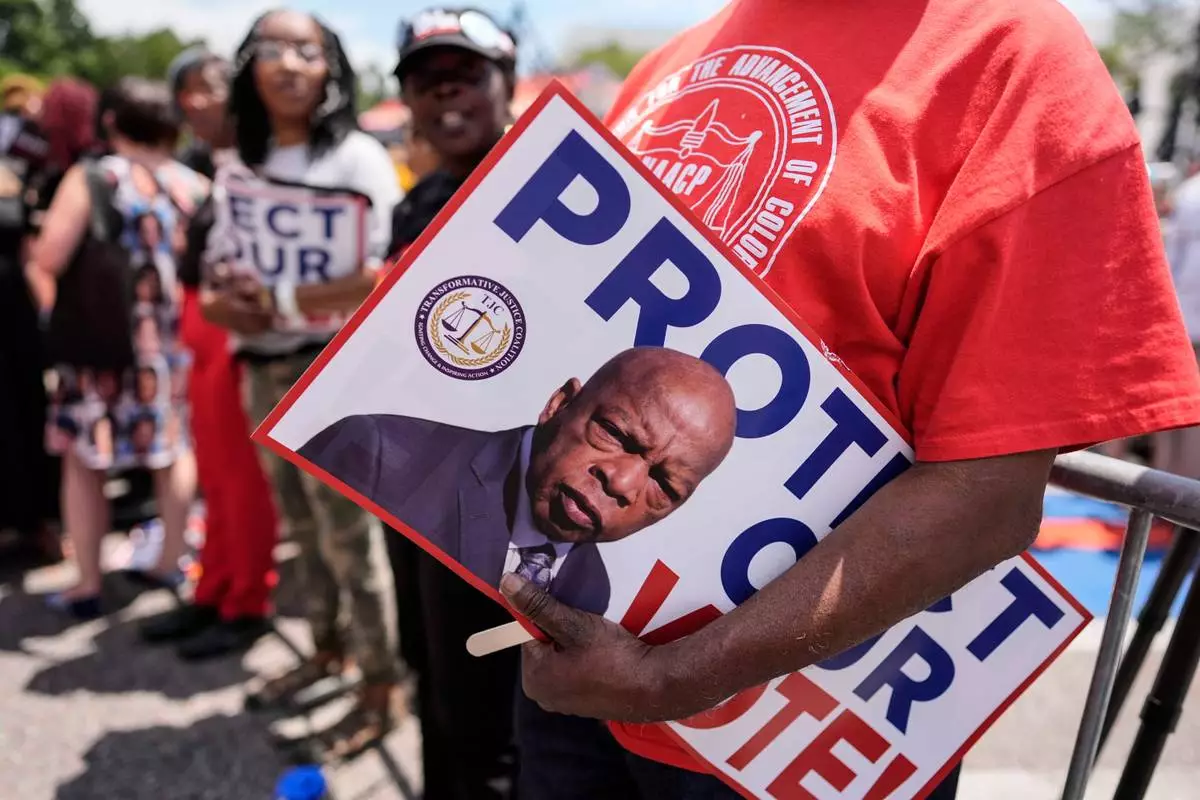
A protestor holds a sign of the late Georgia Congressman John Lewis during a voting rally, Saturday, May 16, 2026, in Montgomery, Ala. (AP Photo/Mike Stewart)
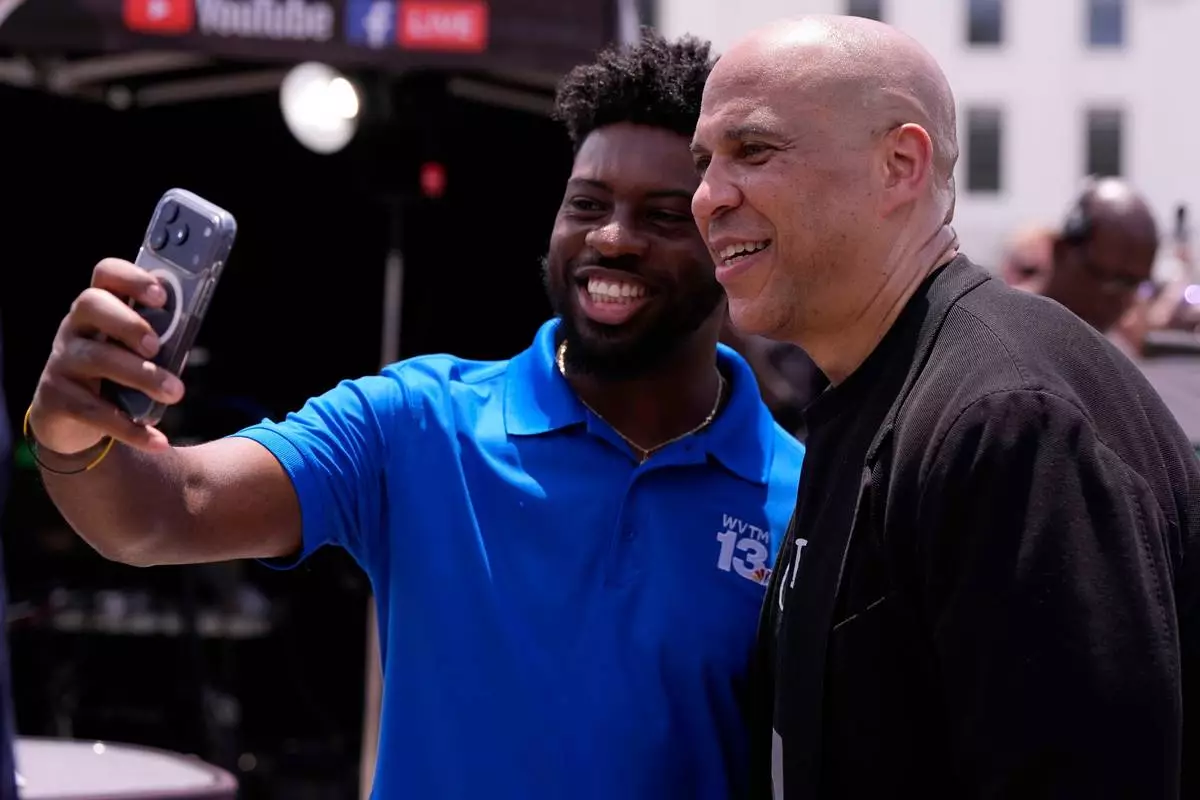
U.S. Sen Corey Booker, D-NY., has his photo taken during a voting rally, Saturday, May 16, 2026, in Montgomery, Ala. (AP Photo/Mike Stewart)
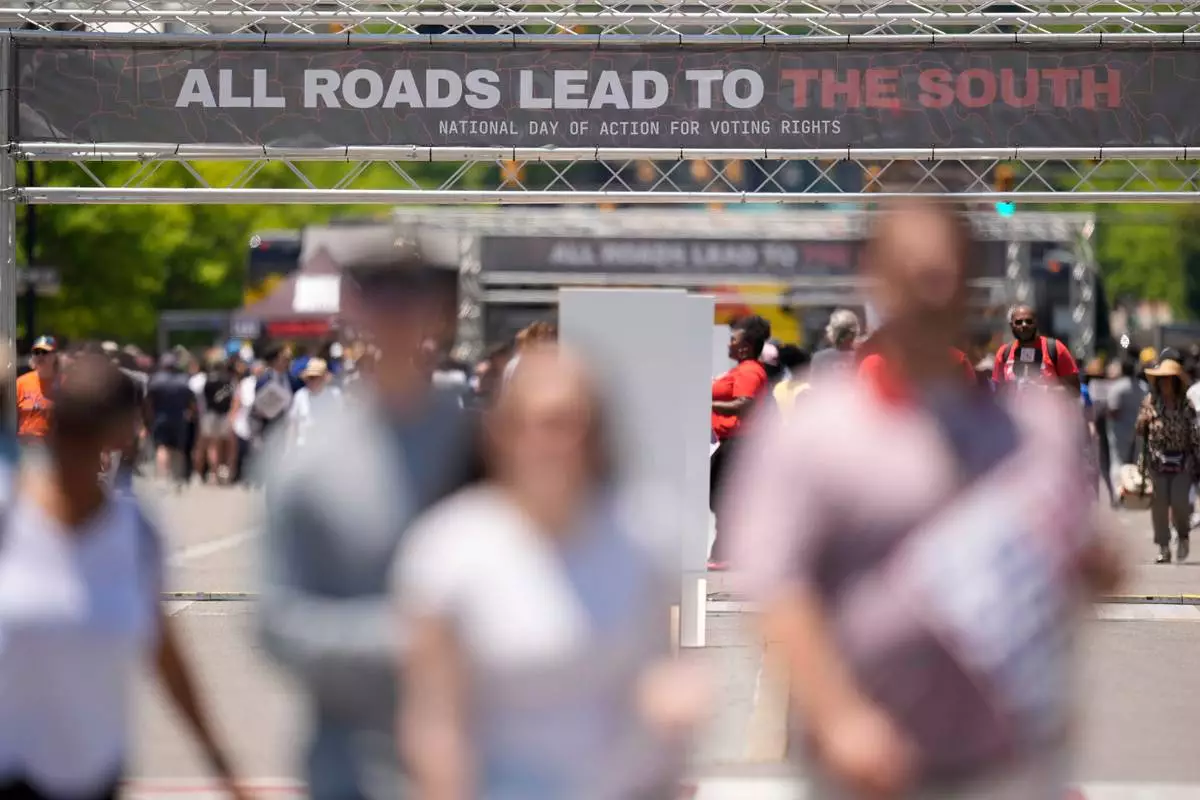
People gather during a voting rally, Saturday, May 16, 2026, in Montgomery, Ala. (AP Photo/Mike Stewart)
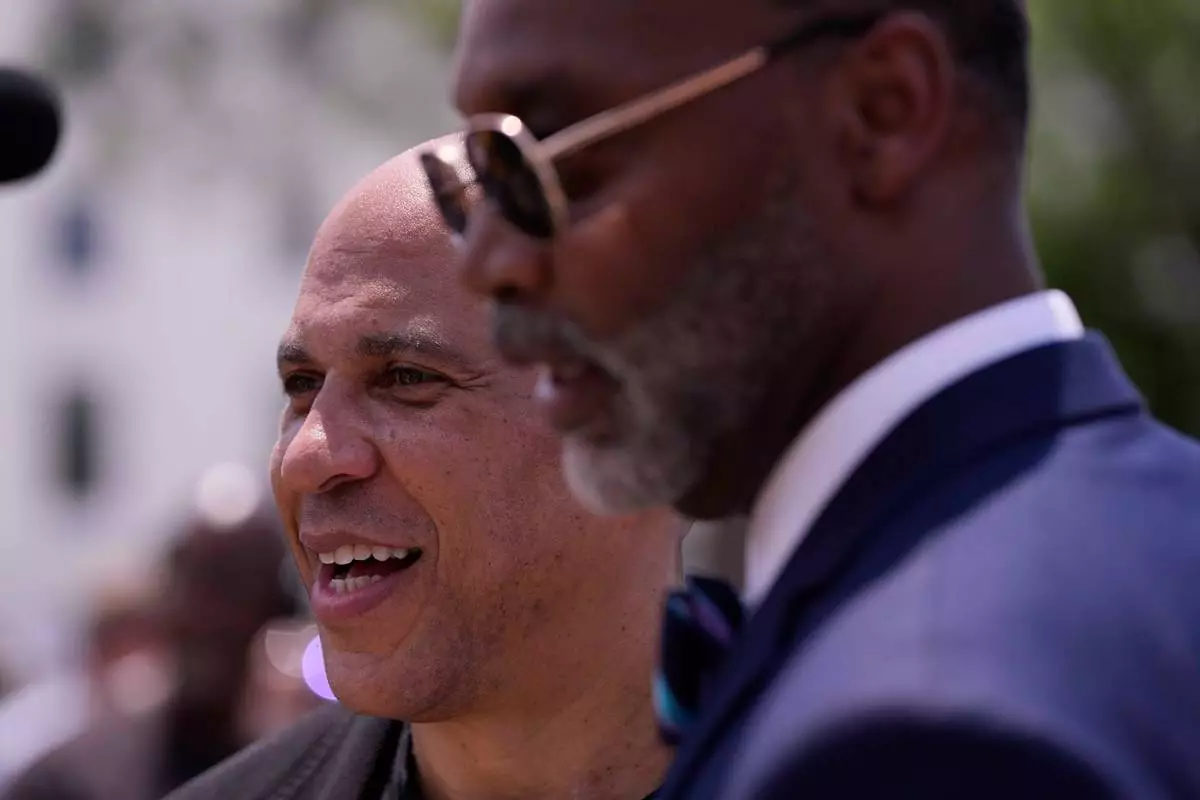
U.S. Sen Corey Booker, D-NY., has his photo taken during a voting rally, Saturday, May 16, 2026, in Montgomery, Ala. (AP Photo/Mike Stewart)
Aaron McGuire sings a spirtual song during a voting rally, Saturday, May 16, 2026, in Montgomery, Ala. (AP Photo/Mike Stewart)