Skip to Content Facebook Feature Image

Trial of former President Sarkozy sheds light on France’s back-channel talks with Libya’s Gadhafi

News

Trial of former President Sarkozy sheds light on France’s back-channel talks with Libya’s Gadhafi
News

News

Trial of former President Sarkozy sheds light on France’s back-channel talks with Libya’s Gadhafi

2025-04-09 05:13 Last Updated At:05:22

PARIS (AP) — The monthslong trial of former French President Nicolas Sarkozy over the alleged illegal financing of his 2007 presidential campaign has shed light on France’s surprising back-channel talks with the government of then-Libyan leader Moammar Gadhafi.

Family members of terror attacks sponsored by Gadhafi’s government have told the court they suspect that almost two decades ago, Sarkozy was willing to sacrifice the memories of their loved ones in order to normalize ties with oil-rich Libya.

More Images
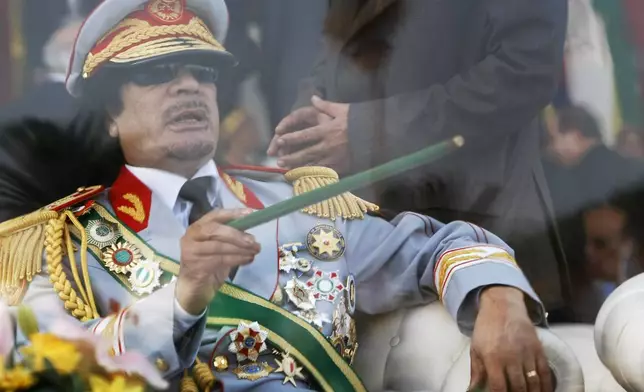
FILE - Libyan leader Moammar Gadhafi gestures with a green cane as he takes his seat behind bulletproof glass for a military parade on Sept. 1, 2009, in Green Square, Tripoli, Libya. (AP Photo/Ben Curtis, File)
FILE - Libyan leader Moammar Gadhafi gestures with a green cane as he takes his seat behind bulletproof glass for a military parade on Sept. 1, 2009, in Green Square, Tripoli, Libya. (AP Photo/Ben Curtis, File)

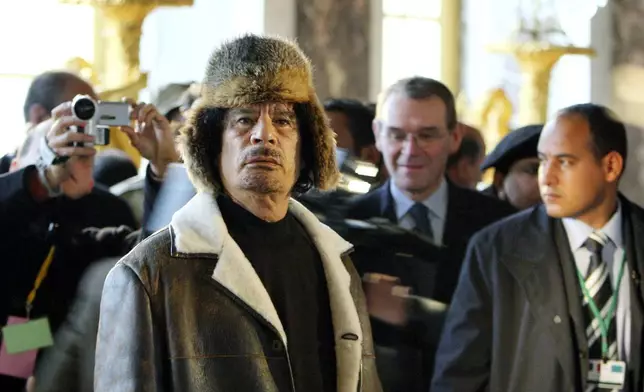
FILE - Libyan leader Col. Moammar Gadhafi, foreground, visits the Chateau de Versailles, southwest of Paris, Dec. 14, 2007. (AP Photo/Patrick Kovarik, Pool, File)
FILE - Libyan leader Col. Moammar Gadhafi, foreground, visits the Chateau de Versailles, southwest of Paris, Dec. 14, 2007. (AP Photo/Patrick Kovarik, Pool, File)

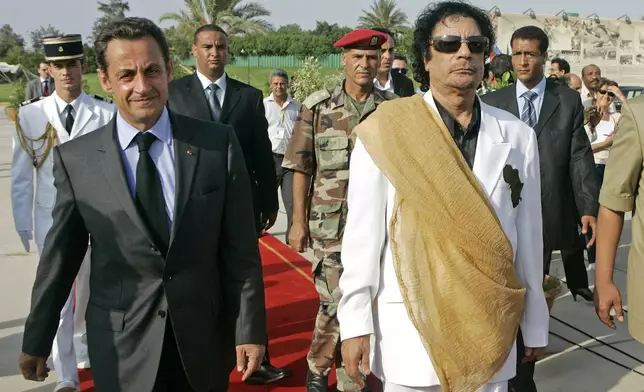
FILE - Libyan leader Moammar Gadhafi, right, welcomes French President Nicolas Sarkozy at the Bab Azizia Palace in Tripoli, July 25, 2007. (AP Photo/Michel Euler, File)
FILE - Libyan leader Moammar Gadhafi, right, welcomes French President Nicolas Sarkozy at the Bab Azizia Palace in Tripoli, July 25, 2007. (AP Photo/Michel Euler, File)

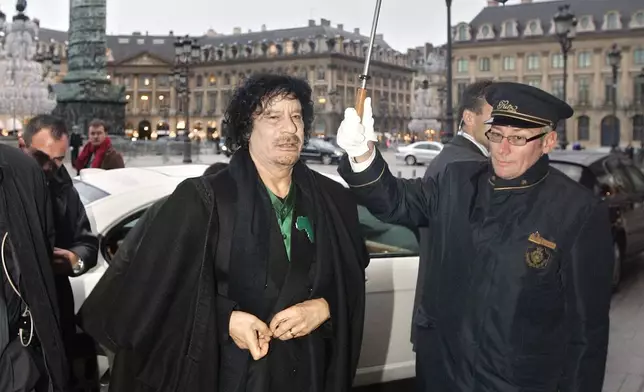
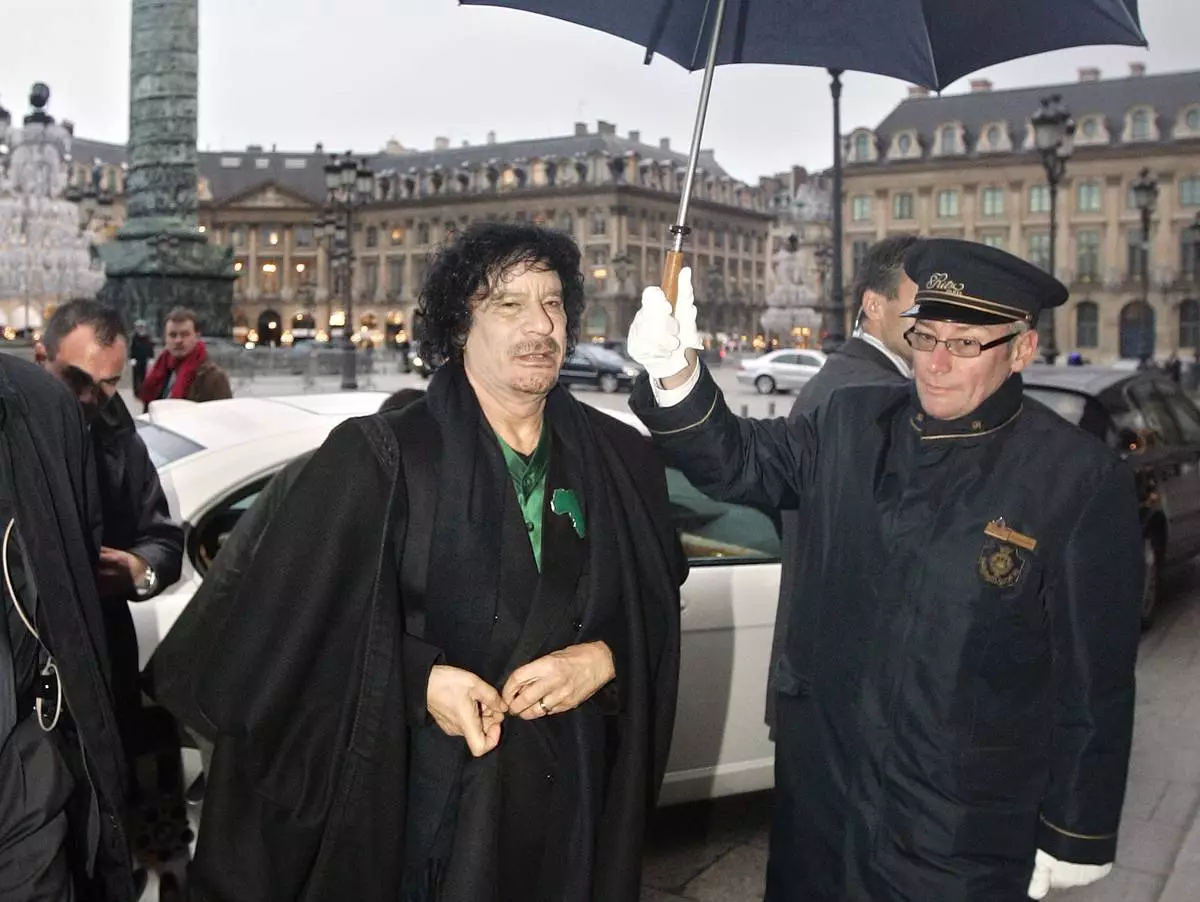
FILE - Libyan Col. Muammar Gadhafi arrives for a meeting with intellectuals at the Ritz Hotel in Paris, Dec. 11, 2007. (AP Photo/Francois Mori, File)
FILE - Libyan Col. Muammar Gadhafi arrives for a meeting with intellectuals at the Ritz Hotel in Paris, Dec. 11, 2007. (AP Photo/Francois Mori, File)

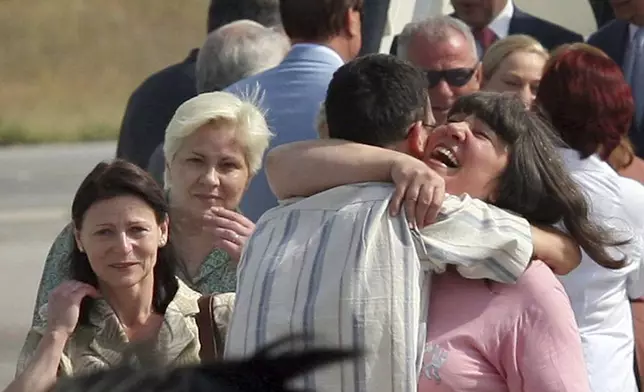
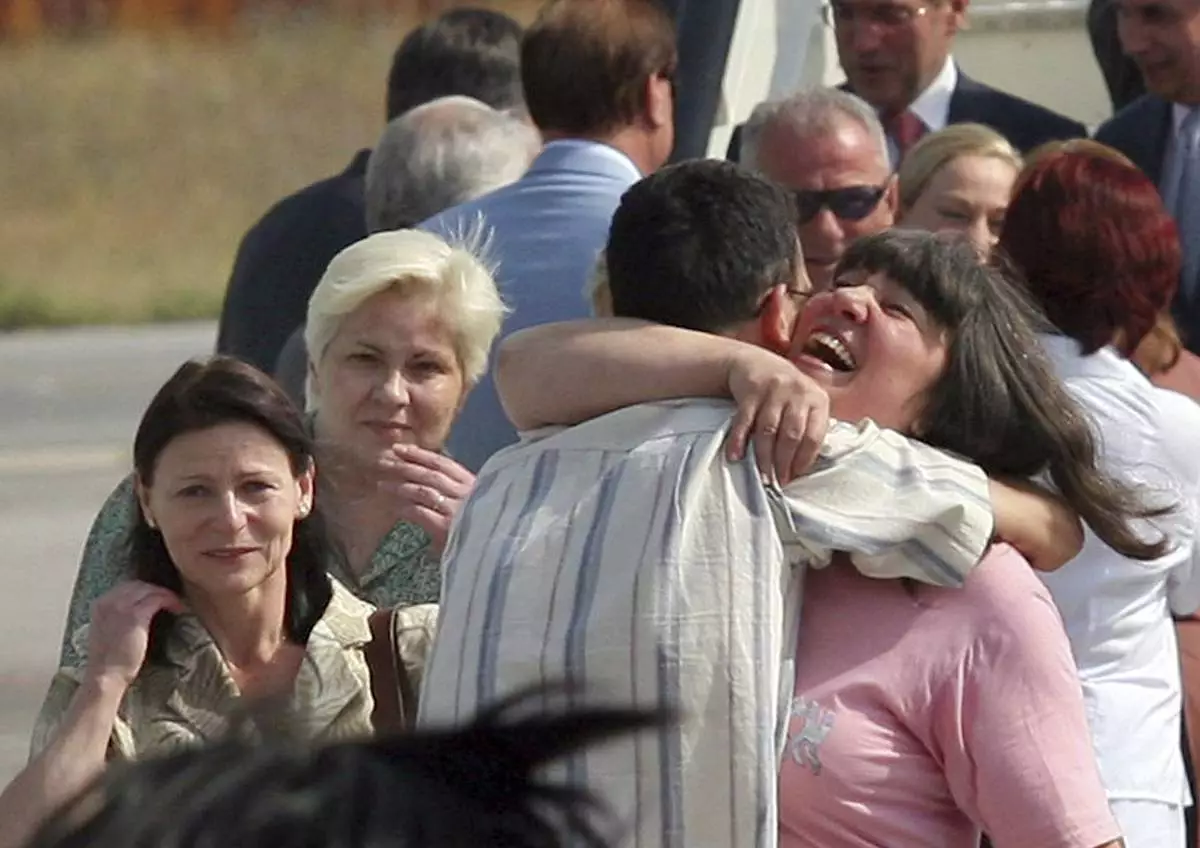
FILE - Bulgarian nurses Valentina Manolova Siropulo, left, Nasya Stoitcheva Nenova, second left, look on as Valia Georgieva Chervenisahka, right, hugs an unidentified man in front of the French presidential air plane after their arrival in the Bulgarian capital Sofia, July 24, 2007. (AP Photo, File)
FILE - Bulgarian nurses Valentina Manolova Siropulo, left, Nasya Stoitcheva Nenova, second left, look on as Valia Georgieva Chervenisahka, right, hugs an unidentified man in front of the French presidential air plane after their arrival in the Bulgarian capital Sofia, July 24, 2007. (AP Photo, File)

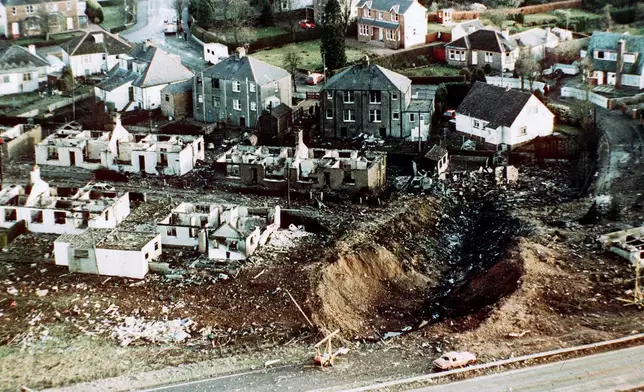
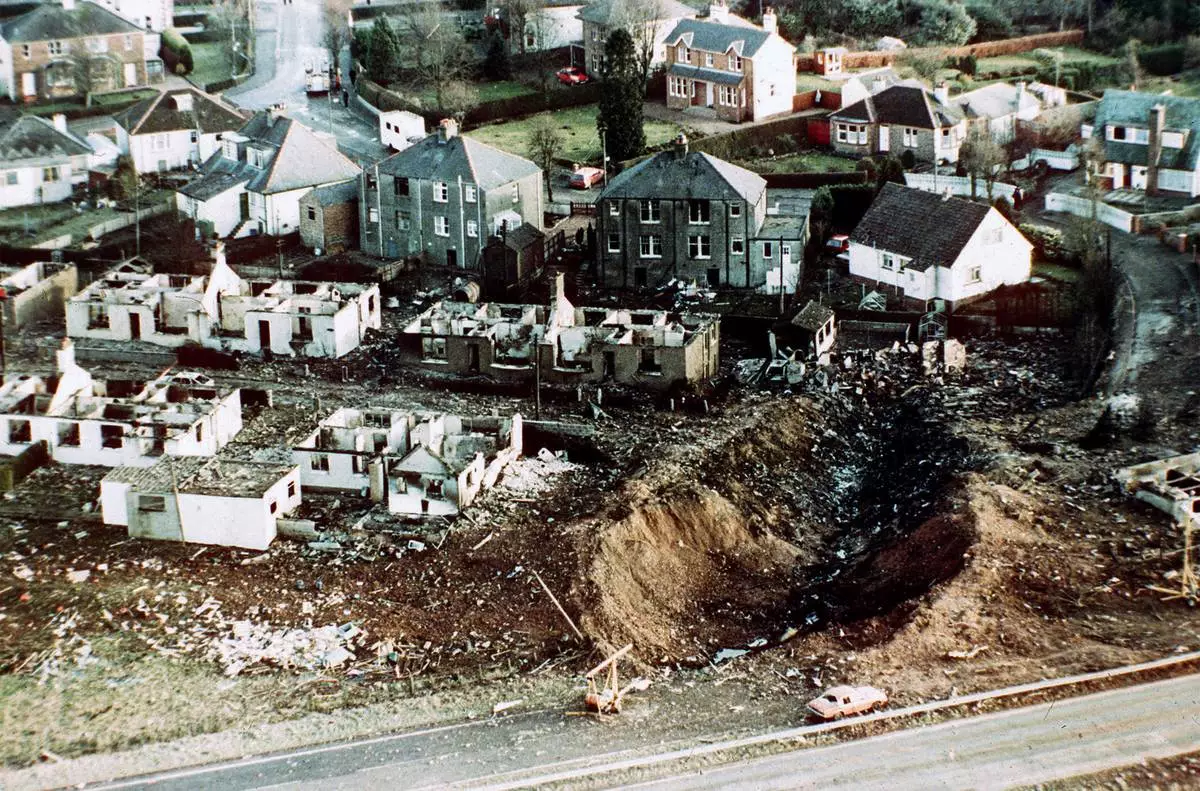
FILE - Wrecked houses and a deep gash in the ground in the village of Lockerbie, Scotland, after the bombing of the Pan Am 103 in the village of Lockerbie, Scotland, in December 1988. (AP Photo/Martin Cleaver, File)
FILE - Wrecked houses and a deep gash in the ground in the village of Lockerbie, Scotland, after the bombing of the Pan Am 103 in the village of Lockerbie, Scotland, in December 1988. (AP Photo/Martin Cleaver, File)

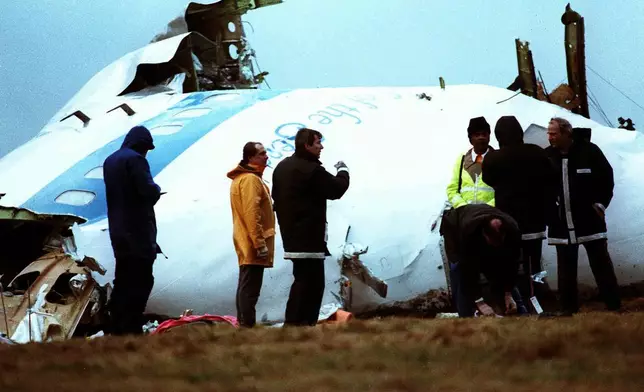
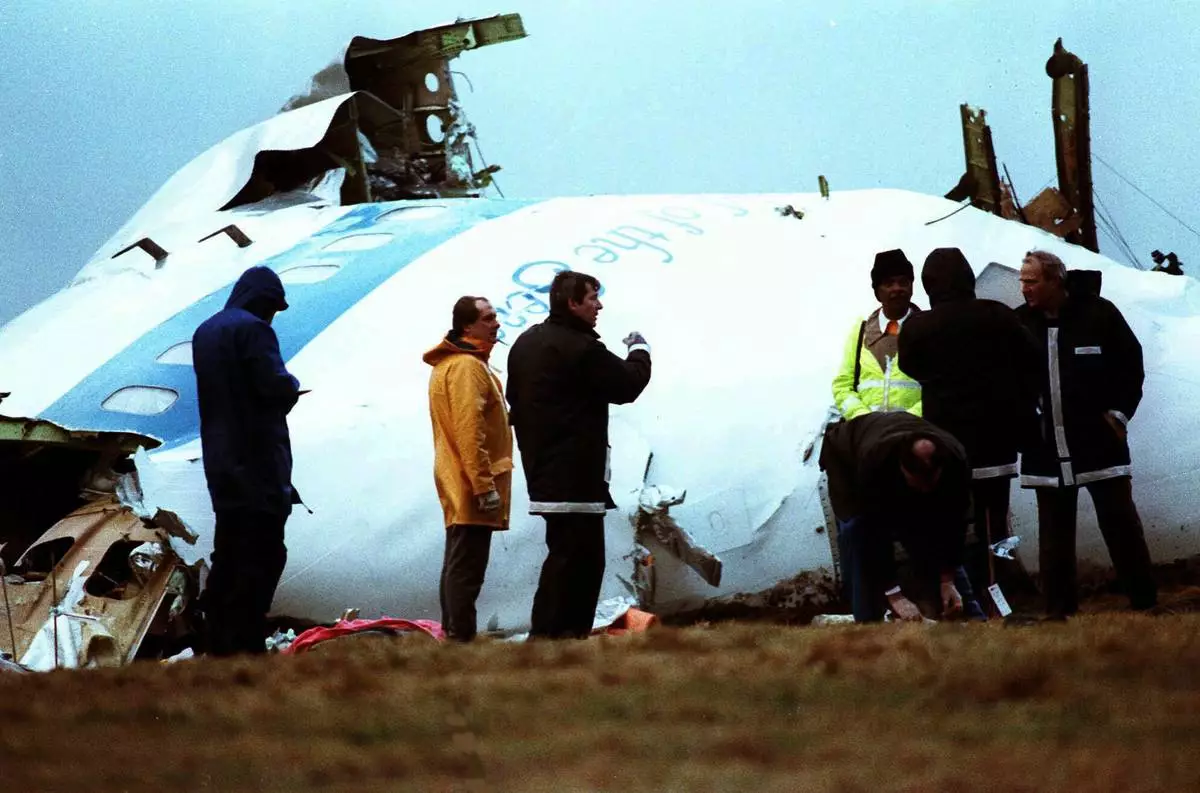
FILE - Investigators inspect the nose section of the crashed Pan Am flight 103, a Boeing 747 airliner in a field near Lockerbie, Scotland, Dec. 23, 1988. (AP Photo/Dave Caulkin, File)
FILE - Investigators inspect the nose section of the crashed Pan Am flight 103, a Boeing 747 airliner in a field near Lockerbie, Scotland, Dec. 23, 1988. (AP Photo/Dave Caulkin, File)

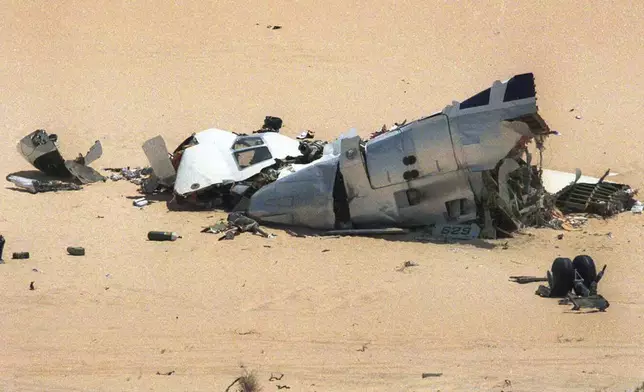
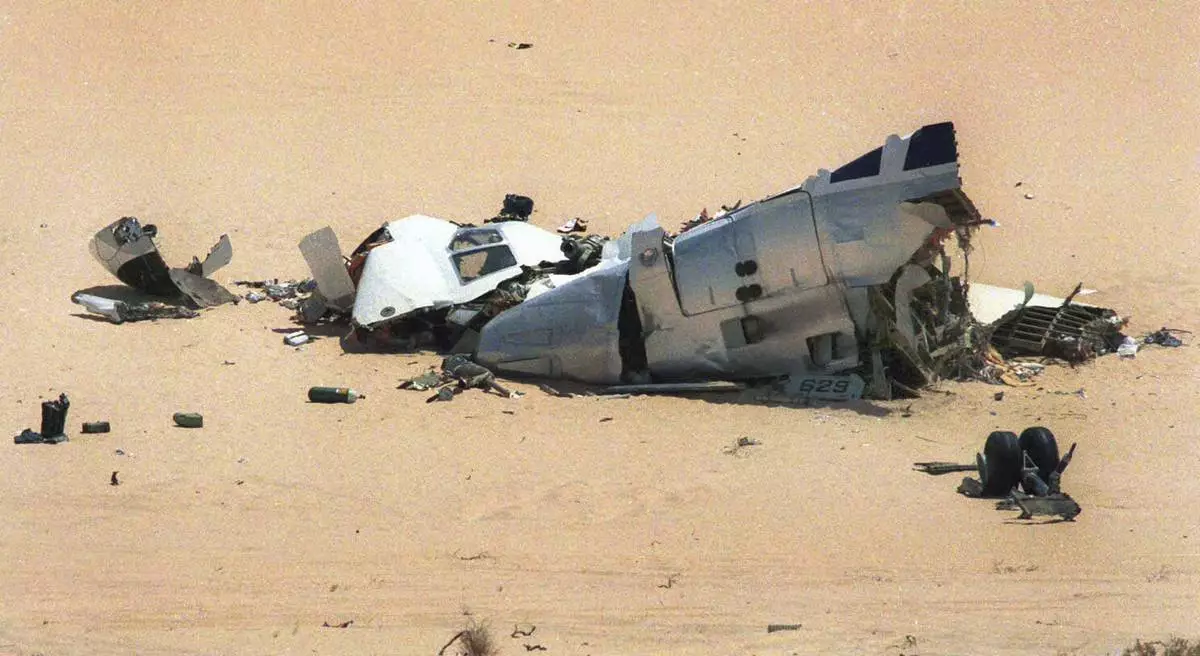
FILE - Debris of a French UTA jetliner seen in the desert of Niger, where the airliner crashed after exploding over the desert in September 1989. (AP Photo/Remy de la Mauviniere, File)
FILE - Debris of a French UTA jetliner seen in the desert of Niger, where the airliner crashed after exploding over the desert in September 1989. (AP Photo/Remy de la Mauviniere, File)

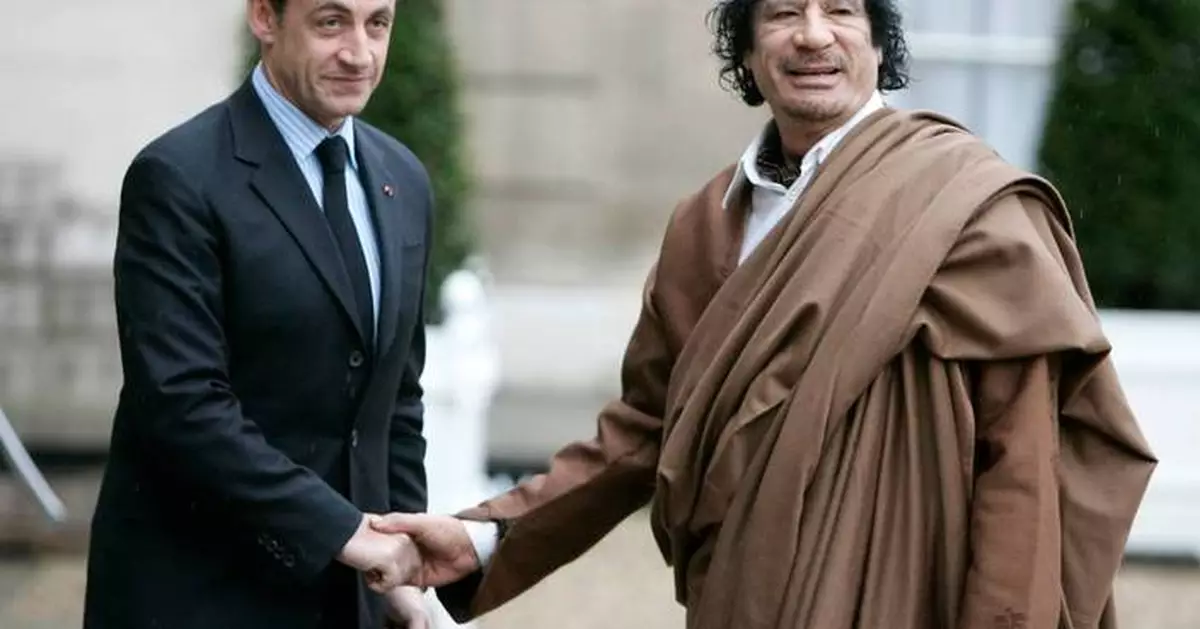
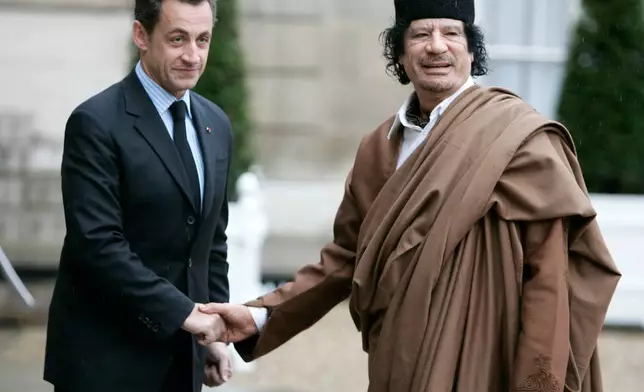
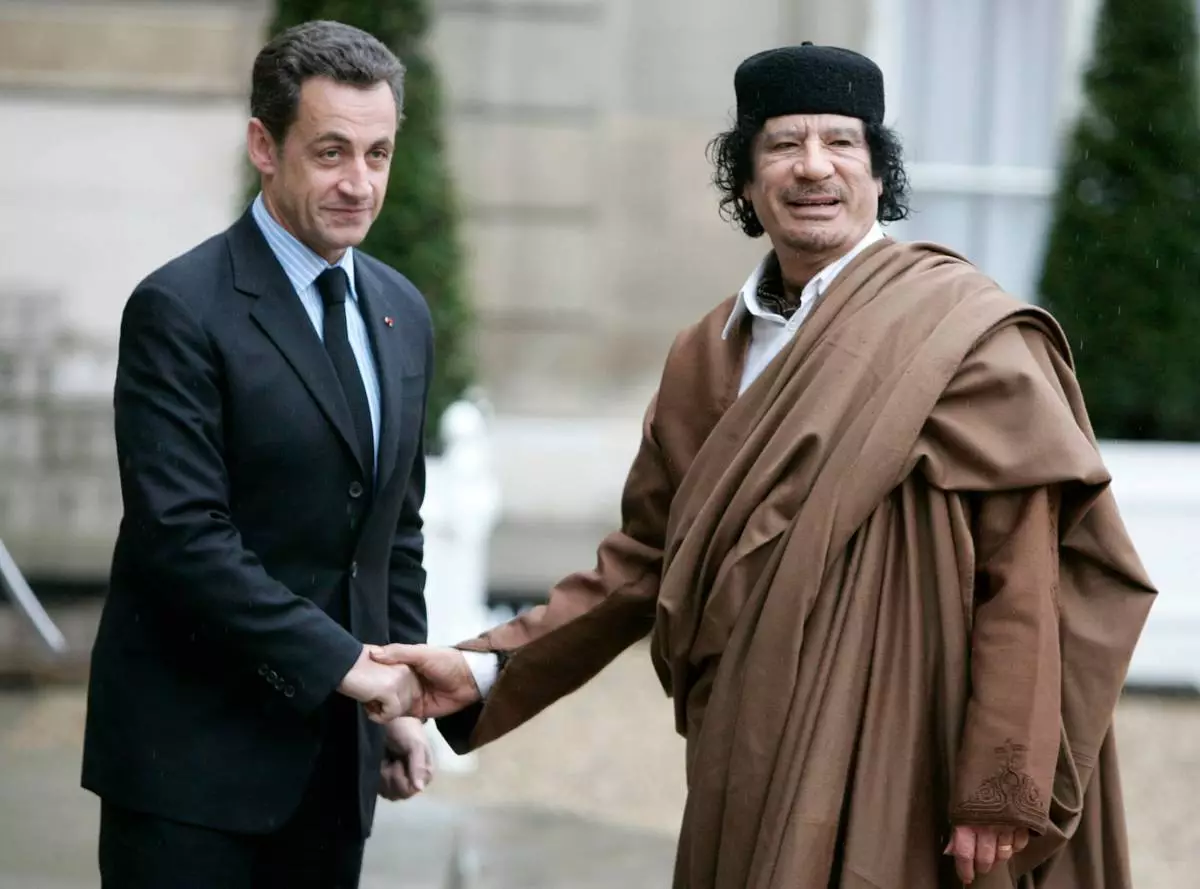
FILE - French President Nicolas Sarkozy, left, greets Libyan leader Col. Moammar Gadhafi upon his arrival on Dec. 10 2007 at the Elysee Palace, in Paris. (AP Photo/Francois Mori, File)

FILE - French President Nicolas Sarkozy, left, greets Libyan leader Col. Moammar Gadhafi upon his arrival on Dec. 10 2007 at the Elysee Palace, in Paris. (AP Photo/Francois Mori, File)

The trial, which started in January, ended on Tuesday with Sarkozy’s lawyers' closing arguments. The verdict is expected on Sept. 25.

French prosecutors requested a seven-year prison sentence for the 70-year-old former leader. Sarkozy, who was president from 2007 to 2012, has denied all wrongdoing.

Key moments in the trial focused on talks between France and Libya in the 2000s, when Gadhafi was seeking to restore diplomatic ties with the West. Before that, Libya was considered a pariah state for having sponsored attacks.

French families of victims of a 1989 plane bombing told the court about their shock and sense of betrayal as the trial questioned whether promises possibly made to Gadhafi’s government were part of the alleged corruption deal.

In 1988, a bomb planted aboard a Pam Am flight exploded while the plane was over the Scottish town of Lockerbie, killing 270 people from 21 countries, including 190 Americans.

The following year, on Sept. 19, 1989, the bombing of UTA flight 772 over Niger killed 170 people, including 54 French nationals on board, after an in-flight explosion caused by a suitcase bomb.

Both French and U.S. investigations have tied both bombings to Libya, whose government had engaged in long-running hostilities with the U.S. and other Western governments.

Now, families of victims suspect French government officials close to Sarkozy promised to forget about the bombings in exchange for business opportunities with Libya and possibly, an alleged corruption deal.

“What did they do with our dead?” Nicoletta Diasio, whose father died in the bombing, told the court, saying she wondered if the memories of the victims “could have been used for bartering” in talks between France and Libya.

During the trial, Sarkozy said he has “never ever betrayed” families by using their loved ones as bargaining chips.“

Libya's initial steps to shed its pariah state status came in 2003 when it took responsibility for both the 1988 and 1989 plane bombings and agreed to pay billions in compensation to the victims’ families.

Gadhafi also announced he was dismantling his nuclear weapons program, which led to the lifting of international sanctions.

Britain, France and other Western countries sought to restore a relationship with Libya for security, diplomatic and business purposes.

In 2007, Sarkozy welcomed Gadhafi to Paris with honors for a five-day official visit, allowing him to set up a Bedouin tent near the Elysee presidential palace. Many French people still remember that gesture, feeling Sarkozy went too far to please a dictator.

Sarkozy said during the trial he would have preferred to “do without” Gadhafi’s visit at the time, but it came as a diplomatic gesture after Libya’s release of Bulgarian nurses who were imprisoned and facing death sentences for a crime they said they did not commit.

On July 24, 2007, under an accord partially brokered by first lady Cecilia Sarkozy and EU officials, Libya released the five Bulgarian nurses and a Palestinian doctor who had spend over eight years in prison.

They had been charged with deliberately infecting hundreds of children with the AIDS virus in the late 1990s — an allegation they denied.

Their release removed the last major obstacle to Libya rejoining the international community.

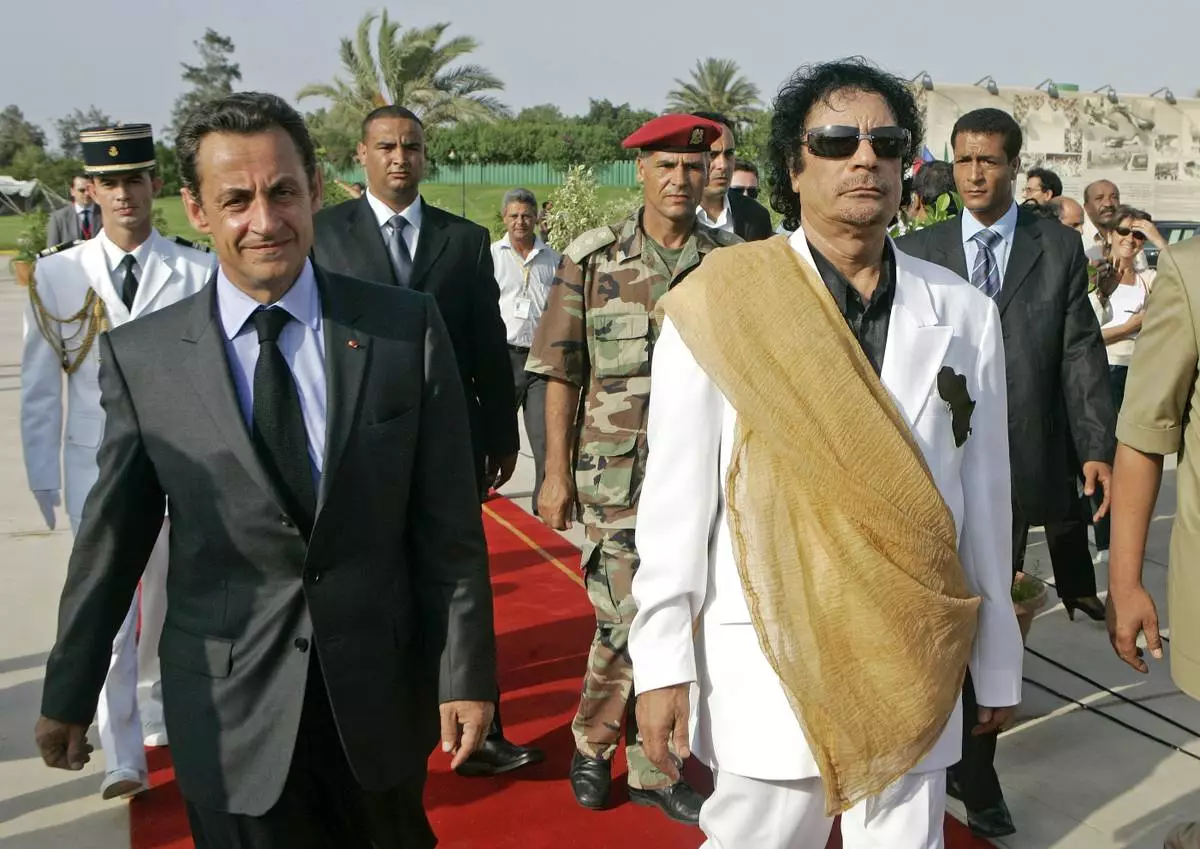
Sarkozy travelled to Tripoli for talks with Gadhafi the day after the medics were returned to Bulgaria on a French presidential plane.

In court he spoke of his “pride" for saving the medics, adding that their release wouldn't have been possible without engaging with Gadhafi.

Accused of masterminding the attack on UTA Flight 772, Gadhafi’s brother-in-law and intelligence chief Abdullah al-Senoussi was convicted in absentia to a life sentence by a Paris court in 1999 for the attack.

An international arrest warrant was issued for him and five other suspects.

Financial prosecutors have accused Sarkozy of having promised to lift the arrest warrant targeting al-Senoussi in exchange for alleged campaign financing.

In 2005, people close to Sarkozy, who was interior minister at the time, including his chief of staff Claude Guéant and junior minister Brice Hortefeux, travelled to Tripoli, where they met with al-Senoussi.

Both Guéant and Hortefeux told the court that it was a “surprise” meeting they were not aware of beforehand.

Al-Senoussi told investigative judges that millions of dollars were provided to support Sarkozy’s campaign. Accused of war crimes, he is now imprisoned in Libya.

Sarkozy has strongly denied that.

Gadhafi’s son, Seif al-Islam, told French news network RFI in January that he was personally involved in giving Sarkozy 5 million dollars in cash.

In a two-page statement to RFI radio, al-Islam said Sarkozy initially “received $2.5 million from Libya to finance his electoral campaign” during the 2007 presidential election, in return for which Sarkozy would “conclude agreements and carry out projects in favour of Libya.”

He said a second payment of $2.5 million in cash was handed over without specifying when it was given.

According to him, Libyan authorities expected that in return, Sarkozy would end a legal case about the 1989 UTA attack — including removing his name from an international warrant notice.

Sarkozy strongly denied those allegations.

“You’ll never find one Libyan euro, one Libyan cent in my campaign,” he said at the opening of the trial in January. “There’s no corruption money because there was no corruption.”

The Libyan civil war started in February 2011, with army units and militiamen loyal to Gadhafi opposing rebels.

Sarkozy was the first Western leader to take a public stance to support the rebellion.

On Feb. 25, 2011, he said the violence by pro-Gadhafi forces was unacceptable and should not go unpunished. “Gadhafi must go,” he said at the time.

On March 10 that year, France was the first country in the world to recognize the National Transitional Council as the legitimate government of Libya.

“That was the Arab Spring,” Sarkozy told the court. “Gadhafi was the only dictator who had sent (military) aircrafts against his people. He had promised rivers of blood, that’s his expression.”

Moammar Gadhafi was killed by opposition fighters in Oct. 2011, ending his four-decade rule of the North African country.
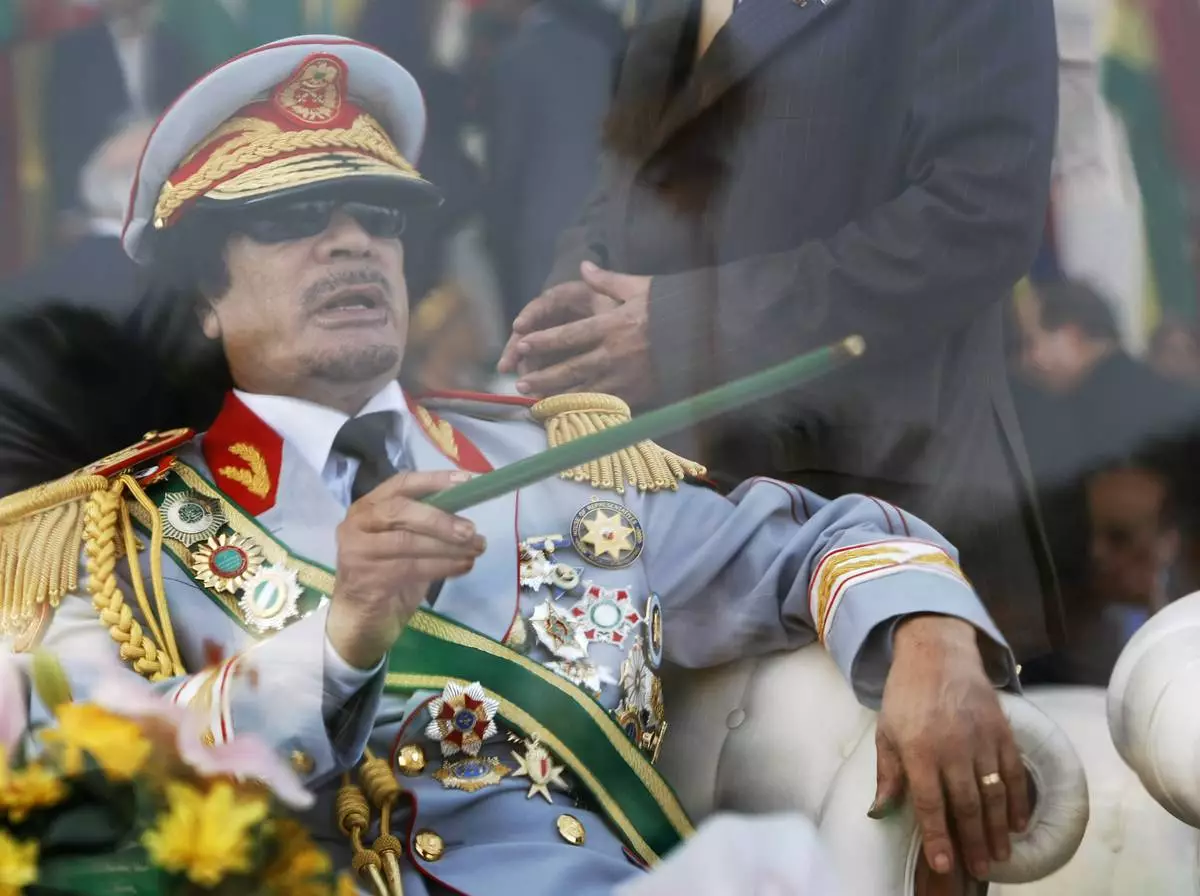
FILE - Libyan leader Moammar Gadhafi gestures with a green cane as he takes his seat behind bulletproof glass for a military parade on Sept. 1, 2009, in Green Square, Tripoli, Libya. (AP Photo/Ben Curtis, File)
FILE - Libyan leader Moammar Gadhafi gestures with a green cane as he takes his seat behind bulletproof glass for a military parade on Sept. 1, 2009, in Green Square, Tripoli, Libya. (AP Photo/Ben Curtis, File)

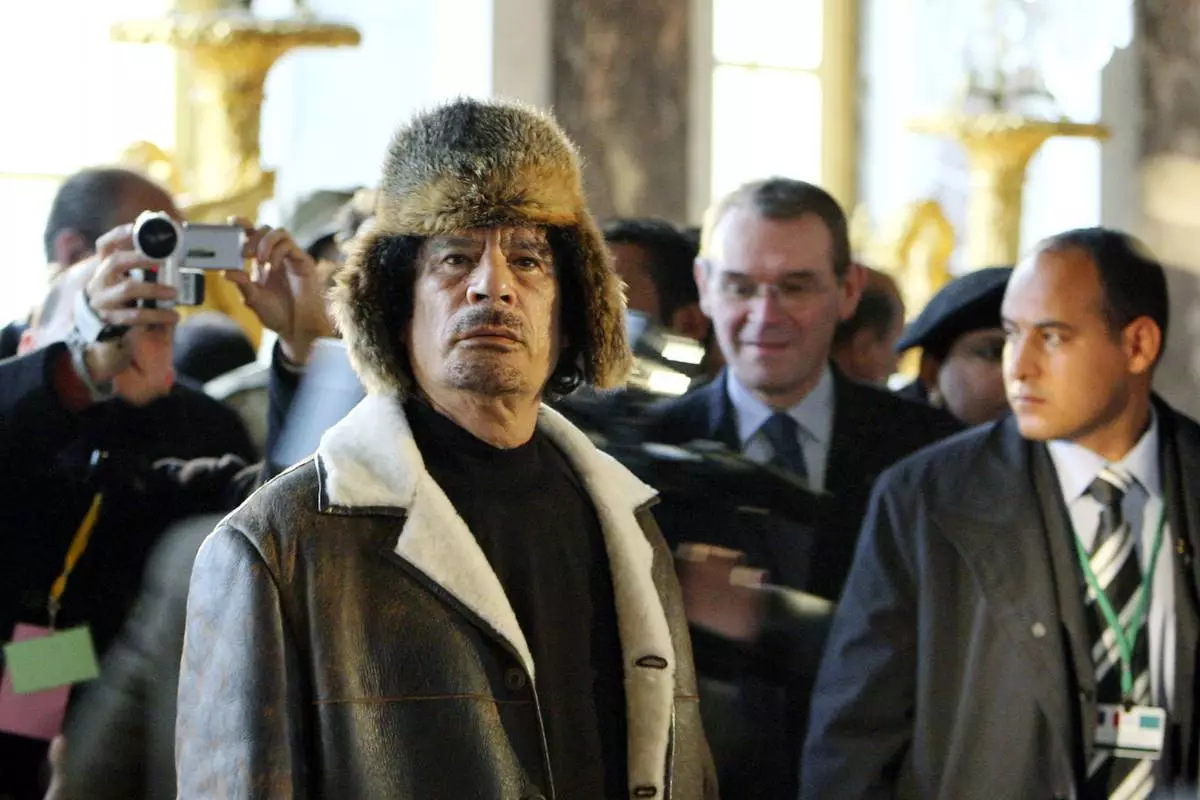
FILE - Libyan leader Col. Moammar Gadhafi, foreground, visits the Chateau de Versailles, southwest of Paris, Dec. 14, 2007. (AP Photo/Patrick Kovarik, Pool, File)
FILE - Libyan leader Col. Moammar Gadhafi, foreground, visits the Chateau de Versailles, southwest of Paris, Dec. 14, 2007. (AP Photo/Patrick Kovarik, Pool, File)

FILE - Libyan leader Moammar Gadhafi, right, welcomes French President Nicolas Sarkozy at the Bab Azizia Palace in Tripoli, July 25, 2007. (AP Photo/Michel Euler, File)
FILE - Libyan leader Moammar Gadhafi, right, welcomes French President Nicolas Sarkozy at the Bab Azizia Palace in Tripoli, July 25, 2007. (AP Photo/Michel Euler, File)

FILE - Libyan Col. Muammar Gadhafi arrives for a meeting with intellectuals at the Ritz Hotel in Paris, Dec. 11, 2007. (AP Photo/Francois Mori, File)
FILE - Libyan Col. Muammar Gadhafi arrives for a meeting with intellectuals at the Ritz Hotel in Paris, Dec. 11, 2007. (AP Photo/Francois Mori, File)

FILE - Bulgarian nurses Valentina Manolova Siropulo, left, Nasya Stoitcheva Nenova, second left, look on as Valia Georgieva Chervenisahka, right, hugs an unidentified man in front of the French presidential air plane after their arrival in the Bulgarian capital Sofia, July 24, 2007. (AP Photo, File)
FILE - Bulgarian nurses Valentina Manolova Siropulo, left, Nasya Stoitcheva Nenova, second left, look on as Valia Georgieva Chervenisahka, right, hugs an unidentified man in front of the French presidential air plane after their arrival in the Bulgarian capital Sofia, July 24, 2007. (AP Photo, File)

FILE - Wrecked houses and a deep gash in the ground in the village of Lockerbie, Scotland, after the bombing of the Pan Am 103 in the village of Lockerbie, Scotland, in December 1988. (AP Photo/Martin Cleaver, File)
FILE - Wrecked houses and a deep gash in the ground in the village of Lockerbie, Scotland, after the bombing of the Pan Am 103 in the village of Lockerbie, Scotland, in December 1988. (AP Photo/Martin Cleaver, File)

FILE - Investigators inspect the nose section of the crashed Pan Am flight 103, a Boeing 747 airliner in a field near Lockerbie, Scotland, Dec. 23, 1988. (AP Photo/Dave Caulkin, File)
FILE - Investigators inspect the nose section of the crashed Pan Am flight 103, a Boeing 747 airliner in a field near Lockerbie, Scotland, Dec. 23, 1988. (AP Photo/Dave Caulkin, File)

FILE - Debris of a French UTA jetliner seen in the desert of Niger, where the airliner crashed after exploding over the desert in September 1989. (AP Photo/Remy de la Mauviniere, File)
FILE - Debris of a French UTA jetliner seen in the desert of Niger, where the airliner crashed after exploding over the desert in September 1989. (AP Photo/Remy de la Mauviniere, File)

FILE - French President Nicolas Sarkozy, left, greets Libyan leader Col. Moammar Gadhafi upon his arrival on Dec. 10 2007 at the Elysee Palace, in Paris. (AP Photo/Francois Mori, File)
FILE - French President Nicolas Sarkozy, left, greets Libyan leader Col. Moammar Gadhafi upon his arrival on Dec. 10 2007 at the Elysee Palace, in Paris. (AP Photo/Francois Mori, File)
WASHINGTON (AP) — The Trump administration's criminal investigation of Federal Reserve Chair Jerome Powell appeared on Monday to be emboldening defenders of the U.S. central bank, who pushed back against President Donald Trump’s efforts to exert more control over the Fed.

The backlash reflected the overarching stakes in determining the balance of power within the federal government and the path of the U.S. economy at a time of uncertainty about inflation and a slowing job market. This has created a sense among some Republican lawmakers and leading economists that the Trump administration had overstepped the Fed's independence by sending subpoenas.

The criminal investigation — a first for a sitting Fed chair — sparked an unusually robust response from Powell and a full-throated defense from three former Fed chairs, a group of top economic officials and even Republican senators tasked with voting on Trump's eventual pick to replace Powell as Fed chair when his term expires in May.

White House press secretary Karoline Leavitt told reporters that Trump did not direct his Justice Department to investigate Powell, who has proven to be a foil for Trump by insisting on setting the Fed's benchmark interest rates based on the data instead of the president's wishes.

“One thing for sure, the president’s made it quite clear, is Jerome Powell is bad at his job,” Leavitt said. “As for whether or not Jerome Powell is a criminal, that’s an answer the Department of Justice is going to have to find out.”

The investigation demonstrates the lengths the Trump administration is willing to go to try to assert control over the Fed, an independent agency that the president believes should follow his claims that inflationary pressures have faded enough for drastic rate cuts to occur. Trump has repeatedly used investigations — which might or might not lead to an actual indictment — to attack his political rivals.

The risks go far beyond Washington infighting to whether people can find work or afford their groceries. If the Fed errs in setting rates, inflation could surge or job losses could mount. Trump maintains that an economic boom is occurring and rates should be cut to pump more money into the economy, while Powell has taken a more cautious approach in the wake of Trump's tariffs.

Several Republican senators have condemned the Department of Justice's subpoenas of the Fed, which Powell revealed Sunday and characterized as “pretexts” to pressure him to sharply cut interest rates. Powell also said the Justice Department has threatened criminal indictments over his June testimony to Congress about the cost and design elements of a $2.5 billion building renovation that includes the Fed's headquarters.

“After speaking with Chair Powell this morning, it’s clear the administration’s investigation is nothing more than an attempt at coercion,” said Sen. Lisa Murkowski, R-Alaska, on Monday.

Jeanine Pirro, U.S. attorney for the District of Columbia, said on social media that the Fed “ignored” her office’s outreach to discuss the renovation cost overruns, “necessitating the use of legal process — which is not a threat.”

“The word ‘indictment’ has come out of Mr. Powell’s mouth, no one else’s,” Pirro posted on X, although the subpoenas and the White House’s own statement about determining Powell's criminality would suggest the risk of an indictment.

A bipartisan group of former Fed chairs and top economists on Monday called the Trump administration's investigation “an unprecedented attempt to use prosecutorial attacks" to undermine the Fed's independence, stressing that central banks controlled by political leaders tend to produce higher inflation and lower growth.

“I think this is ham-handed, counter-productive, and going to set back the president’s cause,” said Jason Furman, an economist at Harvard and former top adviser to President Barack Obama. The investigation could also unify the Fed’s interest-rate setting committee in support of Powell, and means “the next Fed chair will be under more pressure to prove their independence.”

The subpoenas apply to Powell's statements before a congressional committee about the renovation of Fed buildings, including its marble-clad headquarters in Washington, D.C. They come at an unusual moment when Trump was teasing the likelihood of announcing his nominee this month to succeed Powell as the Fed chair and could possibly be self-defeating for the nomination process.

While Powell's term as chair ends in four months, he has a separate term as a Fed governor until January 2028, meaning that he could remain on the board. If Powell stays on the board, Trump could be blocked from appointing an outside candidate of his choice to be the chair.

Powell quickly found a growing number of defenders among Republicans in the Senate, who will have the choice of whether to confirm Trump's planned pick for Fed chair.

Sen. Thom Tillis, a North Carolina Republican and member of the Senate Banking panel, said late Sunday that he would oppose any of the Trump administration’s Fed nominees until the investigation is "resolved."

“If there were any remaining doubt whether advisers within the Trump Administration are actively pushing to end the independence of the Federal Reserve, there should now be none,” Tillis said.

Sen. Dave McCormick, R-Penn, said the Fed may have wasted public dollars with its renovation, but he said, “I do not think Chairman Powell is guilty of criminal activity.”

Senate Majority Leader John Thune offered a brief but stern response Monday about the tariffs as he arrived at the U.S. Capitol, suggesting that the administration needed “serious” evidence of wrongdoing to take such a significant step.

“I haven’t seen the case or whatever the allegations or charges are, but I would say they better, they better be real and they better be serious,” said Thune, a Republican representing South Dakota.

If Powell stays on the board after his term as chair ends, the Trump administration would be deprived of the chance to fill another seat that would give the administration a majority on the seven-member board. That majority could then enact significant reforms at the Fed and even block the appointment of presidents at the Fed's 12 regional banks.

“They could do a lot of reorganizing and reforms” without having to pass new legislation, said Mark Spindel, chief investment officer at Potomac River Capital and author of a book on Fed independence. “That seat is very valuable.”

Powell has declined at several press conferences to answer questions about his plans to stay or leave the board.

Scott Alvarez, former general counsel at the Fed, says the investigation is intended to intimidate Powell from staying on the board. The probe is occurring now “to say to Chair Powell, ’We’ll use every mechanism that the administration has to make your life miserable unless you leave the Board in May,'" Alvarez said.

Asked on Monday by reporters if Powell planned to remain a Fed governor, Kevin Hassett, director of the White House National Economic Council and a leading candidate to become Fed chair, said he was unaware of Powell’s plans.

“I’ve not talked to Jay about that,” Hassett said.

A bipartisan group of former Fed chairs and top economists said in their Monday letter that the administration’s legal actions and the possible loss of Fed independence could hurt the broader economy.

“This is how monetary policy is made in emerging markets with weak institutions, with highly negative consequences for inflation and the functioning of their economies more broadly,” the statement said.

The statement was signed by former Fed chairs Ben Bernanke, Janet Yellen, and Alan Greenspan, as well as former Treasury Secretaries Henry Paulson and Robert Rubin.

Still, Trump's pressure campaign had been building for some time, with him relentlessly criticizing and belittling Powell.

He even appeared to preview the shocking news of the subpoenas at a Dec. 29 news conference by saying he would bring a lawsuit against Powell over the renovation costs.

“He’s just a very incompetent man,” Trump said. “But we’re going to probably bring a lawsuit against him.”

__

AP writers Lisa Mascaro and Joey Cappelletti contributed to this report.

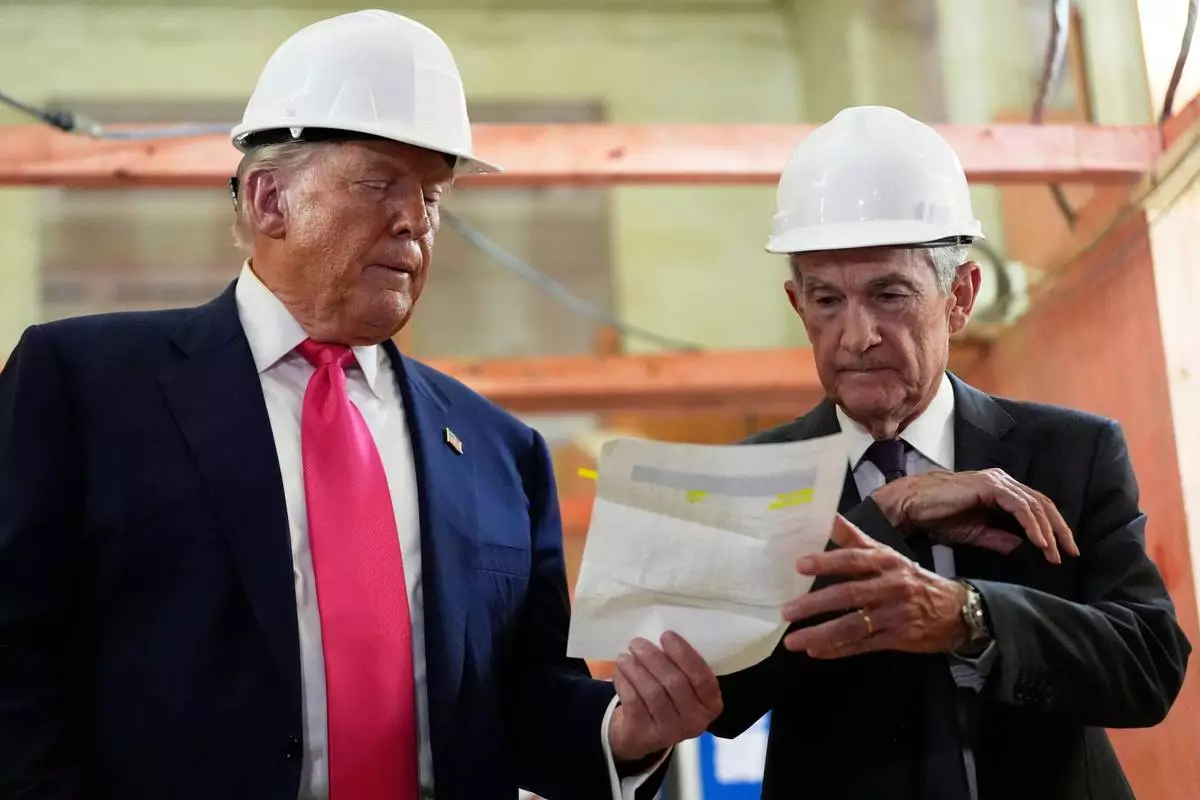
FILE - Federal Reserve Chairman Jerome Powell, right, and President Donald Trump look over a document of cost figures during a visit to the Federal Reserve, July 24, 2025, in Washington. (AP Photo/Julia Demaree Nikhinson, File)

FILE - Federal Reserve Chairman Jerome Powell, right, and President Donald Trump look over a document of cost figures during a visit to the Federal Reserve, July 24, 2025, in Washington. (AP Photo/Julia Demaree Nikhinson, File)

Recommended Articles